
Shipping from China to the UK typically takes 3–45 days, depending on the method you choose.
- Express courier (DHL/UPS/FedEx): 3–5 days
- Air freight (airport-to-airport): 4–8 days
- DDP air freight (door-to-door): 8–12 days
- FCL sea freight: 25–40 days
- LCL sea freight: 30–45 days
Transit times vary due to the chosen port or airport, carrier schedule, customs clearance, peak seasons, and whether the shipment requires transshipment.
Why Shipping Time Varies
Shipping from China to the UK does not follow a single fixed timeline. Transit time can range from just a few days to more than a month, depending on your shipping method, route, and the complexity of your logistics process.
Sea freight, air freight, DDP solutions, and express couriers all operate on different schedules, and each is affected by factors beyond simple distance.
The route itself is one of the main variables. Cargo may move directly from a major Chinese port—such as Shanghai, Ningbo, or Shenzhen—to the UK, or it may pass through transshipment hubs like Singapore, Busan, or Port Klang. Each additional stop can add several days to the journey.
Customs clearance also influences how long delivery takes. In both China and the UK, inspections, incomplete documents, or peak-season backlogs may extend the process. Weather events, port congestion, carrier availability, and booking lead times can further contribute to delays.
Overall, transit time is a combination of mode, route, season, carrier reliability, and customs efficiency.
For a precise delivery estimate, importers should always consider both port-to-port transit time and the additional days required for door pickup, export handling, import clearance, and final delivery.
China → UK Transit Time Comparison Table
The overall delivery time from China to the UK depends heavily on the shipping method you choose.
Sea freight is the most economical but also the slowest, while air freight and express couriers offer much faster delivery for time-sensitive shipments.
DDP services provide predictable door-to-door timelines, especially for small parcels or e-commerce cargo.
Below is a clear comparison of typical 2025 China → UK transit times:
China → UK Transit Time Overview
| Shipping Method | Transit Time (Typical) | Notes |
|---|---|---|
| Express Courier (DHL / UPS / FedEx) | 3–5 days | Fastest option for small parcels; includes customs. |
| Air Freight (Airport → Airport) | 4–8 days | Dependent on flight frequency; fastest bulk option. |
| DDP Air Freight (Door → Door) | 8–12 days | Includes pickup, export, customs clearance, and delivery. |
| FCL Sea Freight (Port → Port) | 25–40 days | Stable schedule; varies by port pair and direct/transshipment route. |
| LCL Sea Freight (Port → Port) | 30–45 days | Longer due to consolidation/deconsolidation. |
| Door-to-Door Sea Freight (FCL/LCL) | 32–55 days | Includes origin pickup + customs + UK domestic delivery. |
These timeframes represent typical expectations under normal conditions. Actual transit time may vary due to peak seasons, customs inspections, weather disruptions, or carrier schedule changes. For urgent cargo, air freight or express is recommended; for cost-sensitive shipments, sea freight offers the best value.
Sea Freight Transit Time (FCL & LCL)
Sea freight is the most common shipping method for China–UK trade, especially for medium to large shipments.
While it offers the lowest cost per cubic meter, it is also the slowest option, with total transit time influenced by port choice, vessel schedule, and whether the route is direct or relies on transshipment hubs.
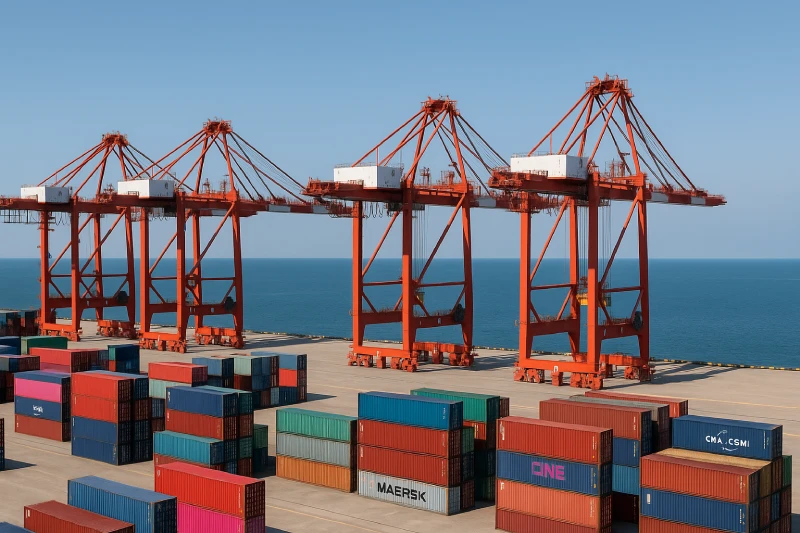
Typical Sea Freight Transit Times (Port-to-Port)
- FCL (Full Container Load): 25–40 days
- LCL (Less than Container Load): 30–45 days
FCL shipments generally move faster because they do not require consolidation or deconsolidation at warehouses. LCL cargo, however, must be packed with other consignments at origin and unpacked at destination, adding several days to the overall timeline.
Direct routes typically provide the quickest transit time, but many carriers operate via transshipment ports such as Singapore, Tanjung Pelepas, Port Klang, or Busan. Every additional hub may add 3–7 extra days depending on congestion and vessel connection times.
Below is a quick comparison of major China → UK ocean routes:
China → UK Major Sea Route Transit Time (Estimated)
| Origin Port (China) | Destination Port (UK) | FCL Transit Time | LCL Transit Time | Notes |
|---|---|---|---|---|
| Shanghai → Felixstowe | 28–35 days | 32–40 days | One of the most commonly used routes. | |
| Ningbo → Southampton | 30–38 days | 34–42 days | Slightly longer due to vessel rotations. | |
| Shenzhen (Yantian) → London Gateway | 27–34 days | 31–40 days | Efficient route for South China cargo. | |
| Qingdao → Felixstowe | 30–40 days | 35–45 days | Often involves transshipment. | |
| Tianjin → Southampton | 32–42 days | 36–48 days | Northern China shipments typically take longer. |
In addition to port-to-port time, importers should factor in:
- Origin pickup: 1–3 days
- Export customs & documentation: 1–4 days
- UK import clearance: 1–3 days
- Final delivery to door: 1–5 days
The total door-to-door sea freight timeline to the UK commonly ranges from 32 to 55 days, depending on routing and customs efficiency.
Air Freight Transit Time (Airport-to-Airport & DDP)
Air freight is the fastest bulk-shipping solution for importers who need a balance between speed and cost.
Transit times from China to the UK are much shorter than sea freight, but they still vary according to flight frequency, airline capacity, export handling, and customs clearance procedures at both ends.
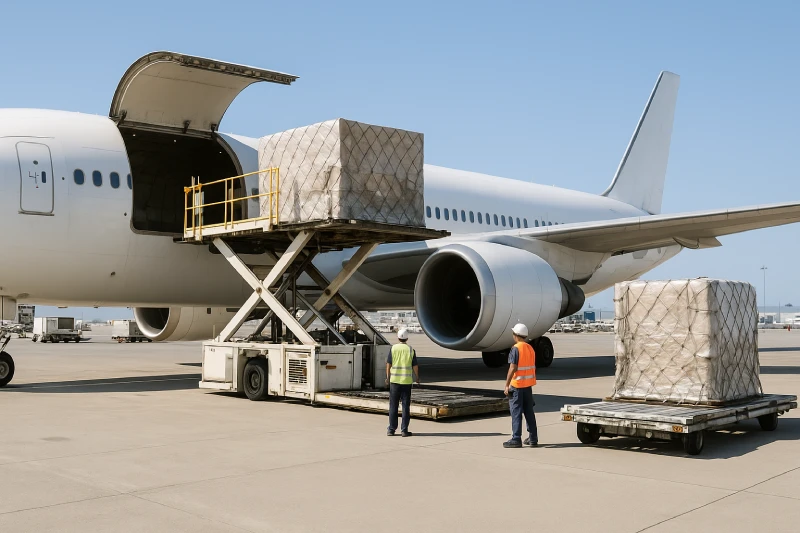
Typical Air Freight Transit Times
- Airport → Airport: 4–8 days
- DDP Air Freight (Door → Door): 8–12 days
Airport-to-airport services focus solely on the flying and terminal handling portion. While the flight itself typically takes less than 15 hours, the total timeline includes cargo acceptance, security screening, airline cut-off times, pallet breakdown, and release procedures at the UK airport.
During busy seasons, backlogs at Chinese airports such as PVG (Shanghai Pudong), CAN (Guangzhou), or SZX (Shenzhen) may extend handling times by several days.
DDP air freight provides a more predictable, all-inclusive door-to-door timeline. This service covers pickup, export documentation, flight handling, import clearance, duties/taxes (if applicable), and final delivery to your UK address. Because the forwarder manages every step, DDP tends to avoid many of the delays caused by incomplete documentation or missed airline cut-off windows.
Factors That Influence Air Freight Time
Flight schedule and frequency: Direct flights (e.g., from Shanghai to London Heathrow) generally move faster than indirect flights routed through Hong Kong, Doha, or Dubai.
Airport congestion: China’s major cargo hubs often experience peak-season backlogs.
Customs clearance speed: UK airports may take 1–3 days for customs release depending on inspection status.
DDP handling process: May add time for domestic pickup and door delivery, but offers more stable end-to-end control.
Overall, air freight is the best option when you need delivery within 1–2 weeks but want to avoid the high cost of express courier services.
Express & Courier Shipping (DHL / UPS / FedEx / Aramex)
Express courier services are the fastest and most predictable way to ship small parcels and urgent samples from China to the UK.
These services operate on fixed, high-frequency flight schedules and include complete door-to-door handling, making them ideal for e-commerce sellers, prototyping, high-value components, and time-critical shipments.
Typical Express Delivery Times
- DHL / UPS / FedEx Express: 3–5 days
- Economy Express: 5–7 days
Premium express services provide the shortest end-to-end transit time available. Shipments are picked up from the supplier’s location, routed through the courier’s dedicated air network (often via Hong Kong or East China hubs), and delivered directly to your UK address with automated tracking at every stage.
Express is often faster than standard air freight because it bypasses many delays associated with airport cargo terminals. Customs clearance for express packages is usually handled electronically, and most parcels release quickly unless a manual inspection is triggered.
When Express Shipping Is the Best Option
- Small parcels under 30 kg
- Urgent samples or replacement parts
- High-value goods needing secure handling
- Amazon FBA restocking requiring rapid turnaround
- Situations where exact delivery dates are mandatory
Although express is more expensive than air freight, it provides unmatched speed, reliability, and convenience—especially when the shipment size is small.
Factors Affecting Shipping Time
Shipping from China to the UK involves multiple stages, and each stage can introduce delays—especially during peak seasons or when documentation is not fully prepared.
Understanding these factors helps importers better predict transit time and reduce the risk of unexpected slowdowns.
1) Port & Airport Congestion
Major Chinese ports such as Shanghai, Ningbo, Shenzhen, and Qingdao frequently experience congestion, especially during Q4 peak season, Chinese New Year, and holiday restocking periods. When terminals are full, vessel berthing and container handling may be delayed for several days.
UK ports like Felixstowe and Southampton also face periodic bottlenecks, which can extend unloading and inland delivery times.
2) Transshipment Delays
Not all vessels and flights operate on a direct route.
Sea freight routed through Singapore, Busan, or Port Klang may incur 3–7 extra days at each hub, depending on vessel connections.
Air shipments routed via Hong Kong, Doha, or Dubai can experience similar delays.
Choosing direct routes—when available—can significantly reduce transit time.
3) Customs Clearance in China & the UK
Customs is one of the most common sources of delay.
Shipments may be held due to:
- Missing or incorrect documents
- HS code discrepancies
- Random inspections
- Declaration value issues
- Restricted or sensitive cargo
China export clearance typically takes 1–3 days, while UK import clearance may take 1–3 days depending on inspection workload.
4) Seasonal & Weather Disruptions
Weather events such as typhoons in South China can shut down ports and airports for 12–48 hours. Seasonal demand spikes—including Black Friday, Christmas, Chinese New Year, and back-to-school periods—also strain capacity and extend booking lead times.
Booking early is essential during these periods.
5) Documentation & Supplier Readiness
Incorrect or incomplete paperwork (packing list, invoice, MSDS, certificates, etc.) can lead to export delays.
Frequent issues include:
- Inaccurate product descriptions
- Missing signatures
- Late submission of shipping marks
- Incorrect packaging for sensitive goods
Ensuring suppliers prepare documents in advance helps avoid setbacks.
6) Carrier Schedule & Equipment Availability
For sea freight, equipment shortages—such as lack of empty containers—may delay loading, especially at busy ports. Air freight delays often occur when airlines face cargo backlogs or reduce flight frequency during low season or operational adjustments.
Actionable Tips to Reduce Delays
- Book earlier during peak months (especially September–December).
- Confirm documentation with your supplier before pickup.
- Choose direct routes whenever cost and schedule allow.
- Use DDP services for predictable customs handling.
- Avoid tight deadlines—add buffer days in procurement planning.
- Work with a forwarder that provides real-time tracking and proactive updates.
These practices help importers maintain more reliable delivery timelines and avoid unnecessary extensions in the supply chain.
How to Ship Faster from China to the UK
Although you cannot control vessel schedules or airport congestion, you can significantly reduce delays by planning your logistics correctly.
Faster shipping is usually the result of better preparation, smarter routing choices, and clear coordination between your supplier and freight forwarder. The following strategies help shorten the overall timeline and prevent unnecessary slowdowns.
1) Choose the Right Port or Airport
Selecting an efficient origin port close to your supplier shortens inland trucking and avoids unnecessary domestic delays.
- For factories in East China: Use Shanghai or Ningbo
- For factories in South China: Use Shenzhen (Yantian) or Guangzhou (Nansha)
- For Northern China: Use Qingdao or Tianjin
On the UK side, Felixstowe, Southampton, and London Gateway offer the most frequent connections from China. For air freight, LHR (London Heathrow) is the fastest airport for customs and cargo processing.
2) Book Earlier During Peak Seasons
Peak seasons often cause long queues for vessel space, container allocation, and cargo flight capacity. During:
- September–December (holiday & Q4 demand)
- Before and after Chinese New Year
- Amazon Prime Day restocking periods
Carriers may be fully booked for weeks. Reserving your space early prevents serious delays and reduces the risk of rolled shipments.
3) Use DDP for Predictable Door-to-Door Timelines
DDP (Delivered Duty Paid) solutions simplify the entire shipping process by including:
- Pickup
- Export clearance
- Flight or vessel handling
- UK import clearance
- Final delivery
Since the forwarder manages every step, DDP shipments tend to move faster and more consistently—especially for small parcels, e-commerce goods, and consumer items that are easily flagged during customs checks.
4) Split Shipments for Critical Items
If part of your cargo is time-sensitive, consider splitting the shipment:
- Urgent small portion → Air freight or express
- Remaining bulk goods → Sea freight
This reduces the risk of delaying the entire supply chain and ensures you receive key items faster.
5) Prepare Documentation in Advance
Most customs delays come from missing, incorrect, or late documentation.
To speed up handling:
- Confirm HS code accuracy
- Prepare invoice, packing list, shipping marks, CO, MSDS, and certificates early
- Ensure supplier provides packaging photos if required
- Avoid last-minute modifications to product descriptions or values
Well-prepared documents can save several days at both export and import customs.
6) Avoid Transshipment Routes if Speed Matters
Direct sailings and direct flights are always faster than routes that rely on hubs like Singapore, Busan, Hong Kong, or Dubai.
If timelines are tight, ask your forwarder to quote direct options only, even if the rate is slightly higher.
7) Use a Freight Forwarder with Real-Time Tracking
Working with a reliable logistics provider can shorten delays through:
- Automated tracking
- Real-time updates
- Faster customs communication
- Proactive responses to schedule changes
This ensures issues are resolved immediately instead of accumulating and extending your timeline.
Port & Route Notes for UK
Choosing the right ports and routes can significantly influence your overall China → UK transit time. Different origin and destination ports offer varying sailing frequencies, levels of congestion, and customs processing speeds.
Understanding these differences allows importers to select faster and more reliable logistics plans.
Major Chinese Ports for UK-Bound Cargo
China has multiple deep-water ports with strong, frequent connections to the UK. The choice of origin port depends largely on where your supplier is located:
Shanghai (Yangshan / Waigaoqiao): The busiest foreign-trade port in China with frequent direct sailings to Felixstowe and Southampton. Typically offers some of the most reliable schedules.
Ningbo-Zhoushan: Extremely high capacity, strong UK route coverage, and competitive rates. Ideal for suppliers in Zhejiang province or East China.
Shenzhen (Yantian / Shekou): Best choice for South China factories. Often provides fast transit times to London Gateway and Felixstowe.
Qingdao: Common for Northern China exports. Routes may involve transshipment, which can add several days.
Tianjin (Xingang): Main port for Beijing/Tianjin/Hebei region. Transit times to the UK are usually longer due to routing patterns and vessel rotations.
Main UK Destination Ports
The UK has several efficient, high-volume ports that handle cargo from China. Your choice affects how quickly the container is discharged, cleared, and delivered inland.
Felixstowe: The UK’s largest container port and the primary hub for China–UK traffic. Offers the widest range of direct services and typically provides stable transit times.
Southampton: Popular for South and Central UK deliveries. Often slightly less congested than Felixstowe, though schedules may be less frequent.
London Gateway: A newer and highly efficient port with modern automation systems. Strong route coverage from South China.
For inland delivery, Felixstowe and London Gateway tend to offer faster distribution to major UK cities like London, Birmingham, and Manchester, while Southampton works well for destinations in southern regions.
UK Airports for Air Freight
Air cargo timelines also vary depending on the destination airport:
London Heathrow (LHR): Fastest processing and highest flight frequency. Best for urgent shipments.
East Midlands (EMA): Major express courier hub (UPS/DHL/FedEx), ideal for e-commerce and small parcels.
Manchester (MAN): Suitable for deliveries to Northern UK destinations.
Choosing the airport closest to your final delivery point can cut 1–2 days off domestic handling.
How Route Choices Affect Transit Time
- Direct routes (Shanghai → Felixstowe) are fastest and most predictable.
- Transshipment routes via Singapore, Busan, or Port Klang add 3–7 days.
- Northern China ports often have longer connections due to vessel rotations.
- Air freight routed via Hong Kong, Doha, or Dubai may take longer than direct flights to LHR.
Selecting an optimized route is one of the most effective ways to control delivery time from China to the UK.
FAQs
1) Is door-to-door shipping slower than port-to-port?
In most cases, yes. Door-to-door services include extra steps such as pickup, export processing, UK import clearance, and last-mile delivery. These additional procedures add several days to the total timeline.
However, door-to-door can also be more predictable, especially with DDP services, because the freight forwarder manages every stage and prevents delays caused by missing documents or communication gaps.
2) How long does UK customs clearance normally take?
Under normal conditions, customs clearance at UK ports and airports takes 1–3 days.
Delays occur mainly when shipments are selected for inspection, when HS codes do not match the cargo description, or when importers submit incorrect paperwork. Preparing accurate documents reduces the likelihood of extended clearance times.
3) Why does LCL shipping usually take longer than FCL?
LCL requires your cargo to be consolidated with other shipments before departure and deconsolidated upon arrival in the UK.
These warehouse processes add extra handling time that FCL does not require. As a result, LCL often takes 5–10 days longer than a full container on the same route.
4) Can I track my shipment during transit?
Yes, most sea and air shipments offer online tracking through shipping lines, airlines, or freight forwarder platforms.
Tracking information typically includes vessel departure, transshipment events, arrival at the UK port or airport, customs status, and final delivery updates for door-to-door shipments.
5) Do holidays affect shipping time from China to the UK?
Absolutely. Major events such as Chinese New Year, Golden Week, Black Friday, and the Christmas season significantly increase demand and reduce carrier capacity.
Importers should book space early during these periods, as transit times may extend by 1–3 weeks depending on congestion levels.
Get an Accurate Delivery Time for Your Shipment
Transit times from China to the UK can vary widely depending on the route, carrier, season, and the type of service you choose. While general timelines are helpful for planning, the most reliable way to know your exact delivery window is to review the details of your shipment—such as product type, volume, pickup location, and preferred destination in the UK.

If you’re preparing an upcoming order or working with a new supplier, feel free to reach out with your shipment information. Our team can help you estimate a more precise door-to-door delivery time based on current schedules, capacity, and customs conditions, so you can plan your supply chain with confidence.
Update & Compliance Note
All transit times listed in this guide are based on typical 2025 shipping conditions and publicly available carrier schedules. Actual timelines may vary due to weather, port congestion, customs procedures, airline capacity, and seasonal demand.
Importers should always confirm the latest availability and regulations before finalizing shipment plans. This article will be periodically reviewed and updated to reflect ongoing changes in the China–UK trade lane.
