

Choosing a freight forwarder in China is rarely a simple comparison of prices.
Most importers already know they need a forwarder—but still struggle to judge which one is actually right for their shipment.
The challenge usually comes from information asymmetry. Quotes look similar on the surface, service descriptions sound reassuring, and risks are often discussed only after problems appear. As a result, many shipment issues are not caused by the transport mode itself, but by hidden assumptions made at the forwarder selection stage.
This guide focuses on that decision point.
Rather than explaining what freight forwarders say they can do, it breaks down what you should look for when evaluating capability, clarity, and risk awareness in real operations.
The goal is to help you make a more informed, controllable choice—before costs escalate, timelines slip, or responsibility becomes unclear.
What This Choice Directly Affects in Your Shipment
Choosing a freight forwarder in China influences far more than who books space or issues documents. It directly shapes how predictable, controllable, and transparent your shipment will be once it leaves the factory.
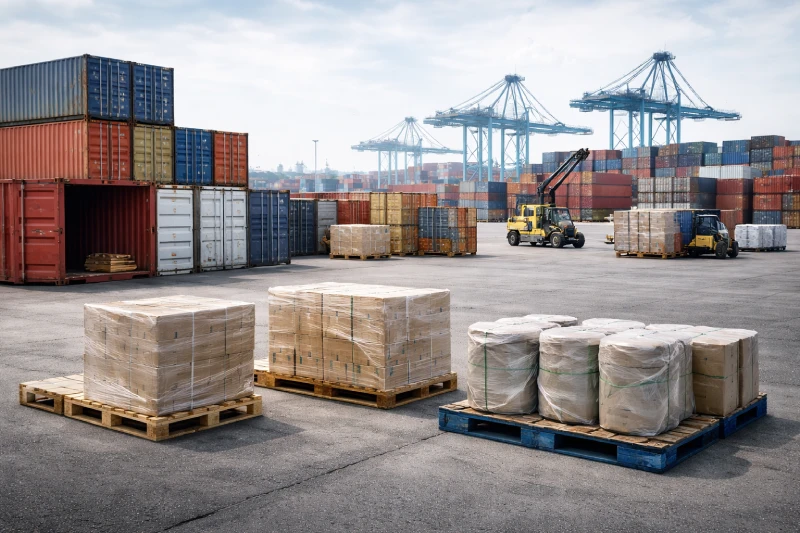
Total landed cost is the first impact. What looks like a competitive freight rate can quickly change once destination charges, handling fees, customs-related costs, or unexpected surcharges appear. The difference is often not the price itself, but how completely those costs are anticipated and explained upfront.
Transit time reliability is another critical factor. Published transit times assume ideal conditions. In practice, schedule changes, port congestion, and documentation issues are common. A capable forwarder plans around these variables rather than simply quoting theoretical timelines.
Risk exposure increases when responsibilities are unclear. Delays, inspections, or re-routing are manageable only if ownership of each step is defined in advance.
Finally, communication efficiency determines how early problems are identified. Timely, specific updates reduce uncertainty and allow decisions to be made before issues escalate.
Information You Should Prepare Before Contacting Freight Forwarders
Before comparing freight forwarders, it’s essential to be clear about your own shipment requirements. Without this baseline, even detailed quotes are difficult to evaluate, and differences between forwarders become blurred.
Start with basic cargo information. Product type, total volume, weight, number of cartons or pallets, and any special handling requirements all affect routing, pricing, and compliance. Incomplete cargo details almost always lead to revised costs later.
Next, clarify origin and destination. Factory pickup location, port of loading, final delivery address, and whether inland transport is required on either end should be defined early.
A working understanding of Incoterms is also important. You don’t need mastery, but you should know where responsibility transfers and which costs are expected on your side.
Finally, set realistic timeline expectations and define the level of service you expect—basic execution or active coordination. This preparation makes all subsequent comparisons meaningful rather than superficial.
Practical Criteria to Evaluate Different Freight Forwarders
Once your shipment requirements are clear, the next step is evaluating freight forwarders on factors that reflect real operational capability, not presentation or pricing alone.
Operational capability comes first. A forwarder should demonstrate familiarity with your cargo type, shipping mode, and destination market. Generic assurances matter less than specific references to similar shipments or known constraints on the route.
Communication and responsiveness reveal how issues will be handled later. Clear, direct answers—and follow-up questions that clarify missing details—usually indicate structured internal processes rather than ad-hoc handling.
Scope clarity is another critical indicator. You should be able to tell exactly what is included, what is excluded, and where responsibility changes. Vague boundaries often lead to disputes once the shipment is in transit.
Evaluate the forwarder’s approach to risk handling. Experienced operators acknowledge potential delays, inspections, or capacity issues upfront and explain how they are typically managed.
Finally, consider experience relevance. Depth in comparable shipments is more meaningful than broad but undefined capability claims.
Questions to Ask During Initial Discussions
Early conversations with a freight forwarder reveal far more than a quotation alone. The way questions are answered—and which points are addressed without prompting—often indicates how the shipment will be managed in practice.
“What is included in this quote?”
This question tests cost transparency. A clear answer should separate freight, local charges, customs-related fees, and optional services, reducing the risk of later surprises.
“What information do you need from me next?”
This shows whether the forwarder operates with a defined process. Structured requests usually reflect internal planning, while vague replies suggest a reactive approach.
“What typically causes delays on similar shipments?”
Here, you are assessing experience rather than optimism. Forwarders who understand the route can explain common bottlenecks and how they are usually mitigated.
“If something goes wrong, who handles it?”
This clarifies responsibility. A forwarder who can explain escalation paths and decision ownership is generally better prepared for non-standard situations.

Warning Signs That Often Appear Early
Potential risks are often visible in the first round of communication, long before any booking is made. Paying attention to these early signals can prevent larger problems later in the shipment.
One common warning sign is an unusually fast quote with minimal detail. Speed alone is not an issue, but when pricing is provided without confirming cargo specifics or delivery scope, it usually indicates assumptions that may surface as extra charges later.
Another concern is avoidance of responsibility-related questions. If explanations around delays, customs issues, or exceptions remain vague, it becomes difficult to know who will act when problems arise.
Be cautious of overly broad assurances such as “no problem” or “we handle everything” without operational context. These statements often replace clarity rather than providing it.
Finally, watch for unclear explanations of cost differences or hesitation around key milestones. These gaps typically reflect uncertainty that will reappear once the shipment is in motion.
What to Do After You’ve Shortlisted 2–3 Freight Forwarders
After narrowing your options to two or three freight forwarders, the focus should shift from collecting more quotes to validating consistency and clarity. At this stage, rushing the decision often adds risk rather than reducing it.
Compare each option on how clearly costs, responsibilities, and timelines are explained—not on the headline price alone. Look for internal consistency: do their explanations of routing, transit time, and risk handling align across emails, calls, and documents?
Pay attention to how potential issues are framed. Forwarders who acknowledge uncertainties and explain how they are managed tend to offer more predictable outcomes than those who present only best-case scenarios.
Keeping the shortlist small is intentional. Fewer, deeper comparisons make it easier to spot assumptions, contradictions, and gaps. The goal is not to find the cheapest answer, but the one that makes expectations—and risks—most explicit before the shipment begins.
At the end of this process, it’s worth reframing what a “good” freight forwarder actually means in practice. The right choice is rarely the lowest quote or the fastest promise on paper.
A reliable forwarder helps you understand what is happening at each stage of the shipment, what could change, and why. Potential issues are not hidden or minimized, but made visible early enough for you to respond. Costs, timelines, and responsibilities may still shift, but they do so within a range you were prepared for.
In that sense, selecting a freight forwarder is not just a procurement task—it is a form of risk management. The more clearly expectations are set before cargo moves, the fewer surprises appear later. A well-chosen forwarder doesn’t eliminate uncertainty, but makes it predictable, explainable, and manageable throughout the shipment.
