

If you only care about how long it realistically takes to ship from Ningbo to Jebel Ali, start with these practical time ranges. They reflect the full logistics chain — not just days at sea.
- Port-to-Port (Ningbo Port → Jebel Ali Port)
Approx. 23–32 daysCovers: vessel departure after cutoff → ocean transit → arrival and discharge
Main sources of variation: direct vs transshipment, vessel scheduling gaps - Door-to-Port (Factory → Jebel Ali Port)
Approx. 26–36 daysAdds factory loading, drayage, and port gate-in before sailing
Most variability happens before the container is on board - Door-to-Door (Factory → final delivery location)
Approx. 30–42 daysIncludes import clearance, container release, pickup, and final delivery
Post-arrival processes often determine the actual delivery date
Important note:
These are realistic planning ranges, not fixed transit times. In practice, overall lead time is influenced far more by pre-departure and post-arrival coordination than by the ocean voyage itself.
Ningbo → Jebel Ali transit time ranges (by shipping model)
The table below summarizes realistic transit time ranges by shipping model.
All ranges reflect normal commercial operations and assume documentation is prepared on time.
| Shipping model | Typical range (days) | What drives variation | Best for |
|---|---|---|---|
| Port-to-Port | 23–32 | Direct vs transshipment, vessel frequency, cutoff-to-ETD gap | Importers controlling origin and destination handling |
| Door-to-Port | 26–36 | Factory loading schedule, drayage timing, port gate-in windows | Shipments where origin operations need coordination |
| Door-to-Door | 30–42 | Import clearance pace, container release, pickup and final delivery | Buyers needing a clear end-to-end delivery window |
How to read this table:
The difference between models is not the ocean leg itself, but how many variable steps are added before departure and after arrival. The more handoffs involved, the wider the planning range should be.
Time breakdown — where the days actually go
Understanding the total transit time requires looking beyond the sailing schedule.
For Ningbo → Jebel Ali, most variation comes from how the handover points connect, not from the ocean leg itself.
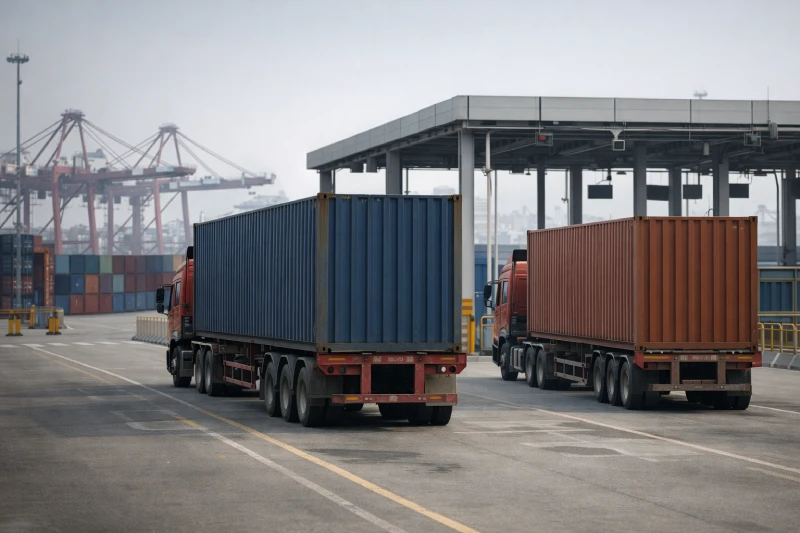
Factory → Port (Ningbo)
Typically 2–5 days
Includes container loading, trucking, and port gate-in.
Delays here often come from late cargo readiness or missing the preferred gate-in window, which can push the container to the next sailing.
Port handling → Vessel departure
Typically 2–4 days
Covers terminal handling, cutoff compliance, and vessel loading.
Even after a container is gated in, it may wait for the planned vessel if cutoff timing and stowage planning do not align.
Ocean transit (at sea)
Typically 18–24 days
This is the most stable segment of the journey.
Transit time at sea varies mainly by direct versus transshipment routing, but once the vessel sails, variability is limited.
Arrival → Release
Typically 3–7 days
Includes discharge, documentation processing, and import clearance steps.
Congestion or inspection requirements can extend this stage beyond the initial ETA.
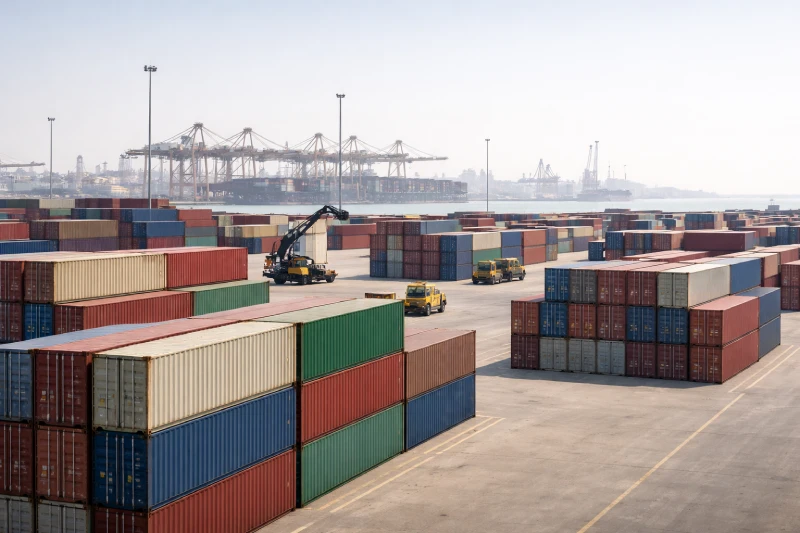
Release → Pickup / Final delivery
Typically 2–6 days
Dependent on container availability, truck scheduling, and local delivery distance.
This stage often determines when cargo is actually usable, not the vessel arrival date.
Key takeaway:
For Ningbo to Jebel Ali shipments, pre-departure and post-arrival stages account for most time uncertainty, while the ocean leg is rarely the main cause of delay.
Route patterns — direct sailing vs transshipment
When shipping from Ningbo to Jebel Ali, the time difference between routings is not about sailing speed, but about how many coordination points are added.
Direct sailing
- Fewer handoffs between departure and arrival
- More predictable ETA once the vessel departs
- Variability mainly comes from how often the service sails, not from transit itself
Direct sailings tend to produce tighter planning ranges, especially when shipment timing is aligned with the vessel’s cutoff and ETD.
Transshipment routing
- One or more intermediate ports added to the chain
- Additional waiting time between connecting vessels
- Each transfer introduces a queue-based delay risk
In practice, transshipment commonly adds 3–7 days of uncertainty, not because the distance is longer, but because containers must wait for the next available connection.
How to think about the difference
- Direct = fewer variables, narrower range
- Transshipment = more flexibility in routing, wider range
The choice is less about “fastest on paper” and more about which option produces a more reliable arrival window for your schedule.
Port-specific operational notes
Transit time is also shaped by how each port operates day to day, not just by distance or routing.
Ningbo-Zhoushan Port
- Multiple terminals and frequent sailings create flexibility, but also variation in cutoff and loading sequences
- Gate-in timing does not always translate directly to same-vessel loading
- Containers may wait several days between cutoff and actual departure, depending on stowage planning
The key planning risk at origin is assuming “gated-in” means “on the next ship.”
Jebel Ali Port
- Vessel arrival and container availability are separate milestones
- Discharge, documentation processing, and clearance are handled in stages
- During busy periods, containers may sit at the terminal even after ETA has passed
At destination, the most common misunderstanding is treating ETA as the pickup date, rather than the start of the arrival process.
Planning implication:
Ningbo affects how cleanly you get onto the vessel, while Jebel Ali affects how quickly you can convert arrival into usable cargo.
Common delay triggers to watch
Most delays on the Ningbo → Jebel Ali lane are predictable once you know what to look for. The signals below often indicate a shipment is likely to slip beyond its initial planning range.
- Late space confirmation — limited vessel options once the cutoff window narrows
- Cargo ready too close to cutoff — increases risk of missing the intended sailing
- Transshipment dependency — waiting for the next connecting vessel adds queue time
- Peak arrival periods — discharge and release move slower during high-volume weeks
- Documentation not released on arrival — clearance cannot start immediately
- Container pickup congestion — truck and slot availability lag behind release
- Inspection or holds — even routine checks can extend the post-arrival window
Rule of thumb:
If two or more of these signals appear on the same shipment, planning should assume the upper end of the transit-time range, not the midpoint.
Planning tips — how to back-calculate your ship date
For Ningbo → Jebel Ali shipments, reliable planning starts from the required delivery window, not from the vessel schedule.
Step 1: Start from the delivery requirement
Assume a target week when the cargo must be available for use, not just arrived at port.
Step 2: Subtract the Door-to-Door range
Use a conservative planning range rather than the fastest case.
For example, if Door-to-Door is typically 30–42 days, subtract the upper half of that range to build buffer.
Step 3: Account for origin-side preparation
Before the container can sail, allow time for:
- factory readiness
- container loading
- port gate-in and cutoff compliance
This stage alone can consume several days, especially if production finishes close to cutoff.
Step 4: Identify the latest safe loading window
The result is not a single “ship date,” but a safe loading window.
Loading at the start of that window gives margin; loading at the end relies on everything aligning perfectly.
Practical takeaway:
Back-calculation works best when you plan for ranges and buffers, not exact ETD or ETA dates. The goal is schedule resilience, not theoretical speed.
FAQs
Is the ocean transit the main factor affecting total transit time?
No. The sailing time itself is relatively stable. Most variation comes from pre-departure coordination in Ningbo and post-arrival release and pickup in Jebel Ali.
Does a direct service always arrive faster than a transshipment route?
Not always. Direct sailings reduce uncertainty, but limited frequency can offset the advantage. Transshipment may look faster on paper, yet often introduces waiting time between connecting vessels.
How much buffer should I add during peak seasons?
It is common to add 5–10 extra days to the normal planning range during busy periods, mainly due to port congestion and slower container release after arrival.
Is ETA the same as the date I can pick up the container?
No. ETA only indicates vessel arrival. Discharge, documentation, clearance, and pickup scheduling all happen afterward and determine when the cargo is actually available.
How can I tell early that my shipment may be delayed?
Warning signs include late space confirmation, cargo readiness close to cutoff, reliance on transshipment, and unresolved documentation before arrival. When these appear together, plan toward the upper end of the transit-time range.
