
Overview & When to Use Sea Freight
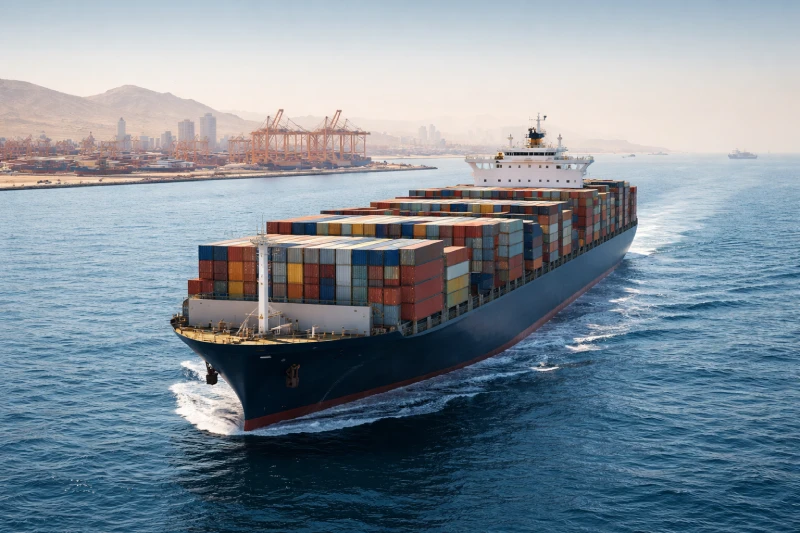
Sea freight is the most widely used shipping mode for China–Saudi Arabia trade when cargo volume, cost structure, and shipment stability are higher priorities than speed. For B2B importers, it provides predictable capacity for full container, consolidated, and non-containerized cargo moving through established Asia–Middle East maritime routes.
Compared with faster but more capacity-constrained options, sea freight allows importers to plan inventory, allocate logistics costs across larger volumes, and handle cargo types that are not suitable for air transport, such as heavy machinery, building materials, and oversized equipment. It is therefore commonly integrated into long-term sourcing and distribution strategies rather than ad-hoc shipments.
In practice, sea freight is chosen not just because of distance, but because it aligns better with commercial import logic, port infrastructure in Saudi Arabia, and regulatory processes that are already optimized for ocean cargo.
Sea freight is typically the right choice when:
- Shipment volume is large enough to justify FCL or consolidated LCL transport
- Cargo weight, dimensions, or handling requirements limit air freight options
- Cost control and supply chain predictability are more important than transit speed
- Goods are destined for distribution, projects, or long-cycle industrial use
- Importers prefer port-to-port or port-to-warehouse control under standard Incoterms
Sea Freight Shipping Options from China to Saudi Arabia
Sea freight shipments to Saudi Arabia are typically organized under FCL, LCL, or Ro-Ro structures, depending on cargo volume, handling requirements, and importer control preferences. Selecting the right option affects not only transportation efficiency, but also cargo risk exposure, customs coordination, and downstream distribution planning.
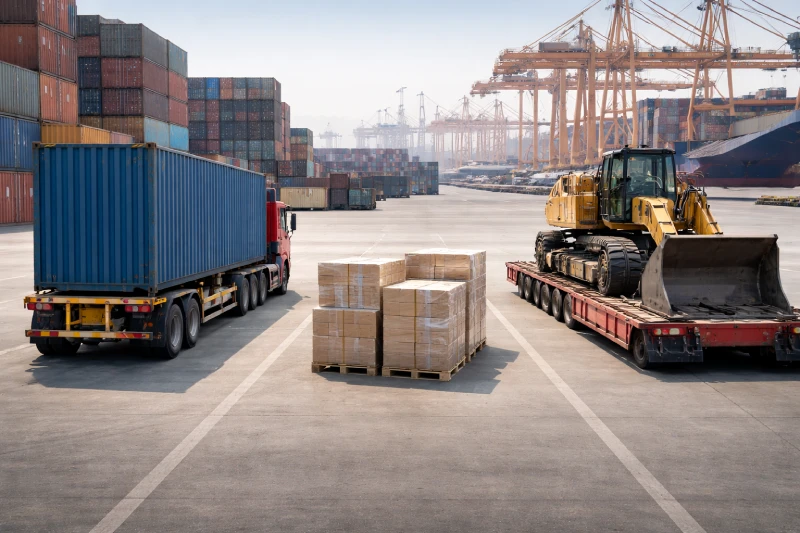
FCL (Full Container Load) is generally used when a single importer fills an entire container, offering maximum control over loading, sealing, and delivery.
LCL (Less than Container Load) allows multiple shipments to share container space, making it suitable for smaller volumes but with additional consolidation and deconsolidation steps.
Ro-Ro (Roll-on/Roll-off) is applied to self-propelled or wheeled cargo that cannot be containerized, such as vehicles or heavy rolling equipment.
The choice between these options should be driven by cargo characteristics, shipment frequency, and operational risk tolerance, rather than shipment size alone.
Sea Freight Option Comparison for Saudi Arabia Imports
| Shipping Option | Best Suited For | Key Decision Factors |
|---|---|---|
| FCL (Full Container Load) | High-volume or repeat importers | Full container control, reduced handling, stable planning |
| LCL (Less than Container Load) | Smaller or mixed-volume shipments | Lower volume threshold, shared space, added consolidation steps |
| Ro-Ro Shipping | Vehicles, trailers, rolling machinery | Port availability, cargo drivability, specialized handling |
Understanding these options early in the planning stage helps importers align cost structure, cargo protection, and delivery coordination with their broader China–Saudi supply chain strategy.
Major Ports in China for Sea Freight to Saudi Arabia
Sea freight shipments from China to Saudi Arabia typically depart from well-established container ports with frequent Middle East services. Port selection at origin is not based solely on proximity, but on a combination of cargo location, carrier coverage, and routing efficiency. Choosing the right export port can simplify inland transport, reduce handling complexity, and improve schedule stability.
South China Export Ports
Ports in South China are commonly used for cargo originating from Guangdong and surrounding manufacturing hubs. These ports offer dense sailing schedules and strong connectivity to both Red Sea and Arabian Gulf routes.
Typical use cases include:
- Electronics, consumer goods, and light industrial products
- Furniture and building materials from the Pearl River Delta
- Exporters requiring flexible carrier options and frequent sailings
East China Export Ports
East China ports serve large-scale manufacturing and consolidated export flows. They are often selected for standardized container cargo and long-term supply programs.
Typical use cases include:
- Machinery, equipment, and industrial components
- High-volume FCL shipments with consistent production output
- Importers prioritizing stable mainline services
North China Export Ports
North China ports are suitable for exporters located in inland or northern industrial zones. They support bulkier cargo and specialized handling requirements.
Typical use cases include:
- Heavy industrial goods and project-related cargo
- Steel products, raw materials, and oversized shipments
- Cargo requiring coordinated inland trucking or rail connections
By aligning the export port with cargo origin and shipment structure, importers can reduce unnecessary domestic movements in China and create a more predictable sea freight workflow to Saudi Arabia.
Sea Freight Transit Structure and Routing Considerations
Sea freight routes from China to Saudi Arabia are generally structured around direct services or transshipment-based services, with routing decisions influenced by port of loading, destination port, and carrier network design. Understanding how these routes are organized helps importers balance schedule reliability with operational flexibility.
Direct sailings are typically preferred when cargo originates from major Chinese export ports and is destined for high-volume Saudi ports. These services reduce handling points and documentation complexity, making them suitable for importers who prioritize cargo integrity and predictable port operations. Direct routing is commonly integrated into regular import programs and long-term supply contracts.
Transshipment routes involve one or more intermediate ports, usually at major regional hubs. These routes are often selected when origin ports have limited direct connections or when cargo flexibility outweighs the need for minimal handling. While transshipment can expand port options and carrier availability, it introduces additional coordination points that require closer shipment monitoring.
From a decision perspective, the routing structure is less about distance and more about operational control, carrier consistency, and downstream clearance planning. Importers shipping into the Red Sea region and those supplying the Eastern Province may face different routing trade-offs, even for similar cargo profiles.
Choosing between direct and transshipment services should therefore align with:
- Cargo sensitivity to additional handling
- Port congestion exposure and scheduling tolerance
- Alignment between arrival port and inland distribution routes
- The importer’s ability to manage documentation and coordination across multiple legs
Cargo Types Commonly Shipped by Sea to Saudi Arabia
Sea freight supports a wide range of commercial and industrial cargo moving from China to Saudi Arabia, particularly goods that require stable handling, scalable capacity, or specialized container solutions. Cargo type plays a key role in determining container selection, port routing, and customs preparation.
Construction and Building Materials
These shipments are typically volume- or weight-driven and are well suited to FCL or breakbulk arrangements. Sea freight allows importers to move large quantities efficiently while aligning with project-based delivery schedules.
Common characteristics include:
- Heavy or bulky materials
- Palletized or unitized cargo
- Destination-driven port selection based on project location
Machinery and Industrial Equipment
Industrial cargo often requires reinforced packing, careful load planning, and customized container solutions. Sea freight accommodates both standard machinery and oversized units that cannot be handled through other modes.
Typical scenarios include:
- Production equipment and processing machines
- Capital goods for factories or infrastructure projects
- Cargo requiring flat rack or open-top containers
Furniture and Interior Products
Furniture shipments are generally volume-intensive and benefit from containerized transport with controlled stacking and protection. Sea freight supports consolidated programs for distributors and large retailers.
Typical use cases include:
- Residential and commercial furnishing imports
- Flat-packed or fully assembled items
- Mixed SKU shipments requiring container optimization
FMCG and Distribution Cargo
For importers supplying wholesale or retail networks, sea freight enables regular replenishment cycles and scalable inventory planning.
Key features include:
- Repeat shipment programs
- Standardized packaging and pallet formats
- Integration with bonded or distribution warehouses
Grouping cargo by industry helps importers align handling methods, documentation, and routing strategies with the practical realities of sea freight to Saudi Arabia.
Saudi Arabia Import Regulations and Compliance
Sea freight shipments to Saudi Arabia are subject to strict commercial import controls designed to ensure product conformity, accurate declaration, and regulatory compliance. For B2B importers, understanding these requirements early helps prevent clearance delays, cargo holds, or rework at destination ports.
Rather than treating compliance as a single step, importers should approach it as a set of coordinated checks that link documentation, product standards, and shipment structure.
Core Compliance Checklist for Sea Freight Imports
Commercial and Shipping Documentation
- Commercial invoice aligned with actual transaction value
- Packing list reflecting accurate cargo description, weight, and packaging method
- Bill of Lading consistent with consignee and Incoterms structure
- HS code classification aligned with Saudi customs requirements
Product Conformity and Regulatory Controls
- SABER system registration for regulated product categories
- Product conformity certificates where applicable
- Manufacturer and importer information correctly declared
- Compliance with Saudi standards for controlled goods
Packaging, Labeling, and Handling Standards
- Clear outer packaging suitable for sea transport
- Proper palletization and load securing for long-haul voyages
- Country of origin markings where required
- Packaging formats compatible with Saudi port handling practices
Restricted and Regulated Goods Awareness
- Verification of import eligibility before shipment
- Additional permits or approvals for controlled items
- Early coordination for machinery, electrical, or safety-related products
By treating compliance as a modular process rather than a single document task, importers can better align sea freight operations with Saudi customs expectations and reduce downstream risks during clearance and delivery.
Risk Factors and Cost Drivers in Sea Freight Shipping
Sea freight from China to Saudi Arabia involves multiple operational variables that can affect shipment flow and overall cost exposure. While ocean transport offers scale and stability, unmanaged risks can lead to delays, additional charges, or disruption to downstream supply chains. Understanding these risks in advance allows importers to put appropriate controls in place.

Port congestion and terminal handling constraints can occur when vessel schedules, yard capacity, or documentation readiness are misaligned.
Potential consequence: Extended container dwell time and accumulation of port-related charges.
Risk management approach: Advance booking, accurate documentation submission, and alignment between vessel arrival and customs readiness.
Demurrage and detention exposure arises when containers remain at the port or outside the terminal beyond allowed free periods.
Potential consequence: Increased logistics costs and pressure on delivery schedules.
Risk management approach: Clear handover planning, timely customs clearance, and coordination with inland transport providers.
Cargo handling and transit damage risks are more pronounced for heavy, oversized, or improperly packed shipments.
Potential consequence: Physical cargo damage, insurance claims, or project delays.
Risk management approach: Appropriate export packing standards, container selection aligned with cargo characteristics, and supervision during loading.
Documentation inconsistencies between shipping documents and actual cargo details can trigger inspections or clearance holds.
Potential consequence: Delayed release and additional compliance scrutiny.
Risk management approach: Early document verification, consistent data across all paperwork, and alignment with Saudi import requirements.
By mapping risk → consequence → management action, importers can treat sea freight not as a fixed cost, but as a controllable component of their China–Saudi supply chain.
Incoterms Considerations for Sea Freight to Saudi Arabia
Incoterms play a critical role in how sea freight shipments from China to Saudi Arabia are structured, as they define the point at which cost, risk, and operational responsibility transfer between seller and buyer. For B2B importers, the choice of Incoterms directly affects freight coordination, customs control, and risk exposure during ocean transport.
In sea freight scenarios, Incoterms are not simply contractual terms—they influence who controls the carrier selection, documentation accuracy, insurance coverage, and destination clearance process. Selecting an inappropriate term can limit visibility or create gaps between transport and customs responsibilities.
Incoterms × Sea Freight Applicability Overview
| Incoterm | Control Point in Sea Freight | Typical Application Logic |
|---|---|---|
| FOB (Free On Board) | Risk transfers at the port of loading in China | Common for experienced importers who want control over ocean freight and destination handling |
| CFR (Cost and Freight) | Risk transfers at origin, freight arranged by seller | Used when buyers want freight arranged but retain insurance and destination control |
| CIF (Cost, Insurance and Freight) | Risk transfers at origin, insurance included | Suitable for importers seeking simplified freight coordination with basic coverage |
| DAP (Delivered at Place) | Risk transfers near final destination | Applied when sellers manage transport close to consignee location, excluding customs duties |
| DDP (Delivered Duty Paid) | Risk transfers after customs clearance and delivery | Used when buyers prefer a fully managed model with minimal operational involvement |
From a sea freight perspective, FOB and CIF are the most commonly used terms for containerized cargo to Saudi Arabia, as they align well with port-based handover points and established customs workflows. More delivery-oriented terms, such as DAP or DDP, require tighter coordination between freight forwarding, customs brokerage, and inland transport.
Importers should evaluate Incoterms not only based on price discussions, but on who is best positioned to manage sea freight risks, documentation accuracy, and compliance obligations within the China–Saudi trade lane.
Operational Coordination and Shipment Visibility
Effective sea freight operations from China to Saudi Arabia rely on structured coordination across multiple stages, rather than isolated transport actions. Clear sequencing improves shipment visibility, reduces handover risk, and supports smoother customs and delivery outcomes.
Typical sea freight coordination follows a staged workflow:
- Pre-shipment planning and booking
Cargo details, Incoterms, port selection, and container requirements are confirmed before space is reserved with the carrier. Early alignment at this stage helps avoid routing changes and documentation revisions later. - Export documentation and origin handling
Shipping documents are prepared in parallel with cargo packing and container loading. Consistency between physical cargo and paperwork is essential to support downstream customs clearance. - Ocean transport and in-transit monitoring
Once the vessel departs, shipment status is tracked against planned milestones. Any schedule changes or routing adjustments are monitored to support destination readiness. - Arrival coordination and customs clearance
Destination documentation is reviewed in advance so customs procedures can begin promptly upon arrival. Coordination with local brokers and port operators helps reduce dwell time. - Inland delivery and handover
After clearance, containers or loose cargo are released for inland transport to warehouses, project sites, or distribution centers, completing the sea freight cycle.
By treating sea freight as a managed end-to-end process rather than a single transport leg, importers gain better visibility, improved control over risk points, and more predictable outcomes in the China–Saudi supply chain.
