
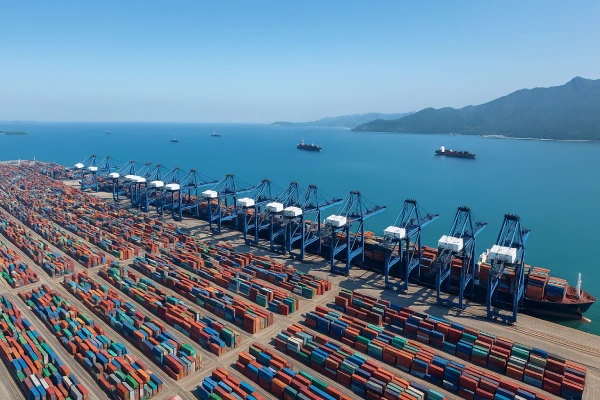
Shenzhen Port, located in China’s Pearl River Delta, is one of the busiest and most advanced container ports in the world. Comprising Yantian, Shekou, Chiwan, and Mawan terminals, it serves as a global logistics hub connecting South China’s manufacturing base to more than 130 countries and 300 international ports.
With state-of-the-art automation, efficient customs procedures, and direct access to major industrial cities such as Dongguan, Huizhou, and Foshan, Shenzhen Port is a top choice for exporters of electronics, machinery, furniture, and consumer goods. Whether you ship FCL, LCL, Ro-Ro, or bulk cargo, the port offers unmatched flexibility and speed for international trade.
Key Facts at a Glance
- 4 main terminals – Yantian, Shekou, Chiwan, Mawan
- Over 28 million TEUs handled annually
- 300 + global routes covering Asia, Europe, the Americas & Africa
- Ideal gateway for South China manufacturing exports
Overview + Location Map
Located in the heart of the Pearl River Delta, Shenzhen Port is the primary maritime gateway of South China and a powerhouse of global trade. It ranks among the top five busiest container ports in the world, handling more than 28 million TEUs annually. Strategically positioned along the South China Sea, the port provides direct access to major international shipping routes that link Asia with Europe, the Middle East, Africa, and the Americas.
Shenzhen Port is not a single facility but a cluster of four main terminals — Yantian, Shekou, Chiwan, and Mawan — each specializing in different cargo types and trade routes. Together, they form a highly integrated logistics network supported by advanced digital systems, automated cranes, bonded warehouses, and modern customs infrastructure.
Thanks to its proximity to Shenzhen, Dongguan, and Huizhou’s vast manufacturing ecosystem, the port plays a critical role in China’s export supply chain — especially for electronics, home appliances, and industrial equipment.
Its efficient operations and frequent vessel schedules make it one of the preferred departure ports for shipments from South China to destinations worldwide.
Port Terminals and Facilities
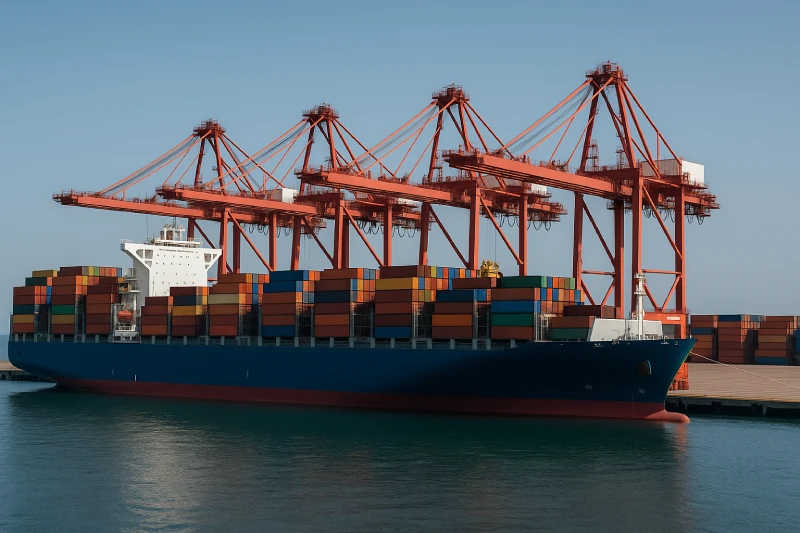
Shenzhen Port operates through four main terminals—Yantian, Shekou, Chiwan, and Mawan—each serving distinct cargo types and trade lanes. Together, they create one of the most sophisticated port systems in Asia, designed to handle massive container throughput with speed, safety, and precision.
Yantian International Container Terminal (YICT)
Located on the eastern side of Shenzhen, Yantian is the port’s largest and most advanced terminal. It specializes in long-haul container services, connecting South China directly with major ports in Europe, North America, and the Middle East.
Equipped with deep-water berths capable of handling the world’s largest vessels, YICT features fully automated cranes, smart yard systems, and 24/7 operations. It is the preferred choice for FCL exports and time-sensitive shipments.
Shekou Container Terminal (SCT)
Situated in the western part of Shenzhen, Shekou Terminal serves as a multi-purpose port offering both container and passenger ferry services. It plays a key role in intra-Asia trade and short-sea shipping routes. With its proximity to Hong Kong and advanced intermodal links, Shekou provides efficient transfer options for LCL and regional cargo consolidation.
Chiwan Container Terminal (CCT)
Chiwan focuses on multi-type cargo handling, including containers, bulk, and project shipments. It supports industries in western Shenzhen and Dongguan, providing flexible solutions for heavy machinery, building materials, and vehicles. Its deep-water berths and modern storage yards enable seamless operation for both containerized and Ro-Ro shipments.
Mawan Port
Mawan Terminal is known for its integrated logistics and bonded warehousing facilities. It primarily supports domestic trade, feeder services, and short-distance exports to Southeast Asia. The terminal’s strategic role complements Yantian, Shekou, and Chiwan by balancing container flow and improving overall port efficiency.
Together, these four terminals make Shenzhen Port a world-class maritime hub, combining capacity, automation, and flexibility to meet the diverse logistics demands of global exporters.
Main Export Commodities
As one of China’s most important export gateways, Shenzhen Port handles a diverse range of goods that reflect the city’s role as a global manufacturing powerhouse.
Its surrounding industrial zones—Shenzhen, Dongguan, Huizhou, and Foshan—supply thousands of exporters producing high-value, high-tech, and consumer-ready products.
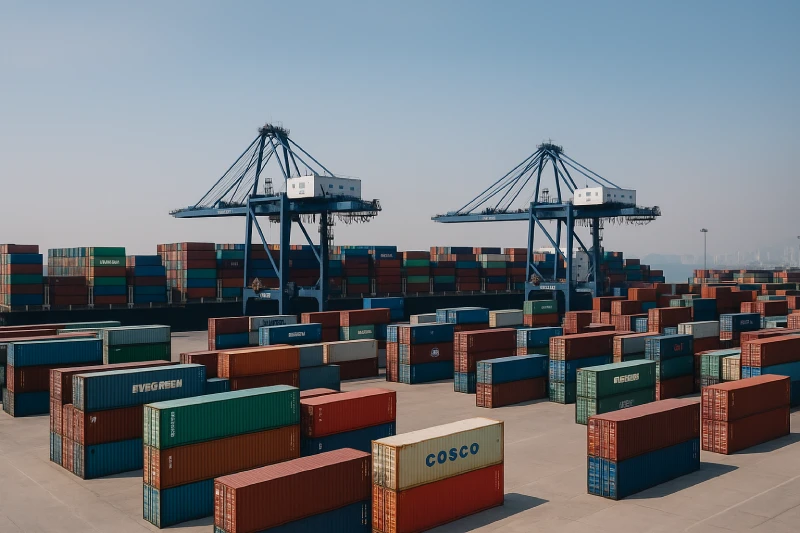
The port’s main export commodities include:
- Electronics and Components: Smartphones, printed circuit boards (PCBs), LED products, and communication devices manufactured by leading tech companies across South China.
- Home Appliances: Air conditioners, refrigerators, lighting equipment, and small kitchen appliances from the Pearl River Delta’s industrial belt.
- Furniture and Building Materials: A major export category to North America, Europe, and the Middle East, including wooden furniture, tiles, and decorative materials.
- Textiles and Garments: Fashion apparel, fabrics, and accessories produced in Shenzhen, Dongguan, and nearby textile clusters.
- Automotive and Machinery Parts: Car accessories, hardware tools, industrial equipment, and mechanical components shipped via FCL or Ro-Ro services.
With a strong supply chain ecosystem, Shenzhen Port efficiently connects South China’s factory network to global buyers—making it one of the most competitive shipping origins for both large-scale and small-batch exports.
Key Trade Routes & Destinations
Shenzhen Port serves as a global gateway linking South China’s manufacturing base with major markets across Asia, the Middle East, Europe, Africa, and the Americas.
Its extensive network of over 300 international routes allows exporters to reach nearly every major port in the world with frequent, reliable sailing schedules.
Asia and the Middle East
Shenzhen maintains dense short-sea and long-haul connections within Asia. Key destinations include Singapore, Busan, Port Klang, Bangkok, and Dubai (Jebel Ali). The port’s strategic location enables rapid turnaround for intra-Asia trade and smooth consolidation for regional LCL cargo.
Europe
Major European routes connect Shenzhen directly with Rotterdam, Hamburg, Antwerp, and Felixstowe. These services support high-volume container flows for electronics, machinery, and consumer goods. Many shipping lines operate weekly direct sailings, minimizing transit time and ensuring schedule reliability.
Americas
To serve the trans-Pacific market, Shenzhen offers regular sailings to Los Angeles, Long Beach, Vancouver, and Houston. These routes are critical for exporters targeting North American retail and e-commerce supply chains, with average sea transit times of 18–25 days.
Africa and Other Regions
Shenzhen Port also connects to Mombasa, Durban, Tema, and Lagos, serving growing African demand for construction materials, vehicles, and electronics. Additional routes to Jeddah, Dammam, and Istanbul extend the port’s coverage to the Middle East and Mediterranean regions.
With this global route network, Shenzhen Port supports fast, flexible, and cost-efficient international shipping, giving exporters from South China a powerful advantage in reaching global markets.
Transit Time Table (China → Regions)
Transit time from Shenzhen Port varies depending on the shipping mode, destination region, and carrier schedule. Winsail Logistics provides optimized routing options for both sea freight and air freight, ensuring your cargo reaches its destination safely and on time.
Below is a general overview of estimated shipping durations from Shenzhen to major global regions:
| Destination Region | Sea Freight (Days) | Air Freight (Days) | Express (Days) |
|---|---|---|---|
| Middle East (e.g. Dubai, Jebel Ali) | 18–22 | 3–5 | 4–6 |
| Europe (e.g. Rotterdam, Hamburg, Felixstowe) | 25–30 | 4–6 | 5–7 |
| Africa (e.g. Mombasa, Lagos, Durban) | 25–35 | 4–6 | 5–8 |
| North America (e.g. Los Angeles, Houston, Vancouver) | 18–25 | 3–5 | 4–6 |
| Southeast Asia (e.g. Singapore, Port Klang, Manila) | 7–10 | 2–4 | 3–5 |
Note: Actual transit time may vary based on carrier availability, port congestion, and customs procedures.
Winsail Logistics works with top global carriers such as Maersk, MSC, COSCO, and CMA CGM, allowing clients to choose between FCL, LCL, or door-to-door delivery based on time and cost requirements.
Advantages vs Other Ports
While China has several world-class seaports such as Shanghai, Ningbo, and Guangzhou, Shenzhen Port stands out for its unique combination of location, connectivity, and operational efficiency. Its advantages make it one of the top choices for exporters shipping from South China.
1. Strategic Location near Manufacturing Clusters
Shenzhen Port is situated at the center of the Pearl River Delta industrial corridor, directly linked to Shenzhen, Dongguan, Huizhou, and Foshan — home to thousands of factories producing electronics, appliances, and precision components.
This proximity minimizes inland trucking time and reduces overall logistics costs compared to ports located farther north.
2. Dense Global Route Network
With over 300 international routes and regular weekly sailings to major destinations worldwide, Shenzhen offers shorter lead times and better vessel frequency than most Chinese ports. Its terminals handle a balanced mix of Asia, Europe, America, and Middle East routes, giving exporters unmatched flexibility.
3. Fast Customs and Advanced Technology
Shenzhen is known for its digitalized customs clearance and automated terminal systems, including AI-powered cranes and smart yard operations. These innovations streamline port handling, allowing for faster container turnover and minimal dwell time — a key advantage for time-sensitive shipments.
4. Complementary Access to Hong Kong
Located just across the bay from Hong Kong Port, Shenzhen benefits from shared maritime and financial infrastructure. Exporters can enjoy intermodal transfers, feeder services, and joint customs supervision, enhancing cross-border logistics efficiency and international connectivity.
5. Cost-Effective and Scalable Operations
Compared to northern ports such as Shanghai, Shenzhen often provides more competitive freight rates for South China shipments, especially for FCL and LCL cargo bound for Southeast Asia or the Middle East. Its multi-terminal structure also allows scalable operations for small to large exporters alike.
In summary, Shenzhen Port combines global reach, operational speed, and cost efficiency, making it the preferred shipping hub for businesses operating in China’s southern manufacturing heartland.
Nearby Manufacturing Hubs
One of the greatest strengths of Shenzhen Port lies in its close connection to China’s largest and most diversified manufacturing region — the Pearl River Delta (PRD).
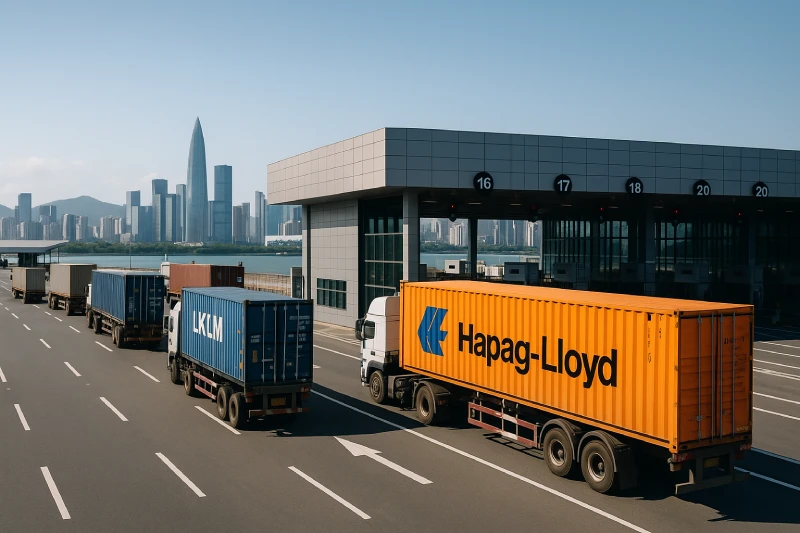
Within just a few hours of trucking distance, exporters can access hundreds of specialized industrial parks and suppliers that feed global supply chains.
Shenzhen
As a global innovation center, Shenzhen hosts leading manufacturers of electronics, telecommunications equipment, and precision hardware. The city’s advanced R&D capabilities and efficient logistics network make it a powerhouse for high-value exports such as smartphones, IoT devices, and PCB assemblies.
Dongguan
Located directly north of Shenzhen, Dongguan is one of China’s most productive industrial cities, specializing in electronics assembly, plastics, packaging, and furniture manufacturing. The city’s vast supplier base allows exporters to consolidate goods quickly and ship through nearby terminals like Yantian or Chiwan.
Huizhou
Huizhou serves as a hub for chemical, petrochemical, and electrical appliance industries. Its proximity to Shenzhen Port enables efficient export of heavy and bulky goods, including cables, power tools, and industrial components, through FCL and bulk cargo services.
Foshan
Renowned for its furniture, ceramics, lighting, and building materials industries, Foshan contributes significantly to shipments destined for the Middle East, Africa, and North America. Goods are typically transported via inland trucking to Shekou or Mawan terminals for export.
Together, these manufacturing hubs create a powerful production-and-export ecosystem centered around Shenzhen Port. The port’s efficient connectivity to highways, railways, and bonded logistics parks ensures seamless movement from factory floor to international vessel, making it a top choice for global supply chains.
Best Mode: FCL / LCL / Ro-Ro / Bulk
Shenzhen Port supports multiple shipping modes, offering exporters the flexibility to match their cargo type, volume, and destination with the most cost-effective and time-efficient solution.
Winsail Logistics provides expert guidance to help you choose between FCL, LCL, Ro-Ro, and Bulk Cargo services based on your specific needs.
FCL (Full Container Load) Shipping
For large-volume exports, FCL shipping is the most efficient option. Shenzhen Port’s Yantian and Chiwan terminals handle thousands of full containers daily, equipped with high automation and fast vessel turnaround.
Ideal for: Electronics, machinery, building materials, and large-scale production shipments.
LCL (Less than Container Load) Shipping
When your cargo doesn’t fill a full container, LCL shipping allows you to share container space with other exporters—reducing costs while maintaining reliability. Winsail consolidates LCL shipments in Shenzhen warehouses before loading them onto vessels bound for key markets in the Middle East, Europe, and Africa.
Ideal for: Small to medium-sized businesses shipping mixed goods or regular low-volume orders.
Ro-Ro (Roll-on/Roll-off) Shipping
For wheeled cargo such as vehicles, trucks, and heavy equipment, Ro-Ro shipping through Shekou or Chiwan terminals provides safe and efficient handling. This method eliminates the need for containerization, lowering labor and packaging costs.
Ideal for: Automobiles, engineering machinery, trailers, and industrial vehicles.
Bulk Cargo
For raw materials, chemicals, and oversized industrial items, bulk shipping remains a practical and economical mode. Shenzhen Port’s Chiwan and Mawan terminals are well-equipped for bulk cargo loading, storage, and customs clearance.
Ideal for: Construction materials, steel, grain, minerals, and heavy industrial goods.
By offering all four transport options under one integrated port network, Shenzhen provides exporters with unmatched logistical flexibility, cost efficiency, and scheduling reliability — making it the preferred maritime hub for South China’s global trade.
Freight Example
Real-world case studies show how Winsail Logistics manages efficient and reliable shipping solutions through Shenzhen Port. Below are two examples demonstrating our capability across both sea freight and air freight services.
1. Ocean Freight Case – Door-to-Door Shipment from Shenzhen to Jebel Ali
We handled a door-to-door ocean freight shipment of automotive clutches from Shenzhen Port to Jebel Ali, UAE, using SEA + DDP service.
The shipment, measuring 1.64 CBM, was completed in 18 days, including customs clearance and final delivery. Our client benefited from a cost-effective and reliable logistics solution tailored for automotive components.
2. Air Freight Case – Door-to-Door Shipment from Shenzhen to Riyadh
We also arranged a door-to-door air freight for diamond segments from Shenzhen to Riyadh, Saudi Arabia, under AIR + DDP service.
We shipped 260 kilograms of industrial products, which reached Riyadh within 8 days — demonstrating Winsail’s expertise in fast air logistics, customs handling, and reliable delivery for industrial goods.
These examples reflect Shenzhen Port’s strategic role as a versatile export hub — capable of handling both heavy industrial shipments and time-sensitive air cargo with equal efficiency.
FAQs
1. How many terminals does Shenzhen Port have?
Shenzhen Port consists of four main terminals — Yantian, Shekou, Chiwan, and Mawan. Each serves specific functions: Yantian handles deep-sea container vessels, Shekou focuses on short-sea and multi-purpose operations, Chiwan manages mixed and Ro-Ro cargo, and Mawan supports logistics and domestic trade.
2. How long does it take to ship from Shenzhen to Dubai or Jebel Ali?
The average sea freight time from Shenzhen to Jebel Ali is around 18–22 days, while air freight typically takes 3–5 days. Winsail Logistics also offers DDP door-to-door solutions that include customs clearance and final delivery in the UAE.
3. Can I ship LCL cargo from Shenzhen Port?
Yes. LCL (Less than Container Load) service is one of Shenzhen’s major export options. Winsail consolidates small-volume cargo in Shenzhen’s bonded warehouses, combining shipments for cost savings while maintaining reliable transit schedules to destinations worldwide.
4. Is Shenzhen Port suitable for Ro-Ro or bulk shipments?
Absolutely. Terminals such as Shekou and Chiwan are equipped for Ro-Ro (Roll-on/Roll-off) operations, ideal for vehicles and heavy machinery. Mawan Terminal also supports bulk cargo, including raw materials, construction equipment, and industrial goods.
5. Why choose Shenzhen Port over Shanghai or Ningbo for exports?
For exporters based in South China, Shenzhen Port provides shorter inland transport distances, faster customs clearance, and more frequent vessel schedules. It’s particularly advantageous for industries located in Shenzhen, Dongguan, and Huizhou that depend on just-in-time production and fast export turnaround.
Looking for a reliable shipping partner in South China?
Winsail Logistics provides end-to-end freight services through Shenzhen Port — including FCL, LCL, Air, Ro-Ro, and DDP options tailored to your needs.
👉 Contact us today to get a customized shipping solution from Shenzhen Port to your destination.
