
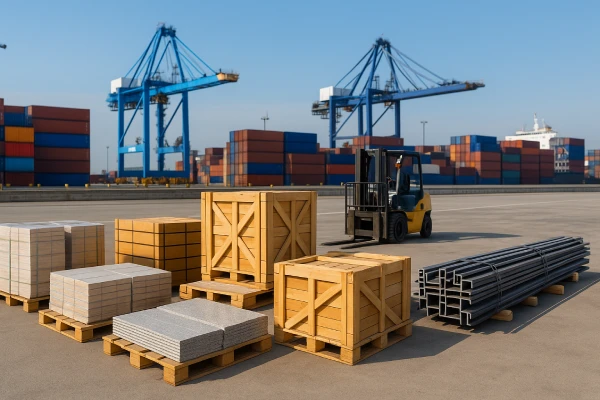
Logistics Overview of Building Materials
Shipping building materials from China involves a mix of heavy, fragile, and oversized cargo, which makes transportation planning far more specialized than standard goods.
Many materials take up large volumes or require reinforced pallets, wooden crating, moisture barriers, and impact protection. Items such as tiles, glass panels, metal structures, and stone slabs can break or deform easily during handling and long ocean journeys.
Another challenge is multi-supplier coordination. Building materials often come from different factories across various provinces, requiring precise consolidation, inland trucking arrangements, and loading supervision.
Customs and compliance also vary widely by product type, with some categories subject to anti-dumping rules or destination certifications.
Because of these combined risks, importers need a freight forwarder that understands proper packaging, loading methods, port selection, and documentation control to ensure damage-free and delay-free delivery.
Shipping Methods
Shipping building materials from China typically relies on FCL due to the heavy weight and large volume of most items. Full container loads offer better protection, more efficient pallet positioning, and lower risk of breakage during transit. For fragile goods such as tiles, sanitary ware, or glass panels, FCL also allows tighter control over loading and reinforcement.
LCL is suitable when importing smaller quantities or when materials come from multiple suppliers. However, LCL requires stronger packaging because shipments are handled more frequently at consolidation hubs.
For oversized cargo—such as long steel beams, structural frames, or large stone slabs—flat rack or open-top containers are often necessary. These modes allow crane lifting and flexible loading angles but require advance booking and approval from carriers.
Air freight is rarely used except for urgent samples or lightweight components, while China–Europe rail can be an efficient option for palletized tiles, flooring, and hardware.
Professional mode selection ensures safety, cost efficiency, and compliance with carrier requirements.
Transit Time
Transit times for building materials depend on the destination region and the chosen shipping mode. Most importers use sea freight, with typical FCL routes ranging from:
- Asia → Middle East: 12–20 days
- Asia → Africa: 20–35 days
- Asia → Europe: 28–40 days
- Asia → USA: 20–40 days depending on East/West Coast
LCL shipments may take slightly longer due to consolidation and deconsolidation at origin and destination warehouses.
For bulky or oversized cargo booked on flat rack or open-top containers, additional lead time is often needed for carrier approval, port crane arrangements, and custom loading plans.
Air freight is the fastest option but is generally limited to samples or lightweight items.
Shipping Cost Factors
Shipping costs for building materials are primarily driven by volume and weight, as most items occupy large space or require reinforced packaging. Heavy pallets, stone slabs, and metal structures often push shipments into higher terminal handling charges or overweight surcharges.
Another major factor is loading complexity. Fragile cargo may require wooden crating, foam protection, or customized A-frame structures, all of which add to the CBM and total cost.
Destination port fees also vary, especially in markets where heavy lifting equipment, OOG handling, or special unloading arrangements are required.
In addition, inland trucking from Chinese factories can significantly affect the total budget, especially when suppliers are located far from major ports such as Ningbo, Qingdao, or Xiamen.
Packaging & Handling Requirements
Proper packaging is one of the most critical factors when shipping building materials, as many items are either heavy, fragile, or sensitive to moisture. Ceramic tiles, glass panels, and sanitary ware typically require reinforced wooden crates, corner protectors, and shock-absorption layers to prevent breakage during handling.
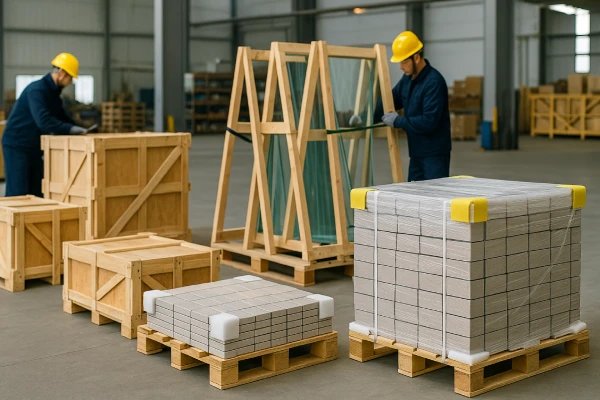
For stone slabs, metal structures, and long profiles, the focus is on weight distribution and structural support. These items must be secured on strong pallets or steel-reinforced frames to avoid bending, cracking, or collapse under pressure.
Moisture-prone materials such as wood panels, MDF, or gypsum boards require waterproof wrapping, desiccants, and ventilated container loading to reduce the risk of mold or warping during sea transport.
Clear loading instructions and proper labeling ensure smooth handling at both origin and destination ports.
HS Codes & Customs Notes
Building materials fall under a wide range of HS categories, and correct classification is essential to avoid customs delays. Common chapters include 25 (stone), 68–69 (ceramics and tiles), 70 (glass), 73 (metal structures and hardware), and 39 (PVC profiles and plastic components).
Some destinations require additional compliance checks, such as SASO/SALEEM for Saudi Arabia or SONCAP for Nigeria. Certain steel and ceramic products may also be affected by anti-dumping regulations, which vary by market.
Using accurate HS codes and preparing the necessary certificates in advance helps ensure a smooth customs clearance process.
Popular Items We Ship (Logistics Perspective Only)
Building materials cover a wide range of cargo types, each with distinct handling challenges. Ceramic tiles are both heavy and fragile, requiring reinforced pallets and shock protection. Glass panels and mirrors often ship on A-frames to prevent cracking during movement.
Marble and granite slabs demand strong wooden crating and careful weight distribution to avoid breakage or tipping. Steel pipes, beams, and long metal profiles involve special loading plans due to irregular lengths and the need for side or top lifting.
Moisture-sensitive materials like wood panels, MDF, and gypsum boards require waterproof wrapping and desiccants throughout the journey.
Loading Methods
Different types of building materials require tailored loading methods to ensure safe transport. Glass panels and stone slabs are commonly loaded using A-frames or reinforced wooden structures, allowing forklift or crane handling without direct pressure on the material.
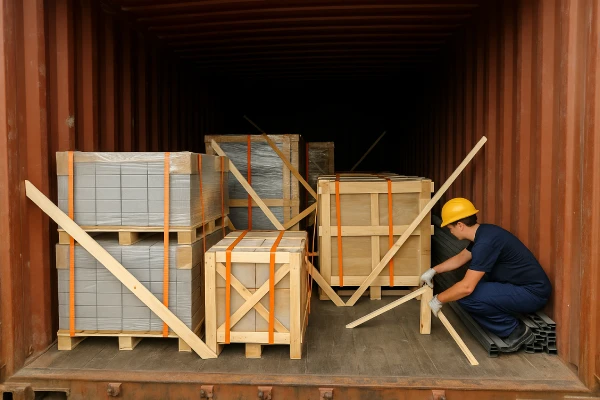
For long items such as steel beams, pipes, and aluminum profiles, side-loading or top-loading may be necessary to avoid bending or damage during placement inside the container.
Fragile and heavy cargo like tiles and sanitary ware must be tightly packed, blocked, and braced to prevent shifting during sea movement. Oversized or irregular pieces may require flat rack or open-top containers, together with custom strapping and padding.
Route & Port Recommendations
Most building materials ship through China’s major heavy-cargo ports such as Ningbo, Qingdao, Tianjin, and Xiamen, which offer reliable equipment for handling pallets, stone slabs, and oversized items.
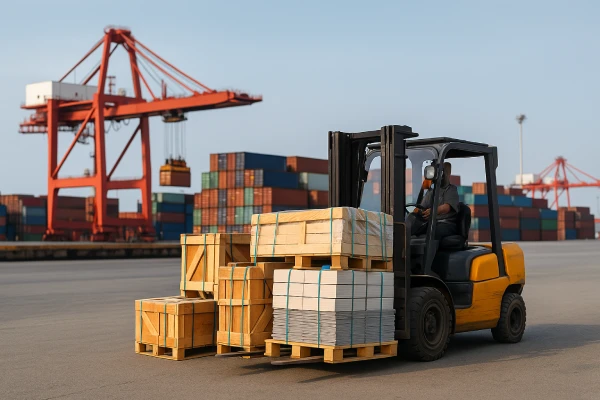
These ports also provide stable sailing schedules to key global markets.
- For the Middle East, Jebel Ali, Dammam, and Doha are popular destinations with frequent FCL routes.
- For Africa, strong connections run to Mombasa, Dar es Salaam, Durban, and Lagos.
- For Europe, importers often use Hamburg or Rotterdam for FCL, while rail service is suitable for palletized tiles and hardware.
- For the USA, both West and East Coast ports are viable depending on transit time needs.
Compliance / Certificates
Compliance requirements for building materials vary widely by destination. Many Middle Eastern countries require SASO/SALEEM certification for tiles, sanitary ware, and certain metal products. In Africa, materials such as flooring, hardware, or structural components may need SONCAP for Nigeria or PVOC programs in Kenya and Tanzania.
For shipments entering the EU, some categories require CE marking, especially items related to safety or construction standards. Wooden packaging must comply with ISPM-15 fumigation rules, while certain steel and ceramic products may also be affected by anti-dumping regulations.
Preparing these documents early helps avoid customs delays and unexpected compliance issues.
Risk Control & Insurance
Building materials face a higher risk of breakage, moisture damage, or deformation during long-distance transport. Fragile items such as tiles, glass, and sanitary ware should always ship with full cargo insurance, as even minor impact can cause significant loss.
For heavy or oversized materials, carriers may require detailed loading photos or weight-distribution plans to minimize operational risks. Moisture-sensitive goods like wood panels and gypsum boards benefit from desiccants, waterproof wrapping, and ventilated loading to reduce mold or warping.
Pre-shipment inspection, updated packing lists, and clear labeling help prevent disputes, delays, and damage claims at the destination.
Storage / Consolidation Options
Building materials often come from multiple suppliers, making origin-side consolidation an important part of the logistics process. Warehouses can receive different types of goods—tiles, hardware, glass, steel profiles—and reorganize them into a single shipment based on weight and compatibility.
During consolidation, items may require pallet reinforcement, moisture protection, or re-crating before loading. Short-term storage also helps coordinate production schedules, ensuring that all materials arrive at the port together.
This approach reduces inland trucking costs and improves loading efficiency for FCL shipments.
Tips to Reduce Delays / Risks / Costs
Booking early is essential for building materials, as heavy and oversized cargo often requires special container types or lifting equipment that can be limited during peak seasons. Planning ahead reduces the risk of rollovers or equipment shortages.
Importers can also minimize breakage and hidden costs by investing in strong packaging, including reinforced pallets and waterproof wrapping. Providing accurate dimensions and weights helps carriers approve the cargo quickly, especially for long profiles or stone slabs.
Where possible, consolidating multiple suppliers into one FCL shipment reduces inland transportation expenses and improves container space efficiency.
How Winsail Helps
Winsail provides specialized logistics support for building materials, focusing on safe handling, accurate loading, and compliance management. Our team works closely with suppliers to coordinate multi-factory consolidation, ensuring all materials arrive at the warehouse in the correct sequence for efficient FCL loading.
We apply category-specific loading SOPs for tiles, glass, stone slabs, steel structures, and long profiles. This includes reinforced crating, A-frame preparation, moisture protection, and secure blocking and bracing inside the container.
For oversized or heavy cargo, we arrange flat rack or open-top bookings, carrier approvals, lifting equipment, and tailored stowage plans. Our team also assists with destination certificates such as SASO, SONCAP, or PVOC, helping importers avoid clearance issues.
Through precise documentation control, real-time tracking, and reliable carrier partnerships, Winsail ensures your building materials move safely, efficiently, and without unnecessary delays.
