
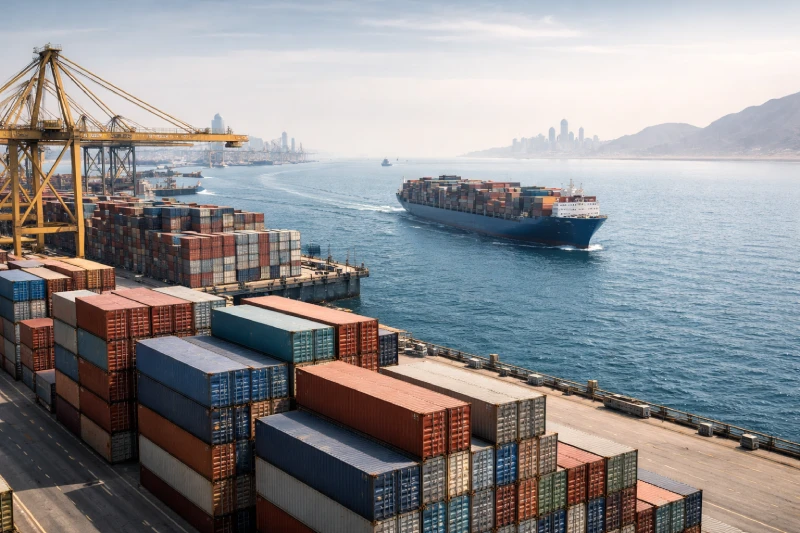
Understanding the shipping cost from China to Saudi Arabia is a critical part of freight planning for B2B importers, distributors, and project cargo owners. In international logistics, “shipping cost” does not refer to a single price, but to a structured combination of charges that arise at different stages of the supply chain—from origin handling in China to customs clearance and inland delivery within Saudi Arabia.
For commercial shipments, costs are influenced by shipment profile, transport mode, contractual terms, and local regulatory requirements rather than by distance alone. Decisions such as containerization method, port selection, and Incoterms allocation can significantly affect overall cost exposure and risk control.
This page explains how shipping costs on the China–Saudi Arabia trade lane are formed, compared, and managed in real-world freight forwarding operations, helping importers evaluate options with clarity and avoid hidden cost assumptions—without relying on indicative prices or time-sensitive rate claims.
Main Shipping Methods from China to Saudi Arabia and Their Cost Logic
When evaluating shipping costs from China to Saudi Arabia, differences between transport modes are not limited to price levels alone. They are more clearly reflected in cost stability, transparency of cost components, and sensitivity to shipment volume changes.
Understanding the cost logic behind each shipping method enables importers to make balanced decisions between budget control, risk management, and operational reliability.
Ocean Freight Cost Structure (FCL and LCL)
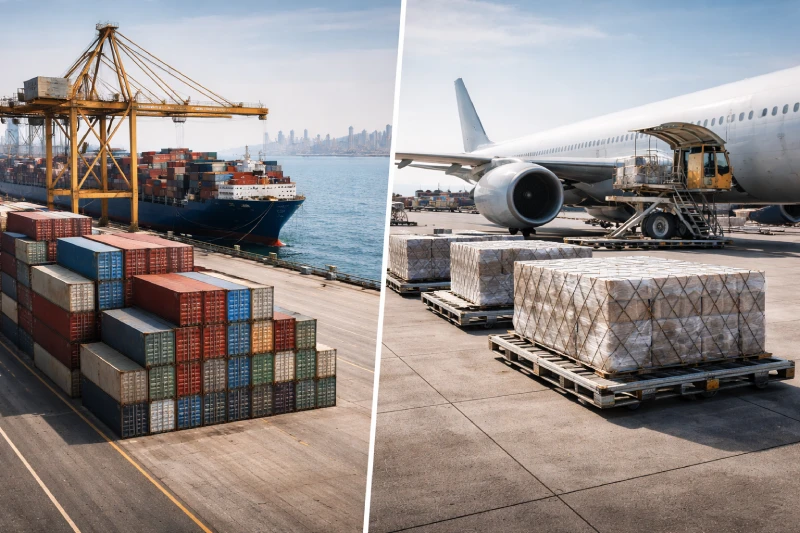
Ocean freight is the most commonly used mode for commercial shipments between China and Saudi Arabia due to its capacity and cost efficiency at scale. From a cost perspective, ocean freight is typically divided into Full Container Load (FCL) and Less than Container Load (LCL) shipments, each following a different cost logic.
For FCL shipments, costs are primarily driven by container utilization, port-to-port routing, and destination handling requirements. Importers benefit from clearer cost visibility and reduced unit cost as shipment volume increases. LCL shipments, by contrast, involve cargo consolidation and deconsolidation, where shared space and handling complexity introduce additional cost variables beyond the main ocean leg.
Air Freight Cost Structure for Commercial Cargo
Air freight is used when shipment value, urgency, or supply chain continuity outweigh pure transportation cost considerations. Cost calculation in air freight is based on chargeable weight, which reflects the higher of actual weight or volumetric weight, making cargo density a key factor.
While air freight generally involves fewer transit stages, total cost exposure includes origin airport handling, airline surcharges, destination terminal charges, and inland delivery. For Saudi Arabia imports, air freight costs are often justified for critical components, time-sensitive materials, or high-value industrial goods where inventory risk is a concern.
Sea–Air and Multimodal Cost Considerations
Sea–air and multimodal solutions combine different transport modes to balance cost and operational flexibility. From a cost logic standpoint, these solutions sit between pure ocean freight and full air freight, introducing additional coordination and handling stages.
Costs in multimodal shipments are influenced by transfer points, cargo compatibility, and documentation alignment across modes. While not suitable for all cargo types, these options can help importers manage budget constraints while maintaining acceptable delivery timelines under specific trade conditions.
Ro-Ro and Breakbulk Cost Characteristics (Project Cargo)
For oversized, heavy, or self-propelled cargo, such as machinery and project equipment, Ro-Ro and breakbulk shipping follow a fundamentally different cost structure. Instead of container-based pricing logic, costs are driven by cargo dimensions, weight, handling method, and port infrastructure capability.
Additional cost considerations include lifting requirements, port equipment availability, and specialized securing measures. For Saudi Arabia-bound project cargo, careful planning at both origin and destination is essential to control handling-related costs and avoid operational delays.
Shipping Method Cost Comparison Overview
The table below summarizes how different shipping methods compare from a cost logic and decision-support perspective, rather than from a rate-based viewpoint:
| Shipping Method | Cost Stability | Volume Suitability | Cost Sensitivity Drivers | Typical B2B Use Case |
|---|---|---|---|---|
| Ocean Freight (FCL) | High | Medium to Large | Container utilization, routing | Regular commercial imports, bulk goods |
| Ocean Freight (LCL) | Medium | Small to Medium | Consolidation, handling stages | Lower-volume shipments, trial orders |
| Air Freight | Low to Medium | Small to Medium | Chargeable weight, surcharges | Time-critical or high-value cargo |
| Sea–Air / Multimodal | Medium | Medium | Transfer points, coordination | Balanced cost-speed requirements |
| Ro-Ro / Breakbulk | Project-based | Oversized / Heavy | Dimensions, handling method | Machinery, construction projects |
Rather than identifying a universally “cheapest” option, experienced importers evaluate shipping methods based on how cost behavior aligns with shipment characteristics and supply chain priorities.
Key Cost Components in China–Saudi Arabia Freight
Origin Charges in China (Factory, Port, and Handling Related)
Origin charges cover all cost elements incurred before cargo departs China. These typically include factory pickup or drayage, export documentation preparation, cargo handling at the port or airport, and terminal-related service fees. The distance between the factory and export gateway, as well as cargo readiness and packaging condition, can directly affect these costs.
For B2B shipments, origin cost visibility is important because incomplete scope definitions at this stage often lead to later cost discrepancies.
Main Freight Charges and Rate Calculation Logic
Main freight charges represent the cost of moving cargo between China and Saudi Arabia via the selected transport mode. Rather than a fixed figure, this cost is determined by shipment profile, routing, carrier selection, and space availability.
In ocean freight, container type and utilization play a major role, while in air freight, chargeable weight and airline routing logic dominate. Understanding how these charges are calculated allows importers to evaluate quotations beyond headline rates.
Destination Charges in Saudi Arabia
Destination charges arise once cargo arrives in Saudi Arabia and are influenced by port or airport procedures, terminal handling requirements, and local operational practices. These costs vary depending on the entry point and the type of shipment.
For importers, destination charges are a common source of misunderstanding, especially when responsibilities are not clearly allocated under the chosen Incoterms.
Customs Clearance, Documentation, and Regulatory Costs
Customs-related costs in Saudi Arabia are shaped by documentation accuracy, cargo classification, and compliance with local regulations. Charges may include customs brokerage services, inspection coordination, and document processing.
Products subject to specific regulatory frameworks—such as technical standards or controlled goods—may incur additional administrative and compliance-related costs during clearance.
Inland Transportation and Final Delivery Costs in Saudi Arabia
Inland transportation costs cover the movement of cargo from the port or airport to the final delivery location, such as warehouses, industrial zones, or project sites. These costs are affected by distance, cargo size, delivery conditions, and access constraints at the destination.
For shipments destined for inland cities or industrial areas, inland logistics planning is a critical component of total landed cost assessment.
Factors That Influence Shipping Costs from China to Saudi Arabia
Shipping costs on the China–Saudi Arabia trade lane are not fixed variables. They fluctuate based on a combination of cargo characteristics, contractual choices, and operational decisions made before shipment. Understanding these influencing factors helps importers anticipate cost movement and evaluate quotations more accurately.
Cargo Type, Density, and Packaging Method
Cargo characteristics play a fundamental role in cost formation. Dense, compact cargo typically achieves better cost efficiency, while lightweight but bulky goods increase space consumption and handling complexity. Packaging method also matters, as poorly optimized packaging can affect container utilization or chargeable weight calculations, especially for air freight.
For regulated or sensitive goods, additional handling or compliance-related steps may further influence overall cost exposure.
Shipment Volume and Container Utilization
Shipment volume directly affects how efficiently space is used during transportation. Well-utilized containers reduce unit shipping costs, while partially filled containers or fragmented shipments tend to increase cost per unit.
For importers shipping regularly, consolidating volumes or aligning shipment schedules can significantly improve cost predictability and control.
Incoterms and Cost Responsibility Allocation
Incoterms determine how cost and responsibility are divided between buyer and seller at different stages of the shipment. Depending on the selected term, certain cost components may be included in the supplier’s scope or transferred to the importer.
Misalignment between Incoterms and operational expectations is a common cause of unexpected charges, making it essential to assess Incoterms not just as legal terms, but as cost-control mechanisms.
Route Selection and Port Pairing
The choice of origin and destination ports influences both direct and indirect costs. Port efficiency, congestion levels, and available services can affect handling charges and operational reliability.
Selecting port pairs that align with cargo type and inland delivery requirements often results in more stable cost outcomes than simply choosing the geographically closest option.
Seasonality and Capacity Constraints (Conceptual Overview)
While shipping costs are not static, variations are often driven by broader capacity and demand dynamics rather than isolated events. Periods of increased cargo movement can lead to tighter space availability, influencing cost behavior across different transport modes.
From a planning perspective, understanding these patterns helps importers assess risk and avoid treating short-term cost changes as permanent baselines.
China Origin Considerations Affecting Shipping Cost
While international freight costs are often discussed in terms of transport mode and destination charges, origin-side decisions in China can have a significant impact on overall cost structure. These factors are especially relevant for B2B shipments originating from multiple factories or inland production zones.
Major Chinese Export Ports for Saudi Arabia Trade
China offers multiple export gateways for shipments bound for Saudi Arabia, each with different operational characteristics. Port selection affects not only the main freight leg, but also origin handling efficiency, carrier availability, and documentation workflows.
For importers, choosing an export port is less about geography alone and more about aligning cargo type, shipping method, and service consistency with the chosen route.
Factory Location vs Port Proximity Cost Impact
The distance between the manufacturing site and the export port directly influences inland transportation and handling costs within China. Cargo produced in inland regions may require additional trucking or rail movements before reaching the port, increasing both cost and coordination complexity.
In some cases, selecting a slightly less common port closer to the factory can result in a more balanced cost outcome than routing cargo through a major hub farther away.
Export Documentation and Compliance Requirements
Export documentation is a foundational cost driver at origin. Accurate preparation of commercial invoices, packing lists, and export declarations helps avoid rework, delays, or corrective handling that can introduce additional charges.
For regulated products or complex shipments, early alignment between the exporter and freight forwarder is essential to ensure compliance-related steps are completed efficiently and without unnecessary cost escalation.
FCL vs LCL vs Air Freight: Cost Decision Framework for Saudi Imports
Selecting the right shipping mode is a cost decision that depends on shipment profile, risk tolerance, and supply chain priorities, rather than on base rates alone. The comparison below focuses on cost behavior and decision logic commonly used by experienced B2B importers shipping to Saudi Arabia.
Decision-Oriented Cost Comparison
| Shipment Scenario | Recommended Mode | Cost Behavior | Key Cost Considerations |
|---|---|---|---|
| Regular commercial volumes with stable demand | Ocean Freight (FCL) | Predictable | Container utilization, routing consistency, destination handling scope |
| Smaller volumes or mixed SKUs | Ocean Freight (LCL) | Variable | Consolidation fees, destination deconsolidation, handling complexity |
| High-value or time-critical goods | Air Freight | Sensitive | Chargeable weight, surcharges, airport handling and inland delivery |
| Oversized or non-containerized cargo | Ro-Ro / Breakbulk | Project-based | Dimensions, lifting requirements, port capability |
| Balanced cost–speed requirement | Sea–Air / Multimodal | Moderate | Transfer points, coordination, documentation alignment |
Conclusion: How Importers Apply This Framework
In practice, cost efficiency is determined by how well the shipping mode matches the shipment’s physical characteristics and commercial priorities. Importers shipping consistent volumes often favor FCL for its cost stability, while LCL remains a practical option for smaller or irregular shipments despite higher variability. Air freight is typically justified by risk mitigation and supply continuity rather than by transport cost alone.
By evaluating shipping modes through a structured decision framework—rather than focusing on isolated charges—importers can better control total landed cost and reduce exposure to unexpected expenses when shipping from China to Saudi Arabia.
Incoterms and Their Impact on Shipping Cost from China to Saudi Arabia
Incoterms define how cost and responsibility are transferred between seller and buyer at different stages of an international shipment. From a cost perspective, they determine who controls specific cost components and where cost risk shifts, making them a critical factor in freight planning for Saudi-bound imports.
EXW: Cost Control Starts at the Factory Gate
Under EXW, the buyer assumes responsibility from the seller’s premises. While this may appear to offer greater cost transparency, it also places full control—and risk—on the importer for origin handling, export procedures, and main transport coordination. Cost efficiency under EXW depends heavily on the importer’s ability to manage origin-side logistics effectively.
FOB: Cost Responsibility Shifts at the Port of Loading
FOB transfers responsibility once cargo is loaded onto the vessel at the origin port. This structure allows importers to control the main freight and destination-side costs while limiting exposure to factory-level handling. For many Saudi importers, FOB offers a practical balance between cost control and operational simplicity.
CIF: Freight Included, Destination Costs Remain
With CIF, the seller arranges and pays for the main freight to the destination port, but responsibility shifts before arrival. While this may simplify procurement, importers should note that destination charges, customs clearance, and inland delivery costs in Saudi Arabia remain outside the seller’s scope and must be evaluated separately.
DAP: Delivery to Destination, Clearance Excluded
DAP extends the seller’s responsibility to delivery at a named place in Saudi Arabia, excluding customs clearance and duties. From a cost planning standpoint, this reduces inland transport uncertainty while leaving regulatory-related costs under the importer’s control.
DDP: Full Cost Scope with Limited Buyer Control
DDP places nearly all cost and responsibility on the seller, including customs clearance and delivery. While this provides maximum cost simplicity for the buyer, it also reduces visibility and control over individual cost components, which can be a limitation for experienced importers seeking optimization.
Cost Logic Summary
Rather than viewing Incoterms as pricing labels, B2B importers evaluate them as cost-control frameworks. The most suitable Incoterm is the one that aligns responsibility with the party best positioned to manage cost, risk, and compliance when shipping from China to Saudi Arabia.
Common Cost Risks and How Importers Manage Them
Even when shipment details are clearly defined, cost risks can still arise from operational gaps, documentation issues, or misaligned expectations. Experienced importers manage these risks by understanding how problems translate into cost impact and where mitigation is most effective.
Problem: Incomplete Cost Visibility at the Quotation Stage
Impact:
When quotations exclude certain origin or destination charges, importers may face unplanned expenses later in the shipment cycle. These costs often surface at arrival, limiting the ability to adjust routing or responsibility allocation.
Mitigation:
Importers reduce this risk by confirming cost scope in advance and ensuring all shipment stages—from origin handling to inland delivery—are clearly accounted for in the freight plan.
Problem: Documentation Errors or Inconsistencies
Impact:
Incorrect or mismatched documents can trigger customs holds, reprocessing fees, or additional inspections in Saudi Arabia. These disruptions not only increase direct costs but may also affect downstream delivery schedules.
Mitigation:
Early document verification and alignment between commercial, packing, and regulatory paperwork help minimize correction-related costs and delays.
Problem: Port Congestion and Storage-Related Charges
Impact:
Delays at ports can lead to storage or demurrage charges, increasing total landed cost without adding value to the shipment. This risk is particularly relevant when clearance or delivery arrangements are not finalized before arrival.
Mitigation:
Advance coordination of customs clearance and inland transport reduces dwell time and limits exposure to port-related cost accumulation.
Problem: Misaligned Incoterms and Operational Reality
Impact:
Selecting Incoterms without considering practical execution can shift cost responsibility unexpectedly, especially at destination. This often results in disputes or last-minute cost absorption by the importer.
Mitigation:
Aligning Incoterms selection with actual control over logistics processes ensures that cost responsibility matches operational capability.
Problem: Cargo Handling Requirements Not Identified Early
Impact:
Special handling needs identified late in the process can generate additional charges for equipment, labor, or re-handling, particularly for non-standard cargo.
Mitigation:
Providing accurate cargo details and handling requirements during the planning stage allows for appropriate cost forecasting and reduces the likelihood of reactive charges.
How B2B Importers Estimate and Compare Shipping Costs Effectively

Define the shipment profile clearly
Confirm cargo type, packaging method, dimensions, weight, and shipment volume. For air freight planning, identify whether the cargo is likely to be volume-heavy versus weight-heavy, as this directly affects chargeable cost logic.
Select the shipping objective before selecting the mode
Decide whether the shipment is driven by budget control, supply continuity, risk reduction, or project scheduling. This ensures mode selection is based on operational priorities rather than on a headline rate.
Confirm the Incoterms scope and responsibility boundaries
Identify which party is responsible for origin handling, main freight, customs clearance, and inland delivery in Saudi Arabia. Cost comparisons become unreliable when two quotations are based on different responsibility splits.
Align routing and entry point with delivery requirements
Choose port/airport entry and inland delivery approach based on final destination, cargo type, and handling constraints. A “cheaper” routing can become more expensive if it increases inland complexity or dwell time.
Compare quotations using total cost structure, not isolated charges
Review origin charges, main freight logic, destination handling, clearance scope, and inland delivery assumptions as one cost chain. Focus on exclusions, conditional charges, and operational dependencies that may change the final landed cost.
Validate compliance and documentation requirements early
Confirm whether the cargo involves Saudi-specific compliance workflows (such as regulated product categories) and ensure documentation readiness. Compliance gaps typically surface as cost escalation during clearance.
Stress-test the plan for likely cost risks
Assess where cost volatility could occur—space constraints, handling complexity, or clearance sensitivity—and plan mitigation measures before cargo departs China. Importers treat cost control as a process, not a one-time quotation exercise.
