
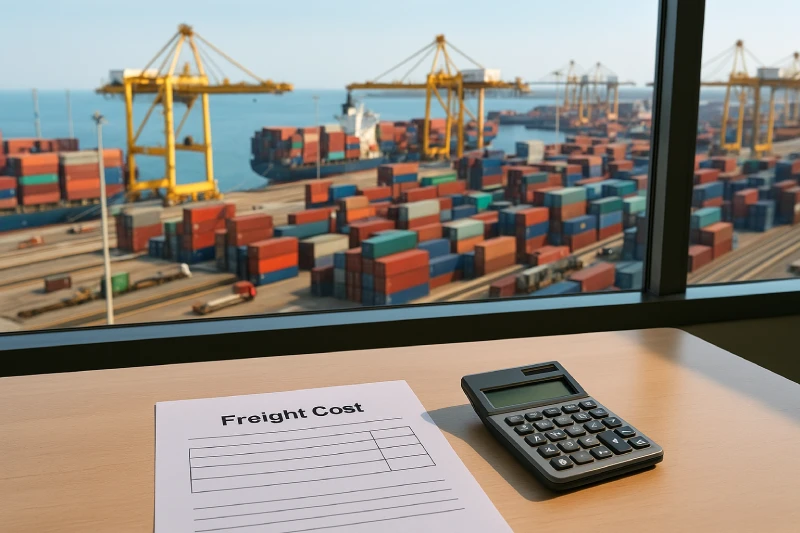
What Determines China → Tanzania Shipping Costs
Shipping costs from China to Tanzania are not fixed; they fluctuate based on a combination of market conditions, cargo characteristics, and operational factors along the China → East Africa trade lane. Importers often notice week-to-week changes because freight rates are influenced by capacity availability, fuel prices, and routing efficiency, especially on shipments into Dar es Salaam, Tanzania’s primary gateway port.
The most important variables affecting your final shipping cost include:
Mode of Transport (Sea, Air, DDP, Express)
Sea freight is usually the most economical for bulk cargo, while air freight and express services cost more due to faster transit times, limited capacity, and higher handling requirements.
Cargo Volume & Weight
For sea freight, costs depend largely on CBM (cubic meters), minimum charges, and consolidation fees. For air freight, carriers charge based on chargeable weight, using the higher value between actual weight and volumetric weight.
Origin Port & Destination City
Rates differ between ports such as Shanghai, Ningbo, Shenzhen, Guangzhou, and China’s inland hubs. On the Tanzania side, delivery to Dar es Salaam, Arusha, Dodoma, or Zanzibar will also change the trucking or last-mile portion of the total cost.
Incoterms (EXW, FOB, CIF, DDP)
Incoterms determine who pays for which part of the logistics chain.
- EXW adds factory pickup and China-side charges.
- CIF only covers port-to-port freight.
- DDP bundles customs duties + tax + last-mile delivery into a single all-in rate.
Seasonality and Market Fluctuations
Rates often rise during peak seasons such as Chinese New Year, Golden Week, Black Friday, and pre-Christmas demand. East Africa is sensitive to capacity imbalance, so sailings or flights may be limited during high-demand periods.
Customs, Duties & Compliance
Tanzania requires proper documentation and HS code declaration. Non-compliance, restricted items, or customs inspections can lead to extra charges or delays, indirectly increasing your total logistics cost.
Together, these factors shape the real-world cost structure for shipping from China to Tanzania. Understanding them allows importers to estimate budgets more accurately and choose the most efficient shipping method for their cargo.
Average Shipping Cost Table (Sea, Air, DDP, Express)
The shipping cost from China to Tanzania varies by transport mode, cargo size, and market conditions. As of the 2025 rate environment, the China → East Africa lane remains moderately priced but sensitive to fuel adjustments, carrier capacity, and peak-season demand. The following ranges reflect typical market levels based on real quotations from major China ports such as Shanghai, Ningbo, Shenzhen, and Guangzhou, shipping primarily to Dar es Salaam.
Sea freight remains the most cost-effective for bulk shipments, while air freight and express services command higher rates due to speed and limited capacity. DDP (duty-paid, door-to-door) options include customs clearance, taxes, and last-mile delivery, so the all-in pricing is significantly higher than port-to-port services.
These cost ranges are suitable for budgeting; Winsail Logistics will provide an exact quote based on your cargo weight, volume, product category, and delivery address in Tanzania.
Featured-Snippet Style Cost Overview
| Method | Typical Cost | Unit | Best For | Notes |
|---|---|---|---|---|
| LCL Sea Freight | US$80–140 | per CBM | 1–12 CBM mixed cargo | Minimum 1–2 CBM charges apply; origin/destination fees additional. |
| FCL 20GP | US$2,000–3,500 | per container | 18–25+ CBM bulk shipments | Stable cost per CBM; varies by line, season, and China origin port. |
| FCL 40HQ | US$3,000–5,500 | per container | 55–68+ CBM large-volume cargo | Better cost-to-volume ratio; peak season may push rates higher. |
| Air Freight (Airport to Airport) | US$5–9 | per kg | 100–500 kg urgent shipments | Charged on chargeable weight (actual vs volumetric). |
| DDP Air Freight | US$9–15 | per kg | E-commerce parcels or high-value items | Includes duty, customs clearance, and last-mile delivery. |
| DDP Sea Freight | US$150–260 | per CBM | 1–15 CBM general cargo | All-in pricing; high season may reach US$280–320 per CBM. |
| Express Courier (DHL/UPS/FedEx) | US$15–25 | per kg | Samples and small urgent parcels | Fastest but most expensive; strong weight and zone dependencies. |
Sea Freight Costs (LCL & FCL Pricing Logic)
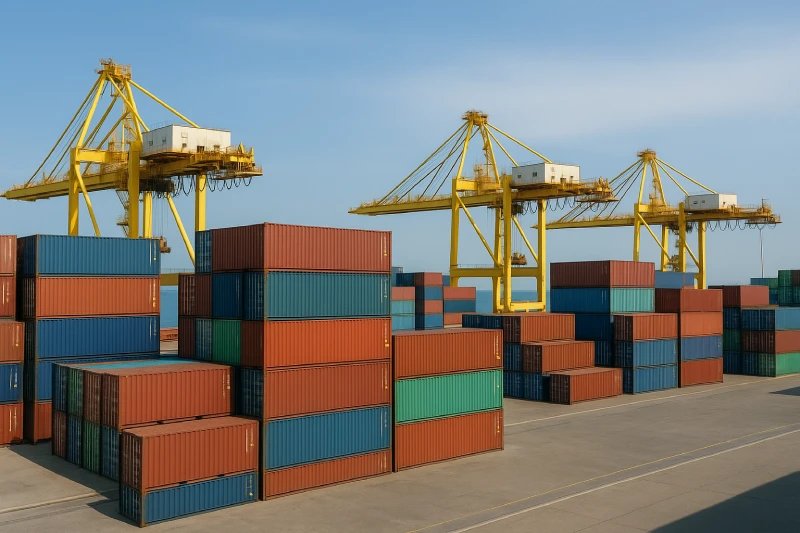
When shipping from China to Tanzania by sea, cost depends on whether you choose LCL (Less-than-Container Load) or FCL (Full Container Load), plus a series of surcharges, port charges, and handling fees. Below is how the pricing logic works — plus recent benchmark rates for reference (China → Tanzania, to Dar es Salaam).
LCL (Shared Container) — CBM-Based Pricing
- LCL shipments are priced per CBM (cubic meter). Freight forwarders pool multiple small shipments into a single container and allocate cost based on volume.
- Forwarders typically apply a minimum chargeable CBM, often 1–2 CBM even if your cargo is smaller. Additional costs may include consolidation fees, origin & destination handling, documentation, and local charges at both ends.
- As of 2025, a realistic reference rate for LCL from major Chinese ports (Shanghai, Ningbo, Shenzhen, Guangzhou, etc.) to Dar es Salaam is about US$80–140 per CBM.
- Example: a 3 CBM LCL consignment at US$80/CBM would cost roughly US$240, before any local handling or duty/tax.
LCL is ideal when your cargo is small (e.g. under ~10–15 CBM), or you want to avoid paying for a full container when you don’t have enough volume.
FCL (Full Container Load) — Container-Based Pricing
For larger shipments, FCL often gives the best cost per unit of goods. Pricing depends on container size (20ft, 40ft, 40HQ), origin port, and sea-freight market conditions. Additional fees may include BAF (Bunker Adjustment Factor), THC (Terminal Handling Charge), documentation fee, port charges, and destination handling.
Recent Market Benchmarks (2025) for China → Dar es Salaam
| Origin Port (China) | Container Type | Typical Ocean Freight Cost (USD) | Notes |
|---|---|---|---|
| Shanghai | 20ft | US$2,200–2,700 | Transit time ~28–32 days |
| Shenzhen | 20ft | US$2,300–2,900 | — |
| Ningbo | 20ft | US$2,200–2,800 | — |
| Shanghai | 40ft / 40HQ | US$4,800–6,200 (some lines) | For large-volume cargo, better cost/CBM |
| General (20ft across many ports) | 20ft | Many forwarders currently quote ~US$2,500–3,200 | Market-dependent range |
Typical transit times for ocean freight from China to Tanzania’s Dar es Salaam port is around 25–35 days, depending on departure port, transshipment schedule, and weather/sea-route conditions.
Why FCL Often Beats LCL (on Cost per Unit)
- If you have enough volume (often ~18–25 CBM for 20ft, ~55–65 CBM for 40HQ), FCL often gives lower cost per CBM compared to LCL after factoring fixed container costs.
- FCL avoids multiple handling and consolidation charges that LCL typically incurs.
- For large, heavy, or bulky shipments — especially industrial goods, machinery, furniture, etc. — FCL ensures better packing and lower risk of damage or mis-allocation within shared containers.
Important Additional Cost Components (Beyond Ocean Freight)
When estimating final cost, you must also account for:
- BAF / Fuel Surcharge & Seasonal Surcharges — carriers may add extra fees when fuel price surges or during high-demand periods.
- Port Handling & Terminal Fees — both at China origin port and at Tanzania destination (terminal handling, unloading, port duties).
- Inland Transportation & Trucking — cost to move goods from Tanzania port to inland warehouse or final consignee address (especially if delivery beyond main port).
- Customs Clearance, Import Duty & Tax, Documentation & Compliance — depending on HS code, goods type, and Tanzanian import regulations.
- Packaging, Container Loading/Unloading Costs, Insurance (if applicable).
These ancillary costs often vary — forwarders commonly provide port-to-port freight only; ensure to request a door-to-door / DDP-inclusive quote if you need full-cost transparency.
Practical Recommendations for China → Tanzania Sea Freight
- For small shipments (< ~10–15 CBM), LCL may still make sense — but confirm minimum CBM charges and consolidation fees.
- If you have mid-to-large volume orders (≥ 18–20 CBM), FCL is usually more cost-efficient and predictable.
- Always request a full breakdown (ocean freight + surcharges + port fees + inland delivery + duty/tax) to avoid hidden costs.
- For bulky, heavy, or mixed lots with potential customs or compliance issues, a reputable freight forwarder with experience in China–Tanzania lane is strongly recommended.
Air Freight Costs (CIF & DDP)
Air freight from China to Tanzania is chosen when speed, product value, or supply-chain urgency outweighs the higher cost compared to sea freight. Transit times are typically 3–7 days depending on the route, airline, and handling time at both ends. Prices fluctuate frequently due to fuel adjustments, aircraft capacity, and peak-season demand, especially on the China → East Africa corridor.
How Air Freight Pricing Works
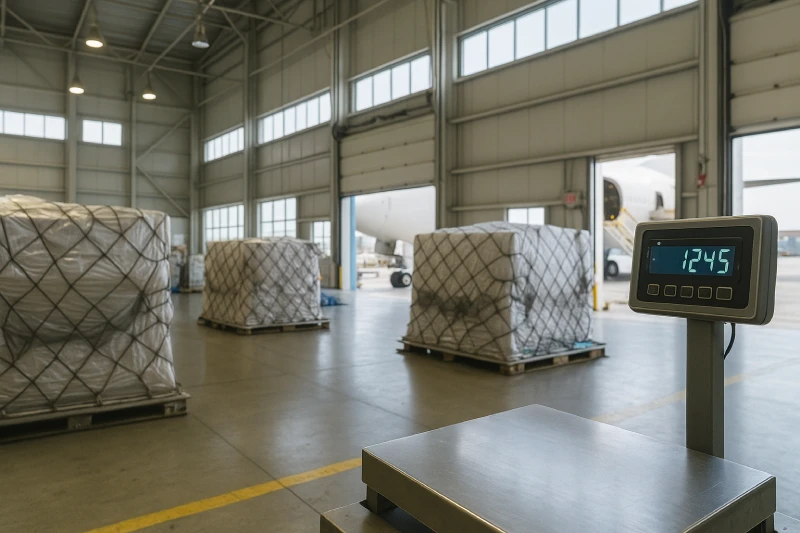
Air freight is primarily calculated based on chargeable weight, which compares:
- Actual weight (kg)
- Volumetric weight, using the formula: Length × Width × Height (cm) ÷ 6000
Whichever is greater becomes the chargeable weight. Large but lightweight cargo can therefore cost more due to dimensional weight.
Additional factors influencing air freight pricing include:
- Airline selection (direct vs transshipment via Middle East hubs)
- Fuel surcharge and security surcharge
- Type of cargo (general, battery-powered, fragile, restricted)
- Airport of origin (Shanghai, Shenzhen, Guangzhou being the most common)
- Handling at Tanzania side (Dar es Salaam International Airport)
Typical Air Freight Rates (Airport-to-Airport)
Based on 2025 market data from major freight forwarders serving East Africa, typical China → Tanzania air freight rates fall into the following range:
| Weight Break | Typical Cost (USD per kg) | Notes |
|---|---|---|
| 1–45 kg | US$8–12/kg | Small shipments have the highest rate; significant effect from volumetric weight. |
| 45–100 kg | US$6.5–9/kg | Medium shipments; commonly booked by importers needing fast restocking. |
| 100–300 kg | US$5.5–8/kg | More cost-efficient; airlines often offer better space allocation at this tier. |
| 300 kg+ | US$5–7/kg | Best cost per kg; suitable for large urgent shipments. |
These ranges represent airport-to-airport pricing. Additional China-side origin fees, destination airport handling, customs clearance fees, and inland delivery charges will apply unless DDP service is chosen.
DDP Air Freight (Duty-Paid, Door-to-Door)
DDP air freight provides a full-service solution covering:
- Pickup from supplier
- Export clearance in China
- International air freight
- Import clearance in Tanzania
- Duty and tax payment
- Final delivery to the consignee’s address
This is the preferred option for e-commerce sellers, high-value electronics, and customers unfamiliar with Tanzania’s customs procedures.
Typical 2025 DDP air freight rates from China to Tanzania:
- US$9–15 per kg depending on cargo type, delivery city, and duty/tax structure
- Lithium battery items, branded electronics, liquids, and sensitive goods may carry surcharges
- Deliveries are usually completed in 5–10 days end-to-end
DDP pricing is higher because it bundles the entire logistics chain into a single per-kg rate, eliminating hidden charges and ensuring predictable landed cost.
When to Choose Air Freight Instead of Sea Freight
Air freight is recommended when:
- You need fast replenishment for retail or e-commerce
- Cargo value is high relative to freight cost
- Goods are perishable, fragile, or sensitive
- You have small or medium-sized shipments where sea LCL is too slow or inefficient
- Market timing (product launch, seasonal demand) is critical
For most importers, air freight becomes cost-effective when balancing speed, predictability, and lower risk of congestion at sea ports.
DDP (Door-to-Door) Shipping Costs
DDP (Delivered Duty Paid) shipping from China to Tanzania is an all-inclusive logistics solution that covers export handling, international freight, import customs clearance, duties and taxes, and final delivery to the consignee’s address. It is widely used by small businesses, e-commerce sellers, and importers who prefer predictable landed costs without dealing with Tanzania’s customs procedures.
How DDP Pricing Works
DDP rates depend on several components bundled into a single per-kg or per-CBM price:
- Product type and HS code (duty and tax percentages vary widely in Tanzania)
- Declared value and compliance requirements
- Shipping mode (air DDP vs sea DDP)
- Delivery address (Dar es Salaam vs inland cities like Arusha, Dodoma, Mwanza)
- Cargo sensitivity (batteries, branded items, liquids, chemicals may incur surcharges)
- Volume and frequency of shipments
Because the forwarder takes full responsibility for customs clearance and duty payment, DDP rates are higher than traditional port-to-port freight.
Typical DDP Air Freight Rates (China → Tanzania)
DDP air freight is the fastest and most convenient door-to-door option. As of 2025, typical market ranges are:
- US$9–15 per kg for general cargo
- Higher rates for sensitive items (batteries, branded electronics, cosmetics, liquids)
- End-to-end transit time: 5–10 days
- Includes: pickup, export clearance, air freight, duty & tax, customs release, last-mile delivery
DDP air is ideal for small parcels, consumer goods, electronics, fashion accessories, and urgent replenishment stock where speed is critical.
Typical DDP Sea Freight Rates (China → Tanzania)
DDP sea freight is the most economical door-to-door solution for larger shipments. Rates vary depending on CBM, product category, and local delivery distance:
- US$150–260 per CBM for general cargo
- Peak season may push rates to US$280–320 per CBM
- End-to-end transit time: 28–40 days
- Suitable for 1–15 CBM shipments; larger volumes may qualify for tailored pricing
DDP sea freight is widely used for general merchandise, furniture, hardware, tools, textiles, lighting products, and other bulk cargo not requiring urgent delivery.
Why Importers Choose DDP for Tanzania
- Predictable total cost — duty, tax, clearance, and delivery included
- No need for local customs brokers
- Zero hidden charges or unexpected destination fees
- Fast and simple process, especially for new importers
- Avoids port congestion or delays commonly seen in FCL/LCL shipments
- Ideal for e-commerce and small-order supply chains
DDP significantly reduces administrative workload and risk, making it an attractive option for businesses that value simplicity and financial certainty.
Express Courier Costs (DHL/UPS/FedEx)
Express courier services such as DHL, UPS, FedEx, and Aramex offer the fastest shipping method from China to Tanzania. They are ideal for samples, small parcels, urgent spare parts, and high-value items that must arrive quickly. Transit times are typically 3–7 days, depending on origin city, routing, and customs processing speed in Tanzania.
How Express Courier Pricing Works
Express courier rates are determined by:
- Chargeable weight (actual vs volumetric, similar to air freight)
- Courier zone (Tanzania falls into higher-rate African zones)
- Fuel and security surcharges
- Remote-area delivery fees for locations outside Dar es Salaam
- Shipment type (documents, parcels, restricted goods, battery-powered items)
- Account discounts (large-volume shippers receive significantly better rates)
Because express shipping is a premium service, it is normally the most expensive option on a per-kg basis.
Typical Express Courier Rates (China → Tanzania, 2025)
Market benchmarks from 2025 rate sheets and freight consolidators indicate the following ranges:
| Weight Tier | Typical Cost (USD per kg) | Notes |
|---|---|---|
| 0.5–1 kg | US$18–30/kg | Highest cost per kg due to fixed base charges. |
| 1–5 kg | US$17–25/kg | Common for samples and small products. |
| 5–10 kg | US$15–22/kg | More cost-efficient; still premium compared to air freight. |
| 10–20 kg | US$14–20/kg | Often used for urgent commercial shipments. |
| 20 kg+ | US$13–18/kg | Larger parcels benefit from better volume-pricing. |
For bulk users, freight forwarders often offer express cargo consolidation, resulting in more competitive rates than booking directly with DHL or FedEx.
When to Use Express Instead of Air Freight or Sea Freight
Express courier is recommended when:
- Delivery speed is the top priority (spare parts, prototypes, urgent samples)
- Shipments are small (usually under 20–30 kg)
- You need door-to-door delivery without customs paperwork
- Shipment consists of high-value or time-sensitive items
For most business shipments above 25–30 kg, air freight or DDP air becomes more economical while still maintaining fast delivery.
Full Breakdown of Cost Influencing Factors
Shipping costs from China to Tanzania are shaped by a combination of operational, market, and regulatory factors. Understanding these variables helps importers accurately estimate their logistics budget and choose the most suitable shipping method. The following elements have the greatest impact on total freight cost, regardless of whether you ship by sea, air, DDP, or express.

1. Cargo Volume & Weight
- Sea freight (LCL) is calculated by CBM, with minimum charges of 1–2 CBM even for smaller shipments.
- Air freight and express courier use chargeable weight, determined by comparing actual vs volumetric weight.
- Larger volumes often benefit from better per-unit pricing, especially for FCL shipments.
2. Packaging Efficiency
Packaging directly affects both CBM and dimensional weight. Oversized or inefficient packaging can increase shipping cost significantly, especially in air freight and LCL shipments. Importers can reduce cost by using:
- Optimized carton sizes
- Tighter packing configuration
- Palletization only when required
- Avoiding unnecessary void space in cartons
3. Route & Transit Type
The selected route influences both price and transit time:
- Direct sailings from China to East Africa ports (e.g., via Dar es Salaam) are sometimes limited, causing reliance on transshipment hubs such as Singapore, Port Klang, or Jebel Ali.
- More transshipment points typically mean higher costs and longer transit times.
- For air freight, flights routed through Doha, Dubai, or Addis Ababa often have different pricing structures.
4. Seasonal Demand & Market Fluctuations
Shipping rates rise during global and regional peak periods such as:
- Chinese New Year
- Golden Week (October)
- Pre-Christmas peak
- Tanzania local import seasons (agricultural or festival-related demand)
During these periods, carriers often implement peak season surcharges, and space shortages can push rates upward.
5. Customs Clearance, Duties & Regulatory Compliance
For traditional sea/air shipments (non-DDP), importers must consider:
- Customs clearance fees
- Import duty, VAT, and any excise tax
- Inspection charges for restricted or sensitive goods
- Potential demurrage or storage charges if documents are incomplete or delayed
Non-compliance with Tanzanian import regulations can result in inspection delays, fines, or re-export orders, all of which increase total cost.
6. Incoterms (EXW, FOB, CIF, DDP)
The selected Incoterm determines how much of the logistics chain is included in the price:
- EXW: Buyer pays all China-side costs plus freight.
- FOB: Supplier delivers to the port; buyer pays ocean freight onward.
- CIF: Supplier covers ocean freight to Tanzania port.
- DDP: Forwarder provides all-in pricing to the buyer’s doorstep.
DDP is usually the highest-cost Incoterm but offers the most convenience and predictability.
7. Additional Handling Requirements
Certain goods may require special treatment, affecting cost:
- Fragile items needing extra packaging
- Electronics with lithium batteries
- Oversized or overweight cargo
- Hazardous materials (special documentation + surcharges)
These factors may add handling fees or route restrictions, particularly for air freight.
8. Local Delivery Location in Tanzania
Deliveries to inland cities (Arusha, Dodoma, Mwanza, Mbeya, Moshi, etc.) require additional trucking charges beyond Dar es Salaam. Costs depend on:
- Distance
- Road conditions
- Cargo type
- Delivery urgency
Door-to-door quotations should always specify the final delivery point to avoid unexpected fees.
How to Reduce Shipping Costs
Reducing the cost of shipping from China to Tanzania often comes down to making a few strategic decisions that optimize volume, timing, and logistics planning. Importers can typically lower their freight spend by selecting the right transport mode for their cargo size, consolidating multiple small orders into a single shipment, and avoiding unnecessary volumetric weight through better packaging.
Other simple but effective tactics include booking space in advance during peak seasons, choosing the most efficient China departure port, and ensuring full compliance with Tanzanian customs requirements to avoid delays, re-inspections, and additional charges.
For a complete list of actionable methods—including consolidation strategies, packaging optimization, Incoterm selection, and transit-time management—refer to our dedicated guide: How to Reduce Shipping Costs & Delivery Time .
FAQs
1. Why do shipping quotes for Tanzania sometimes differ between freight forwarders?
Freight forwarders negotiate different rate levels with carriers based on volume, route preference, and seasonal capacity allocations. Some also include or exclude certain surcharges—such as destination handling, documentation fees, or customs support—leading to variations in the “all-in” price. Comparing quotes only makes sense when the cost structure and included services are clearly itemized.
2. Does choosing a different China origin port significantly change the final cost?
Yes. While ocean rates from major ports (Shanghai, Ningbo, Shenzhen, Guangzhou) may appear similar, the China-side origin charges—such as trucking, warehouse handling, and terminal fees—can vary widely. For inland suppliers, routing through an alternative port can reduce domestic logistics costs even if the base ocean freight is the same.
3. Is it always cheaper to ship in bulk rather than in multiple smaller shipments?
Not necessarily. While larger volumes improve the per-unit cost, importers must also consider cash flow, storage limitations, and product demand cycles. In many cases, shipping more frequently in smaller batches helps avoid overstocking and reduces the risk of tying up working capital, even if per-CBM or per-kg rates are slightly higher.
4. How do Tanzania’s customs regulations influence total shipping cost?
Customs procedures can add indirect costs not reflected in freight rates. Incomplete documentation, valuation discrepancies, or shipments requiring inspection may lead to storage, demurrage, or re-inspection fees. Ensuring accurate HS codes, correct invoices, and compliance with Tanzanian import rules helps minimize these avoidable expenses.
5. Can mixing different product categories in one shipment increase the total cost?
It can. Mixed shipments containing items with different HS codes or regulatory requirements may require separate documentation, split clearance procedures, or additional compliance checks. For LCL and DDP shipments, forwarders may charge a small premium for sorting or handling categories with different duty rates or restrictions.
Get an Accurate Shipping Cost for Your Goods
Because every shipment is different—whether in size, weight, product category, or delivery location—the most reliable way to understand your true logistics cost is through a tailored quote. Market rates on the China → Tanzania route shift frequently due to fuel adjustments, seasonal demand, and carrier capacity, so a customized calculation ensures you receive the most up-to-date pricing.
If you are planning a shipment or comparing transport options, our team can prepare a clear, itemized estimate based on your cargo details and preferred service mode. This helps you budget confidently and select the most efficient solution for your needs.
Share your shipment details, and we’ll provide a personalized China → Tanzania cost quote within 24 hours.
Disclaimer & Update Note
All shipping rates provided in this guide are based on typical market conditions and should be used for general reference only. Actual costs may vary due to fuel adjustments, seasonal demand, carrier capacity, routing changes, and updates to Tanzanian customs policies.
Winsail Logistics reviews and updates its pricing insights regularly. This page reflects the most recent information available for 2025, but importers should always request a current quotation for accurate planning.
