
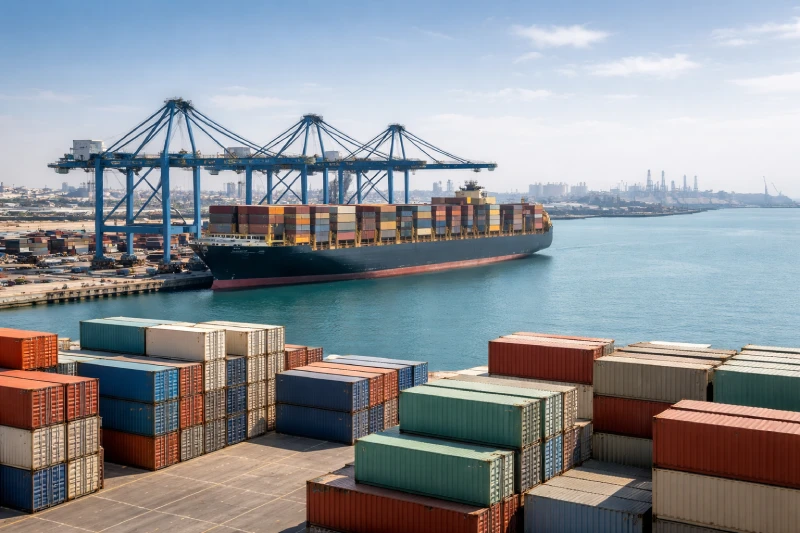
Overview of Shipping from China to Dammam
Dammam is a key logistics gateway on Saudi Arabia’s eastern coast and plays a central role in handling commercial cargo moving between China and the Kingdom’s industrial heartland. As the primary maritime access point to the Eastern Province, Dammam is closely linked to large-scale manufacturing, energy-related industries, and inland distribution networks serving central Saudi Arabia.
For B2B importers shipping from China, Dammam is often selected not only for port access, but also for its strategic position within Saudi Arabia’s domestic supply chain. Cargo arriving via Dammam is typically intended for industrial use, project-based distribution, or onward inland transport rather than direct consumer delivery. This makes the gateway particularly relevant for containerized goods, machinery, and bulk commercial shipments supporting long-term operations.
Key logistics characteristics of Dammam:
- Primary maritime gateway for Saudi Arabia’s Eastern Province and nearby industrial zones
- Strong linkage to manufacturing, energy, and infrastructure-driven cargo flows
- Strategic inland distribution point for Riyadh and other central Saudi markets
- Frequently used for commercial, project, and industrial shipments from China
Major Ports and Logistics Infrastructure Serving Dammam
King Abdulaziz Port Dammam (Primary Seaport)
King Abdulaziz Port is the principal maritime gateway serving Dammam and the wider Eastern Province, handling a large share of Saudi Arabia’s industrial and commercial imports.
- Main entry point for containerized and breakbulk cargo destined for eastern and central Saudi Arabia
- Closely aligned with industrial supply chains rather than consumer-oriented distribution
- Commonly used for machinery, construction materials, and energy-related equipment
- Supports onward inland movement to industrial cities and logistics hubs
Industrial Zones and Logistics Facilities Around Dammam
Dammam is surrounded by well-established industrial areas and logistics facilities that support large-scale commercial cargo handling beyond the port itself.
- Direct access to major industrial cities and manufacturing clusters in the Eastern Province
- Availability of bonded areas and logistics parks supporting staging and redistribution
- Infrastructure designed for heavy, oversized, or project cargo handling
- Strong integration between port operations and nearby industrial supply chains
Connection to Inland Container Depots and Distribution Centers
Dammam functions not only as a port of entry but also as a starting point for inland cargo distribution across Saudi Arabia.
- Established trucking corridors linking Dammam with Riyadh and central regions
- Use of inland container depots (ICDs) for cargo clearance or redistribution
- Suitable for shipments where final delivery is not within the coastal area
- Common choice for importers managing multi-location or project-based distribution
Shipping Routes from China to Dammam
Commercial cargo shipped from China to Dammam typically follows established Asia–Middle East maritime corridors serving the Arabian Gulf. Shipments generally depart from major Chinese export hubs, move through regional transshipment points when required, and enter Saudi Arabia via the eastern seaboard. The routing structure is designed to support high-volume industrial cargo flows rather than point-to-point consumer distribution.

From a planning perspective, routing to Dammam is often selected when cargo is intended for the Eastern Province, industrial cities, or inland markets such as Riyadh. Compared with western Saudi gateways, routes serving Dammam are more closely aligned with industrial supply chains, project cargo movements, and energy-related imports. As a result, routing decisions tend to prioritize cargo handling continuity, port compatibility, and inland transport coordination over simple port proximity.
Key routing considerations for Dammam-bound cargo:
- Direct calls versus transshipment options depending on carrier network design
- Compatibility of routing with industrial or project cargo handling requirements
- Alignment between port arrival and inland trucking or depot transfer plans
- Operational stability along Gulf shipping lanes supporting commercial imports
Sea Freight to Dammam for Commercial Shipments
Full Container Load (FCL) Shipments to Dammam
FCL shipping is the most common sea freight option for commercial cargo moving from China to Dammam, particularly for importers handling regular volumes or industrial goods. Using full containers allows for greater control over cargo integrity and aligns well with the structured import flows typical of the Eastern Province.
- Suitable for manufacturers, distributors, and contractors importing consistent volumes
- Preferred for machinery, building materials, and palletized commercial goods
- Supports direct inland movement to industrial zones or central Saudi markets
- Reduces cargo handling complexity at the port and during inland transfer
Less-than-Container Load (LCL) Cargo for the Eastern Province
LCL sea freight is used when shipment volumes do not justify a full container but still require maritime transport into eastern Saudi Arabia. This option is more commonly selected for supplementary shipments or diversified sourcing strategies.
- Applicable for smaller commercial consignments consolidated with other cargo
- Requires coordination at origin and destination consolidation points
- More sensitive to port handling and inland redistribution planning
- Often used by importers serving multiple destinations within Saudi Arabia
Project, Oversized, and Industrial Cargo by Sea
Dammam is a key entry point for project-based and industrial cargo supporting construction, energy, and infrastructure sectors. Sea freight solutions for these shipments are structured around cargo characteristics rather than standard containerization.
- Commonly used for oversized equipment, heavy machinery, and non-standard units
- Requires compatibility between vessel type, port facilities, and inland transport
- Closely linked to project timelines and site-specific delivery planning
- Frequently integrated with specialized handling and inland routing strategies
Inland Distribution from Dammam to Other Saudi Cities
Once cargo arrives in Dammam, inland distribution becomes a defining factor in overall logistics planning. Many shipments entering through the eastern gateway are not intended for local consumption but are instead moved onward to central Saudi Arabia or designated industrial sites. In practice, Dammam often functions as a staging point where imported cargo is cleared, consolidated, and dispatched according to project schedules or regional demand.

For importers shipping from China, inland movement from Dammam is typically coordinated around road transport corridors linking the Eastern Province with Riyadh and other key markets. This approach allows cargo to flow efficiently from port arrival to inland destinations while maintaining control over handling, storage, and delivery sequencing.
Common inland distribution scenarios from Dammam:
- Trucking from Dammam to Riyadh for central Saudi warehousing or project delivery
- Direct inland transport to industrial cities and manufacturing zones in the Eastern Province
- Use of logistics hubs or inland container depots for redistribution and clearance support
- Consolidated inland delivery for multi-site or project-based import programs
Customs Clearance Considerations in Dammam
Customs clearance is a critical stage for commercial cargo entering Saudi Arabia through Dammam, particularly given the port’s strong association with industrial and project-based imports. From a planning standpoint, clearance should be treated as an integrated part of the supply chain rather than a standalone administrative step. Importers shipping from China typically need to ensure that documentation, cargo classification, and routing decisions are aligned before cargo arrival to avoid downstream disruptions.
Dammam’s role as an industrial gateway also means that customs handling is often coordinated alongside inland distribution plans. Depending on the nature of the cargo and final destination, clearance may be structured to support staged delivery, project timelines, or redistribution across multiple sites.
Key customs-related considerations for Dammam-bound cargo:
- Alignment of commercial documentation with Saudi import regulations
- Sensitivity to cargo classification and declared usage for industrial goods
- Coordination between port-side clearance and inland clearance options
- Integration of customs planning with inland transport and delivery sequencing
DDP and Door-to-Door Shipping to Dammam
Delivered Duty Paid (DDP) shipping is used in some China–Saudi trade scenarios to centralize logistics responsibility under a single arrangement. In the context of shipments to Dammam, DDP is best understood as a contractual framework that combines international transport, customs clearance, and inland delivery into one coordinated flow rather than as a standalone transport mode.
For commercial importers, DDP shipments into Dammam are typically selected when there is a need for clearer responsibility allocation across the supply chain, particularly for complex industrial cargo or multi-location deliveries. While the structure can simplify coordination, it also requires careful alignment of documentation, compliance, and inland logistics planning to ensure that responsibilities are clearly defined and properly managed.
Responsibility considerations under DDP for Dammam-bound cargo:
- Consolidation of transport, clearance, and delivery responsibility under a single framework
- Clear definition of risk transfer points across international and inland legs
- Alignment between customs compliance and inland distribution requirements
- Suitability for project cargo or importers with limited local operational presence
Cargo Planning Considerations Specific to Dammam
Industrial Equipment and Machinery
Dammam is a primary entry point for industrial equipment supporting manufacturing and infrastructure projects across the Eastern Province and central Saudi Arabia.
- Commonly involves heavy, oversized, or high-value machinery
- Requires alignment between port handling capabilities and inland transport planning
- Often linked to long-term installation or production timelines rather than immediate resale
Energy and Oil-Related Cargo
Given its proximity to Saudi Arabia’s energy sector, Dammam handles a significant volume of cargo supporting oil, gas, and energy-related operations.
- Includes specialized equipment, components, and project materials
- Sensitive to cargo classification and declared end use
- Frequently coordinated with site-specific delivery and staging requirements
Construction and Infrastructure Materials
Construction-driven imports form a consistent cargo flow through Dammam, particularly for projects in industrial cities and expanding urban areas.
- Covers building materials, prefabricated units, and structural components
- Often shipped in bulk or project-based consignments
- Requires synchronization between port arrival and inland delivery schedules
Multi-Category Commercial Imports
Some importers use Dammam as a consolidation gateway for diversified commercial goods intended for multiple destinations within Saudi Arabia.
- Supports mixed cargo profiles under centralized import management
- Relies on inland redistribution to reach final delivery points
- Common for distributors serving both industrial and regional markets
Integration with the China–Saudi Arabia Trade Corridor
Dammam is closely integrated into the broader trade corridor linking China and Saudi Arabia, serving as a specialized gateway aligned with industrial supply chains rather than consumer-oriented trade flows. Within this corridor, Dammam complements other Saudi entry points by focusing on cargo destined for the Eastern Province, energy-related industries, and inland markets that require structured distribution.
From a supply chain perspective, shipments routed through Dammam are typically planned as part of a longer logistics sequence that begins at Chinese manufacturing hubs and extends through port handling, inland transport, and site-specific delivery. This integration allows importers to align maritime routing, customs planning, and domestic distribution under a single corridor strategy rather than treating each leg as a separate transaction.
How Dammam fits into the China–Saudi trade corridor:
- Acts as the primary eastern gateway for industrial and project-driven imports
- Supports corridor planning that prioritizes inland distribution to central Saudi Arabia
- Complements western Saudi ports by serving different cargo profiles and end uses
- Enables coordinated planning across ocean transport, clearance, and domestic logistics
