
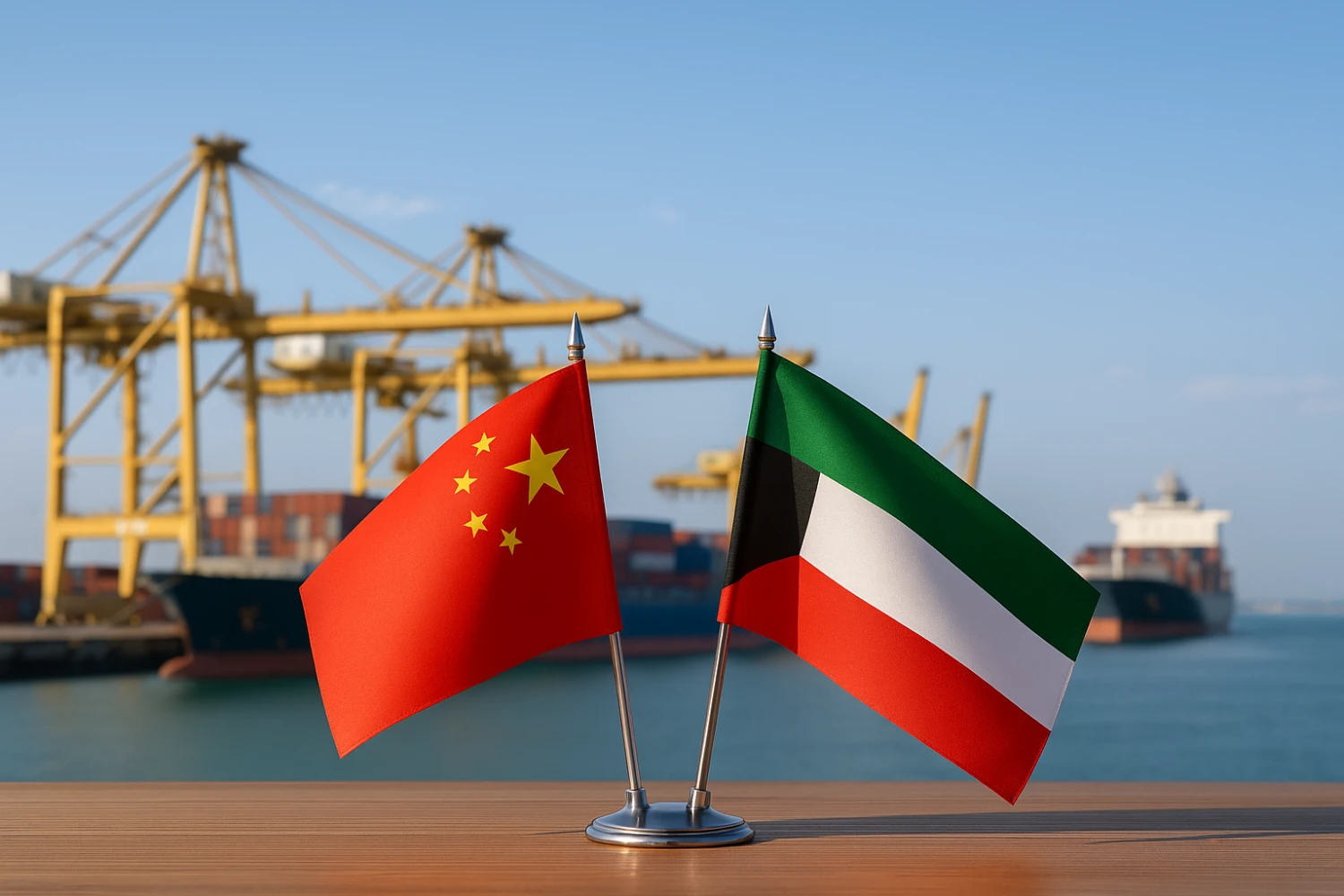
Shipping from China to Kuwait (2025 Guide): Sea, Air, DDP & Express Freight
Overview: Shipping from China to Kuwait
China remains one of Kuwait’s most important sourcing hubs in 2025, supplying a wide range of consumer goods, industrial equipment, construction materials, electronics, lighting products, and automotive parts. As Kuwait accelerates infrastructure development, retail expansion, and e-commerce penetration, demand for cost-effective imports from China continues to rise.
Shipping from China to Kuwait is strategically attractive for importers because:
-
China offers competitive manufacturing and flexible MOQs
-
Kuwait has a highly import-dependent domestic market
-
Freight routes between China and GCC countries are well-established
-
Sea Freight and DDP solutions make total landed costs predictable
-
Kuwait’s position in the northern Arabian Gulf reduces regional transit distances
From China, cargo typically departs from major export hubs such as Shenzhen, Guangzhou, Ningbo, Shanghai, Tianjin, and Qingdao, arriving at Kuwait’s key logistics gateways — Shuwaikh Port, Shuaiba Port, and Kuwait International Airport (KWI) for urgent air shipments.
Whether you are importing bulk construction materials, LED lighting, home furniture, or electronics, you will find multiple cost tiers and transit options — from FCL/LCL sea freight to air freight, DDP door-to-door delivery, and express courier services.
Key Shipping Highlights
| Shipping Aspect | Details |
|---|---|
| Cheapest Method | Sea Freight (FCL/LCL) to Shuwaikh or Shuaiba Port |
| Fastest Method | Express courier (DHL / UPS / FedEx / Aramex) |
| Typical Sea Transit Time | 18–30 days from major China ports |
| Typical Air Transit Time | 3–7 days to Kuwait International Airport (KWI) |
| Best for Large Shipments | FCL 20GP / 40HQ Containers |
| Best for SMEs | DDP Door-to-Door from China to Kuwait |
| Popular Imports | Furniture, electronics, automotive parts, lighting products, plastics, garments |
Why Kuwait Importers Prefer Winsail Logistics
-
Transparent landed cost estimation (no hidden charges)
-
Stable DDP and sea freight routes with controlled customs risks
-
Consolidation services for mixed or small-volume orders
-
Professional handling of fragile, oversized, and high-value cargo
As freight rate volatility, customs regulations, and supply chain disruptions continue to affect global logistics, choosing a reliable logistics partner is crucial. Winsail Logistics provides complete end-to-end guidance, ensuring your cargo moves efficiently from factories in China to your warehouse or doorstep in Kuwait.
Estimated Shipping Cost & Transit Time
Shipping costs from China to Kuwait vary based on freight mode, cargo volume, weight, product category, HS code, and seasonal demand. In 2025, freight rates have stabilized across the China–GCC corridor, driven by improving capacity and streamlined customs processes. Below is a realistic pricing reference range based on current market averages.
Note: These are reference rates for planning purposes. Actual pricing depends on origin port/airport, cargo details, and Kuwait customs requirements.
2025 Cost & Transit Time Comparison
| Mode | Cost Range (Typical Cargo) | Transit Time | Best For | Notes |
|---|---|---|---|---|
| Sea Freight – FCL (20GP/40HQ) | 20GP: USD 1,200–1,850 40HQ: USD 2,200–3,300 |
18–30 days | Large shipments, bulky goods | Lowest cost per CBM, predictable for construction & furniture imports |
| Sea Freight – LCL | USD 45–75 per CBM (min 1–2 CBM) | 20–32 days | Small/medium shipments | Ideal for mixed orders from different suppliers; consolidation saves cost |
| Air Freight | USD 4.5–9.5 per kg (chargeable weight) | 3–7 days | Urgent, high-value goods | Based on volume weight: Max(GW, Volumetric Weight) |
| DDP Door-to-Door | USD 230–650 per CBM or USD 6–12 per kg | 8–18 days | SMEs, no customs handling | Includes customs clearance + import taxes depending on cargo |
| Express (DHL / FedEx / UPS / Aramex) | USD 8–20 per kg (0.5–100kg) | 3–6 days | Samples, e-commerce parcels | Fastest method; fuel & remote fees may apply |
Cost Selection Guide
| Shipment Size | Recommended Method | Reason |
|---|---|---|
| Under 50 kg | Express courier | No customs paperwork, fastest transit |
| 50–300 kg | Air Freight / DDP Air | Balance between cost & speed |
| 1–10 CBM | LCL Sea Freight | Cost-efficient for mixed goods |
| Full container loads | FCL Sea Freight | Best cost per unit for bulk cargo |
| E-commerce / consumer goods | DDP Door-to-Door | Eliminates risk & reduces delays |
How Freight Costs Are Calculated
The total logistics cost depends on:
- Cargo Volume / Weight: Sea freight uses CBM; air uses chargeable weight
- Port Pair / Airport Routing: Rates differ between Shenzhen, Ningbo, Shanghai, and Guangzhou
- Commodity Type & HS Code: Certain categories require inspection or approvals
- Peak Seasons: Ramadan, Christmas, and Back-to-School seasons increase demand
- Fuel Surcharges and Carrier Fees
2025 Transit Time Overview
| Route | Typical Duration | Notes |
|---|---|---|
| China → Shuwaikh / Shuaiba Ports | 18–30 days | Most FCL/LCL shipments |
| China → Kuwait International Airport (KWI) | 3–7 days | Direct or transshipment routes |
| DDP Door-to-Door | 8–18 days | Customs included, varies by commodity |
| Express Courier | 3–6 days | Fastest but costlier |
Quick Takeaways for Kuwait Importers
-
Sea freight remains the most cost-effective option for cargo above 3–4 CBM
-
Air freight is 10× faster but 2–4× more expensive than sea freight
-
DDP is the preferred choice for SMEs, eliminating customs risk
-
Courier services are ideal for samples and lightweight shipments
Sea Freight from China to Kuwait
Sea freight is the most economical and widely used shipping method for transporting commercial goods from China to Kuwait, especially for bulky, heavy, or high-volume products. With well-established maritime trade routes through the Arabian Gulf, importers benefit from predictable costs, stable schedules, and scalable container options.
Why Choose Sea Freight for Kuwait Imports
-
Lowest cost per CBM for medium and large shipments
-
Ideal for furniture, building materials, lighting fixtures, machinery, plastics, and automotive parts
-
Multiple weekly sailings from major China ports
-
Stable GCC maritime routes with low risk of congestion compared to Europe or Africa
-
Suitable for both FCL (Full Container Load) and LCL (Less-than-Container Load) shipping
FCL vs LCL: Which Should You Use?
| Option | Best For | Pros | Cons |
|---|---|---|---|
| FCL (Full Container Load) | 20GP / 40GP / 40HQ shipments | Lowest unit cost, secure, less handling | Requires higher volume |
| LCL (Less-than-Container Load) | 1–12 CBM or mixed goods | Pay per CBM, ideal for SMEs | Longer processing time due to consolidation |
Kuwait importers with repeated monthly orders often switch from LCL to FCL once shipment volume exceeds 22–25 CBM, as a 40HQ becomes more cost-effective.
Major China Ports Serving Kuwait
| Port | Region | Why It Matters |
|---|---|---|
| Shenzhen (Yantian / Shekou) | South China | Fast for electronics, lighting, consumer goods |
| Guangzhou / Nansha | Pearl River Delta | Consolidation hub for mixed export shipments |
| Ningbo | East China | Competitive rates, stable schedules |
| Shanghai | East China | Largest global container port, ideal for machinery |
| Qingdao | North China | Suitable for plastics, textiles, automotive parts |
| Tianjin | North China | Best for heavy industrial cargo |
Destination Ports in Kuwait
| Port | City | Purpose |
|---|---|---|
| Shuwaikh Port | Kuwait City | Main commercial port for general cargo, LCL & retail imports |
| Shuaiba Port | South of Kuwait City | Handles bulk, industrial goods, FCL, oil-related cargo |
Both ports are strategically connected to Kuwait’s logistics network, enabling smooth inland distribution to warehouses and retail outlets.
Sea Freight Transit Time to Kuwait
| Origin Port (China) | Transit Time |
|---|---|
| Shenzhen / Guangzhou | 18–26 days |
| Ningbo / Shanghai | 20–30 days |
| Qingdao / Tianjin | 22–32 days |
Transit duration may vary due to vessel schedules, customs inspections, or peak-season delays.
Sea Freight Cost Reference
| Container Type | Estimated Cost |
|---|---|
| 20GP | USD 1,200–1,850 |
| 40HQ | USD 2,200–3,300 |
| LCL | USD 45–75 per CBM |
Costs include ocean freight only. Additional destination charges, customs taxes, THC, and last-mile delivery fees apply unless using DDP.
Recommended Product Categories for Sea Freight to Kuwait
-
Home furniture, kitchenware, and interior decor
-
LED lighting, cables, and electrical materials
-
Construction materials and tiles
-
Plastic household goods
-
Machinery, auto parts, and hardware tools
When to Avoid Sea Freight
Choose air freight or express courier when:
❌ Goods are needed urgently
❌ The shipment is below 1–2 CBM
❌ Products are fragile, perishable, or require high security
Sea freight forms the backbone of most China–Kuwait import supply chains, offering unbeatable value for medium to large shipments. With the right planning, cargo consolidation, and professional customs handling, you can minimize delays and achieve optimal landed cost.
Air Freight from China to Kuwait
Air freight is the preferred option for time-sensitive, high-value, or lightweight goods imported from China to Kuwait. With multiple daily flights connecting major Chinese airports to Kuwait International Airport (KWI), importers benefit from fast transit times, secure handling, and predictable schedules — making it ideal for electronics, fashion accessories, medical devices, and urgent replenishment orders.
Why Importers Choose Air Freight
-
Fastest transit time after express couriers
-
Minimal handling and reduced risk of cargo damage
-
Stable pricing for shipments under 300 kg
-
Suitable for launches, promotional campaigns, and urgent restocking
-
Reliable for high-value cargo with insurance options
Main Air Routes: China → Kuwait
| China Airport | Code | Typical Usage |
|---|---|---|
| Guangzhou Baiyun | CAN | Consumer electronics, lighting goods |
| Shenzhen Bao’an | SZX | E-commerce parcels, small electronics |
| Shanghai Pudong | PVG | Machinery, industrial components |
| Beijing Capital | PEK | General commercial cargo |
| Hong Kong | HKG | Transit hub for global air freight forwarding |
Arrival Airport in Kuwait:
Kuwait International Airport (KWI) — Kuwait City’s primary cargo gateway, offering bonded warehouse services and swift customs processing.
2025 Air Freight Rates from China to Kuwait
Air freight is charged based on chargeable weight, which considers both actual weight and volume.
| Shipment Size | Estimated Cost |
|---|---|
| 45–100 kg | USD 6.5–9.0 per kg |
| 100–300 kg | USD 5.5–8.0 per kg |
| 300+ kg | USD 4.5–7.5 per kg |
Prices fluctuate based on fuel surcharges, carrier options, and HS code requirements.
Transit Time (Air Freight to Kuwait)
| Route | Timeframe |
|---|---|
| Direct China → KWI | 3–5 days |
| Transshipment via Dubai / Bahrain / Qatar | 4–7 days |
Air freight speed is not affected by port congestion and remains the most reliable method during peak seasons or GCC regulatory changes.
Chargeable Weight Formula
Air freight uses the greater of:
ChargeableWeight= MAX( Gross Weight , Volumetric Weight ) Volumetric Weight(kg) = Length × Width × Height(cm) / 6000This means large but lightweight goods may cost more due to dimensional space.
Best Cargo Types for Air Freight
-
Consumer electronics and LED components
-
Spare parts and automotive accessories
-
Fashion items, watches, and branded products
-
Medical devices and pharmaceuticals
-
Small-batch e-commerce orders
When NOT to Use Air Freight
Avoid air freight if:
❌ Cargo is bulky or above 3–5 CBM
❌ Shipment value cannot justify premium rates
❌ Hazardous materials require special airline permits (e.g., lithium batteries)
In these cases, DDP Air, LCL, or FCL Sea Freight may be more cost-effective.
Pro Tips for Kuwait Importers
✔ Prepare invoices and packing lists clearly to avoid customs delays
✔ Cargo insurance is recommended for electronics and fragile items
✔ Ship early before seasonal peaks (Ramadan & Back-to-School)
✔ Consolidate multiple suppliers into one air shipment to reduce cost per kg
Air freight provides an excellent balance of speed and safety for Kuwait-bound goods, especially when lead time is business-critical. For urgent, high-value imports, it remains the most trusted logistics solution after express services.
Door-to-Door Shipping to Kuwait (DDP vs DAP)
Door-to-door shipping has become one of the most popular logistics options for Kuwait importers—especially SMEs—because it simplifies the entire import process. Instead of dealing with customs brokers, taxes, duties, and delivery arrangements, importers rely on a freight forwarder like Winsail Logistics to handle everything from the China supplier’s warehouse to their address in Kuwait.
In 2025, DDP (Delivered Duty Paid) and DAP (Delivered At Place) are the two most commonly used door-to-door terms for China–Kuwait shipments. Understanding the difference between them helps importers choose the most cost-effective solution.
What is DDP (Delivered Duty Paid)?
DDP means the logistics provider takes care of all logistics costs and responsibilities, including:
✔ Ocean or air freight
✔ Customs clearance in Kuwait
✔ Import duties and applicable taxes
✔ Last-mile delivery to your warehouse or doorstep
✔ No hidden fees or extra paperwork
Importer responsibility:NONE — only receive the goods.
Best for:
-
Small to medium businesses
-
First-time importers
-
E-commerce retailers
-
LED lighting, electronics, furniture, home decor, and general consumer products
What is DAP (Delivered At Place)?
DAP includes:
✔ Freight from China to Kuwait
✔ Delivery to your warehouse or designated location
But does NOT include:
❌ Import duties
❌ Customs taxes
❌ VAT / inspection fees
❌ Any local handling charges
Importer responsibility: Pay duties and complete customs clearance before receiving goods.
Best for:
-
Experienced importers
-
Companies with existing customs brokers
-
Shipments with special tax arrangements
DDP vs DAP Comparison Table
| Feature | DDP | DAP |
|---|---|---|
| Customs Clearance | Included | Not included |
| Duties & Taxes | Paid by forwarder | Paid by importer |
| Risk of Extra Fees | None | Possible |
| Ideal For | SMEs, new importers | Experienced traders |
| Time Required | Faster | Depends on importer |
| Total Cost Predictability | High | Medium |
| Hassle Level | Zero | Moderate to high |
Why Kuwait Importers Prefer DDP
🇰🇼 Kuwait’s customs requirements can be strict, and errors in HS codes, valuation, or documentation may result in:
-
Delays of 5–20 days
-
Penalties on misdeclared goods
-
Additional inspection charges
-
Storage fees at the port or airport
With DDP, Winsail Logistics eliminates these risks by managing:
✔ HS code declaration
✔ Duties calculation
✔ Inspection procedures
✔ Delivery to warehouse in Kuwait City, Farwaniya, Hawally, Ahmadi, Jahra, and more
Typical 2025 DDP Rates for Kuwait
| Shipment Type | Estimated Cost |
|---|---|
| DDP by Air | USD 6–12 per kg (7–15 days) |
| DDP by Sea (LCL) | USD 230–650 per CBM (15–28 days) |
| DDP by Sea (FCL) | Custom quotation based on container type |
Rates vary by product category, documentation requirements, and destination city.
Who Should Choose DDP?
Use DDP if you:
✔ Want a fixed landed cost
✔ Don’t want to deal with Kuwait customs
✔ Are running online or offline retail
✔ Have mixed-product shipments from multiple suppliers
When to Choose DAP Instead
Choose DAP if you already have:
✔ In-house customs capability
✔ Local tax advantages
✔ Pre-approved import licenses
DDP simplifies the China-to-Kuwait import process by eliminating customs complexity, making it the most efficient and predictable logistics model for small and medium importers. For businesses aiming to reduce time, risk, and administrative workload, DDP is the smartest choice in 2025.
Express Shipping from China to Kuwait
Express courier shipping is the fastest method to move goods from China to Kuwait, making it ideal for urgent samples, small parcels, promotional products, and lightweight e-commerce shipments. With leading carriers like DHL, FedEx, UPS, Aramex, and SF Express offering daily flights, parcels reach Kuwait quickly with full tracking, predictable delivery windows, and simplified paperwork.
Why Choose Express Shipping
-
Fastest transit time after air freight
-
Seamless customs declaration handled by the courier
-
Real-time tracking and SMS/email delivery alerts
-
Best choice for shipments under 50 kg
-
Zero need for import agents or customs brokers for most consumer goods
Top Express Carriers for China → Kuwait
| Carrier | Strength |
|---|---|
| DHL | Fastest delivery, strong global network |
| FedEx | Reliable and stable transit schedules |
| UPS | Competitive rates for commercial parcels |
| Aramex | Excellent GCC-wide delivery coverage and COD options |
| SF Express | Cost-effective for smaller parcels, strong China origin handling |
Most express routes consolidate in China logistics hubs like Shenzhen, Hong Kong, and Shanghai before flying to Kuwait International Airport (KWI).
2025 Express Shipping Rates to Kuwait
| Weight Range | Estimated Cost | Transit Time |
|---|---|---|
| 0.5 – 5 kg | USD 20–60 total | 3–6 days |
| 5 – 20 kg | USD 8–18 per kg | 3–6 days |
| 20 – 50 kg | USD 7–16 per kg | 4–7 days |
| 50 kg+ | Quotation-based | 4–8 days |
Express is costlier than air freight per kg, but faster and requires no customs interaction for most general goods.
Common Products Shipped via Express
-
Product samples and prototypes
-
Mobile phones, accessories, and electronics components
-
Fashion, garments, and cosmetics
-
Small-capacity LED products
-
High-priority spare parts
Express Surcharges to Expect
Some couriers may apply:
-
Fuel surcharge (variable monthly)
-
Remote area delivery fees (depending on Kuwait location)
-
Oversize/overweight charges
-
Lithium battery handling fee (if applicable)
Winsail provides upfront quotations to avoid surprise costs.
When to Use Express Instead of Air Freight
Choose Express when:
✔ Shipment is below 50 kg
✔ Delivery time is critical
✔ You need end-to-end tracking updates
✔ You are sending samples before placing bulk orders
✔ Import paperwork needs to be hassle-free
Choose Air Freight when:
❌ Shipment exceeds 50–100 kg
❌ Cargo has large dimensional volume
❌ You want lower cost per kg
Express courier shipping is the go-to option for Kuwait importers who need rapid delivery with minimum documentation. It serves as a crucial logistics tool for startups, sample procurement, online sellers, and businesses with fast inventory turnover cycles.
Customs Clearance in Kuwait
This section explains how customs clearance works in Kuwait when you import goods from China — covering the responsible authority, duty/tax structure, required documents, clearance steps, restrictions/risks, and practical tips for smoother delivery.
Customs Authority
-
The main authority handling imports is the General Administration of Customs (Kuwait Customs).
-
All commercial shipments must be cleared through Kuwait Customs before goods are released for delivery.
Import Duties, Taxes & Key Regulations
-
Kuwait uses the common external tariff of the GCC Customs Union. For most imported goods from outside the GCC (e.g., from China) the standard customs duty rate is 5% of CIF value (cost, insurance, freight) at the time of declaration.
-
Some categories may be exempt (e.g., certain medicines or basic foodstuffs) — always check product classification/HS code.
-
As of 2025, although the GCC framework allows a VAT scheme, Kuwait has not yet fully implemented VAT, so importers currently do not pay VAT on top of customs duty in most cases.
-
Duty and any applicable charges must be paid before customs release.
Required Documents for Clearance
To import into Kuwait, the following documents are typically required:
-
Original Commercial Invoice (with accurate value, description, quantity, unit price, origin, HS code, net & gross weight)
-
Detailed Packing List (with itemized weights, dimensions, package counts)
-
Bill of Lading (for sea freight) or Air Waybill (AWB) (for air/express freight)
-
Certificate of Origin (COO) — often legalized by the chamber of commerce and, if required, attested via Kuwaiti consulate.
-
Importer’s valid commercial license / import license (registered with the Kuwait Chamber of Commerce and Industry — KCCI) for commercial shipments.
-
Correct HS code classification for all goods — misclassification can cause rejection, penalties, delays.
Depending on the nature of goods, additional permits or certificates may be required (e.g., conformity certificates for electronics).
Typical Customs Clearance Process
-
Pre-registration: Importer (or appointed customs broker) ensures all documentation is prepared, importer license is valid, HS codes assigned.
-
Submission of documents to Kuwait Customs — usually through digital filing systems or via the broker when cargo arrives.
-
Customs inspection / verification — physical or documentary inspection; certain goods may require conformity assessments or approval by relevant authorities.
-
Duty payment — duty (typically 5% CIF) must be paid before release.
-
Release and delivery — once duties are cleared and documentation is accepted, cargo is released for onward delivery to importer’s warehouse or address.
Customs clearance typically can be completed within 1–2 weeks, assuming all documents and compliance are in order.
Restricted, Prohibited Goods & Compliance Risks
-
The following goods are prohibited for import into Kuwait: alcoholic beverages, pork and pork-derived products, gambling equipment, narcotics, weapons/ammunition, and other items that conflict with local laws or religious restrictions.
-
Some goods (e.g., pharmaceuticals, medical devices, chemicals, electronics with special components) may require special import permits, conformity certificates, or inspection clearance from relevant ministries.
-
Mis-declaration, wrong HS codes, missing import license or insufficient documentation can lead to: shipment delays, fines, cargo seizure, or rejection.
Practical Tips for Smooth Clearance
-
Always register with KCCI and ensure you hold a valid commercial/import license before shipping.
-
Prepare and double-check invoice & packing list details: HS codes, item descriptions, weights, volumes, and country of origin must match cargo and B/L or AWB.
-
For electronics, lighting, toys or any regulated goods — check if a conformity certificate or special permit is required before shipment.
-
Work with an experienced customs broker or freight forwarder who knows Kuwait’s filing system and documentation requirements.
-
Plan for at least 10–14 days clearance window, especially during busy seasons, holidays, or if inspection is needed.
Customs clearance in Kuwait is relatively straightforward — provided you comply with documentation, duty rules, and the GCC tariff framework. For most commercial imports from China, expect a 5% customs duty, no VAT (as of 2025), and clearance within 1–2 weeks when handled properly.
Shipping Time & Cost Summary Table
To help Kuwait importers choose the right transportation method at a glance, the table below compares all major shipping options from China — including sea freight, air freight, DDP, and express courier. It summarizes typical 2025 costs, transit times, and the ideal use case for each mode.
China → Kuwait Shipping Options Comparison
| Shipping Method | Estimated Cost | Transit Time | Best For | Key Advantages | Limitations |
|---|---|---|---|---|---|
| Sea Freight – FCL | USD 1,200–1,850 (20GP) USD 2,200–3,300 (40HQ) |
18–30 days | Bulk cargo, full container loads | Lowest unit freight cost | Longer transit time |
| Sea Freight – LCL | USD 45–75 per CBM | 20–32 days | Mixed cargo, 1–12 CBM | Affordable for SMEs without full container volume | Consolidation delays possible |
| Air Freight | USD 4.5–9.5 per kg | 3–7 days | Urgent goods, high-value cargo | Fast delivery, reliable schedules | Higher cost per kg |
| DDP Door-to-Door | USD 230–650 per CBM (Sea) USD 6–12 per kg (Air) |
8–18 days (Sea/Air) | SMEs, e-commerce shipments | Customs, duties & taxes included | Limited for regulated goods |
| Express Courier (DHL/FedEx/UPS/Aramex) | USD 8–20 per kg | 3–6 days | Samples & small parcels | Fastest transit, full tracking | Most expensive per kg |
Quick Decision Guide
| Your Scenario | Best Method | Why |
|---|---|---|
| Importing 1–3 CBM of products for resale | LCL Sea Freight | Lowest cost without filling a container |
| Need stock urgently in Kuwait | Air Freight | 3–7 day delivery guarantees time-sensitive supply |
| Want a predictable landed cost with no customs workload | DDP | Import taxes included, no paperwork |
| Shipping full loads like furniture or machinery | FCL Sea Freight | Best price per CBM and safer handling |
| Sending samples before mass order | Express Shipping | Fastest and simplest import path |
Key Takeaways
-
Sea freight remains the most cost-efficient solution for bulk cargo and long-term stock replenishment.
-
Air freight is ideal when timing is critical and product margins support higher logistics spending.
-
DDP is the most convenient option for SMEs and first-time Kuwait importers, offering a risk-free logistics pipeline.
-
Express courier is unbeatable for prototypes, samples, and lightweight shipments that must arrive fast.
Key Ports & Airports: China ↔ Kuwait
Efficient logistics between China and Kuwait rely on well-established maritime and air routes supported by world-class infrastructure. Choosing the right port or airport can significantly affect cost, transit time, and supply chain stability — especially for importers handling regular shipments or time-sensitive goods.
Top Export Ports in China for Kuwait-Bound Shipments
China has multiple coastal gateways serving Kuwait, offering competitive rates and frequent sailings:
| Port | Region | Strength | Typical Kuwait Cargo |
|---|---|---|---|
| Shenzhen (Yantian / Shekou) | South China | Fast routes, major electronics hub | Electronics, lighting, consumer goods |
| Guangzhou / Nansha | Pearl River Delta | Strong consolidation services | Mixed LCL shipments, home goods |
| Shanghai | East China | Global trade hub and largest port | Machinery, industrial equipment |
| Ningbo-Zhoushan | East China | Stable ocean schedules | Furniture, plastics, hardware |
| Qingdao | North China | Competitive freight rates | Automotive parts, textiles |
| Tianjin | North China | Northern gateway | Heavy cargo, construction materials |
| Hong Kong | Special Administrative Region | Premium air-sea connectivity | High-value e-commerce goods |
For Kuwait-bound sea freight, Shenzhen and Ningbo are the most frequently used due to strong carrier capacity and competitive rates.
Main Seaports in Kuwait
| Port | Location | Primary Role | Best For |
|---|---|---|---|
| Shuwaikh Port | Kuwait City | Main commercial port | LCL, retail cargo, containerized goods |
| Shuaiba Port | South of Kuwait City | Industrial freight hub | FCL, bulk cargo, oil & petrochemical items |
Both ports are connected to national highways and distribution centers, enabling fast clearance and inland delivery to business hubs such as Hawally, Farwaniya, Ahmadi, Jahra, and Kuwait City.
Primary Airports Handling China → Kuwait Imports
| Airport | Code | Location | Use Case |
|---|---|---|---|
| Kuwait International Airport | KWI | Kuwait City | All commercial air freight, express courier, bonded warehouse handling |
Supporting Air Hubs in China
| Airport | Code | Best For |
|---|---|---|
| Guangzhou Baiyun | CAN | Export electronics, lighting components |
| Shenzhen Bao’an | SZX | E-commerce, small parcels, tech products |
| Shanghai Pudong | PVG | Machinery, industrial cargo |
| Beijing Capital | PEK | General goods, northern China cargo |
| Hong Kong | HKG | Premium freight, urgent deliveries |
Logistics Route Visualization (Conceptual)
China Ports → Arabian Sea Route → Kuwait (Shuwaikh/Shuaiba) OR China Airports → Direct / GCC Transshipment → KWI AirportMost sea shipments proceed via the Arabian Gulf, whereas air freight may transit through major GCC hubs such as Dubai (DXB), Doha (DOH), or Bahrain (BAH) before reaching Kuwait.
Which Route Should You Choose?
| Scenario | Best Route |
|---|---|
| Bulk imports (containers) | China → Shuwaikh / Shuaiba by sea |
| Urgent replenishment | China → KWI by air |
| Mixed cargo from multiple suppliers | Shenzhen / Guangzhou consolidation → Kuwait |
| High-value or branded goods | PVG/SZX/HKG → KWI air freight |
Choosing the optimal port or airport ensures shorter lead times, smoother customs handling, and lower freight costs — a key competitive advantage for Kuwait-based importers.
How to Ship from China to Kuwait: 6 Steps
Importing goods from China to Kuwait may seem complex, but with a structured approach, you can reduce delays, avoid unnecessary charges, and optimize your landed cost. Below is a clear six-step workflow most Kuwait importers follow, whether using Sea Freight, Air Freight, DDP, or Express.
Step 1 — Request a Freight Quote
Provide basic shipment details so your logistics partner can prepare an accurate quote:
✔ Product description & HS code
✔ Cargo weight and dimensions (CBM or kg)
✔ Supplier address in China
✔ Delivery address in Kuwait
✔ Shipping method preference (Sea / Air / DDP / Express)
Pro Tip: Request multiple options (FCL/LCL/Air) to compare transit time vs. cost.
Step 2 — Choose the Shipping Method
Based on your cost, lead time, and product category, select the most suitable option:
| Shipment Type | Best Method |
|---|---|
| < 50 kg | Express Courier |
| 1–10 CBM | LCL Sea Freight |
| Full loads | FCL Sea Freight |
| Urgent cargo | Air Freight |
| Hassle-free, tax-included | DDP Door-to-Door |
Your choice affects customs responsibility, insurance, and transit time.
Step 3 — Prepare Goods and Export Documents
The supplier (or Winsail Logistics) will handle:
-
Packaging optimization and palletization
-
Labeling and compliance checks
-
Export declaration in China
-
Commercial invoice, packing list, and certificate of origin
Avoid Delays: Ensure product descriptions and HS codes match across Invoice / Packing List / BL or AWB.
Step 4 — Freight Movement from China
Depending on your selected mode:
Sea Freight
Cargo loaded into container → departs via Arabian Gulf route → arrives at Shuwaikh or Shuaiba
Air Freight / Express
Cargo moves to airline hub → consolidated → flown to Kuwait International Airport (KWI)
Important
Track vessel or flight schedules to align with your inventory plan.
Step 5 — Customs Clearance in Kuwait
Your broker or Winsail Logistics will:
-
File import documents
-
Declare HS codes and cargo value
-
Pay customs duties (5% standard rate, VAT not applied as of 2025)
-
Arrange inspections if required
For DDP shipments: All customs tasks, duties, and fees are handled on your behalf — no action required from you.
Step 6 — Final Delivery in Kuwait
Once cleared, your cargo is released and delivered to:
- Your warehouse
- Retail store
- Fulfillment center
- Doorstep (for small parcels or DDP)
Delivery locations typically include Kuwait City, Ahmadi, Hawally, Farwaniya, and Jahra.
FAQs
Shipping costs vary based on mode, volume, and product type.
Expect USD 45–75/CBM for LCL, USD 1,200–3,300 per FCL container, USD 4.5–9.5/kg for air freight, and USD 8–20/kg for express shipments.
DDP all-inclusive options start from USD 230/CBM.
-
Sea Freight: 18–32 days
-
Air Freight: 3–7 days
-
DDP Air/Sea: 8–18 days
-
Express: 3–6 days
Transit time varies by origin port, customs workload, and peak-season conditions.
Yes, commercial importers must have a valid KCCI-registered import license. For personal shipments under certain thresholds, a license may not be required. DDP services remove this requirement for most SMEs.
As of 2025, Kuwait does not collect VAT on imports, but 5% customs duty applies under GCC rules.
Certain goods may be exempt or require additional approvals depending on HS code.
Yes, but some electronic items may require compliance certificates and proper labeling.
Always verify HS codes and product certification needs before shipping.
Minimum documents include: Commercial Invoice, Packing List, Bill of Lading/Air Waybill, and Certificate of Origin. Some categories may need additional permits.
