
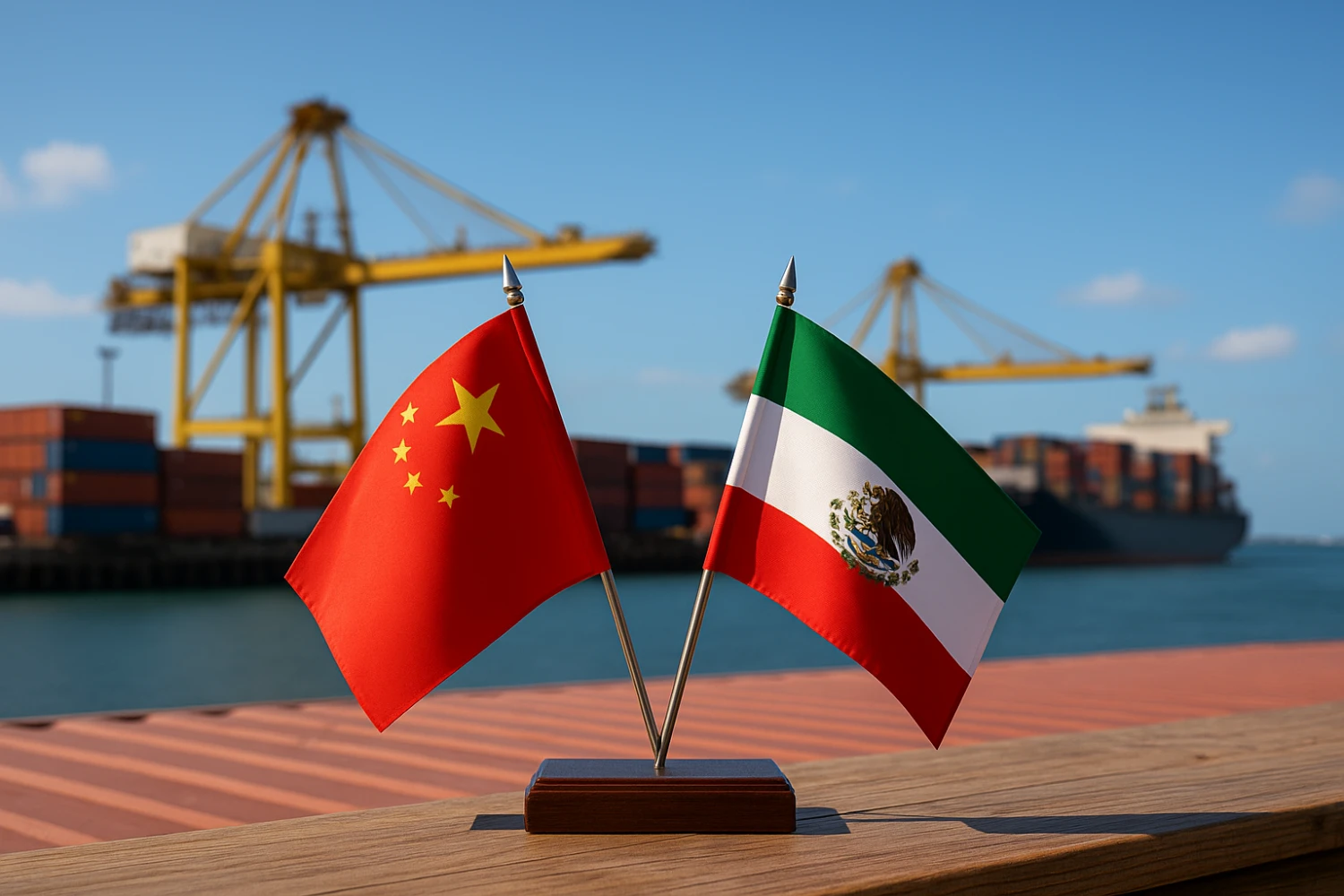
Ship from China to Mexico (2025 Guide): Cost, Transit Times & Shipping Methods
Overview
Trade between China and Mexico continues to expand in 2025, driven by strong demand for electronics, machinery, automotive components, home goods, textiles, and e-commerce replenishment. Most shipments move from major Chinese export hubs such as Shanghai, Ningbo, Shenzhen, Guangzhou, and Qingdao to Mexico’s key Pacific ports—Manzanillo and Lázaro Cárdenas—as well as the Gulf port of Veracruz for cargo destined for central and eastern regions of the country.
Mexico’s geographic position and growing manufacturing base make it a strategic market for both traditional importers and cross-border sellers. Importers typically choose between sea freight, air freight, DDP services, and express couriers, depending on budget, urgency, and product category. Sea freight dominates large commercial shipments, while air freight is used for urgent, high-value, or time-sensitive goods. DDP services are increasingly popular because they simplify customs handling and provide predictable landed costs.
This pillar page provides a high-level overview of the main shipping options and trade routes from China to Mexico, with links to detailed guides for costs, transit times, customs requirements, and shipping methods.
Key Shipping Highlights
| Item | 2025 Summary |
|---|---|
| Main trade routes | East/South China → Manzanillo / Lázaro Cárdenas / Veracruz |
| Common shipping methods | FCL, LCL, Air Freight, DDP, Express |
| Typical cargo types | Electronics, Machinery, Auto Parts, Home Goods, Apparel |
| Sea freight transit time | 18–32 days |
| Air freight transit time | 3–7 days |
| Customs authority | SAT (Servicio de Administración Tributaria) |
Estimated Shipping Cost & Transit Time
Shipping costs and transit times from China to Mexico vary depending on the chosen method, cargo volume, and destination region. In 2025, sea freight remains the most economical option, especially for bulky or heavy goods, while air freight and express couriers offer faster but more expensive delivery. DDP services are widely used by importers who prefer predictable landed costs without managing SAT customs procedures themselves.
The ranges below reflect realistic 2025 market averages for the China–Mexico trade lane. Actual rates may fluctuate due to fuel surcharges, port congestion, carrier capacity, and seasonal demand, especially during peak months.
Cost & Time Comparison
| Method | Typical Cost Range | Average Transit Time | Best For |
|---|---|---|---|
| Sea Freight (FCL) | USD 2,300–4,000 per 40HQ | 18–32 days | Bulk cargo, stable inventory |
| Sea Freight (LCL) | USD 35–60 per CBM | 25–40 days | Small shipments, supplier consolidation |
| Air Freight | USD 4.8–8.5 per kg | 3–7 days | High-value or urgent goods |
| DDP Air / DDP Sea | Varies by route & weight | 7–12 days (Air) / 25–40 days (Sea) | SMEs, e-commerce, simplified clearance |
| Express (DHL/UPS/FedEx) | USD 6–12 per kg | 3–6 days | Samples, light parcels, rapid deliveries |
Quick Notes
-
Sea freight is ideal for shipments above 2–3 CBM, offering the lowest landed cost.
-
Air freight provides reliable schedules for time-sensitive commercial cargo.
-
DDP services eliminate the need for importers to manage SAT clearance or NOM compliance manually.
-
Express couriers are best for small parcels, not large commercial volumes.
Sea Freight Summary (FCL & LCL)
Sea freight is the primary and most cost-efficient method for shipping goods from China to Mexico, especially for medium to large volumes. Most cargo departs from major Chinese ports such as Shanghai, Ningbo, Shenzhen, Guangzhou, and Qingdao, arriving at Mexico’s main Pacific gateways—Manzanillo and Lázaro Cárdenas—with Veracruz serving the Gulf region. Transit times generally range from 18–32 days, depending on the route and carrier schedule.
When to Choose FCL
FCL (Full Container Load) is the best option if you have:
-
Shipments exceeding 15–18 CBM
-
High-value products requiring minimal handling
-
Predictable purchasing cycles and stable inventory plans
FCL offers better unit economics, fewer delays, and enhanced cargo security.
When LCL Makes Sense
LCL (Less than Container Load) works well when:
-
Cargo volume is too small for a dedicated container
-
You are testing new products or placing trial orders
-
You need to consolidate goods from multiple suppliers
Although flexible and cost-sharing, LCL may involve slightly longer lead times due to consolidation and deconsolidation processes.
Air Freight Summary
Air freight is the preferred option for importers who need fast and reliable delivery from China to Mexico. Major air routes operate from Shanghai (PVG), Shenzhen (SZX), Guangzhou (CAN), and Hong Kong (HKG) to Mexico City (MEX), with additional services to Guadalajara (GDL) and Monterrey (MTY) through direct and transshipment flights. Transit times typically range from 3–7 days, depending on routing and customs processing.
When Air Freight Is the Right Choice
Air shipping is well suited for:
-
High-value or fragile goods
-
Urgent or time-sensitive replenishment
-
Medium-weight shipments (usually under 300–500 kg)
-
E-commerce inventory requiring predictable delivery windows
Air freight provides a strong balance between speed and security, with far shorter lead times than sea freight.
Cost & Weight Considerations (High-Level)
Pricing is based on the higher of actual weight or chargeable weight, a standard air freight billing practice. The full breakdown of formulas and examples is explained in the dedicated air freight guide.
Door-to-Door Shipping (DDP vs DAP)
Door-to-door services simplify the shipping process for businesses importing into Mexico, offering predictable costs and reduced involvement in customs procedures. The two most common options are DDP (Delivered Duty Paid) and DAP (Delivered at Place). While both cover transportation from China to the final destination in Mexico, they differ significantly in who handles duties, taxes, and SAT clearance.
When DDP Is the Better Choice
DDP has become popular among SMEs, e-commerce sellers, and companies that prefer a fully managed service. Under DDP:
-
The forwarder handles SAT customs clearance, duties, VAT (IVA), and regulatory checks
-
The importer avoids dealing directly with brokers or complex documentation
-
Landed costs are transparent and easier to budget
-
Ideal for consumer goods, small/medium shipments, and Amazon Mexico (FBA) inventory
When DAP Makes More Sense
DAP may be a better fit for experienced importers who:
-
Already have an RFC (Registro Federal de Contribuyentes) and customs broker
-
Prefer to manage IVA and duties themselves
-
Handle large volumes or specialized cargo requiring tailored documentation
DAP gives importers more control but requires active participation in clearance and compliance.
Express Shipping Summary (DHL / FedEx / UPS)
Express courier services—primarily DHL, FedEx, and UPS—offer the fastest way to ship from China to Mexico. Transit times typically range from 3–6 days, making express ideal for samples, small parcels, high-value electronics, and urgent e-commerce replenishment. These services include end-to-end tracking and more predictable delivery windows compared to traditional air freight.
When Express Shipping Is the Best Choice
Express couriers are recommended when:
-
Shipment weight is under 20–30 kg
-
You require urgent delivery for testing, pre-production samples, or stock-out prevention
-
You want minimal handling and simplified customs processing
-
The cargo value is suitable for Mexico’s expedited clearance thresholds
For heavier shipments, express pricing increases sharply, making standard air freight more cost-effective.
Pricing Logic (High-Level Summary)
Express rates are influenced by:
-
Chargeable weight (volumetric vs actual)
-
Delivery zone within Mexico
-
Peak-season or remote-area surcharges
-
Additional options like insurance and signature services
Detailed comparison tables and carrier-specific analyses are available in the express shipping guide.
Customs Clearance Overview for Mexico
All commercial imports into Mexico are regulated by the Servicio de Administración Tributaria (SAT), which oversees customs clearance, duties, taxes, and compliance verification. Accurate documentation and correct HS classifications are critical to avoid delays, as Mexico enforces strict rules for inspections, product compliance, and import permits (when applicable).
Taxes & Duties (High-Level Overview)
Shipments entering Mexico may incur:
-
IVA (Value-Added Tax) — typically 16%
-
Customs duties, depending on HS code and trade category
-
DTA (Customs Processing Fee)
-
Additional charges if the shipment requires a NOM compliance check or physical inspection
Duty and tax amounts vary significantly by product type, so it’s important to confirm requirements before booking.
Required Documents (Summary)
Most imports require:
-
Commercial Invoice
-
Packing List
-
Bill of Lading or Air Waybill
-
Correct HS Codes & product descriptions
-
Certificates or permits for regulated goods (e.g., electronics under specific NOM standards)
Full document explanations, templates, and compliance checklists are provided in the detailed import guide.
Common Reasons for Delays
-
Incorrect HS codes
-
Missing NOM compliance documentation
-
Under-declared values
-
Random SAT customs inspections
-
Incomplete or inconsistent invoices
Shipping Time & Cost Summary
The table below provides a high-level comparison of the main shipping methods from China to Mexico. It helps importers quickly evaluate the trade-offs between cost, speed, and suitability for different shipment sizes. Detailed pricing models, seasonal variations, and case examples are available in the dedicated cost and transit-time guides.
Shipping Method Comparison
| Method | Typical Cost | Average Transit Time | Best For |
|---|---|---|---|
| FCL Sea Freight | USD 2,300–4,000 per 40HQ | 18–32 days | Bulk cargo, stable replenishment |
| LCL Sea Freight | USD 35–60 per CBM | 25–40 days | Small-volume shipments, supplier consolidation |
| Air Freight | USD 4.8–8.5 per kg | 3–7 days | Urgent, high-value, time-sensitive goods |
| DDP Air / DDP Sea | Varies by weight & destination | 7–12 days (Air) / 25–40 days (Sea) | SMEs, e-commerce, simplified customs |
| Express (DHL/UPS/FedEx) | USD 6–12 per kg | 3–6 days | Samples, lightweight parcels, rapid delivery |
Key Notes
-
Sea freight remains the most cost-effective option for commercial shipments above 2–3 CBM.
-
Air freight offers predictable and fast transit times for urgent or sensitive cargo.
-
DDP reduces importer involvement in SAT customs procedures.
-
Express is ideal for small parcels but not for medium or heavy cargo.
Key China & Mexico Ports / Airports
China and Mexico are connected by established Pacific and Gulf shipping routes, supported by major seaports and airports on both sides. Understanding these gateways helps importers optimize transit times, reduce inland logistics costs, and improve overall reliability.
Major China Export Ports
-
Shanghai (CNSHA) – Largest export hub with extensive carrier options
-
Ningbo (CNNGB) – Strong direct connections to Pacific Mexico ports
-
Shenzhen (CNSZX / CNYPW) – Ideal for South China manufacturing bases
-
Guangzhou (CNCAN) – Reliable for mixed cargo and consolidations
-
Qingdao (CNQDG) – Popular for machinery, metals, and industrial goods
Major Mexico Destination Ports
-
Manzanillo – Mexico’s busiest Pacific container port; primary China–Mexico route
-
Lázaro Cárdenas – Deep-water port with growing capacity and stable schedules
-
Veracruz – Key Gulf port serving central and eastern Mexico
Major Mexico Airports
-
Mexico City (MEX) – Main entry point for air cargo; high frequency from major China hubs
-
Guadalajara (GDL) – Important for electronics, automotive, and tech shipments
-
Monterrey (MTY) – Strong industrial region with consistent cargo demand
How to Ship from China to Mexico: 6-Step Overview
Shipping from China to Mexico follows a structured process, regardless of whether you choose sea freight, air freight, DDP services, or express couriers. The summary below provides a quick, high-level understanding of each stage. Detailed workflows, documentation steps, and operational checklists are available in the full shipping-process guide.
Step-by-Step Summary
1. Request a Freight Quote
Share shipment details including product type, HS codes, volume, weight, Incoterms, and destination in Mexico. Your forwarder recommends suitable shipping methods based on urgency and cost.
2. Book Space & Prepare Cargo
Your supplier confirms cargo readiness and prepares required documents. The forwarder arranges pickup or instructs delivery to the origin warehouse or port.
3. Export Handling in China
Forwarders manage export declarations, container loading for FCL, or consolidation for LCL. All documents must match the commercial invoice and packing list.
4. Main Transportation (Sea, Air, or Express)
Cargo travels from China to Mexico via the chosen mode. Transit time varies significantly by route—Pacific ports offer the fastest ocean delivery.
5. SAT Customs Clearance in Mexico
SAT reviews the documentation, verifies HS classifications, and calculates IVA and any applicable duties. With DDP services, the forwarder handles the entire clearance process on your behalf.
6. Final Delivery Within Mexico
Cargo is delivered to the consignee’s warehouse, Amazon Mexico FBA center, or final destination using local trucking or courier services.
FAQs
FCL sea freight is usually the most cost-effective option for shipments above 15–18 CBM.
Sea freight typically takes 18–32 days, while air freight takes 3–7 days. Express options deliver in 3–6 days.
Yes, for regular commercial imports. However, DDP services allow businesses to receive goods without using their own RFC.
At minimum: Commercial Invoice, Packing List, Bill of Lading or Air Waybill, and correct HS codes. Some products may require NOM certificates.
Common reasons include incorrect HS codes, missing NOM documentation, under-declared values, and random SAT inspections.
Yes. DDP is widely used by SMEs and e-commerce sellers because it includes customs clearance, duties, and delivery—reducing importer workload.
Yes. Both air and sea freight can deliver to FBA centers, but shipments must follow Amazon’s packaging, labeling, and delivery appointment rules.
Air freight is faster and ideal for urgent or high-value goods, while sea freight provides the best cost efficiency for larger volumes.
