
Shipping from China to Egypt — Sea, Air & Door-to-Door Freight Services
Overview of China–Turkey Trade Corridor
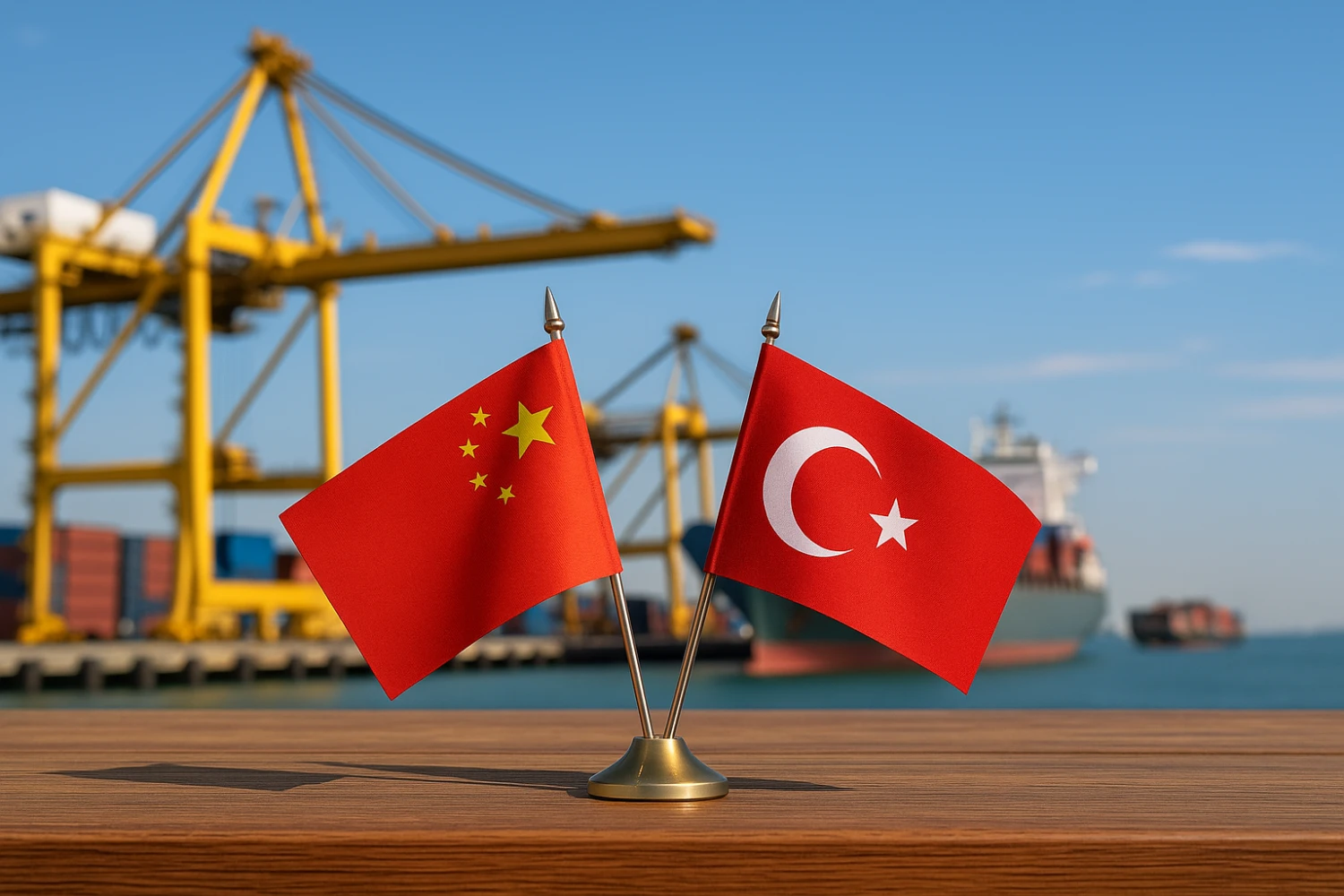
Shipping from China to Turkey has become one of the most strategic freight corridors connecting Asia and Europe. Turkey’s unique location at the crossroads of both continents, combined with its growing role in regional manufacturing and re-export activities, makes it a critical destination for Chinese exporters and global supply chains. In 2025, Turkish importers increasingly rely on China for cost-effective industrial machinery, electronics, home appliances, furniture, textiles, and automotive spare parts.
Turkey benefits from multiple international trade agreements, including the EU–Turkey Customs Union framework, making it an attractive logistics hub for importers who plan to distribute goods onward to the European Union, the Balkans, and the Middle East. This positioning allows many Chinese exporters to consolidate shipments in Turkey and then move products seamlessly into nearby markets.
Main Shipping Routes
There are two primary freight routes from China to Turkey:
Sea Freight
The dominant mode for bulk and heavy cargo. Vessels typically sail from Shanghai, Ningbo, Shenzhen, and Qingdao through the Indian Ocean and Suez Canal, entering the Mediterranean Sea before arriving at ports such as Istanbul, Mersin, and Izmir.
Air Freight
Ideal for urgent or high-value shipments. Most flights operate from Shanghai (PVG), Guangzhou (CAN), and Hong Kong (HKG) to Istanbul Airport (IST) or Sabiha Gökçen Airport (SAW), offering significantly reduced transit times compared to sea freight.
Why Shipping from China to Turkey Is Growing
-
Rising domestic demand for competitively priced Chinese products
-
Turkey’s position as a gateway to Europe, Middle East, and Central Asia
-
Improved logistics infrastructure and customs digitization
-
Increased e-commerce sourcing and SME imports
-
Flexible shipping modes including Sea Freight, Air Freight, DDP, and Express
Key Shipping Highlights
| Feature | Details |
|---|---|
| Main Chinese Ports | Shanghai, Ningbo, Shenzhen, Qingdao, Guangzhou |
| Main Turkish Ports | Istanbul, Mersin, Izmir |
| Best Method for Heavy Cargo | Sea Freight (FCL / LCL) |
| Fastest Delivery Method | Air Freight / Express |
| Most Cost-Efficient Solution | FCL Sea Freight |
| Ideal for SMEs | DDP Shipping (taxes handled upon arrival) |
| Typical Transit Time | Sea: 18–30 days • Air: 3–7 days |
| Common Cargo Types | Machinery, electronics, textiles, auto parts, household goods |
Estimated Shipping Cost & Transit Time
Shipping costs from China to Turkey in 2025 remain highly competitive compared to EU markets, making Turkey an attractive gateway for both domestic distribution and re-export. Rates fluctuate based on fuel prices, Suez Canal capacity constraints, carrier schedules, and seasonal cargo demand. While sea freight offers the lowest price per kilogram, air freight and express services provide significantly faster lead times for time-sensitive shipments.
Below is a realistic price and duration overview to help importers choose the most suitable method based on urgency, cargo weight, and shipment size.
Estimated Shipping Costs from China to Turkey
(Indicative ranges; final pricing depends on cargo specs, HS code, INCOTERMS, and pickup location.)
| Shipping Method | Cost Range (USD) | Suitable Cargo |
|---|---|---|
| FCL Sea Freight (20GP / 40HQ) | $1,250 – $2,650 per container | Bulk, heavy, non-urgent goods |
| LCL Sea Freight | $45 – $85 per CBM | Small to medium shipments |
| Air Freight | $4.8 – $8.5 per kg | Urgent, high-value items |
| Express Courier (DHL/FedEx/UPS/Aramex) | $6.5 – $12 per kg | Samples, electronics, spare parts |
| DDP Shipping | $4.5 – $9.8 per kg | SMEs, e-commerce imports where taxes/clearance are handled |
Estimated Transit Time from China to Turkey
| Shipping Method | Delivery Time | Notes |
|---|---|---|
| FCL Sea Freight | 18 – 30 days | Via Suez Canal to Istanbul, Izmir, or Mersin |
| LCL Sea Freight | 20 – 32 days | Extra time for consolidation and deconsolidation |
| Air Freight | 3 – 7 days | Fastest bulk method |
| Express Shipping | 2 – 5 days | Door-to-door delivery |
| DDP Shipping | 12 – 25 days | Time varies by customs workload & routing |
How to Select the Best Shipping Method
| Scenario | Best Option | Why |
|---|---|---|
| Importing 1 full container of machinery | FCL Sea Freight | Lowest unit cost |
| Sending 2–12 CBM of goods | LCL Sea Freight | Flexible for SMEs |
| Shipping urgent electronics | Air Freight | Fast and secure |
| Sending samples or spare parts | Express | Simplified door-to-door |
| Need tariff, VAT, and customs handled | DDP | Hassle-free importation |
Quick Takeaways
-
Sea freight remains the cheapest and most scalable option for Turkey
-
Air freight is preferred for electronics, fashion, accessories, and automotive parts
-
DDP eliminates customs barriers, helping SMEs avoid paperwork and tax risks
-
Express services are costlier per kg but unbeatable for time-critical delivery
Sea Freight from China to Turkey
Sea freight is the most widely used shipping method for Turkish importers sourcing from China due to its cost efficiency, high volume capacity, and established maritime routes via the Suez Canal. For businesses moving heavy, bulky, or non-urgent goods—such as machinery, automotive parts, home appliances, metal components, and furniture—ocean freight offers unbeatable value compared to air and express options.
Why Sea Freight Is Popular for Turkey
- Turkey’s coastal location and strong port network provide direct access to the Mediterranean
- Stable schedules and multiple weekly departures from major Chinese ports
- Economies of scale significantly reduce per-unit shipping costs
- Suitable for small and large shipments through FCL and LCL solutions
FCL vs LCL: Which Is Better?
| Mode | Best for | Advantages | Considerations |
|---|---|---|---|
| FCL (Full Container Load) | 20GP / 40GP / 40HQ | Lower cost per CBM, safer loading, ideal for >12 CBM shipments | Requires more cargo volume |
| LCL (Less than Container Load) | 1–12 CBM shipments | No need to fill a full container, ideal for SMEs | Slightly longer transit due to consolidation |
Tip: Once your shipment exceeds 12 CBM, upgrading to a 40HQ FCL often becomes more cost-effective than continuing with LCL rates.
| Origin Port (China) | Destination Port (Turkey) | Typical Transit Time | Notes |
|---|---|---|---|
| Shanghai | Istanbul | 23–30 days | Largest volume route |
| Ningbo | Mersin | 20–28 days | Strong for machinery & chemicals |
| Shenzhen | Izmir | 21–30 days | Competitive rates for electronics |
| Qingdao | Istanbul / Izmir | 22–31 days | Northern China advantage |
| Guangzhou | Mersin | 21–29 days | Good consolidation frequency |
Transit times can vary depending on carrier schedules, Suez Canal traffic, and seasonal demand.
Common Cargo Types for Turkey Sea Freight
- Household appliances and kitchen equipment
- Industrial machines and spare parts
- Furniture and home décor
- Auto parts and motorcycle components
- Clothing, fabrics, and textile raw materials
- Building and construction materials
Advantages of Choosing Sea Freight for Turkey
✔ Best price per kilogram for heavy or bulky goods
✔ Flexible container options (20GP / 40GP / 40HQ)
✔ High security and reduced risk for large shipments
✔ Ideal for B2B, wholesale, and e-commerce restocking
When Not to Use Sea Freight
❌ Urgent delivery deadlines (choose Air or Express)
❌ Small shipments under 1 CBM (Express is more suitable)
❌ High-value electronic components prone to moisture damage without proper packaging
Sea Freight Summary
Sea freight remains the backbone of China–Turkey trade, offering the right balance between cost and scalability. For importers dealing with regular purchase cycles or large replenishment orders, FCL or LCL shipments provide a dependable and budget-friendly solution.
Air Freight from China to Turkey
Air freight is the preferred shipping method for businesses that need fast, reliable delivery of high-value or time-sensitive products from China to Turkey. With Turkey acting as a regional distribution hub for Europe, the Middle East, and Central Asia, importers increasingly use air freight to accelerate supply chains, reduce lead times, and maintain inventory flexibility.
In 2025, the surge in e-commerce orders, electronics imports, and aftermarket auto parts has further boosted demand for air cargo services into Istanbul and Izmir. Compared to sea freight, air shipping offers unparalleled speed and lower risk of damage, making it ideal for shipments where timing and product integrity are critical.
Main Airports Serving the China → Turkey Air Route
| Country | Airport Code | Airport Name |
|---|---|---|
| China | PVG | Shanghai Pudong International Airport |
| CAN | Guangzhou Baiyun International Airport | |
| HKG | Hong Kong International Airport | |
| Turkey | IST | Istanbul Airport |
| SAW | Sabiha Gökçen International Airport |
Most commercial and cargo flights operate directly or via transit hubs such as Dubai, Doha, or Frankfurt, providing flexible routing and frequency.
Estimated Air Freight Cost
| Weight Break | Rate (USD/kg) | Notes |
|---|---|---|
| 45–100 kg | $6.2 – $8.5 | Suitable for urgent small batches |
| 100–300 kg | $5.3 – $7.5 | Most cost-effective range |
| 300+ kg | $4.8 – $6.8 | Best for wholesale orders |
| Volumetric Cargo | Based on Chargeable Weight | Larger items may incur dimensional fees |
Air freight pricing varies based on airline, seasonality, fuel surcharge, origin airport, and delivery terms.
Chargeable Weight Formula (Must-Know for Turkey Importers)
Air freight charges are based on actual weight vs. volumetric weight—whichever is higher.
Volumetric Weight(kg)=Length×Width×Height (cm)6000Volumetric\ Weight(kg) = \frac{Length \times Width \times Height\ (cm)}{6000}VolumetricWeight(kg)=6000Length×Width×Height(cm)
Example: A box measuring 60 × 50 × 40 cm
60×50×40÷6000=20kg chargeable60×50×40 ÷ 6000 = 20kg\ chargeable60×50×40÷6000=20kgchargeable
This formula ensures oversized but lightweight cargo is charged fairly based on space occupancy.
Air Freight Transit Time from China to Turkey
| Route | Delivery Time |
|---|---|
| Direct / Semi-Direct Flights | 3–5 days |
| Transit Flights (e.g., via Dubai / Doha) | 5–7 days |
Delays may occur during peak seasons or customs inspections, but air freight is still far faster than sea freight timelines of 18–30 days.
Best Cargo Types for Air Freight to Turkey
✔ Electronics and smart devices
✔ Fashion, apparel, and accessories
✔ Auto spare parts and aftermarket components
✔ Pharmaceutical supplies and medical devices
✔ High-value samples and prototypes for trade fairs
When Air Freight Makes the Most Sense
Choose air freight when:
-
Delivery deadlines are critical
-
Cargo value outweighs shipping cost
-
You cannot risk delays in the Suez Canal or sea congestion
-
You need stable temperature or controlled handling conditions
Air Freight Summary
Air freight provides the perfect balance between speed and reliability for importers who cannot afford long transit times. While costs are higher than sea freight, the reduced lead time and lower damage risk make air shipping a strategic choice for businesses selling in fast-moving or high-value markets.
Door-to-Door Shipping to Turkey (DDP vs DAP)
For many first-time importers and SMEs in Turkey, handling customs clearance, tax payments, and logistics coordination can be challenging. This is why Door-to-Door (D2D) solutions—especially DDP shipping—have become increasingly popular for shipments from China to Turkey. These services eliminate unexpected costs, simplify the import process, and reduce operational risks.
Winsail Logistics provides both DDP (Delivered Duty Paid) and DAP (Delivered At Place) options, allowing importers to choose based on their budget, customs responsibilities, and delivery timeline.
What Is the Difference Between DDP and DAP?
| Term | Who Pays Duties & VAT | Who Handles Customs | Final Delivery | Best For |
|---|---|---|---|---|
| DDP (Delivered Duty Paid) | Seller (Winsail) | Seller | Buyer’s address in Turkey | SMEs, new importers, e-commerce |
| DAP (Delivered At Place) | Buyer | Buyer | Buyer’s warehouse | Experienced importers with tax setup |
Why DDP Is Popular for Turkey
🇹🇷 Turkey’s customs procedures and VAT calculations (typically 20%) can be complex for new importers. Under DDP, Winsail handles:
✔ Customs declaration
✔ Import duty & VAT payments
✔ Final-mile delivery
✔ HS Code evaluation & compliance
✔ Communication with Turkish Customs Administration (TCA)
✔ Clearance at major entry ports/airports (Istanbul, Izmir, Mersin)
This ensures goods arrive ready for distribution without the buyer needing a local customs broker or tax registration.
DDP Shipping Cost & Transit Estimates to Turkey
| Mode | Typical Cost | Delivery Time | Notes |
|---|---|---|---|
| DDP Sea Freight | $4.5 – $7.5/kg | 18–28 days | Best for bulky cargo |
| DDP Air Freight | $6.8 – $9.8/kg | 6–12 days | Ideal for urgent shipments |
Rates vary by product category, HS code, and Turkish tax rules.
When to Choose DDP
Use DDP when:
-
You are importing for the first time
-
You want predictable, all-inclusive landed costs
-
You don’t have a tax ID or customs experience in Turkey
-
Your goods require HS code assessment or certification
-
You want a single logistics partner from pickup to delivery
When to Choose DAP
Choose DAP if:
-
You already have a Turkish customs broker
-
Your organization can manage VAT declarations
-
You prefer to pay duties yourself to optimize tax credits
-
You are importing B2B goods stored in bonded warehouses
Door-to-Door Summary
| Feature | DDP | DAP |
|---|---|---|
| Import Taxes Included | ✔ | ✖ |
| Customs Clearance | ✔ | Buyer handles |
| Transit Risk | Low | Medium |
| Ideal Users | SMEs, e-commerce sellers | Large corporates |
If you want a simple, transparent solution with no hidden costs or customs surprises, DDP is the preferred option for most Turkey-bound shipments.
Express Shipping (DHL / FedEx / UPS / Aramex)
Express courier services are the fastest and most convenient way to ship parcels from China to Turkey, especially for small, time-sensitive, or high-value shipments. Unlike sea or traditional air freight, express shipping provides true door-to-door delivery with integrated customs brokerage, real-time tracking, and predictable transit times.
For e-commerce sellers, sample procurement, spare parts delivery, and urgent orders, express shipping remains the go-to choice despite its higher per-kilogram cost.
Why Use Express Shipping to Turkey?
✔ Fastest delivery channel after premium air freight
✔ Door-to-door delivery without third-party coordination
✔ Real-time tracking and shipment visibility
✔ No minimum volume (ship as little as 0.5–1 kg)
✔ Ideal for Amazon, Trendyol, Etsy and cross-border e-commerce sellers
Major Express Couriers Serving China → Turkey
| Courier | Transit Time | Strength |
|---|---|---|
| DHL | 2–4 days | Most reliable for electronics & business documents |
| FedEx | 3–5 days | Strong global routing, stable rates |
| UPS | 3–6 days | Cost-effective for mid-sized parcels |
| Aramex | 3–7 days | Good pricing into MENA region, popular with SMEs |
Most providers operate through hubs in Hong Kong, Shenzhen, and Shanghai, consolidating shipments before forwarding to Istanbul or other major Turkish cities.
Express Shipping Cost
| Shipment Weight | Price Range (USD/kg) | Notes |
|---|---|---|
| 0.5 – 5 kg | $14 – $20 | Small parcels & samples |
| 5 – 20 kg | $9.8 – $14 | Typical for e-commerce |
| 20 – 50+ kg | $6.5 – $10 | Best value tier |
| Volumetric Cargo | Charged by dimensional weight | Applies to bulky cartons |
Express cost per kg decreases significantly as shipment weight increases.
When Express Shipping Makes Sense
Use Express when:
-
You need delivery within 2–7 days
-
Your cargo size is below 0.5 CBM
-
You are shipping small electronics, samples, spare parts, tools, fashion items, or urgent components
-
You want predictable rates and zero port handling
Common Mistakes to Avoid
❌ Shipping fragile goods without internal cushioning
❌ Under-declaring cargo value (causes customs delays)
❌ Ignoring dimensional weight rules
To ensure customs clearance and compliance, always provide clear product descriptions, HS codes, and accurate invoice values.
Express Shipping Summary
| Strength | Best Scenario |
|---|---|
| Speed | Urgent delivery deadlines |
| Reliability | E-commerce replenishment & samples |
| Convenience | SMEs without logistics experience |
Express shipping is the fastest and most hassle-free method to ship from China to Turkey—perfect for low-volume, high-value, or time-sensitive deliveries.
Customs Clearance in Turkey
Customs clearance is a mandatory step for all goods entering Turkey. Understanding the Turkish customs process is essential to avoid unexpected delays, penalties, or storage fees. Turkey maintains a structured import control system aligned with international norms, and certain products—especially electronics, machinery, textiles, and chemicals—may require certificates or regulatory approvals before being released.
The primary government authority responsible for customs oversight is:
🇹🇷 Turkish Customs Administration (TCA)
Official Role: Managing customs supervision, tariffs, VAT collection, import declarations, and compliance checks at seaports, airports, and land borders.
Import Taxes & Duties in Turkey
| Fee Type | Typical Rate | Applies To |
|---|---|---|
| VAT (Value Added Tax) | 20% | Most imported goods |
| Customs Duty | 0–20% | Based on HS Code & country of origin |
| Anti-dumping Duties | Case-by-case | Steel, textiles, electronics |
| Special Consumption Tax | Select products | Luxury items, vehicles, cosmetics |
EU–Turkey Customs Union Note:
Certain goods accompanied by an A.TR certificate may qualify for duty reductions when transiting EU supply chains. This does not waive VAT.
Required Documents for Importing into Turkey
To avoid customs delays, ensure the following are prepared correctly:
| Document | Purpose |
|---|---|
| Commercial Invoice | Declares product value & details |
| Packing List | Confirms cargo volume & packaging |
| Bill of Lading / Air Waybill | Transport record |
| Certificate of Origin | Determines duty rate |
| HS Code | Identifies tax classification |
| A.TR Certificate (if applicable) | Duty reduction for EU cooperation |
| Other Permits | Electronics, chemicals, medical devices may require approvals |
Common Customs Challenges for Turkey Imports
- Under-declared values → triggers reassessment, fines, or confiscation
- Incorrect HS Code → incorrect tax rate & clearance delays
- Missing certificates → especially for CE-mark products
- Lack of consignee tax number → may block delivery for DAP shipments
- Unprofessional packaging → extra inspections for high-risk cargo
How Winsail Simplifies Customs for Turkey
With Winsail Logistics, importers can avoid handling paperwork and tax complexities. Our team manages:
- HS code pre-classification
- Duty and VAT calculation
- Submission to TCA
- Clearance at Istanbul, Mersin, and Izmir ports
- Delivery to final destination for DDP customers
This ensures goods move from China to Turkey smoothly without delays caused by incorrect filings or incomplete documents.
When DDP Is the Smart Choice
If you’re unfamiliar with Turkey’s import taxation or lack a Turkish tax ID, DDP allows Winsail to complete customs on your behalf—eliminating confusion and guaranteeing landed pricing.
Customs Summary
| Importer Type | Recommended Method |
|---|---|
| First-time buyer | DDP |
| Experienced company with importer code | DAP / FCL |
| High-risk categories (electronics, chemicals) | DDP with compliance check |
Bottom line:
Understanding Turkey’s customs rules is essential for smooth import operations. With complete documentation and the right shipping method, clearance can be completed quickly and efficiently.
Shipping Time & Cost Summary (Quick Comparison Table)
Choosing the right shipping method depends on your shipment size, urgency, and budget. The table below provides a concise comparison of the most common logistics solutions from China to Turkey, allowing importers to make decisions quickly without sorting through detailed technical data.
China → Turkey Shipping Overview
| Shipping Method | Best For | Estimated Cost | Transit Time | Pros | Cons |
|---|---|---|---|---|---|
| FCL Sea Freight | >12 CBM bulk cargo | $1,250–$2,650 per container | 18–30 days | Lowest unit cost, scalable | Slow transit time |
| LCL Sea Freight | 1–12 CBM shipments | $45–$85 per CBM | 20–32 days | No need full container | Extra handling time |
| Air Freight | High-value & urgent goods | $4.8–$8.5/kg | 3–7 days | Fast & secure | Higher cost |
| Express (DHL/FedEx/UPS/Aramex) | Small parcels & samples | $6.5–$12/kg | 2–5 days | True door-to-door | Expensive per kg |
| DDP Sea | SMEs, ecommerce | $4.5–$7.5/kg | 18–28 days | No duty/VAT worries | Longer lead time |
| DDP Air | Fast imports without customs hassle | $6.8–$9.8/kg | 6–12 days | All-inclusive pricing | Higher rate than standard air |
Quick Recommendations
| Business Scenario | Best Option | Why |
|---|---|---|
| First-time importer | DDP Sea / Air | Predictable costs, no customs complexity |
| Bulk restocking orders | FCL Sea | Best cost per unit |
| SME buying mixed SKUs | LCL Sea | Flexible volume |
| Launching new models or samples | Express | Fastest delivery |
| Automotive & electronics | Air Freight | Time-sensitive, lower damage risk |
Key Notes
-
If your shipping volume exceeds 12 CBM, FCL is almost always cheaper than LCL
-
Express becomes cost-effective only when speed > price
-
DDP is the best choice when you need zero paperwork or no Turkish tax registration
Key Ports & Airports: China ↔ Turkey
Efficient logistics between China and Turkey relies on a well-developed maritime and air cargo network. Understanding the major departure and arrival points helps importers plan optimal routes, reduce transit times, and minimize logistics costs.
🇨🇳 Major Export Ports in China
These ports handle the majority of Turkey-bound cargo, offering weekly sailings and strong carrier coverage:
| Port | Region | Strength |
|---|---|---|
| Shanghai | East China | Largest global container hub, most route options |
| Ningbo | Zhejiang | Competitive pricing for machinery & industrial goods |
| Shenzhen (Yantian / Shekou) | South China | Best for electronics & consumer products |
| Qingdao | North China | Ideal for heavy manufacturing exports |
| Guangzhou (Nansha) | South China | Strong consolidation services for SMEs |
Tip: Selecting the closest origin port to your supplier can reduce domestic trucking costs and save several days of handling time.
🇹🇷 Major Import Ports in Turkey
These ports are strategically located on Turkey’s coastline and are well-integrated with highway and rail systems for inland distribution.
| Port | Region | Strength |
|---|---|---|
| Istanbul Port | Northwest | Gateway for mixed consumer & industrial goods |
| Mersin Port | South | Ideal for Mediterranean and Middle East forwarding |
| Izmir Port | West | Strong auto parts and textile distribution network |
Most FCL and LCL sea freight services from China arrive at one of these three ports.
Main Air Cargo Hubs
Air shipments are routed through these international airports for express and general air freight services:
In China
-
PVG — Shanghai Pudong International Airport
-
CAN — Guangzhou Baiyun International Airport
-
HKG — Hong Kong International Airport
In Turkey
-
IST — Istanbul Airport: Turkey’s largest cargo airport with extensive inbound China routes
-
SAW — Sabiha Gökçen International Airport: Cost-effective alternative for express courier and e-commerce imports
Route Overview
China → Turkey freight flows generally follow two corridors:
📌 Maritime Corridor: China → Suez Canal → Mediterranean → Turkey ports (Istanbul / Izmir / Mersin)
📌 Air Corridor: PVG / CAN / HKG → IST / SAW (direct or via Dubai, Doha, Frankfurt)
This dual infrastructure ensures stable supply chain options even during peak season congestion.
Port & Airport Summary
| Mode | Origin | Destination | Key Benefit |
|---|---|---|---|
| Sea Freight | Shanghai / Ningbo / Shenzhen / Qingdao / Guangzhou | Istanbul / Izmir / Mersin | Lowest cost for bulk cargo |
| Air Freight | PVG / CAN / HKG | IST / SAW | Fast & secure for urgent imports |
How to Ship from China to Turkey: 6 Practical Steps
Whether you’re a first-time importer or an experienced buyer scaling operations, a structured shipping workflow helps avoid delays, unexpected costs, and customs issues. Below is Winsail’s proven 6-step framework for moving goods efficiently from China to Turkey.
Step 1 — Request a Freight Quotation
Provide detailed shipment information to receive an accurate shipping proposal:
✔ Product name & HS code
✔ Cargo weight, dimensions, and CBM
✔ Packaging type (cartons, pallets, crates)
✔ Incoterms (EXW / FOB / DDP)
✔ Pickup location in China & delivery address in Turkey
Tip: Sharing correct dimensions helps avoid volumetric charges for air and express shipments.
Step 2 — Choose the Right Shipping Method
Select a mode based on urgency, cargo size, and budget:
| Shipment Scenario | Recommended Method |
|---|---|
| Bulk cargo >12 CBM | FCL Sea |
| Mixed SKUs 2–12 CBM | LCL Sea |
| High-value / urgent orders | Air Freight |
| Samples & small parcels | Express |
| No customs experience | DDP |
Step 3 — Prepare Import & Export Documents
Ensure all paperwork is complete and compliant with Turkish customs:
✔ Commercial invoice
✔ Packing list
✔ Bill of Lading / Air Waybill
✔ Certificate of Origin
✔ Required permits (CE marking, if applicable)
✔ HS codes for taxation
Missing or inaccurate documents cause the majority of clearance delays and storage fees in Turkey.
Step 4 — Cargo Pickup & Consolidation
Winsail arranges factory pickup in China, transports goods to the nearest warehouse, and consolidates shipments if required. For LCL orders, consolidation optimizes freight cost by combining multiple suppliers’ cargo into one container.
Step 5 — International Shipping & Tracking
Cargo is shipped via sea or air to Turkey. During transit:
✔ Real-time tracking updates
✔ Pre-alert notifications
✔ Coordination with Turkish Customs Administration (TCA)
For DDP shipments, taxes and duties are prepaid, eliminating last-mile uncertainty.
Step 6 — Customs Clearance & Final Delivery
Once cargo arrives:
✔ Customs inspection and VAT/duty calculation
✔ Release of goods after TCA approval
✔ Delivery to buyer’s warehouse, fulfillment center, or retail location
For DDP, importers receive goods ready to sell without handling paperwork, registrations, or customs brokers.
Importer Checklist
Before shipping, confirm:
-
Accurate cargo dimensions and weights
-
Correct HS codes assigned
-
CE and product compliance where required
-
Delivery address in Turkey confirmed
-
Chosen shipping method aligned with your logistics budget and lead time
FAQs
Sea freight (FCL or LCL) is generally the most cost-effective option, especially for cargo exceeding 2 CBM. If your volume is above 12 CBM, choosing an FCL container offers the lowest cost per unit.
Depending on the method:
-
Sea Freight: 18–32 days
-
Air Freight: 3–7 days
-
Express Courier: 2–5 days
-
DDP: 12–28 days depending on sea or air routing
If you choose DAP or standard sea/air freight, yes—importers must provide their VKN (Tax Identification Number).
With DDP, Winsail handles customs and taxes, so you do not need a tax ID.
You typically need a commercial invoice, packing list, bill of lading or air waybill, HS codes, certificate of origin, and in some cases, CE compliance certificates for electronics and regulated goods.
Yes, but certain products require CE marking, correct voltage compatibility, and compliance with Turkish safety standards. Incorrect declarations lead to customs delays.
Yes. Items such as chemicals, medical equipment, lithium batteries, and telecom devices may require special permits. Always confirm HS code requirements before shipping.
