
Shipping Furniture from China Made Simple
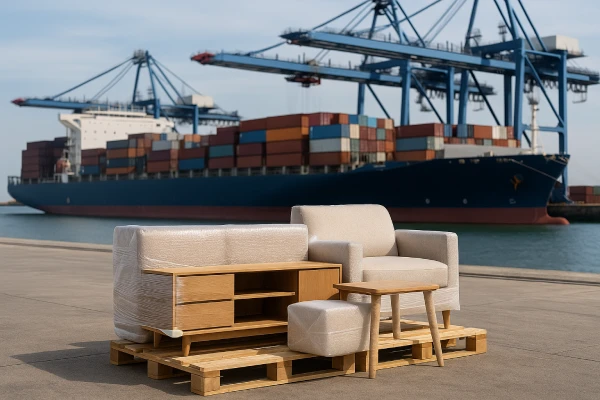
Furniture is one of the most dynamic export categories from China, driven by strong manufacturing clusters in Foshan, Dongguan, Ningbo, Qingdao, and Tianjin. Whether you are shipping wooden bedroom sets, upholstered sofas, office furniture, or outdoor collections, the logistics requirements can be very different from regular general cargo. Furniture is bulky, easily scratched, often semi-fragile, and usually requires customized packaging or reinforced loading. Because of these characteristics, choosing the right freight method, packaging standard, and container loading strategy is critical to avoid damage and unexpected costs.
Shipping furniture from China typically involves a mix of FCL, LCL, and sometimes air freight for high-value or urgent items. Most importers also work with multiple suppliers, which makes consolidation, warehouse handling, and quality checks an important part of the process. Transit time and landing cost can vary widely depending on your destination country, furniture materials, packaging size, and the level of protection required during transport.
Winsail Logistics works closely with furniture factories and global importers to design safe, efficient, and cost-effective logistics plans. From supplier coordination and consolidation to custom packaging guidance, container optimization, and multi-country DDP delivery, we help you move furniture with fewer risks and predictable costs. Our team ensures every shipment is properly protected, documented, and loaded to withstand long-distance sea or air transport—so your products arrive in excellent condition, ready for retail, wholesale, or project use.
Shipping Methods for Furniture from China
Shipping furniture from China requires selecting the most suitable transport mode for your product type, budget, and delivery timeline. Because furniture is typically large in volume and sensitive to damage, choosing the right method can significantly reduce costs and risks.

FCL (Full Container Load)
FCL is the most common and cost-efficient option for furniture importers. It provides full control of the container, better protection against damage, and lower cost per cubic meter. FCL is ideal for complete furniture sets, bulk shipments, hotel project orders, and outdoor furniture collections. With proper loading, padding, and fastening, it offers the safest transportation method for fragile or high-value pieces.
LCL (Less than Container Load)
LCL is suitable for mixed orders or small quantities from different suppliers. However, because LCL cargo is handled more frequently during consolidation and deconsolidation, it requires stronger packaging and accurate labelling. LCL rates are calculated by CBM, making volume control important for cost optimization.
Air Freight
Air freight is used for urgent project deadlines, luxury furniture, or small high-value items. Due to volumetric weight charges, air shipping is usually only practical for compact or partially disassembled pieces.
Express & Courier
Express is mainly used for furniture samples, small components, or replacement parts. Major carriers like DHL, FedEx, and UPS offer fast delivery, but costs are high for bulky goods.
Transit Time for Shipping Furniture from China
The transit time for shipping furniture from China depends on the destination region, the shipping method, and whether you are using FCL or LCL. Since furniture is primarily moved by sea, delivery timelines can vary significantly across different trade lanes.
Sea Freight Transit Time
- USA: 18–30 days (West Coast) / 28–40 days (East Coast)
- Europe: 28–40 days on average
- Middle East (UAE / Saudi Arabia / Qatar): 16–28 days
- Africa (Nigeria / Kenya / Ghana / South Africa): 25–45 days, depending on port congestion
FCL shipments generally move faster because they bypass LCL consolidation and deconsolidation steps.
LCL Transit Time
LCL furniture shipments may take 5–10 days longer than the standard FCL timeline due to warehouse processing, container loading schedules, and destination sorting procedures.
Air Freight Transit Time
Air freight typically takes 3–7 days, including export handling and customs clearance. This is commonly used for high-value furniture or urgent project needs.
Seasonal and Operational Delays
Peak seasons such as the Canton Fair period, holiday sales, and pre–Chinese New Year can add additional delays. For fragile furniture, extra time may be required for enhanced packaging and supplier coordination.
Shipping Cost Factors for Furniture from China
The cost of shipping furniture from China is mainly influenced by volume, packaging size, loading requirements, and the destination port. Because most furniture is bulky rather than heavy, freight charges are typically calculated based on CBM (cubic meter) rather than actual weight. Understanding these factors helps importers control expenses and plan budgets more accurately.
1. Volume & Dimensions (CBM-Based Billing)
Furniture shipments—especially sofas, bed frames, cabinets, and tables—occupy significant space. Even lightweight pieces may generate high freight charges due to volumetric calculations. Disassembled (KD) furniture can reduce CBM and significantly lower sea or air freight costs.
2. Packaging & Reinforcement Requirements
Strong packaging, such as wooden crates, wooden frames, corner protection, bubble wrapping, and moisture-proof treatment, increases safety but also adds size. LCL shipments often require additional reinforcement, which may expand CBM and increase fees.
3. Port Selection & Route Differences
Freight rates vary among major Chinese ports including Ningbo, Shenzhen, Guangzhou, Qingdao, and Tianjin. Certain routes—such as Europe or Africa—may have seasonal fluctuations, peak-season surcharges, or GRI adjustments that affect the final cost.
4. Service Type & Delivery Terms (FOB / CIF / DAP / DDP)
Door-to-door DDP services include destination charges, customs duties, and last-mile trucking. These can represent a significant portion of total landed cost for large furniture shipments.
5. Peak-Season Surcharges
During Q4 and pre–Chinese New Year, furniture freight rates often rise due to high demand and limited container availability.
Packaging & Handling Requirements for Furniture
Proper packaging is the most critical factor in ensuring furniture arrives safely after long-distance transport. Because furniture can be easily scratched, dented, or moisture-damaged, importers must work closely with suppliers and freight forwarders to follow strict packing and handling standards.
1. Protective Materials for Surface & Corner Safety
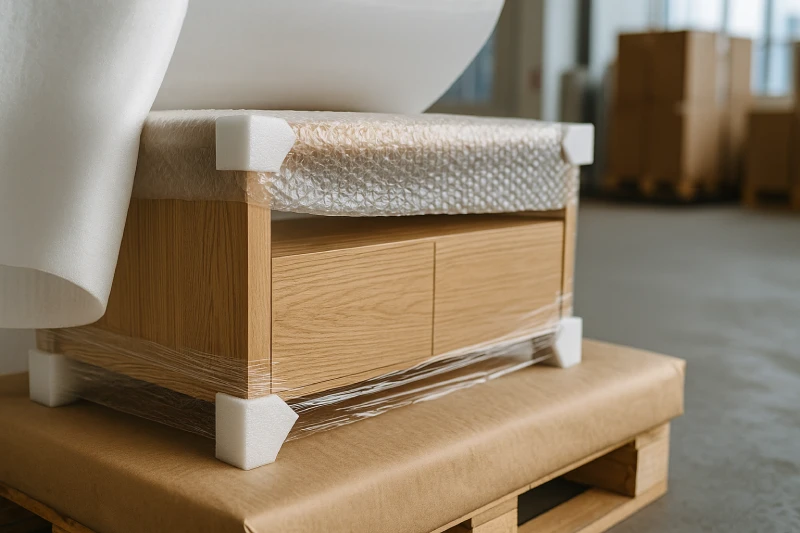
Most furniture damage occurs at corners, edges, and protruding parts. For this reason, strong corner protectors, thick foam padding, bubble wrap, and anti-scratch film are essential. Delicate surfaces like lacquered wood, glass, marble, or high-gloss panels require additional soft-layer protection to prevent friction during transit.
2. Wooden Crates or Wooden Frames for Reinforcement
Large or irregularly shaped items—such as sofas, wardrobes, conference tables, and outdoor lounge sets—often require custom wooden crates or wooden frames (ISPM 15 compliant). This prevents compression damage and keeps the item stable during loading, stacking, and sea movement.
3. Moisture & Mold Prevention
Furniture made from wood, leather, or fabric is highly vulnerable to humidity. Desiccant packs, moisture-proof bags, and mold-prevention spray are recommended for long-distance sea shipments, especially for tropical destinations in Southeast Asia, the Middle East, and Africa.
4. Loading & Unloading Precautions
Furniture must be loaded strategically inside the container—heavy items at the bottom, fragile items on top, and all pieces secured with straps. Soft goods like sofas should not be tightly compressed to avoid deformation. During LCL shipping, cartons should be clearly labeled, strengthened, and stacked with caution to minimize handling damage.
5. Packaging Requirements for Different Materials
- Solid wood: Needs thicker internal padding and strong corner guards
- Glass or mirrors: Must be fully enclosed in wooden crates
- Upholstered furniture: Requires breathable wrapping to prevent mold
- Metal furniture: Needs anti-rust film or oil coating
Proper packaging not only reduces damage risks but also lowers claims and improves the success rate of large project shipments.
HS Codes & Customs Notes for Furniture
Furniture is classified under HS Chapter 94, which covers a wide range of materials and product types. Accurate HS code selection is essential for determining import duties, complying with national regulations, and avoiding customs delays.
Common HS Codes for Furniture
- 9401: Seats (sofas, chairs, office chairs)
- 9403: Wooden, metal, or plastic furniture (tables, cabinets, wardrobes, shelves)
- 9404: Mattresses and bedding items
- 9405: Lighting and lamps used in furniture sets
Important Customs Compliance Notes
Environmental Regulations
Many countries—especially the United States and EU—require compliance with EPA / CARB / TSCA Title VI formaldehyde standards for wood-based furniture. Importers may be asked to provide testing certificates or supplier declarations.
Origin Certificates
Middle Eastern countries such as Saudi Arabia and UAE may require Certificate of Origin (COO) or SASO/SABER authentication depending on the material.
Wood Packaging Rules:
Any wooden crates used for shipping must follow ISPM 15 standards to avoid quarantine issues.
Proper HS code classification helps reduce customs risk and ensures faster, smoother clearance for furniture shipments.
Popular Furniture Products We Ship
Winsail Logistics handles a wide variety of furniture shipments from China, supporting retailers, wholesalers, e-commerce brands, and large commercial projects. Our experience covers both small-volume orders and full-container shipments from major manufacturing hubs such as Foshan, Dongguan, Ningbo, Qingdao, and Tianjin.
We commonly ship:
- Indoor wooden furniture: beds, wardrobes, dining tables, TV cabinets
- Upholstered furniture: sofas, armchairs, lounge chairs, mattresses
- Office furniture: office chairs, workstations, standing desks, filing cabinets
- Outdoor furniture: wicker sets, aluminum tables, patio lounges
- Metal & industrial-style furniture: steel-frame shelves, bar tables, storage racks
- Flat-pack (KD) furniture: panels, modular cabinets, ready-to-assemble sets
- Custom-built project furniture: hotel, villa, restaurant, school, and office projects
Whether your shipment requires disassembled packaging, multiple supplier consolidation, oversized loading, or reinforced wooden crates, our team provides tailored solutions to ensure each piece arrives safely and cost-effectively.
Loading Methods & Container Optimization for Furniture
Efficient and damage-free loading is one of the most important parts of shipping furniture from China. Because furniture pieces vary widely in size, weight, and fragility, each shipment requires a tailored loading plan to maximize safety and container space utilization.
1. Strategic Container Layout
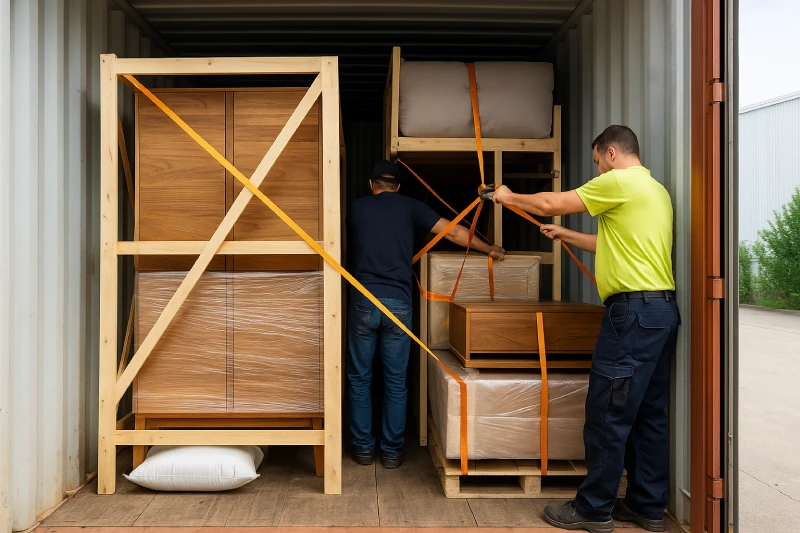
Large and heavy items such as wardrobes, solid-wood tables, and cabinets are positioned at the bottom to create a stable base. Lighter or fragile items—such as mirrors, glass doors, and upholstered chairs—are placed on top or in protected sections. Proper aisle spacing is maintained to prevent friction and shifting.
2. Use of Straps, Dunnage, and Corner Protection
Furniture should be secured with nylon straps, anti-slip mats, air bags, and corner guards to reduce impact movement during sea turbulence. For mixed-material shipments, additional separators or wooden blocking may be required to avoid contact between metal and wooden surfaces.
3. Wooden Crates & Wooden Frames for Oversized Items
Items that cannot be fully boxed or are irregularly shaped—such as large sofas, marble tables, or custom project furniture—are often reinforced with ISPM 15–certified wooden frames or crates to prevent deformation and compression damage.
4. Optimizing CBM for Cost Efficiency
For high-volume orders, flat-pack (KD) furniture helps significantly reduce CBM. Combining suppliers through consolidation also improves container fill rate, lowering per-unit shipping cost.
Proper loading and optimization not only protect the cargo but also reduce overall freight spending for furniture importers.
Route & Port Recommendations for Furniture Shipments
Choosing the right port and route is essential for minimizing cost and transit time when shipping furniture from China. Because most furniture factories are located near South China and East China, selecting the nearest major port can reduce domestic trucking fees and shorten export handling time.
Recommended Origin Ports in China
- South China: Shenzhen (Yantian / Shekou), Guangzhou, Foshan
Best for upholstered furniture, wooden furniture, and custom project orders. - East China: Ningbo, Shanghai
Ideal for flat-pack (KD) furniture, office furniture, and panel-based items. - North China: Qingdao, Tianjin
Suitable for metal and industrial-style furniture.
Route Considerations by Destination
- USA & Canada: Direct services to LA/LB, Seattle, Vancouver, and East Coast via Panama
- Europe: Stable schedules to Rotterdam, Hamburg, and Felixstowe
- Middle East: Fast transit to Dubai (Jebel Ali), Dammam, and Jeddah
- Africa: Regular services to Mombasa, Durban, Lagos, Tema, and Dar es Salaam
How to Reduce Delays
Strategically selecting peak-season–friendly routes, avoiding transshipment-heavy services, and coordinating factory readiness can significantly reduce risk for fragile or oversized furniture shipments.
Compliance & Certifications for Furniture Export
Furniture shipments must comply with various international regulations related to material safety, environmental standards, and wood packaging rules. Failure to meet these requirements can result in customs delays, fines, or rejected shipments at the destination port.
1. Environmental & Formaldehyde Standards
Countries such as the United States and European Union enforce strict rules for wood-based furniture:
- TSCA Title VI (EPA) for composite wood products
- CARB Phase II formaldehyde emission limits
- E1/E0 standards for European markets
Importers may need to provide test reports, supplier declarations, or compliance documents for these materials.
2. Middle East Compliance
Saudi Arabia and UAE may require:
- SASO / SABER certification
- Certificate of Conformity
- Accurate HS code declaration and Model/Brand information
3. ISPM 15 Wood Packaging Requirements
Any wooden crates, pallets, or wooden frames used for furniture shipping must be ISPM 15–certified to prevent quarantine issues. Stamped and heat-treated packaging is mandatory for most international destinations.
4. Fire Safety Regulations
Some markets—such as the UK and certain US states—require fire-retardant or flame-resistant labeling for upholstered furniture.
Ensuring compliance in advance protects your shipment from unexpected delays and additional costs.
Risk Control & Cargo Insurance for Furniture
Furniture is more prone to transit damage than most general cargo due to its size, irregular shapes, and sensitive surfaces. To minimize risks, each shipment requires a combination of preventive handling and proper insurance coverage.
Common Risks for Furniture Shipments
- Scratches, dents, and corner impact
- Deformation during stacking or compression
- Moisture damage, mold, or rust
- Breakage of glass, marble, or delicate components
- Damage caused by frequent handling in LCL shipments
Preventive Measures
Winsail conducts pre-loading inspections, supervises supplier packaging, and applies reinforced protection such as wooden frames, straps, and anti-slip materials. Clear labeling and photo documentation help track handling at every stage.
Recommended Insurance Options
- All-Risk cargo insurance for high-value or fragile pieces
- FPA / TLO coverage for large-volume, low-risk orders
- Additional protection for glass, marble, or custom-built furniture
Proper risk control and insurance ensure financial protection and peace of mind throughout the entire shipping process.
How Winsail Helps Furniture Importers
Shipping furniture requires more than simply booking space on a vessel. Winsail provides end-to-end support tailored to the unique characteristics of furniture logistics, ensuring every shipment is protected, consolidated, and delivered efficiently.
1. Multi-Supplier Coordination & Consolidation
Many furniture buyers source from multiple factories across Foshan, Dongguan, Ningbo, and Qingdao. We manage pickup, warehousing, labeling, and consolidation to help you load a full, optimized container at the lowest possible cost.
2. Packaging Guidance & On-Site Inspection
We work directly with factories to improve packaging standards, add wooden frames or crates when needed, and provide photo/video documentation to verify handling before loading.
3. Professional Container Loading Support
Our team supervises loading to ensure correct stacking, protection, and securing of fragile pieces—reducing damage rates for sofas, wooden cabinets, marble tables, and glass components.
4. Global Door-to-Door Delivery Options
From FCL/LCL sea freight to air shipments and DDP services, we offer flexible solutions for importers in the USA, Europe, Middle East, and Africa.
5. Dedicated Customer Support
A single point of contact follows your shipment from factory to final destination, ensuring smooth communication and predictable delivery.
Winsail provides a complete logistics framework to move furniture safely, cost-effectively, and with fewer delays.
FAQs
1. Is furniture suitable for LCL shipping?
Yes, but LCL requires stronger packaging because cargo is handled more frequently. For fragile or high-value pieces, FCL or wooden-crate reinforcement is recommended.
2. Can different suppliers’ furniture be combined into one container?
Absolutely. Winsail offers consolidation services to collect goods from multiple factories and load them into a single optimized container.
3. How can I reduce damage during shipping?
Use strong corner protectors, thick foam padding, wooden frames, and clear labeling. Proper container loading and supplier packaging inspections are essential.
4. Is air freight a viable option for furniture?
Only for urgent, high-value, or compact items. Volumetric weight makes air freight expensive for large pieces.
5. Do I need certificates for wooden furniture?
Most destinations require TSCA/CARB compliance for composite wood, and wooden crates must follow ISPM 15 standards.
6. What documents are needed for customs clearance?
Commercial invoice, packing list, bill of lading/airway bill, and material/compliance certificates if required by the destination country.
