
Why Shipping to Amazon FBA USA Matters
Shipping products from China to Amazon FBA USA remains one of the most important steps for global sellers entering the world’s largest e-commerce market. In 2025, the landscape continues to evolve: U.S. customs rules are tighter, Amazon’s compliance requirements are stricter, and freight rates fluctuate more frequently due to capacity shifts on major China–USA trade lanes. For many Chinese manufacturers and brand owners, choosing the right shipping method, preparing FBA-ready packaging, and meeting labeling standards have become essential factors that directly impact listing performance, buy box share, and inventory health.
New sellers often face the same challenges—How much does it cost? How long will it take? Should I choose sea freight, air freight, or DDP? What documents are needed to avoid delays? This guide answers those questions with a clear and practical step-by-step framework tailored specifically for Amazon FBA USA.
With years of experience helping thousands of sellers ship smoothly from China to U.S. fulfillment centers, Winsail Logistics provides the workflow, compliance insights, and logistics support you need to scale your Amazon business confidently.
Related Guide:
shipping from China to the USA for Amazon sellers
How Amazon FBA USA Works
Amazon FBA (Fulfillment by Amazon) is a logistics ecosystem that handles storage, picking, packing, and last-mile delivery for sellers. For Chinese suppliers and brand owners targeting the U.S. market, understanding how FBA operates is essential because the fulfillment workflow determines how you should pack your cartons, label each unit, schedule deliveries, and choose the correct shipping method from China.
When you create an FBA shipment in Seller Central, Amazon assigns specific U.S. fulfillment centers (FCs) such as ONT8, LAX9, FTW1, PHL4, or CLT2. Each facility follows strict receiving standards—carton size limits, weight restrictions, labeling rules, and appointment requirements. Products that fail to meet these standards may face delays, extra fees, or even rejection at the warehouse entry.
Another key aspect is Amazon’s distributed inventory model: depending on ASIN performance, category, and inbound settings, your shipment may be split across multiple FCs. This affects shipping costs and transit planning. Experienced freight forwarders can help minimize unnecessary split shipments by optimizing packaging and shipment plans.
Once the goods arrive at the FC, Amazon takes over and ensures Prime-level delivery to customers. Your job is to ensure compliance and ship smoothly—this guide will show you exactly how.
Shipping Options from China to Amazon FBA USA
Shipping to Amazon FBA USA involves selecting the most suitable combination of international transport, customs handling, and final delivery to the assigned fulfillment center (FC). Each method has different advantages depending on shipment size, urgency, and product type.
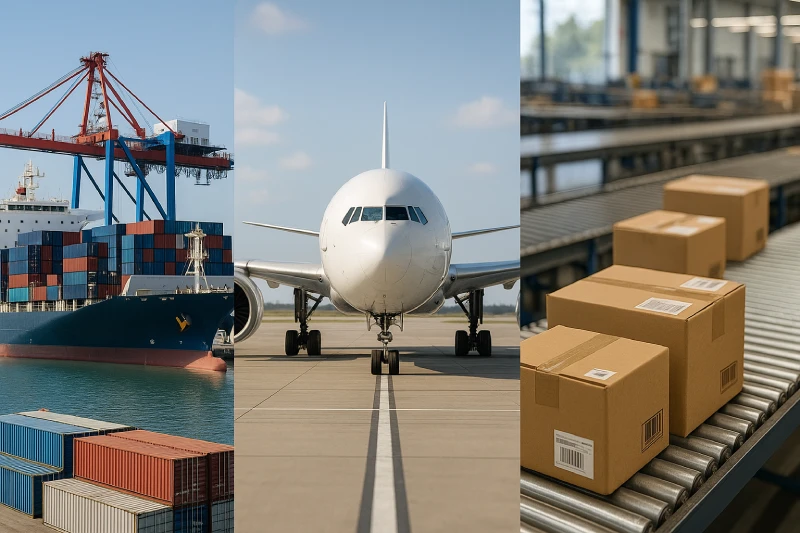
1. Sea Freight (FCL / LCL)
Sea freight is the most cost-effective solution for medium to large shipments.
- FCL (Full Container Load) is ideal for high-volume replenishment, offering predictable transit and the lowest unit cost.
- LCL (Less than Container Load) is suitable for smaller quantities but requires additional consolidation and deconsolidation time.
Common U.S. entry ports include Los Angeles/Long Beach, Oakland, Seattle, New York, Savannah, followed by domestic trucking or UPS/FedEx delivery to the assigned FBA warehouse.
2. Air Freight
Air freight provides a balanced combination of transit speed and cost. Typical total lead time ranges from 7–12 days, making it ideal for time-sensitive replenishment, electronics, beauty products, and seasonal SKUs where delivery reliability matters.
3. Express Delivery (DHL / UPS / FedEx)
Express services are the fastest option and often used for small, urgent shipments, product launches, or samples. They can deliver directly to Amazon FBA, provided the shipment meets all labeling and appointment requirements. This method is excellent for testing new SKUs or maintaining inventory during stockouts.
3. DDP vs DAP for FBA USA
- DDP (Delivered Duty Paid) includes customs clearance and duties, making it the most beginner-friendly solution.
- DAP (Delivered at Place) offers transparent freight rates but requires the importer (seller) to pay duties and manage compliance, making it more suitable for experienced sellers with a U.S. Tax ID.
Choosing the right method depends on shipment volume, budget, inventory urgency, and compliance needs. The following chapters will help you calculate costs and compare options more precisely.
Amazon FBA USA Shipping Costs
The cost of shipping from China to Amazon FBA USA in 2025 is influenced by multiple logistics variables, Amazon requirements, and U.S. customs procedures. Understanding these cost drivers helps sellers choose the most suitable shipping method and avoid unnecessary expenses.
1. Chargeable Weight & Dimensional Weight
Air freight, express services, and certain DDP channels apply dimensional (volumetric) weight.
- Chargeable weight = max(actual weight, volumetric weight)
Oversized cartons or lightweight but bulky items will significantly increase the total cost.
2. Shipping Method Differences
- Sea Freight (FCL/LCL) – lowest cost per unit but longer lead time
- Air Freight – mid-range cost with stable transit times
- Express (DHL/UPS/FedEx) – highest cost, fastest delivery
- DDP Channels – cost includes customs clearance + duties (if applicable)
Each method has a different pricing mechanism, which is why sellers should match replenishment cycles with logistics mode.
3. U.S. Customs-Related Fees
Depending on product category and declaration, your shipment may incur:
- Customs duties
- MPF (Merchandise Processing Fee)
- Harbor Maintenance Fee (HMF) for sea freight
- Additional exams if selected (X-ray, CET, tailgate)
DDP services generally bundle these fees into one all-inclusive rate.
4. Final Delivery to FBA Warehouse
Once cleared, your goods must be delivered to the assigned fulfillment center. Costs may vary due to:
- Warehouse location (West Coast vs Central vs East Coast)
- Palletized vs carton delivery
- Appointment requirements for truckloads
5. Seasonal Price Fluctuations
Peak seasons—especially August to November—often see higher air rates, long-haul trucking fees, and limited space.
Because rates change frequently, the most reliable way to estimate your cost is to request a tailored quote based on your SKU dimensions, weight, and target FBA warehouse.
Amazon FBA Packaging, Labeling & Compliance Requirements
Proper packaging, labeling, and compliance preparation are essential for ensuring your shipment is accepted at Amazon FBA warehouses without delays or additional fees. Amazon follows strict inbound rules, and failure to meet them may result in refusal, re-labeling charges, or disruptions to your inventory flow.
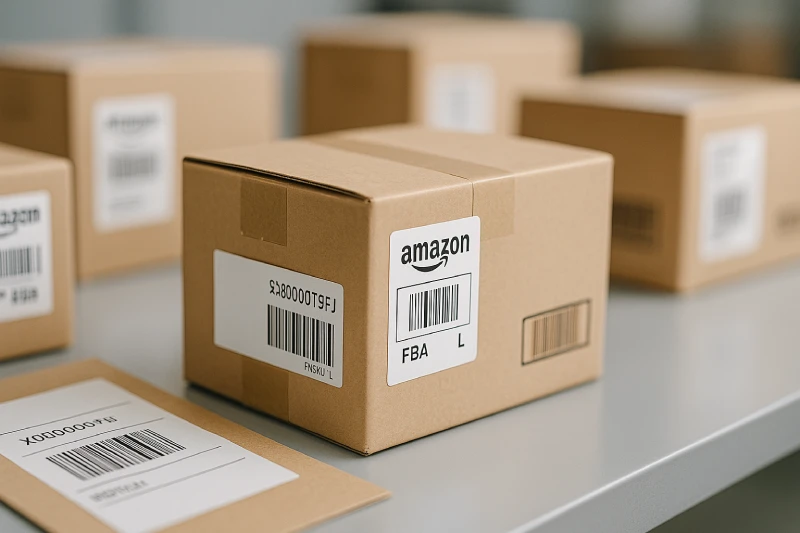
1. FBA Carton Label Requirements
Each carton must display:
- Amazon FBA Box Label generated from Seller Central
- Clear, scannable barcodes (no smudges, no tape covering the code)
- Labels placed on a flat surface, not across edges or corners
If cartons arrive without readable labels, Amazon may reject or rework the shipment at the seller’s expense.
2. Unit-Level Labeling (FNSKU)
Every sellable unit must carry an FNSKU label, which links inventory to your seller account. Requirements include:
- Only one scannable barcode per unit
- No conflicting manufacturer barcodes
- Products with variations must each have unique FNSKUs
3. Carton and Pallet Requirements
Amazon enforces specific weight and size policies:
- Cartons must generally be under 50 lb, unless a single item exceeds that weight
- Maximum carton dimensions should follow Amazon’s oversized thresholds
- Pallet shipments must comply with Amazon’s pallet specs (40″ × 48″, no overhang)
4. Compliance for Restricted or Regulated Products
Some products require additional compliance documents before shipping:
- Batteries or products containing batteries → MSDS + UN38.3
- Electronics → FCC certification
- Cosmetics, supplements, food-contact items → FDA compliance
- Children’s products → CPSIA test reports
Ensuring compliance before shipping helps prevent customs holds and FBA receiving delays.
5. Why Preparation Matters
Proper FBA preparation reduces the risk of:
- Warehouse refusal
- Unexpected rework fees
- Inventory check-in delays
- Account performance issues
In the next chapter, we will outline how to choose the best shipping method based on cost, urgency, and product characteristics.
How to Choose the Best Shipping Method to Amazon FBA USA
Selecting the right shipping method is one of the most important decisions for Amazon sellers. Your choice affects landed cost, cash flow, inventory turnover, and the stability of your Amazon rankings. The optimal solution depends on shipment size, margin structure, product category, and urgency.
1. When to Choose Sea Freight (FCL/LCL)
Sea freight is the most economical option for replenishment shipments or stable ASINs with predictable inventory cycles.
Choose this method when:
- Your shipment is 1 CBM+ or palletized
- You want the lowest cost per unit
- Delivery urgency is moderate
- You’re replenishing existing SKUs rather than launching new ones
2. When to Choose Air Freight
Air freight is ideal for balancing speed and cost.
Choose air freight if:
- You’re replenishing fast-moving products
- You need reliable 7–12 day delivery
- Your goods are compact, high-value, or seasonal
- Stockouts would significantly impact your ranking or buy box share
3. When to Choose Express (DHL/UPS/FedEx)
Express couriers are best for:
- Small, urgent shipments
- New product launches
- Emergency restock situations
- Sending product samples to Amazon for compliance review
4. When to Choose DDP Channels
DDP (Delivered Duty Paid) simplifies the entire process.
Use DDP if:
- You want hassle-free customs clearance
- You don’t have a U.S. entity or Tax ID
- You prefer one all-inclusive rate (shipping + duties + final delivery)
5. Quick Decision Matrix
| Scenario | Recommended Method |
|---|---|
| New product testing | Express or Air |
| High-volume replenishment | FCL / LCL |
| Tight delivery deadline | Air |
| No import experience | DDP |
Next, we’ll move into the core of this guide: a clear step-by-step process for shipping from China to Amazon FBA USA.
How to Ship from China to Amazon FBA USA
Shipping to Amazon FBA USA involves more than simply booking a freight service. To ensure smooth receiving, on-time delivery, and full compliance with Amazon’s strict inbound rules, sellers must follow a structured workflow from product preparation to final check-in. Below is a complete step-by-step guide tailored for Chinese manufacturers, private-label brands, and cross-border sellers.
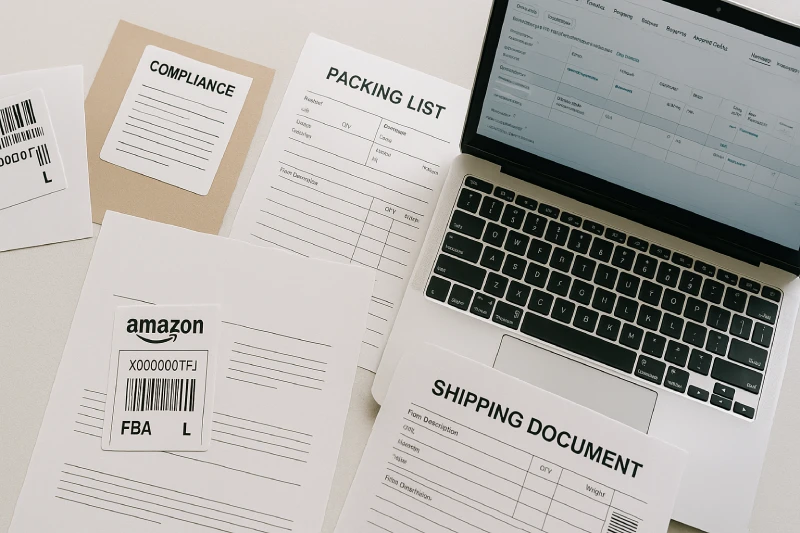
Step 1 — Confirm Product & Compliance Requirements
Before planning logistics, verify whether your product requires specific certifications or documentation. U.S. customs and Amazon both enforce strict category rules.
Key checks include:
- Electronics → May require FCC certification
- Cosmetics, supplements, food-contact items → FDA compliance
- Children’s products → CPSIA testing and tracking labels
- Batteries or battery-powered items → MSDS, UN38.3 test reports
- Hazmat items → Check Amazon’s Dangerous Goods Program
Ensuring compliance early prevents customs delays, FC rejections, and account health issues.
Step 2 — Prepare Packaging, Labels & Barcodes
Amazon requires that every inbound shipment follows its labeling and packaging rules.
You must ensure:
- Each unit has a correct and scannable FNSKU
- Each carton has a valid FBA Box Label generated from Seller Central
- No mixed-SKU cartons unless approved
- Carton weight is generally below 50 lb
- Carton dimensions do not exceed oversized restrictions
- Barcodes are not covered by tape or placed across edges
This preparation is critical—Amazon may reject shipments that fail to meet label or packaging standards.
Step 3 — Create Your FBA Shipment Plan in Seller Central
Log into Seller Central and create a shipment for your SKU(s). During this process, Amazon will assign specific FCs such as ONT8, LAX9, FTW1, SMF3, PHL4, etc.
Important steps include:
- Entering carton dimensions and weights accurately
- Printing FNSKU and box labels
- Downloading the shipment plan documents
- Reducing unnecessary split shipments by optimizing carton structure
- Choosing between SPD (Small Parcel Delivery) or LTL (Less-than-Truckload)
Once your plan is created, send all shipment information to your freight forwarder.
Step 4 — Choose a Freight Forwarder & Shipping Method
Provide your freight forwarder with:
- Carton dimensions & weights
- Quantity of units per carton
- SKU details
- Target FBA warehouse codes
- Whether you prefer sea freight, air freight, express, or DDP
An experienced FBA freight forwarder can help you:
- Reduce split shipments
- Optimize packaging for lower shipping fees
- Ensure all FBA requirements are met
- Manage final delivery appointments on your behalf
Step 5 — Export Customs Clearance in China
Before leaving China, every shipment must complete export customs procedures.
You’ll need:
- Commercial Invoice
- Packing List
- HS Code & product description
- Export declaration information from the supplier or freight forwarder
Most freight forwarders can complete this step for you if documents are accurate.
Step 6 — International Shipping (Sea, Air, Express, or DDP)
Depending on your selected method:
Sea Freight
- Cheapest for large shipments
- Requires container consolidation (LCL) or full-container booking (FCL)
- Transit varies from 15–30 days to the U.S. West Coast and 25–40 days to the East Coast
Air Freight
- Typical total door-to-FBA timeframe: 7–12 days
- Suitable for high-value or time-sensitive SKUs
Express Courier
- Fastest (3–6 days total)
- Best for small cartons or urgent replenishment
DDP (Delivered Duty Paid)
- Freight forwarder handles customs, duties, and final delivery
- Ideal for sellers without a U.S. entity or import experience
- Most common solution for Amazon FBA beginners
Tracking is available throughout the shipping process.
Step 7 — Import Customs Clearance in the USA
Once your shipment arrives at a U.S. port or airport, it must clear customs.
Typical checks involve:
- HS Code classification
- Product compliance review
- Documentation accuracy
- Random inspection (CET, X-ray, tailgate)
DDP shipments simplify this step, as the freight forwarder acts as the importer of record or handles the process on your behalf.
Step 8 — Final Delivery to the Amazon FBA Warehouse
After clearing customs, your goods must be delivered to the assigned FC.
Options include:
- UPS Small Parcel Delivery (SPD)
- LTL trucking (booked via a freight forwarder)
- Amazon-partnered carriers
- Appointment-based delivery for palletized shipments
Common receiving issues to avoid:
- Incorrect or missing carton labels
- Overweight or oversized cartons
- Appointment not scheduled
- Arriving outside FBA receiving hours
Once the warehouse checks in your inventory, the units become available for sale.
Transit Time from China to Amazon FBA USA
Understanding the transit time for each shipping method is crucial for planning inventory levels, avoiding stockouts, and maintaining a healthy Amazon ranking. Transit time includes international shipping, customs clearance, and final delivery to the assigned Amazon fulfillment center.
1. Sea Freight (FCL / LCL)
Sea freight has the longest lead time but offers the lowest cost per unit.
- To West Coast ports (LA/LB, Oakland, Seattle): 15–25 days on water
- To East Coast ports (New York, Savannah, Charleston): 25–40 days on water
- LCL shipments require an additional 5–7 days for consolidation and deconsolidation
- Final delivery to FBA FCs adds 2–6 days depending on location
2. Air Freight
Air freight offers a balance between time and cost:
- Typical China → USA air transit: 3–6 days
- Customs clearance + domestic delivery to FBA: 4–6 days
- Total estimated lead time:7–12 days
Suitable for fast-moving SKUs, seasonal inventory, and high-value goods.
3. Express Courier (DHL / UPS / FedEx)
The fastest method for small or urgent shipments:
- Door-to-door international transit: 2–4 days
- Delivery to FBA FC: 1–3 additional days
- Total lead time:3–6 days
4. DDP Air / DDP Sea
DDP routes include customs clearance and final delivery:
- DDP Air: 8–12 days total
- DDP Sea: 22–35 days total (depending on destination)
Planning ahead using these timelines helps sellers replenish inventory smoothly and avoid costly stockouts.
Common Mistakes Amazon Sellers Should Avoid
Shipping to Amazon FBA USA involves a series of strict requirements, and even experienced sellers sometimes make mistakes that cause delays, additional fees, or inventory check-in issues. Avoiding these common pitfalls will help ensure a smooth and predictable replenishment process.
1. Incorrect or Missing Labels
FBA box labels or FNSKU labels that are missing, damaged, or covered by tape can result in:
- Receiving delays
- Re-labeling fees
- Shipment rejection
Always double-check barcode placement and clarity before dispatch.
2. Inaccurate Carton Information
Providing incorrect carton dimensions or weights in Seller Central may lead to Amazon rework, incorrect shipping charges, or split shipments that increase logistics costs.
3. Overweight or Oversized Cartons
Amazon enforces strict limits. Cartons above 50 lb or exceeding Amazon’s size restrictions often face refusal or special handling fees.
4. Poor Compliance Preparation
Failing to provide FDA, FCC, CPSIA, MSDS, or battery-related documents may cause customs holds or FC-level delays.
5. Forgetting Appointment Requirements
For palletized or LTL shipments, arriving without an appointment is one of the most common reasons FBA warehouses reject shipments.
6. Not Monitoring Inventory Levels
Slow replenishment can cause stockouts, loss of ranking, and increased PPC costs. Matching replenishment cycles with the right shipping method is critical.
Avoiding these mistakes significantly improves on-time delivery and FBA receiving speed.
Documents Checklist for FBA USA Shipping
Preparing accurate and complete documentation is essential for smooth export from China, compliant customs clearance in the United States, and successful receiving at Amazon FBA warehouses. Missing or incorrect documents are among the most common causes of delays, inspections, or additional fees.
Below is a clear and practical checklist that sellers and freight forwarders should prepare for every FBA shipment.
1. Commercial Invoice
- Product name and description
- HS Code
- Unit value and total value
- Country of origin (“Made in China”)
- Consignee / Importer information
2. Packing List
- Carton count
- Dimensions and weight of each carton
- SKU quantities per carton
- Total volume and gross weight
3. FBA Box Labels
- Downloaded from Seller Central
- Printed clearly and placed on two adjacent sides of each carton
- Not covered by tape or shrink wrap
4. Compliance Documents (If Required)
- MSDS + UN38.3 for battery products
- FCC for electronics
- FDA documentation for cosmetics, supplements, food-contact items
- CPSIA for children’s products
5. Bill of Lading / Air Waybill
Provided by the freight forwarder for cargo tracking and customs filing.
6. Additional Documents
- Certificate of Origin (if needed)
- Test reports for restricted items
Having all documents prepared and verified before shipping significantly reduces customs risk and speeds up Amazon receiving time.
Major USA FBA Warehouse Zones
Amazon operates one of the most extensive fulfillment networks in the world, with dozens of FBA warehouses strategically located across the United States. Understanding these zones helps sellers plan transit times, estimate domestic delivery costs, and optimize replenishment strategies from China.
Below is a simplified breakdown of the major U.S. FBA regions and their characteristics.
1. West Coast Fulfillment Centers
Common FC codes: ONT8, LAX9, SMF3, SNA4, LAS1
Best for:
- Fastest transit from China (especially for air and sea freight)
- Lower domestic trucking costs
- Sellers who frequently replenish inventory
Notes: West Coast warehouses are often automatically assigned for compact or lightweight goods.
2. Central U.S. Fulfillment Centers
Common FC codes: DFW7, FTW1, MCI4, ORD9
Best for:
- Nationwide distribution balance
- Lower overall delivery times to U.S. customers
Notes: Shipments to Central FCs typically require slightly higher trucking fees compared to West Coast FCs.
3. East Coast Fulfillment Centers
Common FC codes: MDT2, CLT2, EWR4, PHL4, BWI2
Best for:
- Sellers with heavy products (closer to East Coast consumers)
- Optimizing Prime delivery speeds in densely populated regions
Notes: Sea shipments to the East Coast can take longer but may reduce domestic delivery costs for East Coast-heavy customers.
4. Tips for Managing FC Assignments
- Provide accurate carton dimensions to reduce split shipments
- Keep SKUs well-organized to avoid Amazon sending units to multiple zones
- Work with an experienced FBA freight forwarder to optimize inbound settings
Understanding these warehouse zones helps sellers build efficient replenishment cycles and reduce fulfillment costs.
Why Work With Winsail Logistics
Shipping to Amazon FBA USA requires more than simply arranging transportation—it demands a partner who understands Amazon’s strict requirements, U.S. customs regulations, and the operational challenges sellers face on a daily basis. Winsail Logistics specializes in China-to-USA e-commerce logistics and provides end-to-end support tailored for Amazon FBA sellers.
With years of experience handling FBA shipments of all types—sea freight, air freight, express, and DDP—Winsail helps sellers avoid common pitfalls such as labeling errors, customs delays, appointment issues, and split shipments. Our team ensures your cartons meet Amazon’s packaging standards, your compliance documents are complete, and your inbound workflow remains smooth from supplier to fulfillment center.
Whether you are launching your first SKU or managing high-volume replenishment cycles, Winsail provides:
- Flexible shipping solutions for different product categories and budgets
- FBA-compliant labeling, repacking, and consolidation services
- Reliable DDP channels for sellers without a U.S. importer
- Clear communication and shipment visibility from start to finish
A well-managed logistics process keeps your inventory healthy, protects your ranking, and improves your customers’ experience. Winsail’s role is to make your FBA supply chain predictable and efficient.
FAQs
1. Can I ship directly to Amazon FBA from China?
Yes. You can ship directly from your supplier or manufacturer in China to the assigned FBA warehouse, provided all units and cartons follow Amazon’s packaging and labeling requirements. Most sellers use a freight forwarder to handle customs, documentation, and final delivery.
2. Which shipping method is best for Amazon FBA: sea, air, or express?
It depends on your shipment size and urgency:
(1) Sea freight for large replenishment shipments
(2) Air freight for predictable 7–12 day delivery
(3) Express for small or urgent cartons
(4) DDP channels for sellers without U.S. import experience
3. Does Amazon allow DDP shipments?
Yes, Amazon accepts DDP shipments as long as the delivery complies with appointment requirements and the cartons meet FBA inbound guidelines. DDP is popular among new sellers because duties and customs clearance are handled by the freight forwarder.
4. How can I avoid Amazon splitting my inbound shipment into multiple warehouses?
ou can reduce split shipments by:
(1) Using consistent carton dimensions
(2) Keeping SKUs organized
(3) Creating shipments during non-peak hours
(4) Working with a freight forwarder experienced in FBA routing
While splits cannot be completely avoided, optimizing packaging and shipment plans helps minimize them.
5. What is the fastest shipping method for FBA USA?
Express courier (DHL/UPS/FedEx) is the fastest, typically delivering within 3–6 days. For larger shipments requiring faster delivery, air freight may be more cost-effective while still maintaining reliable speed.
