
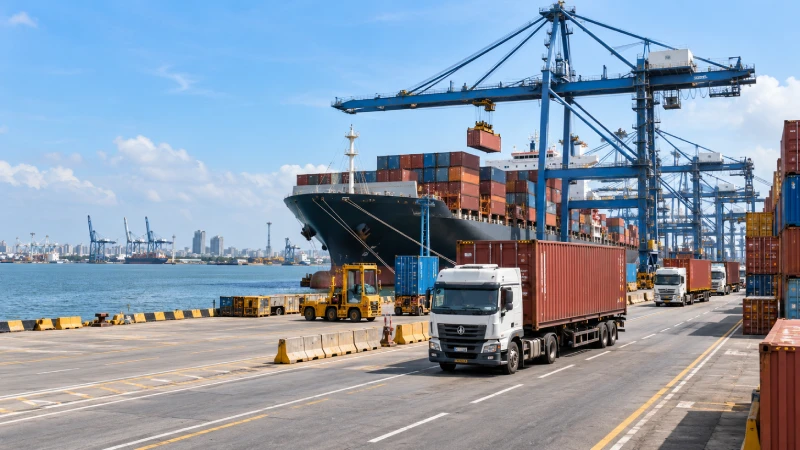
Ocean freight paid does not mean cargo released.
When a container shipped from China reaches Nigeria, the consignee may still receive separate invoices from the shipping line, terminal operator, customs broker, government authorities, trucker or container depot.
That is why there is no single universal “Lagos destination charge.”
The amount depends on the shipping line, Bill of Lading arrangement, exact Nigerian terminal, container type, commodity, customs status, clearance speed, inland destination and how quickly the empty container is returned.
Nigeria’s port system also contains distinct gateways rather than one interchangeable “Lagos port.” The Nigerian Ports Authority separately identifies Lagos Port Complex at Apapa, Tin Can Island Port Complex and Lekki Deep Sea Port in Lagos, as well as Onne Port Complex in Rivers State. (Nigerian Ports Authority)
This guide explains how those post-arrival costs fit together and, more importantly, who bills each one and when it can start increasing.
Quick Answer: A practical Nigeria destination budget for FCL cargo should separate carrier local charges, terminal charges, customs-clearance service fees, statutory duties and taxes, storage or container time charges, and inland delivery. Do not combine customs duty with logistics charges when comparing quotations.
Destination logistics = carrier local charges + terminal charges + broker/clearance service + storage or D&D if incurred + inland transport
Separately:
Import duties and taxes = statutory customs assessment under the applicable Nigerian tariff and valuation rules
These two lines should remain separate throughout the quotation and clearance process.
For the wider route-planning context, see Shipping from China to Nigeria and Shipping Cost from China to Nigeria.
What Counts as a Nigeria Destination Charge?
The term destination charge is often used too broadly.
For budgeting purposes, Nigeria-side costs are easier to understand when divided into four groups.
| Cost Group | Typical Items | Usually Billed By | Main Charging Basis |
|---|---|---|---|
| Destination logistics charges | Documentation, release, terminal handling, delivery-related services | Shipping line / NVOCC / terminal | Per B/L, container, TEU or service |
| Government charges | Customs duty, applicable taxes and statutory assessments | Government / Customs | HS code, customs value and applicable tariff rules |
| Inland delivery | Port haulage, Lagos delivery, upcountry trucking, waiting time | Trucker / logistics provider | Container, trip, distance or time |
| Time-based charges | Terminal storage, demurrage, detention | Terminal and/or carrier | Container per day after applicable free time |
A fifth cost may also appear: the customs broker or clearing agent’s professional fee. That is a service charge and should not be confused with the duty and tax paid to government.
This separation matters because two quotations can show the same “destination charges” total while covering very different services.
One may include terminal release and clearance coordination but exclude customs assessment. Another may include trucking but exclude demurrage. A third may simply use one unexplained “port charge” line.
For an importer, that makes comparison almost impossible.
Are Destination Charges Included in CIF?
Not automatically.
Under the ICC’s CIF Incoterms® 2020 framework, the seller contracts and pays for freight and the required insurance to the named destination port, but the seller does not have the CIF obligation to clear the goods for import or pay import duties. Destination unloading costs also depend on whether they were already included under the seller’s contract of carriage. (ICC Digital Library)
Therefore:
CIF Lagos does not mean every charge required to release and deliver the cargo in Nigeria has already been paid.
Always read the actual freight quotation and contract instead of assuming that the Incoterm alone answers every destination-cost question.
Who Bills What After the Shipment Reaches Nigeria?
One reason Nigeria destination invoices appear confusing is that several unrelated parties can bill the same shipment.
| Billing Party | Typical Charge Types | Charging Basis | When Payable |
|---|---|---|---|
| Shipping line / NVOCC | Destination documentation, release, local administration, equipment-related charges, amendments, demurrage | Per B/L, container, TEU or day | Before carrier release or when incurred |
| Terminal operator | Terminal handling, delivery, positioning, examination handling, special services, storage | Per container, unit, service or day | Before terminal delivery |
| Customs broker / clearing agent | Declaration, clearance coordination, documentation and professional services | Job, B/L, container or agreed service fee | During clearance |
| Government / Customs | Import duty, taxes and statutory assessments | HS code and customs valuation | Before customs release |
| Trucker | Port haulage, final delivery, waiting and upcountry transport | Trip, container, distance or day | Before or after delivery |
| Empty-container depot / equipment process | Depot handling or equipment-related cost where applicable | Container / event | At or after empty return |
The key question is therefore not only:
“How much are destination charges?”
It is:
“Which party is charging this line, what is the charging basis, and is the same service already included somewhere else?”
That question helps identify duplicated, outdated or badly described cost lines.
Shipping-Line Local Charges
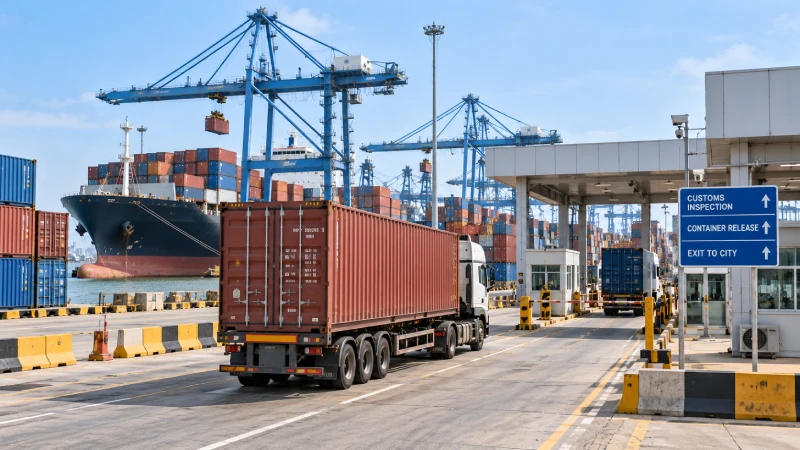
Shipping-line charges are separate from terminal charges even when both appear after vessel arrival.
A carrier invoice may contain items such as:
- Destination documentation or release fees
- Local administration or port-related carrier charges
- Container cleaning, protection or maintenance-related charges
- B/L or manifest amendment fees
- Express-release or documentation services
- Container deposits where applicable
- Demurrage or combined D&D charges
- Additional services requested for a specific shipment
Not every line applies to every shipment.
Carrier, container type, B/L type, cargo, service contract and requested services all matter.
CMA CGM’s global local-charge index includes a Nigeria Local Services schedule dated February 20, 2026. The Nigeria schedule separates destination documentation, container-related and local-terminal-recovery items, with different charging bases and effective-date notes. (CMA CGM)
This illustrates an important rule:
Never budget Nigerian carrier charges from a generic “shipping line fee” copied from another carrier.
A Maersk shipment should be checked against Maersk’s applicable Nigeria schedule. A CMA CGM shipment should be checked against CMA CGM. The same principle applies to MSC, PIL, Grimaldi, Hapag-Lloyd or an NVOCC.
Do Not Confuse “Online Today” With “Effective Today”
This is especially important with public tariff pages.
For example, Maersk’s Nigeria import information page is accessible and contains local-charge and detention information, but the displayed schedule itself states an effective date of December 9, 2023. It should therefore not automatically be quoted as a current 2026 rate without carrier confirmation. (Maersk)
Before using a shipping-line tariff, verify:
- Carrier or NVOCC name
- Effective date
- Container size and type
- Dry, reefer, IMO or special equipment
- Per-B/L versus per-container basis
- VAT treatment
- Whether a deposit is refundable
- Whether the charge is prepaid or collect
- Whether the quotation already includes the same item
- Applicable free-time agreement
- Empty-container return conditions
Pro Tip: Save the carrier tariff or written charge confirmation used for your shipment together with the booking confirmation. If a billing dispute appears later, the effective date matters.
Terminal Charges — Apapa, Tin Can and Lekki
“Shipping to Lagos” is still not enough information for a reliable destination-cost estimate.
You need the exact terminal.
Apapa / APM Terminals
At Lagos Port Complex, the Nigerian Ports Authority identifies the principal container terminal as being operated by APM Terminals. (Nigerian Ports Authority)
APM Terminals publishes an Apapa tariff page showing “Tariff – APM Terminals Apapa Terms of Business – Effective January 2026.” (APM Terminals)
That means an Apapa container estimate should be checked against the applicable APMT tariff and shipment circumstances, rather than against a general “Lagos port charge.”
Terminal services can vary according to the container, cargo and operation required.
Tin Can Island
Tin Can Island is even more important to identify precisely because it has multiple terminal operators.
NPA lists operators including:
- Tin Can Island Container Terminal
- Port & Cargo Handling Services
- Five Star Logistics
- PTML
- Josepdam Port Services
These terminals do not represent one interchangeable invoice structure. (Nigerian Ports Authority)
A booking that says only “Tin Can” therefore does not provide enough information to calculate terminal charges.
Confirm the specific operator from the booking, arrival notice or carrier.
Lekki Freeport Terminal
Lekki Deep Sea Port is another separate Nigerian gateway. Lekki Freeport Terminal identifies itself as the container-terminal operator for the port and provides its own operational and tariff resources. (Lekki Freeport Terminal)
Do not take a tariff previously used for Apapa and apply it to Lekki.
Nigeria Terminal Source Matrix
| Nigeria Gateway | Main Terminal Context | What Must Be Confirmed | Tariff Source to Check |
|---|---|---|---|
| Apapa | Lagos Port Complex / APM Terminals container operations | Vessel, carrier, container and APMT service | APM Terminals Apapa |
| Tin Can | Multiple operators | Exact discharge terminal | Relevant terminal operator |
| Lekki | Lekki Freeport Terminal | Service calling pattern and LFT tariff | LFT |
| Onne | Onne Port / WACT and other port operations | Carrier, terminal and cargo routing | Applicable Onne terminal |
Tariff source is not the same as your final forwarder invoice.
A forwarder or carrier may bundle several costs, while the terminal’s published schedule may list individual operational services separately.
Taxes, extra lifts, examination positioning, special-equipment handling, reefer services, storage and exceptional operations may also change the final amount.
Pro Tip: Request both the carrier local-charge information and exact destination-terminal name before departure. “Lagos” alone is insufficient for destination budgeting.
For container-rate planning before departure, also review 20ft & 40ft Container Shipping Cost from China to Nigeria.
Customs Clearance, Duties and Taxes — Keep Them Separate
Customs-related costs are commonly mixed into “destination charges,” but there are actually two very different categories.
1. Customs-Clearance Service Cost
This is the professional or operational service charged by the licensed agent or logistics provider.
It can include work such as:
- Customs declaration preparation
- Document checking
- Clearance coordination
- Examination coordination
- Communication with Customs and other agencies
- Port-release coordination
2. Statutory Import Charges
These are government assessments arising from the cargo’s classification, customs value and applicable import rules.
Nigeria Customs states that customs valuation follows the applicable WTO/ECOWAS framework and Nigeria Customs Service Act, with transaction value as the primary valuation method when the necessary conditions are satisfied. Duty rates depend on tariff classification rather than on a universal “Nigeria clearing percentage.” (Nigeria Customs Service)
Nigeria Customs also operates a tariff lookup framework showing that duty and VAT treatment can differ by tariff line. (Nigeria Customs Tariff)
Therefore, do not accept a quotation that hides everything under one line such as:
Customs/port fee: ₦X
Ask for the statutory assessment and the service charge to be separated.
| Cost | Destination Logistics Charge? | Statutory Import Charge? |
|---|---|---|
| Clearing-agent professional fee | Yes | No |
| Shipping-line documentation | Yes | No |
| Terminal handling | Yes | No |
| Customs duty | No | Yes |
| Applicable import VAT | No | Yes |
| Terminal storage | Yes | No |
| Carrier demurrage | Yes | No |
| Trucking | Yes | No |
Form M and PAAR
Nigeria Customs’ service standards list Form M and the Pre-Arrival Assessment Report, or PAAR, as core import procedures. The published requirements for PAAR include a registered Form M and supporting documents such as regulatory certificates where applicable, Bill of Lading, commercial invoice, packing list and certificate of origin. (Nigeria Customs Service)
These are not merely administrative details.
If clearance documentation is incomplete while the container is already accumulating port time, the documentation problem can become a logistics-cost problem.
SONCAP Where Applicable
SONCAP is not required for every product, but for regulated goods the Standards Organisation of Nigeria describes it as a pre-shipment conformity-verification system and states that the relevant certification is required for import and Customs-clearance processes. (Standards Organisation of Nigeria)
Nigeria also changed part of this process in 2026. SON announced that from March 27, 2026, specified SONCAP and Import Permit processes moved to the National Single Window platform, including certificate activation for Form M, PAAR and cargo-clearance purposes. (Standards Organisation of Nigeria)
For regulated goods, compliance therefore needs to be checked before shipment—not after the vessel reaches Nigeria.
Storage, Demurrage and Detention Are Different Cost Clocks
These three terms are often used interchangeably in informal quotations.
They should not be.
| Charge | Where the Clock Runs | Usually Billed By | Typical Trigger | Clock Stops When |
|---|---|---|---|---|
| Terminal storage | Container/cargo remains in terminal | Terminal | Terminal free period expires | Cargo/container exits applicable storage |
| Demurrage | Carrier container remains at port/terminal beyond carrier terms | Carrier | Carrier free time expires | Container gates out, subject to carrier rules |
| Detention | Carrier container is outside terminal | Carrier | Gate-out / applicable detention free time expires | Empty container accepted at correct return location |
| Combined D&D | Carrier-defined combined equipment period | Carrier | Contractual free time expires | According to carrier tariff |
The exact terminology and clock structure can differ between carriers, so always follow the applicable tariff and booking terms.
Example Timeline
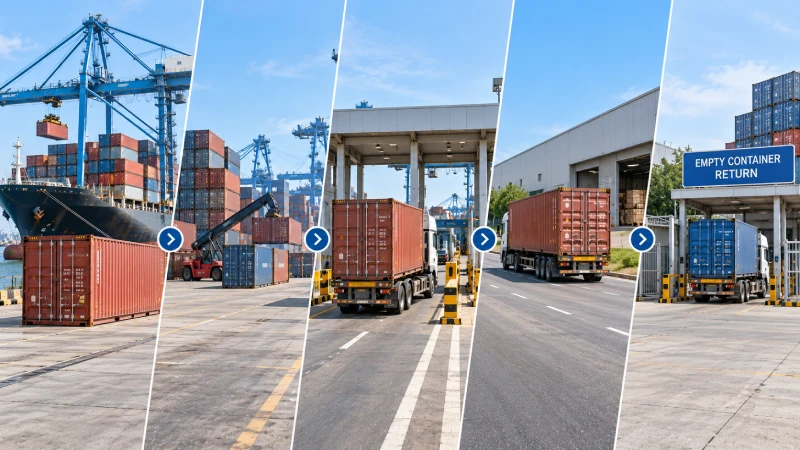
Vessel discharge → customs processing → terminal release → gate-out → customer unloading → empty-container return
Different cost clocks may apply at different points in this chain.
A Customs release does not necessarily stop terminal storage immediately.
Gate-out may stop one clock while starting or continuing another.
And delivering the goods to the buyer’s warehouse does not end the equipment obligation if the carrier’s empty container still needs to be returned.
Do Not Assume a Universal Number of Free Days
There is no safe generic rule such as:
“Nigeria gives seven free days.”
Free time can depend on:
- Carrier
- Contract
- Container type
- Terminal
- Commodity
- Special equipment
- Negotiated booking terms
- Whether carrier demurrage and detention are separate or combined
The Nigerian Shippers’ Council has documented disputes involving significant storage and demurrage amounts, which reinforces why time-based charges should be actively monitored rather than treated as a minor afterthought. (Nigerian Shippers’ Council)
Record your contractual free-time terms before the vessel sails.
How Delayed Import Documentation Creates Extra Charges
Destination-charge control actually begins before cargo leaves China.
The container may arrive on schedule, but if the importer and clearing agent are not ready, the shipment can sit while multiple time-based costs continue running.
Before departure, check:
- Form M status
- PAAR preparation/status
- SONCAP or other regulatory documents where applicable
- Bill of Lading details
- Consignee details
- HS classification
- Commercial invoice
- Packing list
- Certificate of origin where required
- Importer information
- Clearing-agent appointment
- Funding for Customs assessment
- Carrier-release requirements
One common operational problem is a mismatch between documents.
For example:
- Product description on the invoice differs from the B/L
- Quantity does not match the packing list
- Consignee information is inconsistent
- HS-code assumptions were never checked
- A regulated product reaches Nigeria without the required compliance preparation
- The clearing agent receives final documents only after arrival
The freight price may not change—but the destination cost can.
Pre-Arrival Checklist
Before ETA, the consignee or agent should already know:
- Which carrier is handling the container
- Exact discharge terminal
- B/L number and release status
- Expected vessel and ETA
- Documentation required by Customs
- Compliance certificate status where applicable
- Estimated statutory assessment
- Terminal and carrier free-time rules
- Trucking plan
- Empty return location or process
If timing risk is part of your routing decision, see How Long Does It Take to Ship from China to Nigeria?.
Inland Delivery and Empty-Container Return
A destination-cost calculation should not stop at the terminal gate.
For FCL cargo, a typical post-clearance flow may be:
Terminal gate-out → Lagos or upcountry trucking → warehouse delivery → container unloading → empty-container return → EIR/return confirmation
Each stage can affect cost.
Lagos Delivery
For delivery within Lagos, confirm:
- Trucking rate
- Truck waiting allowance
- Delivery-area restrictions
- Unloading time
- Whether the truck waits for same-day container stripping
- Empty return point
Upcountry Delivery
For delivery to another city or state, the cost structure may include:
- Longer-distance haulage
- Driver time
- Road or operating costs
- Overnight or waiting time
- Return movement
- Separate empty-container positioning
The lowest port-to-port freight does not necessarily produce the lowest delivered cost.
Empty-Container Return
This step deserves special attention.
Confirm:
- Designated return depot
- Latest return deadline
- Depot opening/acceptance procedure
- Container condition requirements
- Whether an appointment is required
- Required EIR or return evidence
- Deposit-refund conditions where a deposit applies
A container delivered to the buyer is not operationally complete until equipment obligations have been satisfied.
A truck delay, wrong return depot or slow unloading can therefore become a detention problem.
What Changes Between Apapa, Tin Can, Lekki and Onne?
Nigeria’s gateways should not be ranked using one generic price table.
NPA treats Lagos Port Complex, Tin Can Island, Lekki and Onne as distinct port complexes, and individual terminals can have different operators and service structures. (Nigerian Ports Authority)
| Gateway | Operational Variable to Check | Destination-Cost Impact |
|---|---|---|
| Apapa | Carrier service and exact terminal | Terminal tariff, trucking and empty return |
| Tin Can | Which terminal/operator receives the cargo | Handling, release and storage structure |
| Lekki | Carrier calling pattern and LFT operations | Terminal charges and inland routing |
| Onne | Carrier/terminal and final destination | Terminal costs, delivery routing and equipment return |
Apapa
Apapa may be appropriate for a particular carrier service or Lagos delivery, but an importer still needs the specific terminal, trucking plan and return arrangement.
Tin Can
Tin Can’s multiple operators make exact terminal identification particularly important.
Do not transfer a rate from one Tin Can operator to another.
Lekki
Lekki should be evaluated using the actual carrier call, terminal tariff and inland destination rather than assumptions based on Apapa.
Onne
Onne may form part of the routing analysis for shipments whose carrier service or Nigerian final destination makes it operationally relevant.
WACT, the West Africa Container Terminal at Onne, operates as a container terminal serving multiple shipping lines. (APM Terminals WACT)
The correct question is not:
“Which Nigerian port is always cheapest?”
It is:
“For this carrier, this cargo and this final delivery point, what will the complete post-arrival process cost?”
For broader cost comparisons, see Cheapest Shipping from China to Nigeria.
How to Request a Destination-Charge Estimate Before Shipping
A useful destination-charge estimate needs more than cargo weight and the word “Lagos.”
Send the following information.
Shipping Details
- Shipping line or proposed carrier
- B/L type
- Port of discharge
- Exact terminal if known
- 20GP, 40GP, 40HQ, reefer or special equipment
- Number of containers
- Incoterm
- Expected sailing date
Cargo Details
- Commodity
- HS code if confirmed
- Commercial value
- Gross weight
- Regulated/non-regulated status
- Dangerous-goods status if applicable
Nigeria Clearance Details
- Importer details
- Form M status
- PAAR status
- SONCAP or other compliance status where applicable
- Appointed customs broker
- Final delivery city
Equipment and Time Details
- Carrier free time
- Terminal storage terms
- Requested additional free time
- Empty-container return location
- Planned unloading method
A practical request can be structured like this:
Please provide an itemized Nigeria destination-cost estimate showing the shipping-line local charges, terminal charges, customs-broker service fee, statutory charges separately, inland delivery, container-return conditions and applicable free time. Please state the carrier, exact terminal, tariff effective date, VAT treatment and whether each amount is per B/L, per container or per day.
That is far more useful than asking:
“How much is Lagos clearing?”
For consolidated cargo, the cost structure is different because CFS and groupage handling can apply. See LCL Destination Charges in Nigeria for that specific scenario.
Destination Cost Planning Framework
For internal budgeting, use three separate totals.
A. Predictable Destination Logistics
Carrier fixed charges + known terminal charges + broker service + planned haulage
These should normally be estimated before departure.
B. Statutory Import Cost
Customs duty + applicable taxes/levies according to the current assessment
This depends on the actual commodity classification and customs valuation.
C. Contingency Exposure
Storage + demurrage + detention + extra examination/handling + truck waiting + amendment costs
These are partly preventable.
The result is:
Estimated post-arrival budget = A + B + contingency allowance for C
This format lets the importer see whether a quotation is expensive because of unavoidable statutory assessment, normal logistics charges or preventable operational delays.
Two Practical Rules That Prevent Many Destination-Charge Problems
Pro Tip 1: Ask for the carrier local-charge schedule and exact terminal before the vessel departs China. A quotation saying only “Lagos” does not provide enough information for a dependable destination budget.
Pro Tip 2: Put the agreed carrier free time in writing on the quotation, booking confirmation or another shipment record. Do not rely on a verbal statement that “there should be enough free days.”
Before Your Container Sails — Final Checklist
Confirm the following:
- Carrier
- Port of discharge
- Exact terminal
- B/L arrangement
- Destination carrier charges
- Current terminal tariff source
- Customs broker
- HS classification
- Estimated Customs assessment
- Form M
- PAAR preparation
- SONCAP or other compliance documentation where applicable
- Carrier free time
- Terminal storage rules
- Lagos/upcountry trucking cost
- Empty return depot
- Container deposit conditions if applicable
- Contingency plan for delays
For vehicle imports, destination charges involve a different combination of RoRo/container operations, vehicle-specific Customs treatment and terminal handling, so use the dedicated Destination Charges When Shipping Cars to Apapa guide rather than applying this general FCL framework unchanged.
Final Takeaway
Nigeria destination charges are not one invoice and they are not one universal Lagos price.
For a container arriving from China, separate the post-arrival budget into:
Shipping line → Terminal → Customs broker → Government → Inland transport → Container return
Then identify which costs are fixed, which depend on Customs assessment and which only appear when time is lost.
The most useful destination-cost estimate should therefore show:
who bills the charge, what it covers, how it is calculated, which terminal and carrier tariff applies, the effective date, applicable free time and whether VAT or other taxes are additional.
That structure makes China-to-Nigeria quotations easier to compare and greatly reduces the risk of discovering important costs only after the container has arrived.
FAQ
What destination charges are payable when a container arrives in Nigeria?
Possible costs include shipping-line local charges, terminal handling and release-related services, customs-broker fees, government duties and taxes, terminal storage, carrier demurrage or detention, inland haulage and empty-container return costs. Not every shipment incurs every charge.
Are Nigeria destination charges included in ocean freight?
Not necessarily. Ocean freight can be prepaid while Nigerian carrier local charges, terminal charges, customs clearance, duties, taxes, storage and inland delivery remain payable after arrival. Always check the quotation's inclusions and exclusions.
Does CIF include Lagos terminal and customs charges?
CIF does not automatically make the seller responsible for Nigerian import clearance and duties. Some destination unloading costs may already be included in the seller's contract of carriage, so the actual freight contract must also be checked.
What is the difference between terminal storage and container demurrage?
Terminal storage normally applies because the cargo or container remains within the terminal beyond the applicable storage period. Demurrage is generally a carrier equipment charge when the carrier's container remains at the port or terminal beyond the carrier's agreed free time.
What is detention on an import container?
Detention normally applies after a carrier-owned container has left the terminal and remains outside the carrier's control beyond the applicable free period. The charge usually stops according to the carrier's rules when the empty container is properly returned and accepted.
Are Apapa and Tin Can destination charges the same?
No. They are different port complexes, and Tin Can itself has several terminal operators. The terminal, carrier and services performed determine the applicable charges.
Does Lekki have the same local charges as Apapa?
Do not assume so. Lekki Freeport Terminal and APM Terminals Apapa are separate terminal operations with their own tariffs and procedures.
Can destination charges be estimated before the container leaves China?
Yes. Many costs can be estimated once the carrier, terminal, container type, customs status, trucking plan and free-time conditions are known. Costs caused by delays, inspections, amendments, storage, demurrage or detention remain less predictable.
