
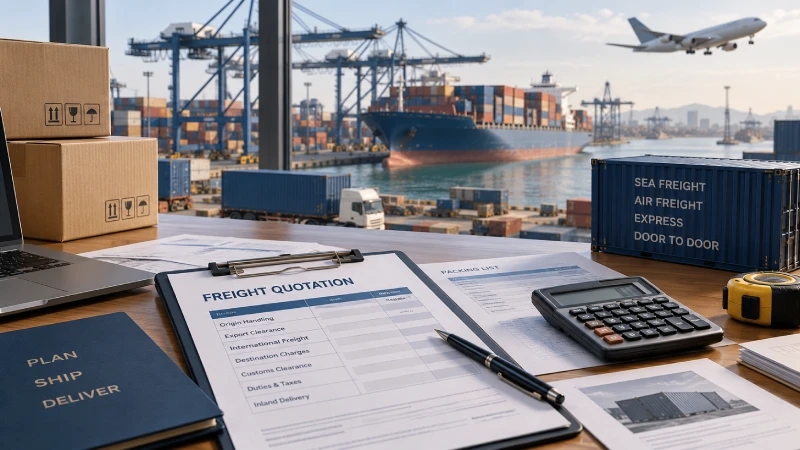
If you are importing from China, a quotation showing “US$X per CBM,” “US$X per kg,” or “US$X per container” is not automatically the total amount required to move your cargo to Nigeria.
The first question is not only how much does shipping from China to Nigeria cost? It is also:
What exactly does that price include?
A China-to-Nigeria quotation may cover one of four very different scopes:
Freight-only → Port-to-port → Destination-inclusive → Door-to-door / managed service
That distinction matters because a low ocean or air freight rate may still leave origin handling, Nigerian terminal charges, customs clearance, duties, taxes and inland delivery to be paid separately.
For importers comparing suppliers or planning a purchase, this guide provides a practical 2026 overview of sea LCL, FCL, air freight, express and door delivery costs, explains how freight quotations should be compared, and shows what information is needed before a reliable rate can be confirmed.
Rate note: Freight markets change frequently. The figures below are planning references based on publicly available August–October 2026 market information, not fixed Winsail tariffs. Always obtain a shipment-specific quotation for your actual cargo-ready date.
Current Shipping Cost from China to Nigeria — Quick Comparison
The following ranges are useful for initial budgeting, but they should not be treated as booking rates.
| Method | Pricing Unit | 2026 Planning Reference | Rate Reference | Typical Scope | Typical Transit | Best For |
|---|---|---|---|---|---|---|
| Sea LCL | Per CBM / W/M | About US$150–200/CBM on selected basic China–Lagos LCL services | Oct. 2026 | Mainly international LCL freight; local charges may be separate | About 40–50 days | Smaller commercial shipments |
| Sea FCL 20GP | Per container | Roughly US$2,800–3,800 to Lagos in recent public market references | Aug.–Oct. 2026 | Usually base ocean freight / port-to-port | About 35–45 days | Medium-volume or dense cargo |
| Sea FCL 40ft / 40HQ | Per container | Roughly US$3,200–5,600+, depending on origin, carrier and routing | Aug.–Oct. 2026 | Usually base ocean freight / port-to-port | About 35–45 days | Larger-volume cargo |
| Air freight | Per chargeable kg | Approximately US$6–16/kg across different commercial-weight and service references | Aug.–Oct. 2026 | Usually airport freight; inclusions vary significantly | About 4–10 days | Urgent, higher-value cargo |
| Express courier | Per chargeable kg | Often around US$13–20/kg for small commercial parcels in published planning references | Sep.–Oct. 2026 | Courier network; customs/tax scope varies | About 3–7 days | Samples and small urgent shipments |
| Door-to-door / DDP | Shipment / kg / CBM | Shipment-specific quote required | Current quote | Depends on contract and Incoterm | Depends on mode | Buyers wanting coordinated delivery |
Recent public LCL references for October 2026 show basic China–Nigeria rates around US$150–195/CBM on selected services, while public FCL references commonly place 20GP Lagos rates around US$2,800–3,800. Other route-specific quotations can be materially higher, especially for 40ft equipment. (Goodhope Freight)
Air pricing has an even wider spread because weight breaks, routing and service scope differ. Recent published references range from approximately US$6/kg on some larger-volume services to well above US$10/kg on other commercial-weight bookings. (DDPLink)
Do not compare these headline numbers until you have confirmed what each quotation includes.
For a detailed transit-time comparison, see our China-to-Nigeria transit time guide.
Sea LCL
LCL, or Less than Container Load, allows you to share container space with other shipments.
It is generally suitable when you do not have enough cargo to justify a full container. Pricing is normally linked to the shipment’s chargeable volume or weight under the consolidator’s W/M rules.
However, the rate shown as “US$X per CBM” is often only part of the final cost.
Nigeria-side CFS, release, handling, clearance and inland delivery can materially affect the total.
For detailed LCL calculations, see LCL cost per CBM to Nigeria.
Sea FCL
FCL means you book the full container.
The freight price is quoted per container rather than simply multiplying a CBM rate. The final amount depends on the China origin port, container type, carrier, sailing date, destination terminal and available equipment.
A larger container can produce a lower freight cost per unit when properly utilized, but that does not mean a 40ft container is automatically the right choice for every shipment.
For a dedicated FCL comparison, see 20ft and 40ft container shipping cost from China to Nigeria.
Air Freight
Air freight is normally quoted using chargeable weight:
Chargeable weight = greater of actual gross weight and applicable volumetric weight
Rates also change at different airline weight breaks.
A 100 kg shipment therefore cannot be expected to receive the same per-kilogram rate as a 500 kg or 1,000 kg shipment.
Express Courier
DHL, FedEx, UPS and similar express services are mainly useful for samples, replacement parts and small urgent shipments.
Courier pricing can change significantly based on dimensional weight, fuel surcharges, destination area and account discounts.
For commercial cargo above small-parcel volumes, compare express with conventional air freight rather than assuming courier will remain economical.
Door-to-Door / DDP
Door-to-door and DDP prices cannot be responsibly reduced to one universal “Nigeria shipping rate.”
A meaningful quote needs the commodity, HS code where known, cargo value, shipment dimensions, importer arrangement and final Nigerian address.
That is why a managed-service quotation may look much higher than an ocean-freight-only quotation while actually covering a much larger portion of the supply chain.
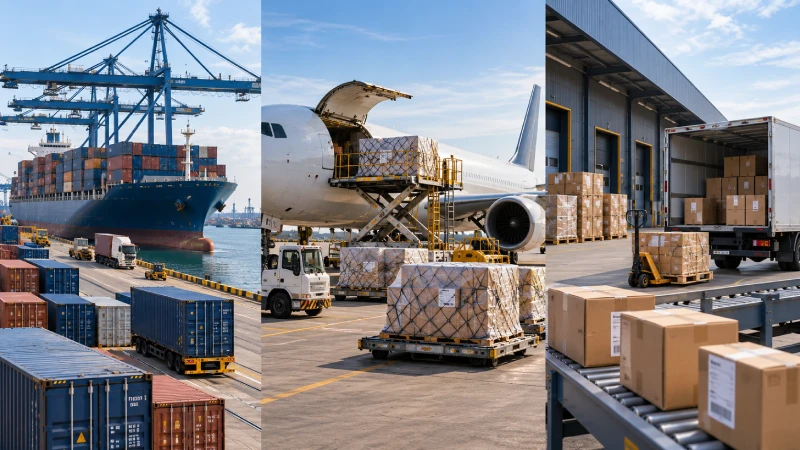
What Does a China-to-Nigeria Freight Quote Include?
Two quotations can differ by thousands of dollars while both are technically correct.
The reason is usually scope.
A typical China-to-Nigeria shipment can contain at least nine cost layers:
- Supplier pickup in China
- China origin handling
- Export declaration
- International freight
- Carrier destination charges
- Terminal or CFS charges
- Nigerian customs clearance
- Import duties and taxes
- Inland delivery in Nigeria
A headline freight rate may cover only item four.
Quote Scope Comparison
| Charge | Freight-Only | Port-to-Port | Door-to-Door | DDP / Managed Service |
|---|---|---|---|---|
| China supplier pickup | Normally separate | Sometimes | Usually included if agreed | Usually included if agreed |
| China origin handling | Sometimes | Usually | Usually | Usually |
| Export declaration | Sometimes | Usually | Usually | Usually |
| International freight | Included | Included | Included | Included |
| Nigeria carrier/local charges | Separate | Often separate | Depends on quote | Depends on agreed scope |
| Terminal / CFS handling | Separate | Often separate | Usually coordinated | Depends on agreed scope |
| Customs clearance | Separate | Separate | Often included as service | Usually coordinated |
| Duties and taxes | Separate | Separate | Usually separate unless stated | Only included where expressly agreed |
| Nigerian inland delivery | Separate | Separate | Included to named destination | Included to agreed destination |
The key rule is simple:
Freight prepaid is not the same as destination charges prepaid.
Even when the Bill of Lading shows freight prepaid, the consignee may still face Nigerian carrier charges, terminal fees, customs assessment, clearing costs and inland transport.
This is why quotations should always contain a written included / excluded list.
Nigeria Customs Service describes Form M, PAAR, customs declaration, assessment and release as parts of the import process, while regulatory certificates may also be required depending on the goods. (Nigeria Customs Service)
For SON-regulated products, SONCAP is a pre-shipment conformity process and applicable goods may require the relevant Product and Shipment Certificates. (Standards Organisation of Nigeria)
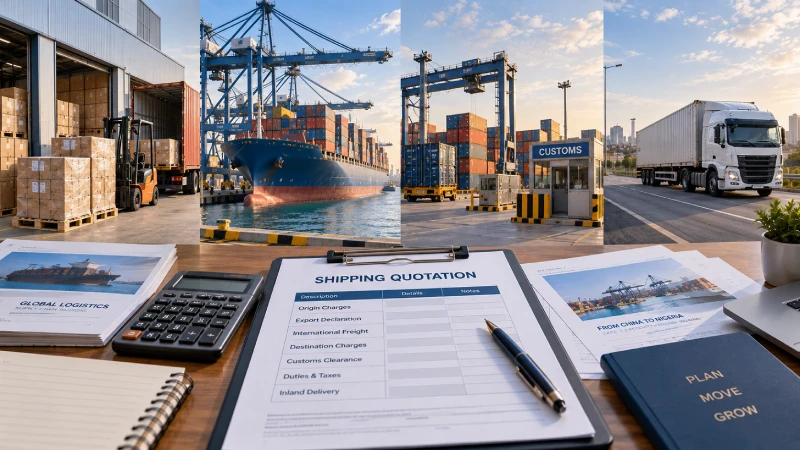
Sea Freight Cost — LCL vs FCL
Sea freight is normally the first option importers evaluate when cost matters more than speed.
But LCL and FCL use different pricing structures.
LCL Shipping
LCL is generally priced by W/M or chargeable CBM.
It can work well for:
- smaller commercial orders;
- shipments from multiple suppliers;
- importers testing a new product;
- cargo that does not justify an entire container.
The disadvantage is that the ocean freight rate alone does not tell you the final LCL cost.
Consolidation, deconsolidation and destination handling can change the economics significantly.
That is especially important when comparing LCL with a full container.
See current cost per CBM from China to Nigeria.
FCL Shipping
FCL is priced per container.
It becomes increasingly attractive as cargo volume rises because the cost is spread across more products.
But the decision should not be based only on nominal container capacity.
Consider:
- actual usable loading volume;
- cargo density;
- packaging;
- 20GP versus 40GP/40HQ equipment;
- container availability;
- Nigeria destination charges;
- final delivery requirements.
A shipment near the LCL/FCL crossover point should be quoted both ways.
Do not simply calculate:
LCL CBM rate × total CBM
and compare that number with a container freight rate.
The two quotations may contain different origin and destination charges.
Air Freight and Express Shipping Costs
For urgent cargo, the important comparison is usually standard air freight versus express courier.
They are not the same product.
| Factor | Air Freight | Express Courier |
|---|---|---|
| Typical cargo | Commercial shipments | Samples and smaller parcels |
| Pricing | Chargeable weight | Chargeable weight |
| Weight breaks | Very important | Important |
| Airport handling | Often handled separately | Integrated into courier network |
| Customs arrangement | Depends on service scope | Courier normally coordinates entry |
| Final delivery | Optional | Commonly included |
| Best use | Urgent commercial cargo | Very urgent small shipments |
Air freight rates generally improve as shipment weight moves into larger airline weight breaks.
Express couriers, by comparison, are designed around speed, tracking and integrated parcel handling.
This makes express convenient for small shipments but often expensive when cargo becomes heavier or bulkier.
The most important calculation is still:
Chargeable weight = greater of actual weight and applicable volumetric weight
So a lightweight but oversized shipment can cost considerably more than its scale weight suggests.
If the cargo contains batteries, liquids, magnets, chemicals or other restricted characteristics, provide that information before asking for a rate. Carrier acceptance and special handling can change both price and routing.
For service details, see Air Freight from China and our express shipping from China to Nigeria guide.
Door-to-Door and DDP Shipping Cost
A door-delivery quote normally looks more expensive than a basic freight quote because more steps are included.
That does not necessarily mean the underlying transport is more expensive.
You may simply be comparing different products.
Before accepting a door-to-door or DDP quotation, confirm:
- where pickup starts;
- which China charges are included;
- the named Nigerian destination;
- who handles import clearance;
- who acts as the importer where required;
- whether duty and taxes are actually included;
- whether delivery is to Lagos only or another Nigerian city;
- whether unloading is included;
- whether storage or demurrage is excluded;
- whether the quotation applies to the declared commodity and HS code.
DDP Does Not Remove Every Import Compliance Question
DDP is an Incoterm defining seller and buyer responsibilities, but it should not be interpreted as a promise that an overseas freight provider can eliminate all Nigerian importer or regulatory requirements.
The shipment may still depend on the actual importer structure, tax registration, customs documentation and product-specific approvals.
Nigeria Customs Service states that customs valuation follows the applicable valuation framework and that transport, loading/handling related to that transport and insurance can form part of the customs value where applicable. Classification then determines the relevant tariff treatment. (Nigeria Customs Service)
For regulated products, compliance should therefore be checked before shipment rather than after the cargo reaches Nigeria.
What Changes the Shipping Price?
A China-to-Nigeria rate should always be connected to a specific shipment and a specific date.
1. Cargo-Ready Date
Freight rates are normally valid for a limited period.
If your supplier will finish production several weeks later, today’s rate may no longer be available.
2. China Origin City
A factory in Foshan, Dongguan, Yiwu, Ningbo, Qingdao or another manufacturing area creates different domestic pickup and port-routing costs.
The lowest ocean rate is not automatically the lowest total origin cost.
3. Port or Airport
Shenzhen, Guangzhou, Ningbo, Shanghai and Qingdao do not always have identical carrier schedules or rate levels.
For air freight, Guangzhou, Shenzhen, Shanghai and other gateways may also produce different capacity and connection options.
4. Nigerian Gateway
Nigeria has several major seaports. The Nigerian Ports Authority lists Lagos Port Complex, Tin Can Island, Lekki Deep Sea Port, Onne, Rivers, Delta and Calabar among the country’s principal port facilities. (Nigerian Ports Authority)
Your correct gateway depends partly on the cargo, carrier service and final delivery location.
5. Weight and Volume
For LCL, volume and weight affect the chargeable measurement.
For air and express, the carrier compares actual and volumetric weight.
For FCL, the question becomes container utilization and equipment type.
6. Commodity
A rate for normal general cargo cannot automatically be used for:
- batteries;
- chemicals;
- liquids;
- dangerous goods;
- oversized machinery;
- temperature-sensitive products;
- regulated products.
7. Equipment Type
20GP, 40GP, 40HQ, reefer, open-top and flat-rack equipment have different pricing and availability.
8. Carrier Space and Equipment Availability
Even when the published market appears stable, an individual sailing may be full or equipment may be unavailable.
The next sailing can have a different rate.
9. Carrier Surcharges
This is one of the clearest reasons not to treat an online rate as permanent.
For example, CMA CGM announced on September 30, 2026 that a US$200 per TEU Peak Season Surcharge would apply from October 15, 2026 loading date for Central and South China to its West Africa Central Range, including Nigeria, for dry and reefer cargo on applicable short-term contracts. The carrier also notes that bunker, terminal, security and other local charges may apply. (CMA CGM)
A quotation issued in early October may therefore not represent the cost of cargo loading later in the month.
10. Final Delivery Location
“Delivery in Nigeria” is not one price.
Delivery within Lagos is different from transport to Abuja, Kano, Ibadan, Port Harcourt or another inland destination.
Provide the actual delivery city before comparing door rates.
Pro Tip: Ask whether the freight rate remains valid through your actual cargo-ready date—not merely whether it is valid on the day the quotation is issued.
Freight Cost vs Destination Cost vs Landed Cost
The phrase shipping cost is often used to describe three different numbers.
Understanding the difference prevents unrealistic budgeting.
Layer 1 — International Freight
This is the transport from the China origin gateway to the Nigerian gateway.
Examples include:
- ocean freight;
- LCL freight;
- airline freight;
- courier transportation.
Layer 2 — Destination Logistics
After arrival, additional logistics may include:
- carrier release charges;
- terminal handling;
- CFS handling for LCL;
- customs brokerage;
- examination or handling;
- storage;
- demurrage or detention;
- inland trucking.
Layer 3 — Customs Duties and Taxes
These depend on factors such as:
- HS classification;
- customs value;
- product type;
- applicable tariff treatment;
- other statutory measures.
Nigeria Customs Service states that customs valuation follows sequential valuation methods and that classification is used to determine the applicable tariff treatment. (Nigeria Customs Service)
Put together:
International freight
+ destination logistics
+ customs duties and taxes
+ inland delivery / delay costs where applicable
= landed logistics/import cost
That is why two quotes with very different headline freight rates can eventually produce similar—and sometimes reversed—total costs.
Freight-Budget Framework
For initial planning, use:
Total logistics cost = China-side charges + international freight + Nigeria destination charges + clearance + duties/taxes + inland delivery + time-based charges
The formula is more useful than multiplying a single online freight rate by your CBM or weight.
What to Send for an Accurate China-to-Nigeria Quote
A freight forwarder cannot produce a reliable quotation from a product name alone.
Before requesting pricing, prepare the following information.
Cargo Information
- Product name
- HS code, if known
- Number of cartons, pallets or packages
- Gross weight
- Dimensions of each package or total CBM
- Cargo value
- Photos or specifications when useful
China Information
- Supplier city
- Pickup address if collection is required
- Cargo-ready date
- Current purchasing Incoterm, such as EXW or FOB
Nigeria Information
- Destination port or airport, if already decided
- Final delivery city
- Whether port pickup or door delivery is required
- Nigerian importer arrangement
Special Requirements
Tell the forwarder in advance if the cargo contains or involves:
- lithium batteries;
- liquids;
- chemicals;
- dangerous goods;
- magnets;
- branded goods;
- oversized cargo;
- machinery requiring special loading;
- temperature-control requirements;
- regulated products.
For SONCAP-regulated products, conformity requirements should be planned before export; SON states that the programme verifies applicable products against Nigerian or approved equivalent standards before shipment. (Standards Organisation of Nigeria)
Quote Checklist
A useful quotation request can look like this:
Product: Commercial coffee machines
Packages: 18 cartons
Gross weight: 620 kg
Volume: 4.8 CBM
Supplier: Guangzhou, China
Cargo ready: October 20, 2026
Destination: Lagos, Nigeria
Cargo value: US$18,000
Incoterm: EXW
Service required: Compare LCL port-to-port and door delivery
Special handling: None known
That provides enough information to compare realistic transport options.
How to Compare Two Freight Quotations Correctly
Do not compare only the largest number printed on the quotation.
Normalize both offers first.
Check that they use the same:
| Variable | Why It Matters | What to Confirm |
|---|---|---|
| Cargo measurements | Changes CBM and chargeable weight | Same weight and dimensions |
| Origin | Changes pickup and local charges | Same factory / China port |
| Destination | Changes local handling and trucking | Same Nigeria terminal/city |
| Service scope | Biggest source of misleading comparisons | Same Incoterm/inclusions |
| Carrier / routing | Changes price and transit | Direct or transshipment |
| Cargo classification | Restricted cargo costs more | General, battery, DG, etc. |
| Rate date | Market changes quickly | Same cargo-ready period |
| Destination fees | Can reverse the cheaper quote | Included or collect |
| Customs scope | Major difference in door quotes | Clearance/duty stated clearly |
Pro Tip: Always normalize competing quotations to the same Incoterm, cargo measurements, destination and inclusion list before comparing the headline price.
Why China-to-Nigeria Freight Rates Change So Often
Shipping rates are not a fixed tariff.
During 2026 alone, carrier surcharge announcements on China–West Africa services changed repeatedly. CMA CGM published multiple PSS adjustments through the year, including substantially different levels in May, June, July, September and October. (CMA CGM)
The practical lesson for importers is not to try to predict every surcharge.
Instead:
- confirm your cargo-ready date;
- obtain a quotation close to booking;
- check the validity period;
- ask whether PSS, bunker and other carrier surcharges are included;
- compare the complete logistics scope rather than an old online rate.
For long-term purchasing plans, use published prices as budget ranges, not guaranteed procurement costs.
Which Shipping Method Fits Your Budget?
The right method depends on what you are shipping.
Consider LCL When
You have a smaller commercial shipment and enough time for consolidation and deconsolidation.
Before choosing it, understand the Nigeria-side charges.
Consider FCL When
You have enough cargo to make a dedicated container commercially sensible or want reduced cargo handling compared with consolidation.
Compare both 20ft and 40ft options using actual loading requirements.
Consider Air Freight When
The cargo is urgent, valuable or expensive to keep out of stock.
Air freight should be compared using chargeable—not simply actual—weight.
Consider Express When
You are moving samples, urgent spare parts or small parcels and value speed and integrated delivery.
Consider Door-to-Door When
You prefer one logistics coordinator to manage more of the route.
Make sure the written quotation defines exactly what happens at Nigerian customs and which charges remain outside the quoted price.
If your objective is specifically to minimize the total shipment cost, see our guide to the cheapest shipping from China to Nigeria.
FAQ
How much does shipping from China to Nigeria cost?
For initial 2026 planning, selected public market references show basic LCL ocean freight around US$150–200/CBM, 20GP ocean freight around US$2,800–3,800, and commercial air freight across a much wider range of roughly US$6–16/kg depending on shipment size and scope. These are not fixed booking prices.
What is included in a China-to-Nigeria freight quote?
It depends on the quotation. A basic rate may include only international freight, while a larger quote may also include China pickup, export handling, destination clearance and Nigerian delivery. Always request an inclusion and exclusion list.
Is sea freight cheaper than air freight to Nigeria?
For most medium and large commercial shipments, sea freight has a lower transportation cost per unit than air freight. Air freight becomes attractive when speed, inventory availability or cargo value justifies the higher transport cost.
Are Nigerian customs duties included in shipping costs?
Normally not unless the quotation expressly states that duties and taxes are included under the agreed service. Port-to-port and standard freight quotations usually leave customs duties and taxes separate.
Why do China-to-Nigeria shipping prices change every few weeks?
Carrier capacity, equipment availability, fuel-related charges, seasonal demand and peak-season surcharges can all change. The quotation validity period and actual cargo-ready date therefore matter.
How can I get an accurate freight quote before ordering from my supplier?
Provide the product, package count, gross weight, dimensions or CBM, supplier location, cargo-ready date, destination city, commercial value, current Incoterm and any special cargo characteristics.
Is door-to-door shipping priced differently from port-to-port freight?
Yes. Port-to-port freight ends at the agreed port or airport scope, while door delivery normally adds destination handling, customs coordination and inland transport.
Plan Your China-to-Nigeria Shipping Cost
The most useful shipping price is not the lowest number on a rate sheet.
It is the quotation that clearly identifies:
- what cargo is being shipped;
- when it will be ready;
- where the service begins;
- where the service ends;
- what is included;
- what remains payable in Nigeria;
- and how long the rate remains valid.
For a broader overview of routes, shipping methods, customs planning and delivery options, read our complete guide to shipping from China to Nigeria.
For mode-specific planning:
- Sea Freight from China
- Air Freight from China
- LCL cost per CBM to Nigeria
- 20ft and 40ft container rates to Nigeria
- Cheapest shipping from China to Nigeria
- Nigeria destination charges
- China-to-Nigeria transit times
Send Cargo Details
Send Winsail Logistics:
product + packages + dimensions + gross weight + supplier city + cargo-ready date + Nigerian destination + cargo value + requested service scope
and compare the available sea, air or managed delivery options using the same cost basis.
Rate disclaimer: Prices shown in this guide are public market planning references, not guaranteed Winsail quotations. Freight rates, carrier surcharges, space, equipment and local charges can change before booking.
Customs disclaimer: Customs duties, taxes, valuation, product compliance and clearance requirements depend on the actual shipment and current Nigerian regulations. Confirm the HS classification, importer arrangements and regulatory requirements before cargo is dispatched.
