
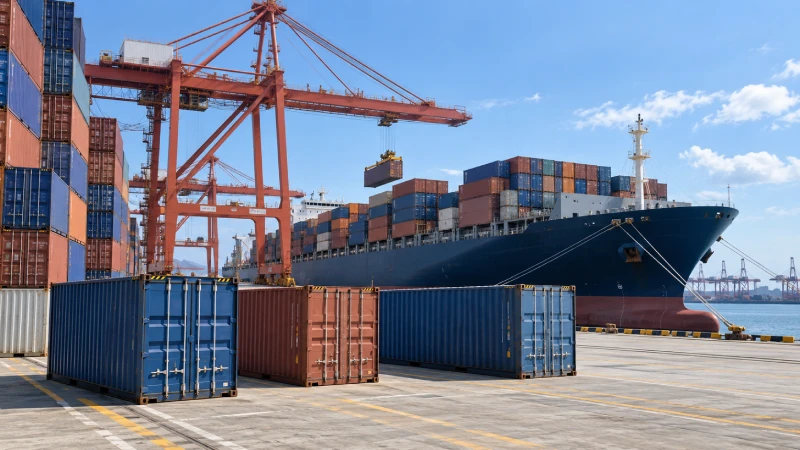
FCL shipping from China to Nigeria does not necessarily mean that every cubic metre inside the container is filled with cargo.
FCL—Full Container Load—means that the shipper has dedicated use of the container. The real commercial question is whether that dedicated container gives you enough value in terms of space, loading control, reduced cargo handling and destination economics to justify choosing FCL instead of LCL shipping from China to Nigeria.
For some shipments, FCL becomes attractive because the cargo almost fills a container. For others, the deciding factor is not volume at all. Heavy machinery, tiles or metal products may reach practical weight limits before the container is physically full. Sensitive products may justify FCL because they benefit from less shared handling. A shipment involving several Chinese suppliers may also become operationally easier when the cargo can be consolidated and stuffed into one dedicated container.
That is why choosing FCL should start with your actual packing list, cargo dimensions, gross weight, loading method and Nigerian destination, rather than a simple rule such as “use FCL above X CBM.”
How FCL Shipping from China to Nigeria Works
A typical FCL shipment follows a relatively simple physical chain:
Empty container release → factory or warehouse stuffing → container sealing → China export port → ocean transport → Nigerian terminal → customs clearance → container gate-out → delivery and unloading → empty container return
The detailed export, customs and ocean-freight procedures are covered more fully in Sea Freight from China to Nigeria. For FCL planning, the most important operational decisions happen before the container is loaded:
- Select the correct container type.
- Confirm the cargo dimensions and weight.
- Decide where the container will be stuffed.
- Check whether one or several suppliers will load cargo.
- Confirm the China departure port and Nigerian gateway.
- Review carrier free-time conditions.
- Plan Nigerian customs clearance and final delivery.
- Confirm how and where the empty container will be returned.
A poor decision at any of these stages can create extra trucking, reloading, waiting, demurrage or detention costs later.
20GP vs 40GP vs 40HQ
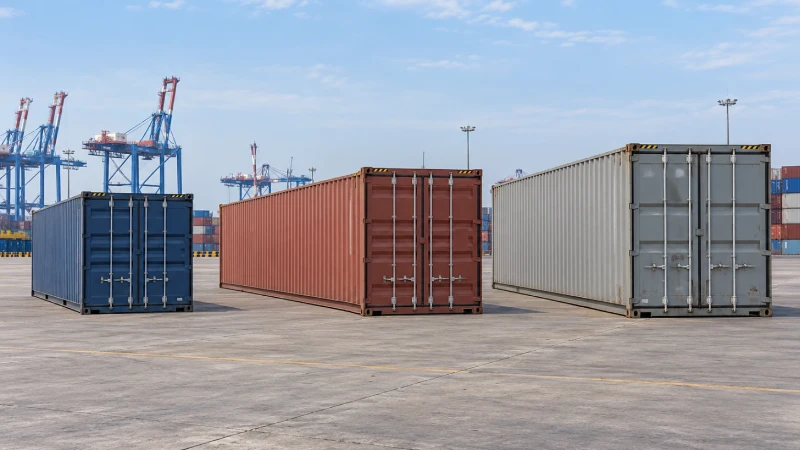
The three dry-container types most commonly considered for general FCL cargo are 20GP, 40GP and 40HQ.
Carrier equipment specifications vary slightly by container fleet, so the specific container’s CSC plate and carrier equipment data should always take priority. As a current reference, Maersk lists approximately 33.2 m³ for a 20-foot standard container, 67.7 m³ for a 40-foot standard container and 76.4 m³ for a 40-foot high-cube container. It lists door widths of approximately 2,340 mm, with door heights of about 2,280 mm for standard dry containers and 2,585 mm for a 40HQ. Maersk equipment specifications
| Equipment | Approx. Internal Cube | Approx. Door Opening | Payload Check | Best Cargo Profile | Main Limitation |
|---|---|---|---|---|---|
| 20GP | 33.2 m³ | 2.34 m × 2.28 m | Critical for dense cargo | Machinery, tiles, metal parts, dense industrial cargo | Less volume |
| 40GP | 67.7 m³ | 2.34 m × 2.28 m | Still required | General merchandise, cartons, furniture, mixed commercial cargo | Same internal height as 20GP |
| 40HQ | 76.4 m³ | 2.34 m × 2.585 m | Required | Bulky, lightweight cargo, furniture, appliances, high-volume cartons | Extra height adds little value for weight-limited cargo |
When a 20GP Makes More Sense
A 20GP can be a strong choice when the shipment is relatively dense.
Examples include:
- ceramic tiles
- metal components
- machine parts
- industrial equipment
- stone products
- dense building materials
With these products, a larger 40-foot container may provide significantly more cubic capacity without providing a proportionate increase in the practical cargo weight that can be moved.
The result can be a 40GP or 40HQ that is physically half empty but already difficult to move within road, terminal or carrier weight limits.
When a 40GP Makes More Sense
A 40GP generally works well for general commercial cargo where volume is the main constraint but the additional height of a 40HQ is unnecessary.
Typical examples include:
- packaged consumer goods
- cartons
- furniture
- household products
- mixed wholesale shipments
- industrial components with moderate density
When a 40HQ Makes More Sense
A 40HQ has essentially the same floor footprint as a 40GP but provides additional internal height.
That makes it useful for products such as:
- furniture
- mattresses
- plastic goods
- lightweight equipment
- large cartons
- certain appliances
- other high-volume, low-density cargo
If the shipment is already weight-limited, however, paying for extra height may provide little operational value.
Pro Tip: Choose the container around the real loading plan, not simply the theoretical cubic capacity.
Container Volume Is Not the Same as Usable Cargo CBM
A 40HQ may have more than 76 m³ of internal geometric volume, but that does not mean you can automatically load 76 m³ of commercial cargo.
Real container utilization is affected by several factors.
Carton Geometry
Boxes rarely fit perfectly against every container surface.
Different carton sizes can create unused pockets between rows, above cargo or near the doors.
Palletization
Pallets simplify warehouse handling but reduce space utilization.
The pallet itself consumes height and floor area, while the dimensions of the pallet may not divide evenly into the container floor.
Cargo Weight
You may run out of usable payload before you run out of cubic space.
This is particularly important for heavy industrial cargo.
Load Distribution
Heavy cargo cannot simply be concentrated wherever there is space.
Weight must be distributed appropriately across the container floor and positioned with transport stability in mind.
Loading Sequence
Cargo loaded for several suppliers, SKUs or delivery priorities may require deliberate sequencing.
The most space-efficient arrangement is not always the most operationally practical arrangement.
Unusable Gaps
Bracing, protective material, irregular machinery shapes and safe clearance around cargo all reduce real usable capacity.
For this reason, the best way to estimate FCL utilization is to work from:
carton or crate dimensions + quantity + gross weight + pallet details + loading constraints
rather than total supplier CBM alone.
Payload Can Matter More Than CBM
Volume receives most of the attention when comparing FCL equipment, but payload can become the primary constraint for dense cargo.
This is especially relevant for:
- tiles
- stone
- steel and metal products
- heavy machinery
- batteries or dense industrial goods
- construction materials
Published equipment specifications may show theoretical payload figures close to or above 28 tonnes for common dry containers, but that does not mean every China-to-Nigeria shipment can automatically load to that weight. Maersk equipment specifications
Several limits need to be checked together.
Container Maximum Gross Weight
The CSC plate on the physical container provides equipment-specific information.
Carrier Acceptance
A shipping line may apply operational or route-specific weight restrictions.
China Trucking Limits
The container still has to move legally and safely from the stuffing location to the export terminal.
Terminal Handling
Terminal equipment and operational requirements may affect acceptance.
Nigerian Inland Transport
The container must also be moved from the destination terminal to the unloading point under applicable local road and transport requirements.
That is why there is no useful universal statement such as “a 20GP can always carry X tonnes from China to Nigeria.”
For dense cargo, send the gross cargo weight before booking the equipment.
Container Loading Control
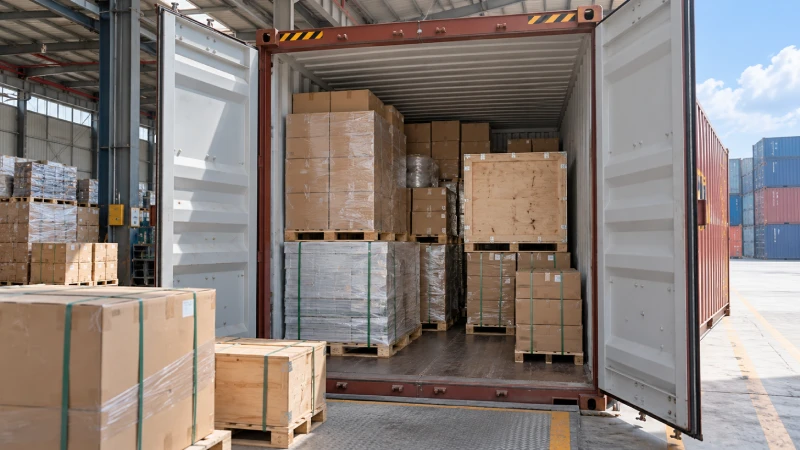
One of the main advantages of FCL is greater control over how the shipment is loaded.
Less Cargo Mixing
Your goods are not routinely consolidated into the same container with multiple unrelated LCL shipments.
This reduces shared cargo handling during the consolidation and deconsolidation process.
Seal Control
After stuffing is completed, the container is sealed.
Seal information should be recorded correctly on the shipping documentation and checked during the transport chain where required.
Loading Plan
A loading plan can account for:
- heavy cargo placement
- fragile cartons
- loading sequence
- SKU separation
- pallet layout
- bracing
- doorway clearance
Multi-Supplier Consolidation
A dedicated container does not have to be loaded by only one supplier.
For example, goods from factories in Guangzhou, Foshan and Dongguan can potentially be consolidated before final container stuffing when the routing and timing make commercial sense.
The key is to coordinate supplier cargo readiness so that one delayed supplier does not hold the entire container.
Inspection Before Sealing
Where required, cargo quantity, packaging condition, labeling or loading can be checked before the container doors are closed.
The exact supervision or inspection scope should be agreed before booking rather than assumed.
Current FCL Routing to Nigeria
Nigeria can be served through several container gateways, and the best route depends on the China origin, carrier network, capacity, final Nigerian destination and schedule available when the shipment is booked.
As of October 2026, current carrier networks show several useful examples.
CMA CGM: China to Lekki
CMA CGM’s WAX1 structure, announced in February 2026, includes:
Qingdao → Ningbo → Nansha → Shekou → Singapore → Colombo → Abidjan → Lekki
This creates direct vessel coverage from several major Chinese export ports into Lekki without a container transshipment between the listed WAX1 port calls. CMA CGM WAX service update
CMA CGM: Connections to Apapa and Onne
CMA CGM’s WAX3 rotation includes:
Singapore → Tanjung Pelepas → Lomé → Apapa → Onne → Cotonou
For cargo originating in China, Apapa or Onne routing may therefore involve a connection into this loop depending on the booked origin and service combination. CMA CGM WAX service update
MSC IROKO: China to Lagos and Onne
MSC’s current IROKO network provides direct-service calls from Ningbo and Nansha through Asia and Africa to Nigerian ports.
The published rotation includes:
Ningbo → Nansha → Singapore → Cape Town → Pointe-Noire → Cotonou → Apapa → Tin Can/Lagos → Onne
MSC has published indicative port-to-port transit times of approximately:
- Ningbo → Apapa: 39 days
- Ningbo → Tin Can: 40 days
- Ningbo → Onne: 43 days
- Nansha → Apapa: 36 days
- Nansha → Tin Can: 37 days
- Nansha → Onne: 40 days
These are carrier-network examples rather than guaranteed booking times. Vessel rotation, blank sailings, congestion, capacity and schedule changes can affect actual transit. MSC IROKO service update
| China Port / Network | Nigeria Gateway | Carrier / Service | Routing Character | Last Verified |
|---|---|---|---|---|
| Qingdao / Ningbo / Nansha / Shekou | Lekki | CMA CGM WAX1 | Direct service loop | Oct 2026 |
| China via Southeast Asia connection | Apapa | CMA CGM WAX3 | Connection into WAX3 | Oct 2026 |
| China via Southeast Asia connection | Onne | CMA CGM WAX3 | Connection into WAX3 | Oct 2026 |
| Ningbo / Nansha | Apapa | MSC IROKO | Direct-service rotation | Oct 2026 |
| Ningbo / Nansha | Tin Can/Lagos | MSC IROKO | Direct-service rotation | Oct 2026 |
| Ningbo / Nansha | Onne | MSC IROKO | Direct-service rotation | Oct 2026 |
The Nigerian Ports Authority lists Lekki, Lagos Port Complex at Apapa, Tin Can Island Port and Onne among Nigeria’s port facilities. Nigerian Ports Authority
The correct gateway should therefore be selected around the final delivery location and total shipment economics, not simply the shortest ocean schedule.
For a broader view of routing, transit and destination planning, see Shipping from China to Nigeria.
FCL Cost Structure
An FCL quote normally contains more than the ocean freight line.
The commercial structure may include:
Ocean freight + China origin charges + applicable surcharges + Nigerian destination charges + customs-related scope + inland trucking + optional handling
Ocean Freight
This is the carrier cost for transporting the container between the booked ports.
China Origin Costs
Depending on the service basis, these can include:
- container pickup
- trucking
- terminal handling
- documentation
- customs declaration
- warehouse or loading services
Carrier Surcharges
Carrier surcharges can change the economics quickly.
For example, CMA CGM announced a USD 200 per TEU Peak Season Surcharge from Central and South China to the West Africa Central Range, including Nigeria, for short-term-contract cargo with a loading date from October 15, 2026. It also notes that other bunker, terminal, security and local charges may apply. CMA CGM PSS notice
This is one reason container-cost content should use dated rate benchmarks rather than presenting a freight rate as permanently valid.
Nigerian Destination Costs
These depend on the carrier, terminal, equipment, shipment status and service scope.
Customs and Regulatory Costs
These depend on the commodity, customs value, HS classification and import structure.
Inland Delivery
A port-to-port rate does not include moving the container to the final warehouse unless that service is specifically added.
When comparing quotations, always compare the same origin, destination, equipment, free time and service scope.
Free Time, Demurrage and Detention
FCL importers should understand three separate time-related cost concepts.
Terminal Storage
Terminal storage is charged for cargo or containers remaining in the terminal beyond applicable free storage conditions.
It is a terminal-related charge and should not automatically be treated as the same thing as shipping-line demurrage.
Demurrage
In common carrier terminology, demurrage relates to using the carrier’s container beyond allowed free time while it remains within the relevant terminal or import cycle.
The precise contractual definition should be checked on the carrier tariff and booking terms.
Detention
Detention commonly applies after the container has been collected from the terminal and remains outside the terminal beyond the permitted period before the empty equipment is returned.
A typical risk sequence looks like this:
Vessel arrival → discharge → free-time clock → customs/release → gate-out → delivery → unloading → empty return
Delays can come from:
- incomplete import documents
- customs issues
- terminal congestion
- delayed payment
- trucking shortages
- delivery-site restrictions
- slow unloading
- late empty-container return
There is no reliable universal statement such as “Nigeria always gives X free days.”
Free-time arrangements may differ by:
- carrier
- port
- container type
- contract
- shipment
- customer agreement
- destination depot
Pro Tip: Put the agreed free-time terms on the booking confirmation before the vessel departs China.
When FCL Beats LCL
There is no universal CBM number at which FCL automatically becomes cheaper than LCL.
The crossover depends on total shipment economics.
| Factor | FCL | LCL |
|---|---|---|
| Main pricing basis | Dedicated container | Usually volume/weight based |
| Container space | Dedicated | Shared |
| Cargo handling | Less shared handling | More consolidation handling |
| Origin consolidation | Simpler for large volume | Useful for smaller shipments |
| Destination handling | Container-based | LCL deconsolidation charges |
| Cargo control | Higher | Lower |
| Best utilization | Medium-to-high container utilization | Small or irregular shipments |
| Heavy cargo | Payload must be checked | Weight-density pricing may matter |
| Sensitive cargo | Often attractive | More shared handling points |
FCL Becomes Worth Comparing When
- cargo occupies a large share of a container
- LCL destination charges become significant
- the cargo is sensitive to repeated handling
- several suppliers can be consolidated efficiently
- the shipment requires more loading control
- release simplicity has commercial value
- the importer wants dedicated container security
LCL May Still Be Better When
- cargo volume is low
- inventory should move in smaller batches
- waiting to fill a container would delay sales
- a dedicated container creates substantial unused space
- destination and delivery arrangements favor LCL
Do not make the decision from CBM alone.
Compare the all-in landed logistics cost and operational risk.
FCL Booking Checklist
Before booking FCL shipping from China to Nigeria, prepare the following information.
Container and Cargo
- preferred equipment: 20GP, 40GP or 40HQ
- commodity
- HS code if available
- number and type of packages
- dimensions
- total CBM
- gross weight
- palletization status
- dangerous-goods status if applicable
China Origin
- supplier or stuffing address
- cargo-ready date
- number of suppliers
- preferred loading date
- loading equipment required
- China departure port
Shipping
- Nigerian destination port
- required routing
- carrier preference if any
- VGM information
- required free time
- sailing schedule
- documentation requirements
Nigeria Destination
- importer details
- import documentation
- customs broker arrangement
- final delivery address
- unloading method
- empty-return location
- delivery-site access restrictions
A freight forwarder can evaluate equipment more accurately when the packing list contains dimensions and weights, not only a supplier’s estimated CBM.
Which Container Should You Choose?
Use this practical decision logic.
Dense, Heavy Cargo
Priority: payload first.
Start by checking:
- gross weight
- road movement
- container maximum gross weight
- carrier acceptance
A 20GP may be commercially more sensible than a partially utilized 40-foot container.
Bulky, Lightweight Cargo
Priority: cube first.
A 40HQ often provides the strongest utilization because of its additional internal height.
Near-Full Container Utilization
Priority: compare FCL against LCL all-in cost.
Destination LCL charges can materially change the result.
Sensitive or High-Value Cargo
Priority: handling and control.
A dedicated container may reduce shared cargo handling and give the shipper more control over stuffing and sealing.
FCL Container Lifecycle
A China-to-Nigeria FCL container normally moves through the following operational chain:
Empty release
↓
Factory or warehouse stuffing
↓
Cargo secured and container sealed
↓
China export terminal
↓
Vessel loading
↓
Ocean transport
↓
Nigerian port discharge
↓
Customs and terminal release
↓
Container gate-out
↓
Customer unloading
↓
Empty container return
The commercial responsibility for each stage depends on the agreed Incoterm and freight service scope.
Compare Container Options Before Booking
If you are deciding between a 20GP, 40GP and 40HQ, send the packing list with carton or crate dimensions, quantity and gross weight.
The decision should be based on actual utilization rather than container names alone.
Check the FCL Rate on the Same Service Basis
When comparing FCL quotations, confirm that each option uses the same:
- China origin
- Nigerian gateway
- container size
- sailing period
- free time
- destination scope
- final delivery requirement
A cheaper ocean rate does not necessarily produce the lower final logistics cost.
Send the Packing List
For a practical FCL assessment, provide:
product + package count + package dimensions + gross weight + supplier location + cargo-ready date + Nigerian destination
That information is usually enough to begin comparing equipment and routing options.
FAQ
What is FCL shipping?
FCL means Full Container Load. The shipper has dedicated use of the container, but the container does not have to be physically filled to 100% of its cubic capacity.
Should I use a 20GP or 40GP?
It depends on both cargo volume and weight. A 20GP often suits dense cargo, while a 40GP provides substantially more cubic space for general merchandise. Use the actual packing list rather than CBM alone.
What is the difference between 40GP and 40HQ?
They have a similar floor footprint, but a 40HQ provides additional internal height and therefore more cubic capacity. It is particularly useful for bulky, low-density cargo.
How much cargo can an FCL container carry?
There is no single safe payload figure for every China-to-Nigeria shipment. Container specifications, the individual CSC plate, carrier acceptance, trucking rules and destination movement all need to be checked.
Does FCL always cost less than LCL at high CBM?
No. FCL often becomes competitive as utilization increases, but origin costs, destination fees, routing and delivery requirements can change the crossover point.
What is demurrage?
Demurrage is generally a carrier charge associated with keeping carrier equipment within the relevant terminal or import cycle beyond the allowed free period. The exact definition and tariff depend on the carrier.
What is detention?
Detention generally applies when carrier equipment remains outside the terminal beyond the allowed time after pickup and before empty return.
Can an FCL container ship directly to Lekki or Onne?
Yes, direct-service options exist in current carrier networks. CMA CGM's WAX1 includes Lekki, while MSC's IROKO includes Nigerian calls at Apapa, Tin Can/Lagos and Onne. Actual availability should be reconfirmed for the intended sailing date.
Routing, free time, container availability and carrier surcharges can change. Verify the current sailing, equipment availability and commercial terms before booking.
