
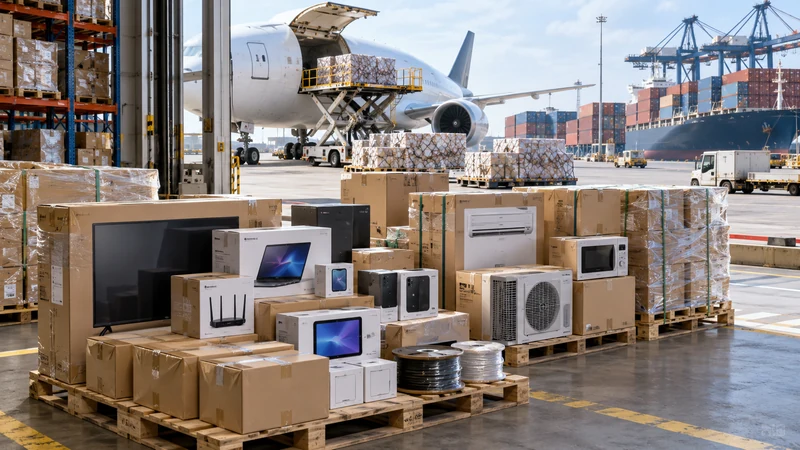
Shipping electronics from China to Nigeria requires more than choosing between air freight and sea freight. “Electronics” is too broad for either a reliable freight quote or a Nigerian compliance check. A television, PCB, smartphone, air conditioner, Wi-Fi router, charger and battery-powered tool can have different HS codes, certification requirements, battery classifications and carrier restrictions.
For commercial electronics shipments, the safest approach is to identify the exact product and model before certification, customs preparation or freight booking. That model-level information can affect SONCAP screening, possible SONMELS requirements, Nigerian Communications Commission requirements for communication equipment, HS classification and, where batteries are involved, dangerous-goods transport rules.
If you are still comparing the overall route, shipping modes and Nigerian import process, start with Shipping from China to Nigeria. This guide focuses specifically on electronics, including model-level compliance, batteries, packing, security and freight selection.
Regulatory check: Reviewed for publication on October 4, 2026. Nigerian product-control requirements and dangerous-goods rules can change. Final SON, SONMELS, NCC, Customs and carrier acceptance should be confirmed against the exact product, model and shipment before cargo is booked.
Can the Electronics Be Imported into Nigeria?
Start by identifying exactly what is being imported.
A supplier description such as “electronics,” “electrical accessories,” “smart device,” or “machine parts” is not enough. Before shipping from China, the importer and freight forwarder should establish the product’s function, specifications, commercial status and proposed HS classification.
Electronics Import Screening Checklist
| Information to Confirm | Why It Matters |
|---|---|
| Exact product name | Determines the starting point for classification and compliance |
| Manufacturer and model number | Certification and approvals may be model-specific |
| Main function | Helps distinguish finished equipment, parts and accessories |
| Voltage, frequency and wattage | Important for electrical specifications and product documentation |
| Battery chemistry | Determines whether dangerous-goods rules may apply |
| Battery Wh rating or lithium content | Used for battery transport classification |
| Battery arrangement | Installed, packed with equipment or shipped separately can follow different rules |
| New, used or refurbished | Regulatory treatment may differ |
| Finished product or component | Components may classify differently from complete equipment |
| Intended commercial use | Retail, manufacturing input and project equipment may follow different compliance routes |
| Proposed HS code | Affects Customs classification, duties and regulatory screening |
| Communication capability | Phones, routers and other network equipment may require NCC Type Approval |
Nigeria Customs Service maintains Nigeria’s tariff and HS classification resources, while the Standards Organisation of Nigeria controls conformity requirements for products within its regulatory scope. Classification should therefore be checked against the actual construction and function of the goods, rather than relying only on the Chinese supplier’s commercial description.
There may also be another regulator for certain electronic products. The Nigerian Communications Commission requires applicable communications equipment to comply with its Type Approval framework. This can matter for products such as mobile phones, wireless devices, routers and other equipment that connects to Nigerian communications networks.
For this reason, a shipment described simply as “500 cartons of electronic products” should not be booked until the model list has been reviewed.
SONCAP for Electronics: Product-Specific, Not Generic
SONCAP is Nigeria’s pre-shipment conformity assessment programme for products regulated by the Standards Organisation of Nigeria.
For regulated goods, conformity assessment can involve document review, testing, inspection and verification against applicable Nigerian Industrial Standards or approved equivalent standards. Depending on the product and certification route, Product Certificate and shipment-level SONCAP documentation may be required.
That does not mean an importer should simply ask:
“Do electronics need SONCAP?”
A better question is:
“Does this exact product and model fall within the current SONCAP procedure, and which conformity documents are required for this shipment?”
Why the Exact Model Matters
Model information can affect:
- electrical specifications;
- applicable product standards;
- test reports;
- manufacturer information;
- wattage, voltage and capacity;
- safety characteristics;
- product certificate details;
- shipment certificate data;
- battery specifications;
- telecom approval where applicable.
Changing models after certification documents have been prepared can create discrepancies between the physical cargo, invoice, packing list, compliance certificates and customs declaration.
SON states that Product Certificates are used within the SONCAP process, while shipment-level conformity documentation supports clearance of regulated goods. For commercial imports, the importer should also coordinate compliance documentation with Form M and other Nigerian import records.
In 2026, SON also announced migration of specified SONCAP and Import Permit processes to Nigeria’s National Single Window platform, including processes connected with Form M, PAAR and clearance. Importers should therefore confirm the current electronic workflow instead of following an older procedure copied from a previous shipment.
For the broader Nigerian clearance workflow and document relationships, see Customs Clearance in Nigeria.
SONMELS May Also Apply to Selected Electrical Appliances
Some electrical products require an additional check: the Standards Organisation of Nigeria Mandatory Energy Labeling Scheme, or SONMELS.
SONMELS addresses minimum energy performance standards and energy labeling for selected appliances. It is not a blanket requirement for every electronic product.
The current SON programme information identifies selected appliance groups in staged phases.
| SONMELS Group | Products Listed by SON | Shipping Relevance |
|---|---|---|
| Phase I | Refrigerators, freezers and refrigerator-freezer combinations | Check energy-performance and labeling status before shipment |
| Phase I | Window/wall, single-split and portable air conditioners | Exact AC type and model matter |
| Phase I | CFL, LED and fluorescent tube lamps | Product specification and labeling should be screened |
| Phase II | Ducted and multi-split air conditioners | Do not assume the same treatment as Phase I AC units |
| Phase II | Electric motors | Industrial buyers should check the exact model and applicable standard |
| Phase II | Electric comfort fans | Appliance importers should verify the current requirement |
| Phase II | Televisions | Relevant to TV distributors and retailers |
| Phase II | Electric storage water heaters | Model-level screening is required |
SON’s current programme page describes staged implementation through 2026. Because the implementation position can change during the transition, importers should verify the current mandatory status against the exact appliance category and model before shipment.
For example, a television importer should not assume that a previous refrigerator shipment proves the same SONMELS treatment applies. Likewise, a supplier’s statement that a product is “energy efficient” is not a substitute for checking the applicable Nigerian requirement.
Air vs Sea Freight for Electronics from China to Nigeria
There is no single best shipping method for electronics.
The choice depends on cargo value, volume, urgency, fragility, battery status, destination requirements and how much handling the shipment can tolerate.
Electronics Shipping Method Comparison
| Method | Best For | Main Risk | Battery Impact | Main Cost Basis |
|---|---|---|---|---|
| Air Freight | Phones, ICT equipment, components and urgent high-value stock | Battery restrictions, high chargeable weight and security handling | High; airline and DG acceptance must be confirmed | Chargeable weight |
| Sea LCL | Several CBM of electronics without enough cargo for a full container | More consolidation, handling and moisture exposure | DG acceptance can affect routing and consolidation | Usually volume or weight basis |
| Sea FCL | Appliances, regular stock and larger commercial shipments | Longer transit and container moisture exposure | DG declaration and carrier acceptance still apply where relevant | Container |
| Express | Samples, prototypes, replacement parts and small parcels | Courier commodity and battery restrictions can be strict | Often significant | Billable or chargeable weight |
When Air Freight Works Better
Air Freight from China to Nigeria is normally considered when the electronics are:
- compact but valuable;
- urgently needed for retail replenishment;
- replacement components for a project;
- ICT equipment with high value per kilogram;
- time-sensitive spare parts;
- samples or pre-production units.
Air cargo pricing is generally based on chargeable weight. A lightweight but bulky carton can therefore cost much more than its actual scale weight suggests.
Battery-containing products also require screening before air freight is assumed to be available. The presence of a lithium battery can change documentation, packing, state-of-charge requirements, airline acceptance and routing.
When Sea Freight Works Better
Sea Freight from China to Nigeria is usually more appropriate for:
- televisions;
- refrigerators;
- air conditioners;
- desktop equipment;
- larger appliances;
- palletized accessories;
- regular wholesale inventory;
- shipments occupying several cubic metres;
- full-container quantities.
For valuable electronics, FCL can reduce the number of cargo-handling interfaces compared with LCL, although it does not eliminate packing, moisture, theft or damage risk.
LCL can still be practical for smaller commercial shipments, but electronics should be packed for repeated warehouse, consolidation and deconsolidation handling rather than only for movement from the Chinese factory to the origin warehouse.
When Express Shipping Makes Sense
Express Shipping from China to Nigeria can suit small samples, prototypes, urgent replacement parts and low-volume commercial parcels.
However, courier acceptance rules for lithium batteries and certain electronic devices can be stricter than general cargo rules. A parcel being small does not automatically make it acceptable for courier transport.
Electronics with Lithium Batteries Need Separate Transport Classification
A product containing a lithium battery should never be booked merely as “electronics.”
The first question is how the battery is presented for transport.
Battery Configuration Matrix
| Configuration | Typical Example | Transport Issue |
|---|---|---|
| No battery | Charger, PCB, cable or non-battery appliance | Normal cargo screening unless another dangerous component is present |
| Battery contained in equipment | Laptop, smartphone or rechargeable scanner | Battery type, Wh rating and applicable packing rules must be checked |
| Battery packed with equipment | Equipment plus a removable battery packed in the same shipment | Separate packing provisions and state-of-charge rules may apply |
| Standalone battery | Replacement battery or power bank | More restrictive dangerous-goods treatment |
| Large battery system | Industrial battery pack | Specialist DG review and carrier approval are required |
Under IATA dangerous-goods rules, lithium-ion batteries are assigned different UN classifications depending on how they are shipped. Lithium-ion batteries shipped alone are generally classified as UN 3480, while qualifying lithium-ion batteries contained in or packed with equipment are generally classified as UN 3481.
Manufacturers and subsequent distributors must also make the applicable UN 38.3 battery test summary available for relevant cells, batteries and battery-powered equipment.
Important 2026 Air-Freight Battery Requirements
IATA’s 2026 guidance introduced important state-of-charge requirements for some lithium-ion battery configurations.
For lithium-ion batteries packed with equipment under PI 966, reduced state-of-charge requirements apply to specified configurations. Standalone lithium-ion batteries under PI 965 are also subject to state-of-charge restrictions and additional aircraft limitations.
Lithium-ion batteries contained in equipment under PI 967 are treated differently from batteries packed with equipment, so the words “battery included” are not enough for booking.
A power bank deserves particular attention because it is generally treated primarily as a battery, not simply as a battery contained in another device.
Information Needed for Battery Screening
Before booking, provide:
- lithium-ion, lithium-metal or other chemistry;
- battery manufacturer;
- battery model;
- number of cells or batteries;
- Wh rating;
- lithium content where relevant;
- battery net weight;
- whether installed, packed with equipment or standalone;
- UN 38.3 test summary;
- SDS or other requested technical documentation;
- proposed packing arrangement.
Final acceptance still depends on the actual classification, packing instruction, airline, routing and operator variations.
For sea freight, lithium batteries can also fall under dangerous-goods requirements. Packaged dangerous goods carried by sea are governed by the IMDG Code, including classification, packing, container handling, stowage and segregation. The applicable shipping line must confirm acceptance before booking.
Telecom and Wireless Electronics Need an NCC Check
SONCAP is not the only compliance issue for electronics.
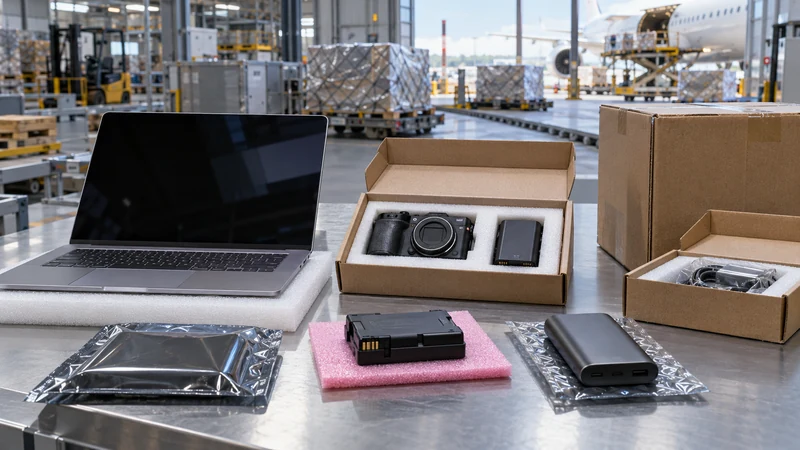
Phones, wireless adapters, routers and other communications equipment can fall under the Nigerian Communications Commission’s Type Approval system. NCC states that applicable equipment with communications capabilities connecting to Nigerian communications networks requires Type Approval.
This is another reason model numbers should be reviewed early.
For example, importing a new phone model cannot safely be treated as identical to importing:
- a phone charger;
- a wired headset;
- a Bluetooth accessory;
- a Wi-Fi router;
- a network switch;
- a base-station component.
The technical function determines which regulatory questions need to be asked. SONCAP documentation and NCC approval are separate compliance issues, so one should not automatically be treated as a substitute for the other.
High-Value Electronics Need a Security Plan
Freight cost is only one part of electronics shipping.
Phones, tablets, computer components, branded accessories and other compact electronics can have very high value relative to carton size. Reducing unnecessary visibility and handling can therefore be as important as obtaining a low freight rate.
Useful operational controls include:
- neutral outer cartons where commercially appropriate;
- avoiding unnecessary high-value product descriptions on outer packaging;
- sequential carton numbering;
- recording quantities by carton;
- photographing cartons before warehouse acceptance;
- photographing pallet condition after wrapping;
- tamper-evident or numbered seals where suitable;
- stretch-wrapping pallets;
- limiting unnecessary warehouse handling;
- documenting serial numbers for especially high-value equipment;
- checking cargo-insurance terms and exclusions.
For a pallet containing hundreds of identical devices, a carton-level packing record and photo inventory can make shortage investigation much easier than paperwork that only says “10 cartons electronics.”
Insurance Should Match the Real Risk
Cargo insurance should not be treated as an automatic substitute for secure packing or handling. Before relying on a policy, confirm:
- insured value basis;
- commodity description;
- exclusions for fragile electronics;
- exclusions or special terms for batteries;
- theft requirements;
- packaging conditions;
- deductible;
- evidence required for claims.
If insurance is required, confirm the available option and policy terms before shipment rather than after cargo is already in transit.
Protect Electronics from Shock, Static Electricity and Moisture
Electronics can arrive without visible carton damage and still suffer internal damage.
Packaging should therefore be designed around the product’s actual vulnerability.
Electronics Packaging Checklist
Inner protection
- retain suitable original factory packaging where it provides adequate protection;
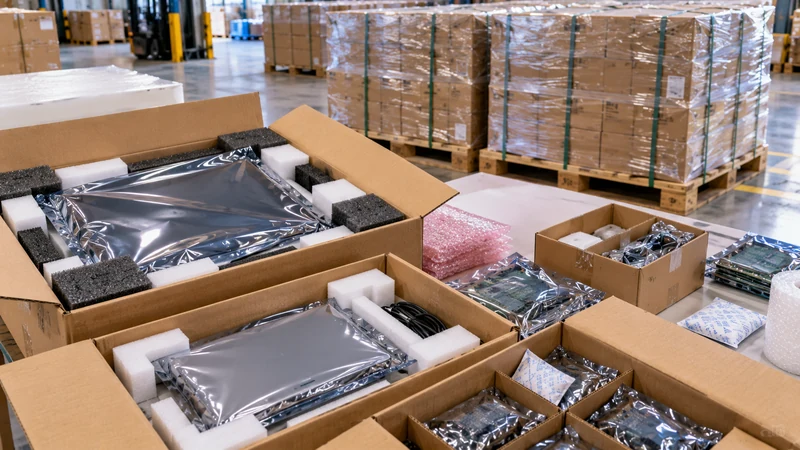
- use anti-static bags for sensitive PCBs and electronic components;
- immobilize products so they cannot move inside the carton;
- protect screens and vulnerable surfaces;
- separate accessories from fragile components.
Shock protection
- use suitable foam or molded inserts;
- reinforce cartons for export handling;
- add corner and edge protection for larger equipment;
- prevent heavy cartons from being stacked on fragile units;
- test pallet stability before dispatch.
Moisture protection
- use moisture-resistant inner layers where necessary;
- add appropriate desiccant for ocean shipments;
- keep cartons away from direct contact with container floors where practical;
- use suitable palletization;
- consider the risk of container condensation on longer sea routes.
Battery protection
- protect terminals against short circuit where required;
- prevent unintended activation of devices;
- use the packaging required by the applicable dangerous-goods classification;
- do not repack battery goods without checking whether the new configuration changes compliance.
A “Fragile” label is not a substitute for protective packaging.
HS Classification Is a Major Risk for Electronics
Electronics often have similar appearances but different Customs classifications.
A shipment could contain:
- a finished appliance;
- an electronic module;
- a replacement PCB;
- a power supply;
- a controller;
- a display;
- a charger;
- an accessory;
- a battery;
- a spare component.
These should not automatically receive the same HS code.
Nigeria Customs classification follows the Harmonized System and the applicable interpretation rules. Classification affects tariff treatment, documentation and sometimes regulatory screening.
Consider the difference between the following descriptions:
Weak description:
“Electronic accessories.”
Better description:
“AC/DC power adapters, Model XX-120, input/output specifications…, for use with specified equipment.”
The second description gives the importer and broker a much stronger starting point for classification.
Do not copy an HS code from a marketplace listing, Chinese export declaration or previous shipment and assume it is automatically correct for Nigerian import purposes. The product’s actual function, construction and presentation should support the classification used.
Costs Beyond International Freight
When comparing electronics freight from China to Nigeria, buyers should budget for more than the base air or ocean rate.
Depending on the shipment, additional costs can include:
- origin pickup in China;
- export handling;
- air or ocean terminal charges;
- battery or dangerous-goods handling;
- DG documentation;
- special packaging;
- product testing;
- SONCAP certification;
- SONMELS-related compliance where applicable;
- NCC approval for applicable communications equipment;
- inspection;
- cargo insurance;
- destination terminal charges;
- Nigerian customs brokerage;
- import duty and applicable taxes;
- port or airport storage;
- demurrage or other delay-related charges;
- delivery from the Nigerian entry point to the buyer’s warehouse.
This is why the lowest freight rate is not always the lowest landed logistics cost.
A shipment that reaches Nigeria before the correct product documents are ready can generate storage and clearance costs that are much larger than the saving achieved by choosing a slightly cheaper carrier.
Documents to Prepare Before Shipping Electronics
The final document set depends on the product, but a commercial electronics shipment should normally be screened for the following:
- detailed commercial invoice;
- packing list;
- exact model and specification list;
- proposed HS classification;
- Bill of Lading or Air Waybill;
- Form M documentation;
- PAAR-related documentation;
- SONCAP Product Certificate where applicable;
- shipment-level SONCAP documentation where applicable;
- SONMELS documentation where applicable;
- NCC Type Approval where applicable;
- UN 38.3 test summary for applicable lithium batteries;
- SDS and battery technical data where requested;
- dangerous-goods declaration or other DG documents where applicable;
- insurance documents if cargo insurance is arranged.
Form M and PAAR are important parts of Nigeria’s commercial import and customs-clearance workflow. The key operational requirement is data consistency.
The model, quantity, product description, HS code and other key information should not conflict across the invoice, packing list, compliance certificates, battery documents, freight documents and customs declaration.
A mismatch discovered before departure can often be corrected. The same mismatch discovered after arrival can turn into a clearance, storage or certification problem.
For a fuller explanation of Nigerian clearance documents, see Customs Clearance in Nigeria.
What Information Is Needed for an Electronics Freight Quote?
For a useful shipping assessment, send:
- exact product name;
- manufacturer;
- model number;
- product function;
- voltage and wattage;
- quantity;
- number of cartons;
- carton dimensions;
- gross weight;
- total shipment volume;
- commercial value;
- supplier city in China;
- destination in Nigeria;
- battery chemistry;
- battery Wh rating;
- battery quantity;
- whether the battery is installed, packed with equipment or standalone;
- whether the goods are new, used or refurbished;
- desired shipping time.
Photos of the product, specification labels, battery markings and packed cartons can also help identify issues that are not obvious from the commercial invoice.
Pro Tip: Send the exact model list before certification or booking. Substituting models after documents are prepared can create both compliance and customs-data mismatches.
Review Electronics Shipping Before the Cargo Leaves China
The most expensive electronics-shipping problems usually begin before the aircraft departs or the container is loaded.
A practical review sequence is:
- Identify every product and model.
- Confirm the main function and technical specification.
- Screen the proposed HS classification.
- Check SON and SONCAP applicability.
- Check SONMELS for relevant appliances.
- Check NCC Type Approval for applicable communications equipment.
- Identify every battery.
- Determine the battery transport configuration.
- Obtain the required battery documentation.
- Confirm airline, shipping line or courier acceptance.
- Verify export packaging and cargo-security controls.
- Make sure shipment documents use consistent product data.
Only then should the transport mode and final booking be confirmed.
For urgent, compact electronics, review Air Freight from China to Nigeria. For appliances and larger wholesale shipments, compare Sea Freight from China to Nigeria. Very small samples may fit Express Shipping from China to Nigeria, although battery acceptance must still be checked.
How Winsail Coordinates Electronics Shipping from China to Nigeria
Winsail can coordinate the China-side and international freight steps for commercial electronics shipments, including collecting cargo data, reviewing packing details, comparing air and sea options, arranging pickup, coordinating warehouse handling and submitting shipment information to carriers.
For battery-containing cargo, the exact battery specification and transport configuration should be checked before booking so that the proposed route can be reviewed against dangerous-goods and carrier requirements.
For regulated electronics, importers should complete the required Nigerian compliance work with the relevant authorities, conformity-assessment providers, banks and customs representatives. Winsail can coordinate logistics information and shipment documents, but does not issue SONCAP certificates, SONMELS approvals, NCC Type Approvals or Nigerian customs decisions.
If the product, battery configuration or model changes after the initial review, the shipment should be checked again before departure.
FAQ
Is air or sea freight better for electronics from China to Nigeria?
Air freight is generally better for urgent, compact and high-value electronics, while sea freight is usually more economical for appliances, pallets and larger wholesale volumes. Battery status, dimensions, value and handling risk should be considered before choosing.
Do electronics require SONCAP in Nigeria?
Many commercial electronics can fall within SON's regulatory framework, but SONCAP applicability should be checked against the exact product and model. Do not assume every item described as “electronics” follows the same certification route.
What is SONMELS?
SONMELS is Nigeria's mandatory energy-labeling and minimum energy-performance framework for selected electrical appliances. The applicable product categories and implementation status should be confirmed against the exact model before shipment.
Can electronics containing lithium batteries be shipped by air?
Many can, but acceptance depends on battery chemistry, Wh rating, whether the battery is installed, packed with equipment or standalone, the applicable packing instruction, documentation, airline and routing.
Why does the electronics model number matter?
The model can affect product specifications, test reports, certification, battery data, telecom Type Approval and customs documentation. Using documents prepared for a different model can create compliance and clearance mismatches.
How should electronics be packed for ocean freight?
Use strong export cartons, suitable internal cushioning, anti-static protection where relevant, moisture protection, stable palletization and adequate corner or impact protection for fragile equipment. Ocean cargo should also be prepared for condensation and repeated handling.
Are phone accessories classified the same as phones?
No. A mobile phone, power bank, charger, USB cable, wireless headset and replacement battery can have different functions, HS classifications and regulatory requirements. Communication-enabled equipment may also require an NCC check, while standalone lithium batteries can face separate dangerous-goods rules.
Send Models & Packing Details
For shipping electronics from China to Nigeria, start with the actual product data rather than only the total shipment weight.
Prepare the model list, specifications, quantities, carton sizes, gross weight, supplier city and Nigerian destination. If any product contains a battery, also provide the battery chemistry, Wh rating, configuration and available UN 38.3 documentation.
This allows the shipment to be reviewed for the appropriate transport method, battery status, packing requirements and major compliance issues before certification or freight booking is finalized.
For general route planning, see Shipping from China to Nigeria.
Official Sources
- Standards Organisation of Nigeria — SONCAP
- Standards Organisation of Nigeria — SONCAP FAQ
- Standards Organisation of Nigeria — SONMELS
- Nigeria Customs Service — CET Tariff
- Nigerian Communications Commission — Type Approval
- IATA — Lithium Battery Guidance Document
- International Maritime Organization — Dangerous Goods
