

Shipping clothes and textiles from China to Tanzania requires more than selecting a freight rate. Apparel wholesalers must coordinate suppliers, protect fabric and garments during transportation, maintain accurate SKU records, and prepare the documents needed for import clearance.
A shipment may contain fabric rolls, finished T-shirts, dresses, uniforms, private-label garments, and accessories from several Chinese factories. Although these products can sometimes travel together, they may have different packaging requirements, customs classifications, conformity obligations, and trademark considerations.
For importers preparing seasonal inventory for Dar es Salaam, Arusha, Dodoma, Mwanza, or other Tanzanian markets, careful planning before goods leave China can help prevent stock discrepancies, avoidable handling costs, and documentation problems.
Quick Answer: For apparel shipments from China to Tanzania, consider LCL for smaller mixed-carton orders, FCL for larger or more controlled loads, and air freight for urgent replenishment. Protect fabric rolls and garments from moisture and crushing, measure final packed CBM, and maintain supplier-level SKU records. Before dispatch, check product-specific HS classifications, applicable TBS conformity requirements, and FCC trademark recordation for branded goods entering Mainland Tanzania. Confirm import-clearance responsibilities and delivery terms before booking.
Data Note — October 2026: This guide references published Tanzanian import procedures, TBS conformity guidance, and FCC trademark-recordation rules reviewed in October 2026. Product-specific obligations, current freight quotations, carrier schedules, and destination charges must be confirmed for each shipment. Packaging calculations are illustrative, not actual freight quotations. Mainland Tanzania and Zanzibar may follow different regulatory procedures.
For a general comparison of shipping methods and destinations, see our shipping from China to Tanzania guide.
1. Choose the Right Shipping Method for Clothing and Textiles
The best freight arrangement depends on shipment volume, packaging format, stock availability, and how urgently the importer needs the merchandise.
Clothing is often relatively light compared with the space its cartons occupy. Fabric rolls, however, can vary considerably in weight and dimensions depending on their construction, width, and length.
Before choosing a freight method, compare the final packed cargo rather than simply the purchase value or number of pieces ordered.
LCL Shipping for Mixed Clothing Cartons and Smaller Orders
Less than Container Load (LCL) shipping allows a commercial shipment to share container space with other cargo.
It can be suitable for importers purchasing smaller quantities of T-shirts, shirts, dresses, trousers, uniforms, or fabric from several Chinese suppliers.
For example, a wholesaler may buy finished garments from Guangzhou, additional styles from another factory, and fabric rolls from a textile supplier. These purchases may be collected and prepared for one consolidated freight movement, subject to the agreed warehouse and booking arrangements.
The main advantage is that the importer does not need to reserve an entire container.
However, LCL also introduces additional handling considerations. Cargo may be received at a Container Freight Station (CFS), loaded with other goods, and separated again at the destination facility.
Clothing cartons should therefore be strong enough for the agreed handling process, clearly labeled, and protected against contamination or moisture.
LCL is not automatically the cheapest option in every situation. Minimum freight charges, consolidation fees, destination handling, and final delivery can significantly affect the total bill.
FCL Shipping for Bulk Garments and Fabric Rolls
Full Container Load (FCL) shipping provides a dedicated container for the booked shipment.
It may be preferable when an importer has a substantial quantity of finished garments, large batches of fabric rolls, or stock requiring greater control over the loading arrangement.
For apparel wholesalers, FCL offers several potential operational advantages:
- More control over how cartons, fabric rolls, and pallets are arranged.
- Less exposure to shared-container cargo during consolidation and deconsolidation.
- Greater flexibility to group merchandise by supplier, PO, or product category.
- The ability to plan unloading around the receiving warehouse’s equipment and storage space.
FCL does not eliminate handling risks. Poor weight distribution, inadequate securing, wet packaging, or inappropriate stacking can still damage the merchandise.
Importers should compare complete LCL and FCL quotations using the same origin, destination, service scope, and expected cargo readiness.
A container should never be loaded beyond applicable weight, structural, or safety restrictions simply to maximize utilization.
Air Freight for Samples and Urgent Seasonal Replenishment
Air freight is worth considering when a smaller quantity of clothing needs to reach Tanzania ahead of the main sea shipment.
Typical situations include pre-production samples, urgent replacement sizes, missing colors, or selected products required for a forthcoming sales campaign.
For instance, a retailer may decide to send its main wholesale inventory by sea but reserve a smaller urgent shipment for air transport.
The decision should consider the value of earlier stock availability against the additional transportation and handling costs.
Air freight is commonly charged according to actual or volumetric weight, subject to the carrier’s applicable rules. Bulky but lightweight cartons can therefore attract charges based on their dimensions rather than their physical weight.
Importantly, air freight does not remove the need for accurate customs documentation, product classification, trademark checks, or applicable conformity procedures.
2. How to Pack Fabric Rolls, Garment Cartons, Hanging Clothes and Pallets
Packaging is one of the most important decisions when shipping textiles and apparel from China to Tanzania.
The packaging must protect the goods, support identification, and withstand the agreed transport and handling process without creating unnecessary volume.
Different textile products should not automatically be packed in the same way.
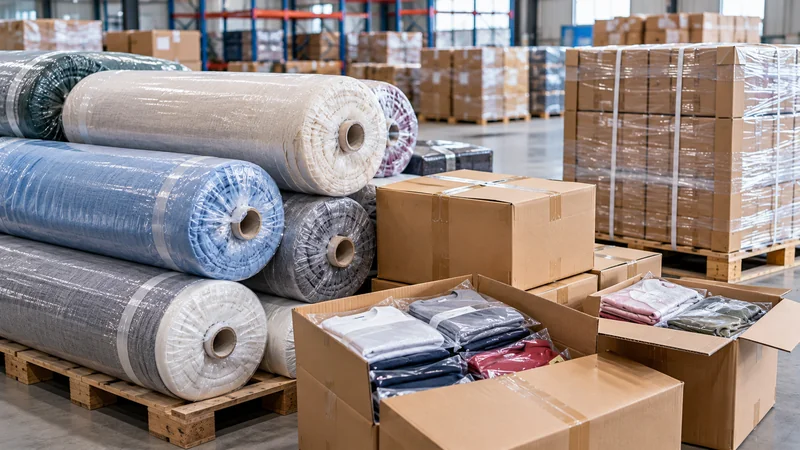
Fabric Rolls: Protect Against Moisture, Crushing and Deformation
Fabric rolls need protection that suits their construction, surface sensitivity, and roll dimensions.
Woven cotton fabric, knitted polyester fabric, upholstery textiles, and coated materials may respond differently to compression, humidity, or prolonged storage.
Before packing, suppliers should confirm the roll’s actual length, width, diameter, gross weight, and the protection required by the material.
Suitable protective measures may include secure roll-end protection, appropriate wrapping, and handling arrangements that prevent excessive compression or movement.
Each roll should carry an identifiable reference linked to its supplier and commercial documentation.
Useful roll-level information includes the fabric specification, composition, color, lot or batch reference, measured quantity, and roll identification number.
For fabrics sold by length, the commercial quantity should remain traceable to the applicable roll records. A customs invoice showing only the number of rolls may not provide sufficient information to identify the merchandise accurately.
Folded Garments: Use Strong Cartons and Clear SKU Labels
Folded garments are commonly packed in export cartons, with inner protective packaging selected according to the garment and presentation requirements.
Cartons should provide appropriate stacking strength without unnecessarily compressing the clothing.
For mixed apparel orders, every shipping carton should have a unique carton number connected to its contents.
A useful carton label identifies the supplier or purchase order, product SKU, color, size range, quantity, and carton sequence.
For example, a carton labeled only “Ladies’ Clothing — 200 Pieces” is difficult to reconcile if the shipment contains several styles and sizes.
A more useful identification might be:
Supplier B / PO-102 / SKU-TS04 / Black / Sizes M–XL / Carton 08 of 24
The accompanying packing record should state the quantity of each size inside that carton.
Mixed-SKU cartons can be practical for smaller wholesale assortments, but their contents should be individually recorded. This reduces uncertainty during customs-document preparation, warehouse receiving, and stock reconciliation.
Hanging Garments: Confirm Equipment and Handling Arrangements
Some formalwear, suits, dresses, or other garments may be better transported on hangers rather than tightly folded.
Garments on Hangers (GOH) arrangements can help preserve presentation quality for certain products, but they require suitable equipment, securing systems, and receiving procedures.
A conventional container booking does not automatically include GOH equipment or handling.
Before choosing hanging transport, the importer should confirm equipment availability, cargo acceptance, transport charges, handling responsibilities, and whether the destination warehouse can receive hanging garments.
For many ordinary wholesale clothing shipments, properly designed cartons may provide a more practical packing solution.
Palletized Clothing: Balance Handling Protection and Shipping Volume
Palletizing can make cartons easier to move using appropriate material-handling equipment and may help prevent direct contact between cartons and warehouse floors.
However, pallets, corner protection, and wrapping add weight and occupy space.
An importer should compare the final dimensions of palletized cargo with those of loose cartons before deciding which arrangement is appropriate.
If wooden pallets or other wooden packing materials are used, their treatment and marking must be checked against applicable wood-packaging rules, including ISPM 15 where relevant.
Not every pallet requires the same treatment; the material and applicable requirements matter.
Apparel Packaging and Shipping Risk Matrix
| Cargo Type | Recommended Packing Considerations | Main LCL / FCL Risks | Compliance Checks |
|---|---|---|---|
| Fabric rolls | Protective wrapping, secured ends, roll IDs | Crushing, moisture, roll movement, deformation | Fiber composition, construction, HS classification, applicable TBS rules |
| Folded garment cartons | Suitable export cartons, inner protection, SKU labels | Carton damage, excessive stacking, missing pieces | Garment classification, labeling requirements, brand status |
| Hanging garments | Compatible GOH equipment and secure hanging systems | Equipment availability, garment movement, handling damage | Product classification, brand identification, applicable standards |
| Palletized apparel | Stable pallet loads, suitable wrapping, protective corners | Increased packed CBM, load instability, pallet damage | Individual product compliance, wood-packaging rules where applicable |
| Private-label garments | Identifiable cartons, SKU records, brand documentation | Mixed brands, incorrect labeling, unauthorized marks | FCC trademark recordation, brand authorization, HS and TBS checks |
The matrix describes practical considerations, not automatic customs approvals or mandatory packaging specifications for every shipment.
Pro Tip — Measure the Final Shipping Unit
Do not calculate freight volume using only the factory’s original carton dimensions if the goods will later be palletized, reinforced, or repacked. Request the dimensions and gross weights of the finished shipping units before confirming the booking.
3. Calculate Packed CBM and Protect Textiles from Moisture
Clothing and fabric importers should confirm the volume and weight of their shipments after export packing is complete.
Freight costs can change when suppliers add outer cartons, protective wrapping, pallets, or reinforced packaging. A shipment that appears small in the purchase order may occupy more space once it is ready for international transport.
How to Calculate CBM for Clothing Cartons
CBM means cubic meters. It measures the physical volume occupied by packed cargo.
For rectangular cartons, use:
CBM = Length (cm) × Width (cm) × Height (cm) × Number of Cartons ÷ 1,000,000
Consider a hypothetical shipment containing 20 cartons of finished clothing.
Each carton measures 60 × 40 × 50 cm.
The volume of one carton is:
60 × 40 × 50 ÷ 1,000,000 = 0.12 CBM
The total volume is:
0.12 × 20 = 2.40 CBM
If those cartons are subsequently palletized or repacked, the importer must use the final outside measurements for the applicable freight calculation.
Fabric rolls should also be measured according to their actual shipping configuration. Their length, outer diameter, number of rolls, and any supporting pallets or crates can affect the space required.
Understand How LCL Charges Differ from Physical CBM
LCL ocean freight commonly uses a Weight or Measurement (W/M) charging convention.
Under a common arrangement, one CBM is compared with one metric ton of gross weight, and the larger numerical quantity forms the freight-rating basis.
For example, suppose an apparel shipment measures 2.40 CBM and weighs 400 kg.
Its volume basis is 2.40 measurement units, while its weight basis is 0.40 weight units. Under the stated convention, its preliminary rated quantity would be 2.40 W/M.
However, actual quotations may impose minimums, rounding increments, fixed handling fees, or special cargo conditions.
The correct comparison is therefore not simply the ocean freight rate multiplied by the physical CBM.
For a detailed explanation of W/M calculations and additional charges, read our guide to shipping cost per CBM from China to Tanzania.
How to Reduce Moisture and Condensation Risks
Moisture exposure is a significant concern for many textile products because it can affect appearance, odor, packaging condition, and saleability.
During ocean transport, temperature changes can contribute to condensation inside containers. Cargo packed while damp, wet cartons, and poorly protected loads can create additional problems.
Before loading, the responsible party should check whether the container or transport unit is clean, dry, free from visible water ingress, and suitable for the intended cargo.
Suppliers should also ensure that fabrics and garments are adequately dry before packing.
Depending on the product, additional protection may include appropriate inner wrapping, moisture-control materials, and separation from container walls or other potentially wet surfaces.
Desiccants may help manage moisture under suitable conditions, but they cannot compensate for a leaking container or goods packed with excessive moisture.
For sensitive textiles, the importer should agree on packaging specifications and loading-condition checks before the supplier releases the goods.
Photographs of the packed merchandise, container condition, and loading arrangement can provide useful records if damage is discovered later.
Compare Packing Costs Against Total Shipment Costs
The smallest possible carton is not always the most economical choice.
Excessive compression can affect garment presentation, while fragile packaging may result in damaged cartons or additional handling problems.
Conversely, unnecessary pallets or oversized cartons can increase chargeable volume.
Importers should evaluate packaging using the complete cost of preparing, shipping, clearing, and receiving the goods.
A practical comparison includes packaging materials, packing labor, final freight measurements, consolidation handling, international transportation, destination charges, inland delivery, and the potential consequences of stock damage.
The objective is to achieve suitable protection and efficient loading without making unsupported assumptions about guaranteed savings.
4. Consolidate Multiple Chinese Apparel Suppliers Without Losing SKU Traceability
Many Tanzanian clothing wholesalers purchase from more than one Chinese supplier.
One supplier may produce T-shirts, another may provide jeans, and a third may supply fabric or accessories. Combining these purchases into a single freight movement can simplify cargo coordination and may reduce duplicated shipment charges.
However, consolidation must not erase the identity, quantity, value, or brand of the individual products.
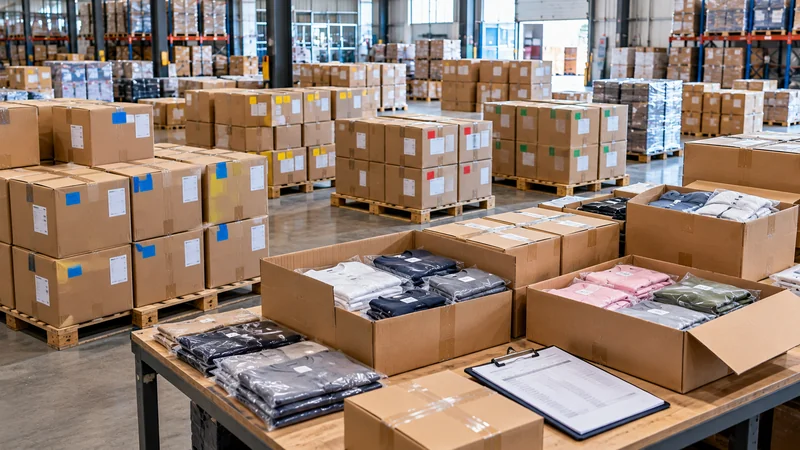
Create a Receiving Plan for Every Supplier
Before arranging supplier deliveries, establish a common shipment reference.
Each supplier should receive clear instructions about the agreed receiving location, delivery arrangements, package labeling, documentation, and expected goods-ready date.
The receiving plan should identify the supplier, purchase order, cargo description, package count, gross weight, and any special storage or handling requirements.
When the cargo arrives at the agreed warehouse or CFS, the receiving party should record the packages against the supplier’s delivery information.
A package count is not the same as a full inspection of garment quality or quantity.
If the importer requires verification of colors, sizes, stitching, fabric specifications, or actual piece counts, the scope of that inspection should be agreed separately.
Maintain a Carton-Level Manifest
The consolidated packing list should allow the importer to identify which products are inside each carton or roll package.
A reliable approach is to assign unique carton IDs that remain connected to the original purchase orders.
For example, if one shipment contains shirts, trousers, and dresses, the manifest should distinguish the merchandise by product description, SKU, color, size, and quantity.
This information becomes particularly valuable when a warehouse reports a missing carton or when the importer needs to reconcile stock after delivery.
The same records can support checks against commercial invoices and help the customs representative investigate discrepancies in declared product quantities.
A consolidated shipment should not be described merely as “mixed clothing” when more specific item information is available.
Reconcile Invoices Before Final Packing
When goods originate from several Chinese suppliers, the importer should compare each invoice against the corresponding merchandise and packing data.
Product descriptions, quantities, values, and brand information must remain accurate even when the goods are placed into one transport unit.
The final shipment-level packing list should reconcile the physical cargo with the supplier-level records.
Commercial invoice arrangements, customs valuation, and declaration requirements should be confirmed with the responsible exporter, importer, and Tanzanian clearing agent.
Combining merchandise for transportation does not automatically turn separate products into one customs classification.
Supplier Consolidation and SKU Control Checklist
| Checkpoint | Required Information | Main Risk if Missing |
|---|---|---|
| Supplier identification | Supplier name and purchase order | Unidentified or incorrectly assigned cartons |
| Receiving records | Delivery date, package count, cargo condition | Unresolved shortages or damage |
| Carton identification | Unique carton ID and supplier reference | Difficult stock reconciliation |
| SKU breakdown | Style, size, color, quantity | Incorrect inventory quantities |
| Fabric roll records | Roll ID, material, batch, measured quantity | Mixed fabric lots or measurement discrepancies |
| Commercial documentation | Supplier invoice, value, product descriptions | Customs queries or inconsistent declarations |
| Brand information | Brand name, owner, authorization evidence where applicable | Trademark compliance questions |
| Final handover | Approved consolidated manifest and measured cargo | Mismatched freight booking or import documents |
Pro Tip — Assign Carton IDs Before Consolidation
Ask every supplier to identify its cartons before dispatch. Keep the carton references linked to the original supplier invoice and purchase order, even if a warehouse later consolidates the goods into pallets or a shared container.
This makes it easier to trace missing packages and reconcile the shipment after arrival.
Plan an Apparel Shipment
Purchasing garments and fabrics from multiple Chinese suppliers?
Winsail Logistics can review your proposed cargo details and discuss suitable freight and consolidation arrangements.
Share the supplier locations, product categories, carton or roll quantities, final packed measurements, cargo-ready dates, and destination in Tanzania. Include any special packaging or branded-goods requirements so they can be evaluated before booking.
Plan an Apparel Shipment
5. Check HS Classification, TBS PVoC and Textile Product Requirements
Import compliance is particularly important for mixed textile and apparel shipments.
A wholesaler may purchase woven fabric, knitted shirts, uniforms, children’s clothing, and fashion accessories in one order. These products should not automatically be assigned the same customs classification or conformity requirements.
The correct assessment begins with identifying what each product actually is.
Why Fabric and Finished Garments Need Separate HS Reviews
The Harmonized System (HS) organizes traded merchandise according to its characteristics and applicable classification rules.
For textile goods, the relevant information can include fiber composition, fabric construction, whether the product is knitted or woven, and whether it is sold as fabric or as a completed garment.
The intended use and product type may also affect classification.
For example, a roll of woven cotton fabric and a finished cotton shirt are different commercial products. The fact that both contain cotton does not mean they share the same HS code.
Similarly, knitted shirts and woven shirts may require different classifications even when they have similar commercial descriptions.
Importers should obtain sufficient technical information from the supplier before asking a licensed customs representative to confirm the appropriate classification.
The tariff assessment should use the current EAC/Tanzania customs tariff and applicable national provisions, including amendments and product-specific measures.
Do not rely on a supplier’s suggested HS code without checking its suitability for Tanzanian import purposes.
Import duty, VAT, other applicable levies, and permit requirements must be determined from the actual classification and circumstances. A single tax percentage should not be applied indiscriminately to all textile SKUs.
Does Clothing Require TBS Pre-Shipment Verification of Conformity?
The Tanzania Bureau of Standards (TBS) administers a Pre-shipment Verification of Conformity (PVoC) program for specified imported goods.
The program is intended to assess conformity with applicable standards before the goods are shipped.
For products within the applicable PVoC scope, the relevant conformity process and Certificate of Conformity (CoC) requirements must be addressed before shipment. TBS may require documentary review, product inspection, testing, or other assessment steps depending on the program and product.
The key point is that the applicable requirement must be checked against the actual goods.
A shipment described broadly as “textiles” may contain products with different classifications or standards obligations.
Before arranging inspection or requesting a certificate, the importer should identify the individual products and compare their HS classifications with the current regulated-goods list and relevant standards.
TBS publishes its program guidance, regulated HS-code information, exemption materials, and an August 2026 summarized procedure on its official PVoC information page.
The importer should verify the latest applicable version before shipping. A product should not be described as exempt simply because another garment category was previously exempt.
Likewise, a supplier’s own quality certificate does not automatically replace a CoC issued through the required conformity process.
Product Labels and Technical Descriptions
Product labels can help establish the identity of the merchandise, but labeling requirements should be checked against the relevant product standards rather than assumed to be identical for every garment.
For accurate product identification, importers should collect information about the fabric composition, garment type, manufacturer, brand, and relevant product characteristics.
Where a product-specific standard requires additional labeling, safety, or performance information, that requirement should be addressed before production or packing is finalized.
Buyers should not wait until the shipment reaches Dar es Salaam before discovering that a relevant technical document or conformity assessment is missing.
New Clothing and Second-Hand Clothing Are Different Product Categories
This guide primarily concerns new commercial textiles and apparel.
Second-hand clothing, including used garments commonly traded in bales, may be subject to different classification, inspection, standards, or import conditions.
An importer should not apply the new-clothing documentation process automatically to second-hand merchandise.
If a shipment contains both new products and used clothing, their import requirements should be reviewed separately before combining them for transport.
Mainland Tanzania and Zanzibar Compliance
The TBS and FCC procedures discussed in this guide primarily concern imports into Mainland Tanzania.
Zanzibar has its own standards authority, the Zanzibar Bureau of Standards (ZBS), and relevant import conformity procedures.
Goods destined for Zanzibar should therefore be assessed according to the applicable Zanzibar requirements, even when the proposed freight route involves Dar es Salaam.
A Mainland Tanzania conformity assessment should not automatically be treated as evidence that all Zanzibar import requirements have been satisfied.
6. FCC Trademark Recordation for Branded Clothing Imports
Trademark compliance is an additional consideration for wholesalers importing branded apparel into Mainland Tanzania.
A shipment may contain clothing carrying an established international brand, merchandise produced under a private-label arrangement, or products manufactured under a distribution or licensing agreement.
The fact that garments were purchased from a Chinese factory does not automatically establish that the importer has the rights or supporting evidence needed for the branded goods.
What Is FCC Trademark Recordation?
Tanzania’s Fair Competition Commission (FCC) administers the trademark-recordation framework under the Merchandise Marks legislation.
According to its official commencement notice, trademark-rights recordation for goods imported into Mainland Tanzania began on December 1, 2025.
The notice states that trademarks associated with goods intended for import into Mainland Tanzania must be recorded with the Chief Inspector of Merchandise Marks, irrespective of where those trademarks were registered.
The framework is intended to support border monitoring and measures against counterfeit merchandise.
For apparel importers, this means that trademark checks should form part of pre-shipment planning whenever the goods carry branded marks.
An importer handling multiple clothing brands should not assume that documentation for one trademark covers every other brand in the consignment.
Identify the Brand Owner and Authorized Use
Before importing branded garments, establish which trademark appears on each relevant product and who owns or is authorized to use it.
Brand identification should consider more than the main garment label.
Marks may appear on hangtags, printed graphics, sewn-in labels, retail packaging, or other merchandise presentation.
Importers should maintain a record connecting the relevant branded products to the brand owner and the documentation supporting their manufacture, sale, or importation.
For private-label garments, the importer should confirm the ownership and registration status of the trademark, the manufacturer’s authority to apply the mark, and the current FCC recordation requirements.
Unbranded goods should also be checked carefully. A product described as generic may still carry a manufacturer’s logo or another identifiable trademark.
Can Foreign Trademark Certificates Support FCC Recordation?
The 2025 regulations establish the recordation application framework, including information concerning the trademark owner, manufacture of the goods, identifying product images, and relevant authorized use.
Professional legal commentary published in September 2026 reports that an FCC clarification dated July 28, 2026, permits foreign trademark registration certificates to support recordation applications when the applicable conditions are met.
That commentary also distinguishes recordation from trademark rights enforceable under Tanzanian law: FCC recordation itself does not create or confer trademark ownership or enforceable rights in Tanzania.
Because the original July 2026 clarification was not independently obtained for this review, applicants should confirm the current documentary requirements and legal effect directly with FCC or a qualified Tanzanian trademark representative before relying on a foreign certificate.
For the official commencement notice and contact information, refer to the FCC Trademark Rights Recordation Public Notice.
Keep Trademark Records Separate from Product Conformity Records
FCC trademark recordation and TBS product conformity assessment serve different purposes.
Trademark recordation concerns the marks associated with imported merchandise and the relevant legal and administrative requirements.
TBS conformity assessment concerns whether applicable products meet the relevant standards.
Neither process substitutes automatically for the other.
A branded garment may require both a trademark-related review and a product-specific conformity assessment, depending on the circumstances.
Similarly, obtaining a CoC for an applicable product does not establish ownership or authorized use of the trademark displayed on that product.
SKU-Level Customs and Brand Verification Register
A simple spreadsheet can help importers coordinate these checks across multiple suppliers.
| Register Field | Information to Record | Responsible Review |
|---|---|---|
| Supplier / Purchase Order | Supplier identity and PO reference | Importer |
| SKU and Product Description | Detailed garment or fabric identification | Supplier / Importer |
| Fiber Composition | Material composition and relevant construction | Supplier |
| New / Used Condition | Product condition | Importer |
| Brand / Trademark | Mark, owner, and authorized-use information | Brand Owner / Importer |
| Proposed HS Classification | Product-specific tariff classification | Licensed CFA / Customs Review |
| TBS Conformity Status | Applicable standard, PVoC or exemption evidence | Importer / Relevant Authority |
| FCC Recordation Status | Relevant trademark recordation evidence | Brand Owner / Authorized Representative |
| Supporting Documents | Certificate, authorization, invoice, or other evidence | Relevant Responsible Party |
| Review Status | Confirmed, pending, or not applicable with supporting basis | Importer / Compliance Reviewer |
A pending classification or conformity decision should remain marked as pending until the appropriate evidence is available.
Do not populate every garment SKU with the same HS code, conformity status, or trademark outcome simply because the products are being shipped together.
7. Plan Seasonal Apparel Restocking Before the Sales Deadline
For clothing wholesalers, the most important date is often not the vessel departure date.
It is the date when the merchandise must be available for inspection, sorting, distribution, and sale.
A retailer preparing inventory for a promotion or seasonal demand should therefore plan backward from the required stock-ready date.
Work Backward from the Target Stock-Ready Date
The planning process begins with the destination warehouse’s receiving deadline.
From there, the importer should identify the time needed for inland delivery, release procedures, customs assessment, freight transportation, origin consolidation, packaging, and supplier production.
These milestones depend on different parties.
The supplier controls production and initial goods readiness. The freight provider confirms booking arrangements and available schedules. The importer and licensed clearing agent manage the required documentation and clearance coordination.
Regulatory authorities determine the relevant assessment and release outcomes.
Consequently, a published ocean transit estimate cannot be treated as a guaranteed warehouse delivery date.
Seasonal Apparel Shipment Milestone Planner
| Milestone | Required Confirmation | Main Dependency |
|---|---|---|
| Production completion | Supplier’s confirmed goods-ready date | Factory production and quality acceptance |
| Export packing | Final cartons, rolls, weights, dimensions | Packing specifications and stock readiness |
| Supplier consolidation | Receiving and discrepancy records | Completion of all scheduled supplier deliveries |
| Compliance readiness | HS, TBS, FCC and document review status | Applicable product and trademark requirements |
| Freight departure | Confirmed carrier booking and ETD | Cargo acceptance and transport schedule |
| Tanzania arrival | Current carrier ETA and arrival notice | Actual route and operating conditions |
| Customs and cargo release | Authorized release and collection documents | Customs assessment, approvals and charges |
| Warehouse receipt | Delivery confirmation and stock reconciliation | Inland transport and receiving arrangements |
The importer should monitor unresolved milestones rather than relying on one general delivery estimate.
When to Split an Apparel Order Between Sea and Air
Some buyers may benefit from dividing an order into a bulk shipment and an urgent replenishment shipment.
For example, a wholesaler could allocate the majority of its regular stock to sea freight while considering air freight for selected sizes or colors required sooner.
This approach may improve inventory flexibility, but it also creates separate transportation and documentation requirements.
Each movement needs accurate cargo details, applicable regulatory checks, and clearly identified import responsibilities.
Splitting an order may also increase fixed freight, documentation, or destination charges.
The importer should compare the additional cost with the commercial value of receiving the urgent merchandise earlier.
Compare Total Landed Costs, Not Freight Rates Alone
Freight quotations should be evaluated against a consistent scope.
An inexpensive ocean freight rate may exclude warehouse consolidation, origin handling, destination CFS charges, customs representation, import taxes, inland transportation, and other services.
For a meaningful comparison, each quotation should identify the origin and destination, final cargo measurements, chargeable basis, included services, excluded charges, and validity period.
Product-specific conformity procedures and trademark-recordation work should be considered separately where their costs and responsibilities are relevant.
The cheapest freight component does not necessarily produce the lowest landed cost or the most suitable inventory outcome.
8. Prepare Customs Documents and Verify Apparel Stock on Arrival
Accurate documentation links the merchandise leaving Chinese suppliers to the goods declared and received in Tanzania.
For apparel shipments, this is particularly important because one freight movement may contain many SKUs, garment types, suppliers, and brands.
Documents Commonly Needed for Tanzania Imports
Commercial import documentation normally includes a final commercial invoice, packing list, and relevant transport document such as a Bill of Lading (B/L) or Air Waybill (AWB).
The shipment may also require importer authorization, product-specific permits, conformity documentation, trademark-related evidence, or other records depending on the goods and applicable procedures.
The Tanzania National Business Portal’s official Import Procedure explains that importers must appoint a licensed Clearing and Forwarding Agent (CFA) to clear their goods and that documentation is processed through the Tanzania Customs Integrated System (TANCIS).
The government guidance encourages relevant declarations and supporting documents to be prepared before cargo arrival. It also explains that incomplete or insufficient goods descriptions may generate customs queries.
For a shipment containing mixed clothing and fabric, the documents should provide sufficient detail to identify the different products and reconcile the declared quantities and values.
Descriptions such as “general cargo” or “mixed textiles” are not suitable substitutes for accurate item-level information when those descriptions fail to identify the imported merchandise.
Confirm Who Handles Customs Clearance and Taxes
Importers should establish clearance responsibilities before the goods leave China.
A freight quotation described as door-to-door does not automatically mean that import duties, VAT, and other applicable taxes are included.
The service may involve transportation to a named destination while the buyer remains responsible for import clearance and the related charges.
Under Incoterms 2020, Delivered at Place (DAP) and Delivered Duty Paid (DDP) allocate import-clearance responsibilities differently.
Under DAP, the buyer is generally responsible for import clearance. Under DDP, the seller assumes the contractual import-clearance and applicable duty/tax responsibilities.
However, a DDP arrangement must be legally workable under the destination country’s rules. A contractual term alone does not authorize a foreign seller to perform customs formalities that local law restricts.
For Tanzania-bound apparel, the parties should identify the actual importer of record, appointed licensed CFA, responsible tax payer, and any separately payable destination charges.
For a detailed explanation of the import process, see our guide to customs clearance in Tanzania.
Check the Merchandise Before Confirming Final Receipt
The receiving warehouse should compare the delivered packages against the final approved manifest.
For cartons of finished garments, this includes checking carton IDs, package condition, and the quantities recorded in the receiving system.
For fabric rolls, the warehouse should check roll identification, visible packaging damage, and relevant quantity records.
If cartons are damp, damaged, missing, or incorrectly identified, the receiving party should document the condition and discrepancies promptly.
Photographs, delivery documents, unloading records, and supplier packing information may be useful for investigating losses or supporting a claim.
Cargo insurance does not automatically cover every type of deterioration or discrepancy. Coverage, exclusions, notice periods, and required evidence depend on the applicable policy and transport arrangements.
The importer should ensure that final stock reconciliation is completed before treating the shipment as fully received.
Plan Your Apparel Shipment from China to Tanzania
Shipping clothing and textiles successfully involves coordinating several decisions before the goods leave the supplier.
The freight method must fit the shipment’s final packed volume and commercial deadline. Fabric and garments need appropriate protection. Supplier invoices and carton records must remain traceable, and each relevant product and brand must be reviewed against its own import requirements.
Whether you are importing fabric rolls, wholesale garments, uniforms, or private-label apparel, Winsail Logistics can help you evaluate the proposed freight arrangement based on the information available for your shipment.
To begin planning, provide your Chinese supplier locations, destination in Tanzania, cargo descriptions, carton or roll counts, final dimensions and weights, and expected goods-ready dates.
For mixed-SKU or branded shipments, include the available packing lists and relevant brand information so documentation and handling questions can be identified early.
Plan an Apparel Shipment
FAQ
Can Cotton Fabric Rolls and Finished T-Shirts Use the Same HS Code?
Not simply because both products contain cotton. Fabric rolls and finished garments have different physical characteristics and may fall under different tariff classifications. The correct HS code depends on the actual product, its composition, construction, and relevant classification rules. A licensed Tanzanian clearing agent should review the classifications before import declaration. Do not assign one generic textile code to every item in a mixed shipment.
Can Several Chinese Clothing Suppliers Ship Together if Their Invoices and Brands Are Different?
Yes, multiple suppliers' cargo can potentially be consolidated into one freight movement when the operational and documentation arrangements permit it. However, each supplier's merchandise must remain identifiable through accurate invoices, product descriptions, carton or roll references, and packing records. Different brands and product categories may also require separate compliance evidence. The importer and licensed customs representative should confirm how the consolidated shipment will be documented and declared.
Does a Private-Label Clothing Brand Need FCC Trademark Recordation in Tanzania?
Branded goods entering Mainland Tanzania must be assessed against the FCC trademark-recordation framework. A private-label garment should not automatically be considered exempt merely because it is produced under an OEM or private-label manufacturing arrangement. The brand owner or authorized representative should confirm trademark ownership, the current recordation status, accepted supporting documents, and the applicable FCC requirements before shipment. Trademark recordation and TBS product conformity are separate compliance matters.
Does Palletizing Clothing Cartons Change the CBM Used for LCL Freight?
It can. Palletizing introduces additional height, weight, and potentially unused space between or around cartons. Freight measurement generally needs to reflect the final packed shipping units under the applicable quotation rules. If garments are palletized after the supplier originally reports loose-carton dimensions, the importer should request revised measurements and confirm the chargeable W/M with the freight provider.
Does Door-to-Door Apparel Shipping Include Tanzania Import Duties and Taxes?
Not necessarily. Door-to-door transportation describes a delivery service scope but does not, by itself, establish who is responsible for import clearance or tax payments. The answer depends on the agreed contract, applicable Incoterm, and written service inclusions. Before shipping, confirm which party acts as importer of record, which licensed clearing agent handles the declaration, and who pays the applicable duties, taxes, regulatory charges, and destination handling costs.
Important Information: This article provides general logistics and import-planning guidance based on information reviewed in October 2026. It does not constitute legal, customs, trademark, or product-certification advice. HS classifications, current TBS product requirements, FCC recordation eligibility, taxes, carrier availability, quotations, and clearance responsibilities must be verified for the actual merchandise and destination. Procedures applicable to Mainland Tanzania should not automatically be applied to Zanzibar.
