

What Determines China → Nigeria Shipping Costs
Shipping costs from China to Nigeria vary widely because freight rates are influenced by multiple market and cargo-specific factors. The final price you pay is not determined by a single element, but by a combination of volume, weight, transport mode, customs requirements, and real-time market conditions. Understanding these variables helps importers budget more accurately and choose the most cost-effective method.
The shipping mode—sea freight, air freight, express, or DDP—creates the biggest price difference. Sea freight is generally the cheapest, especially for bulky goods, while air freight becomes necessary for urgent or high-value shipments. Express couriers are fastest but come with premium per-kg rates.
Cargo volume and weight also play a major role. LCL sea freight is charged per CBM with minimum fees, while FCL rates depend on container type and availability. Air freight uses chargeable weight, meaning oversized packages can cost more even if they are light.
The origin and destination ports—for example, Shenzhen or Ningbo in China and Lagos (Apapa/Tincan) or Onne in Nigeria—affect total cost because of varying handling fees, transit times, and carrier capacity on each route.
Seasonality and market trends impact prices as well. Rates typically increase during August–October peak season, before major trade holidays, or when carriers impose GRI or fuel surcharges. Congestion in Lagos ports can also raise destination handling fees.
Finally, Incoterms and customs-related factors influence the overall budget. EXW shipments require more origin-side charges; CIF excludes Nigerian import duty and VAT; while DDP includes tax, customs clearance, and last-mile delivery, making it more predictable but also dependent on HS code and product category.
In short, shipping cost from China to Nigeria is shaped by the interaction of logistics choices, cargo characteristics, and market conditions. A customized freight quote is always recommended for the most accurate estimation.
Average Shipping Cost from China to Nigeria (Sea, Air, DDP & Express)
Shipping costs from China to Nigeria vary depending on the transport mode, shipment size, product type, and the level of service required. The table below provides a general reference range commonly seen in the market, helping importers understand what to expect when budgeting for sea freight, air freight, DDP services, or express couriers. Actual rates may fluctuate weekly due to fuel costs, carrier capacity, and seasonal demand, so these numbers should be treated as approximate benchmarks rather than fixed prices.
Sea freight (LCL or FCL) is usually the most economical option, especially for bulky cargo. Air freight is significantly faster and suitable for high-value or urgent shipments, while DDP services provide an all-inclusive solution that covers tax, customs clearance, and last-mile delivery. Express couriers such as DHL or FedEx are mainly used for samples and small parcels, offering predictable transit times but at a higher cost per kilogram.
Updated Shipping Cost Table with Reference Rates
Note: The following rates represent general 2025 market reference ranges. Actual shipping costs may vary depending on seasonality, fuel adjustments, carrier capacity, port congestion, and cargo type. Always request an updated quote before shipping.
| Method | Typical Cost (Reference Range) | Unit | Best For | Notes |
|---|---|---|---|---|
| LCL Sea Freight | US $180–220 | per CBM | 1–12 CBM cargo, mixed SKUs | Includes ocean freight & consolidation; excludes destination port and delivery fees |
| FCL 20GP | US $2,200–4,500 | per 20′ container | Medium-volume shipments | Common 20′ container freight cost for China → Nigeria routes |
| FCL 40HQ | US $2,700–5,500 | per 40′ container | Large-volume shipments | Best cost per CBM; suitable for bulky or high-volume goods |
| Air Freight (CIF) | US $4.0–9.5 | per kg | Urgent or high-value cargo | Charged by actual or volumetric weight; ideal for lightweight or time-critical products |
| DDP Air | US $5.5–10.5 | per kg | E-commerce parcels, small electronics | All-inclusive: freight, customs clearance, duty/VAT, and door delivery |
| DDP Sea | US $180–240 | per CBM | General commercial cargo (2–12 CBM) | Sea freight + taxes + Nigeria domestic delivery; ideal for regular cargo |
| Express (DHL / UPS / FedEx) | US $7–15 | per kg | Samples & time-critical goods | Fastest option; price varies by season and fuel surcharges |
How to Interpret These Rates
- LCL Sea Freight is cost-effective for small to mid-size shipments but destination port fees in Lagos can add significantly to the total cost.
- FCL 20GP / 40HQ provides the best stability and cost efficiency for importers with growing volume.
- Air Freight is ideal for urgent, compact, or high-value goods where speed matters more than cost.
- DDP Air/Sea simplifies the entire process and is popular among Nigerian SMEs and e-commerce sellers needing predictable, all-inclusive pricing.
- Express Couriers should be used primarily for samples or small volumes due to the higher per-kg cost.
Sea Freight Costs (LCL & FCL Pricing Logic)
Sea freight is the most common and cost-effective way to ship goods from China to Nigeria, especially for bulk cargo or shipments that are not time-sensitive. Rates vary depending on whether you choose LCL (Less than Container Load) or FCL (Full Container Load), as well as the specific port pair and seasonal market conditions.
LCL Pricing Logic — How Cost per CBM Is Calculated
LCL shipping is charged per CBM (cubic meter), which makes it ideal for smaller volumes between 1–12 CBM. However, the cost includes multiple components, not only the ocean freight rate:
- Origin charges (export handling, documentation, warehouse consolidation)
- Ocean freight (per CBM with 1 CBM or 1 ton minimum rule)
- Destination charges at Lagos or Onne
- Delivery fees, if door service is requested
LCL has a minimum charge, typically equivalent to 1 CBM even if your shipment is smaller, and cargo is usually consolidated with other shippers’ goods. For Nigeria routes, destination fees at Lagos ports can be significant, so they should be included in budget estimates.
LCL is best for: mixed SKUs, 1–8 CBM cargo, small commercial orders.
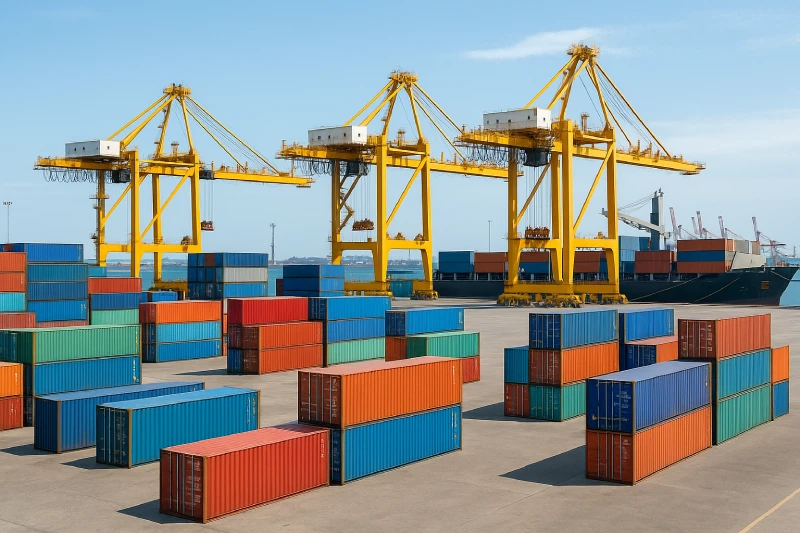
FCL Pricing Logic — 20GP & 40HQ Container Costs
When the shipment volume approaches 15–22 CBM or higher, FCL becomes more economical. Instead of paying per CBM, you pay a flat cost per container, which includes:
- Base ocean freight (the main cost driver)
- BAF (Bunker Adjustment Factor)
- PSS or GRI surcharges during peak season
- Documentation & terminal handling charges
- Optional: container pickup, trucking, customs clearance
Rates for 20GP and 40HQ containers depend heavily on carrier capacity, route demand, and seasonality. Nigeria lanes experience noticeable price changes around August–October, before Chinese New Year, and during congestion periods at Apapa or Tincan.
40HQ generally offers the lowest cost per CBM and is the preferred choice for bulky or lightweight cargo.
Popular China → Nigeria Routes and Cost Ranges
Different origin ports in China have different freight rate levels, depending on sailing frequency and carrier competition. Shenzhen, Ningbo, and Qingdao are the most common origins for Nigerian importers. Lagos (Apapa/Tincan) remains the main destination port, followed by Onne for East Nigeria shipments.
China → Nigeria Sea Freight Cost (Reference Table)
| Origin Port (China) | Destination Port (Nigeria) | Method | Typical Cost (Reference Range) | Notes |
|---|---|---|---|---|
| Shenzhen | Lagos (Apapa / Tin-Can) | LCL | US $180–220 per CBM | Regular LCL consolidations to Lagos; cost excludes destination delivery & clearance fees. |
| Ningbo-Zhoushan | Lagos (Apapa / Tin-Can) | LCL | US $180–220 per CBM | Steady rates outside peak season; suitable for mixed small shipments. |
| Qingdao | Lagos (Apapa / Tin-Can) | LCL | US $180–220 per CBM | For low-density or less time-sensitive cargo. |
| Shenzhen | Lagos (Apapa / Tin-Can) | FCL 20′ (20GP) | US $2,200–3,650 per container | Stable 20′ container rate including basic ocean freight and documentation. |
| Ningbo-Zhoushan | Lagos (Apapa / Tin-Can) | FCL 40′ High Cube (40HQ) | US $3,250–5,850 per container | Best cost per CBM for large-volume shipments; actual range depends on season & carrier. |
| Shenzhen | Onne (East Nigeria) | FCL 40′ High Cube (40HQ) | US $3,250–5,850 per container | Good for east-Nigeria delivery; may add inland delivery cost. |
When to Choose LCL vs FCL for Nigeria
- Choose LCL when your volume is low, you have multiple SKUs, or you need flexibility.
- Choose FCL when your cargo volume approaches 15–22 CBM, or when destination handling fees make LCL less attractive.
- For fragile/high-value items, FCL also reduces risk since the cargo is not handled with other shippers’ goods.
Air Freight Costs (CIF & DDP)
Air freight is the fastest and most reliable way to move goods from China to Nigeria, especially for high-value, time-sensitive, or small-volume shipments. Compared with sea freight, air freight rates fluctuate more frequently because airlines adjust pricing based on fuel cost, cargo space availability, and overall demand on key lanes such as Guangzhou → Lagos (LOS) or Hong Kong → Lagos.
How Air Freight Pricing Works
Air freight is billed according to chargeable weight, which is the higher value between:
① Actual Weight (kg)
② Volumetric Weight = (Length × Width × Height) / 6000
This means that a lightweight but bulky package may cost more than a compact heavy item. Proper packaging can reduce volumetric weight and significantly lower cost.
Other factors that influence the air freight rate include:
- Airline and route selection
(Direct flights or high-capacity routes usually offer better pricing.) - Commodity type
(Lithium batteries, liquids, powders, cosmetics require special handling and higher surcharges.) - Cargo seasonality
(Rates rise during holiday peaks—Black Friday, Christmas, Ramadan.) - Airport handling fees at origin and destination
Airlines typically offer tiered rates, with notable price drops at 45 kg, 100 kg, and 300 kg thresholds.
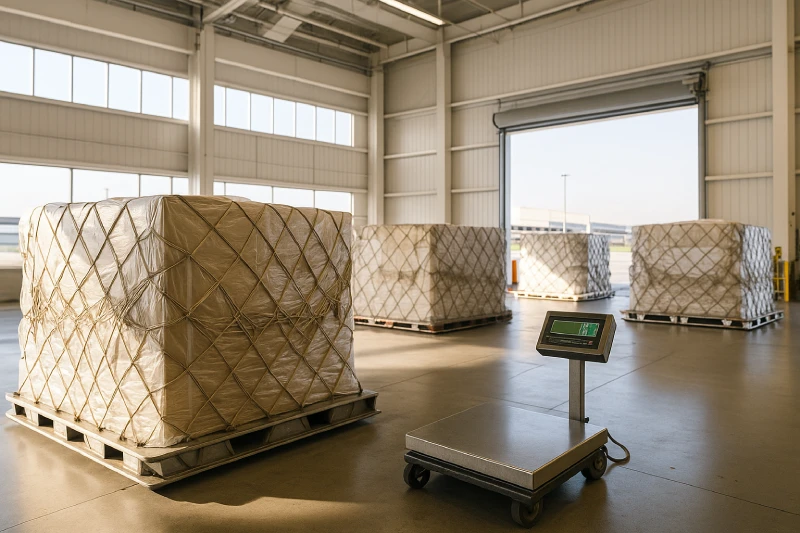
Typical Air Freight Weight Tiers
Below is the standard tier structure commonly used by airlines and forwarders:
| Tier | Weight Range | Rate Characteristics |
|---|---|---|
| Small Parcel Tier | 1–45 kg | Highest rate per kg |
| Mid Tier | 45–100 kg | Price decrease begins |
| Bulk Tier | 100–300 kg | Lower rates, steady supply |
| Heavy Cargo Tier | 300+ kg | Best rate/volume efficiency |
These tiers help importers estimate costs even before getting a formal quote.
CIF Air Freight vs. DDP Air Freight
Air shipments from China to Nigeria are typically offered in two pricing models:
CIF Air Freight (Airport-to-Airport)
CIF only covers:
- Origin export handling
- Air freight to Lagos Airport (LOS)
Not included: customs duty, VAT, inspection fees, and local airport clearing charges.
Best for importers who have their own clearing agent in Lagos.
DDP Air Freight (Door-to-Door)
DDP covers:
- Export handling
- Air freight
- Customs clearance in Nigeria
- Duty + VAT (depending on HS code)
- Last-mile delivery to consignee
This option converts a multi-step clearing process into a single all-inclusive cost. DDP is widely used in Nigeria for electronics, accessories, small appliances, clothing, and e-commerce parcels.
DDP air is generally more expensive per kg than CIF, but its predictability and convenience make it extremely popular with SMEs and online sellers.
Routes Commonly Used for China → Nigeria Air Freight
The following origins are the most frequently used for Nigeria-bound air cargo:
- Guangzhou (CAN) → Lagos (LOS) – most popular trade lane
- Hong Kong (HKG) → Lagos (LOS) – stable capacity and competitive rates
- Shanghai (PVG) → Lagos (LOS) – suitable for large-volume exports
- Shenzhen (SZX) → Lagos (LOS) – often used for electronics and consumer goods
Each airport has slightly different handling fees and security screening charges.
When to Choose Air Freight for Nigeria
Air freight is the best choice when:
- Delivery is urgent (3–7 days total)
- Goods are small but high value (electronics, accessories, spare parts)
- Inventory shortages must be avoided
- The product category is sensitive or time-critical
If transit time is more important than cost, air freight offers the most predictable performance on the China–Nigeria trade lane.
DDP (Door-to-Door) Shipping Costs
DDP (Delivered Duty Paid) shipping has become one of the most popular solutions for Nigerian importers because it provides one fixed, predictable cost that includes freight, customs clearance, duty/VAT, and door delivery. This eliminates the uncertainty of Nigeria’s port charges, lengthy clearing procedures, and unexpected destination fees—common challenges for importers using CIF or FOB terms.
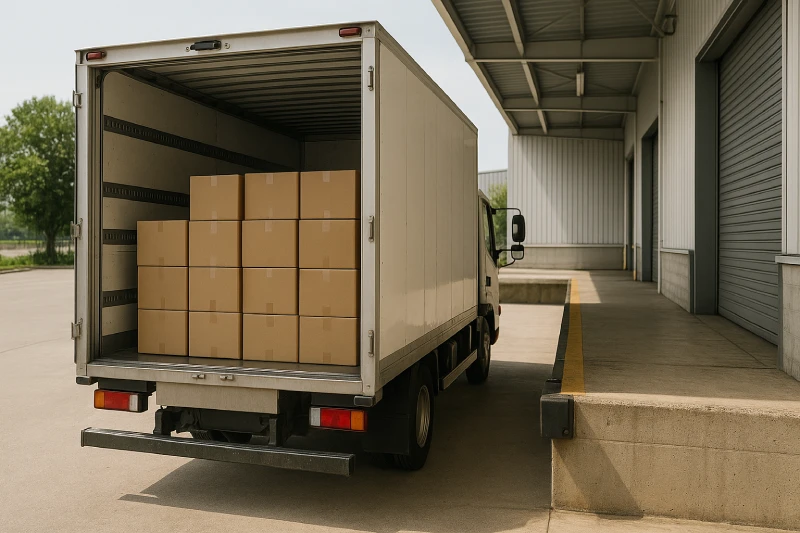
DDP services are available by both air and sea, and the final cost varies depending on the cargo volume, HS code, duty rate, and delivery address.
What Determines DDP Shipping Costs
Unlike CIF or EXW pricing, DDP costs cover every step from the supplier’s warehouse in China to the consignee in Nigeria. The main variables include:
1. Product Type & HS Code
Each category has a different duty and VAT structure. For example:
- Electronics typically have moderate import duties
- Clothing and textiles may carry higher VAT
- Items containing batteries or liquids require special handling
DDP providers must account for these differences when calculating the total landed cost.
2. Shipping Mode (Air vs Sea)
- DDP Air: charged per kg, ideal for small parcels, electronics, and e-commerce.
- DDP Sea: charged per CBM, more economical for 2–12 CBM cargo or bulky items.
3. Volume & Weight
Air uses chargeable weight.Sea uses CBM with minimum charges.
4. Delivery Location
Door delivery to Lagos is most common and cost-effective.
Destinations outside Lagos (Abuja, Port Harcourt, Ibadan) require additional trucking fees.
5. Customs Compliance Requirements
Some categories require SONCAP, Form M, or additional compliance checks.
These may influence both cost and transit time.
DDP Air Shipping — Cost Characteristics
DDP air is best for:
- Small electronics
- Mobile accessories
- Clothing
- E-commerce orders
- Packages between 1–100 kg
Pricing is typically a per-kg all-inclusive rate that covers:
- Export handling in China
- Air freight to Lagos
- Nigeria customs clearance
- Duty + VAT
- Last-mile door delivery
Transit time usually ranges 5–10 days, depending on flight capacity and customs workload.
DDP Sea Shipping — Cost Characteristics
DDP sea freight is ideal for:
- Bulkier goods (2–12 CBM)
- Household items
- Furniture
- Tools, hardware, machinery parts
- Clothing in larger volumes
Pricing is normally a per-CBM all-inclusive rate with a minimum charge of 1–2 CBM.
The cost includes:
- Consolidation & loading
- Ocean freight
- Destination customs clearance
- Duty + VAT
- Delivery to Lagos or other available cities
Transit time for DDP sea is typically 30–45 days, depending on consolidation schedules, vessel transit, and local delivery routes.
Example Cost Scenarios
| Mode | Cargo | Volume / Weight | Typical DDP Cost (Reference) | Notes |
|---|---|---|---|---|
| DDP Air | Phone accessories | 20 kg | US $5.5–15.0 per kg | Fast, all-inclusive door-to-door service — suitable for small parcels & electronics |
| DDP Sea | General goods | 3 CBM | US $120–350 per CBM | Good for bulk ordinary cargo, includes clearing & delivery |
| DDP Sea (Larger) | Mixed cargo | 8 CBM | US $120–350 per CBM → total ~US $960–2,800 | Per-CBM rate tends to stay within this band; total cost scales with volume |
When DDP Is the Best Option
Importers in Nigeria often prefer DDP when:
- They want a predictable “no hidden fees” cost.
- They do not have a reliable clearing agent.
- They want fast customs clearance through a single provider.
- They need last-mile delivery directly to warehouse or home address.
- They ship categories with known duty structures (electronics, textiles, accessories).
DDP provides a simplified experience by consolidating all cost components into one transparent quote.
Express Courier Costs (DHL/UPS/FedEx)
Express courier shipping is the fastest method for transporting goods from China to Nigeria, offering reliable transit times and full end-to-end tracking. Services like DHL, UPS, FedEx, and Aramex are commonly used for samples, small parcels, high-value items, and urgent shipments where timing is critical. Although express shipping is significantly more expensive on a per-kg basis compared to air freight or DDP, it remains popular due to its simplicity and speed.
How Express Courier Pricing Works
Express courier rates are determined by several cost components:
1. Chargeable Weight
Like air freight, couriers calculate cost based on the higher of:
- Actual weight, or
- Volumetric weight = (L × W × H) / 5000 or 6000 (depending on courier)
Bulky but lightweight items may incur higher charges.
2. Courier Brand & Service Level
Different couriers offer different rates and transit speeds. For example:
- DHL Express is typically fastest, with strong performance on China → Lagos routes.
- UPS and FedEx offer competitive pricing for mid-size parcels.
- Aramex may offer lower rates for e-commerce parcels but with longer transit times.
3. Fuel & Surcharges
Fuel costs, remote area fees, security surcharges, and peak season charges are added dynamically each month. Nigeria frequently incurs remote area surcharges for deliveries outside Lagos.
4. Delivery Address
Lagos deliveries are the most cost-effective.
Shipments to Abuja, Kano, Ibadan, and Port Harcourt may involve additional fees or longer transit times.
Typical Use Cases for Express Shipping
Express couriers are ideal when:
- You need samples sent quickly to validate quality.
- You ship spare parts, electronics, prototypes, documents, or consumer goods under 30 kg.
- You require high reliability, predictable delivery, and straightforward customs procedures.
- The shipment is too small for air freight or DDP sea/air to be economical.
Most express shipments reach Nigeria in 3–7 days, depending on customs and courier workload.
Example Express Cost Structure
| Courier | Weight Range | Typical Cost (Reference) | Transit Time | Notes |
|---|---|---|---|---|
| DHL Express / UPS / FedEx / Aramex | 1–20 kg | US $5–15 per kg | 3–7 days | Door-to-door service; fastest shipping method for small parcels to Nigeria |
Pros and Cons of Express Shipping
Advantages
- Fastest delivery to Nigeria
- Full tracking and high reliability
- Simple clearance process (handled by courier)
- Door-to-door convenience
Limitations
- High cost per kilogram
- Volumetric weight penalties for bulky items
- Not suitable for shipments over 30–50 kg due to escalating cost
Full Breakdown of Cost Influencing Factors
Shipping costs from China to Nigeria are determined by a combination of cargo characteristics, route selection, customs requirements, and overall market dynamics. Understanding each factor helps importers make better logistics decisions, avoid unnecessary expenses, and plan more accurate budgets. Below is a comprehensive explanation of the main elements that shape final freight rates.
Volume & Weight (Primary Cost Driver)
Sea Freight
- LCL is billed per CBM, with a minimum charge of 1 CBM.
- Oversized or low-density cargo may incur additional handling fees.
- For volumes approaching 15–22 CBM, switching to FCL becomes more economical.
Air Freight
- Charged based on chargeable weight, using volumetric formulas.
- Bulky packages—even if lightweight—can be more expensive than dense items.
Express
- Uses courier-specific volumetric formulas; lightweight but bulky goods are penalized.
Why it matters: Volume and weight determine not only the base freight charge but also handling, warehousing, and customs fees.
Packaging Efficiency
Inefficient packaging increases volumetric weight for air and express shipments and increases CBM for LCL sea freight. Optimized packaging can reduce:
- Chargeable weight
- Shipping cost per unit
- Risk of cargo damage
- Customs inspection delays
Using reinforced but compact packaging is especially important for Nigeria-bound goods due to handling conditions at ports.
Route Selection (Direct vs Transshipment)
Different routes have different costs and transit times:
- Direct sailings from major China ports (Shenzhen, Ningbo, Qingdao) to Lagos are generally faster but may cost slightly more.
- Transshipment routes via Singapore, Malaysia, or Middle East hubs can lower cost but increase transit time by 5–10 days.
For air freight, routing through Hong Kong or Guangzhou often provides more competitive pricing due to higher flight frequency to Lagos.
Peak Season & Market Volatility
Rates fluctuate significantly during:
- Back-to-school season
- Black Friday / Christmas
- Ramadan
- China export peaks (Aug–Oct)
- Chinese New Year
Carriers may impose GRI (General Rate Increases) or PSS (Peak Season Surcharge). Congestion at Lagos ports can also raise destination handling fees and extend clearance time.
Customs Clearance & Compliance Requirements
Nigeria enforces strict import regulations. The following compliance items impact cost:
- HS code duty rate (varies by product category)
- VAT
- SONCAP requirements for certain goods
- Form M for regulated imports
- Inspection fees
- Storage & demurrage if clearance is delayed
Using DDP solutions can eliminate many of these uncertainties by bundling all fees into one price.
Port Selection & Destination Charges
Shipping to Lagos (Apapa/Tincan) is generally the most cost-effective.
Onne is preferred for East Nigeria deliveries but may have slightly higher handling fees.
Destination charges can include:
- Terminal handling
- Documentation & release fees
- Customs inspection
- Storage or demurrage
- Bond fees (if applicable)
These fees are not included in CIF quotes and can vary widely, making budgeting more difficult for importers.
Incoterms Impact (EXW vs FOB vs CIF vs DDP)
Incoterms determine who pays for which part of the journey.
| Incoterm | Cost Responsibility | Notes |
|---|---|---|
| EXW | Buyer pays all origin charges | Lowest supplier responsibility but highest buyer workload |
| FOB | Supplier covers export fees; buyer covers freight | Most balanced for international imports |
| CIF | Supplier pays sea freight; buyer pays Nigeria port fees | Popular but destination fees can be high |
| DDP | Seller/forwarder pays all costs to door | Most predictable cost for Nigerian importers |
Incorrectly choosing Incoterms can result in unexpected fees—especially with CIF to Nigeria due to unpredictable port charges.
Commodity Type & Handling Requirements
Sensitive cargo categories may involve additional costs:
- Battery-powered items
- Liquids, powders, magnets
- Fragile items
- Oversized machinery
- Goods requiring palletization or wooden crates
These can trigger inspections, special handling, airline restrictions, or reinforced packaging requirements.
Fuel Costs & Carrier Capacity
Fluctuations in fuel prices affect:
- BAF (Bunker Adjustment Factor) for sea
- FSC (Fuel Surcharge) for air and express
- Carrier capacity during peak demand
This is why rates may change weekly, especially on air freight lanes.
How to Reduce Shipping Costs (Summary Guide)
While freight rates from China to Nigeria depend on market conditions, importers can still lower their logistics expenses through strategic planning and smarter shipment management. The most effective ways to reduce cost involve choosing the right shipping mode, improving packaging efficiency, and optimizing shipment volume.
One of the simplest ways to save money is to consolidate smaller orders into fewer shipments, especially for LCL or air freight, where unit costs drop as volume increases. Selecting the most suitable port pair and avoiding peak-season departures can also help stabilize rates. Ensuring proper documentation and compliant packaging prevents customs delays and additional handling fees—two common sources of unexpected cost in Nigeria-bound shipments.
Other techniques include booking shipments earlier, comparing multiple carriers, and choosing DDP for product types with predictable duty structures.
For a full, in-depth guide covering more than 15 actionable strategies, please refer to our dedicated article:
👉 How to Reduce Shipping Costs & Delivery Time .
FAQs
1. Why do two freight forwarders quote very different prices for the same shipment?
Freight rates vary because each forwarder works with different carrier contracts, consolidation networks, and destination agents in Nigeria. Some quotes may exclude certain charges—such as terminal handling, customs processing fees, or last-mile delivery—making the price appear lower upfront. The most accurate comparison is between all-inclusive quotes with identical service scope.
2. How much can customs inspection or document issues increase the final shipping cost?
If a shipment is selected for physical or X-ray inspection, additional costs may include inspection fees, storage, and extra handling at the terminal. Incorrect or incomplete commercial invoices, packing lists, or HS codes can also delay clearance and increase demurrage. Even small paperwork errors may add $50–$300+ in extra cost, depending on the delay.
3. Does shipping during low season significantly reduce cost?
Yes, off-peak months—typically March to June and parts of January/February—often have lower demand, allowing carriers to offer discounted rates. Importers with flexible schedules can save a meaningful amount by avoiding August–October peak season and pre-holiday surges when rates increase sharply due to congestion and capacity shortages.
4. Can optimizing packaging actually reduce total shipping cost to Nigeria?
Absolutely. For both sea LCL and air freight, oversized or inefficient packaging can increase payable CBM or volumetric weight. Reducing void space, using standardized carton dimensions, or palletizing cargo correctly can lower freight costs and reduce the likelihood of damage or re-inspection fees at the destination.
5. Why do Nigeria-bound shipments sometimes incur higher destination charges than other African markets?
Lagos ports (Apapa and Tincan) frequently face congestion, high container dwell times, and varying terminal handling practices. As a result, destination charges such as THC, storage, agency fees, and inspection costs may be higher compared with less congested ports in neighboring countries. This is a structural characteristic of the Nigeria import environment rather than a result of carrier pricing alone.
Get an Accurate Cost Estimate for Your Shipment
Because freight rates to Nigeria fluctuate based on volume, timing, commodity type, and market conditions, the most reliable way to plan your logistics budget is to obtain a customized quote tailored to your shipment. A detailed estimate ensures you understand the full cost components—including freight, handling fees, customs considerations, and delivery options—before your goods leave China.
Whether you are comparing sea, air, express, or DDP services, our team can help you evaluate the most suitable solution for your cargo type and timeline. Share your shipment details—such as product category, weight, volume, and delivery city—and you will receive a clear, transparent cost breakdown within 24 hours.
A personalized quote allows you to avoid unexpected charges, choose the most economical routing, and ensure your cargo arrives in Nigeria efficiently and safely.
Disclaimer & Update Note
Shipping costs from China to Nigeria change regularly due to adjustments in carrier capacity, global fuel prices, seasonal demand, and updates to Nigeria’s import regulations. All pricing structures and examples provided on this page are intended as general reference points rather than fixed quotations.
Importers should always request a current, shipment-specific estimate to ensure accuracy, as rates can fluctuate from week to week. This guide is reviewed periodically to reflect market conditions, and the information here represents the most recent update for 2025.
