

Shipping from China to Tanzania typically takes 25–35 days by sea freight (FCL) and 30–40 days for LCL. Air freight is much faster at 5–9 days, while express couriers such as DHL, UPS, FedEx, or Aramex deliver in about 3–5 days.
Transit times vary based on the origin port or airport, routing (direct or transshipment), customs clearance speed, peak-season congestion, and how quickly documents are prepared.
Why Shipping Time Varies
Shipping from China to Tanzania does not follow a single fixed timeline. Transit time can differ widely depending on the shipping method, origin port or airport, routing, carrier schedules, and how smoothly customs clearance proceeds on both sides. Sea freight may range from 25 to 40 days, while air freight can be as short as one week — yet both can experience delays during peak seasons or congested periods at Dar es Salaam Port.
Other factors also influence total lead time, including the availability of vessel space, transshipment stops (commonly in Singapore, Dubai, or Colombo), the accuracy of shipping documents, and how efficiently inland trucking, loading, and unloading are coordinated. Importers shipping for the first time often underestimate the time added by consolidation (for LCL shipments), export paperwork in China, and clearance procedures in Tanzania.
Understanding these variables helps businesses plan inventory cycles, reduce stockout risk, and choose the most suitable service level. For more context on the full logistics process, see our main guide: Ship from China to Tanzania.
China → Tanzania Transit Time Table
Transit times between China and Tanzania vary depending on the shipping method, routing, and service level. Sea freight generally offers the best cost-to-volume ratio but is the slowest, while air freight and express couriers provide much faster delivery for urgent or high-value goods. The table below summarizes the typical timelines importers can expect in 2025.
These estimates include average waiting, handling, and customs processes but may shift slightly during peak seasons such as Chinese New Year, Golden Week, and Q4 shipping surges. For an exact timeline, Winsail Logistics can provide real-time schedules based on your cargo type, origin city, and delivery destination in Tanzania.
| Shipping Method | Typical Transit Time | Door-to-Door | Notes |
|---|---|---|---|
| FCL Sea Freight | 25–35 days | Optional | Faster than LCL; fewer stops; stable weekly sailings. |
| LCL Sea Freight | 30–40 days | Optional | Consolidation/deconsolidation adds 3–7 extra days. |
| Air Freight (Airport-to-Airport) | 2–4 days flight time / 5–9 days total | Optional | Includes handling and customs; often transits via Dubai/Doha/Addis Ababa. |
| DDP Air Freight | 8–12 days | Yes | Includes export clearance, import clearance, and final delivery. |
| Express Courier (DHL / UPS / FedEx / Aramex) | 3–5 days | Yes | Fastest option for small parcels; stable and predictable. |
Sea Freight Transit Time (LCL & FCL)
Sea freight is the most common and economical way to ship goods from China to Tanzania. Transit times usually fall between 25–40 days, depending on the origin port, vessel schedule, and whether the shipment is FCL (Full Container Load) or LCL (Less than Container Load). While FCL shipments move faster and more predictably, LCL shipments require extra handling steps that extend total lead time.
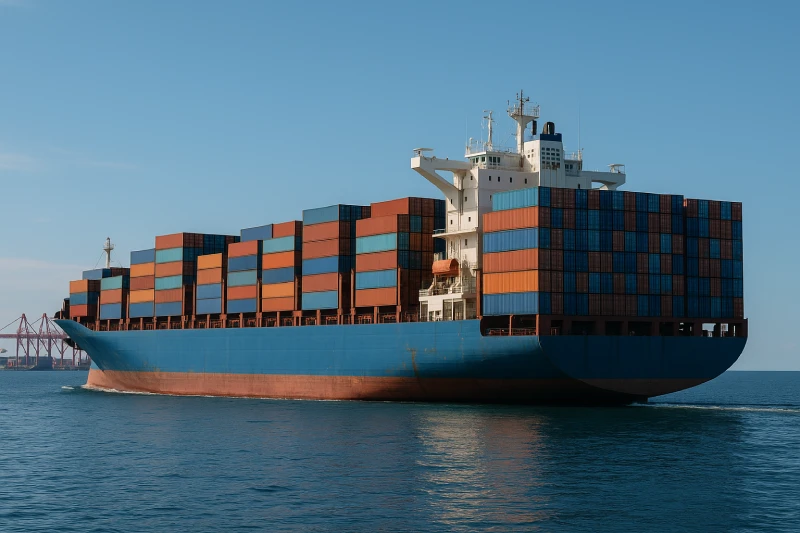
FCL Transit Time: 25–35 Days
FCL is generally the fastest and most reliable sea freight option. Once the container is loaded and sealed at the factory or warehouse, it moves directly to the port for export and is not reopened until arriving in Tanzania. This reduces delays related to consolidation, security checks, and handling.
Why FCL Is Faster
- No waiting for other shippers to fill the container
- Fewer loading/unloading steps
- Faster customs clearance
- Priority on many vessel schedules
LCL Transit Time: 30–40 Days
LCL shipments require time for consolidation in China and deconsolidation in Tanzania, typically adding 3–7 days to the standard FCL timeline. This makes LCL slower and slightly less predictable, especially during peak freight seasons when warehousing terminals manage high volumes of small shipments.
Why LCL Takes Longer
- Waiting for container to be fully consolidated
- Extra handling at CFS warehouses
- Higher likelihood of customs inspections
- More complex transshipment routing
Typical Port-to-Port Sea Freight Transit Times
Below is a quick reference table for common China → Tanzania routes.
| Origin Port (China) | Destination Port: Dar es Salaam | Estimated Transit Time |
|---|---|---|
| Shanghai | Dar es Salaam | 25–32 days |
| Ningbo | Dar es Salaam | 26–34 days |
| Shenzhen (Yantian) | Dar es Salaam | 24–30 days |
| Guangzhou (Nansha) | Dar es Salaam | 25–33 days |
| Qingdao | Dar es Salaam | 28–35 days |
| Tianjin (Xingang) | Dar es Salaam | 30–38 days |
Note: Most routes include a transshipment stop—typically in Singapore, Jebel Ali (UAE), or Colombo—which can add time depending on vessel connection speed.
Air Freight Transit Time (CIF vs DDP)
Air freight is the preferred option for urgent, high-value, or time-sensitive shipments from China to Tanzania. While it costs more than sea freight, it dramatically reduces total transit time. Most shipments to Tanzania transit through Dubai, Doha, Addis Ababa, or Nairobi, as direct flights from China to Dar es Salaam are limited. As a result, a realistic door-to-door air freight timeline typically ranges between 5–12 days depending on whether the service is CIF (airport-to-airport) or DDP (door-to-door with customs included).
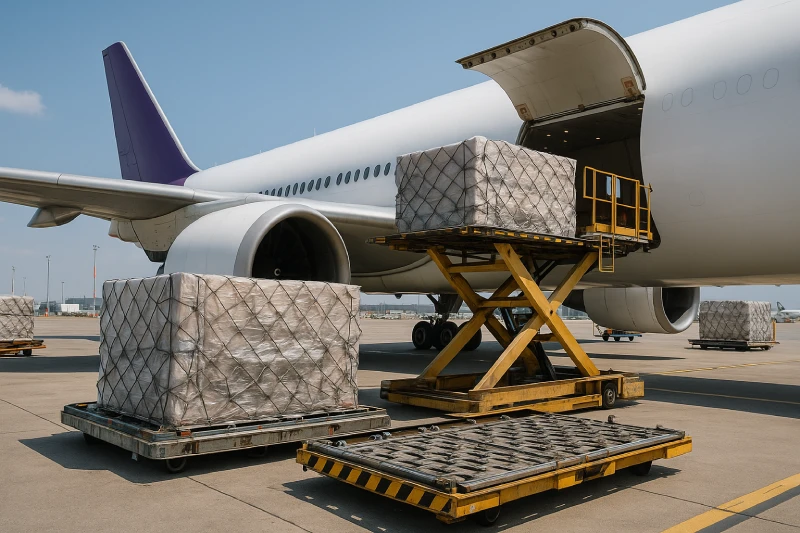
Airport-to-Airport Air Freight (CIF) – Total: 5–9 Days
The pure flight time from major Chinese airports (PVG, SZX, CAN) to Dar es Salaam’s Julius Nyerere International Airport (JNIA) is typically 2–4 days, including transshipment at a regional hub. However, the total lead time extends to 5–9 days once you factor in:
- Export handling & documentation (1–2 days)
- Flight schedule availability (1–2 days)
- Import handling at JNIA (1–2 days)
- Customs clearance (1–3 days depending on accuracy of documents)
When CIF Air Freight Makes Sense
- You have a reliable local customs broker in Tanzania
- You want faster-than-sea, but not express pricing
- You need predictable weekly shipping schedules
DDP Air Freight (Door-to-Door) – Total: 8–12 Days
DDP (Delivered Duty Paid) air shipping provides a fully managed door-to-door service, covering:
- Pickup from supplier
- Export clearance in China
- International flight
- Import clearance in Tanzania
- Duty & tax settlement
- Final delivery to your address
Because customs clearance and last-mile delivery are handled by the forwarder, the timeline is slightly longer than CIF but extremely convenient for businesses lacking local logistics support.
Why DDP Air Freight Takes 8–12 Days
- Consolidation before export (1–2 days)
- Export clearance (1–2 days)
- Transit via hub airport (2–4 days)
- Import clearance + door delivery (3–4 days)
DDP is the most predictable option for importers who want a hands-off, compliant, and fully managed shipping solution.
Express & Courier Shipping
Express courier shipping is the fastest and most predictable way to move small parcels from China to Tanzania. Major carriers—including DHL, UPS, FedEx, and Aramex—operate daily flights through global hubs such as Hong Kong, Shenzhen, Dubai, and Addis Ababa, allowing for stable transit times even during busy seasons. For lightweight, high-value, or urgently needed items, this is the most time-efficient option.
Typical Express Delivery Time: 3–5 Days
Most express parcels arrive in Tanzania within 3–5 days, including pickup, export processing, international flight, customs handling, and last-mile delivery to your address. Tracking is fully end-to-end, and customs clearance is generally smoother because express carriers pre-submit documentation electronically.
Advantages of Express Shipping
- Fastest delivery option available
- Predictable transit times, minimal delays
- Real-time tracking throughout the journey
- Simplified customs clearance (handled by the carrier)
- Ideal for samples, electronics, eCommerce parcels, and urgent spare parts
Limitations to Consider
- More expensive than air freight
- Weight/size restrictions (best for 0.5–50 kg parcels)
- Certain products—like batteries, liquids, or magnets—may require special handling or cannot fly via express
When Express Shipping Is Better Than Air Freight
Choose an express courier when:
- Delivery is time-critical (e.g., prototype samples or urgent components)
- Shipment weight is low and air freight minimum charges are too high
- You need reliable door-to-door delivery without hiring a local broker
Express shipping provides unmatched speed and convenience, making it the preferred solution for Tanzania-bound shipments that require fast, hassle-free delivery.
Factors Affecting Shipping Time from China to Tanzania
Transit time from China to Tanzania is influenced by a combination of operational, seasonal, and documentation-related factors. Even when you choose the correct shipping method, delays can occur if one or more of these elements are not well-managed. Understanding these variables helps importers plan more accurate lead times, avoid costly stockouts, and maintain smoother supply-chain operations.

Below are the key factors that most commonly affect shipping time between China and Tanzania.
1. Port Congestion (China & Tanzania)
Dar es Salaam Port experiences periodic congestion, especially during peak import seasons. Congestion can delay:
- Vessel berthing
- Container unloading
- Customs inspection queues
- CFS processing for LCL cargo
China’s major ports (Shanghai, Ningbo, Yantian) generally operate efficiently but still see slowdowns during surges in export volume.
Impact: +2 to +7 days
2. Transshipment Delays
Most sea and air routes from China to Tanzania are not direct. Cargo commonly transships through:
- Singapore
- Jebel Ali (UAE)
- Colombo
- Addis Ababa / Nairobi (air freight)
If a vessel or flight misses its connection, the shipment must wait for the next available schedule.
Impact: +3 to +10 days
3. Customs Clearance (Export & Import)
Incorrect or incomplete documents are one of the most frequent causes of delays. Tanzania Revenue Authority (TRA) may hold shipments for review if:
- HS codes are inaccurate
- Invoice values appear inconsistent
- Certificates (e.g., COC) are missing
- Cargo is selected for physical inspection
Impact: +1 to +5 days (Physical inspections can extend delays further.)
4. Cargo Type & Documentation Requirements
Certain goods require extra steps before export or import:
- Batteries, chemicals, magnets → special airline approvals
- Medical devices, cosmetics → may trigger inspection
- Machinery → may require pre-shipment verification
Impact: Varies based on product category
5. Seasonal Peaks & Holidays
Shipping time increases around major global and regional holiday periods, including:
- Chinese New Year (January–February)
- Golden Week (October)
- Q4 eCommerce peak (September–December)
- Tanzania local holidays affecting customs and port labor schedules
During these windows, vessel space and flight capacity tighten.
Impact: +3 to +14 days
6. Weather & Ocean Conditions
Monsoon seasons in the Indian Ocean can force carriers to adjust routing or reduce sailing speed. Severe weather also affects:
- Loading/unloading operations
- Flight reliability
- Inland trucking schedules
Impact: +1 to +5 days
7. LCL Consolidation & Deconsolidation
LCL shipments require handling at CFS warehouses:
- Waiting to consolidate cargo in China
- Deconsolidation and sorting in Tanzania
Both processes extend lead time and increase the chance of delays during busy periods.
Impact: +3 to +7 days over FCL
8. Inland Transportation (Pickup & Final Delivery)
Distance from the supplier to the origin port (e.g., a factory in Chengdu shipping via Shenzhen) can add days to the timeline.
Similarly, last-mile delivery within Tanzania—from Dar es Salaam to Arusha, Mwanza, Dodoma, or Zanzibar—adds extra transit time.
Impact: +1 to +6 days depending on the distance
How Importers Can Reduce Time-Related Risks
Practical steps to minimize delays:
- Submit complete and accurate documents before pickup
- Book shipments early in peak seasons
- Choose high-frequency ports (Shenzhen, Shanghai, Ningbo)
- Use DDP for simplified customs handling
- Avoid LCL for urgent cargo
- Split shipments (small urgent air freight + bulk sea freight)
Proactive planning can reduce overall shipping time and ensure a smoother logistics experience.
How to Ship Faster from China to Tanzania
While transit times depend heavily on the shipping method and routing, importers can significantly influence the overall lead time by optimizing their logistics planning. Choosing the right port, preparing documents early, and selecting a suitable service level all help streamline the shipping process.
Below are practical, proven strategies to reduce delays and ensure your cargo reaches Tanzania as quickly as possible.
1. Choose the Most Efficient Origin Port
Not all Chinese ports offer the same frequency or route efficiency.
For Tanzania-bound shipments:
- Shenzhen (Yantian) – Often provides the fastest sailing times
- Shanghai & Ningbo – High carrier frequency and reliable connections
- Guangzhou (Nansha) – Strong for South China suppliers
- Tianjin & Qingdao – Longer routing; slower for urgent cargo
Tip: If your supplier is inland, sometimes shipping from a more efficient coastal port saves time even if trucking distance is longer.
2. Book Shipments Early — Especially During Peak Seasons
Shipping delays are common around:
- Chinese New Year
- Golden Week
- Q4 holiday peak
- Local Tanzania public holidays
Booking early increases the chance of accessing faster sailings or flight schedules and reduces risk of rollovers caused by vessel overbooking.
3. Use FCL Instead of LCL for Time-Sensitive Cargo
FCL avoids the extra consolidation and deconsolidation steps that add 3–7 days to LCL shipments.
If your cargo volume is close to half a container or more, FCL is usually worth the speed advantage.
4. Consider Splitting Shipments (Fast + Economical Options)
A common strategy for growing businesses:
- Air freight (or express) for urgent units
- Sea freight (FCL/LCL) for the remaining bulk volume
This approach prevents stockouts without requiring full air freight for the entire order.
5. Prepare Documents Early to Avoid Customs Delays
The most common avoidable delays come from incomplete or incorrect documentation.
Be sure to finalize:
- Commercial invoice
- Packing list
- HS codes
- Certificates (such as COC when required)
- Manufacturer details
- Tax ID (TIN) for Tanzania importers
Providing these early ensures smoother export and import clearance.
6. Choose DDP for Simplified Customs Handling
For importers who lack a local broker in Tanzania—or prefer a hands-off clearance process—DDP air or sea removes uncertainty.
The forwarder handles:
- Duty & tax processing
- Import clearance
- Last-mile delivery
This significantly reduces delays caused by incomplete paperwork or miscommunication with local customs.
7. Avoid Unnecessary Transshipment When Possible
Some carriers route cargo through multiple hubs, increasing the risk of missed connections.
Choosing a carrier with reliable, minimal-transshipment routes can reduce transit time by 3–7 days.
8. Consolidate Suppliers to Reduce Handling Time
When shipping products from multiple suppliers, using a forwarder to collect and consolidate goods in one warehouse greatly reduces:
- Delays caused by incomplete sets of goods
- Unnecessary handling
- Multiple customs declarations
This is especially valuable for air freight and DDP shipments.
9. Maintain Communication With Your Freight Forwarder
Real-time updates on:
- Space availability
- Sailing schedules
- Flight frequencies
- Customs requirements
…help you make faster, more informed decisions that minimize delays.
Sample Timeline Examples
The timelines below use actual shipping cases handled by Winsail Logistics, giving importers a clear picture of how long door-to-door and port-to-port movements typically take. These examples reflect real carrier schedules, consolidation steps, and customs processes between China and Tanzania.
Example A: FCL Sea Freight — Ningbo → Dar es Salaam (Polyester Fabric)
Total Transit Time: 43 Days (IAL Route)
This case involved a full container of polyester fabric moving from Ningbo to Dar es Salaam using IAL’s 43-day sailing schedule. The extended timeline reflects transshipment routing and standard processing on both sides.
Step-by-Step Timeline
- Day 1–3: Cargo pickup at factory + container loading
- Day 4–6: Export documentation + customs clearance in Ningbo
- Day 7–41: Sea transit via IAL route (including transshipment)
- Day 42–43: Arrival at Dar es Salaam, unloading, customs clearance, and release
Key Insight:
Fabric shipments often require precise documentation for classification and inspection, adding emphasis on clean paperwork to avoid delays. Even with a 43-day route, proper preparation ensured on-schedule delivery.
Example B: FCL Sea Freight — Nansha → Dar es Salaam (Cabinet Doors)
Total Transit Time: 29 Days (MSC Carrier)
This shipment demonstrates a faster, more direct routing from South China. Using MSC’s schedule, the container arrived in 29 days—significantly quicker than typical East China routes.
Step-by-Step Timeline
- Day 1–2: Pickup and safe loading of cabinet doors into FCL container
- Day 3–5: Export clearance at Nansha (Guangzhou)
- Day 6–27: Ocean transit from Nansha to Dar es Salaam
- Day 28–29: Arrival, customs clearance, and cargo release
Key Insight:
South China ports like Nansha and Yantian often offer shorter transit times to East Africa due to stronger direct connections. For bulky or fragile items such as cabinet doors, FCL ensures safer handling and fewer delays.
Port & Route Notes for Tanzania
Shipping time from China to Tanzania is strongly influenced by the origin port, the carrier’s routing, and the type of transshipment hub used along the way. Understanding which ports and transport corridors are most efficient helps importers plan more accurate lead times and choose the best shipping strategy.
Below is a breakdown of the major ports and routes that commonly serve Tanzania-bound cargo.
Main Entry Ports in Tanzania
1. Dar es Salaam Port (DAR) — Primary Gateway
Dar es Salaam handles the majority of Tanzania’s containerized imports and offers the highest sailing frequency from China. Most FCL and LCL shipments—regardless of the origin port—are routed here.
Why It’s Preferred:
- Reliable East Africa hub
- Faster customs processing than smaller ports
- Regular services from major carriers (MSC, Maersk, CMA, IAL)
Impact on Transit Time: Shortest and most stable lead times.
2. Tanga Port
A smaller port with limited container capacity. It typically receives regional or feeder services rather than direct connections from Asia.
Best For: Certain bulk cargo, construction materials, or shipments destined for northern regions.
Impact on Transit Time: Longer due to lower frequency and feeder-based routing.
3. Mtwara Port
Primarily supports bulk commodities and southern-region projects. Container services are infrequent.
Impact on Transit Time: Not recommended for standard China → Tanzania shipments unless specifically required.
Major China Origin Ports and Their Route Characteristics
1. Shenzhen (Yantian)
One of the most efficient ports for Africa-bound freight.
Advantages:
- Strong weekly sailings to East Africa
- Shorter transit times (often 24–30 days)
- Ideal for electronics, textiles, and mixed cargo
2. Guangzhou (Nansha)
A strong alternative for South China factories, known for fast routing—e.g., the Winsail case with 29-day transit to Dar es Salaam.
3. Shanghai (Yangshan / Waigaoqiao)
High-frequency sailings with stable carrier capacity.
Transit Time: ~25–32 days
Best For: Machinery, bulk-volume shipments, suppliers in East China
4. Ningbo
Popular for manufacturing regions in Zhejiang; slightly longer routing but still efficient.
Transit Time: ~26–34 days
(Example: Winsail’s 43-day IAL route for specialized fabric shipments.)
5. Qingdao & Tianjin (Northern China)
Longer transit times due to additional domestic routing and indirect ocean paths.
Transit Time: 28–38 days
Common Transshipment Hubs on the China → Tanzania Route
Most vessels and flights do not move directly to Tanzania. Cargo commonly routes through:
- Singapore (largest hub for East Africa transshipment)
- Jebel Ali, UAE (major MSC/Maersk routing point)
- Colombo, Sri Lanka (CMA, Evergreen, and regional carriers)
- Addis Ababa / Nairobi (air freight transshipment hubs)
Why It Matters: A missed connection at any hub can add 3–10 days to the total shipping timeline.
Choosing the Best Route for Faster Delivery
- Use South China ports for shortest transit times.
- Select carriers with consistent East Africa schedules (MSC, Maersk, CMA).
- Avoid routes with multiple transshipment points when speed is a priority.
- For urgent cargo, consider air freight via Addis Ababa or Nairobi hubs.
Understanding these port and route characteristics helps businesses align shipping strategies with their delivery deadlines and budget.
FAQs
1. Does shipping time differ depending on whether goods are commercial or personal shipments?
Yes. Commercial cargo usually moves faster because the documentation (invoice, HS code, packing list) follows standardized customs requirements. Personal shipments or mixed personal effects often trigger additional clarification or inspection in Tanzania, which may add a few days to the overall clearance and delivery time.
2. Can I reduce transit time by choosing a specific carrier rather than relying on the lowest-cost option?
Absolutely. Carriers like MSC, Maersk, CMA CGM, and PIL operate more consistent schedules to East Africa. Choosing a stable carrier instead of a low-cost, indirect route can reduce transit time by 3–7 days, especially during congested seasons when cheaper services are more likely to be rolled over.
3. How does inland trucking inside Tanzania affect total delivery time?
Most transit-time estimates end at Dar es Salaam Port, but final delivery to inland cities—such as Dodoma, Arusha, Mwanza, Mbeya, or Zanzibar (via ferry)—adds extra days. Depending on the distance and road conditions, inland delivery can extend the total lead time by 1–6 days, especially during rainy seasons.
4. Are there shipping methods that guarantee a fixed delivery time from China to Tanzania?
No shipping method can guarantee exact delivery dates, but some options—such as express courier services and DDP air freight—offer more predictable schedules. Sea freight cannot guarantee fixed dates due to weather, port congestion, and transshipment variables, though premium services can reduce variability.
5. Does shipping time change if multiple suppliers are involved in one shipment?
Yes. Consolidating goods from multiple Chinese suppliers requires additional collection and coordination, often adding 2–5 days before export clearance. While consolidation can reduce freight cost, importers working under tight deadlines should consider splitting urgent SKUs into a separate air or express shipment to avoid postponing the entire container’s departure.
Get a Customized Shipping Timeline for Your Cargo
Shipping time from China to Tanzania can vary widely depending on your product type, volume, packing method, and the route chosen. The estimates in this guide provide a helpful benchmark, but the most accurate timeline always comes from reviewing your shipment details alongside real-time vessel and flight schedules.
If you’re planning a shipment—or comparing sea freight, air freight, and door-to-door options—our team can prepare a tailored transit-time plan based on your supplier location, delivery destination in Tanzania, and your required delivery window. You can also explore our pages on sea freight, air freight, and DDP solutions to better understand which method fits your timeline and budget.
Share your shipment details anytime, and we’ll help you find the most efficient route from China to Tanzania.
Update & Compliance Note(2025 Edition)
All transit times in this guide are based on 2025 carrier schedules, recent case studies, and current customs procedures for China–Tanzania trade lanes. Actual delivery times may vary due to vessel rotations, airline capacity, routing changes, and local port conditions. Importers should always confirm timelines with their freight forwarder before booking, especially during peak seasons or when shipping sensitive or regulated goods.
This guide is reviewed and updated regularly to reflect the latest logistics developments and ensure accuracy for Tanzania-bound shipments.
