
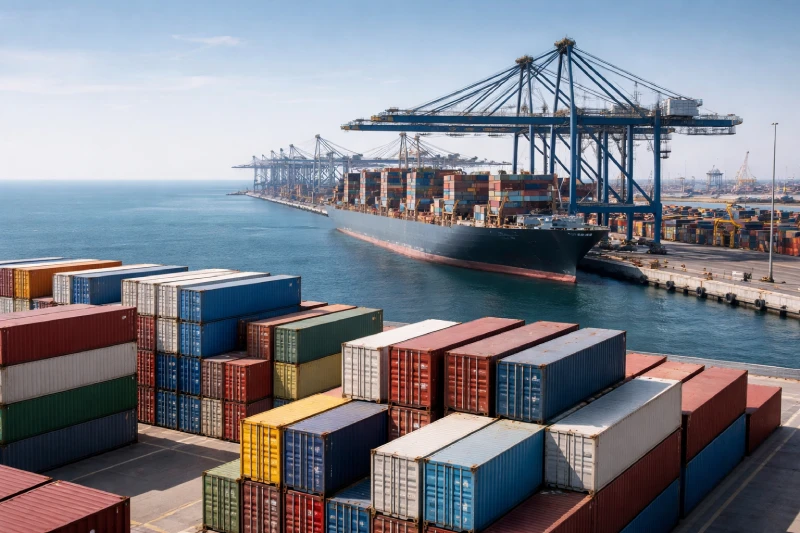
Shipping from China to Jeddah plays a central role in Saudi Arabia’s commercial import structure, particularly for businesses serving the western region of the country. Jeddah functions as a primary maritime gateway rather than a final consumption market, shaping how cargo is routed, cleared, and distributed inland.
For B2B importers, understanding Jeddah’s logistics role goes beyond choosing a transport mode. Decisions around port handling, customs coordination, and inland delivery planning are closely linked to how Jeddah connects international cargo flows with domestic supply chains.
This page focuses on practical, location-specific logistics considerations when moving commercial cargo from China to Jeddah. It is designed to support informed planning by importers, distributors, and project cargo owners operating within the Saudi market.
Why Jeddah Is a Strategic Logistics Gateway in Saudi Arabia
Jeddah occupies a foundational position within Saudi Arabia’s logistics system, primarily through the role of Jeddah Islamic Port as the country’s main Red Sea maritime gateway. Rather than serving only local demand, Jeddah operates as a high-volume entry point where international cargo is processed, cleared, and prepared for onward distribution across multiple regions.
At a national level, Jeddah is tightly integrated into Saudi Arabia’s broader supply chain structure, linking seaborne imports with inland transport networks and regional distribution centers. Cargo arriving through Jeddah often supports manufacturing, construction, and wholesale activity well beyond the western region, making the port a strategic node rather than a standalone destination.
- Port functions: containerized cargo handling, bulk and breakbulk operations, import customs processing
- Coverage areas: western Saudi Arabia, central regions via inland transport, selected cross-regional flows
- Typical cargo flows: China-origin industrial goods entering via Jeddah and moving onward to domestic markets
Shipping Modes from China to Jeddah
Sea Freight to Jeddah
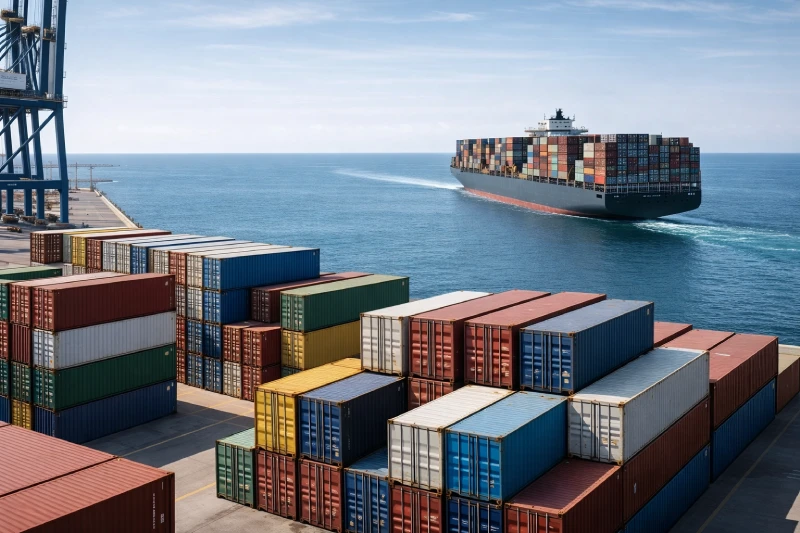
Sea freight is the primary transport mode for commercial cargo moving from China to Jeddah, reflecting the port’s role as a large-scale maritime gateway. Shipments typically follow established Asia–Red Sea trade lanes, allowing exporters to align production output with predictable ocean routing patterns.
This mode is well suited for containerized cargo, consolidated shipments, and oversized or heavy goods that require stable handling conditions. For B2B importers, sea freight supports structured supply planning where cargo volume, packaging format, and downstream inland distribution are coordinated around port operations in Jeddah.
Air Freight via Jeddah
Air freight via King Abdulaziz International Airport serves specific operational scenarios rather than general import flows. It is commonly used when shipment timing must align with project milestones, production schedules, or urgent replenishment needs within western Saudi Arabia.
Instead of replacing sea freight, air transport functions as a complementary option for high-value, sensitive, or time-critical commercial cargo. Importers typically select this mode when supply chain continuity or contractual obligations outweigh considerations of shipment scale.
Common Routing and Cargo Flow Considerations
Commercial cargo moving from China to Jeddah generally follows a westbound maritime corridor linking East Asian export hubs with the Red Sea. This macro flow reflects Jeddah’s position as the primary Red Sea entry point for Saudi Arabia, where inbound cargo transitions from international transport into domestic logistics networks serving multiple regions.
Within this corridor, routing decisions often involve a conceptual choice between direct services and transshipment-based movements. Direct routings prioritize operational simplicity and port continuity, while transshipment routings offer greater flexibility in carrier selection and sailing schedules, depending on cargo characteristics and supply chain design.
- Export origin: manufacturing and consolidation points at major Chinese coastal export regions
- Main carriage: ocean transport along Asia–Red Sea trade lanes
- Port handling: discharge, terminal operations, and import-side processing at Jeddah
- Inland transfer: onward trucking or distribution movements to regional and inland destinations
Customs Clearance Environment in Jeddah
Saudi Arabia’s import customs environment is structured around centralized regulations combined with port-level execution. For commercial cargo, clearance focuses on documentation alignment, cargo classification, and coordination between customs authorities and port operators, with an emphasis on consistency across entry points rather than ad-hoc local practices.
At Jeddah, clearance activities are closely integrated with port operations due to the volume and diversity of inbound cargo handled at the seaport. As a high-throughput gateway, Jeddah places particular importance on advance coordination, accurate cargo information, and synchronized handling between terminals, customs, and inland transport providers.
- Port clearance: customs processing completed directly at the seaport as cargo is discharged and released into the domestic logistics network
- Inland clearance: customs formalities completed at designated inland facilities after cargo is transferred out of the port under controlled movement
Inland Distribution from Jeddah Port
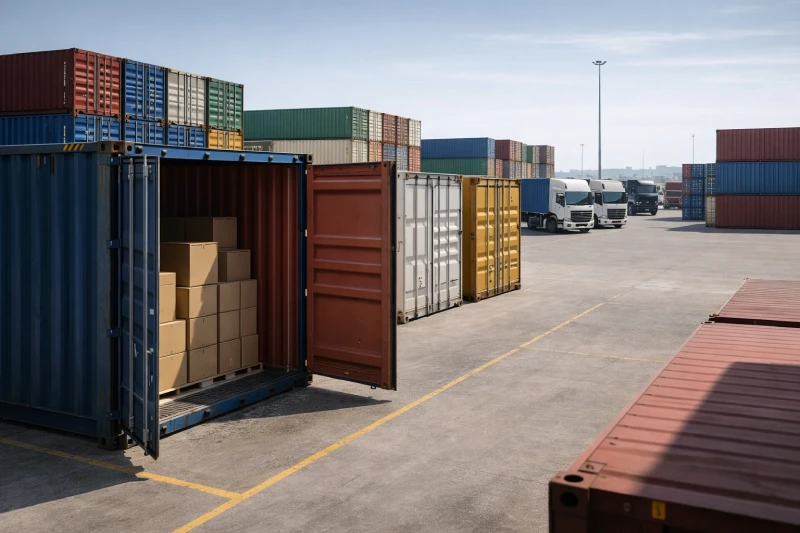
Jeddah serves as the primary distribution origin for cargo destined to Saudi Arabia’s western region, where proximity to the port supports relatively direct inland movements. Shipments supplying commercial centers, industrial zones, and project sites in this area are typically dispatched soon after port release, allowing importers to align inventory flow with regional demand.
Beyond the western region, Jeddah plays a critical role in supplying central Saudi Arabia, particularly Riyadh. Cargo moving along this corridor is planned as a structured inland leg rather than a local delivery, with routing, load configuration, and scheduling designed to support consistent replenishment and large-volume distribution into the capital’s commercial and industrial markets.
To support these inland movements, distribution centers and inland container depots function as transition points between port operations and final delivery. These facilities allow cargo arriving through Jeddah to be staged, consolidated, or reallocated before reaching end destinations, helping importers manage inventory positioning and domestic logistics efficiency.
DDP and End-to-End Delivery Concepts for Jeddah Imports
In the Saudi market, DDP is often discussed because importers face a multi-layered logistics environment that spans international transport, customs compliance, and inland delivery. For companies without a local logistics structure, DDP provides a framework to consolidate responsibilities and reduce operational fragmentation across these stages.
Within a Jeddah-based import scenario, responsibility allocation under DDP centers on managing the full flow from origin in China through port clearance and onward inland transport. The port’s role as an entry gateway means that coordination at Jeddah directly influences how smoothly cargo transitions from international shipment into domestic distribution.
DDP arrangements are commonly applied when shipments are destined for inland markets, when importers require predictable landed delivery to warehouses or project sites, or when supply chains prioritize centralized control over multiple logistics interfaces rather than managing each segment independently.
Relationship Between Jeddah and Other Saudi Logistics Gateways
When comparing Jeddah and Dammam, the distinction largely follows an east–west logistics orientation within Saudi Arabia. Jeddah functions as the primary Red Sea gateway supporting western and central regions, while Dammam serves as the main entry point on the Arabian Gulf side, aligning more closely with eastern industrial zones and Gulf-oriented trade flows.
The relationship between Jeddah and Riyadh reflects a port–inland dynamic rather than a competitive one. Jeddah operates as an international entry and processing hub, whereas Riyadh functions as a central inland distribution and consumption center, with cargo frequently moving between the two as part of a planned domestic logistics chain.
Operational Considerations for B2B Importers
For B2B importers shipping from China to Jeddah, operational success often depends on preparation rather than transport selection. Clear alignment between cargo characteristics, documentation accuracy, and local handling expectations helps reduce friction at the port and supports smoother inland distribution.
- Packaging: ensuring cargo is protected for multi-stage handling from international transport through domestic delivery
- Labeling: applying clear, compliant markings that support identification and customs processing without causing ambiguity
- Local coordination: maintaining effective communication between overseas shippers, port-side agents, and inland transport providers
