
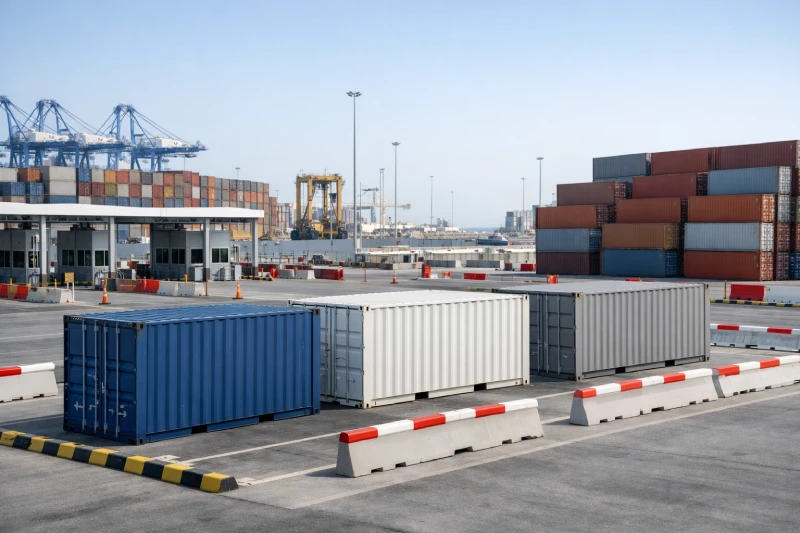
Customs clearance is one of the most critical stages when shipping goods from China to the United Arab Emirates. Regardless of whether you are importing by sea, air, or courier, your cargo cannot move into the UAE market until it has successfully passed customs control. For international importers, especially those unfamiliar with UAE procedures, customs clearance is often where unexpected delays, extra costs, or compliance risks arise.
The UAE is widely regarded as having an efficient and business-friendly customs system. However, “efficient” does not mean “automatic.” Customs authorities rely heavily on accurate documentation, correct cargo classification, and clearly defined responsibility between the buyer, seller, and logistics provider. Small errors—such as mismatched invoice values, unclear Incoterms, or missing importer registration—can slow clearance or trigger inspections.
This guide explains UAE customs clearance in practical, business-focused terms for importers shipping from China. It covers how the clearance process works, who is responsible under different Incoterms, what documents are required, how long clearance typically takes, and how DDP shipping changes customs responsibilities. The goal is not to overwhelm you with regulations, but to help you plan shipments with fewer surprises, better cost control, and smoother delivery outcomes.
How Customs Clearance Works in the UAE – Step-by-Step Overview
For imports arriving from China, customs clearance in the UAE follows a structured and largely digital process. While the exact workflow may vary slightly depending on the port of entry (seaport, airport, or land border), the core steps are consistent across most commercial shipments. Understanding this sequence helps importers anticipate timing, responsibilities, and potential risk points.
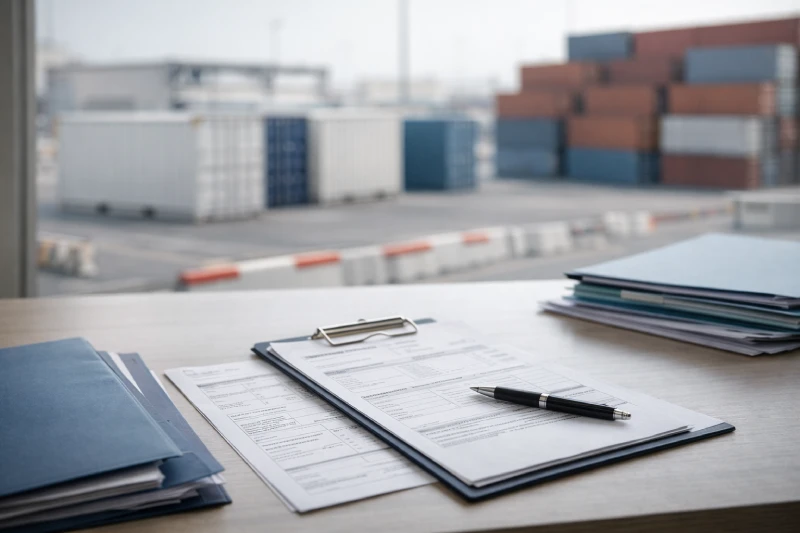
First, customs clearance begins once the cargo physically arrives in the UAE. Arrival alone does not mean the goods are cleared. The shipment is placed under customs control at the port or terminal, and it cannot move forward until a customs declaration is submitted and approved.
Next, the import customs declaration is filed through the UAE customs system. This declaration is based on the commercial invoice, packing list, and transport document (Bill of Lading or Air Waybill). Customs uses this information to identify the cargo, assess its value, confirm the HS code, and determine whether duties, VAT, or special controls apply.
After submission, customs performs a risk assessment. Many shipments are cleared electronically without physical inspection, especially when documentation is complete and consistent. However, selected shipments may be subject to:
- document verification,
- X-ray scanning, or
- physical inspection, depending on cargo type and risk profile.
Once customs completes its review, import duties and VAT are calculated. These charges must be paid before the shipment can be released. Only after payment confirmation does customs issue the release approval.
Finally, the cargo is released from customs control and can proceed to inland delivery or warehouse transfer. At this stage, the shipment is considered legally imported into the UAE.
For importers, the key takeaway is that UAE customs clearance is not a single action but a coordinated process. Smooth clearance depends less on speed at the port and more on preparation—accurate documents, clear responsibility under the chosen Incoterm, and alignment between the shipper, importer, and logistics provider.
Who Is Responsible for Customs Clearance Under Different Incoterms
One of the most common sources of confusion for importers shipping from China to the UAE is who is actually responsible for customs clearance. This responsibility is determined by the Incoterm agreed in the sales contract, not by local practice or assumptions. Misunderstanding this point often leads to delays, disputes, or unexpected costs once the cargo arrives.
Below is a practical breakdown of customs responsibility under the most commonly used Incoterms for China–UAE trade.
EXW (Ex Works) – Importer Bears Full Customs Responsibility
Under EXW, the seller’s responsibility ends at their factory or warehouse in China. From that point onward, the buyer is responsible for everything, including export arrangements, international transport, and UAE import customs clearance.
For UAE imports, this means the buyer must:
- manage or appoint parties for export handling in China,
- ensure all documents are prepared correctly,
- handle UAE customs declaration, duties, and VAT.
EXW is often underestimated by overseas buyers. While it may appear cheaper on paper, it places the highest customs and compliance burden on the importer and is generally risky for buyers without strong logistics experience.
FOB (Free On Board) – Import Customs Still Belong to the Buyer
FOB is widely used in China exports and is often misunderstood as “seller handles most of the shipping.” In reality, under FOB:
- the seller handles export customs in China and delivers the cargo on board the vessel,
- the buyer takes responsibility once the cargo is loaded.
For UAE imports, the buyer is still fully responsible for:
- UAE customs clearance,
- payment of duties and VAT,
- compliance with local import requirements.
FOB simplifies export-side handling but does not reduce import customs responsibility in the UAE.
CIF (Cost, Insurance & Freight) – Freight Included, Customs Not Included
Under CIF, the seller arranges and pays for ocean freight and insurance to the UAE port. However, this Incoterm is often mistakenly assumed to include customs clearance.
In practice:
- the seller covers transport costs to the UAE port,
- the buyer remains responsible for UAE customs clearance, duties, VAT, and inland delivery.
CIF may simplify freight coordination, but customs risks and costs still sit entirely with the importer. This is especially important for first-time UAE importers who expect a “door-to-door” solution.
DDP (Delivered Duty Paid) – Customs Handled by the Seller or Forwarder
DDP is the only Incoterm where UAE customs clearance is handled on behalf of the buyer. Under a properly structured DDP arrangement:
- the seller or appointed logistics provider manages customs declaration,
- import duties and VAT are paid as part of the shipment,
- the cargo is delivered after customs release.
For importers, DDP offers the highest level of cost predictability and the lowest operational involvement. However, it also requires that the party offering DDP has real local customs experience in the UAE. Poorly executed DDP arrangements can still create clearance risks, even though responsibility is contractually shifted.
Understanding these differences is essential. Choosing the wrong Incoterm does not just affect freight costs—it directly determines who controls, and who is exposed to, the UAE customs clearance process.
Required Documents for UAE Import Customs Clearance
Accurate and complete documentation is the foundation of smooth customs clearance in the UAE. Customs authorities rely primarily on documents—not verbal explanations—to assess cargo value, classification, and compliance. For shipments from China, most clearance delays are caused not by inspections, but by document inconsistencies or missing information.
Below are the core documents typically required for commercial import customs clearance in the UAE, explained in practical terms.
Commercial Invoice
The commercial invoice is the most important customs document. It is used to determine:
- the declared value of the goods,
- the basis for duty and VAT calculation,
- the nature of the transaction between buyer and seller.
The invoice must clearly show:
- seller and buyer details,
- product description that matches the actual cargo,
- unit price, total value, and currency,
- agreed Incoterm.
Customs is particularly sensitive to undervaluation or vague descriptions, which may trigger document reviews or inspections.
Packing List
The packing list explains how the cargo is physically packed, not how much it costs. It allows customs and terminal operators to:
- verify quantities,
- check weights and dimensions,
- locate specific cartons if inspection is required.
Discrepancies between the packing list and the actual cargo—such as carton count or gross weight—are a common cause of clearance delays.
Bill of Lading (B/L) or Air Waybill (AWB)
This is the transport document issued by the carrier:
- Bill of Lading for sea freight,
- Air Waybill for air freight.
Customs uses it to confirm:
- the consignee and notify party,
- port of loading and discharge,
- shipment reference details.
Any mismatch between the transport document and the commercial invoice (company names, shipment description) can stop clearance until corrected.
Certificate of Origin (When Required)
A certificate of origin confirms where the goods were manufactured. While not required for every shipment, it is commonly requested for:
- specific product categories,
- preferential duty treatment,
- regulatory verification.
When required, the origin must align with both the invoice and the cargo itself.
Importer Trade License (Commercial Shipments)
For standard commercial imports, the UAE importer must hold a valid trade license registered with customs. Without it:
- customs clearance cannot proceed,
- cargo may remain on hold at the port.
This requirement is especially relevant for first-time importers who may not yet be properly registered.
Additional Permits (Product-Specific)
Some goods require special approvals or permits before clearance, such as:
- food products,
- cosmetics,
- medical or electronic items.
These approvals are usually checked during customs declaration, not after cargo arrival—making advance preparation critical.
For importers, the key principle is simple: UAE customs clearance is document-driven. Ensuring consistency across all documents before shipment departure is far more effective than trying to correct issues after the cargo arrives.
Customs Duties, VAT, and Import Taxes in the UAE
When importing goods from China into the UAE, customs clearance is not only an administrative process but also a financial one. Understanding how customs duties and VAT are calculated helps importers estimate landed costs accurately and avoid unexpected payment requests during clearance.
Customs Duty Basics
Most commercial goods imported into the UAE are subject to customs duty, which is typically calculated as a percentage of the customs value. In practical terms, customs value is usually based on:
- the declared value of the goods, and
- the cost of international freight and insurance up to the UAE port of entry.
Customs authorities use the commercial invoice and transport documents to assess whether the declared value is reasonable. If the value appears inconsistent with the cargo type or market norms, customs may request clarification or re-evaluate the declaration.
Value Added Tax (VAT)
In addition to customs duty, VAT is applied to most imported goods. VAT is calculated after customs duty is assessed, meaning it applies to:
- the customs value of the goods, plus
- the customs duty amount.
This structure is important because even small changes in declared value can affect the final VAT payable.
Product-Specific Variations
Not all goods are treated equally. Some product categories may:
- attract different duty rates,
- be exempt from certain charges, or
- require additional compliance checks before taxes are finalized.
Because of this, relying on generic duty assumptions can lead to inaccurate budgeting.
Why Accurate Cost Planning Matters
Under-declaring cargo value or using incorrect classifications may appear to reduce costs in the short term, but it significantly increases the risk of:
- customs audits,
- shipment holds,
- penalties or reassessment.
For importers, the safest approach is to treat customs duties and VAT as integral parts of total shipping cost, not as separate or optional expenses. Clear documentation and realistic value declaration are essential to ensuring predictable clearance outcomes.
Typical Customs Clearance Time in the UAE
Customs clearance time is a major concern for importers shipping from China to the UAE, as it directly affects delivery schedules, inventory planning, and cash flow. While the UAE is known for efficient customs operations, clearance time is not fixed and depends largely on preparation and shipment characteristics.
Average Clearance Time by Transport Mode
For most commercial shipments with complete and accurate documentation:
- Air freight customs clearance is often completed within 1–2 working days after cargo arrival.
- Sea freight customs clearance typically takes 2–4 working days, depending on port workload and inspection selection.
- Courier or express shipments may clear faster for low-value or simplified entries, but commercial consignments still follow standard procedures.
These timelines assume that duties and VAT are paid promptly and no additional approvals are required.
Factors That Affect Clearance Speed
Several variables can extend or shorten the clearance process:
- Document readiness: Pre-submitted and verified documents speed up declaration and approval.
- Inspection selection: Some shipments are flagged for X-ray scanning or physical inspection.
- Product type: Regulated goods may require additional checks or permits.
- Importer compliance history: Established importers with consistent records often experience faster clearance.
Planning for Realistic Timelines
Importers should avoid treating customs clearance as an automatic step that happens “in the background.” Even in a highly efficient system like the UAE, clearance time must be built into the overall shipping schedule.
Allowing buffer time, especially for first-time shipments or new product categories, helps prevent downstream disruptions such as missed delivery appointments or storage charges at the port.
Common Customs Issues and Causes of Clearance Delays
Even in a well-organized customs environment like the UAE, clearance delays can occur. In most cases, these delays are not caused by congestion or system inefficiency, but by preventable issues related to documentation, cargo classification, or responsibility gaps. Understanding the most common problems helps importers reduce risk before the shipment departs from China.
Inconsistent or Incorrect Documentation
One of the most frequent causes of delay is inconsistency between documents. Examples include:
- mismatched product descriptions between the invoice and packing list,
- differences in consignee or shipper names across documents,
- invoice values that do not align with freight or insurance costs.
Customs will usually place the shipment on hold until the discrepancies are clarified or corrected.
Incorrect HS Code Classification
Using an incorrect or overly generic HS code can result in:
- incorrect duty or VAT assessment,
- requests for reclassification,
- increased likelihood of inspection.
Reclassification not only delays clearance but may also lead to revised charges or compliance review.
Missing Importer Registration or License
For commercial imports, clearance cannot proceed without a valid UAE importer registration. First-time importers often discover this requirement only after cargo arrival, resulting in avoidable storage and demurrage costs.
Regulated or Restricted Goods
Certain products require prior approvals or permits. If these are not arranged in advance, customs may:
- hold the cargo,
- request additional documentation,
- deny clearance until compliance is confirmed.
Delayed Payment of Duties and VAT
Even when customs approval is granted, shipments cannot be released until all duties and VAT are paid. Payment delays—especially during weekends or holidays—can extend clearance time unnecessarily.
Lack of Clear Responsibility
Unclear Incoterm arrangements often lead to confusion over who is responsible for customs actions or payments. When neither party acts promptly, clearance stalls.
For importers, the common thread across most delays is preparation. Clear documentation, correct classification, and defined responsibility reduce the likelihood of customs holds far more effectively than reactive problem-solving after arrival.
Customs Clearance Under DDP Shipping – What Importers Should Know
DDP (Delivered Duty Paid) shipping fundamentally changes how customs clearance is handled for imports from China to the UAE. Under a properly structured DDP arrangement, the responsibility for UAE import customs clearance is shifted away from the buyer and handled by the seller or the logistics provider acting on the seller’s behalf. For many importers, this significantly reduces operational involvement—but it does not eliminate the need for understanding how the process works.
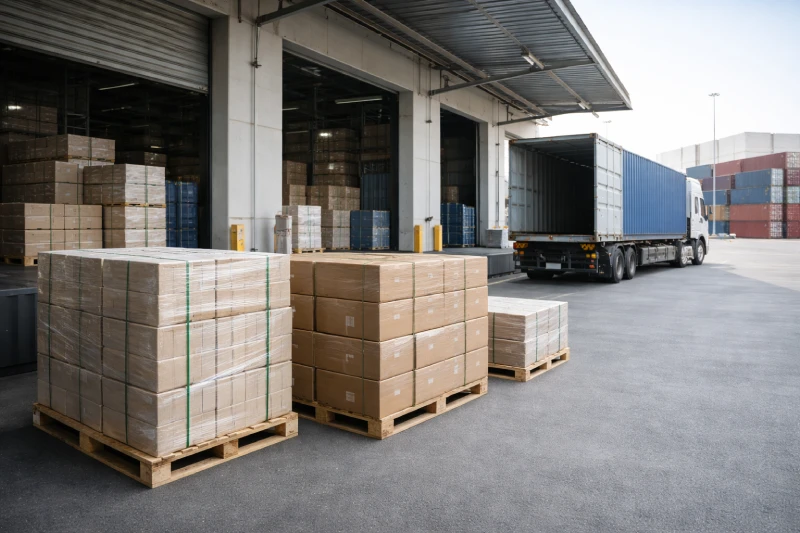
How DDP Customs Clearance Works in Practice
Under DDP shipping, the appointed party manages:
- preparation and submission of the UAE customs declaration,
- coordination with customs authorities,
- payment of customs duties and VAT,
- release of cargo after clearance.
From the importer’s perspective, customs clearance becomes an embedded part of the overall shipping service rather than a separate task that must be managed locally.
What Importers Still Need to Provide
Although the operational burden is transferred, importers are not completely hands-off. Accurate information is still essential, including:
- correct product descriptions and specifications,
- realistic cargo values,
- confirmation of the final delivery address and consignee details.
If the information provided at the origin is inaccurate, even a DDP shipment can face customs delays or reassessment.
Common Risks with Poorly Executed DDP
Not all DDP offers are equal. Risks arise when:
- duties or VAT are underestimated,
- customs compliance is handled by inexperienced agents,
- responsibilities are unclear between seller and forwarder.
In such cases, shipments may be delayed, or unexpected costs may surface despite the DDP agreement.
When DDP Makes Sense
DDP customs clearance is particularly suitable for:
- first-time UAE importers,
- buyers without a local customs presence,
- e-commerce or multi-consignee shipments where simplicity is critical.
For importers, DDP is best viewed as a risk-management tool, not just a pricing option. Understanding how customs clearance is executed under DDP helps ensure that the promised convenience translates into real-world reliability.
Who Should Handle Customs Clearance?
Deciding who should handle customs clearance is a strategic choice that affects cost control, risk exposure, and operational efficiency. There is no single “best” option for every importer shipping from China to the UAE—the right approach depends on experience level, shipment profile, and internal resources.
When the Importer Should Handle Customs Clearance
Importer-managed customs clearance is generally suitable when:
- you have an established UAE trade license and customs registration,
- you import regularly and understand local clearance procedures,
- you want direct control over duty, VAT payment, and declaration details,
- your cargo involves specialized classifications that you prefer to manage internally.
This approach offers transparency and control, but it also requires strong documentation discipline and local coordination.
When a Freight Forwarder or Agent Should Handle Clearance
Using a forwarder or customs agent to manage clearance makes sense when:
- you have moderate import experience but limited internal customs expertise,
- shipment volumes are growing and consistency matters,
- you want professional handling without fully outsourcing responsibility.
In this model, the importer remains legally responsible, but execution is delegated to specialists.
When DDP Is the Better Choice
DDP shipping is often the most practical option when:
- you are a first-time or infrequent importer into the UAE,
- you do not have a local customs setup,
- you need predictable landed costs and minimal administrative involvement,
- speed and simplicity are higher priorities than granular cost control.
Practical Decision Rule
If customs clearance feels like a compliance task, manage it directly.
If it feels like a risk, delegate it.
If it feels like an obstacle, DDP may be the most efficient solution.
Making this decision before shipment departure—rather than after cargo arrival—is one of the most effective ways to ensure smooth UAE customs clearance.
Best Practices to Ensure Smooth UAE Customs Clearance
Smooth customs clearance in the UAE is rarely the result of luck. It is usually the outcome of consistent preparation, clear communication, and realistic expectations set before the cargo leaves China. Importers who treat customs as an integral part of the shipping process—rather than a final administrative step—tend to experience fewer delays and lower overall costs.
Prepare and Verify Documents Before Shipment
All core documents should be reviewed together before departure to ensure consistency. Product descriptions, quantities, values, and company details must align across the commercial invoice, packing list, and transport documents. Early verification reduces the risk of customs queries after arrival.
Confirm HS Codes and Product Classification
Using the correct HS code is essential for accurate duty and VAT assessment. When in doubt, clarification should be obtained in advance rather than relying on generic or approximate classifications that may later be challenged by customs.
Define Customs Responsibility Clearly
The chosen Incoterm must be clearly agreed and understood by all parties. Ambiguity over who handles customs declaration or pays duties is a common cause of clearance delays, especially when shipments arrive and action is required immediately.
Plan for Duties, VAT, and Payment Timing
Customs clearance cannot be completed until all applicable charges are paid. Importers should ensure that payment arrangements are in place in advance, particularly for high-value shipments or time-sensitive cargo.
Allow Time for First-Time or New Product Imports
New importers or new product categories may attract additional scrutiny. Building buffer time into delivery schedules helps avoid downstream disruptions such as storage fees or missed distribution deadlines.
By applying these practices consistently, importers can significantly reduce customs-related risks and make UAE clearance a predictable, manageable part of their China-to-UAE supply chain.
FAQs
How long does customs clearance take in the UAE?
For most commercial shipments with complete and accurate documentation, customs clearance in the UAE typically takes 1–2 working days for air freight and 2–4 working days for sea freight. Delays usually occur due to document issues, inspections, or late payment of duties and VAT.
What documents are required for UAE import customs clearance?
Commonly required documents include a commercial invoice, packing list, and Bill of Lading or Air Waybill. Commercial imports also require a valid UAE importer trade license. Certain products may need additional permits or approvals depending on their category.
Who pays customs duty and VAT under DDP shipping?
Under DDP shipping, customs duty and VAT are paid by the seller or the logistics provider acting on the seller’s behalf, as part of the agreed DDP service. The importer receives the cargo after customs clearance without making separate customs payments.
Can goods be cleared without a UAE trade license?
For standard commercial imports, a UAE trade license registered with customs is required. Without it, customs clearance cannot proceed. Some low-value courier shipments may follow simplified procedures, but this does not apply to most business imports.
Why do shipments get held by UAE customs?
The most common reasons include document inconsistencies, incorrect HS codes, missing permits, or unclear importer responsibility. In many cases, holds are resolved once the requested clarification or correction is provided.
Conclusion
Customs clearance is not a formality to be addressed after goods arrive in the UAE. It is a core component of the China-to-UAE shipping process that directly affects cost, timing, and risk. Importers who understand how clearance works, who is responsible under their chosen Incoterm, and what documentation is required are far better positioned to avoid delays and unexpected expenses.
Whether customs is handled directly, through an agent, or under a DDP arrangement, the key to smooth clearance is preparation. Accurate documents, realistic value declarations, and clear responsibility planning turn UAE customs clearance from a potential bottleneck into a predictable step in your supply chain.
