

Shipping goods from China to Nigeria can be highly profitable—but only if your logistics partner understands the complexity of this route. From customs clearance challenges to port congestion and documentation risks, choosing the right freight forwarder is not just about price—it’s about reliability, compliance, and long-term scalability.
This guide will help you evaluate freight forwarders objectively, so you can make a confident, risk-controlled decision.
What Does a Freight Forwarder Do
A freight forwarder is a logistics service provider that organizes the transportation of goods from the supplier (China) to the final destination (Nigeria). Unlike carriers (shipping lines or airlines), forwarders act as coordinators across the entire supply chain.
Their responsibilities typically include:
- Booking cargo space (sea freight, air freight, or express)
- Managing export documentation in China
- Coordinating international shipping
- Handling import customs clearance in Nigeria
- Arranging final delivery to warehouse or doorstep
For businesses importing into Nigeria, a forwarder often becomes the central control point of the entire logistics process.
In more advanced cases, freight forwarders also offer DDP (Delivered Duty Paid) services—meaning they handle duties, taxes, and customs clearance on your behalf. This simplifies operations for importers who are unfamiliar with Nigerian customs regulations.
In short, a good freight forwarder reduces risk, ensures compliance, and provides visibility across every stage of shipping.
Why Nigeria Requires Experienced Forwarders
Nigeria is not a standard import market. Compared to regions like Europe or North America, it presents unique logistical and regulatory challenges that require specialized experience.
Key challenges include:
- Complex customs procedures: Nigerian import regulations often involve multiple agencies, documentation layers, and evolving policies.
- Port congestion: Major ports such as Lagos (Apapa and Tin Can Island) frequently experience delays, affecting both clearance and delivery timelines.
- Unpredictable clearance times: Without proper documentation and local coordination, shipments can be held for extended periods.
- High risk of hidden charges: Inexperienced forwarders may not fully account for destination charges, leading to unexpected costs.
Because of these factors, working with a general global forwarder (without Nigeria-specific experience) can significantly increase your risk.
An experienced freight forwarder understands:
- How to prepare compliant documentation before shipment
- How to minimize clearance delays
- How to structure shipping terms (e.g., DDP vs FOB) based on your situation
- How to coordinate with local agents efficiently
For Nigeria, experience is not optional—it is a key risk management factor.
Key Factors When Choosing a Forwarder
Choosing the right freight forwarder for China to Nigeria shipping should be based on structured evaluation—not just quotes. Below are the four most important criteria.
1. Experience with China–Nigeria Routes
Not all freight forwarders specialize in West Africa. You should verify:
- Number of years handling Nigeria shipments
- Familiarity with Lagos port operations
- Experience with your product category (e.g., electronics, textiles, machinery)
A forwarder experienced in this route can anticipate issues before they occur—reducing delays and unexpected costs.
2. DDP Capability (End-to-End Service)
If you want a simplified and predictable import process, it’s important to check whether the forwarder can offer DDP (Delivered Duty Paid) shipping.
Under a DDP arrangement, the forwarder takes full responsibility for:
- Export handling in China
- International transportation
- Import duties and taxes
- Customs clearance in Nigeria
- Final delivery to your location
This is especially useful if you are new to importing or don’t have a local clearing agent.
Many importers choose this model to avoid dealing with complex Nigerian customs procedures. If you’re not familiar with how DDP works in practice, you can explore a detailed breakdown of how DDP shipping from China to Nigeria works, including cost structure and risk coverage, before deciding if it’s the right option for your business.
3. Pricing Transparency
One of the most common issues in international shipping is unclear pricing.
A reliable freight forwarder should clearly break down:
- Freight cost (per CBM or per KG)
- Origin charges (China side)
- Destination charges (Nigeria side)
- Customs duties and taxes (if applicable)
Avoid forwarders who provide only a “low headline price” without detailed breakdowns.
Transparent pricing helps you:
- Accurately calculate landed cost
- Avoid hidden fees
- Compare different providers objectively
4. Communication and Responsiveness
In logistics, communication directly impacts risk control.
Evaluate:
- Response time to inquiries
- Clarity of explanations
- Proactive updates during shipment
A strong forwarder will:
- Provide regular shipment updates
- Notify you of potential delays early
- Offer solutions—not just status reports
Poor communication often leads to:
- Missed deadlines
- Documentation errors
- Increased costs
5. Customs Clearance Expertise
Customs clearance is often the most sensitive stage when shipping to Nigeria.
Even small documentation errors can lead to delays, inspections, or additional charges. A qualified freight forwarder should be able to:
- Prepare accurate and compliant documents before shipment
- Understand Nigeria-specific import requirements
- Coordinate closely with local clearing agents
In reality, many shipping delays in Nigeria are not caused by transport—but by clearance issues. That’s why it’s important to understand how customs clearance works in Nigeria, what documents are required, and where most importers make mistakes, especially if you are handling part of the process yourself.
Common Problems with Inexperienced Forwarders
Choosing the wrong freight forwarder can lead to operational and financial risks. Below are the most common issues importers face.
1. Unexpected Charges
Inexperienced forwarders may omit:
- Destination handling fees
- Port charges
- Customs-related costs
This results in a final cost much higher than the initial quote.
2. Delayed Shipments
Lack of route experience can lead to:
- Poor carrier selection
- Inefficient consolidation (for LCL)
- Delays in customs documentation
This affects inventory planning and sales timelines.
3. Customs Clearance Failures
Incorrect or incomplete documentation can cause:
- Shipment holds
- Additional inspection
- Fines or penalties
In some cases, cargo may even be returned or abandoned.
4. Lack of Accountability
Some forwarders rely heavily on third-party agents without strong coordination.
This leads to:
- Poor tracking visibility
- Delayed responses
- Difficulty resolving issues
Ultimately, the importer bears the risk.
Sea vs Air vs DDP Handling Capability
A capable freight forwarder should be able to recommend and handle different shipping methods based on your needs.
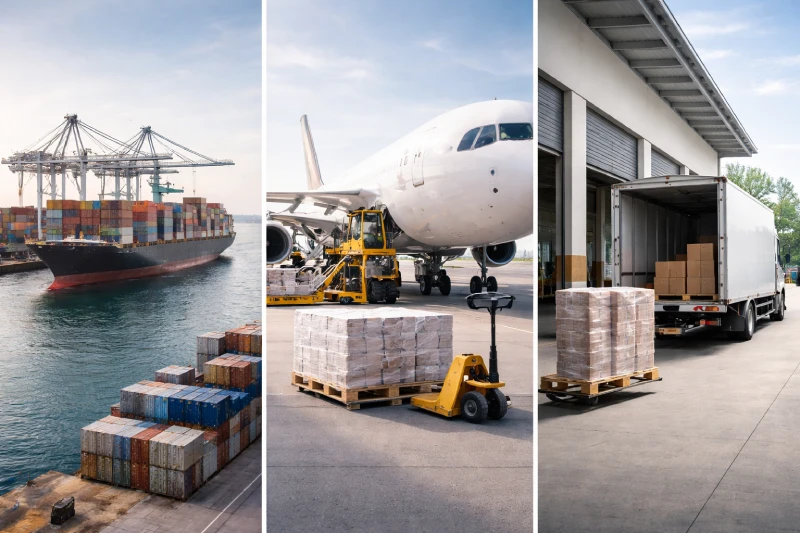
Sea Freight (Best for Cost Efficiency)
Sea freight is the most common option for bulk shipments from China to Nigeria.
It is ideal if you:
- Ship large volumes
- Want to minimize cost per CBM
- Can accept longer transit times (typically 30–45 days)
However, pricing structures (especially LCL vs FCL), port handling, and delivery timelines can vary significantly depending on how your shipment is arranged.
If you’re comparing options, it helps to understand how sea freight from China to Nigeria is structured, including consolidation, container types, and real transit timelines, so you can avoid unexpected delays or cost differences.
Air Freight (Best for Speed)
Air freight is suitable for urgent shipments or high-value goods where time is critical.
Typical characteristics include:
- Transit time: 5–10 days
- Higher cost per KG
- More predictable delivery schedule
While air shipping is faster, pricing can vary depending on chargeable weight, airline routes, and peak season factors.
Before choosing this option, many importers compare air freight costs, delivery timelines, and when it actually makes sense versus sea freight, especially for mid-sized shipments where the cost difference becomes significant.
DDP Shipping (Best for Simplicity)
- All-inclusive service
- No need to manage customs or taxes
- Predictable total cost
A strong forwarder should help you choose based on:
- Budget
- Timeline
- Cargo type
- Risk tolerance
Rather than pushing one method, they should provide a balanced recommendation.
FAQs
1. How do I verify a freight forwarder’s credibility?
Check their experience with Nigeria routes, request shipment references, and evaluate their communication quality during initial discussions.
2. Is DDP shipping safe for Nigeria?
Yes, if handled by an experienced forwarder. It reduces complexity and ensures compliance, but requires a reliable partner with strong local expertise.
3. What is the biggest risk when shipping to Nigeria?
Customs clearance issues and hidden charges are the most common risks.
4. Should I choose the cheapest freight forwarder?
Not necessarily. Low pricing without transparency often leads to higher total costs due to hidden fees or delays.
5. Can one forwarder handle both sea and air freight?
Yes. Most professional freight forwarders offer multiple shipping methods and help you choose the best option.
Final Thoughts
Selecting the right freight forwarder from China to Nigeria is not about finding the cheapest option—it’s about minimizing risk, ensuring compliance, and maintaining supply chain stability.
Focus on experience, transparency, and communication. A qualified forwarder becomes a long-term logistics partner—helping your business scale efficiently in the Nigerian market.
