
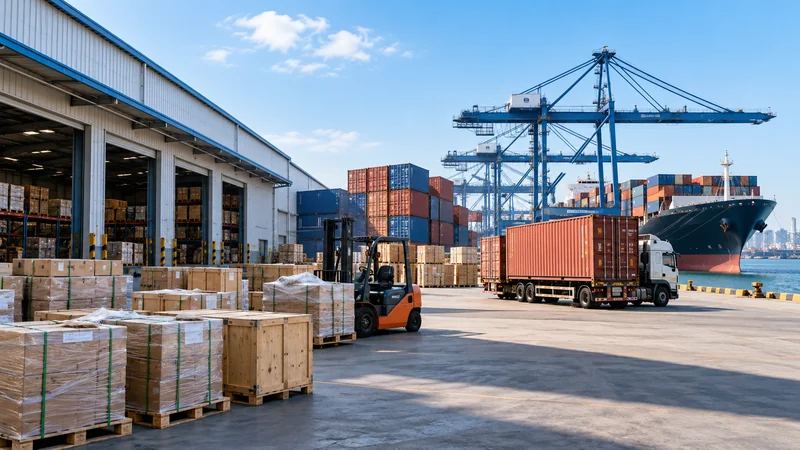
The cheapest quote tells you very little until you know where the forwarder’s responsibility starts, where it ends, and who pays when something deviates from plan.
That is especially true when shipping from China to Nigeria. A quotation may cover only ocean freight from a Chinese port to Lagos, while another may include supplier pickup, warehouse handling, export procedures, destination coordination, customs brokerage, and final delivery. Comparing only the headline number can therefore lead to the wrong decision.
If you are trying to learn how to choose a freight forwarder from China to Nigeria, evaluate the provider as an operating partner rather than simply a seller of freight rates.
A reliable forwarder should be able to explain its scope, show how your cargo moves through China, identify who handles the Nigerian side, clarify documentation responsibilities, provide realistic shipment milestones, and explain what happens when something goes wrong.
This guide provides a practical 12-point framework for comparing China-to-Nigeria freight forwarders objectively. For the wider route, transport modes, and destination planning context, see China–Nigeria freight planning hub.
What a China-to-Nigeria Forwarder Should Actually Do
Use the Nigeria shipping-agent comparison as a shortlist, then validate each provider against the operational tests below.
Before comparing companies, understand what type of provider you are dealing with.
A carrier physically operates transport capacity, such as a shipping line or airline. A freight forwarder arranges transportation and coordinates multiple parties involved in moving the cargo.
A China warehouse or consolidator may receive goods from different suppliers, inspect package quantities, measure cargo, combine shipments, and prepare them for export.
A Nigerian customs broker or clearing agent handles customs-related procedures within the scope permitted by local rules and its appointment.
The term shipping agent is used broadly in the market and may refer to a forwarder, consolidator, destination agent, or another logistics intermediary. It does not automatically describe the company’s legal role or exact service scope.
A courier company is normally more suitable for parcels and express shipments, while a sourcing agent primarily assists with supplier sourcing, purchasing, inspection, or procurement rather than international freight operations.
These roles can overlap, but they are not interchangeable. That is why your first question should not simply be, “Are you a shipping agent?”
It should be:
What exactly will your company be responsible for under this shipment?
Test 1 — Can You Verify the Company and the People?
Begin with basic identity verification.
Ask for the company’s registered legal name, operating address, corporate email domain, and the names of the people responsible for sales and operations. Where relevant, ask what registrations or licences apply to the services being offered.
The purpose is not to impose an arbitrary rule such as “the company must be at least five years old.” A newer company can be competent, while an older company can still provide poor service.
Instead, look for consistency.
The company name on quotations, invoices, contracts, bank instructions, website information, and business documents should make sense together. If payment is requested to an unrelated company or individual, ask why.
A professional sales contact should also be able to introduce an operations contact when necessary. You should know who will manage your shipment after payment rather than relying entirely on the salesperson who won the account.
Online reviews may provide additional context, but they should never be your only verification method. Reviews can be incomplete, outdated, manipulated, or unrelated to the exact trade lane and cargo type you are shipping.
Identity Verification Checklist
Before sending cargo or payment, confirm:
- Registered company name
- Operating address
- Corporate email domain
- Relevant registrations or licences where applicable
- Named sales and operations contacts
- Quotation and invoice entity
- Bank-account and company-name consistency
- Clear explanation of any third-party payment arrangement
Test 2 — Is There Real China-Side Operating Capability?
For shipments originating in China, China-side execution is often more important than importers initially realize.
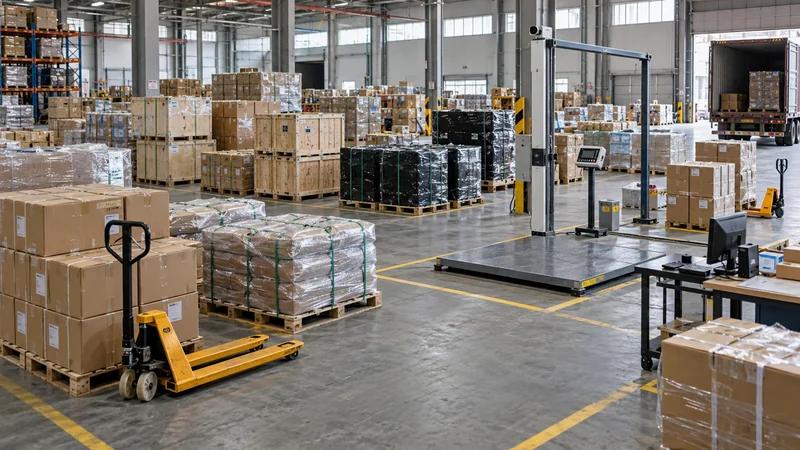
A forwarder should be able to explain how it handles supplier pickup, warehouse receiving, cargo measurement, pallet or crate handling, export documentation, consolidation, and delivery to the relevant port or airport.
This becomes especially important when you buy from several factories.
For example, imagine you purchase machinery parts in Foshan, packaging materials in Dongguan, and accessories in Yiwu. The freight forwarder may need to coordinate three pickup schedules, identify each supplier’s cargo separately, receive everything into a warehouse, check quantities, record dimensions, and decide when the consolidated shipment is ready to close.
A forwarding company does not necessarily need to own every truck or warehouse it uses. Outsourcing is normal in international logistics.
What matters is whether the provider can clearly explain the operating process and remain accountable for the services it sells.
Ask where your cargo will be received, how it will be identified when it arrives, and what evidence you will receive after warehouse delivery.
Test 3 — How Is Nigeria-Side Work Actually Structured?
Do not automatically reject a freight forwarder because it does not own a Lagos office.
International forwarding networks frequently combine origin offices, contracted destination agents, customs brokers, transport companies, terminals, and other specialists.
The important issue is transparency.
| Nigeria-side model | What to clarify |
|---|---|
| Own operation | Which services are performed directly and which are subcontracted? |
| Contracted destination partner | Who is the partner, what are they responsible for, and who remains accountable to you? |
| Customer-appointed clearing agent | Where does the forwarder’s responsibility end and when does your agent take over? |
Before appointing a China-to-Nigeria freight forwarder, ask which Nigerian ports or airports the service covers, who communicates with the consignee after arrival, who coordinates customs-related questions, who advises destination charges, and who arranges final delivery when delivery is included.
For FCL shipments, also clarify responsibility for container pickup, unloading arrangements, empty-container return, and exposure to detention or demurrage.
A strong partner network can work very well. What creates risk is not the use of partners—it is not knowing who they are or where responsibility changes hands.
Test 4 — Does the Forwarder Understand Your Cargo?
A company can be an excellent general freight forwarder and still be unsuitable for your particular shipment.
Cargo characteristics matter.
Batteries, dangerous goods, machinery, vehicles, oversized cargo, temperature-sensitive products, and goods subject to product-specific Nigerian requirements may require different handling, documentation, carrier acceptance, packaging, or pre-shipment procedures.
For products that may fall under NAFDAC, SONCAP, dangerous-goods, battery, or other regulatory or carrier requirements, ask the forwarder what information it needs before accepting the booking.
A weak answer sounds like:
“Everything is okay. We can ship anything.”
A better answer identifies what must be checked before the provider confirms routing and acceptance.
For example, a forwarder handling battery products may ask for battery type, specifications, packaging information, supporting documents, and whether the battery is packed alone, packed with equipment, or contained in equipment.
The goal is not to find a forwarder claiming experience with every product category. It is to find one that understands the limitations of the cargo you actually ship.
For containerized general cargo, you can also review Sea Freight from China to Nigeria. For urgent commercial cargo, see Air Freight from China to Nigeria.
Test 5 — Does the Quote Have a Defined Start and End Point?
Never evaluate a quotation that says only:
China to Nigeria — $X
That is a price, not a complete service scope.
A usable quotation should make it possible to understand where responsibility begins, where it ends, and which costs remain outside the quote.
At minimum, confirm:
- China pickup point if pickup is included
- Origin port or airport
- Destination port or airport
- Freight mode
- Service scope
- Nigerian destination if inland delivery is included
- Quotation validity
- Transit-time basis
- Important exclusions
Also confirm whether the quote refers to port-to-port, airport-to-airport, door-to-port, door-to-door, DAP, DDP, or another clearly defined arrangement.
Do not assume that the words “door-to-door” automatically mean every tax, customs fee, inspection cost, storage charge, or unloading expense is included.
The written quotation should define the scope.
Test 6 — Can You Normalize the Quote?
Two freight quotations are often impossible to compare until you reorganize them into the same structure.
Consider this simplified comparison:
| Cost element | Forwarder A | Forwarder B |
|---|---|---|
| China supplier pickup | Unclear | Included |
| Warehouse handling | Unclear | Listed |
| Export handling | Included | Included |
| International freight | Quoted | Quoted |
| Freight surcharges | Unclear | Listed |
| Destination line charges | Not stated | Scope defined |
| Terminal/CFS charges | Not stated | Identified separately |
| Customs brokerage | “Customs support” | Responsibility specified |
| Import duty/tax | Unclear | Excluded unless stated |
| Final delivery | Not stated | Optional |
| Unloading | Not stated | Excluded |
| Storage / D&D | Not stated | Subject to actual exposure |
Forwarder A may show the lower headline freight rate.
Forwarder B may appear more expensive initially, but its quotation gives you much more information about the expected landed logistics cost.
You still cannot declare Forwarder B cheaper or better without actual figures. What you can say is that its scope is easier to evaluate.
Pro Tip: Ask every shortlisted forwarder to quote the same cargo, same packed dimensions, same weight, same Nigerian destination, and same service scope.
That single step eliminates a large amount of misleading price comparison.

Test 7 — What Does the Forwarder Do With Documents?
International shipments involve documents created or supplied by different parties.
A reliable freight forwarder should distinguish between documents it prepares, documents your supplier must provide, documents you as the Nigerian importer must arrange, and approvals or records issued through government or regulatory processes.
This distinction matters because statements such as “we handle all documents” can mean very different things.
For one shipment, the forwarder may prepare transport documents and coordinate export-related paperwork. The supplier may be responsible for commercial documents and product information. The Nigerian importer may need to provide importer-side information or complete procedures that cannot simply be transferred to the Chinese freight company.
The forwarder may assist with, coordinate, or work alongside parties involved in PAAR, SONCAP, NAFDAC-related, customs, or other procedures where relevant.
That is different from claiming that the freight forwarder itself “issues” a government approval.
Ask for a simple responsibility matrix before shipping:
Who prepares it? Who submits it? Who approves it? Who pays for it?
If the answer is unclear during quotation stage, the confusion normally becomes more expensive after the cargo arrives.
Test 8 — Can They Consolidate Multiple Suppliers Correctly?
Cargo consolidation is one of the main reasons Nigerian importers use a China-based freight forwarder.
However, consolidation should involve more than giving every supplier the same warehouse address.
Ask how the warehouse identifies shipments from different suppliers. There should be a practical way to connect incoming cartons or pallets to your account or shipment.
You should also understand how receiving discrepancies are handled.
If your supplier says it sent 20 cartons but the warehouse receives 18, will the forwarder record the discrepancy immediately? Will you receive photographs? Will the supplier be contacted before the shipment closes?
Measurements also matter because freight costs may depend on chargeable weight, CBM, container utilization, or other cargo measurements.
Finally, ask how incompatible goods are handled. Some cargo should not simply be mixed into the same shipment without checking carrier, safety, regulatory, packaging, or handling requirements.
If you regularly buy from several factories, compare the forwarder’s warehouse procedures with the broader China Warehouse and Consolidation Services available for export shipments.
Test 9 — How Is Tracking Provided?
“Tracking” can mean several different things in international freight.
Shipping-line container or bill-of-lading tracking can show certain ocean milestones. Air cargo may be tracked through AWB information. A warehouse system may show when cargo is received. Internal forwarding updates may show booking, loading, departure, arrival, customs, delivery, and proof-of-delivery milestones.
These systems do not always exist in one platform.
Ask your freight forwarder what tracking evidence is available at each stage.
For example, after the cargo leaves China, can you receive the relevant B/L or AWB reference? If the shipment is still in the China warehouse, can the forwarder confirm receiving status rather than simply saying, “Cargo is here”?
WhatsApp can be a useful communication channel, particularly for fast operational updates. But a WhatsApp message by itself is not the same thing as independent carrier tracking or a structured shipment milestone system.
A good provider should know the difference.
Test 10 — How Does the Company Handle Exceptions?
This is one of the most useful tests you can perform before choosing a forwarder.
International logistics rarely follows the perfect sales presentation. Suppliers ship late. Carton counts change. Actual measurements exceed estimates. Carriers change schedules. Customs asks questions. Trucks arrive at sites that are not ready to unload.
Ask your shortlisted forwarders how they manage exceptions.
| Exception | What you want to know |
|---|---|
| Supplier misses pickup date | Who follows up and how is the shipping plan revised? |
| Warehouse receives fewer cartons | Who records the discrepancy and informs the importer? |
| Actual CBM exceeds quotation | Who verifies the measurement and approves additional cost? |
| Battery or restricted item is discovered | Who stops the shipment and reassesses acceptance? |
| Customs requests additional information | Who coordinates the response and which party supplies the documents? |
| Carrier rolls the booking | Who proposes the next sailing or alternative routing? |
| Container approaches free-time limits | Who monitors exposure and alerts the responsible party? |
| Delivery location cannot unload | Who coordinates the truck, consignee, equipment, and resulting waiting charges? |
Pro Tip: Ask at least one exception-handling question during the sales discussion.
For example:
“What happens if your warehouse receives only 18 cartons when my supplier says it shipped 20?”
The answer often reveals more about operational quality than a polished company presentation.
Test 11 — What Is the Claims and Cargo Insurance Process?
Cargo loss or damage is where vague assumptions become expensive.
Do not assume that freight charges automatically include cargo insurance.
Ask whether insurance can be arranged, what declared value is used, which risks or exclusions apply, what documentation would be required for a claim, and what notification or filing deadlines apply.
Also distinguish cargo insurance from carrier liability.
The fact that a carrier or freight provider may have some contractual liability does not mean your entire commercial value is automatically protected.
If insurance is important for your shipment, request the actual coverage terms or policy information rather than relying on the sentence “insurance included.”
You should also understand the claims process before a problem occurs.
Who must document the damage? Are photographs required? Should the consignee note visible damage at delivery? Which transport or commercial documents must be retained? Who submits the claim?
A forwarder does not need to promise that every claim will be paid. It should be able to explain the process.
Test 12 — Start With a Controlled Trial
If you are appointing a freight forwarder for the first time, consider beginning with a manageable commercial shipment where practical.
The purpose is not to artificially split cargo, manipulate declared values, or avoid regulations.
The purpose is to test the working relationship.
Define what success looks like before the shipment starts. You might evaluate quotation accuracy, supplier coordination, warehouse receiving, documentation communication, tracking quality, response time when a problem occurs, and reconciliation of final charges.
After delivery, compare what was promised with what actually happened.
Did the cargo arrive at the stated warehouse?
Did you receive receiving evidence?
Were changes in weight or CBM explained?
Were additional charges connected to a documented reason?
Did the operations team respond effectively when the shipment changed?
A successful trial provides far more useful evidence than advertising claims.
Forwarder Evaluation Scorecard
Instead of creating an arbitrary 100-point rating, classify the criteria by importance and request evidence.
| Criterion | Priority | Evidence to Request |
|---|---|---|
| China operations | High | Operating address, pickup and warehouse process |
| Nigeria execution | High | Office, partner, broker, or agent structure |
| Cargo capability | High | Relevant handling or acceptance procedure |
| Quote transparency | High | Itemized scope and exclusions |
| Compliance discipline | High | Responsibility matrix |
| Tracking | Medium | Sample shipment milestones |
| Exception handling | High | Named escalation path |
| Insurance / claims | Medium | Policy or claims process |
Your final decision should also reflect your own shipment.
For a straightforward air shipment of ordinary commercial goods, sophisticated FCL container-return procedures may be less important. For a high-value machinery container, destination coordination, unloading planning, free time, and claims procedures may be critical.
12 Questions to Ask Before Appointing a Freight Forwarder
- What is your company’s registered legal name, and which entity will invoice me?
- Where will my cargo be received or handled in China?
- Who is responsible for Nigerian import clearance under this exact quote?
- Do you use your own Nigeria operation, a contracted partner, or a customer-appointed clearing agent?
- Have you handled this cargo category before, and are there any carrier or regulatory acceptance requirements?
- What exact origin and destination points are included in the quotation?
- Which charges can still be billed after arrival?
- Which documents do you prepare, which must my supplier provide, and which are my responsibility as importer?
- If I have several Chinese suppliers, how will you identify, receive, measure, and reconcile each supplier’s cargo?
- What tracking references or shipment milestones will I receive?
- What happens if cargo quantity, CBM, weight, sailing schedule, customs requirements, or delivery conditions change?
- What is your cargo insurance and claims process if goods are lost or damaged?
You do not need the forwarder to give a perfect answer instantly.
You need answers that are specific, internally consistent, and connected to the service being sold.
Example: Why the Cheapest Quote May Not Be the Cheapest Shipment
Imagine two companies quote the same LCL cargo from China to Nigeria.
Forwarder A provides a very low ocean-freight figure but does not identify the Nigerian terminal, destination handling charges, customs brokerage arrangement, delivery scope, or storage exposure.
Forwarder B quotes a higher freight amount but identifies the origin service, destination terminal, destination-charge structure, customs-clearance responsibility, inland-delivery exclusions, and circumstances that may create storage or other extra costs.
You cannot simply say Forwarder B is cheaper.
But you also cannot say Forwarder A is cheaper.
To make a valid comparison, put both quotations into the same cost structure and ask each provider to fill the missing lines.
This is quote normalization.
It turns a headline-rate comparison into a scope comparison—and that is a much safer basis for choosing a China-to-Nigeria freight forwarder.
Common Mistakes When Choosing a China-to-Nigeria Freight Forwarder
The most common mistake is choosing the lowest headline rate without understanding what has been excluded.
Importers also create unnecessary risk when they never verify the China warehouse address, assume “customs support” means duties and taxes are included, accept a vague DDP quotation, fail to identify the actual Nigerian destination port, ignore container free-time exposure, or never ask what happens when cartons go missing.
Cargo-specific mistakes are equally important.
A shipper may obtain a normal-cargo quotation and only later tell the forwarder that the shipment contains batteries, chemicals, liquids, or another restricted item. This can change carrier acceptance, documentation, packaging, cost, and routing.
Another mistake is judging a provider almost entirely through website appearance or online reviews.
A professional website is useful. Positive reviews are useful.
Neither replaces a clear quotation, an identifiable operating company, cargo-specific competence, and a credible exception-handling process.
Choosing the Right Forwarder Is Mainly About Defining Responsibility
A reliable China-to-Nigeria freight forwarder is not necessarily the company with the lowest rate, biggest office, most reviews, or most impressive sales presentation.
The better choice is usually the provider whose operating model fits your cargo and whose responsibilities you can verify.
Before making a decision, make sure you understand the China pickup and warehouse process, Nigeria-side operating structure, cargo acceptance requirements, quotation scope, destination charges, documentation responsibilities, consolidation procedure, tracking method, exception escalation path, and insurance or claims process.
Then compare every shortlisted provider using the same shipment details.
If you already have one or more quotations, use the framework above to compare them line by line rather than comparing only the headline freight rate.
For a broader comparison of sea freight, air freight, courier, and other transport choices, review Best Shipping Methods from China to Nigeria.
If you are evaluating Winsail Logistics, apply the same checklist to us that you would apply to any other freight forwarder.
FAQ
How do I verify a freight forwarder in China?
Check the registered company name, business address, corporate email domain, quotation and invoice entity, relevant registrations where applicable, named operations contacts, and whether payment details are consistent with the company you are appointing.
Does my forwarder need an office in Nigeria?
Not necessarily. A provider may use its own operation, a contracted destination partner, a customs broker, or a customer-appointed agent. What matters is that the structure, responsibilities, contacts, and handover points are clearly disclosed.
What should a China-to-Nigeria quote include?
It should identify the cargo basis, pickup point if applicable, origin and destination port or airport, freight mode, service scope, quotation validity, transit basis, destination coverage, and important exclusions.
How can I identify hidden destination charges?
Ask which carrier, terminal, CFS, customs brokerage, duty and tax, storage, demurrage, detention, delivery, waiting-time, unloading, and container-return costs are included, excluded, or subject to actual occurrence.
Should I choose the cheapest freight forwarder?
Not automatically. First normalize every quote so each provider is pricing the same cargo, dimensions, destination, and service scope. A lower headline freight rate may exclude costs that another quotation already identifies.
How can I verify that my cargo has actually shipped?
Request the transport reference appropriate to the shipment, such as B/L, carrier booking details, or AWB information, together with relevant warehouse, loading, departure, and shipment milestone evidence.
What should a forwarder do if Customs raises a query?
The forwarder should clarify the issue, identify who must provide the information or document, coordinate with the responsible importer, supplier, broker, or other party, and communicate the next operational step without claiming authority it does not have.
Should I test a new forwarder with a small shipment first?
Where commercially practical, a controlled first shipment can help you evaluate quote accuracy, warehouse handling, communication, tracking, exception management, and final-charge reconciliation before expanding the relationship.
