

Introduction
Sea freight from China to Tanzania is one of the most cost-effective and scalable logistics solutions for importers moving goods into East Africa. Whether you are shipping full container loads (FCL) or smaller consolidated shipments (LCL), understanding how the process works, the cost structure, and local port conditions is critical for avoiding delays and controlling total landed cost.
For a broader overview of all shipping options—including air freight, express, and door-to-door solutions—see our Shipping from China to Tanzania guide, which helps you choose the right method based on cost, speed, and cargo type.
Tanzania’s main gateway, Dar es Salaam Port, handles the majority of inbound cargo and serves not only Tanzania but also neighboring landlocked countries such as Zambia, Rwanda, and Uganda. This makes route planning and customs handling especially important compared to more straightforward destinations.
In this guide, we break down the key aspects of sea freight from China to Tanzania—from shipping methods and transit times to cost structures and common operational challenges—so you can make informed logistics decisions.
How Sea Freight Works
Sea freight from China to Tanzania follows a structured multi-stage process involving origin handling, ocean transportation, and destination clearance.
The process begins at the supplier’s facility in China. Goods are packed according to export standards and transported to a nearby port such as Shanghai, Ningbo, Shenzhen, or Guangzhou. At the port, cargo is either loaded into a full container (FCL) or consolidated with other shipments (LCL).
Once loaded, the container is shipped via ocean carriers operating routes across the Indian Ocean to East Africa. Most shipments arrive at Dar es Salaam Port, the primary maritime hub in Tanzania.
Upon arrival, cargo goes through customs clearance, inspection (if required), and port handling procedures. After clearance, goods are either picked up by the importer or delivered inland via trucking.
Throughout the process, freight forwarders coordinate documentation, booking, customs compliance, and communication between all parties. This coordination is especially important for Tanzania shipments, where port congestion and documentation accuracy can significantly impact timelines.
FCL vs LCL
Choosing between FCL (Full Container Load) and LCL (Less than Container Load) is one of the most important decisions when shipping from China to Tanzania. The right choice depends on shipment volume, urgency, cost sensitivity, and risk tolerance.
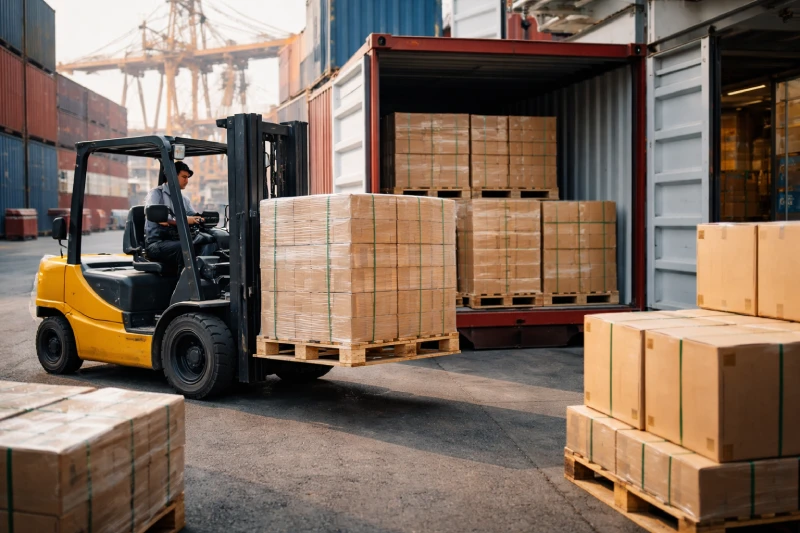
FCL (Full Container Load)
FCL means you book an entire container exclusively for your cargo. Common container types include 20GP, 40GP, and 40HQ.
When to use FCL:
- Shipment volume ≥ 15–20 CBM
- High-value or fragile goods
- Need for better cargo control and lower risk
Advantages:
- Faster handling at both origin and destination
- Lower risk of damage or contamination
- More predictable transit time
Considerations:
- Higher upfront cost compared to LCL
- Requires sufficient cargo volume to be cost-efficient
For Tanzania shipments, FCL is often preferred by experienced importers because it reduces complications during customs clearance and minimizes delays at Dar es Salaam Port.
LCL (Less than Container Load)
LCL allows multiple shippers to share container space. Your cargo is consolidated at origin and deconsolidated at destination.
When to use LCL:
- Shipment volume < 10–12 CBM
- Flexible delivery timelines
- Lower initial budget
Advantages:
- Pay only for the space you use
- Suitable for small and frequent shipments
Considerations:
- Longer transit time due to consolidation and deconsolidation
- Higher risk of handling damage
- Additional local charges at destination
In Tanzania, LCL shipments often face longer dwell times at port due to consolidation handling and customs inspections. This can lead to unexpected storage and handling fees if not managed properly.
Key Decision Rule
- Use FCL when cost per CBM becomes competitive and reliability matters
- Use LCL when shipment size is small and cost flexibility is the priority
For many importers, transitioning from LCL to FCL is a key step in optimizing logistics costs over time.
Transit Time
Sea freight transit time from China to Tanzania depends on the port of origin, shipping route, and carrier schedule.
Typical transit times:
- Shanghai → Dar es Salaam: 22–28 days
- Shenzhen / Guangzhou → Dar es Salaam: 18–24 days
- Ningbo → Dar es Salaam: 23–30 days
However, actual transit time is not just the sailing duration. You should also account for:
- Origin handling: 3–5 days
- Port congestion delays: 3–10 days (common in peak seasons)
- Customs clearance: 2–7 days
This means the total door-to-port timeline is usually 25–40 days.
Key insight:
Transit time variability is higher for Tanzania compared to more developed ports. Buffer time should always be included in your supply chain planning, especially for time-sensitive cargo.
Cost Breakdown
Sea freight costs from China to Tanzania are composed of multiple components across origin, ocean freight, and destination stages.
1. Ocean Freight
This is the base cost for shipping the container:
- FCL: Fixed rate per container (20GP / 40HQ)
- LCL: Charged per CBM (cubic meter)
Rates vary depending on season, carrier capacity, and fuel costs.
2. Origin Charges (China)
These include:
- Export documentation
- Terminal handling charges (THC)
- Trucking to port
- Customs export clearance
3. Destination Charges (Tanzania)
Often underestimated, these can significantly impact total cost:
- Port handling fees
- Customs clearance
- Import duties and taxes
- Delivery (if door-to-door service is required)
4. Additional Costs
- Inspection fees
- Storage/demurrage (if delays occur)
- Peak season surcharges
For a detailed cost structure and updated price benchmarks, refer to:
- Shipping Cost from China to Tanzania
- Shipping Cost per CBM from China to Tanzania
Key insight:
For Tanzania shipments, destination charges can sometimes exceed ocean freight—especially for LCL shipments. Always request a full cost breakdown (origin + destination) before confirming a shipment.
Port Operations in Tanzania
Tanzania’s primary maritime gateway is Dar es Salaam Port, which handles the majority of imports from China.
Key Characteristics
- Serves as a regional hub for East and Central Africa
- Handles both containerized and bulk cargo
- Experiences periodic congestion due to high cargo volume
Operational Considerations
- Congestion Risk
During peak seasons, vessels may face berthing delays, increasing overall transit time. - Customs Procedures
Tanzania Revenue Authority (TRA) oversees customs clearance. Documentation accuracy is critical, as discrepancies can lead to inspections and delays. - Inspection Frequency
Random and targeted inspections are common, especially for new importers or high-risk goods. - Inland Transport
Cargo is typically moved via trucking from Dar es Salaam to inland destinations. Infrastructure improvements are ongoing, but delays can still occur.
Practical Advice
- Work with experienced freight forwarders familiar with Tanzania regulations
- Ensure all documents (invoice, packing list, bill of lading) are accurate and consistent
- Plan buffer time for clearance and delivery
Understanding local port operations is essential to avoiding unexpected delays and costs.
Common Delays & Solutions
Shipping from China to Tanzania involves several potential delay points. Identifying these early can help you mitigate risks.
1. Port Congestion
Issue:
Dar es Salaam Port often experiences congestion, especially during peak import periods.
Solution:
- Book shipments in advance
- Choose reliable carriers with consistent schedules
2. Documentation Errors
Issue:
Incorrect or inconsistent documents can trigger customs delays or inspections.
Solution:
- Double-check all shipping documents
- Align invoice, packing list, and bill of lading details
3. Customs Clearance Delays
Issue:
Incomplete declarations or regulatory issues can slow clearance.
Solution:
- Work with local customs brokers
- Prepare all required import permits in advance
4. LCL Handling Delays
Issue:
Consolidation and deconsolidation processes add time and complexity.
Solution:
- Use FCL when possible
- Choose experienced consolidators
5. Unexpected Charges
Issue:
Storage, demurrage, or inspection fees can increase total cost.
Solution:
- Monitor shipment status closely
- Clear cargo promptly upon arrival
FAQs
1. How long does sea freight from China to Tanzania take?
Typically 25–40 days door-to-port, depending on origin port, route, and congestion conditions.
2. What is the cheapest shipping method?
LCL is cheaper for small shipments, while FCL becomes more cost-effective for larger volumes.
3. Which port is used in Tanzania?
Most shipments arrive at Dar es Salaam Port, the country’s main container hub.
4. Is customs clearance complicated in Tanzania?
It can be, especially for new importers. Accurate documentation and local expertise are essential.
5. Should I choose FCL or LCL?
Choose FCL for larger, high-value shipments and better reliability. Use LCL for smaller shipments with flexible timelines.
Final Takeaway
Sea freight from China to Tanzania offers strong cost advantages but requires careful planning due to port conditions, customs procedures, and cost variability. By choosing the right shipping method (FCL vs LCL), understanding the full cost structure, and working with experienced logistics partners, you can significantly reduce risks and optimize your supply chain.
If you’re planning regular imports, developing a stable shipping strategy—rather than treating each shipment individually—will deliver the greatest long-term savings and reliability.
