
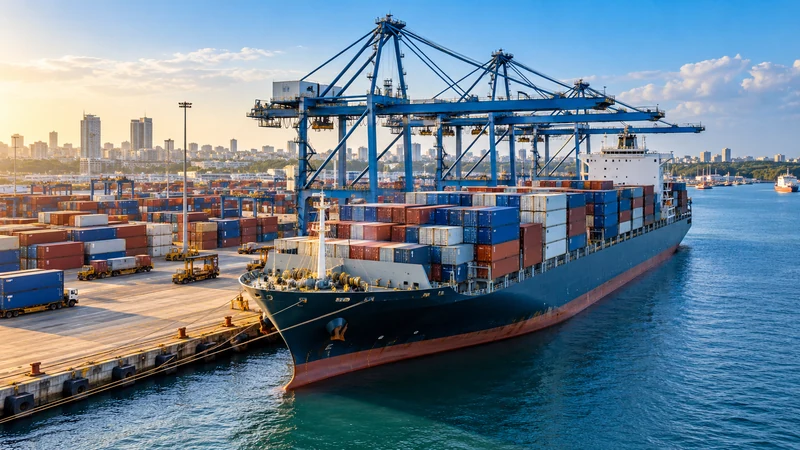
Sea freight from China to Tanzania typically moves commercial cargo through Dar es Salaam, the country’s principal seaport. Importers choose FCL for a dedicated container or LCL for shared space, depending on volume, handling needs and total cost. Vessel arrival does not mean cargo is ready for collection: transport-document release, customs clearance and port handover must be arranged. For other transport options, see our shipping from China to Tanzania guide.
Data Note (October 2026): Ocean freight rates and vessel schedules vary by carrier, route and booking date. Port charges should be checked against the applicable Tanzania Ports Authority (TPA) tariff and terminal arrangements. Any transit estimate must distinguish port-to-port sailing from customs processing and inland delivery.
Is Sea Freight the Right Choice for Your China–Tanzania Shipment?
Sea freight is generally a practical option for importers moving commercial quantities of goods where transport cost matters more than immediate delivery. It is commonly considered for furniture, machinery, building materials, packaged merchandise and regular inventory replenishment.
However, choosing ocean freight should involve more than comparing the price of a container with an air freight quotation. Shipment size, cargo handling requirements, inventory deadlines and the cost of collecting goods in Tanzania can all influence the decision.
When Sea Freight Makes Sense
Ocean freight is particularly worth considering when:
- Cargo volume is substantial: Transporting multiple pallets or large shipments can make sea freight more economical than air freight.
- Delivery deadlines are flexible: The importer can accommodate vessel schedules, possible transshipment and destination clearance.
- Shipments are recurring: Regular orders allow businesses to plan production, consolidation and replenishment around sailing schedules.
- Cargo requires substantial loading space: Suitable oversized or heavy cargo may move by specialized ocean equipment, subject to technical assessment.
Not every product is suitable for a standard dry container. Dangerous goods, temperature-sensitive products and out-of-gauge cargo may need special equipment, approvals or handling arrangements.
When Another Shipping Method May Be Better
Air freight may be preferable for urgent replacement parts, high-value inventory or orders with strict delivery deadlines. Very small consignments should also be compared across LCL, air freight and other available services because minimum charges and destination fees affect the final cost.
Our best shipping methods from China to Tanzania comparison explains these alternatives in more detail.
FCL vs LCL: Which Fits Your Cargo and Risk Profile?
The two main containerized sea freight options are Full Container Load (FCL) and Less than Container Load (LCL). Both can serve commercial imports into Tanzania, but their cost structures and handling requirements differ.
FCL Shipping: Dedicated Container Space
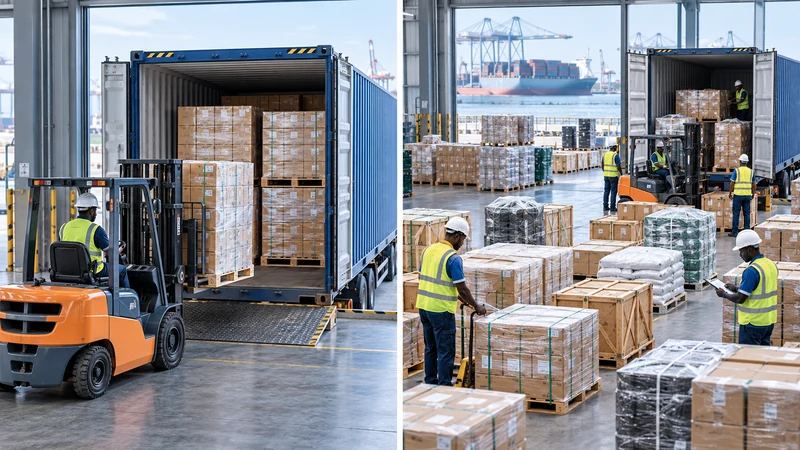
With FCL, the shipper books an entire container rather than purchasing shared space within another shipment. Common equipment includes 20-foot standard, 40-foot standard and 40-foot high-cube containers, subject to availability and cargo suitability.
FCL can be useful for larger orders, shipments consolidated from multiple suppliers, or goods requiring greater control over loading and unloading.
It generally reduces the need for cargo deconsolidation at destination. However, an FCL shipment still requires customs clearance, carrier release, terminal handling and container-return arrangements where applicable.
LCL Shipping: Shared Container Space
LCL allows an importer to ship a smaller consignment alongside other shipments within a consolidated container.
Cargo is normally delivered to a consolidation facility or Container Freight Station (CFS), loaded with other shipments, and separated at the destination facility before collection.
LCL freight is commonly calculated using weight or measurement (W/M), subject to the consolidator’s applicable charging rules and minimum charges.
Although LCL avoids booking a full container, additional consolidation, deconsolidation, warehouse handling and destination fees must be considered.
FCL vs LCL Decision Matrix
| Shipment Profile | FCL Advantages / Limitations | LCL Advantages / Limitations | Main Operational Risk |
|---|---|---|---|
| Small commercial shipment | Dedicated container may be costly | Shared space avoids paying for unused container capacity | Minimum charges and CFS handling |
| Medium-volume cargo | May offer competitive overall cost | Flexible space utilization | Comparing all destination charges |
| Large shipment | Often better container utilization | Shared handling may become less practical | Equipment capacity and container return |
| Fragile or sensitive goods | Greater control over loading arrangements | More cargo-handling touchpoints | Packaging and damage exposure |
| Multiple Chinese suppliers | Can consolidate goods before container loading | Consolidator can receive separate consignments | Supplier coordination and document accuracy |
There is no universal CBM threshold at which FCL always becomes cheaper than LCL.
The break-even point changes with ocean freight rates, cargo weight, origin collection, destination charges and container availability.
Compare quotations using the same shipment details, Incoterm, origin, destination and delivery scope.
Ports and Routing: From China to Dar es Salaam
The departure port influences inland pickup arrangements, available carrier services, documentation cutoffs and the potential need for transshipment.
Common Chinese Loading Ports
Several major Chinese ports may serve shipments bound for Tanzania:
| China Loading Port | Typical Sourcing Region | Routing Consideration |
|---|---|---|
| Shanghai | Shanghai and surrounding East China manufacturing areas | Compare available sailings and connections |
| Ningbo-Zhoushan | Zhejiang and nearby manufacturing centers | Evaluate pickup distance and carrier options |
| Shenzhen (Yantian/Shekou) | Shenzhen and Pearl River Delta suppliers | Check terminal, cutoff and service availability |
| Guangzhou/Nansha | Guangzhou and surrounding Guangdong factories | Compare inland pickup and vessel connections |
| Qingdao | Shandong and nearby northern production regions | Confirm available services and transshipment |
These are potential export gateways, not a guarantee of direct sailings from every port.
A port closer to the supplier may reduce trucking distance, but the best overall route also depends on service frequency, sailing connections and cargo-ready dates.
Dar es Salaam: Tanzania’s Principal Ocean Gateway
The Tanzania Ports Authority identifies Dar es Salaam as the country’s principal port and an important trade gateway for Tanzania and neighboring inland markets.
It handles containerized and other cargo through port and terminal facilities subject to the applicable operating arrangements.
For Tanzanian importers, arrival at Dar es Salaam is only one milestone. Goods still require the appropriate customs, shipping-line and terminal release procedures before physical collection.
Confirm the discharge terminal and pickup arrangements for the actual shipment rather than assuming all cargo uses the same facility.
Direct Services vs Transshipment
A direct ocean service carries cargo to the destination without changing vessels, while a transshipment service involves transferring the container between vessels at an intermediate port.
Either arrangement may be available depending on the carrier’s current network.
Transshipment can introduce additional schedule dependencies, including connection times, missed connections and revised vessel ETAs.
Before booking, request the proposed loading port, service routing, any transshipment location, estimated departure date (ETD) and estimated arrival date (ETA).
A published ETA is an estimate, not a guaranteed cargo-collection date.
Sea Freight Transit Time and Total Shipping Cost
A common planning mistake is treating the ocean transit estimate as the total time required to receive goods in Tanzania.
Importers should budget for the entire shipment journey, including the stages before departure and after vessel arrival.
Understand the Full Shipping Timeline
A typical shipment involves:
- Cargo preparation: Production completion, packing and shipping instructions.
- Origin handling: Factory pickup, consolidation or container loading, export procedures and terminal gate-in.
- Ocean transport: Vessel departure, sailing and any transshipment connection.
- Destination arrival: Discharge, cargo records and availability information.
- Cargo release: Customs processing, carrier documentation and terminal arrangements.
- Final collection: CFS pickup or FCL container movement, followed by inland delivery if contracted.
ETD and ETA describe expected vessel movements. They do not confirm customs clearance, delivery-order issuance or readiness for gate-out.
The most useful estimate therefore separates the sailing schedule from origin preparation, destination release and final delivery.
For a more detailed comparison, see how long shipping from China to Tanzania takes.
What Does a Sea Freight Quote Actually Cover?
An ocean freight quotation may exclude significant services required before the importer receives the cargo.
| Cost Component | What to Check Before Booking |
|---|---|
| Ocean freight | Container rate or LCL weight/measurement basis |
| China origin charges | Pickup, export handling, documentation and terminal costs |
| Destination carrier charges | Documentation, delivery-order and applicable local fees |
| Port/terminal charges | Handling, storage and other relevant tariff items |
| Customs clearance | Licensed agent fees, inspections and documentation |
| Import duties and taxes | Applicable HS classification, valuation and tax treatment |
| Inland delivery | Collection location, destination and unloading scope |
The applicable Incoterm and service contract determine which party is responsible for each component.
TPA’s January 2026 Sea Ports Tariff Book provides official port charging rules. Actual amounts depend on the applicable service, cargo category and charging conditions.
Storage, demurrage and detention should be checked separately. Terminal storage concerns cargo or containers remaining at a facility, while carrier demurrage and detention follow the relevant equipment terms. These charges do not necessarily have identical free periods.
For the broader calculation of shipping costs from China to Tanzania, compare all payable charges rather than choosing a quote solely by its ocean freight rate.
How Sea Freight Works from China to Dar es Salaam: Step by Step
Understanding the operational sequence helps buyers coordinate suppliers, freight providers and destination clearing agents before problems arise.
Step 1: Confirm Cargo Details and Delivery Terms
Provide the product description, package count, dimensions, gross weight, cargo value, pickup address and expected readiness date.
Confirm the agreed Incoterm and named place. These establish important responsibilities between buyer and seller but should be supported by a clearly defined logistics service scope.
Check whether the goods require special handling, permits or conformity documentation before booking.
Step 2: Arrange Booking and China-Origin Handling
The freight provider or responsible contracting party arranges the appropriate container or consolidation booking.
For FCL, the loading plan must account for container capacity, safe weight distribution, packing and verified gross mass requirements.
For LCL, cargo must reach the nominated consolidation facility before the applicable receiving cutoff.
Export documentation and customs procedures should be coordinated before loading deadlines.
Step 3: Confirm Loading and Transport Documents
After loading, the responsible parties confirm shipment details and prepare the applicable bill of lading or other transport document.
Importers should check consignee details, cargo quantities, destination information and release instructions before final document issuance.
Step 4: Monitor Vessel Movement
Track the sailing and revised ETA through the carrier or shipment coordinator.
If the route includes transshipment, monitor the onward connection rather than relying only on the first vessel’s departure status.
Step 5: Prepare Import Clearance Before Arrival
Send the commercial invoice, packing list, transport documents and applicable supporting certificates to the appointed Tanzanian clearing agent.
Confirm the shipping-line document-release arrangements and payment responsibilities in advance.
Step 6: Complete Destination Release and Collection
Once the shipment is available, customs processing, carrier release and terminal collection requirements must be completed.
The importer then arranges cargo collection or contracted inland delivery. FCL movements may also require the empty container to be returned under the shipping line’s equipment conditions.
Bills of Lading and Container Release: Who Authorizes Collection?
Shipping documents do more than confirm that cargo has been transported. They are central to identifying the consignee and establishing the conditions under which the carrier or its agent can release the shipment.
Check the Bill of Lading Before Issuance
The shipper and importer should verify the relevant details, including:
- Shipper, consignee and notify-party information.
- Loading and discharge ports.
- Cargo description, packages and gross weight.
- Container and seal numbers where applicable.
- Freight-payment terms and release instructions.
- Consistency with the invoice, packing list and shipping manifest.
Not every field appears identically on every transport document, but discrepancies can create problems during clearance or release.
Original B/L, Telex Release and Sea Waybill
Three common release arrangements are:
Original Bill of Lading: A negotiable original B/L generally requires surrender of the properly endorsed original document under the carrier’s requirements.
Surrendered B/L / Telex Release: Where accepted and correctly arranged, the shipper surrenders the original documents and the carrier authorizes release at destination without presentation of those originals.
Sea Waybill: A non-negotiable transport document that generally allows release to the identified consignee after the carrier’s identity and release requirements are satisfied.
The appropriate method depends on carrier rules, buyer-seller payment arrangements and any trade-finance requirements. An ordinary emailed B/L copy should not be assumed to authorize collection.
For LCL cargo, the consolidator’s house bill of lading and destination release procedures may also be relevant.
From Document Release to the Delivery Order
Once the applicable transport-document conditions and carrier charges have been satisfied, the shipping line or its authorized agent may issue a Delivery Order (DO).
However, a Delivery Order does not replace customs release or terminal gate authorization.
TPA’s 2026 tariff rules require container status in the Delivery Order and Release Order to agree with the manifest. Inconsistent records may need amendment before processing can continue.
Pro Tip — Check Documents Before Vessel Arrival: Ask the supplier and freight provider to confirm consignee details, container numbers, bill-of-lading release method and manifest-related information early. Correcting inconsistencies before arrival can prevent avoidable complications during destination release.
Dar es Salaam Arrival: Customs Clearance and Port Handover
After cargo reaches Dar es Salaam, multiple parties may be involved before the importer can collect it.
The shipping line, Tanzania Revenue Authority (TRA), clearing agent, terminal operator and trucking provider have different responsibilities.
Appoint a Licensed Clearing and Forwarding Agent
According to the Tanzania Revenue Authority’s import procedures, importers must appoint a licensed Clearing and Forwarding Agent (CFA) to clear goods.
Import declarations and supporting documentation are processed electronically through the Tanzania Customs Integrated System (TANCIS).
TRA advises that clearing agents lodge import documents at least seven days before the goods arrive.
Relevant documentation commonly includes the commercial invoice, packing list, bill of lading, importer’s authorization letter and product-specific permits or exemptions where applicable.
Early submission supports preparation; it does not guarantee clearance within seven days.
Customs Release, Shipping-Line Release and Port Collection
The TPA import process describes the involvement of the clearing agent in document submission, shipping-agent release arrangements, port invoicing and truck collection.
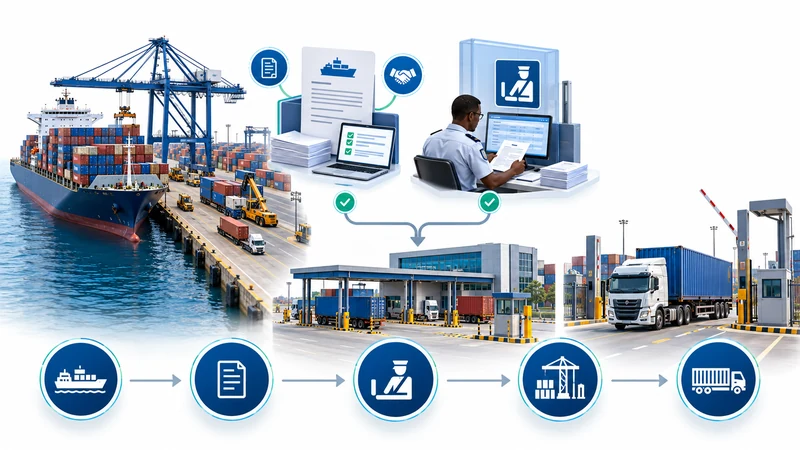
The practical handover involves several separate checkpoints.
| Checkpoint | Responsible Party | What Must Be Confirmed |
|---|---|---|
| Import declaration | Licensed CFA / TRA | Accurate documents and applicable customs requirements |
| Customs processing | TRA / relevant agencies | Assessment, payments, inspections and release authorization |
| Carrier release | Shipping line / authorized agent | Transport-document conditions and Delivery Order |
| Port charges | CFA / responsible payer / terminal | Applicable invoices and payment confirmation |
| Truck collection | CFA / trucking provider / terminal | Truck announcement, entry authorization and cargo availability |
| Final gate-out | Terminal / port security | Cargo verification and exit authorization |
Some steps may take place in parallel or in a different operational order depending on the shipment and terminal.
Customs release, shipping-line release and physical gate-out are distinct requirements. Completing one does not automatically complete the others.
FCL Container Pickup vs LCL Collection
For FCL imports, the authorized trucker normally collects the released container under the applicable terminal and carrier procedures.
If the container is transported inland for unloading, the responsible party must also manage empty-container return deadlines and condition requirements.
For LCL imports, the container is generally deconsolidated at the designated destination CFS. The importer or authorized representative collects the specific consignment after the required releases and facility procedures are completed.
LCL storage and handling charges may differ from those for an FCL container.
Check Product-Specific Import Requirements
Some goods require approvals beyond ordinary customs documentation.
For example, products covered by the Tanzania Bureau of Standards (TBS) Pre-shipment Verification of Conformity (PVoC) programme generally require the applicable Certificate of Conformity (CoC) before shipment, subject to the programme’s specific rules and exemptions.
Importers should verify requirements using the correct product classification before cargo leaves China.
This Dar es Salaam workflow principally concerns Mainland Tanzania. Shipments involving Zanzibar may require additional or different standards and administrative procedures, including those of relevant Zanzibar authorities.
Pro Tip — Prepare the Local Handover: Before the vessel arrives, confirm who will obtain the Delivery Order, handle customs documentation, pay terminal charges, organize truck entry and complete any necessary empty-container return. A clear responsibility checklist is more reliable than assuming one provider automatically handles every stage.
Optional Services and What to Send for a Sea Freight Quote
A port-to-port ocean freight booking may be sufficient when an importer already has established export and destination arrangements.
Other shipments require additional coordination between Chinese suppliers, freight providers and the receiving party in Tanzania.
Port-to-Port, Door Delivery and DDP Are Not the Same
Port-to-port generally covers the agreed ocean transport between named ports, subject to the quotation’s inclusions and exclusions.
Door-to-door describes a pickup-to-delivery service scope, but it does not automatically mean import duties and taxes are included.
DDP (Delivered Duty Paid) assigns the seller responsibility for import clearance and applicable import duties and taxes under Incoterms 2020. It should only be agreed where those obligations can legally and practically be fulfilled.
Likewise, CIF Dar es Salaam does not automatically mean the seller pays Tanzanian import duties or the buyer’s inland delivery costs. The sale contract and Incoterm must be interpreted alongside the actual transport quotation.
When Additional Logistics Services May Be Needed
Depending on the cargo and contracted scope, importers may request:
- Supplier pickup and multi-supplier cargo consolidation.
- Cargo insurance and additional packaging coordination.
- Special equipment or handling for suitable heavy, oversized or temperature-sensitive shipments.
- Destination documentation coordination.
- Inland transportation beyond Dar es Salaam.
- Assistance coordinating container unloading or empty return.
The availability, responsible provider and charges for each service must be confirmed before booking.
Information Needed for an Accurate Sea Freight Quote
To assess the available routing and service scope, prepare the following information:
| Required Information | Example of What to Provide |
|---|---|
| China origin | Supplier pickup city or loading port |
| Cargo | Product description and HS code, if available |
| Shipment size | Packages, dimensions, CBM and gross weight |
| Equipment | FCL or LCL preference, if known |
| Shipment date | Estimated cargo-ready date |
| Trade terms | Incoterm and named place |
| Destination | Dar es Salaam port or complete delivery address |
| Special requirements | Dangerous goods, oversize, temperature control or applicable certificates |
Winsail Logistics can assess the shipment information you provide and help compare suitable ocean freight arrangements and requested logistics services, subject to routing, availability and service confirmation.
The objective is to establish a clear transport plan covering not only the ocean movement but also the handoffs that must occur before the importer receives the cargo.
FAQ
Can I combine goods from several Chinese suppliers into one sea freight shipment?
Yes, consolidation may be possible through FCL loading arrangements or an LCL consolidation facility. However, suppliers must coordinate cargo readiness, receiving instructions, packing information and export documentation. Confirm who manages consolidation and whether additional collection, warehouse or handling charges apply before booking.
Do I need an original bill of lading to collect cargo in Dar es Salaam?
Not always. Release may be arranged through an original bill of lading, surrendered B/L or sea waybill, depending on the carrier’s rules and commercial agreement. The consignee must satisfy the applicable document-release requirements before obtaining the necessary shipping-line authorization.
Can I collect my cargo immediately after the vessel arrives?
Usually not simply because the vessel has arrived. Cargo must be discharged and made available, while relevant customs, carrier, payment and terminal requirements must be satisfied. An ETA indicates the vessel’s expected arrival, not the date on which goods are legally and physically available for collection.
If my supplier quotes CIF Dar es Salaam, who pays customs duties and local delivery charges?
Under CIF Incoterms 2020, the seller arranges and pays for the agreed ocean freight and required insurance to the named destination port, but the buyer generally handles import clearance and duties. Destination handling allocation depends on the contract and carriage terms. Inland delivery must be separately agreed.
Can my shipment be delayed even after ocean freight has been paid?
Yes. Payment of ocean freight does not replace customs clearance, shipping-line release or terminal procedures. Missing documents, inspections, unpaid destination charges, regulatory holds or incomplete collection arrangements can prevent cargo release. The importer should confirm the status of each requirement separately.
Who is responsible for returning an FCL container after unloading?
The responsible party depends on the transport contract, delivery arrangement and shipping-line equipment terms. Where a container is transported inland, its timely return to an approved location is important. Confirm return instructions, free time and potential detention charges before arranging inland delivery.
Can I use the same import-clearance process for Zanzibar?
Do not assume that Mainland Tanzania’s port and standards procedures cover every Zanzibar shipment. The customs declaration framework may share systems, but relevant Zanzibar regulatory approvals and destination procedures must be assessed separately. Confirm the final destination, routing, product category and competent authorities before shipment.
Final Takeaway
Successful sea freight from China to Tanzania depends on more than finding a competitive container rate.
Importers should select FCL or LCL based on total shipment requirements, confirm the actual China–Dar es Salaam routing, prepare accurate transport documents and coordinate a licensed clearing agent before arrival.
The most important distinction is between vessel arrival and cargo availability. Once carrier release, customs processing, terminal payments and collection arrangements are understood, importers can plan shipments with clearer responsibilities and fewer avoidable surprises.
