
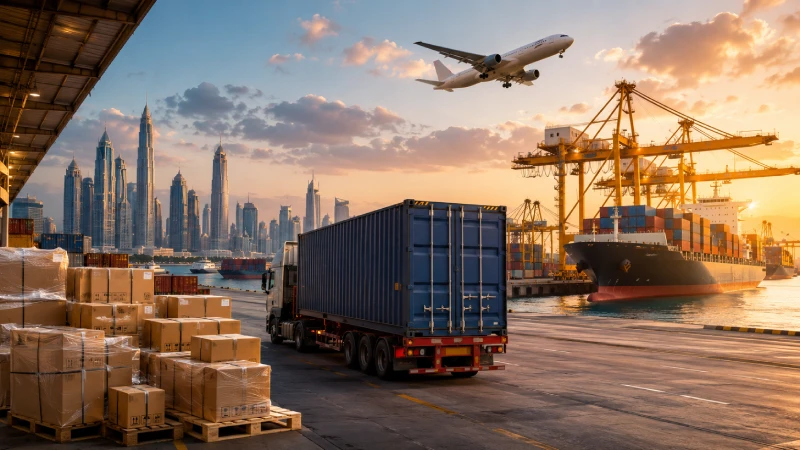
Importing products from China to the UAE has become one of the most common sourcing strategies for wholesalers, retailers, SMEs, and e-commerce businesses. From electronics and furniture to textiles and machinery, Chinese suppliers offer competitive pricing and flexible manufacturing capacity that attract businesses across Dubai, Abu Dhabi, Sharjah, and other UAE markets.
However, for many first-time importers, the shipping process can quickly become confusing. Questions about shipping methods, customs clearance, taxes, transit time, and Incoterms often create unnecessary delays and unexpected costs.
This guide explains exactly how to ship from China to UAE step by step. Instead of focusing on theory, this article provides practical guidance that helps you choose the right shipping method, avoid common mistakes, and reduce logistics risks.
If you are still comparing routes and freight solutions, you can also explore our complete guide to shipping from China to UAE for a broader overview of logistics options and trade routes.
Choose the Right Shipping Method from China to UAE
Selecting the correct shipping method is the first major decision in the import process. Your choice affects shipping cost, delivery speed, customs handling, and inventory planning.
Air Freight from China to UAE
Air freight is the preferred solution for businesses that need fast delivery or are shipping high-value products.
It is commonly used for:
- electronics
- urgent inventory replenishment
- medical products
- fashion items
- samples and prototypes
Major cargo airports in the UAE include Dubai International Airport and Abu Dhabi International Airport.
Typical air freight transit time from China to UAE ranges from 3 to 8 days depending on the departure city, customs processing, and final delivery arrangement.
Air freight works best when:
- cargo weight is moderate
- speed matters more than cost
- products have high profit margins
- delays could disrupt sales or production
The biggest advantage is speed. However, shipping costs are significantly higher than sea freight, especially for bulky cargo.
If you want a detailed comparison of delivery schedules, you can also read our shipping time from China to UAE guide.
Sea Freight from China to UAE
Sea freight is the most economical solution for larger shipments and long-term import operations.
It is widely used for:
- furniture
- machinery
- building materials
- wholesale consumer goods
- industrial products
The UAE’s largest seaport is Jebel Ali Port in Dubai, which handles the majority of container cargo arriving from China.
Sea freight generally offers two options:
FCL (Full Container Load)
FCL is suitable when your shipment can fill most or all of a container.
Advantages include:
- lower unit shipping cost
- better cargo protection
- fewer handling risks
- faster port processing
LCL (Less than Container Load)
LCL allows multiple importers to share container space.
This option is ideal for SMEs and first-time importers with smaller cargo volumes.
However, LCL shipments may involve:
- additional consolidation time
- higher handling frequency
- slightly longer customs processing
Typical sea freight transit time from China to UAE ranges from 18 to 35 days depending on the route and shipping season.
Express Shipping
Courier services such as DHL, FedEx, and UPS are usually used for:
- small parcels
- product samples
- urgent business documents
- lightweight commercial shipments
Express shipping is convenient because it combines transportation, customs processing, and final delivery into one service.
For shipments under 100 kg, express shipping can sometimes be more practical than standard air freight.
However, many importers underestimate the cost of dimensional weight pricing. Large but lightweight cartons can become surprisingly expensive when shipped by courier.
Understand DDP, FOB, and CIF Before Booking
Choosing the wrong shipping term is one of the most common mistakes among first-time importers.
FOB (Free on Board)
Under FOB terms:
- the supplier handles export procedures in China
- the buyer controls international freight and import handling
FOB gives importers more control over shipping cost and freight forwarder selection.
This option works best for businesses with importing experience or established logistics partners.
CIF (Cost, Insurance, and Freight)
Under CIF terms:
- the supplier pays transportation costs to the UAE port
- the buyer still handles customs clearance and local delivery
Many beginners incorrectly assume CIF includes door delivery. In reality, importers still need to arrange customs clearance, taxes, and inland transportation after the cargo arrives.
DDP (Delivered Duty Paid)
DDP is one of the most popular shipping solutions for UAE importers, especially SMEs and first-time buyers.
Under DDP shipping:
- the freight forwarder handles transportation
- customs clearance is included
- import duties and taxes are managed
- final delivery is arranged
The main advantage is simplicity. Importers receive a clearer total landed cost without needing to coordinate multiple service providers.
This is why many businesses choose DDP shipping from China to UAE when importing for the first time.
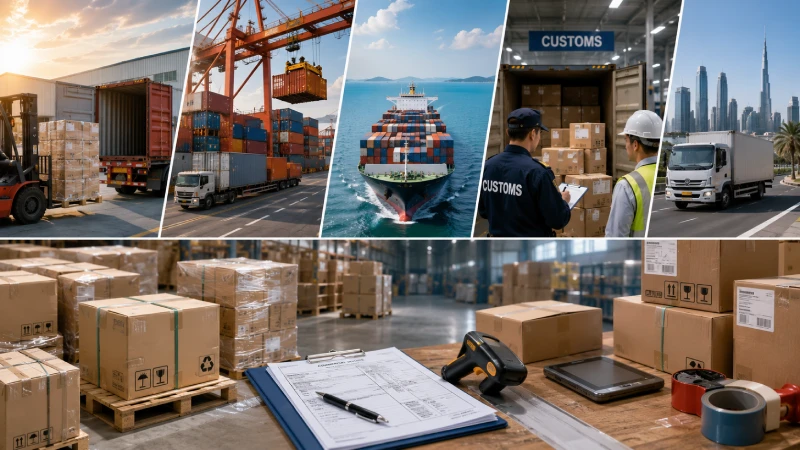
Step-by-Step Shipping Process from China to UAE
Understanding the actual shipping workflow helps businesses avoid delays and communicate more effectively with suppliers and freight forwarders.
Step 1: Confirm Product Details with the Supplier
Before shipping begins, verify:
- carton dimensions
- cargo weight
- packaging method
- product quantity
- HS code
- invoice value
Incorrect information at this stage often leads to customs issues later.
Step 2: Book a Freight Forwarder
A freight forwarder coordinates the shipping process between the supplier, carrier, customs authorities, and final destination.
A reliable freight forwarder should provide:
- transparent pricing
- transit time estimates
- customs support
- cargo tracking
- UAE import experience
Avoid choosing solely based on the cheapest quote. Extremely low prices often exclude destination charges or customs handling fees.
Step 3: Cargo Pickup in China
Once production is completed, the cargo is picked up from the supplier’s factory or warehouse.
Depending on the shipment type, cargo may be:
- consolidated with other shipments
- transferred to a port warehouse
- inspected before export
Professional packaging is especially important for sea freight shipments because cargo may remain in transit for several weeks.
Step 4: Export Customs Clearance in China
Before cargo leaves China, export customs clearance must be completed.
Required documents usually include:
- commercial invoice
- packing list
- bill of lading or air waybill
- export declaration
Common problems at this stage include:
- incorrect HS codes
- undervalued invoices
- missing documentation
Any inconsistency can delay shipment departure.
Step 5: International Transportation
After export clearance, the cargo moves via air freight, sea freight, or express courier service.
Sea freight shipments travel through major Chinese ports such as:
- Shenzhen
- Ningbo
- Shanghai
- Guangzhou
Air freight shipments usually depart from:
- Shenzhen
- Guangzhou
- Shanghai
- Hong Kong
Transit time varies depending on:
- shipping season
- route congestion
- weather conditions
- customs inspection frequency
Step 6: UAE Customs Clearance
When cargo arrives in the UAE, customs authorities review shipment documents and assess import duties or VAT if applicable.
Customs may inspect:
- invoice accuracy
- product category
- cargo value
- compliance certificates
Certain products require additional approvals, including:
- cosmetics
- food products
- medical equipment
- wireless electronics
Incomplete documentation is one of the biggest causes of customs delays in the UAE.
Step 7: Final Delivery
After customs clearance is completed, the cargo is delivered to the importer’s warehouse, office, retail store, or fulfillment center.
Door-to-door delivery is especially useful for SMEs because it simplifies coordination and reduces operational complexity.
How Long Does Shipping from China to UAE Take?
Delivery timelines depend heavily on the shipping method.
Typical Air Freight Time
- airport-to-airport: 3–5 days
- door-to-door: 5–8 days
Air freight is ideal for urgent inventory replenishment.
Typical Sea Freight Time
- port-to-port: 18–28 days
- door-to-door: 25–35 days
LCL shipments may take longer because cargo consolidation and deconsolidation require additional handling.
Typical Express Shipping Time
- 3–7 days door-to-door
Express services are usually the fastest option for smaller shipments.
Factors That Cause Delays
Several factors can extend shipping timelines:
- Chinese New Year congestion
- Ramadan scheduling adjustments
- port congestion
- customs inspections
- incomplete paperwork
- weather disruptions
Booking cargo early during peak seasons is extremely important.
What Determines Shipping Cost from China to UAE?
Shipping costs vary significantly depending on cargo type and shipping arrangement.
Main Cost Factors
The most important pricing factors include:
- cargo volume
- chargeable weight
- shipping method
- Incoterms
- destination city
- customs duties
- fuel surcharges
Sea freight is usually calculated based on container size or cubic meters, while air freight uses chargeable weight calculations.
Why DDP Pricing Appears Higher
Many beginners initially think DDP shipping is expensive.
However, DDP pricing typically includes:
- international transportation
- customs clearance
- import duties
- VAT handling
- delivery charges
This creates a more predictable total import cost and reduces surprise fees later.
For a detailed pricing breakdown, you can also explore our shipping cost from China to UAE guide.
Hidden Charges Many Importers Overlook
Unexpected logistics costs often include:
- storage fees
- demurrage
- customs inspection charges
- port handling fees
- re-delivery charges
These costs usually occur when cargo clearance is delayed.
Common Shipping Mistakes and How to Avoid Them
Choosing the Wrong Incoterm
Many beginners select CIF because it appears cheaper initially. Later, they discover additional customs and delivery charges after the shipment arrives.
If you are inexperienced with UAE customs, DDP shipping is often the safer option.
Focusing Only on the Lowest Shipping Price
Low freight quotes may exclude:
- customs fees
- taxes
- destination handling
- final delivery
Always request a full cost breakdown before booking.
Incorrect Product Documentation
Minor invoice errors can lead to customs holds or penalties.
Always verify:
- product descriptions
- declared values
- quantities
- HS codes
before shipment departure.
Ignoring UAE Import Regulations
Certain products require approvals or certifications before importation.
Importers should confirm compliance requirements before placing supplier orders.
Booking Too Late During Peak Season
Shipping demand spikes dramatically before:
- Chinese New Year
- Ramadan
- year-end retail seasons
Late bookings often result in:
- higher freight rates
- limited cargo space
- delayed departures
Best Shipping Strategy for Different Importers
First-Time Importers
Recommended solution:
- DDP air freight or DDP sea freight
- door-to-door delivery
- simplified customs handling
This reduces operational risk and makes budgeting easier.
SMEs and Retail Businesses
Recommended solution:
- LCL sea freight
- DDP shipping
- consolidated cargo arrangements
This helps balance cost and flexibility.
Large Importers and Distributors
Recommended solution:
- FCL sea freight
- FOB shipping terms
- direct customs coordination
Larger importers typically benefit from stronger freight negotiation power and more control over logistics operations.
Final Thoughts
Shipping from China to UAE becomes much easier once you understand the logistics process, shipping terms, customs requirements, and cost structure.
For most first-time importers, the safest approach is usually:
- choosing a reliable freight forwarder
- using DDP shipping
- preparing accurate documents early
- planning shipments before peak season
While price is important, reliability and customs expertise often matter even more. Delays, inspections, and hidden charges can easily cost more than slightly higher freight rates.
Whether you are importing a few cartons or full containers, building a long-term shipping strategy helps reduce risk and improve profitability over time.
If you need support with air freight, sea freight, DDP shipping, customs clearance, or door-to-door delivery, working with an experienced China–UAE freight forwarder can simplify the entire process and help your business scale more efficiently.
