

Furniture is one of the most common products shipped from China to the UAE, especially for retailers, interior design companies, hotel projects, office fit-out contractors, and e-commerce sellers. However, furniture shipping is very different from shipping standard consumer goods.
Large cargo volume, fragile surfaces, irregular dimensions, moisture risks, and difficult last-mile delivery all make furniture logistics more complex than many importers expect. A low freight rate alone does not guarantee a successful shipment. In many cases, poor packaging, incorrect container loading, or weak delivery coordination create bigger losses than freight costs themselves.
This guide explains how to ship furniture from China to the UAE efficiently while reducing damage risks, avoiding unnecessary delays, and controlling total landed costs.
Why Furniture Shipping Requires Specialized Logistics Planning
Furniture cargo creates unique transportation challenges because it combines high volume with relatively low weight. Freight charges are usually based on cubic meters (CBM) instead of actual weight, which means inefficient packaging can significantly increase shipping costs.
For example, a shipment of lightweight dining chairs may occupy large container space while weighing very little. In sea freight, volume matters far more than weight for most furniture products.
Furniture is also highly vulnerable during transportation. Common issues include:
- Scratched wood surfaces
- Cracked glass panels
- Broken marble edges
- Water damage from container condensation
- Compression damage from poor stacking
- Fabric contamination during handling
Unlike small carton cargo, furniture often requires customized loading strategies inside containers.
Different furniture categories also require different logistics approaches:
- Flat-pack furniture is easier and cheaper to ship
- Upholstered sofas need moisture protection
- Marble furniture requires reinforced crating
- Office furniture may require installation coordination
- Hotel furniture projects involve phased deliveries and site scheduling
Because of these factors, experienced furniture importers usually focus on cargo protection and operational reliability — not only freight rates.
Best Shipping Methods for Furniture from China to UAE
Sea Freight Is the Preferred Option
Sea freight is the dominant shipping method for furniture imports from China to the UAE because furniture is bulky and container-friendly.
Most furniture shipments move through major Chinese ports such as:
- Shenzhen
- Guangzhou
- Foshan
- Ningbo
- Shanghai
The main UAE destination port is usually Jebel Ali in Dubai, although Abu Dhabi and Sharjah are also used depending on the project location.
Sea freight is ideal for:
- Furniture retailers
- Wholesale distributors
- Hotel projects
- Office fit-outs
- Large residential orders
For most importers, container shipping provides the best balance between cost efficiency and cargo safety.
When Air Freight Makes Sense
Air freight is rarely used for full furniture shipments because costs are extremely high compared to sea freight. However, it can still be useful for:
- Urgent showroom samples
- Replacement parts
- Luxury furniture prototypes
- Small high-value decorative items
In some cases, hotel projects may air ship a small portion of furniture to meet opening deadlines while the remaining cargo moves by sea.
LCL vs FCL Shipping for Furniture
LCL Shipping for Small Furniture Orders
LCL (Less than Container Load) allows importers to share container space with other cargo owners.
This option works well for:
- Small furniture retailers
- First-time importers
- Sample orders
- Trial market shipments
However, LCL creates additional handling risks because cargo is consolidated and deconsolidated multiple times.
Furniture damage is more common in LCL shipments due to:
- Mixed cargo stacking
- Frequent warehouse handling
- Shared container movement
- Limited loading control
For fragile furniture, cheap LCL rates can become expensive if damage occurs.
FCL Shipping Provides Better Protection
FCL (Full Container Load) is usually the preferred option for furniture cargo because the container is dedicated to one importer.
Key advantages include:
- Reduced cargo handling
- Better loading control
- Lower breakage risk
- Faster unloading
- More stable transit conditions
For furniture shipments above roughly 15–18 CBM, FCL often becomes more economical and safer than LCL.
Many experienced UAE furniture importers consolidate products from multiple Chinese suppliers into one full container to maximize efficiency.
Choosing the Right Container for Furniture Cargo
Container selection affects both shipping cost and cargo protection.
20FT vs 40FT Containers
A 20FT container is suitable for:
- Heavy furniture
- Dense cargo
- Small commercial orders
A 40FT container is commonly used for:
- Sofa shipments
- Hotel furniture
- Lightweight bulky products
- Mixed furniture categories
Because furniture occupies large space, 40FT containers are extremely common in this industry.
High Cube Containers
High Cube containers provide additional height, making them useful for:
- Wardrobes
- Cabinets
- Tall shelving
- Commercial fixtures
They also help reduce loading pressure on stacked furniture.
Oversized Furniture Considerations
Some furniture pieces exceed standard container dimensions, including:
- Large conference tables
- Hotel lobby furniture
- Custom marble counters
- Exhibition fixtures
These shipments may require:
- Open-top containers
- Flat rack containers
- Special lifting equipment
Oversized cargo also creates additional customs and port coordination requirements.
Furniture Packaging Requirements for China to UAE Shipping
Packaging is one of the most important factors in furniture shipping success.
Many Chinese factories only use domestic-level packaging, which is often insufficient for international sea freight.
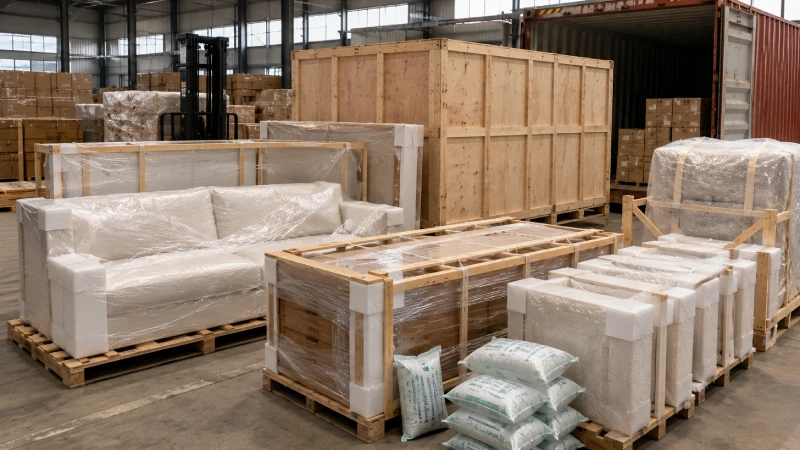
Recommended Furniture Protection Methods
Professional export packaging may include:
- Bubble wrap
- Foam edge protection
- Wooden frames
- Reinforced cartons
- Corner guards
- Stretch wrapping
- Palletization
For premium furniture, wooden crating is often recommended.
Moisture Protection Is Critical
Sea freight containers regularly experience condensation during long ocean transit. This moisture can damage:
- Wood finishes
- Upholstery
- Leather
- MDF materials
To reduce risks, experienced exporters use:
- Desiccant bags
- Waterproof wrapping
- Ventilated packaging
- Elevated pallets
This is especially important during humid seasons.
Glass and Marble Furniture Need Extra Reinforcement
Glass dining tables and marble furniture are among the highest-risk cargo types.
These products require:
- Shock-absorbing materials
- Strong wooden crating
- Vertical loading support
- Fragile handling labels
Improper loading often causes corner cracks during container movement.
Flat-Pack Furniture Reduces Shipping Costs
Flat-pack furniture is significantly easier to ship than fully assembled furniture because it:
- Reduces CBM usage
- Improves container efficiency
- Lowers damage risk
- Simplifies UAE delivery
This is one reason why many furniture exporters prefer knock-down packaging for international markets.
Shipping Costs for Furniture from China to UAE
Furniture shipping costs are influenced by several factors beyond freight rates alone.
Main Cost Factors
Key pricing variables include:
- Cargo volume (CBM)
- Container type
- Loading efficiency
- Packaging dimensions
- Destination city
- Customs handling
- Delivery access difficulty
For furniture, inefficient packaging can dramatically increase freight costs because shipping is usually volume-based.
Seasonal Freight Fluctuations
Furniture importers should also consider seasonal market conditions.
Rates often rise during:
- Pre-Ramadan demand
- Chinese New Year periods
- Peak retail inventory seasons
- Container shortage periods
Booking early during peak periods helps secure space and better pricing.
Hidden Costs Many Importers Miss
Unexpected charges often include:
- UAE port storage
- Demurrage fees
- Delivery waiting time
- Warehouse unloading labor
- Crane or lift services
- Building access restrictions
These operational costs are especially important for commercial furniture projects.
For detailed pricing structures, importers can internally link to:
Transit Time for Furniture Shipping from China to UAE
Sea freight transit times vary depending on origin port, shipping schedule, and customs processing.
Typical port-to-port transit times are:
- Shenzhen to Dubai: approximately 18–25 days
- Ningbo to Jebel Ali: approximately 22–30 days
- Guangzhou to UAE: approximately 20–28 days
However, total door-to-door delivery time is usually longer.
Typical Door-to-Door Timeline
A realistic furniture shipment timeline may include:
- Factory pickup: 1–3 days
- Export customs clearance: 2–5 days
- Container loading and consolidation: 3–7 days
- Ocean transit: 18–30 days
- UAE customs clearance: 2–7 days
- Final delivery scheduling: 1–5 days
Furniture shipments often experience delays during final delivery rather than ocean transit itself.
For transit estimates, importers can internally link to:
UAE Customs and Import Requirements for Furniture
Furniture importers into the UAE typically need:
- Commercial invoice
- Packing list
- Bill of lading
- Certificate of origin
Certain wooden furniture products may require additional material declarations depending on the wood type and treatment status.
VAT and Import Duties
Commercial furniture imports into the UAE are generally subject to:
- Import duty
- UAE VAT
Charges depend on product classification and declared value.
Accurate documentation is essential because incorrect cargo descriptions can trigger customs inspections and delays.
Why Many Importers Choose DDP Shipping
DDP (Delivered Duty Paid) shipping is increasingly popular among UAE furniture buyers because it simplifies the import process.
With DDP shipping:
- Customs clearance is handled by the forwarder
- Duties and taxes are pre-arranged
- Final delivery coordination becomes easier
- Budget forecasting improves
This is especially useful for:
- Small retailers
- First-time importers
- E-commerce sellers
- Hotel project buyers
Importers can internally link to:
- DDP Shipping page
Final Delivery Challenges in the UAE
Many furniture shipping problems occur after customs clearance.
Building Access Restrictions
Residential towers, hotels, and commercial buildings in the UAE often have:
- Elevator size limitations
- Delivery appointment systems
- Restricted unloading hours
- Limited parking access
Large furniture may require manual lifting or dismantling during delivery.
Warehouse Coordination for Commercial Projects
Hotel and office projects require careful coordination between:
- Contractors
- Interior designers
- Warehouse operators
- Freight forwarders
Poor scheduling can create expensive storage delays.
White-Glove Delivery Services
Premium furniture shipments may require:
- Room placement
- Furniture assembly
- Packaging debris removal
- Installation support
These services are increasingly common in Dubai’s luxury furniture market.
Common Furniture Shipping Mistakes
One of the biggest mistakes importers make is choosing the cheapest shipping option without considering cargo protection.
Poor Packaging Decisions
Weak packaging frequently causes:
- Broken corners
- Surface scratches
- Water damage
- Insurance disputes
Ignoring Final Delivery Conditions
Many importers forget to check:
- Elevator dimensions
- Delivery timing restrictions
- Labor requirements
- Site unloading access
This can create serious delivery delays.
Using General Freight Forwarders Without Furniture Experience
Furniture shipping requires specialized handling knowledge.
Experienced furniture forwarders understand:
- Container loading balance
- Cargo securing methods
- Fragile cargo protection
- Last-mile delivery coordination
This expertise often reduces total costs by preventing damage and delays.
Conclusion: Choosing the Right Shipping Strategy for Furniture Imports
Shipping furniture from China to the UAE involves far more than simply booking ocean freight. Successful furniture logistics depends on container planning, packaging quality, customs coordination, and final delivery execution.
For small importers, LCL shipping may help reduce upfront costs, but FCL often provides better protection and operational stability for larger shipments. Proper packaging, moisture prevention, and delivery planning are essential for minimizing losses.
Whether you are importing retail furniture, hotel FF&E cargo, office furniture, or custom residential products, working with an experienced freight forwarder can significantly reduce risk throughout the shipping process.
If you are planning furniture imports from China to the UAE, a professional logistics partner can help you:
- Optimize container loading
- Reduce shipping damage
- Choose between LCL, FCL, or DDP
- Improve customs clearance efficiency
- Coordinate final delivery more smoothly
The right shipping strategy not only lowers costs — it also protects your furniture, delivery timelines, and customer experience.
