

Last Updated: November 7, 2026
Quick Answer
FCL shipping from China to the UAE uses a dedicated 20GP, 40GP or 40HQ container. Choose the size based on cargo dimensions, gross weight, loading method and total shipping cost—not CBM alone. Before booking, confirm the loading location, sailing schedule, VGM requirements, destination port and UAE delivery arrangements, including customs release, trucking, unloading and empty container return.
For UAE importers purchasing machinery, building materials, furniture, automotive components or wholesale inventory, choosing the right container is only the beginning.
A successful FCL shipment also depends on whether the supplier can load the container safely, whether the cargo meets equipment and transport restrictions, and whether the consignee can collect, unload and return the container within the applicable free time.
A shipment that looks economical based on its ocean freight quotation may become more expensive because of loading difficulties, missed cutoffs, port charges or delayed empty-container return.
This guide explains how to select a 20ft or 40ft container, arrange loading in China, manage the export booking process and prepare for container delivery in the UAE.
When Should You Choose FCL Instead of LCL Shipping to UAE?
Full Container Load (FCL) means cargo is booked under a dedicated container arrangement rather than sharing a consolidated container with unrelated shipments.
FCL is commonly used for larger commercial orders, but it can also be appropriate for smaller shipments that require greater control over loading, handling or delivery.
When a Dedicated Container Makes Commercial Sense
FCL is worth considering when:
- Your shipment occupies substantial container space. A dedicated container may be more economical than paying LCL freight and handling charges for a large shipment.
- Your cargo is particularly heavy or sensitive to handling. A controlled loading plan can reduce unnecessary cargo transfers.
- You import regularly. Dedicated-container planning may help coordinate supplier production, inventory replenishment and warehouse receiving.
- You purchase from multiple Chinese suppliers. Goods can potentially be consolidated into one FCL shipment when export documentation and loading arrangements allow.
- You need coordinated delivery. A container can be transported to an approved receiving location for unloading, subject to trucking and customs arrangements.
However, FCL does not guarantee lower costs or eliminate cargo damage.
The importer still needs to verify the container’s suitability, loading quality, shipping schedule and destination responsibilities.
How to Compare the Total Cost of LCL and FCL
The decision should be based on the total cost for the same cargo quantity and delivery scope, not a fixed cubic-meter threshold.
LCL freight commonly uses weight-or-measurement charging, often called W/M. A typical comparison uses one cubic meter or one metric tonne, whichever produces the greater chargeable quantity. The exact pricing rule must be confirmed in the quotation.
FCL freight is generally quoted by container type, with additional charges depending on the agreed service scope.
| Cost Component | LCL Shipping | FCL Shipping |
|---|---|---|
| Main freight basis | Chargeable volume or weight | Container type and booking |
| Origin handling | Consolidation and CFS handling may apply | Container pickup, loading and origin handling |
| Destination handling | CFS unloading and cargo release | Container terminal and carrier release |
| Cargo handling | Shared-container consolidation and deconsolidation | Dedicated loading and unloading arrangements |
| Inland delivery | Individual shipment delivery | Container trucking and empty return |
| Main cost risk | CFS and shipment-specific handling charges | Equipment free time, trucking, storage and return charges |
Illustrative comparison
A UAE importer orders 18 CBM of packaged industrial components weighing 7,000 kg.
If the LCL provider uses the standard comparison of one CBM against one metric tonne, the preliminary chargeable quantity would be:
Greater of 18 CBM or 7 tonnes = 18 W/M units.
The importer should compare the complete LCL quotation for those 18 units against a suitable 20GP quotation, including origin handling, destination charges, trucking and container-related expenses.
If the FCL total is competitive, the importer may also consider the advantages of dedicated loading and fewer warehouse transfers.
This example does not establish 18 CBM as a universal FCL threshold. Different cargo, ports, carriers and delivery conditions can produce different results.
For smaller shipments or mixed orders that do not justify a dedicated container, review our LCL shipping from China to UAE guide.
20GP vs 40GP vs 40HQ: Which Container Should You Book?
The three common dry-container options for FCL shipments are 20GP, 40GP and 40HQ.
Their main differences are internal length, usable height, door clearance and allowable cargo weight.
20GP, 40GP and 40HQ Container Dimensions Compared
The following figures are reference specifications published by CMA CGM. Actual dimensions, tare weights, maximum gross masses and payload allowances can vary between container units.
| Specification | 20GP | 40GP | 40HQ |
|---|---|---|---|
| Internal length | 5.900 m | 12.034 m | 12.034 m |
| Internal width | 2.352 m | 2.352 m | 2.352 m |
| Internal height | 2.393 m | 2.395 m | 2.700 m |
| Door opening width | 2.340 m | 2.340 m | 2.340 m |
| Door opening height | 2.280 m | 2.280 m | 2.585 m |
| Nominal internal volume | 33.2 CBM | 67.8 CBM | 76.4 CBM |
| Reference average tare | 2,230 kg | 3,720 kg | 3,900 kg |
| Reference maximum gross mass | 30,480 kg | 30,480 / 32,500 kg | 30,480 / 32,500 kg |
| Reference maximum payload | 28,250 kg | 26,760 / 28,780 kg | 26,580 / 28,600 kg |
| Common consideration | Compact or dense loads | Higher-volume general cargo | Taller or bulky cargo |
Source: CMA CGM Container Equipment Specifications. Figures are equipment references, not guaranteed limits for every container.
Important: The maximum payload is not necessarily the maximum cargo weight allowed for a particular shipment. Road weight restrictions, axle-load limits, floor loading, port rules and the assigned container’s actual specifications may impose lower practical limits.
When a 20GP Container Is the Better Choice
A 20GP is often worth evaluating for dense cargo that does not require the length of a 40ft container.
Examples include:
- Tiles and packaged stone products.
- Metal components and industrial fasteners.
- Compact machinery and spare parts.
- Dense building materials.
- Heavy cartons or crates with a relatively small total volume.
Consider a UAE building-material distributor purchasing palletized stone products from China.
The cargo may occupy considerably less than the container’s nominal volume while approaching the permitted cargo weight.
In this situation, increasing container size does not necessarily solve the main constraint.
The loading plan must account for individual pallet weight, floor contact area, weight distribution and the permitted transport weight at both origin and destination.
For concentrated machinery or exceptionally heavy pallets, a technical review may be required even when the combined weight is below the stated maximum payload.
When to Choose 40GP or 40HQ
A 40GP provides approximately twice the internal length of a 20GP.
It is commonly considered for higher-volume general cargo, including:
- Packaged furniture and household goods.
- Wholesale cartons and retail inventory.
- Automotive components.
- Packaging materials.
- Industrial products with moderate weight and high volume.
A 40HQ has approximately the same internal length and width as a 40GP, but it provides additional height.
The extra height is useful for taller packaged goods or cargo that can be safely stacked.
For example, a furniture importer may benefit from a 40HQ when product dimensions and stacking arrangements allow greater use of the additional vertical space.
However, if the cargo cannot be stacked or is already limited by weight, the added height may provide little value.
A 40HQ should not automatically be selected simply because it has greater nominal capacity. Equipment availability, freight rates, actual cargo dimensions and loading restrictions still matter.
When a Standard Dry Container Is Not Suitable
Standard dry containers are not appropriate for every cargo type.
Request an additional equipment review when:
- The packaged cargo cannot pass through the container door.
- Individual machinery units exceed the internal dimensions.
- The floor-loading or concentrated-weight limits may be exceeded.
- The cargo requires a special lifting arrangement.
- Temperature control is necessary.
- Dangerous or regulated goods require equipment-specific acceptance.
- Safe loading or securing cannot be achieved within the container.
Oversized machinery may require an open-top container, flat rack or another suitable transport arrangement, subject to technical feasibility and carrier acceptance.
Do not book specialized cargo based only on overall CBM and weight.

How Much Cargo Can Actually Fit in an FCL Container?
A container’s nominal volume is not the same as its usable cargo capacity.
For example, a 40HQ may have approximately 76.4 CBM of internal space, but that does not mean every shipment totaling 76.4 CBM can be loaded safely or physically.
The actual loading result depends on the dimensions and configuration of individual packages.
Nominal Capacity vs Actual Loadable Volume
Several factors reduce practical loading efficiency.
Package geometry: Rectangular cartons may fit together efficiently, while irregular machinery crates can leave unusable gaps.
Pallet dimensions: Palletized cargo must fit within the container’s width and length. The outside dimensions of the loaded pallet—not only the product dimensions—determine its footprint.
Stacking restrictions: Fragile goods, unstable cartons and heavy equipment may not support additional cargo above them.
Cargo securing: Space may be required for blocking, bracing, separation or other approved restraint methods.
Loading access: Forklift movement, lifting procedures and the loading sequence can affect the achievable arrangement.
A practical loading plan should therefore use package-level measurements rather than dividing total cargo CBM by the container’s theoretical capacity.
Example: Calculating Palletized Cargo Volume
Illustrative scenario — not an actual shipment
A Chinese supplier prepares ten loaded pallets.
Each pallet measures:
- Length: 1.20 m
- Width: 0.80 m
- Total loaded height: 1.50 m
The total outside volume is:
10 × 1.20 × 0.80 × 1.50 = 14.4 CBM
This calculation identifies the total palletized volume.
It does not confirm how the pallets will fit inside a specific container.
The shipper must still check the floor arrangement, number of loading positions, package weight, stacking limitations and required cargo restraint.
Payload, Weight Distribution and Floor-Loading Limits
Four separate checks are necessary before approving a container loading plan.
1. Maximum gross mass
The maximum permitted mass of the container together with its contents, subject to the assigned equipment and applicable restrictions.
2. Actual payload
The maximum permissible cargo and packing mass after accounting for the container’s tare mass.
3. Floor loading and concentrated loads
The container floor must safely support the cargo’s load distribution. A single machine with a small contact area can create a risk even when total container weight is acceptable.
4. Inland transport restrictions
The tractor, chassis, axles, roads and transport route must accommodate the loaded container under applicable local rules.
These checks are particularly important for stone, metal products, machinery and dense industrial materials.
Door Clearance and Cargo Orientation
Door clearance can be more restrictive than the container’s internal dimensions.
Illustrative scenario
A machinery crate is 2.40 m high.
The reference door opening height of a standard 40GP is approximately 2.28 m, while a 40HQ has a reference door opening height of approximately 2.585 m.
A 40HQ may therefore be a more suitable starting point.
However, the crate must still fit through the opening in the required orientation, clear the container’s internal structure and be handled safely with the available equipment.
The final decision must also consider the crate’s width, length, weight, lifting method and securing requirements.
Loading Risks for Heavy, Fragile and Machinery Cargo
Different cargo categories require different loading controls.
| Cargo Type | Main Loading Risk | Recommended Control |
|---|---|---|
| Heavy materials | Excessive concentrated loads or uneven distribution | Verify unit weights, contact areas and floor loading |
| Fragile goods | Crushing, shifting and vibration | Use suitable packaging, blocking and cushioning |
| Machinery | High center of gravity and movement | Confirm lifting points, center of gravity and securing plan |
| Mixed cartons | Movement and receiving errors | Group compatible cargo and maintain clear SKU records |
| Moisture-sensitive cargo | Condensation and packaging damage | Check cargo moisture, packing condition and protection |
Machinery requires particular attention.
The supplier should provide the machine’s gross packed weight, outside dimensions, lifting points and center-of-gravity information where relevant.
Heavy units must be secured against movement during sea and inland transport. Packaging material alone should not be assumed to provide sufficient restraint.
The IMO/ILO/UNECE CTU Code provides guidance on safe packing and securing of cargo transport units. Loading arrangements should be reviewed against the applicable technical requirements.
Factory Loading vs Warehouse Loading vs Supplier Consolidation
Once the container type has been selected, the next decision is where and how to load it.
For China export shipments, three common arrangements are factory loading, warehouse loading and supplier consolidation.
The most suitable option depends on supplier locations, cargo readiness, loading equipment and export-document responsibilities.
Factory Loading: Best for a Single Ready Supplier
Factory loading means an empty container is transported to the supplier’s facility for stuffing.
A typical operation includes:
- Confirm the empty-container release and factory loading appointment.
- Transport the container to the factory.
- Inspect the empty container before loading.
- Load the goods using suitable labor and equipment.
- Complete blocking and securing.
- Record the container and seal numbers.
- Dispatch the loaded container toward the designated terminal.
Factory loading can reduce additional warehouse handling when the shipment is already prepared at one location.
However, the supplier must have sufficient truck access, loading space and equipment.
A factory without a suitable loading bay, forklift or heavy-lifting capability may require another arrangement.
Loading delays can also affect the truck appointment and export cutoffs.
Warehouse Loading: Better Control Over Cargo Preparation
Warehouse loading means the goods are delivered to a suitable loading facility before the container is stuffed.
This method may be useful when goods need to be:
- Counted or checked before loading.
- Repacked or palletized.
- Labeled and organized by SKU.
- Combined with additional cargo.
- Prepared using equipment unavailable at the factory.
The warehouse can provide a controlled location for cargo preparation, but the service scope must be confirmed.
Additional unloading, storage, handling and domestic trucking costs may apply. Moving goods through another facility also introduces another handling stage.
Supplier Consolidation: Combining Multiple Suppliers into One FCL Shipment
A UAE distributor may purchase goods from several Chinese factories for one replenishment order.
Instead of shipping each supplier’s cargo separately, it may be possible to consolidate the goods into a single FCL container.
The process normally requires:
- Collecting each supplier’s pickup address and purchase order details.
- Confirming cargo-ready dates.
- Agreeing on a consolidation deadline.
- Arranging domestic transport to the loading facility.
- Checking carton quantities and product identification.
- Confirming the exporter and export-declaration arrangements.
- Preparing compatible shipping instructions and a final packing list.
- Loading and sealing the container.
Illustrative scenario
A Dubai auto-parts wholesaler purchases filters, packaged accessories and mechanical components from three factories in Zhejiang and Jiangsu.
Consolidation may allow these goods to move under one FCL arrangement, provided cargo compatibility, export documentation and loading deadlines can be coordinated.
However, having multiple suppliers does not automatically mean that one exporter can declare every product without additional arrangements.
The legal exporter, document responsibilities and customs requirements must be confirmed before the cargo is combined.
Factory Loading vs Warehouse Loading vs Supplier Consolidation
| Loading Method | Best-Suited Situation | Main Advantage | Main Consideration |
|---|---|---|---|
| Factory loading | One supplier with ready cargo | Fewer handling stages | Factory access and loading equipment |
| Warehouse loading | Goods need preparation or inspection | Greater preparation flexibility | Extra handling and storage costs |
| Supplier consolidation | Multiple Chinese suppliers | Combined shipment coordination | Cargo readiness and export-document alignment |
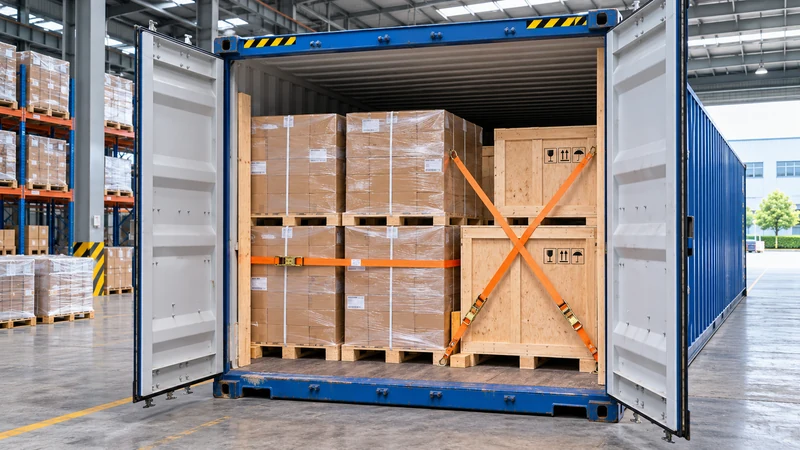
Container Inspection, Loading Photos and Seal Management
Before loading, the responsible loading party should check the container’s condition.
Look for:
- Visible structural damage.
- Holes or daylight penetration.
- Water ingress or signs of previous leakage.
- Damaged flooring.
- Strong odors or contamination.
- Door and locking-bar problems.
During loading, maintain records of pallet quantities, cargo arrangement and securing work.
After loading, record the container number, seal number and final package count. Share the information with the parties preparing the transport documents.
A seal provides evidence relevant to container security, but it does not guarantee that the cargo is undamaged or that the seal will never be removed during an authorized inspection.
How to Book an FCL Container and Manage China Export Operations
Booking a container involves more than selecting a vessel departure date.
The shipper and freight forwarder must coordinate equipment availability, origin trucking, export formalities, document submission and terminal cutoffs.
Choose the China Loading Port and Confirm the Available Sailing
Relevant China export gateways may include Shanghai, Ningbo, Shenzhen/Yantian, Guangzhou/Nansha, Qingdao and Xiamen.
The best origin port depends on the factory location and the carrier’s actual service options.
For example, a supplier located near Ningbo may have a different total inland transport cost than one delivering to Shanghai.
However, the nearest port is not automatically the preferred option.
The comparison should include:
- Factory-to-terminal trucking costs.
- Available equipment.
- Carrier acceptance and vessel space.
- Current routing and transshipment arrangements.
- Export declaration requirements.
- Loading and terminal cutoff dates.
- The actual UAE discharge location.
A quotation must identify the booked port of loading and intended port of discharge rather than only describing the shipment as “China to Dubai.”
Confirm the Booking, Sailing Schedule and Cutoff Dates
The booking confirmation should identify the container type, vessel or service details where confirmed, equipment release arrangements and applicable deadlines.
Key terms include:
| Term | Meaning | Why It Matters |
|---|---|---|
| ETD | Estimated Time of Departure | Used for cargo readiness planning |
| ETA | Estimated Time of Arrival | Used for import and delivery preparation |
| CY Cutoff | Deadline for loaded-container terminal acceptance | Missing it can prevent loading on the intended vessel |
| SI Cutoff | Shipping instruction submission deadline | Affects transport-document preparation |
| VGM Cutoff | Deadline for submitting verified gross mass | Required for vessel loading |
| Empty Release | Authorization to collect empty equipment | Needed before factory or warehouse loading |
| Gate-In | Acceptance of the loaded container at the terminal | Confirms delivery to the terminal, not necessarily vessel loading |
There is no single cutoff timetable applicable to every Chinese port or shipping line.
The booking party should confirm the actual deadlines and the local time zone used in the instructions.
Empty Container Pickup, Loading, VGM and Gate-In
A typical origin workflow is:
Step 1 — Confirm the booking. Check equipment type, port, carrier instructions and loading requirements.
Step 2 — Arrange empty-container collection. Obtain the applicable release details and confirm the loading appointment.
Step 3 — Inspect the empty container. Record significant defects and request instructions if the unit is unsuitable.
Step 4 — Complete cargo loading. Verify package counts, load distribution and restraint.
Step 5 — Apply and record the seal. Confirm the container number and seal number against shipment records.
Step 6 — Establish the verified gross mass. Complete VGM using an accepted method and submit the required information before the cutoff.
Step 7 — Complete export and carrier documentation. Confirm customs status and shipping instructions.
Step 8 — Deliver the loaded container to the terminal. Check gate-in acceptance and subsequent vessel-loading status.
Some tasks overlap, and the precise order depends on the origin terminal and carrier procedures.
Understanding VGM and the Shipper’s Responsibility
VGM stands for Verified Gross Mass.
It refers to the verified mass of the packed container, including the container tare mass.
Under SOLAS, VGM is a condition for loading a packed container onto a ship.
Two verification methods are recognized:
- Method 1: Weighing the packed container.
- Method 2: Weighing cargo items and packing materials, then adding the container tare mass using an approved certified method.
The named shipper is responsible for obtaining and communicating VGM in accordance with the requirements.
A weighing provider, warehouse or forwarder may assist with the process, but their involvement does not automatically remove the named shipper’s responsibility.
See the International Maritime Organization’s VGM guidance.
What Happens If the Container Misses a Cutoff?
Missing a cutoff may result in the container being rolled to another sailing.
Potential consequences include:
- Revised departure and arrival dates.
- Trucking or terminal waiting costs.
- Additional container-related charges.
- Booking amendments.
- Changes to the importer’s delivery or inventory schedule.
If a cutoff is at risk, the responsible booking party should immediately confirm the missed requirement, available alternatives and written revised instructions.
Do not assume the terminal will accept a late container without authorization.
Current routing consideration: As of November 2026, carrier-specific advisories have identified restrictions and irregular calls affecting some UAE-bound services, including Jebel Ali. The actual carrier routing, discharge port and onward movement must be reconfirmed before booking. A quoted ETA should not be treated as a guaranteed delivery date.
FCL Booking Documents: What Must the Shipper and Importer Prepare?
FCL documentation serves different purposes at different stages.
Some records are needed to secure space, others support export clearance and vessel loading, while others are required for import clearance and destination container release.
Documents Needed Before FCL Booking and Loading
At the booking stage, the forwarder generally needs accurate cargo details, including commodity description, package count, gross weight, volume, loading address and proposed consignee.
Before export, the parties must also prepare the applicable commercial and transport information.
The commercial invoice and packing list should accurately describe the cargo being shipped.
If the shipment includes machinery, regulated products or specialized cargo, additional product information and approvals may be necessary.
Documents Needed for Ocean Transport and UAE Container Release
After loading, transport documentation must reflect the confirmed shipment details.
Depending on the arrangement, the shipment may use an original bill of lading, a sea waybill or another applicable release arrangement.
At destination, the consignee or authorized representative may need the arrival notice, carrier release documentation, customs declaration and applicable terminal collection authorization.
FCL Booking Documents: Purpose, Responsibility and Timing
| Document or Record | Typical Stage | Responsible or Coordinating Party |
|---|---|---|
| Booking request and cargo details | Before booking | Shipper / freight forwarder |
| Commercial invoice | Export and import preparation | Supplier / exporter |
| Packing list | Before loading | Supplier / exporter |
| Shipping instructions | Carrier documentation cutoff | Named shipper / authorized party |
| VGM declaration | Before vessel loading | Named shipper |
| China export declaration information | Export clearance | Exporter / authorized agent |
| Container number and seal record | After loading | Loading party / shipper |
| Bill of lading or sea waybill | Ocean transport | Carrier / authorized issuer |
| Certificate of origin | Import preparation, where required | Exporter / authorized issuer |
| Product permits or certificates | As applicable before shipment or clearance | Responsible importer / exporter |
| Arrival notice and delivery order | Destination release | Carrier / agent / consignee |
| UAE customs declaration and release | UAE import | Importer / authorized customs broker |
| Empty-container return receipt | Shipment completion | Haulier / equipment return party |
The exact documents and approval requirements depend on the commodity, importing entity, shipment structure and customs jurisdiction.
A certificate of origin or product-specific authorization should not be assumed to be mandatory for every shipment without checking the applicable requirements.
Who Is Responsible for Each Document?
The supplier, exporter, named shipper and UAE importer are not necessarily the same legal entity.
For example, the Chinese factory may issue commercial documents, while another authorized exporter handles export declaration arrangements.
The shipping line issues or arranges the applicable transport document, and the UAE importer or authorized customs representative handles the import declaration and associated approvals.
The agreed Incoterm, such as FOB, CIF or DAP, helps allocate contractual responsibilities between seller and buyer. It does not automatically establish customs authorization or determine every third-party charge.
Before shipment, reconcile the consignee name, product description, package count, gross weight, container number and other relevant information across the available documents.
For a broader explanation, see the documents required for shipping from China to UAE.
Jebel Ali vs Khalifa Port: Where Should Your FCL Container Arrive?
Jebel Ali and Khalifa Port are important container gateways for UAE importers, but they serve different logistical needs.
The preferred destination should be determined by actual vessel availability, customs arrangements, inland transportation and the final receiving location.
Jebel Ali Port: Container Imports for Dubai and Northern Emirates
Jebel Ali Port is located in Dubai and supports containerized cargo handling, storage and logistics connections.
It is a relevant gateway to evaluate for importers delivering to:
- Dubai mainland warehouses.
- Jebel Ali Free Zone (JAFZA).
- Dubai distribution facilities.
- Sharjah and Ajman commercial locations.
- Businesses arranging onward distribution or re-export.
The port’s infrastructure and related logistics network make it relevant to commercial cargo movements. Further information is available from DP World Jebel Ali Port.
However, terminal infrastructure does not mean every carrier has an available direct sailing to Jebel Ali.
The carrier’s current routing and container-release arrangements must be checked for the actual booking.
Khalifa Port: An Option for Abu Dhabi and KEZAD
Khalifa Port is an important container and industrial logistics gateway in Abu Dhabi.
It is worth evaluating for:
- Abu Dhabi-based importers.
- Manufacturing facilities.
- KEZAD businesses.
- Industrial distributors.
- Construction and project cargo destinations within the Abu Dhabi region.
For some Abu Dhabi deliveries, routing through Khalifa Port may reduce inland transport distance or simplify receiving arrangements.
That advantage must still be assessed against the actual ocean freight offer, carrier availability, terminal charges and empty-container return requirements.
A closer destination port is not necessarily the lower-cost option.
Jebel Ali vs Khalifa Port: FCL Destination Decision Matrix
| Decision Factor | Jebel Ali | Khalifa Port |
|---|---|---|
| Location | Dubai | Abu Dhabi |
| Common destination consideration | Dubai, JAFZA and northern-emirate distribution | Abu Dhabi and KEZAD operations |
| Cargo profile | General containerized commercial cargo | General commercial and industrial cargo |
| Carrier service | Confirm actual available routing | Confirm actual available routing |
| Inland trucking | Compare with final delivery address | Compare with final delivery address |
| Customs process | Confirm applicable Dubai customs procedures | Confirm applicable Abu Dhabi customs procedures |
| Empty return | Follow the booked carrier’s instructions | Follow the booked carrier’s instructions |
| Main decision | Total port-to-destination feasibility and cost | Total port-to-destination feasibility and cost |
Compare the Total Port-to-Warehouse Cost
An importer should compare the complete arrival and delivery arrangement, including:
- Ocean freight to the confirmed discharge location.
- Destination terminal and release charges.
- Customs brokerage and applicable examinations.
- Trucking to the consignee.
- Unloading or waiting charges.
- Empty-container return requirements.
If a booking involves discharge at an alternative UAE port and onward bonded movement, the responsible parties must confirm how that arrangement affects customs clearance, delivery timing, charges and equipment return.
Mainland, Free Zone and Re-export Delivery Considerations
A container delivered to a mainland warehouse may follow different customs and receiving procedures from one entering a free zone.
For JAFZA, KEZAD or another free-zone destination, confirm the consignee’s registration, customs arrangements, entry authorization and warehouse receiving instructions.
A free-zone address must not automatically be treated as an exemption from customs duties or VAT.
Under UAE VAT rules, designated-zone treatment applies only where the relevant legal conditions are met. The status of the goods, movement, transaction and recipient matters.
For goods intended for onward export or movement to the UAE mainland, the appropriate customs and tax treatment should be confirmed with the responsible authority or qualified adviser.
FCL Shipping Costs and Charges Importers Must Check Before Booking
The ocean freight rate is only one part of the total cost of FCL shipping from China to the UAE.
A quotation that covers port-to-port transportation may exclude origin collection, loading, destination handling, customs services, inland delivery and container return.
Importers should request a clear breakdown of included and excluded charges.
What Is Included in a 20ft or 40ft Container Quote?
Depending on the agreed scope, FCL expenses may include:
China origin expenses
- Empty-container positioning and trucking.
- Factory or warehouse loading.
- Cargo blocking and securing.
- Export declaration and documentation.
- Terminal handling and related origin services.
Ocean transport expenses
- Container ocean freight.
- Applicable carrier and route surcharges.
- Agreed transport-document charges.
UAE destination expenses
- Terminal handling and storage where applicable.
- Delivery-order and release charges.
- Customs brokerage and examinations if applicable.
- Inland container trucking.
- Unloading and equipment return.
Duties, import VAT and product-specific regulatory costs must be assessed separately where applicable.
The paying party depends on the commercial agreement and relevant contracts. Do not assume a freight quotation includes these amounts merely because it uses terms such as “CIF Dubai” or “door delivery.”
FCL Port Charges at Jebel Ali and Khalifa Port
Destination charges can be assessed by different service providers.
For example:
- The terminal may assess handling or storage charges.
- The shipping line or its local agent may assess delivery-order and equipment-related charges.
- A customs broker may charge for declaration services.
- A trucking provider may charge for delivery, waiting, additional stops or empty return.
These charges should not be combined into one unexplained “port fee.”
The amount payable depends on the actual shipment, terminal tariff, carrier agreement and service arrangement.
Demurrage vs Detention vs Terminal Storage
Three cost categories are particularly important for FCL importers.
| Charge | What It Generally Covers | How to Manage the Risk |
|---|---|---|
| Demurrage | Keeping the carrier’s container at the port or terminal beyond applicable free time | Arrange cargo release and pickup promptly |
| Detention | Keeping carrier equipment beyond permitted free time, commonly after terminal gate-out | Unload and return the empty container promptly |
| Terminal storage | Occupation or storage of terminal space under terminal rules | Check terminal storage-free periods and release timing |
These descriptions reflect common commercial usage.
Some carriers apply combined demurrage-and-detention arrangements. Free-time definitions, counting methods and charging periods vary by carrier, tariff and booking.
An importer must therefore confirm:
- Whether free time is combined or separate.
- Which event starts the applicable period.
- How chargeable days are counted.
- Whether terminal storage is charged separately.
- The applicable equipment-return deadline.
- Whether an extension or alternative arrangement is available.
A container may incur more than one type of charge if different contractual and terminal conditions apply.
How to Reduce Container-Related Delay Costs
The most effective way to reduce avoidable charges is to prepare before vessel arrival.
Before arrival: Review the latest ETA, document status and expected customs requirements.
Before discharge or release: Confirm the delivery-order process, outstanding charges and any required import approvals.
Before container collection: Ensure the trucking provider has the necessary authorization and an available vehicle.
Before warehouse delivery: Confirm that the receiving site has sufficient labor, equipment and unloading space.
Before empty return: Obtain the current authorized return location and confirm the applicable deadline.
Retain records of release, trucking, delivery and empty return in case a later charge needs to be checked or disputed.
FCL Cost & Risk Checklist: What to Verify Before Confirming Your Container
| Cost or Risk Item | What to Confirm | Potential Consequence |
|---|---|---|
| Origin trucking | Pickup location, equipment and loading appointment | Waiting or additional transport charges |
| Factory/warehouse loading | Labor, lifting equipment and loading time | Loading delays or handling costs |
| Export documentation | Required records, responsible party and deadlines | Customs or carrier delays |
| Ocean freight | Equipment, routing, validity and surcharges | Budget changes |
| UAE terminal handling | Applicable terminal tariff and payment scope | Unexpected destination charges |
| Delivery-order charges | Carrier release requirements and fees | Delayed collection |
| Customs brokerage | Service scope and documentation | Additional fees or release delays |
| Duties and VAT | Applicable importer obligations | Unplanned import costs |
| Demurrage | Free time, start event and charging method | Charges for delayed container collection |
| Detention | Free time and equipment-return deadline | Charges for late equipment return |
| Terminal storage | Free period and terminal-specific tariff | Additional storage charges |
| Inland trucking | Delivery address, waiting and unloading scope | Additional transport costs |
| Empty-container return | Depot, appointment and return conditions | Detention or drop-off costs |
| Equipment damage | Inspection, cleaning and repair responsibility | Disputed damage or cleaning charges |
| Service disruption | Alternative routing, discharge or onward transport | Changed costs and delivery arrangements |
The importer should ask for a revised, itemized quotation whenever the route, container type, loading address or final delivery arrangement changes materially.
From UAE Port Arrival to Empty Container Return: Step by Step
For an FCL importer, the shipment is not complete when the vessel arrives.
The container must be released, collected, transported, unloaded and returned in accordance with the relevant instructions.
Step 1 — Confirm Arrival and Document Readiness
When the carrier issues the arrival information, confirm:
- Container number and bill of lading reference.
- Actual or updated arrival status.
- Intended discharge terminal.
- Consignee and notify-party details.
- Outstanding freight or local charges.
- Transport-document release status.
Vessel arrival does not necessarily mean the container is immediately available for collection.
Discharge, terminal processing, customs procedures and carrier release may still be pending.
Step 2 — Arrange Customs Clearance and Obtain Cargo Release
The UAE importer or its authorized customs representative must complete the applicable import procedures.
These may involve reviewing the commercial invoice, packing list, transport documents, product classification, permits and other applicable records.
Customs may require inspection or additional information depending on the goods and circumstances.
Winsail Logistics can coordinate relevant logistics information and shipment arrangements where agreed, but customs authorization, product compliance and approval decisions remain with the responsible parties and authorities.
For detailed requirements, refer to our UAE customs clearance procedures.
Step 3 — Obtain the Delivery Order and Arrange Port Collection
The applicable carrier or agent release process must be completed before the container is collected.
For a Jebel Ali import, collection may involve the delivery order, required payments, customs release and terminal or haulier authorization through relevant systems.
The exact steps and system access depend on the shipment and the parties handling collection.
The nominated haulier must confirm the container’s release status and any terminal pickup appointment requirements.
Do not dispatch a truck based solely on the vessel’s reported arrival.
Step 4 — Truck the Container to the UAE Receiving Location
The final receiving address needs more detail than a company name and city.
Before arranging delivery, check:
- Exact site location and access instructions.
- Receiving hours and delivery appointment.
- Road and vehicle restrictions.
- Whether a loaded container trailer can enter the premises.
- Available unloading equipment.
- Whether the cargo can be unloaded within the agreed vehicle waiting time.
- Any additional permit or site-entry requirements.
Machinery or heavy cargo may require special lifting equipment at destination.
For a large warehouse order, the importer may need to reserve unloading labor and storage space in advance.
Trucking charges should clearly state whether unloading, waiting, additional stops and empty return are included.
Step 5 — Unload, Inspect and Record Container Condition
Before opening the container, inspect and record the container number and seal condition.
During unloading:
- Compare the shipment against the packing list.
- Check quantities and packaging condition.
- Record visible damage, shortages or discrepancies.
- Photograph relevant conditions before cargo is moved or repaired.
- Follow the contractual and insurance notification procedures when a problem is discovered.
- Keep the unloading and delivery records.
An intact seal does not guarantee that the goods were secured correctly or that no damage occurred during transportation.
If the container shows signs of damage or contamination, notify the responsible party and follow the appropriate inspection and evidence-preservation process.
Step 6 — Return the Empty Container to the Authorized Depot
The importer or contracted haulier must arrange empty-container return according to the carrier’s current instructions.
Before return, confirm:
- Authorized depot or terminal.
- Applicable deadline.
- Equipment condition and cleanliness requirements.
- Return appointment, if required.
- Any associated trucking or drop-off charges.
After returning the equipment, obtain the relevant receipt or equipment interchange record.
The completion time and return documentation may be important when reconciling detention or equipment-damage claims.
Do not assume the empty container can always be returned to the port where it was collected.
Complete FCL Shipping Checklist: China Booking to UAE Container Return
The following checklist can be used by purchasing managers, import coordinators and receiving teams.
Before Booking: Cargo and Container Readiness
- Confirm the complete cargo description and product quantities.
- Collect the packing list, package dimensions and gross weights.
- Identify heavy, fragile, oversized or regulated cargo.
- Check container dimensions, door clearance and loading restrictions.
- Compare 20GP, 40GP and 40HQ suitability.
- Confirm supplier locations and cargo-ready dates.
- Identify the UAE importing entity and final destination.
- Compare complete FCL quotations and relevant LCL alternatives.
Before Loading: Supplier and Export Preparation
- Confirm factory loading, warehouse loading or consolidation arrangements.
- Verify supplier readiness and transport appointments.
- Confirm equipment, labor and cargo-securing requirements.
- Check the empty container’s condition.
- Confirm carton, pallet and crate counts.
- Prepare shipping instructions and export documentation.
- Arrange loading supervision and records.
- Confirm container and seal numbers after loading.
Before Vessel Departure: Cutoffs and Export Completion
- Confirm the actual booking and intended vessel service.
- Record the CY, SI and VGM cutoffs.
- Complete loading and cargo restraint.
- Establish and submit VGM by the deadline.
- Complete the applicable export formalities.
- Confirm terminal gate-in.
- Verify transport-document information.
- Monitor the actual vessel-loading status and any revised routing.
Before UAE Arrival: Import and Delivery Preparation
- Review the latest ETA and discharge location.
- Confirm the commercial invoice and packing list.
- Check importer registration and applicable approvals.
- Coordinate with the authorized customs broker.
- Confirm delivery-order and carrier release procedures.
- Review destination charges and equipment free time.
- Arrange suitable container trucking.
- Confirm warehouse receiving and unloading readiness.
- Verify current empty-container return instructions.
After Delivery: Unloading, Empty Return and Shipment Closure
- Inspect the container and seal before opening.
- Unload the cargo using suitable equipment.
- Record quantities, condition and any discrepancies.
- Complete the applicable delivery documentation.
- Return the empty container to the authorized location.
- Obtain the equipment-return receipt.
- Reconcile trucking, terminal and equipment charges.
- Retain the shipment records for future reference.
This checklist should be reviewed for each shipment rather than treated as a substitute for the actual carrier instructions, customs requirements or agreed service contract.
Information scope: This guide covers standard dry-container FCL shipments originating in China and intended for UAE importers. Container specifications, carrier acceptance, vessel routing, schedules, tariffs and equipment-return arrangements vary by shipment and may change. Current terms must be confirmed before booking.
Service note: UAE import declarations, duties, VAT, product approvals and customs decisions remain subject to the applicable laws, responsible importing parties and competent authorities. Freight coordination does not by itself establish authorization to act as an importer or customs broker.
FAQ
Can I Combine Goods from Multiple Chinese Suppliers into One FCL Container?
Yes, when the cargo, documents and export arrangements are compatible. Coordinate supplier-ready dates, domestic transport, warehouse receiving, packaging and loading. Confirm the exporter, export declaration and transport-document arrangements before consolidation; additional handling or warehousing charges may apply.
Is FCL Worth Booking If My Cargo Does Not Fill the Entire Container?
It can be. A partially loaded FCL shipment may still offer a suitable combination of cost, handling control and delivery convenience. Secure the cargo against movement, and compare complete LCL and FCL quotations for the same goods and service scope instead of relying on container fill percentage alone.
Who Pays Demurrage or Detention If UAE Customs Clearance Is Delayed?
Payment responsibility depends on the carrier terms and contracts between the parties. Customs delays do not automatically waive demurrage, detention or terminal storage. Check free-time rules and responsibilities before arrival, and retain the relevant release and delay records if charges need to be reviewed.
Can One FCL Container Be Delivered to Multiple Warehouses in the UAE?
Multiple stops may be possible if the trucking provider agrees and customs status, equipment terms and delivery conditions permit them. Confirm the route, unloading arrangements, security and empty-return deadline in advance. Extra stops may generate additional handling, waiting and transport charges.
What If the Shipping Line Changes the Empty Container Return Depot?
Follow the latest authorized carrier or equipment-provider instructions. Obtain the updated return location and deadline in writing, confirm any appointment or charges with the haulier, and retain the revised instructions with the final return receipt. Do not use the original depot without authorization.
