
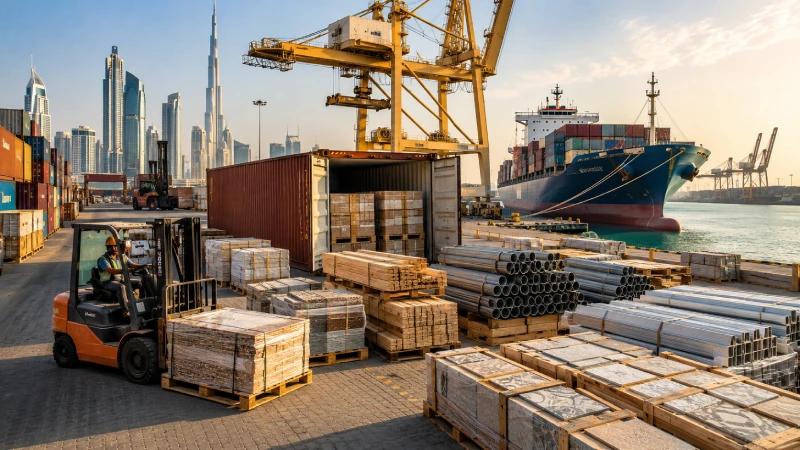
The UAE construction industry continues to create strong demand for imported building materials. From large-scale Dubai commercial developments to residential projects in Abu Dhabi and Sharjah, importers regularly source tiles, steel products, aluminum profiles, wood panels, glass, and sanitary materials from China and other manufacturing countries.
However, shipping building materials is very different from shipping normal consumer cargo. Construction materials are often heavy, fragile, oversized, moisture-sensitive, or difficult to load efficiently. Poor freight planning can easily lead to cargo damage, customs delays, container overload problems, or unnecessary logistics costs.
For importers, contractors, distributors, and project suppliers, understanding how to optimize building material shipping to UAE is critical for protecting both timelines and profit margins.
This guide explains the best shipping methods, packaging standards, container loading strategies, customs requirements, transit expectations, and cost optimization techniques specifically for construction cargo.
Why Shipping Building Materials to UAE Requires Specialized Logistics Planning
The UAE imports massive quantities of construction materials every year due to ongoing infrastructure growth, real estate expansion, industrial projects, and commercial development. Major ports such as Jebel Ali handle large volumes of imported building products for projects across the country.
Unlike general cargo, building materials create unique logistics challenges:
- Heavy cargo can exceed container weight limits
- Fragile products like tiles and glass require reinforced packaging
- Steel and metal products risk rust during sea freight
- Wood flooring and panels can absorb moisture during transit
- Oversized materials may require special containers
- Construction projects often depend on strict delivery schedules
Additionally, many building materials are low-margin products. Even small increases in freight cost can significantly impact importer profitability. This is why container loading efficiency and sea freight optimization become extremely important.
Common building materials imported into UAE include:
- Ceramic tiles
- Marble and stone
- Steel pipes and coils
- Aluminum profiles
- Glass products
- Wooden flooring
- Cement-based products
- Bathroom fittings
- Insulation materials
Each category requires different handling and packaging methods.
Best Shipping Methods for Building Materials to UAE
Why Sea Freight Is the Main Choice for Bulk Cargo
Sea freight is the dominant shipping method for building materials because most construction cargo is heavy and shipped in large volumes. Air freight is usually too expensive for dense products such as tiles, steel, or stone.
Sea freight offers:
- Lower shipping cost per CBM
- Better suitability for heavy cargo
- Easier containerized transport
- More stable handling for palletized goods
- Better profitability for importers
For most UAE construction importers, Full Container Load (FCL) shipping is the preferred option.
FCL vs LCL Shipping for Building Materials
FCL shipping works best for bulk construction cargo because the entire container belongs to one importer. This reduces handling risks and improves cargo protection.
FCL advantages include:
- Lower damage risk
- Better loading control
- Faster customs handling
- Reduced cargo movement during transit
- Better weight distribution planning
LCL shipping can work for smaller importers sourcing mixed products from multiple suppliers, but it creates additional risks:
- More cargo handling
- Higher breakage risk
- Slower consolidation processes
- Increased customs complexity
Heavy building materials are usually better suited for 20FT containers because of weight limitations. Lightweight but bulky materials may fit better in 40FT containers.
When Air Freight Makes Sense
Although sea freight dominates construction logistics, air freight can still be useful in specific situations:
- Emergency replacement materials
- Urgent spare parts
- High-value architectural components
- Critical project-delay prevention
However, air freight costs are significantly higher and generally unsuitable for bulk building materials.
For most importers, sea freight remains the only cost-effective long-term solution.
Internal resources that support this topic include:
- DDP shipping solutions
- China to UAE shipping cost guides
- China to UAE shipping time estimates
Container Loading and Palletization for Building Materials
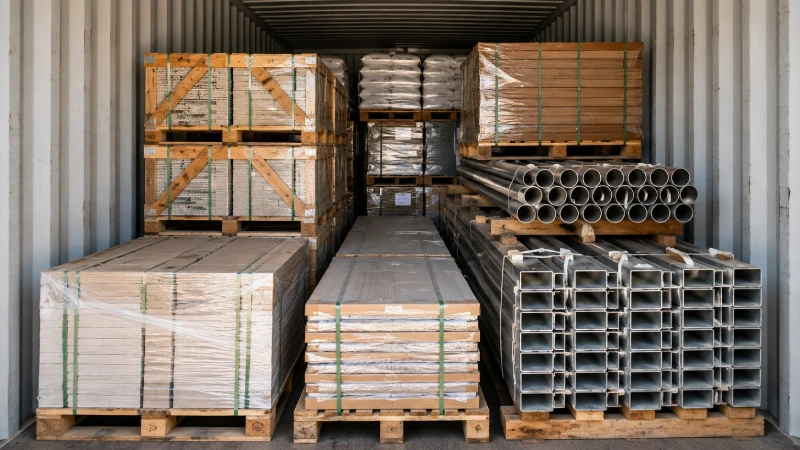
Why Container Loading Efficiency Matters
Container loading efficiency directly affects shipping cost.
Construction cargo is often charged based on either:
- Total cargo volume
- Total cargo weight
- Container utilization efficiency
Poor loading planning creates wasted space, unstable cargo stacking, and increased freight cost per unit.
Experienced importers carefully optimize:
- Pallet dimensions
- Weight distribution
- Cargo stacking patterns
- Void space reduction
This becomes especially important for low-margin products like tiles and steel products.
Best Palletization Methods for Heavy Cargo
Palletization is essential for protecting building materials during export handling.
Recommended practices include:
- Heat-treated export pallets
- Heavy-duty shrink wrapping
- Reinforced corner protection
- Steel or plastic strapping
- Moisture barrier wrapping
Weight distribution is extremely important. Overloaded pallet corners can collapse during port handling or container movement.
For UAE imports, pallet stability matters because containers may experience:
- Long port dwell times
- High outdoor temperatures
- Frequent unloading movement
Loading Tips for Different Building Materials
Ceramic Tiles and Marble
Tiles are among the most damage-sensitive construction products.
Best practices include:
- Vertical stacking instead of flat stacking
- Wooden crate reinforcement
- Foam shock absorption
- Tight pallet securing
Steel and Metal Products
Steel cargo faces corrosion risks during sea freight.
Protection methods include:
- Waterproof wrapping
- Anti-rust oil treatment
- Desiccant placement
- Elevated pallet positioning
Wood Flooring and Panels
Wood products require moisture protection.
Recommended measures:
- Ventilated packaging
- Waterproof outer wrapping
- Humidity control materials
- Mold prevention treatment
Glass Products
Glass requires specialized handling and reinforced framing.
Most exporters use:
- A-frame packaging
- Shock-resistant supports
- Anti-vibration securing systems
Common Container Loading Mistakes
Some of the most common importer mistakes include:
- Mixing heavy and fragile cargo together
- Uneven container weight distribution
- Poor pallet securing
- Leaving empty container gaps
- Overloading container floors
These problems often lead to cargo shifting, product damage, or customs inspection complications.
Packaging Requirements for Building Material Shipping
Building materials experience harsh shipping conditions during ocean transport.
Containers may face:
- Humidity exposure
- Salt air corrosion
- Temperature fluctuations
- Rough port handling
- Long storage periods
This makes export-grade packaging extremely important.
Recommended Packaging by Material Type
Tiles and Stone Products
- Wooden crates
- Foam separators
- Reinforced edge protection
- Anti-impact wrapping
Steel Products
- Rust-prevention coating
- Waterproof wrapping
- Steel straps
- Desiccant bags
Powder and Cement Materials
- Moisture-proof jumbo bags
- Sealed packaging
- Reinforced bulk loading systems
Fragile Decorative Materials
- Multi-layer cushioning
- Shock-resistant packaging
- Fragile cargo labels
UAE Climate Considerations
The UAE climate creates additional risks for imported building materials.
High temperatures and humidity can damage:
- Wood products
- Adhesive-based materials
- Paint-related products
- Certain insulation materials
Containers may remain outdoors during customs clearance or delivery scheduling, increasing exposure risk.
Importers should always prioritize moisture and heat protection during packaging.
UAE Customs Clearance and Import Documentation
Construction cargo entering UAE must comply with customs documentation requirements.
Essential documents include:
- Commercial invoice
- Packing list
- Bill of lading
- Certificate of origin
Some specialized construction products may require:
- Product certifications
- Compliance approvals
- Additional import permits
Common Customs Problems That Cause Delays
Many customs delays occur because of simple documentation errors.
Common problems include:
- Incorrect HS codes
- Weight inconsistencies
- Poor cargo descriptions
- Missing pallet quantities
- Invoice mismatches
For building materials, accurate cargo descriptions are especially important because customs authorities may inspect:
- Material composition
- Product classification
- Quantity declarations
- Safety compliance
UAE-Specific Compliance Considerations
Certain building materials may face additional checks, including:
- Fire-resistant products
- Electrical construction materials
- Chemical-based coatings
- Insulation materials
Importers should confirm UAE compliance requirements before shipment departure.
Why Many Importers Choose DDP Shipping
Many first-time UAE importers choose DDP shipping because it simplifies customs handling.
DDP services can help with:
- Import tax handling
- Customs clearance coordination
- Port documentation
- Final delivery arrangements
This reduces operational pressure for project-based buyers.
Shipping Costs for Building Materials to UAE
Shipping cost depends on several important factors.
Main Factors Affecting Shipping Cost
The largest cost influences include:
- Cargo weight
- Cargo volume
- Container type
- Shipping season
- Origin location
- UAE destination port
- Packaging dimensions
Heavy cargo such as steel and tiles is usually weight-sensitive, while insulation products may be volume-sensitive.
Hidden Costs Many Importers Overlook
Importers often underestimate secondary logistics costs such as:
- Port storage charges
- Demurrage fees
- Customs inspection costs
- Container detention fees
- Repacking charges
Poor planning can quickly increase total import cost.
Sea Freight Cost Optimization Strategies
Experienced importers reduce shipping cost by:
- Maximizing container utilization
- Consolidating suppliers
- Using proper pallet dimensions
- Booking earlier during peak seasons
- Avoiding unnecessary cargo voids
For heavy cargo, 20FT containers are often more economical because they handle weight more efficiently.
Transit Time and Delivery Expectations
Shipping time from China to UAE varies depending on:
- Port congestion
- Shipping route
- Customs clearance speed
- Container availability
- Seasonal demand
Typical sea freight transit times usually range between:
- 18–35 days port-to-port
- Longer for door-to-door delivery
What Causes Delays for Construction Cargo
Building materials often experience delays because:
- Heavy cargo requires additional handling
- Customs inspections may be stricter
- Documentation corrections take time
- Peak construction seasons increase congestion
Containers carrying oversized or mixed cargo may also face longer processing times.
How to Reduce Shipping Delays
Importers can improve delivery reliability by:
- Preparing documents early
- Confirming HS codes in advance
- Booking freight before peak seasons
- Using experienced freight forwarders
- Ensuring suppliers meet packaging standards
Good coordination between supplier, freight forwarder, and importer is essential for project-based shipments.
Real-World Import Scenarios for UAE Construction Cargo
Importing Ceramic Tiles for a Dubai Project
A Dubai importer sourcing ceramic tiles from Foshan reduced cargo damage significantly after switching from LCL to FCL shipping.
By improving pallet reinforcement and vertical stacking methods, breakage rates dropped substantially.
Shipping Steel Pipes to Abu Dhabi
An Abu Dhabi industrial supplier experienced rust damage due to insufficient moisture protection.
After implementing waterproof wrapping and desiccant systems, cargo quality improved during sea transit.
Consolidating Mixed Building Materials
A contractor sourcing products from multiple Chinese suppliers used a consolidation warehouse to combine:
- Tiles
- Bathroom fittings
- Aluminum profiles
- Lighting materials
This improved container utilization and reduced overall freight cost.
Common Shipping Mistakes When Importing Building Materials
Many costly logistics problems come from avoidable planning mistakes.
Common issues include:
- Choosing incorrect container sizes
- Weak export packaging
- Poor palletization
- Incorrect HS codes
- Ignoring UAE compliance rules
- Delayed freight booking
- Mixing fragile and heavy cargo together
Experienced importers focus heavily on prevention because cargo damage and project delays can quickly become expensive.
How to Choose the Right Freight Forwarder
Not all freight forwarders understand construction cargo.
Building material logistics requires experience with:
- Heavy cargo handling
- Container optimization
- UAE customs processes
- Bulk cargo packaging
- Moisture-sensitive products
A strong freight partner can help reduce:
- Damage risk
- Customs delays
- Unnecessary freight cost
- Delivery disruptions
This becomes especially important for large construction projects with strict timelines.
Conclusion
Shipping building materials to UAE requires far more planning than standard cargo shipping. Heavy weight, fragile products, moisture exposure, customs requirements, and container efficiency all directly affect cost, cargo safety, and delivery reliability.
For importers, the most important priorities are:
- Choosing the right shipping method
- Optimizing container loading
- Using export-grade packaging
- Preparing accurate documentation
- Working with experienced freight forwarders
With proper logistics planning, UAE construction importers can reduce cargo damage, lower shipping costs, improve customs clearance efficiency, and maintain stable project delivery schedules.
