
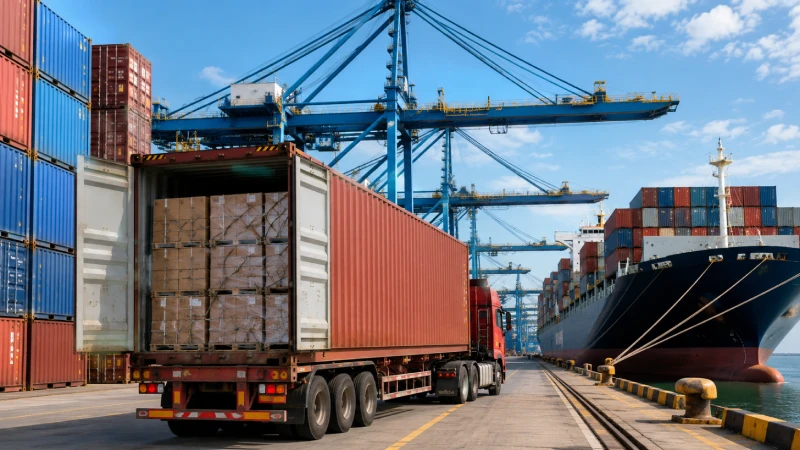
For many businesses importing from China to Qatar, Less than Container Load (LCL) shipping is the logical starting point. It allows companies to purchase smaller quantities, reduce inventory exposure, and test products without committing to a full container.
However, as import volumes increase, a new challenge emerges.
The biggest obstacle is no longer freight cost.
Instead, importers begin struggling with inventory shortages, unpredictable arrival dates, warehouse congestion, delayed customer deliveries, and increasing supply chain complexity.
At this stage, many successful businesses transition from LCL to Full Container Load (FCL) shipping.
The reason is simple: FCL is not merely a transportation method. It is a supply chain management tool that provides greater control, improved cargo security, and more reliable inventory planning.
For companies already shipping regularly between China and Qatar, understanding when and why to switch from LCL to FCL can significantly improve operational efficiency.
The Hidden Operational Problems That Appear as Import Volumes Grow
When importers first start sourcing products through Shipping from China to Qatar, flexibility is often more important than efficiency.
LCL shipments offer several advantages:
- Smaller order quantities
- Lower inventory investment
- Easier cash-flow management
- Reduced storage requirements
For growing businesses, these benefits make perfect sense.
The problem arises when purchasing volumes increase.
Many importers notice that they are placing orders more frequently, receiving shipments from multiple suppliers, and managing larger inventories across several product categories.
What once seemed efficient gradually becomes difficult to control.
Instead of managing one predictable shipment, businesses may find themselves tracking multiple LCL shipments departing at different times, arriving on different vessels, and clearing customs separately.
As complexity increases, planning becomes more difficult.
Inventory shortages become more common.
Warehouse operations become harder to coordinate.
Sales teams begin making promises that logistics teams struggle to fulfill.
Eventually, the hidden cost of uncertainty becomes larger than the transportation cost itself.
A delayed shipment can result in:
- Lost sales opportunities
- Project delays
- Emergency replenishment orders
- Customer dissatisfaction
- Higher safety stock requirements
This is often the point where businesses begin evaluating FCL shipping as a strategic solution rather than a freight option.
Why FCL Provides Better Supply Chain Control
One of the biggest advantages of FCL shipping is operational simplicity.
With a dedicated container, the importer gains control over an entire shipment cycle.
Instead of managing several small cargo movements, the business manages one container, one departure schedule, one customs process, and one warehouse receiving event.
This creates a much more predictable workflow.
Procurement teams can align purchasing schedules with production plans.
Warehouse managers can prepare receiving operations in advance.
Inventory planners can forecast stock arrivals with greater confidence.
In contrast, LCL shipments depend heavily on consolidation schedules.
Before departure, cargo must often wait for sufficient freight from multiple shippers to fill a container.
This additional variable introduces uncertainty into the supply chain.
FCL eliminates much of this dependency.
Once cargo is loaded and sealed, the shipment generally follows the carrier’s schedule without waiting for additional cargo from unrelated shippers.
The result is a supply chain that becomes easier to manage and easier to scale.
Container Scheduling Advantages for Qatar Importers
As businesses grow, shipment timing becomes increasingly important.
For many Qatar importers, inventory planning depends on knowing exactly when products will arrive.
FCL provides a significant advantage in this area.
Because the entire container belongs to one importer, departure planning becomes more straightforward.
The shipment follows the shipping line’s schedule rather than a consolidation warehouse’s timeline.
This improves transit predictability and helps businesses create more reliable replenishment plans.
For example, companies supplying the retail sector often need inventory before major shopping periods.
Construction suppliers may require materials before project milestones.
Industrial distributors often need parts available to support ongoing operations.
In all of these situations, shipment reliability is more valuable than small freight savings.
Predictable container schedules also improve warehouse operations.
Instead of receiving multiple fragmented shipments throughout the month, businesses can organize labor, equipment, and storage around scheduled container arrivals.
This improves receiving efficiency and reduces warehouse disruption.
Many successful importers eventually build their entire inventory strategy around regular container cycles.
Monthly container arrivals.
Biweekly replenishment containers.
Quarterly project shipments.
These structured schedules are much easier to manage than irregular LCL deliveries.
Cargo Security Advantages of Full Container Loads
Cargo security becomes increasingly important as shipment values grow.
One major advantage of FCL shipping is the reduction in cargo handling.
With LCL shipments, cargo often passes through several additional facilities:
- Origin consolidation warehouse
- Container loading facility
- Destination deconsolidation warehouse
- Local distribution center
Each transfer creates additional handling risk.
Each touchpoint increases the possibility of damage, loss, or shipment confusion.
FCL significantly reduces these risks.
Cargo is typically loaded directly into a dedicated container at origin.
The container is sealed and remains sealed until arrival at the final destination.
This process reduces cargo movement and improves shipment integrity.
Another advantage involves cargo compatibility.
In LCL shipments, products from different importers are packed together inside the same container.
Heavy cargo may be positioned near fragile goods.
Packaging standards vary between shippers.
Moisture-sensitive products may travel alongside other cargo types.
FCL eliminates these concerns because the importer controls the entire loading environment.
The result is better cargo protection and greater peace of mind.
How Customs Inspections Affect FCL and LCL Differently
Customs clearance is another area where operational efficiency matters.
Many importers underestimate the impact that customs inspections can have on supply chain performance.
In LCL shipping, multiple importers share the same container.
If customs identifies an issue involving one shipment, other cargo within the container may experience delays as well.
This creates uncertainty for businesses that have no direct connection to the inspection issue.
With FCL shipping, the situation is different.
The container belongs to one importer.
Documentation is centralized.
Cargo identification is simpler.
Inspection coordination is generally more straightforward.
This does not mean inspections never occur.
However, it does mean that importers have greater visibility and control over the process.
For businesses that rely on consistent inventory availability, this increased control can reduce unexpected supply chain interruptions.
Importers looking to streamline Customs Clearance in Qatar often discover that FCL shipments simplify coordination between freight forwarders, customs brokers, and warehouse teams.
Inventory Forecasting Becomes More Accurate with FCL
Inventory management is one of the strongest arguments for switching to FCL.
Successful inventory planning depends on predictability.
When shipment arrival dates fluctuate significantly, businesses are forced to carry larger safety stock levels.
This ties up cash and increases storage costs.
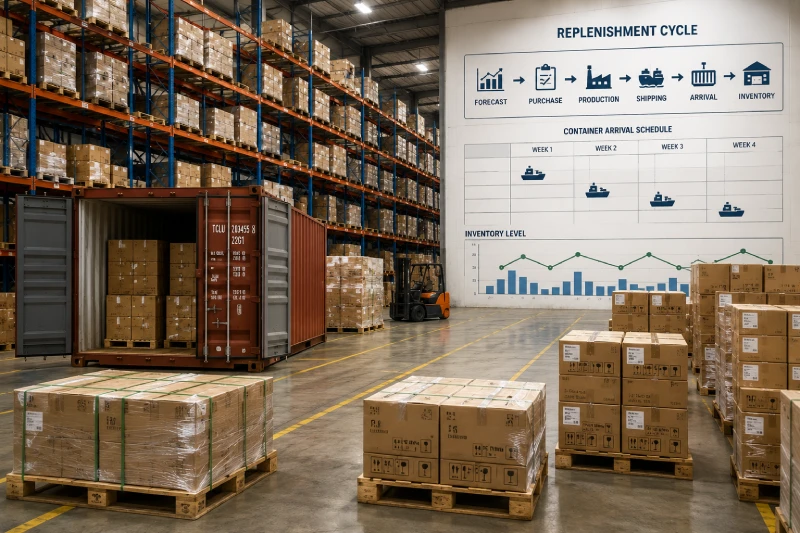
Reliable container schedules allow planners to forecast inventory with greater confidence.
Instead of reacting to stock shortages, companies can establish structured replenishment cycles.
This changes purchasing behavior.
Reactive purchasing often follows this pattern:
Inventory runs low.
Urgent orders are placed.
Shipping decisions become rushed.
Emergency costs increase.
By contrast, companies using FCL often follow a planned replenishment model.
Demand forecasts are reviewed.
Purchase orders are prepared.
Container space is allocated.
Inventory arrives according to a predictable schedule.
The result is lower operational stress and better inventory control.
Many mature importers eventually stop thinking about individual orders and begin thinking about container cycles.
Their focus shifts from shipping products to managing inventory flow.
Coordinating Multiple Suppliers Through One FCL Strategy
Another major benefit of FCL shipping is supplier consolidation.
Many Qatar importers source products from multiple manufacturing regions across China.
A typical purchasing cycle may involve suppliers in:
- Shenzhen
- Guangzhou
- Ningbo
- Shanghai
- Yiwu
Managing separate shipments from each supplier can quickly become inefficient.
Experienced freight forwarders often help consolidate cargo from multiple factories into one container before export.
This approach provides better control over inventory allocation and shipment timing.
Instead of asking, “When should I ship this order?”
Importers begin asking:
“How should I optimize the next container?”
This mindset shift is common among businesses that have reached a more advanced stage of supply chain development.
Container planning becomes the foundation of procurement planning.
Inventory planning becomes more structured.
Operations become more predictable.
Signs Your Business Is Ready to Transition from LCL to FCL
Not every importer needs FCL immediately.
However, several indicators suggest that the transition may be worthwhile.
Your business may be ready if:
✓ You import from China every month.
✓ Inventory shortages occur regularly.
✓ Multiple LCL shipments arrive simultaneously.
✓ You manage several suppliers across China.
✓ Warehouse operations are becoming more complex.
✓ Customer delivery commitments require greater reliability.
✓ Inventory forecasting is becoming difficult.
✓ Cargo security is a growing concern.
Importantly, shipment volume alone should not determine the decision.
Many businesses move to FCL because they need better operational control, not because they are trying to reduce freight costs.
Conclusion
As import operations expand, supply chain performance becomes increasingly important.
At this stage, businesses no longer evaluate shipping solely based on transportation expenses.
They focus on predictability, inventory availability, cargo security, and operational efficiency.
This is why many successful companies eventually transition from LCL Shipping from China to Qatar to dedicated FCL shipments.
The advantages extend far beyond transportation.
FCL provides:
- Better shipment visibility
- Greater cargo protection
- Improved inventory planning
- More reliable transit schedules
- Easier warehouse coordination
- Stronger customs control
- Enhanced supply chain efficiency
For growing businesses involved in Sea Freight from China to Qatar, the decision to adopt FCL is often less about freight rates and more about creating a supply chain capable of supporting long-term growth.
The most successful importers eventually stop viewing containers as shipping equipment and start treating them as strategic tools for inventory management, operational planning, and business scalability.
