
For many importers in Qatar, the decision is not whether goods can be shipped from China—it is whether they should be shipped now.
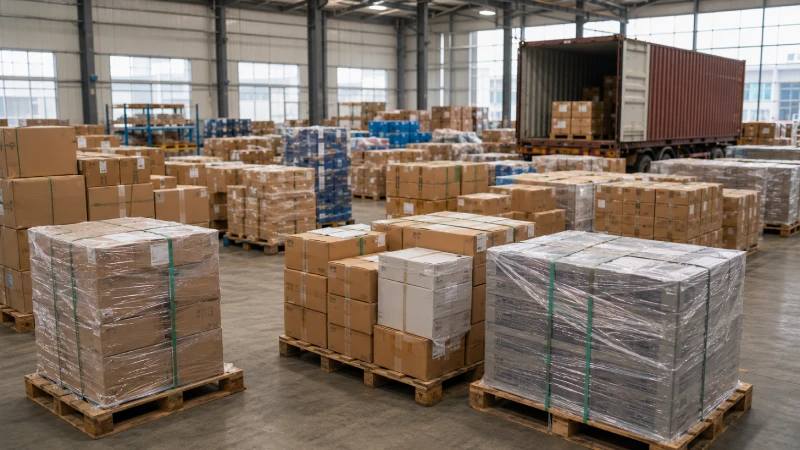
A supplier may have finished production. Inventory may be ready for dispatch. However, the shipment volume may only be 2–5 CBM, far below the capacity of a full container.
At this point, Less than Container Load (LCL) shipping appears to be the obvious choice.
Yet many importers are surprised when their final logistics bill arrives. What initially looked like a low-cost shipping solution often becomes significantly more expensive after consolidation fees, destination charges, and warehouse handling costs are added.
The key question is not simply whether LCL is available.
The real question is:
Is shipping now by LCL economically justified, or would waiting for additional cargo create a lower total landed cost?
This guide explains the pricing logic behind LCL shipping from China to Qatar and helps importers make smarter shipment decisions.
The Real Cost Structure Behind LCL Shipping
One of the most common mistakes importers make is focusing only on ocean freight.
An LCL quotation usually includes several cost components:
- Origin handling charges
- Consolidation warehouse fees
- Export documentation
- Ocean freight
- Destination deconsolidation fees
- Customs-related charges
- Delivery order fees
- Local handling costs
Ocean freight often represents only a portion of the final logistics expense.
For example, a 2 CBM shipment may receive an attractive freight rate from Shanghai to Doha. However, once destination fees are added, the total landed logistics cost can increase dramatically.
This is why experienced importers evaluate total shipment cost rather than comparing freight rates alone.
How Freight Forwarders Calculate CBM Charges
Most LCL freight rates are based on a concept known as Revenue Ton (RT).
The carrier charges whichever is greater:
- One cubic meter (CBM)
- One metric ton (1,000 kg)
For lightweight cargo such as furniture, plastic products, or consumer goods, volume usually determines cost.
For heavy cargo such as steel parts, machinery components, or stone products, weight often becomes the pricing factor.
This explains why two shipments occupying the same physical space can receive completely different freight charges.
Cargo density has a direct impact on transportation economics.
Importers who understand this calculation can better predict their logistics budget before cargo leaves China.
Why Small Shipments Often Cost More Than Expected
The biggest challenge with LCL is that many logistics costs do not shrink proportionally with shipment size.
Whether you ship 1 CBM or 5 CBM, many fixed charges remain almost identical.
These include:
- Documentation fees
- Customs processing fees
- Cargo release charges
- Administrative handling fees
As a result, smaller shipments carry a much higher cost per cubic meter.
For example:
A 1 CBM shipment may absorb nearly the same destination charges as a 5 CBM shipment.
This means the smaller shipment effectively pays a larger share of fixed logistics expenses.
The result is poor cost efficiency.
Every Warehouse Touch Adds Cost
Unlike full-container shipping, LCL cargo passes through multiple facilities before reaching its destination.
A typical shipment may move through:
Supplier warehouse → Consolidation warehouse → Export terminal → Import terminal → Deconsolidation warehouse → Final delivery point
Every transfer requires:
- Labor
- Equipment
- Warehouse space
- Documentation processing
Each touchpoint adds cost.
More importantly, every transfer increases the risk of cargo damage, handling errors, and delays.
This is one reason why LCL shipping often carries higher handling expenses than many importers initially expect.
The Hidden Cost of Multi-Supplier Purchasing
Many Qatar importers source products from multiple Chinese cities.
A typical sourcing scenario may involve:
- Electronics from Shenzhen
- Home products from Yiwu
- Packaging materials from Guangzhou
Although combining these purchases into one shipment appears efficient, additional costs often emerge.
Forwarders may charge:
- Supplier collection fees
- Domestic transportation costs
- Warehouse receiving charges
- Cargo sorting expenses
The more suppliers involved, the more complicated the consolidation process becomes.
Without proper planning, supplier consolidation can consume a significant portion of the savings that LCL was expected to generate.
Understanding Doha Destination Charges Before You Ship
For many first-time importers, destination charges are the most surprising part of the logistics bill.
These charges are collected after cargo arrives in Qatar and may include:
- Terminal handling charges
- Delivery order fees
- Documentation release fees
- Deconsolidation charges
- Customs-related service fees
Many importers focus heavily on freight rates while paying little attention to destination costs.
This often creates unrealistic budgeting expectations.
Why Destination Charges Do Not Scale Down
One of the unique characteristics of LCL shipping is that destination charges are largely fixed.
Whether cargo occupies 1 CBM or 5 CBM, many local fees remain nearly unchanged.
This creates an important economic reality.
As shipment volume increases, destination charges become a smaller percentage of total logistics cost.
As shipment volume decreases, those same charges become significantly more expensive on a per-CBM basis.
This is why extremely small shipments often deliver poor cost efficiency.
How to Reduce Destination Fees in Doha
Experienced importers often use several strategies to improve LCL economics.
First, they consolidate multiple purchase orders into fewer shipments.
Second, they reduce shipment frequency whenever inventory planning allows.
Third, they request fully itemized quotations before booking cargo.
Understanding all local charges before shipment departure prevents unexpected costs upon arrival.
Many importers also work with the same customs broker repeatedly, allowing processes to become faster and more cost-efficient over time.
When Does LCL Stop Making Sense?
The most important question is not whether LCL works.
The real question is when it stops being economical.
Many importers continue using LCL simply because they started with LCL.
However, logistics decisions should evolve as purchasing volume grows.
The LCL Sweet Spot
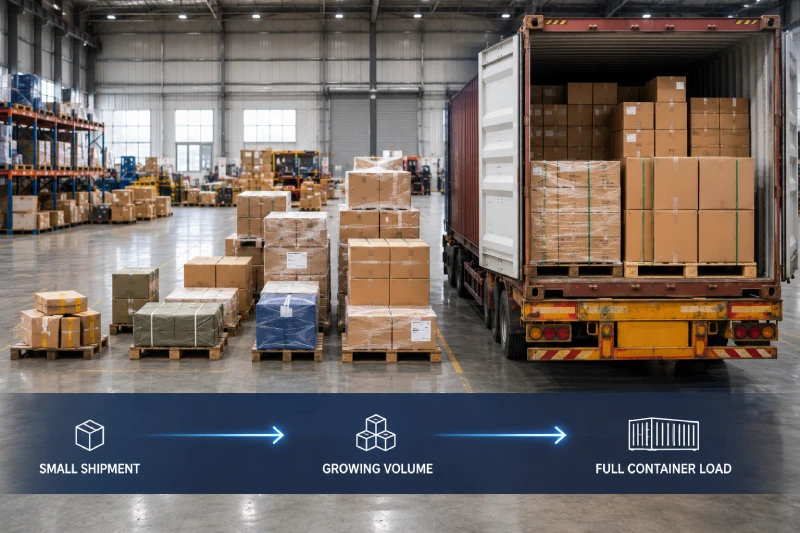
LCL generally performs best when cargo volume is:
- Too large for courier services
- Too small for container loading
- Needed quickly for inventory replenishment
Typical examples include:
- Market testing shipments
- Product launches
- Spare parts orders
- Small retail replenishment orders
In these situations, shipment flexibility often outweighs the additional logistics costs.
The Warning Zone
As cargo volume grows, the economics begin to change.
At a certain point:
- Cost per CBM stabilizes
- Fixed destination charges become less important
- Container utilization becomes feasible
This is when importers should start comparing LCL against 20ft Container Shipping Cost from China to Qatar.
Many companies discover that the difference between a large LCL shipment and a dedicated container is smaller than expected.
Continuing to use LCL beyond this point may actually increase logistics costs.
Cargo Types That Benefit Most From LCL
Not all products perform equally well in consolidated shipping environments.
The best LCL cargo generally shares several characteristics:
- High value relative to volume
- Strong packaging
- Moderate weight
- Low contamination risk
Examples include:
- Electronics
- Consumer products
- Retail merchandise
- Spare parts
- Small industrial components
Because these products generate high value per cubic meter, transportation costs represent a smaller percentage of overall product value.
Cargo That Often Performs Poorly in LCL
Certain products struggle to achieve good economics through consolidation.
Examples include:
- Ceramic tiles
- Stone products
- Steel components
- Heavy machinery parts
These products tend to generate high freight costs due to their weight and density.
Additionally, handling risks can increase when cargo is repeatedly moved during consolidation and deconsolidation.
Cargo Compatibility Matters
LCL containers are shared environments.
Multiple importers’ cargo is loaded into the same container.
As a result, compatibility becomes important.
Potential risks include:
- Moisture exposure
- Odor contamination
- Stacking damage
- Packaging compression
Proper packaging and cargo segregation help reduce these risks.
Importers shipping sensitive products should discuss cargo compatibility with their freight forwarder before booking.
Should You Ship Now or Wait?
Ultimately, the decision comes down to economics and inventory urgency.
Ship Now If:
- Inventory shortages are approaching
- Customer demand is immediate
- Product launch deadlines exist
- Delays would create lost sales
In these situations, the opportunity cost of waiting may exceed any freight savings.
Wait If:
- Additional orders will be ready soon
- Supplier production is ongoing
- Cargo volume is expected to increase significantly
- Inventory levels remain healthy
Combining multiple orders into one shipment often reduces logistics cost per unit.
The savings can be substantial when destination charges are spread across a larger cargo volume.
Common Mistakes That Increase LCL Costs
Many Qatar importers accidentally increase logistics expenses through avoidable decisions.
The most common mistakes include:
- Shipping too frequently
- Comparing freight rates instead of landed costs
- Ignoring destination charges
- Failing to consolidate suppliers
- Remaining in LCL after shipment volume has grown substantially
A logistics strategy that worked at 2 CBM may no longer be optimal at 10 CBM.
Regularly reviewing shipment economics helps prevent unnecessary transportation costs.
Conclusion
LCL shipping from China to Qatar is not automatically the cheapest option.
It is simply the most flexible option for smaller cargo volumes.
The smartest importers evaluate the complete picture:
- Freight charges
- Consolidation costs
- Destination fees
- Inventory urgency
- Future purchasing volume
If cargo is urgently needed, LCL often provides the fastest path to market.
However, if additional inventory will soon be available, waiting and consolidating cargo may produce significantly better economics.
The goal is not to find the cheapest freight rate.
The goal is to determine whether shipping today creates a lower total business cost than shipping tomorrow.
