
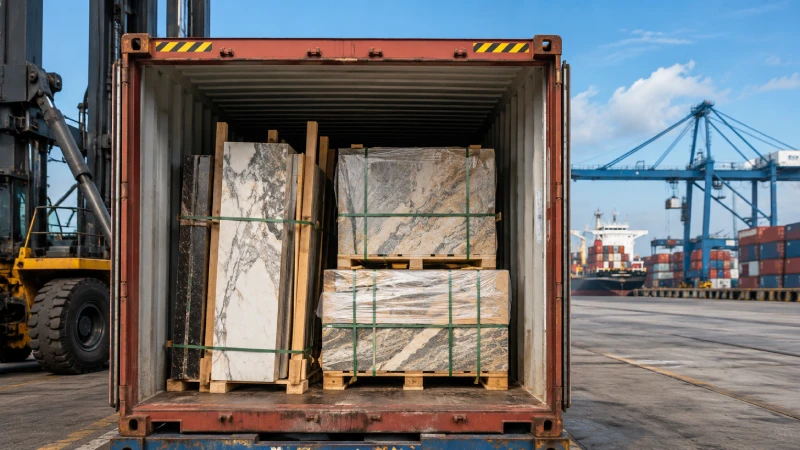
Marble, granite, quartz stone, and other natural stone products remain in high demand across Qatar’s construction, hospitality, and infrastructure sectors. As developers continue investing in residential towers, commercial complexes, luxury villas, and public projects, imports of stone materials from China have become a critical part of the supply chain.
For importers evaluating large stone purchases, transportation economics often become more important than product pricing itself. Unlike many construction materials, stone cargo is extremely dense, meaning shipping costs are influenced more by weight limitations than by container volume. Understanding these factors can significantly reduce logistics expenses and improve project profitability.
If you are currently planning procurement activities, our complete Shipping from China to Qatar guide provides a broader overview of transportation options, transit planning, and import considerations. This article focuses specifically on the economics of shipping heavy marble and stone cargo.
Why Stone Cargo Is Different from Most Building Materials
Many construction materials occupy large amounts of space while remaining relatively lightweight. Stone products behave in the opposite way.
A pallet of marble slabs may occupy only a few cubic meters while weighing several tons. Granite blocks are even heavier. As a result, stone shipments often reach maximum weight limits long before container space is fully utilized.
For Qatar importers, this creates several unique challenges:
- Container payload restrictions
- Truck weight limitations
- Higher terminal handling costs
- Specialized loading equipment requirements
- Increased risk of overweight penalties
This means that traditional freight calculations based on volume are often less relevant than transportation costs calculated per ton.
Why Cost per Ton Matters More Than Cost per Container
Many first-time importers focus only on container freight rates.
For stone cargo, experienced buyers analyze transportation efficiency using cost per ton delivered.
Consider two shipments:
- Container A costs $1,800 to transport and carries 15 tons.
- Container B costs $2,100 to transport and carries 28 tons.
At first glance, Container B appears more expensive. However, the freight cost per ton is significantly lower.
The second shipment delivers more material while spreading fixed transportation costs across a larger payload.
For large construction projects in Doha, Lusail, and Al Wakrah, even small reductions in freight cost per ton can generate substantial savings across multiple containers.
This is one reason why importers frequently compare stone shipments against alternatives such as 20ft Container Shipping Cost from China to Qatar when planning procurement budgets.
Why Most Stone Shipments Use 20ft Containers
Many importers assume larger containers automatically reduce transportation costs.
With heavy cargo, the opposite is often true.
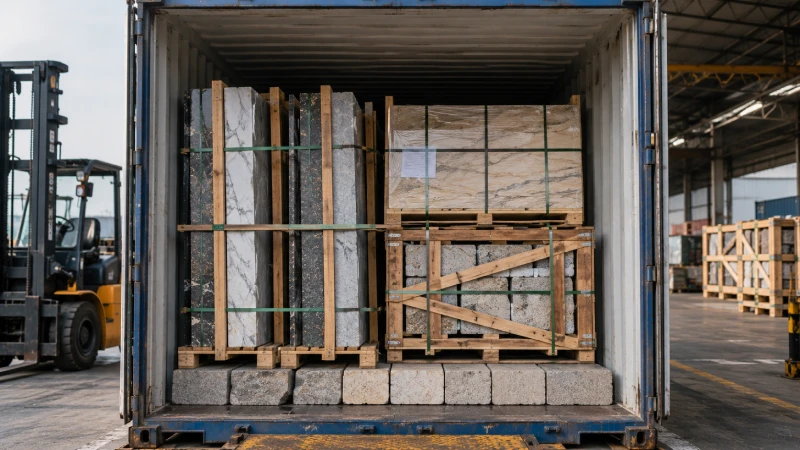
A standard 20GP container typically provides sufficient volume for marble and granite shipments while allowing cargo weight to approach legal payload limits.
Because stone products are so dense, importers rarely utilize the entire cubic capacity of a container.
A marble shipment may fill only half the available space while already reaching maximum allowable weight.
As a result, 20ft containers frequently offer:
- Better payload utilization
- Easier compliance with road regulations
- Reduced overweight risk
- Lower handling complexity
- Improved loading stability
For dense natural stone products, the container is usually limited by weight rather than volume.
Understanding Weight Restrictions Throughout the Supply Chain
Container limits are only one part of the equation.
Stone cargo must pass through multiple stages before reaching the final project site.
Each stage introduces its own weight restrictions.
Export Transportation in China
Cargo first travels from the factory to the port.
Local trucking regulations may restrict:
- Gross vehicle weight
- Axle loads
- Road access routes
Heavy stone blocks often require specialized transport vehicles before they even reach the port terminal.
Ocean Carrier Restrictions
Shipping lines maintain payload limits for each container type.
Exceeding these limits can result in:
- Rejected bookings
- Additional surcharges
- Cargo reloading requirements
- Delayed departures
Inland Transportation in Qatar
After customs clearance, containers must travel from the port to warehouses or construction sites.
Heavy shipments may require:
- Special transport permits
- Route planning
- Alternative delivery schedules
Ignoring these limitations can increase total project logistics costs.
Choosing Between Marble Blocks and Marble Slabs
The form in which stone is shipped has a major impact on transportation economics.
Shipping Marble Blocks
Blocks offer several advantages:
- Minimal packaging requirements
- Faster loading operations
- Lower preparation costs
However, blocks are extremely heavy.
They require:
- Cranes
- Heavy forklifts
- Reinforced loading procedures
Handling expenses can increase significantly.
Shipping Marble Slabs
Slabs provide greater flexibility for distributors and contractors.
Advantages include:
- Easier storage
- Faster project deployment
- Reduced processing requirements
However, slabs require:
- A-frame supports
- Protective packaging
- Additional securing materials
The optimal solution depends on whether processing will occur in China or Qatar.
The Hidden Cost of Port Handling Operations
Ocean freight is often only part of the total logistics budget.
For stone shipments, terminal handling expenses can become a major cost category.
Unlike general cargo, stone frequently requires specialized equipment.
Common examples include:
- Heavy-duty forklifts
- Reach stackers
- Mobile cranes
- Gantry cranes
- Specialized slab handling systems
Each equipment movement generates operational costs.
When importing multiple containers of marble or granite, handling expenses can become a meaningful percentage of total landed cost.
Importers comparing stone imports with other construction materials often discover that handling costs are substantially higher than those discussed in Shipping Building Materials from China to Qatar due to the unique weight characteristics of natural stone.
Why Proper Container Loading Strategy Saves Money
The objective is not simply loading the maximum amount of cargo.
The goal is maximizing legal payload while maintaining safe weight distribution.
Improper loading can create several problems:
- Container floor damage
- Cargo movement during transit
- Inspection delays
- Increased unloading costs
- Safety risks
Experienced freight planners carefully distribute weight across the container floor.
This approach improves:
- Container stability
- Equipment efficiency
- Compliance with carrier requirements
Proper loading plans often reduce operational costs at both origin and destination.
When Overloading Becomes More Expensive Than Underloading
Many buyers assume the heaviest possible container provides the lowest shipping cost.
In reality, excessive loading frequently increases overall expenses.
Potential consequences include:
- Overweight surcharges
- Re-handling fees
- Trucking restrictions
- Port delays
- Additional labor charges
A shipment that exceeds operational limits may ultimately cost more than a slightly lighter container.
Successful importers focus on optimal loading rather than maximum loading.
The objective is balancing:
- Freight efficiency
- Regulatory compliance
- Equipment availability
- Delivery reliability
This approach generally produces lower total landed costs.
Reducing Freight Cost per Ton for Large Projects
For commercial developments and infrastructure projects, transportation efficiency improves as shipment volume increases.
Several strategies help reduce cost per ton.
Consolidate Procurement Orders
Larger consolidated purchases allow:
- Better container utilization
- Reduced administrative expenses
- More efficient trucking schedules
Standardize Packaging
Using consistent slab sizes and crate configurations simplifies handling operations.
Benefits include:
- Faster loading
- Reduced labor costs
- Improved unloading efficiency
Coordinate Delivery Schedules
Synchronizing procurement with construction timelines prevents excessive storage costs and minimizes site congestion.
Importers managing large project shipments often combine these strategies with FCL Shipping from China to Qatar planning to improve overall supply chain efficiency.
When Project Scale Creates Logistics Advantages
Small stone purchases often generate disproportionately high transportation costs.
Fixed expenses such as:
- Documentation
- Equipment mobilization
- Customs processing
- Terminal handling
must still be paid regardless of shipment size.
As shipment volume increases, these costs are distributed across more material.
This creates meaningful economies of scale.
Large contractors frequently achieve significantly lower logistics costs per ton than smaller importers ordering only one or two containers.
For major Qatar construction projects, transportation planning is therefore often integrated directly into procurement strategy.
Conclusion
Shipping marble and stone from China to Qatar is fundamentally a heavy cargo economics challenge rather than a traditional freight forwarding exercise.
The most successful importers focus less on container volume and more on payload efficiency, freight cost per ton, handling requirements, and operational limitations throughout the supply chain.
By selecting the appropriate container type, optimizing weight distribution, managing port handling costs, and coordinating procurement schedules, Qatar importers can significantly reduce transportation expenses while improving project delivery performance.
For companies importing large quantities of natural stone, understanding these heavy cargo economics is often the difference between a profitable project and a logistics budget that exceeds expectations.
