

Understanding Project Procurement Challenges for Qatar Construction Projects
Importing building materials for construction projects in Qatar requires more than just shipping knowledge. Contractors and project buyers face tight timelines, large-scale material orders, and coordination between multiple suppliers. Misalignment between procurement, shipment, and onsite storage often leads to project delays and cost overruns.
Effective planning begins with understanding the critical path of the construction project. Materials with long lead times, such as structural steel, cement, or specialized cladding, need to be ordered in advance. Meanwhile, bulk cargo economics must be considered to avoid overstocking that inflates storage costs or under-ordering that halts construction progress.
Strategic Procurement Planning for Construction Materials
Identifying Material Lead Times and Suppliers
Reliable supplier selection is crucial. Contractors should verify production schedules, MOQ, and historical delivery performance of Chinese manufacturers. A delay at the supplier level cascades downstream, affecting shipping schedules and site readiness.
Prioritizing Materials by Critical Path
Materials should be categorized according to project milestones:
- Long-lead items: Structural steel, prefabricated modules
- Bulk consumables: Cement, aggregates, tiles
- Last-minute or finishing items: Paint, fixtures, specialty equipment
Focusing on the critical path ensures that any delayed materials will not stop other ongoing construction activities.
Consolidating Orders for Cost Efficiency
Consolidating multiple material types into a single shipment optimizes CBM (cubic meter) usage and freight cost. For example, shipping 100 m³ of steel and 30 m³ of tiles together in an FCL container reduces per-unit shipping cost, compared to multiple smaller shipments.
Coordinating Shipping Schedules with Project Milestones
Aligning Factory Dispatch Dates with Site Requirements
Scheduling shipments should match onsite construction needs. Arriving too early increases storage costs; arriving late delays construction. Coordinating with suppliers on dispatch dates ensures materials reach Qatar just-in-time, optimizing cash flow and storage utilization.
Transit Time Planning and Contingency Windows
Typical sea freight from major Chinese ports to Doha takes 20–30 days. Contractors should add buffer periods for customs clearance and inland transport:
This allows for minor delays without disrupting the project timeline.
Staggered Shipment Scheduling
For large projects, multiple staggered shipments prevent congestion at the construction site. Prioritize critical materials first, while less urgent materials arrive later. This reduces onsite clutter and avoids unnecessary handling costs.
Storage and Site Logistics Considerations
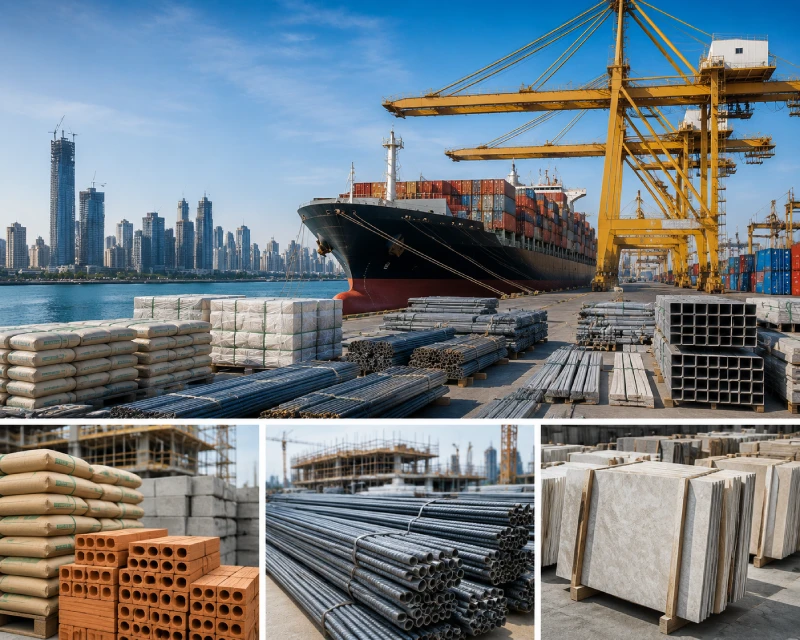
Pre-Delivery Storage Capacity Planning
Site storage is often limited. Contractors should evaluate:
- Onsite storage areas
- Offsite warehouse options
- Security and weather protection
Proper planning avoids material damage, theft, or blockage of ongoing works.
Inventory Rotation and Material Sequencing
Implementing a FIFO (first-in, first-out) system ensures materials are used efficiently, reducing risk of deterioration or expiry, especially for adhesives, coatings, and cement. Sequencing materials based on project phases minimizes handling and reorganization.
Equipment and Handling Requirements
Heavy, oversized, or fragile materials require specialized equipment such as cranes, forklifts, and pallet jacks. Advanced planning of handling equipment ensures safe and timely unloading, reducing downtime and accident risk.
Optimizing Bulk Cargo Economics
Cost-Benefit of LCL vs FCL for Large Project Orders
- FCL (Full Container Load): Best for large, consolidated shipments; lower per-unit cost.
- LCL (Less than Container Load): Suitable for smaller, staggered orders; higher per-unit cost but flexible.
Contractors should calculate total cost per CBM to determine the most economical approach.
Minimizing Wastage and Over-Ordering
Accurate order quantities prevent overstocking. Packaging optimization reduces wasted space, maximizes container efficiency, and lowers shipping costs.
Leveraging Supplier & Freight Discounts
Negotiating bulk booking agreements with suppliers and freight forwarders can reduce both material and shipping costs. Flexible delivery terms allow project teams to match arrivals with payment schedules and onsite readiness.
Risk Management and Delay Prevention Strategies
Common procurement-related delays include:
- Production bottlenecks at suppliers
- Port congestion
- Customs clearance delays
- Weather disruptions
Contractors should maintain contingency plans: buffer stock, alternative suppliers, and flexible shipment schedules. Regular communication between supplier, freight forwarder, and project team ensures rapid response to any unexpected issues.
Key Takeaways for Contractors and Project Buyers
- Synchronize procurement, shipping, and storage with project milestones.
- Prioritize materials by critical path to prevent delays.
- Optimize bulk cargo economics using consolidated shipments and careful CBM calculations.
- Plan for storage capacity and handling equipment at the construction site.
- Maintain contingency plans to minimize risk and avoid costly project interruptions.
Following these strategies helps Qatar-based construction projects import building materials from China efficiently, reducing delays and controlling costs while maintaining seamless project progress.
