
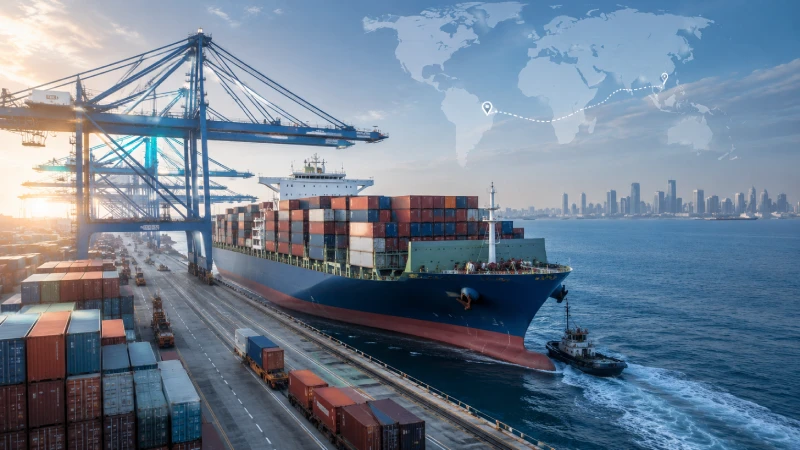
Sea freight from China to Qatar is the right choice when your shipment is too large, too heavy, or too cost-sensitive for air freight, but not so urgent that paying a premium for speed makes business sense. If you are already comparing options under the broader Shipping from China to Qatar route, this page helps you decide whether sea freight is the right commercial solution for your next shipment.
For most importers, sea freight becomes the strongest option when the goal is landed cost control rather than fastest delivery. This is especially true for furniture, building materials, machinery, tiles, kitchen cabinets, lighting products, auto parts, solar equipment, and other cargo where volume or weight makes air freight expensive.
The real decision is not simply whether sea freight is cheaper. The better question is whether the savings are large enough to justify the longer lead time, extra planning, and operational risk. When the shipment is planned correctly, sea freight can reduce cost without sacrificing control. When it is planned poorly, a low freight rate can turn into hidden charges, port delays, storage costs, delivery problems, or cargo damage.
Quick Decision Summary: Is Sea Freight from China to Qatar the Right Choice?
Choose sea freight from China to Qatar if your shipment is bulky, heavy, margin-sensitive, or suitable for planned replenishment. It is usually the right solution when landed cost matters more than speed and when you can prepare accurate cargo details before booking.
Sea freight is a strong fit if:
- Your shipment is packed in cartons, pallets, crates, or containers.
- The cargo volume or weight makes air freight too expensive.
- You can plan ahead and do not require immediate delivery.
- You want a lower cost per CBM or per container.
- You need supplier pickup, export handling, ocean booking, Qatar clearance support, and final delivery coordination.
- You are comparing LCL, FCL, consolidation, or door-to-door freight options.
Do not choose sea freight if the shipment is extremely urgent, very small, poorly packed, or tied to a fixed deadline where delay penalties are higher than freight savings.
For most Qatar importers, sea freight is the best cost-optimization channel when the shipment is commercial in scale and the delivery schedule is flexible enough to support ocean transit.
What Sea Freight from China to Qatar Is Best For
Sea freight works best when the importer’s priority is reducing total logistics cost without losing visibility over cargo movement.
For Qatar importers, this usually applies to three buying situations.
The first is regular commercial importing. If you buy from Chinese factories every month or every quarter, sea freight gives you better cost predictability. You can consolidate suppliers, plan container loading, and negotiate more suitable routing instead of treating every shipment as an emergency.
The second is bulky project or retail cargo. Products such as furniture, fixtures, cabinets, tiles, marble, equipment, and construction materials consume space quickly. Even when they are not extremely heavy, their volume makes air freight inefficient. Sea freight allows the shipment to move by LCL, FCL, or a dedicated container depending on quantity.
The third is margin-sensitive importing. If your profit depends on controlling landed cost, sea freight gives you more room to protect margins. This matters for wholesalers, distributors, project contractors, trading companies, and importers selling into Qatar’s competitive B2B or retail markets.
Sea freight is especially suitable when your commercial decision is based on these questions:
- Can I lower freight cost without creating delivery failure?
- Can I ship more units per shipment to reduce unit logistics cost?
- Can I avoid paying air freight because of poor planning?
- Can I consolidate several suppliers into one shipment?
- Can I get one clear quotation covering origin, ocean freight, destination charges, customs support, and delivery?
If these questions match your current situation, sea freight is likely the right direction.
When NOT to Use Sea Freight from China to Qatar
Sea freight is not always the best choice, even when it looks cheaper on paper.
Do not use sea freight if the cargo is needed urgently for production, installation, exhibition, retail launch, or repair. If a missing component can stop a project or create customer penalties, air freight may be more cost-effective despite the higher freight price.
Do not use standard sea freight for very small shipments if the total handling, documentation, origin charges, and destination fees make the shipment uneconomical. In some cases, courier, air freight, or supplier consolidation may be more practical.
Do not use sea freight without proper packaging if your cargo is fragile, moisture-sensitive, oversized, or easily scratched. Ocean transport involves multiple handling points. Poor packaging can turn a low freight rate into a high claims problem.
Do not use sea freight if your supplier cannot provide accurate packing data. Without dimensions, weight, carton count, HS code, cargo photos, and loading requirements, any quote will be unstable. A cheap estimate can become expensive after cargo is measured or inspected.
Do not use sea freight only because one quote looks lower. Low ocean freight can be offset by high local charges, unclear destination fees, customs issues, storage, demurrage, or failed delivery coordination in Qatar.
Sea freight is a cost-saving tool only when the shipment is planned correctly. If timing, documentation, packaging, or supplier coordination is weak, the cheaper option may become the riskier one.
Decision Framework: How to Choose the Right Sea Freight Solution
Instead of asking only how much sea freight costs from China to Qatar, importers should make the decision using a commercial framework.
The first factor is shipment size. If the cargo is small but not urgent, LCL may be suitable. If the shipment is large enough to fill most of a container, FCL may reduce handling risk and improve cost control. If you are close to a full container but not quite there, supplier consolidation can be the better solution.
The second factor is cargo sensitivity. Fragile, high-value, moisture-sensitive, oversized, or project-critical cargo should not be judged by freight rate alone. These shipments require better packing, loading supervision, clear routing, and a forwarder who understands risk control.
The third factor is supplier complexity. Buying from one supplier is simple. Buying from three, five, or ten suppliers in different Chinese cities requires consolidation planning. Without coordination, you may pay repeated pickup, warehouse, and documentation costs.
The fourth factor is Qatar delivery requirement. A shipment ending at Hamad Port is not the same as a shipment delivered to a warehouse, showroom, construction site, or project location. Final delivery access, unloading conditions, customs status, and delivery timing all affect the right solution.
The fifth factor is quote transparency. A reliable freight solution should clearly separate origin charges, ocean freight, destination charges, customs-related costs, delivery fees, and possible extra charges. If the quote is vague, the risk is not low; it is simply hidden.
A good sea freight decision should answer:
- Is LCL, FCL, or consolidated shipment more suitable?
- Are all suppliers and pickup cities included?
- Are Qatar destination charges clearly explained?
- Is customs support included or separate?
- Who controls delivery after arrival?
- What risks could create extra cost?
- What information is still missing before a firm quote?
This framework helps importers avoid choosing based only on the lowest number.
Cost vs Risk vs Convenience Analysis
Sea freight is usually chosen for cost optimization, but cost cannot be separated from risk and convenience.
A low-cost option may work well for simple cargo, flexible timing, and experienced importers. However, the same option may be dangerous for fragile products, multi-supplier orders, or project cargo with strict deadlines.
| Decision Factor | Lowest-Cost Option | Balanced Option | Higher-Control Option |
|---|---|---|---|
| Best for | Simple cargo, flexible timing | Regular commercial imports | Fragile, project, or high-value cargo |
| Main benefit | Lower quoted freight | Better cost-risk balance | Stronger operational control |
| Main risk | Hidden charges or weak coordination | Requires accurate cargo data | Higher upfront logistics cost |
| Typical importer | Price-sensitive buyer | Distributor or wholesaler | Contractor, project buyer, factory |
| Recommended when | Cargo is simple and non-urgent | Cost matters but reliability also matters | Failure would be expensive |
For most Qatar importers, the balanced option is usually the best. It may not be the absolute cheapest quote, but it reduces the risk of unexpected destination cost, supplier delays, poor loading, or customs confusion.
Convenience also has value. If a forwarder can coordinate supplier pickup, warehouse consolidation, export declaration, sea booking, Qatar clearance support, and delivery, the importer saves time and reduces communication mistakes.
The key is to compare total landed cost, not only ocean freight.

Comparison with Alternative Solutions
Sea freight should be compared with realistic alternatives before making a final decision.
| Solution | Best For | Weakness | Decision Guidance |
|---|---|---|---|
| Sea Freight LCL | Small to medium cargo not filling a container | More handling, possible destination charges | Good for cost control when cargo volume is moderate |
| Sea Freight FCL | Larger shipments, better cargo control | Requires enough volume to justify container use | Best for regular importers and bulky cargo |
| Air Freight | Urgent, high-value, or lightweight cargo | Much higher cost for heavy or bulky goods | Use when delay cost is higher than freight cost |
| Courier | Samples, documents, small parcels | Not suitable for commercial bulk cargo | Good for samples before bulk production |
| DDP Shipping | Buyers who want simplified delivery and fewer import handling steps | Must confirm scope, taxes, and delivery terms carefully | Useful when importer wants convenience and predictable responsibility |
| Supplier-Arranged Freight | Simple orders from one experienced supplier | Importer may have less cost visibility and control | Acceptable only if the supplier is reliable and transparent |
If cost is the main priority, sea freight usually wins against air freight and courier for commercial cargo. But if convenience and responsibility are more important, a door-to-door or DDP shipping from China to Qatar solution may be better than port-to-port sea freight.
The right question is not which method is cheapest. It is which method gives you the lowest acceptable landed cost with the least operational risk.
Real Importer Scenarios
Scenario 1: Furniture Retailer Importing Mixed Products
A Qatar furniture retailer buys sofas, tables, chairs, and display items from several suppliers in Foshan and Guangzhou. The cargo is bulky, not urgent, and margin-sensitive.
Sea freight is the right choice because air freight would destroy profit margins. The best solution is supplier consolidation plus either LCL or FCL depending on final volume. The key risk is packaging and loading order, because furniture can be scratched or compressed during transport.
Recommended decision: choose sea freight with consolidation, cargo photos, packing review, and clear Qatar delivery planning.
Scenario 2: Contractor Importing Building Materials
A contractor imports tiles, sanitary ware, lighting, and fittings for a project in Doha. The shipment is heavy and schedule-sensitive, but not urgent enough for air freight.
Sea freight is suitable, but the decision should not be based only on cost. The importer needs loading supervision, strong packaging, and delivery coordination because damaged or delayed materials can affect installation schedules.
Recommended decision: use sea freight, but choose a forwarder who can manage cargo risk and delivery timing, not just book a vessel.
Scenario 3: Machinery Buyer Shipping One Large Equipment Order
A factory in Qatar imports machinery from a Chinese manufacturer. The equipment is expensive, heavy, and may require wooden crates, forklift handling, and careful documentation.
Sea freight may be the most economical solution, but only if packaging, dimensions, lifting points, and customs documents are confirmed before booking. A poor forwarder may quote cheaply but fail to manage oversized handling or destination delivery.
Recommended decision: use controlled sea freight with technical cargo review before shipment confirmation.
Scenario 4: Trading Company Buying from Multiple Yiwu Suppliers
A trading company purchases household goods, accessories, and small commercial products from many suppliers. Each order is too small for a container, but together they create a meaningful shipment.
Sea freight consolidation is usually the best solution. The importer can reduce unit freight cost by combining cargo into one export shipment instead of shipping separately.
Recommended decision: use warehouse consolidation in China, then ship by LCL or FCL depending on total CBM.
Scenario 5: Importer with Urgent Replacement Parts
A Qatar importer needs replacement parts to restart equipment operation. The shipment is small, high-value, and urgently needed.
Sea freight is not the best choice. Even if it is cheaper, the business cost of waiting may be much higher than the freight savings.
Recommended decision: use air freight or courier for the urgent parts, then use sea freight for future planned replenishment.
Common Mistakes Importers Make
The first mistake is choosing the lowest quote without checking what is included. Some quotes exclude destination charges, customs support, delivery, storage, or special handling. A low first number can become a high final cost.
The second mistake is quoting without accurate cargo details. If CBM, gross weight, carton count, packing type, supplier location, and delivery address are missing, the quote cannot be reliable.
The third mistake is using sea freight too late. Many importers wait until the goods are finished before planning logistics. This reduces routing options and may force expensive decisions.
The fourth mistake is ignoring packaging. Sea freight is cost-effective, but it is not gentle. Fragile cargo, furniture, tiles, marble, machinery, and electronics need packaging designed for ocean movement and handling.
The fifth mistake is comparing port-to-port and door-to-door quotes as if they are the same. They are not. A port-to-port quote may look cheaper, but the importer still needs to manage clearance, destination charges, and inland delivery.
The sixth mistake is failing to clarify Incoterms. FOB, EXW, CIF, DAP, and DDP create different responsibilities and costs. If the importer and supplier are not aligned, unexpected charges can appear.
The seventh mistake is not asking about risk before booking. A professional forwarder should tell you what can go wrong: supplier delay, measurement change, customs document issues, port storage, truck delivery limits, or packaging weakness.
Final Recommendation: Should You Choose Sea Freight from China to Qatar?
Choose sea freight from China to Qatar if your shipment is commercial, bulky, heavy, margin-sensitive, or suitable for planned replenishment. It is usually the best option when cost optimization matters more than speed and when you can prepare accurate cargo details before booking.
Choose LCL if your shipment is not large enough for a full container but still too big or too expensive for air freight.
Choose FCL if you have enough volume, want better cargo control, or need to reduce handling risk.
Choose consolidated sea freight if you buy from multiple Chinese suppliers and want to reduce total shipment cost.
Do not choose sea freight if the cargo is urgently needed, very small, poorly packed, or commercially risky to delay.
The strongest decision is to use sea freight when it supports your landed cost target without creating unacceptable delivery, damage, or customs risk.
Get a Cost-Optimized Sea Freight Quote from China to Qatar
If you are comparing sea freight options from China to Qatar, WINSail Logistics can help you choose the right solution before you commit to a booking.
Send us your cargo details, and our team will help evaluate whether LCL, FCL, consolidation, door-to-door, or another solution gives you the best balance of cost, risk, and convenience.
For a faster quote, please provide:
- Cargo name
- Supplier city in China
- Destination in Qatar
- Carton, pallet, crate, or container details
- Total CBM and gross weight
- Incoterms
- Required delivery location
- Cargo photos or packing list if available
Request a quote today and let us help you reduce freight cost without creating hidden logistics risk.
FAQ
Is sea freight from China to Qatar always the cheapest option?
It is usually cheaper than air freight for bulky or heavy commercial cargo, but the final cost depends on shipment size, supplier location, destination charges, customs handling, and delivery requirements.
Should I choose LCL or FCL for sea freight to Qatar?
Choose LCL when your cargo is not enough for a full container. Choose FCL when you have enough volume, want better cargo control, or need to reduce handling risk.
When should I avoid sea freight from China to Qatar?
Avoid sea freight when the shipment is urgent, very small, poorly packed, or tied to a deadline where delays would create higher business costs than freight savings.
Can sea freight be arranged from multiple suppliers in China?
Yes. Supplier consolidation is often one of the best ways to reduce total freight cost when buying from multiple Chinese factories or trading companies.
What information is needed for a sea freight quote?
A reliable quote usually requires cargo name, supplier city, destination address, packing details, total CBM, gross weight, Incoterms, and any special handling requirements.
Why do some sea freight quotes look much cheaper than others?
Some quotes may exclude destination charges, customs support, delivery, storage, or special handling. Importers should compare the full scope, not only the ocean freight number.
Is sea freight suitable for fragile cargo?
Yes, but only with proper packaging, loading planning, and risk control. Fragile cargo should not be shipped based on freight price alone.
Can WINSail Logistics help compare sea freight with air freight or DDP options?
Yes. WINSail Logistics can evaluate your cargo details and recommend whether LCL, FCL, consolidation, air freight, door-to-door, or DDP-style shipping is the better solution.
