
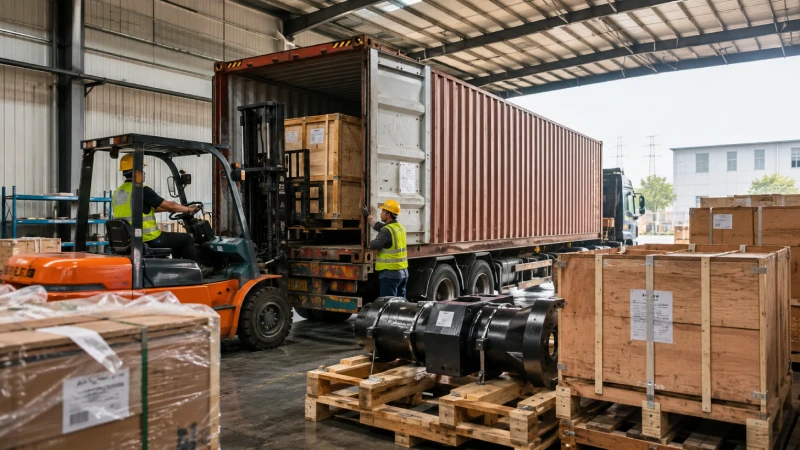
For Qatar importers comparing different China export origins, Ningbo should not be judged only as another port city. It should be evaluated as a stable industrial export hub with strong manufacturing support, efficient container handling, and reliable full-container shipping conditions. If you are still comparing several China origins, start with our broader Shipping from China to Qatar guide, then use this Ningbo-focused page to decide whether Ningbo is the right sourcing and export origin for your Qatar-bound cargo.
Ningbo is especially suitable when the shipment is factory-led, containerized, and repeatable. It is not always the best choice for small mixed cargo, urgent air freight, or goods manufactured in South China. But when your suppliers are located in Ningbo, Cixi, Yuyao, Taizhou, Shaoxing, or nearby Zhejiang industrial areas, shipping from Ningbo to Qatar can reduce domestic trucking complexity and improve export consistency.
Why Ningbo Matters for Qatar-Bound Shipments
Ningbo’s value comes from a combination of manufacturing strength and port efficiency. Many China export cities are strong in one area but weaker in another. Yiwu is strong for small commodity trading. Shenzhen is strong for electronics and fast-moving supply chains. Guangzhou and Foshan are practical for furniture, lighting, and mixed consumer goods. Ningbo’s position is different: it is a production-driven export origin for industrial goods, appliances, hardware, plastic products, machinery parts, and dense container cargo.
For Qatar importers, this matters because many purchases are not one-time sample orders. Distributors, project contractors, industrial buyers, and building material suppliers often need stable monthly or quarterly shipments. They care less about a single low quote and more about whether the origin can support reliable container loading, predictable sailing schedules, and smooth supplier coordination.
This is where Ningbo has a strong advantage. When the cargo is already produced in Zhejiang, exporting through Ningbo often keeps the supply chain shorter and more controllable. Instead of moving cargo to Shanghai or South China only because those ports are more familiar, importers can use Ningbo as the natural export gateway for Zhejiang-made goods.
What Qatar Importers Commonly Source from Ningbo
Ningbo is a practical origin for several cargo categories that match Qatar’s import demand.
One important category is home appliances and appliance components. Ningbo and nearby cities have strong manufacturing clusters for small appliances, fans, kitchen appliances, motors, housings, and supporting components. For Qatar retailers and distributors, these products often move better as planned FCL shipments rather than scattered small orders. If your cargo includes electrical or appliance-related products, you may also compare this page with Shipping Electrical Products from China to Qatar to understand compliance and documentation risks.
Hardware, tools, and mechanical parts are another strong fit. Many Qatar importers source fasteners, fittings, hand tools, bearings, metal accessories, and maintenance-related parts from Zhejiang suppliers. These goods are often dense, packed in cartons, pallets, or crates, and suitable for stable container planning.
Ningbo is also relevant for plastic products and molded components. These may include household plastic goods, injection-molded parts, packaging items, appliance shells, and automotive plastic parts. The key advantage is not simply product availability, but the ability to consolidate factory production into predictable container shipments.
For industrial buyers, Ningbo is especially useful for machinery parts, production equipment, pumps, valves, spare parts, and industrial accessories. These shipments require better loading control, stronger packaging, and closer coordination with suppliers. Importers handling machinery or factory equipment can also review Shipping Machinery from China to Qatar and Shipping Industrial Equipment from China to Qatar for more detailed risk planning.
Ningbo-Zhoushan Port: The Core Logistics Advantage
The main reason Ningbo works well for Qatar shipments is Ningbo-Zhoushan Port. The port is one of China’s most important international gateways and is known for large cargo throughput, strong container capacity, and deep-water port infrastructure. For importers, the practical value is not just the port’s size. The real value is consistency.
FCL shipping requires more than booking a container. The container must be released on time, picked up by the trucker, loaded at the factory or warehouse, returned before cut-off, accepted by the terminal, and matched with the correct vessel schedule. When shipments repeat every month or every quarter, these operational details matter a lot.
Ningbo is particularly strong for FCL shipments because the surrounding industrial base feeds steady export cargo into the port. This supports more predictable container operations for suppliers and freight forwarders. If your Qatar shipment involves a full 20GP, 40GP, or 40HQ container, Ningbo can often provide a more stable export experience than trying to move Zhejiang cargo to another city only to chase a small ocean rate difference.
For importers planning regular container programs, FCL Shipping from China to Qatar is often the most relevant shipping model to compare with Ningbo’s strengths.
When Ningbo Is a Strong Origin for Qatar
Ningbo is a strong choice when your shipment meets several conditions.
First, your suppliers should be located in Ningbo or nearby Zhejiang cities. If cargo is produced close to the port, inland trucking becomes simpler, cheaper, and easier to control. This is especially important for heavy cargo, fragile goods, and factory-loaded containers.
Second, your cargo should be suitable for containerized shipping. Ningbo’s biggest advantage appears when cargo can fill a full container or at least justify planned consolidation. Appliances, hardware, plastic goods, machinery parts, auto parts, and industrial supplies are common examples. For replacement parts, distributor stock, or aftermarket supply chains, Shipping Auto Parts from China to Qatar can support a more detailed replenishment strategy.
Third, the shipment should not be extremely urgent. Ningbo is excellent for planned sea freight, but it is not always the best origin for last-minute air freight to Doha. If the cargo must arrive very quickly, Shanghai, Guangzhou, Shenzhen, or Hong Kong may offer more flexible air cargo options.
Fourth, Ningbo works best when the importer values stability over short-term quote shopping. A slightly lower ocean freight rate from another port may not help if it creates longer domestic trucking, more coordination problems, or higher loading risk.
Ningbo vs Shanghai, Shenzhen, Guangzhou, and Yiwu
Choosing Ningbo should always be based on supplier geography and cargo profile, not port reputation alone.
Compared with Shanghai, Ningbo can be more practical when the supplier is in Zhejiang and the shipment is FCL-ready. Shanghai offers broad international logistics coverage, strong air freight options, and wide service availability. But if the cargo is produced near Ningbo, moving it to Shanghai may add unnecessary inland cost and coordination. Shanghai may be better for mixed corporate shipments or complex supplier networks, while Ningbo may be better for direct factory-to-container export.
Compared with Shenzhen, Ningbo has a different role. Shenzhen is stronger for electronics, high-value components, and fast-moving South China supply chains. Ningbo is stronger for industrial goods, appliances, hardware, plastic products, and stable FCL shipments. If your suppliers are in Shenzhen, Dongguan, or Huizhou, exporting from South China usually makes more sense. But if the cargo is produced in Zhejiang, Ningbo is usually more logical. For South China comparison, you can also review Shipping from Shenzhen to Qatar.
Compared with Guangzhou and Foshan, Ningbo is less suitable for Guangdong-made furniture, lighting, ceramic products, and mixed consumer goods. If your Qatar shipment is based on Foshan or Guangzhou suppliers, review Shipping from Guangzhou to Qatar instead of forcing the cargo through Ningbo.
Compared with Yiwu, the decision depends on the buying model. Yiwu is excellent for small commodities, mixed SKUs, market sourcing, and multi-supplier consolidation. Ningbo is stronger for factory-led shipments and stable container programs. If your cargo comes from many small Yiwu market suppliers, Yiwu-based consolidation may be more efficient. If your goods are manufactured by factories around Ningbo, Ningbo is usually the better export origin.
Cost Positioning: Ningbo Is Not Always Cheapest, But Often More Efficient
Ningbo should not be selected only because the ocean freight quote looks attractive. The better question is total logistics cost.
Total cost includes inland trucking, pickup from suppliers, warehouse handling, container loading, port cut-off risk, cargo repacking, and possible delays caused by using the wrong origin. If your supplier is close to Ningbo, shipping from Ningbo can reduce many hidden costs. The container can be loaded closer to the factory, trucking time is shorter, and the communication chain is easier to manage.
For dense cargo such as hardware, metal parts, machinery accessories, and industrial components, this matters even more. Heavy cargo can create additional risks if it needs long-distance trucking across provinces. Choosing the closest practical export port can reduce handling and movement risk.
However, Ningbo is not automatically the cheapest option for every shipment. If your suppliers are in Guangdong, South China ports may be cheaper overall. If your goods are small mixed commodities, Yiwu or Shanghai consolidation may make more sense. If the shipment is urgent, air freight from other hubs may be more practical.
The best decision is to compare the complete route from supplier location to final Qatar delivery, not only the sea freight line item.
Transit Time Positioning: Stability Over Speed
Shipping from Ningbo to Qatar by sea is usually selected for planned cargo, not emergency cargo. Transit time depends on the carrier, sailing week, transshipment port, port congestion, and Middle East service routing. Instead of asking whether Ningbo is always the fastest, importers should ask whether Ningbo provides stable departures for the cargo type and supplier location.
For regular FCL shipments, this stability can be more valuable than a small theoretical transit time difference. A Qatar appliance distributor, for example, may care more about predictable monthly departures than saving two days on one sailing. A construction supplier may need containers to leave China according to a project schedule. An industrial buyer may need replacement parts to arrive before stock runs out.
Ningbo is well suited to these planned shipment models. It supports structured booking, factory loading, and containerized export execution. But if the shipment is urgent, small, and high-value, air freight alternatives should be compared before choosing Ningbo.
Consolidation Strategy: Best for Zhejiang Factory Cargo
Ningbo consolidation works best when suppliers are geographically close. For example, if an importer buys from two or three suppliers in Ningbo, Cixi, Yuyao, Shaoxing, or Taizhou, consolidating the goods near Ningbo and loading one FCL can be efficient. The cargo can be checked, palletized, labeled, and loaded with better control.
This is especially useful for Qatar importers buying industrial parts, hardware, appliance components, or project-related supplies from multiple Zhejiang factories. Instead of shipping several small lots separately, the importer can combine them into one planned container.
However, Ningbo is not ideal for random nationwide consolidation. If suppliers are spread across Guangdong, Fujian, Shandong, Jiangsu, and Zhejiang, Ningbo may not be the best central point. The additional domestic trucking may increase cost and risk. For multi-province sourcing, the consolidation city should be selected based on supplier distribution, cargo urgency, and container volume.
In short, Ningbo is a strong consolidation point for Zhejiang-led cargo, not a universal consolidation solution for every China shipment.
Ningbo’s Strength for Heavy and Industrial Cargo
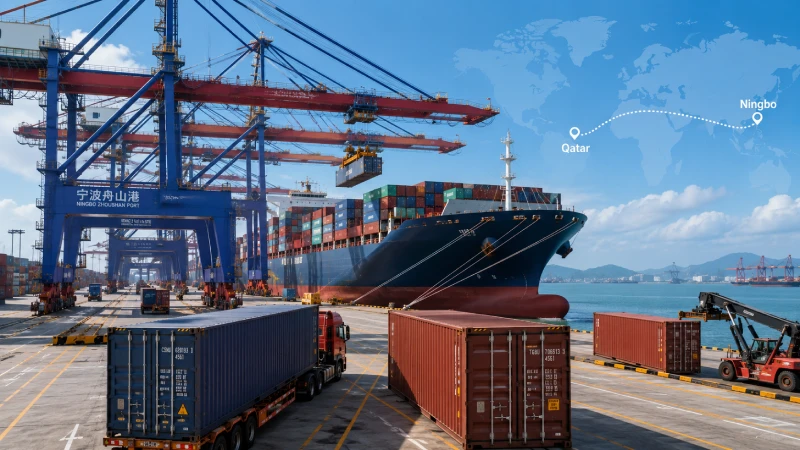
Ningbo is particularly attractive for heavy, dense, and industrial cargo. This includes machinery components, hardware, metal goods, industrial spare parts, pumps, valves, tools, and construction-related supplies. These goods often require more careful container planning than light consumer products.
For dense cargo, container type matters. A 20GP container may be more suitable than a 40HQ if the cargo reaches weight limits before filling the container volume. Importers should check cargo weight, packaging dimensions, floor loading, lashing requirements, and road transportation limits before booking.
Packaging is also critical. Heavy cargo may require wooden crates, reinforced pallets, anti-rust protection, shock protection, and proper forklift access. Poor weight distribution can create loading risk, container damage, or destination unloading problems in Qatar.
This is why Ningbo’s value is not just port capacity. Its real value is stable factory-to-port execution for industrial shipments. When suppliers, forwarders, warehouses, truckers, and port operations are coordinated around a strong export origin, Qatar importers can reduce operational uncertainty.
When Ningbo Is Not the Best Choice
Ningbo is strong, but it is not suitable for every Qatar shipment.
If your suppliers are mainly in Shenzhen, Dongguan, Guangzhou, Foshan, or Zhongshan, South China ports are usually more efficient. Moving cargo to Ningbo may add unnecessary trucking cost and delay.
If your order is made up of small mixed commodities from many market suppliers, Yiwu may be a better sourcing and consolidation base. Ningbo can still work if cargo is nearby, but it is not the first choice for scattered small orders.
If your shipment is urgent and must reach Doha quickly, Ningbo sea freight may not meet the deadline. Air freight from Shanghai, Guangzhou, Shenzhen, or Hong Kong may provide better flexibility.
If your cargo is LCL and very small, Ningbo’s port scale may not provide a major advantage. LCL performance depends more on consolidation service, warehouse handling, sailing schedule, and destination deconsolidation than on port size alone.
The key point is simple: Ningbo is excellent for stable industrial FCL cargo, but not every shipment needs Ningbo.
Decision Checklist: Should You Ship from Ningbo to Qatar?
Choose Ningbo if your supplier is located in Ningbo, Cixi, Yuyao, Taizhou, Shaoxing, or nearby Zhejiang areas. It is also a strong option if your cargo includes appliances, hardware, plastic products, machinery parts, industrial supplies, or dense cargo.
Ningbo is especially suitable if you can ship by 20GP, 40GP, or 40HQ, and if your business needs monthly or quarterly replenishment. It is also useful when you want better loading control, shorter inland movement, and stable port operations.
Consider another origin if your suppliers are in Guangdong, your order is mainly Yiwu-style mixed commodities, your shipment is urgent air cargo, or your suppliers are spread across many provinces with no clear consolidation logic.
For Qatar importers, the right origin should reduce total risk, not simply produce the lowest single freight quote.
Strategic Conclusion
Shipping from Ningbo to Qatar is a strong choice when the cargo is industrial, factory-led, containerized, and repeatable. Ningbo’s advantage comes from its Zhejiang manufacturing base, Ningbo-Zhoushan Port efficiency, and strong suitability for stable FCL operations.
It is not the best origin for every shipment. South China cargo should usually move through South China ports. Yiwu-style small commodity cargo may need Yiwu consolidation. Urgent shipments may require air freight from larger air cargo hubs.
But for appliances, hardware, machinery parts, plastic products, industrial components, and dense container cargo, Ningbo can be one of the most practical origins for Qatar importers. If you are comparing Ningbo, Shanghai, Shenzhen, Guangzhou, or Yiwu for your next Qatar shipment, Winsail Logistics can evaluate your supplier locations, cargo volume, container type, and Qatar delivery deadline to recommend the most efficient export strategy.
FAQ
Is Ningbo a good origin for shipping goods to Qatar?
Yes. Ningbo is a strong origin when goods are produced in Zhejiang and shipped by FCL, especially appliances, hardware, plastic products, machinery parts, industrial goods, and dense cargo.
Is Ningbo better than Shanghai for Qatar shipments?
Ningbo may be better when suppliers are in Zhejiang and the cargo is FCL-ready. Shanghai may be better for mixed supplier networks, urgent air freight, or broader logistics flexibility.
What cargo is commonly shipped from Ningbo to Qatar?
Common cargo includes home appliances, appliance parts, hardware, tools, plastic products, machinery components, metal goods, industrial supplies, and building-related materials.
Is Ningbo suitable for FCL shipping to Qatar?
Yes. Ningbo is especially suitable for stable FCL shipments because its manufacturing base and port operations support planned container exports.
Is Ningbo suitable for LCL shipping to Qatar?
It can be suitable if the cargo is sourced from Ningbo or nearby Zhejiang cities. For very small mixed orders, Yiwu or Shanghai consolidation may sometimes be more practical.
Should I use Ningbo if my supplier is in Shenzhen or Guangzhou?
Usually no. If your supplier is in South China, exporting from Shenzhen, Guangzhou, Nansha, or Hong Kong is usually more efficient unless there is a specific consolidation reason.
Is Ningbo good for heavy cargo to Qatar?
Yes. Ningbo is a strong option for heavy and dense cargo, but container weight, loading balance, packaging, and lashing should be checked before booking.
How do I decide between Ningbo and Yiwu for Qatar shipments?
Choose Yiwu for small commodities and multi-supplier market sourcing. Choose Ningbo for factory-led cargo, industrial goods, and stable FCL shipments.
Is Ningbo always the cheapest port for Qatar shipping?
No. Ningbo can be cost-efficient when cargo is produced nearby, but the best origin depends on total cost, including trucking, consolidation, loading, port handling, and schedule reliability.
