
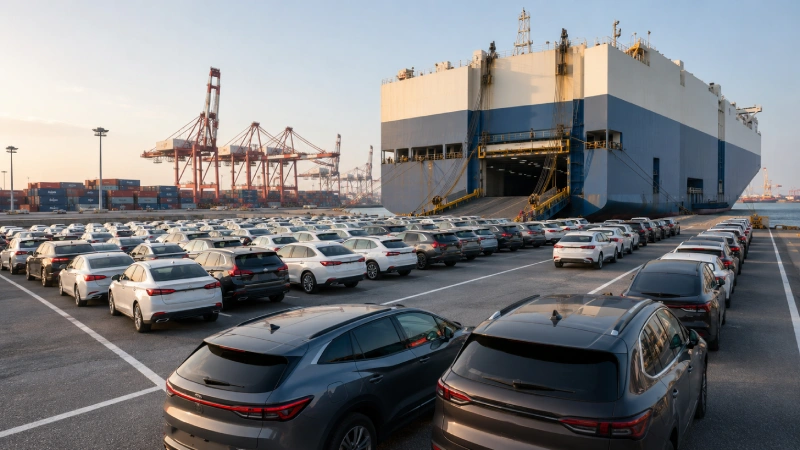
Used cars can be exported from China, but the transaction must be handled through a Chinese enterprise approved for used-vehicle export business. A freight forwarder may coordinate pickup, booking, loading, customs declaration and destination support, but it is not the exporter or licence applicant.
Used car export logistics covers destination eligibility, exporter verification, inspection, ownership transfer, licensing, inland transport, port acceptance, loading and delivery. Because a vehicle cleared for export generally cannot simply be returned to China, import feasibility and carrier acceptance should be confirmed before port delivery.
Who Is Responsible for Each Part of a Used Car Export?
| Participant | Main responsibility |
|---|---|
| Overseas buyer or importer | Confirm import eligibility, permits, duties, customs clearance, registration and insurance |
| Chinese used-car exporter | Purchase the vehicle, complete ownership transfer, arrange inspection, apply for the licence and disclose vehicle condition |
| Inspection body | Issue the required report under WM/T 8-2022 or WM/T 9-2022 |
| Freight forwarder | Coordinate pickup, storage, booking, loading, lashing, customs declaration and destination-agent handover |
| Ocean carrier and terminal | Set acceptance conditions, schedules, loading procedures and dangerous-goods requirements |
| Destination authorities | Conduct valuation, inspection, taxation, customs release and vehicle registration |
Winsail can coordinate the logistics chain, but it cannot replace the approved exporter, issue a used-car export licence or certify destination-country registration eligibility.
Check Destination Import Eligibility Before Purchasing the Vehicle
First confirm that the vehicle can be imported, cleared, registered and insured in the destination market.
Legal import checks
Confirm:
- Maximum permitted vehicle age
- Whether age is based on model year, production date or first registration
- Left-hand-drive or right-hand-drive requirements
- Emissions, safety and roadworthiness standards
- Definitions of used, rebuilt, accident-damaged and refurbished vehicles
- Import permit, type approval and pre-shipment inspection requirements
- Rules for private imports versus commercial batches
Saudi Arabia generally applies a five-model-year limit to passenger cars, buses and light transport vehicles below 3.5 tonnes. It also restricts flooded, burned, rolled-over, seriously damaged, taxi and steering-converted vehicles.
Kenya normally limits used vehicles to eight years from first registration. Vehicles are generally required to be right-hand drive and inspected by a KEBS-appointed agency before shipment.
The UAE permits used-vehicle imports, but customs valuation, vehicle inspection, vehicle-status documentation and local registration testing may still apply.
Commercial suitability checks
Importers should also assess spare-parts availability, repair capability, diagnostic access, software support, fuel or charging compatibility, recalls and overseas warranty coverage.
Exportability from China does not guarantee legal registration in another country.
Verify the Vehicle and Exporter Before Payment
Verify the exporter
Confirm that the contracting company has passed the official used-car export business review and that the contract name matches the receiving bank account.
The registered owner after transfer, export-licence applicant and customs exporter should remain consistent. Do not pay an intermediary in full if it cannot explain the ownership-transfer, inspection and licence route. A normal trading or forwarding registration does not authorise used-car export.
Verify the vehicle
Before payment, request:
- VIN and registration information
- Production and first registration dates
- Mileage and maintenance records
- Body, chassis, engine-bay and interior photos
- Cold-start, dashboard and road-test videos
- OBD diagnostic results
- Accident, flood, fire and structural-repair history
- Number of available keys
For combustion vehicles, review engine and transmission condition. For EVs and plug-in hybrids, request battery state of health, fault codes, repair history, water-ingress information and recall status.
The government-required export inspection supports licensing but does not replace an independent pre-purchase inspection of mileage, repairs, battery condition or value.
China’s Used Car Export Requirements in 2026
China expanded used-car exports nationwide in March 2024, but eligible enterprises must still apply through the Ministry of Commerce business system, pass provincial review and renew their filing for the following year.
What qualifies as a used vehicle?
The framework generally covers registered motor vehicles that have been traded and transferred before reaching the national mandatory scrappage standard. Three-wheeled vehicles and low-speed goods vehicles are excluded.
The 180-day rule
From January 1, 2026, a vehicle applying for export within 180 days of registration requires an After-sales Maintenance Service Confirmation issued and stamped by the vehicle manufacturer.
The document should identify the destination country, vehicle and overseas after-sales service network. Without it, the export licence will not be issued. This is an additional confirmation requirement, not a blanket ban on every vehicle registered for fewer than 180 days.
Transfer pending export
The vehicle must be transferred into the approved exporter’s name. Its Motor Vehicle Registration Certificate will be marked “transfer pending export.”
A temporary driving plate may be issued for up to 60 days. The vehicle cannot then be transferred again within China.
Export licence and deregistration
Used vehicles follow a one-batch-one-licence system. Under one commodity code, one application may cover up to 20 vehicles, and the licensed quantity must match the actual customs declaration.
VIN, brand, model, registration date and transfer-pending-export date must match the Motor Vehicle Registration Certificate. After customs clearance, the exporter should complete deregistration within two months. A cleared vehicle cannot normally be returned to China.
Read How to Export Used Cars from China for a deeper explanation of exporter eligibility and policy steps.
Inspection, Condition Reporting and Vehicle Preparation
Three inspections should be separated:
- The WM/T 8-2022 or WM/T 9-2022 inspection required for export licensing
- The buyer’s independent pre-purchase inspection
- The terminal or carrier’s shipment-condition inspection
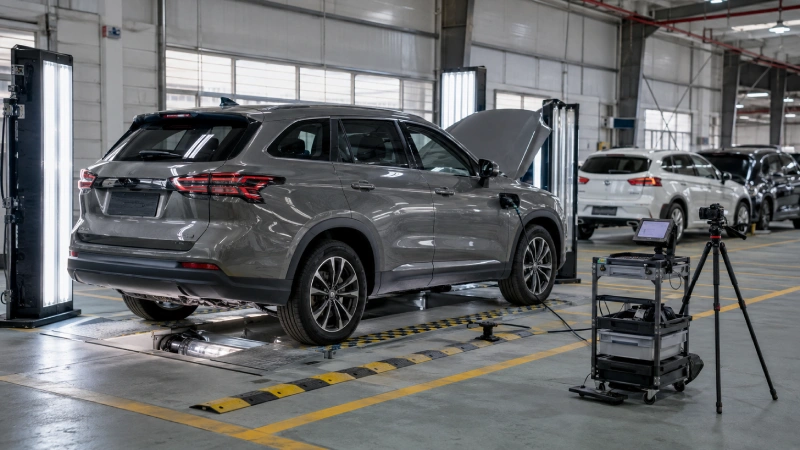
Before port delivery, clean the body and undercarriage, check for leakage, and repair problems affecting tyres, brakes, steering, starting or safe movement.
Take dated condition photos, disable alarms when required, remove personal belongings, oil products, loose parts and non-original batteries, and provide all available keys.
Fuel level or EV battery charge should follow the selected carrier’s instructions because requirements can differ by carrier, terminal and route.
RoRo vs Container Shipping for Used Cars
| Decision factor | RoRo | Container |
|---|---|---|
| Vehicle condition | Usually requires a vehicle that can drive, steer and brake | Can handle more special cases with an approved loading plan |
| Shipment size | Suitable for one vehicle or large batches | Suitable for one vehicle, small batches or multi-car loading |
| Route coverage | Depends on car-carrier services | Container networks generally cover more ports |
| Protection | Vehicle is secured but driven during handovers | Enclosed after loading, reducing later contact |
| Loading | Terminal delivery and acceptance inspection | Measurements, ramps or frames, and professional lashing |
| Non-running vehicles | Often restricted by standard services | May be possible with specialist loading and approval |
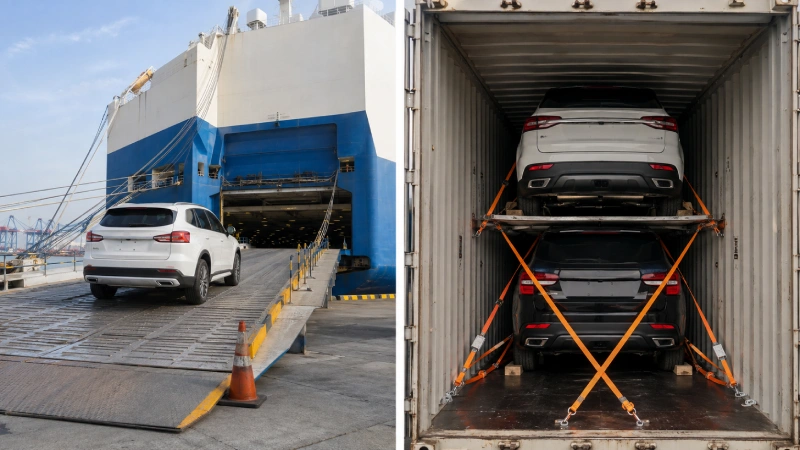
RoRo is not always cheaper, and containers are not automatically safer. Compare route, value, condition, quantity, dimensions and total cost.
Car carriers commonly require used vehicles to be clean, free from leakage, able to steer and brake, supplied with working keys and cleared of personal belongings. Fuel limits, alarm deactivation and low-voltage battery disconnection may also apply. These are carrier rules rather than universal regulations.
Read Container vs RoRo Shipping for a deeper comparison and How Many Cars Fit in a Shipping Container for loading-capacity planning.
Rail and road transport may work for selected destinations but are not the default options for the Middle East or Africa.
Special Shipping Rules by Vehicle Type
A vehicle’s used status does not change the classification created by its propulsion system.
| Vehicle type | Current classification direction |
|---|---|
| Petrol or diesel vehicle | Normally reviewed under UN3166 with SP961 or SP962 |
| HEV, PHEV or EREV | Normally assessed under UN3166 because an internal-combustion engine is present |
| Lithium-ion battery electric vehicle | UN3556 |
| Lithium-metal battery vehicle | UN3557 |
| Sodium-ion battery vehicle | UN3558 |
| LPG, CNG or other gas-powered vehicle | Relevant UN3166 gas-powered vehicle entry |
Petrol and diesel vehicles
The carrier should confirm how UN3166, SP961 or SP962 applies. Fuel quantity, battery disconnection and documents can vary.
HEV, PHEV and EREV
A hybrid with an internal-combustion engine should not be declared as a pure electric vehicle. It is normally reviewed under the applicable UN3166 entry.
Used BEVs
Lithium-ion BEVs are reviewed under UN3556. Check collision damage, water ingress, repairs, recalls, fault codes and battery health. State-of-charge limits may be carrier-specific.
LPG, CNG and other gas vehicles
Disclose the fuel type before booking. The carrier may request proof of fuel-system integrity, impose preparation requirements or refuse the vehicle.
Documents for Used Car Export Logistics
China export documents
- Export contract with condition disclosure and after-sales terms
- Motor Vehicle Registration Certificate
- Third-party inspection report
- Export licence
- VIN list
- Commercial invoice
- Packing list
- Customs declaration information
- Manufacturer confirmation when the 180-day rule applies
Carrier and logistics documents
- Booking confirmation
- Vehicle dimensions and weight
- Vehicle-condition declaration
- Dangerous Goods Declaration where applicable
- Container Packing Certificate where applicable
- Loading and lashing records
- Bill of Lading
- Marine cargo insurance certificate where arranged
Destination documents
- Import permit
- Pre-shipment inspection certificate
- Conformity or type-approval documents
- Ownership or export evidence
- Customs valuation documents
- Local registration documents
Read Used Car Export Documents from China for the detailed checklist.
Step-by-Step Used Car Export Logistics Process
- Confirm destination import, customs and registration eligibility.
- Verify the Chinese exporter’s approval and receiving account.
- Collect VIN, registration date, propulsion type, condition and history records.
- Arrange an independent pre-purchase inspection.
- Sign a contract covering disclosure, after-sales terms and delivery responsibilities.
- Transfer the vehicle to the approved exporter and register it as “transfer pending export.”
- Complete the WM/T 8-2022 or WM/T 9-2022 inspection.
- Apply for the one-batch-one-licence export licence.
- Select RoRo or container shipping according to route, quantity, dimensions and condition.
- Obtain carrier and terminal acceptance before inland delivery.
- Arrange pickup, storage, cleaning and dated condition photography.
- Deliver to the RoRo terminal or complete professional container loading and lashing.
- Complete export customs declaration and vessel loading.
- Check the Bill of Lading, VIN, shipper, consignee and destination port.
- Complete vehicle deregistration within the required period.
- Coordinate destination customs clearance, pickup and local registration.
Do not send the vehicle to the port until the carrier and terminal have accepted its condition and propulsion type. A late rejection can create storage, return-haulage and missed-vessel charges.
Used Car Export Logistics Costs and Lead Time
Estimate the landed cost as:
Vehicle purchase + transfer and registration + inspection and preparation + China inland transport + port handling + export formalities + ocean freight + insurance + destination charges + duties and registration
Quotation variables include quantity, dimensions, China location, running condition, propulsion type, shipping method, loading plan, ports, carrier, inspection and insurance.
Separate lead time into verification, transfer, inspection, licensing, carrier approval, pickup, port handling, ocean transit, clearance and registration. Fixed long-term freight tables are unreliable because rates, capacity and port conditions change.
Common Reasons Used Car Shipments Are Delayed or Rejected
Common causes include:
- Destination restrictions on age, steering position or damage history
- Exporter, registered owner and receiving company inconsistencies
- VIN, model or registration-date differences between documents
- Missing manufacturer confirmation for a vehicle within 180 days
- Failed third-party inspection
- Concealed accident, flood, fire or battery-repair history
- Booking a non-running vehicle as standard RoRo cargo
- Leakage, flat tyres, brake failure or steering failure
- Personal belongings, oil products, parts or extra batteries inside
- Fuel level or EV charge outside carrier requirements
- Unconfirmed transshipment or destination-port acceptance
- Treating the export inspection as destination import approval
- Missing marine cargo insurance
- Incorrect VIN information on the manifest or Bill of Lading
How Winsail Coordinates Used Car Export Logistics
Winsail coordinates vehicle pickup and handover in China, movements between the export base, warehouse and port, RoRo and container route comparison, carrier acceptance, loading, lashing, customs declaration, shipment updates and destination-agent handover.
Winsail does not issue used-car export licences, replace inspection bodies, guarantee destination clearance or registration, or assume responsibility for supplier-undisclosed defects.
FAQ
Who is legally allowed to export used cars from China?
A Chinese enterprise approved for used-car export business must handle acquisition, transfer registration, inspection and the export-licence application. An ordinary trading company or freight forwarder cannot simply export the vehicle under its own name.
Can a car registered for less than 180 days be exported?
Potentially. From January 1, 2026, the application requires a manufacturer-issued After-sales Maintenance Service Confirmation identifying the destination market, vehicle and overseas service network.
Is a third-party inspection mandatory for used car exports?
Yes. Used passenger vehicles are inspected under WM/T 8-2022, while used commercial vehicles and trailers use WM/T 9-2022. This does not replace buyer due diligence or destination inspection.
Is RoRo or container shipping better for used cars?
RoRo can suit accepted running vehicles on supported routes. Containers offer wider port coverage and more controlled handling after loading. The decision depends on condition, quantity, route and total cost.
Can a non-running or accident-damaged car be shipped from China?
Possibly, but standard RoRo services often reject non-running vehicles. Container or specialist loading may be required, and destination restrictions must be checked.
Are used electric and hybrid cars subject to different shipping rules?
Yes. Lithium-ion BEVs are reviewed under UN3556. HEVs, PHEVs and EREVs normally follow the applicable UN3166 direction because they contain an internal-combustion engine.
Can spare parts or personal belongings be loaded inside the vehicle?
RoRo carriers usually prohibit personal belongings, loose parts, oil products and additional batteries. Container shipments also cannot include undeclared cargo.
How much does it cost and how long does it take to ship used cars from China?
There is no universal rate or transit time. Cost and timing depend on location, quantity, dimensions, condition, propulsion type, route, shipping method, licensing, vessel space and destination clearance.
