
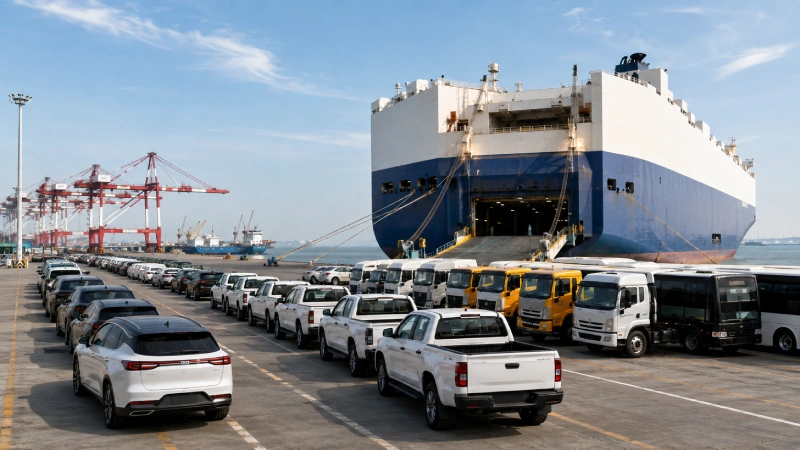
China-made new vehicles, used cars, electric vehicles, pickups, trucks, buses and some wheeled machinery can be shipped to Africa by RoRo, container or specialized cargo services. However, the best route is not decided by ocean freight alone. Importers should first confirm whether the vehicle can legally enter and be registered in the destination country, then compare its condition, powertrain, dimensions, gateway port and final delivery city. For a broader overview, see Vehicle Shipping from China.
Check Whether the Vehicle Can Be Imported Before Booking
Africa is not one uniform vehicle-import market. Rules vary by country and may cover vehicle age, steering position, emissions, inspection, accident history, import licensing, type approval and road registration.
Kenya, for example, generally requires an imported used vehicle to be less than eight years old from the year of first registration, right-hand drive and inspected by a KEBS-appointed agent in the exporting country. South Africa applies much tighter restrictions and normally requires both an ITAC import permit and an NRCS Letter of Authority. Transport availability therefore does not prove import eligibility.
Shipping feasibility does not automatically mean legal importability or road registration.
New, Used or Recently Registered Vehicle
China-side export requirements depend on the vehicle’s actual status. A sales invoice alone is not enough.
For a used vehicle, the VIN, model, registered owner, registration date and transfer-for-export records should be consistent. From January 1, 2026, a vehicle submitted for export within 180 days of registration must be supported by an after-sales maintenance service confirmation issued by the manufacturer. Modified vehicles require evidence that the modification is genuine and compliant.
China’s 2026 export licensing catalogue continues to cover automobiles. New vehicles are generally administered under a “non-one-batch-one-license” system, while used automobiles are handled on a one-batch-one-license basis. The exporter or another eligible commercial entity applies through the competent commerce authority; a freight forwarder does not issue the licence. Importers and exporters should verify the current requirements through the Ministry of Commerce of China.
Destination-Country Eligibility
Before buying the vehicle or reserving space, ask a qualified destination broker, inspection company or authority to confirm:
- How vehicle age is calculated
- Whether left-hand-drive or right-hand-drive vehicles are permitted
- Whether pre-shipment inspection, PVoC or roadworthiness certification is required
- Whether used, damaged, salvage or accident vehicles are restricted
- Whether an import permit, Certificate of Conformity or type approval is needed
- Whether the exact model can be registered for road use
For example, Kenya’s vehicle-import procedure requires importers to consider vehicle age, steering configuration, inspection and supporting records. The latest country-specific rules should always be confirmed before booking through the relevant customs or standards authority, such as the Kenya Revenue Authority.
Choose the Right Shipping Method
RoRo Vehicle Shipping
RoRo is often suitable for operable cars, SUVs, pickups, fleet vehicles and high-and-heavy units that can safely move through the vessel ramp and fit the assigned deck. Trucks, buses and some project vehicles may also qualify when their dimensions, weight, ground clearance and securing points meet carrier requirements.
Used vehicles may be shipped by RoRo when the carrier, service and destination allow them and the vehicle meets operational and safety requirements. It normally needs to start, steer, brake and move under its own power, with functioning tires and no leakage. Non-running or towable vehicles may only be accepted in limited circumstances, depending on the carrier and service.
RoRo coverage is usually narrower than container networks. Personal belongings and undeclared spare parts are normally prohibited. Fuel level, battery state of charge and vehicle condition must meet the selected carrier’s instructions. Insurance is not automatically included, and used-vehicle acceptance remains route-specific.
Read RoRo Car Shipping from China for detailed preparation, carrier-acceptance and port-handling guidance.
Container Car Shipping
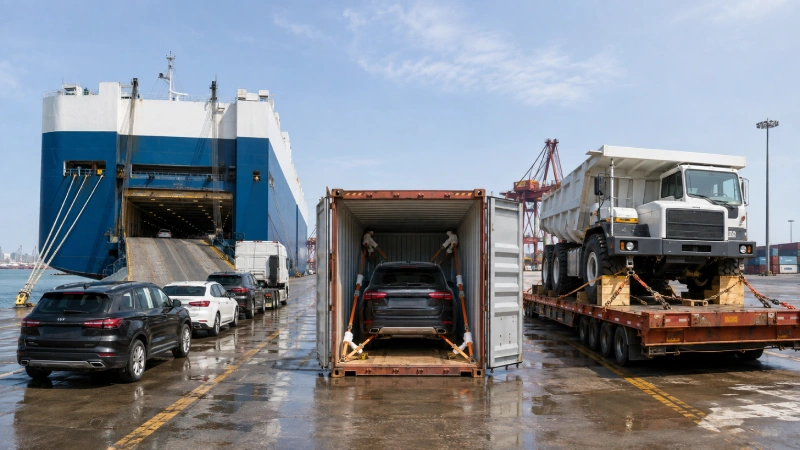
Container shipping is often considered for high-value vehicles, destinations without practical RoRo calls and shipments where access to the vehicle should be reduced after loading. Declared spare parts may sometimes travel in the same container when properly packed, secured and accepted.
A 40HQ container cannot automatically be promised to hold three or four cars. Capacity depends on each vehicle’s dimensions, weight, ground clearance and loading angle, as well as container door dimensions, loading equipment, securing method and carrier approval.
Powertrain also matters. Combustion-engine vehicles, hybrids and electric vehicles may follow different declaration and carrier-review procedures depending on whether they are transported in an approved RoRo vehicle space or packed inside a freight container.
See Container Car Shipping from China for capacity, loading, securing and declaration requirements.
Flat Rack, Breakbulk or RoRo High-and-Heavy
Oversized buses, tractor units, mining vehicles, cranes and large dump trucks may require flat rack, breakbulk, Mafi or specialized RoRo handling.
Before quotation, provide accurate length, width, height, shipping weight, axle loads, ground clearance, photographs and running condition. Lifting cargo may also require center-of-gravity data, lifting points and an engineered loading or lashing plan. Incorrect dimensions can cause extra charges, a change of transport method, delayed loading or carrier rejection.
Main Vehicle Shipping Routes from China to Africa
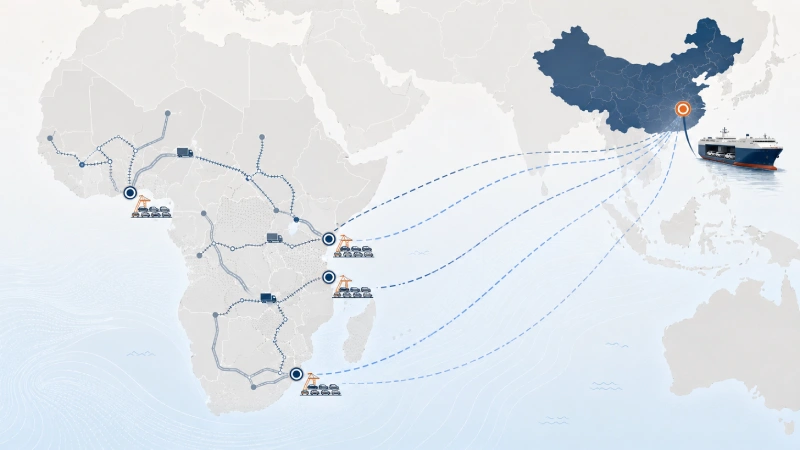
The best African gateway depends on the destination country, the carrier’s current network and the final delivery city.
| Region | Main gateway examples | Planning focus |
|---|---|---|
| West Africa | Lagos/Tin Can, Tema, Abidjan, Cotonou, Douala, Dakar | Confirm direct or hub service and local vehicle rules |
| East Africa | Mombasa, Dar es Salaam, Djibouti | Evaluate local import requirements and inland corridors |
| Southern Africa | Durban, Maputo, Walvis Bay | Separate transit opportunities from South Africa’s strict used-car controls |
| North Africa | Casablanca, Tangier Med, Agadir, Algiers, Alexandria | Check technical standards, model approval and language documents |
China–Africa vehicle services are real, but published schedules are dated service examples rather than permanent promises. Vehicle shipments have moved from Chinese ports to Durban, Lagos, Mombasa and Dar es Salaam, with some services extending coverage through regional transshipment. The actual port rotation, sailing frequency, cargo acceptance and estimated transit must be reconfirmed for the intended booking.
Direct Service vs Transshipment
A direct call means the vessel calls at the named discharge port without cargo transshipment. It does not mean delivery to the importer’s final city.
Routing through Durban, Lagos or another regional hub can expand coverage but adds connection risk, additional handling and waiting time. The booking confirmation should identify the load port, discharge port, any transshipment port, estimated departure and estimated arrival. These remain estimates rather than guaranteed delivery dates.
Shipping Vehicles to Landlocked African Countries
For Uganda, Rwanda, Burundi, Zambia, Malawi, South Sudan, inland DRC, Burkina Faso, Mali or Niger, port-to-port shipping is only the first stage.
Mombasa connects with Northern Corridor markets including Uganda, Rwanda, the DRC and South Sudan. Dar es Salaam serves several East, Central and Southern African inland markets, while Tema can support transit cargo moving toward Burkina Faso, Mali and Niger.
Importers should compare ocean freight, transit customs, border requirements, road distance, transporter capability, security, storage exposure and final-city delivery cost. The Bill of Lading discharge port, customs-clearance country and final delivery city must be clearly distinguished.
Documents Required for Vehicle Shipping from China to Africa
The document set depends on the vehicle’s status, shipping method, carrier and destination country. Not every document below applies to every shipment.
China Export Documents
Possible China-side requirements include:
- Sales contract and commercial invoice
- VIN and vehicle specification list
- Packing list
- Export customs declaration
- Automobile export licence applied for by an eligible export entity
- New-vehicle factory or conformity records
- Used-vehicle registration, transfer and cancellation records
- Manufacturer after-sales service confirmation for applicable recently registered vehicles
- Authenticity and compliance evidence for modified vehicles
The exporter’s eligibility and document consistency should be reviewed before port delivery. A freight forwarder can coordinate the file set and customs process but does not issue the vehicle export licence.
Shipping and Carrier Documents
Depending on the cargo and service, the carrier may request:
- Booking confirmation
- Bill of Lading or Sea Waybill instructions
- Vehicle condition report
- Cargo insurance certificate
- Dangerous-goods declaration and carrier approval
- Battery or state-of-charge information
- OOG dimensions, weight and photographs
- Loading, lifting or securing plan
The IMO IMDG Code, including Amendment 42-24, became mandatory on January 1, 2026. Correctly identifying the powertrain and loading method is therefore essential.
For battery-electric vehicle declarations and carrier review, read Electric Vehicle Shipping from China.
Destination Documents
Depending on the destination, requirements may include:
- Import permit
- Certificate of Origin
- Certificate of Conformity
- Pre-shipment inspection or roadworthiness certificate
- Importer tax identification
- Advance cargo declaration
- Original registration or cancellation certificate
- Customs-clearance authorization
- Destination agent appointment
These requirements should not be generalized across Africa. For example, Kenya’s vehicle-import procedure lists documents such as the original invoice, cancelled original registration record, Bill of Lading and pre-shipment inspection certificate. The importer should confirm whether a Certificate of Origin or another supporting record applies to the specific vehicle and import entry.
Step-by-Step Vehicle Shipping Process
Collect vehicle details. Confirm the quantity, model, VIN, new or used status, powertrain, running condition, dimensions, weight, location and cargo-ready date.
Verify destination eligibility. The importer or a qualified local specialist should check vehicle age, steering side, inspection, taxes, import permits and road-registration conditions.
Select the gateway and inland corridor. Compare Lagos, Mombasa, Dar es Salaam, Durban, Tema or another suitable port according to the final delivery city rather than ocean freight alone.
Compare transport methods. Review RoRo, container, flat rack and breakbulk options together with sailing schedules, vehicle restrictions, transshipment and destination handling.
Obtain carrier acceptance. Pre-approval is particularly important for electric vehicles, hybrids, gas-powered vehicles, non-running units, modified vehicles and oversized cargo.
Arrange pickup and condition records. Photograph the VIN, mileage, exterior condition, visible damage and keys at vehicle handover.
Coordinate export and customs documents. The eligible exporter handles the export-licence application. Winsail can coordinate booking, terminal delivery, customs data and shipping documents.
Prepare destination handling. Send the necessary documents before arrival so import permits, inspection, customs clearance and inland transport are not left until discharge.
Cost and Transit Time from China to Africa
There is no reliable single “China to Africa” price per vehicle because routes, ports, vehicle specifications and import procedures differ.
Total logistics cost = China pickup + yard and port handling + export documentation + ocean freight + DG or OOG charges + insurance + destination charges + customs and taxes + inland delivery.
The main variables include:
- Chinese load port and African discharge port
- Vehicle dimensions and occupied deck or container space
- RoRo, container or specialized cargo method
- Number of vehicles
- Petrol, diesel, hybrid, electric or gas powertrain
- Direct service or transshipment
- Destination storage, customs clearance and inland corridor
- Carrier space, fuel surcharge and regional risk surcharge
Transit time should also be separated into vehicle collection, export preparation, waiting for the vessel, ocean passage, transshipment, discharge, customs clearance and inland delivery. A carrier-published sea transit is only one part of the total lead time and should not be treated as a guaranteed port-to-city delivery period.
Common Risks and How to Reduce Them
Common problems include booking before checking import eligibility, inconsistent VIN or registration data, declaring a non-running vehicle as ordinary RoRo cargo, incorrect EV or hybrid information, inaccurate oversized-cargo measurements and comparing ocean freight while ignoring destination costs.
RoRo does not mean zero damage risk. Low ocean freight does not guarantee the lowest landed cost. Port-to-port transit is not final delivery time, and a freight forwarder cannot guarantee destination customs clearance or road registration.
Importers can reduce risk by confirming eligibility first, disclosing the vehicle’s complete condition, obtaining written carrier acceptance, checking quotation inclusions and preparing destination documents before departure.
How Winsail Supports Vehicle Shipments to Africa
Winsail coordinates vehicle pickup and consolidation in China, compares RoRo, container and specialized cargo options, submits vehicle details for carrier review, works with eligible exporters and customs-documentation teams, and connects shipments with African port agents and inland transport resources.
Winsail does not issue vehicle export licences, accept every vehicle, guarantee carrier space, promise fixed transit times or guarantee customs clearance and vehicle registration outcomes in every destination.
FAQ
How much does it cost to ship a vehicle from China to Africa?
Cost depends on the vehicle’s dimensions, condition, powertrain, pickup location, shipping method, destination port, carrier capacity, documentation, insurance and inland delivery. A useful quotation should clearly identify the included and excluded origin, ocean and destination charges.
How long does vehicle shipping from China to Africa take?
The total lead time depends on vehicle preparation, export documents, carrier approval, sailing frequency, route, transshipment, customs clearance and inland transport. A published sea-transit estimate represents only one stage of the shipment.
Is RoRo or container shipping better for cars going to Africa?
RoRo may suit operable vehicles on available routes, while a container may suit high-value vehicles or destinations with broader container coverage. The decision should compare landed cost, carrier acceptance, schedule, handling exposure and destination unloading capability.
Can used cars be shipped from China to Africa by RoRo?
Used cars can be shipped by RoRo when the carrier, route and destination accept them and the vehicle meets operational requirements. It normally must run, steer and brake properly, have functional tires, show no leakage and meet fuel or battery restrictions.
Can electric vehicles be shipped from China to Africa?
Electric vehicles can be shipped subject to battery condition, IMDG classification, carrier approval, port procedures and destination import eligibility. RoRo and container shipments may follow different review processes, while used or damaged EVs can face tighter restrictions.
Which African port should I use for a landlocked destination?
The correct port depends on the final city and inland corridor. Mombasa and Dar es Salaam serve several East and Central African markets, while Tema supports some Sahel transit flows. Compare border procedures, road distance, security, storage and inland-delivery cost.
What documents are required to export a vehicle from China?
Typical documents include the commercial invoice, VIN list, packing list, customs declaration, applicable export licence and shipping instructions. Used, recently registered, modified, electric or oversized vehicles may require additional records and carrier approvals.
Can spare parts or personal items be shipped inside the vehicle?
Personal belongings and loose undeclared cargo are generally not permitted in RoRo vehicles. A container may allow properly declared and securely packed spare parts when the carrier, customs authorities and loading plan permit them.
