
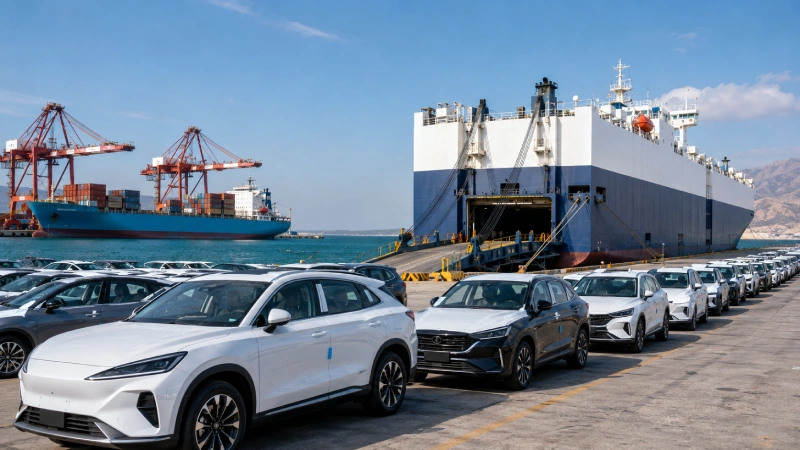
Shipping cars from China to Egypt is possible by container or RoRo, but freight is only one part of the process. For many shipments, the biggest risks arise before the vehicle is loaded in China: whether the importer is eligible, whether the specific VIN can legally enter Egypt, whether the vehicle meets technical requirements, and whether the ACID process has been completed correctly.
This guide explains the 2026 rules, shipping methods, ports, import taxes, electric vehicle restrictions and documentation involved in shipping cars from China to Egypt.
Important: Egyptian import rules, customs classifications and tax treatment can change. Before buying or shipping a vehicle, ask a licensed Egyptian customs broker to confirm eligibility using the VIN, production date, powertrain, HS code and importer details.
For a broader overview of vehicle export logistics, see our guide to vehicle shipping from China.
Quick Answer: Can You Ship a Car from China to Egypt?
Yes. Cars can be shipped from China to Egypt, provided that the vehicle complies with both Chinese export requirements and Egyptian import requirements.
The Egyptian importer normally needs to obtain an ACID number before shipment, while the Chinese exporter must complete the required CargoX procedures and China-side export formalities.
Different rules apply to new cars, used cars, electric vehicles, hybrid vehicles, privately imported passenger cars and commercial vehicle imports.
Most importantly, a confirmed shipping booking does not mean that the vehicle is automatically eligible for customs clearance or registration in Egypt.
For this market, pre-shipment approval is often more important than the freight price.
Who Is Allowed to Import Cars into Egypt?
The first step is identifying who will act as the importer of record.
Personal Importers
Individuals may import passenger vehicles, but private imports are subject to specific restrictions.
Under Egypt’s Decision No. 319/2024, an individual importing a passenger car is generally limited to one vehicle within a five-year period. The importer may also need to demonstrate financial capacity and arrange payment through an Egyptian bank or the relevant Form 4 process.
Requirements can differ for Egyptian residents, Egyptians living abroad, foreign residents and diplomatic cases. Temporary programs created for Egyptians abroad should not be treated as a permanent general exemption from normal vehicle import rules.
Commercial Importers
Vehicles imported for commercial resale should normally be handled by an Egyptian company with the appropriate GOEIC importer registration.
The company’s registered activities, commodity scope, tax records and commercial registration should correspond with the vehicle business being conducted.
The importing company should also appoint an experienced customs broker before the vehicle is purchased.
Trucks and Special-Purpose Vehicles
Do not automatically apply passenger-car rules to trucks, tractor heads, buses, construction vehicles or special-purpose vehicles.
The personal passenger-car restrictions introduced by Decision No. 319/2024 do not create one universal rule for every type of motor vehicle. Commercial vehicles may be subject to separate age, weight, use and technical requirements.
New and Used Car Import Rules in Egypt
Vehicle status is one of the most important issues when you import cars from China to Egypt.
Egypt does not have a broad rule allowing all used vehicles below a certain age to be imported.
| Vehicle category | Main import risk | Verify before shipment |
|---|---|---|
| New gasoline passenger car | Model year and technical compliance | VIN, production date, E-mark documents |
| Used gasoline passenger car | Strict age, ownership and import-route conditions | First registration, purchase date, ownership history |
| Battery electric passenger car | Generally must be new and meet production-year conditions | CCS2, model year, China export licence |
| Hybrid vehicle | Classification and tax treatment vary | HEV, PHEV, REEV or MHEV status |
| Truck or tractor head | Rules depend on age, weight and intended use | GVW, production year, configuration |
| Special-purpose vehicle | Separate certification or exemptions may apply | Chassis, equipment function, certification |
Three common assumptions should be avoided.
First, not every used car under three years old can be imported into Egypt. Earlier arrangements concerning certain hybrid vehicles should not be generalized to all used cars.
Second, the old policy allowing certain used battery electric cars up to three years old is no longer the standard rule. Decision No. 199/2021 cancelled that earlier arrangement.
Third, a vehicle described by a Chinese seller as a “new-energy vehicle” does not automatically qualify for battery-electric tax treatment. BEV, HEV, PHEV, REEV and MHEV vehicles may be classified differently.
Before paying a deposit, the Egyptian customs broker should review the VIN, production date, first registration date, purchase date, powertrain and importer identity.
Vehicle Specifications and GOEIC Compliance
Legal export from China does not guarantee acceptance in Egypt.
Left-Hand Drive and Vehicle Identification
Egypt is a right-hand-traffic market, so buyers should generally purchase left-hand-drive vehicles.
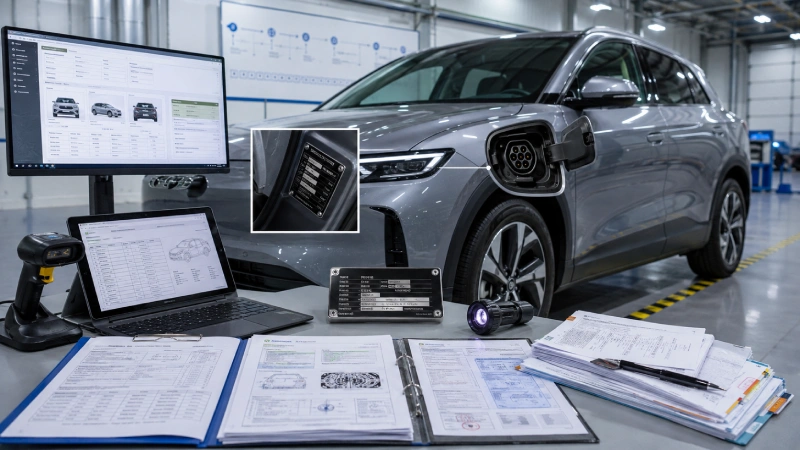
VIN numbers, manufacturer plates, production dates and registration documents must be consistent. Modified vehicles or vehicles with mismatched identification records create significant customs and registration risks.
UNECE and E-Mark Documentation
GOEIC and other Egyptian authorities may require vehicle conformity information based on UNECE regulations.
Depending on the vehicle, documents may include:
- VIN and manufacturer identification
- Model and configuration information
- E-mark certificates
- UNECE test documentation
- Type-approval or conformity documentation
- Technical specifications
A Chinese domestic-market model may be completely legal in China but still lack the version-specific certification required for Egypt.
Buyers should therefore confirm the exact configuration, rather than relying only on the model name.
See the official GOEIC requirements for industrial imports for the regulatory framework.
Emissions and Energy Labels
Gasoline and diesel vehicles may require emissions information, while M1 passenger cars can also be subject to energy-consumption or labelling requirements.
Electric vehicles require additional attention to battery specifications, charging interfaces and vehicle-version documentation.
China-Side Export Requirements in 2026
From January 1, 2026, China applies export licence management to certain pure electric passenger vehicles.
The exporter must meet the applicable licensing requirements, and information on the export declaration, VIN, vehicle registration status and export licence must remain consistent.
For certain registered vehicles treated as nearly new or used vehicles, additional documentation may apply. Where a vehicle has been registered in China for less than 180 days, a manufacturer-issued after-sales maintenance service confirmation may be required before the export licence can be obtained.
Typical China-side documentation can include the sales contract, invoice, vehicle records, export declaration and export licence.
The official requirements are set out in the Chinese Ministry of Commerce announcement on pure electric passenger vehicle export licensing.
Remember that China export clearance and Egypt import approval are separate processes.
ACI, ACID and CargoX Requirements
Egypt’s Advance Cargo Information system is a critical part of sea freight imports.
The normal sequence is:
- The Egyptian importer submits advance shipment information through Nafeza.
- The system issues the ACID number.
- The Chinese exporter completes CargoX registration and verification.
- Commercial invoices, packing lists and required shipment documents are submitted through the designated system.
- The ACID number is correctly shown on the bill of lading, manifest and applicable commercial documentation.
- Document consistency is checked before final shipment.
The ACID must normally be obtained before loading the vehicle for shipment.
An ACID is generally valid for six months, but the importer should still check the applicable validity before booking.
Names, importer details, HS codes and other shipment information across CargoX, ACID documentation, invoices and bills of lading should match.
Applying for the ACID after the vehicle has already departed China is not a safe operating procedure. Bill of lading amendments may also generate carrier charges and create ACI matching problems.
See the official Nafeza ACI guidance.
Best Ports for Shipping Cars from China to Egypt
There is no single best Egyptian port for every shipment.
Alexandria and El Dekheila
Alexandria and El Dekheila are major gateways for northern Egypt, Cairo and western markets. They have established container and vehicle-import handling infrastructure.
Damietta
Damietta can be attractive for Delta-region deliveries and may be available for container or selected vehicle services depending on the carrier schedule.
Port Said
Port Said is strategically located at the Mediterranean entrance of the Suez Canal.
However, buyers must distinguish between Port Said as a transshipment point and Port Said as the actual customs-clearance destination.
Ain Sokhna
Ain Sokhna is located on the Red Sea side and provides convenient access to Cairo, Suez and the Suez Canal Economic Zone.
Some China-origin routings may also benefit from the port’s position without requiring the vessel to continue through the canal toward Mediterranean ports.
Compare the final port based on vessel schedule, customs capability, destination charges, inland delivery distance and the carrier’s policy toward electric vehicles.
RoRo vs Container Shipping
Both RoRo and container shipping can be used for car shipping from China to Egypt.
| Factor | RoRo | Container |
|---|---|---|
| Best suited for | Standard running vehicles | High-value, non-running or multi-car shipments |
| Sailing availability | Depends on PCTC schedules | Usually more flexible |
| Vehicle protection | Stored inside vessel decks | Enclosed container |
| Personal cargo | Normally prohibited | Still subject to customs/carrier approval |
| Securing | Terminal and vessel procedures | Professional CTU loading and lashing |
| EV acceptance | Case-by-case carrier review | Also subject to battery/carrier review |
| Cost | Can be competitive per vehicle | Depends on container type and loading plan |
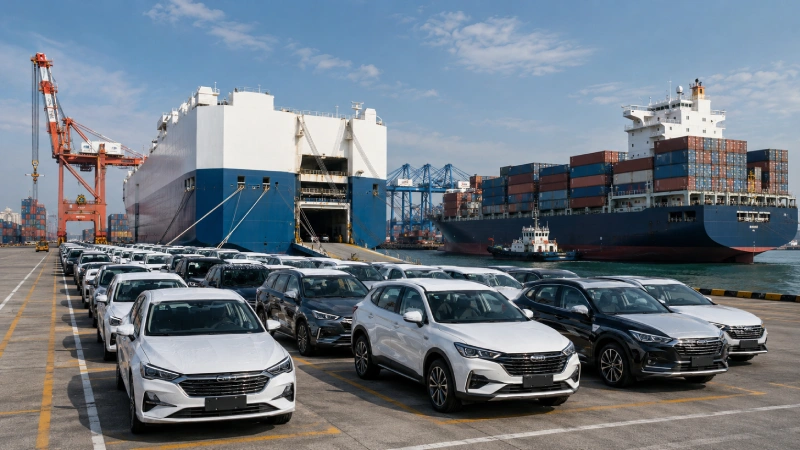
RoRo car shipping from China can be efficient when a suitable PCTC service is available.
Container car shipping from China usually provides greater schedule flexibility and physical protection.
Do not assume that a 40HQ can always load a fixed number of vehicles. Capacity depends on vehicle dimensions, loading geometry, lashing clearance and carrier rules.
Special Requirements for Electric and Hybrid Vehicles
Electric vehicle imports require additional compliance work.
For standard battery electric passenger cars entering Egypt, buyers should normally plan around new vehicles that meet the applicable production-year requirements.
China’s 2026 export licensing rules must also be completed before shipment.
Charging configuration is another major risk.
Egypt’s public DC fast-charging network is increasingly based on the European CCS2 standard. Some China-domestic vehicles are supplied only with GB/T charging interfaces.
A GB/T-to-CCS2 adapter may solve a physical connection problem, but it should not be treated as proof of customs, type-approval or registration compliance.
Before buying a Chinese-market EV, verify:
- Whether the vehicle has factory-installed CCS2
- Whether certification matches the exported configuration
- Whether Egyptian authorities accept the exact model
- Battery capacity and chemistry
- Local diagnostics and software support
- Spare-parts availability
Damaged, accident-affected, flooded, recalled or battery-compromised EVs may also be refused by carriers.
The applicable IMDG Code classification should be confirmed based on battery chemistry, powertrain and vehicle status during booking.
For a broader operational overview, see our guide to electric vehicle shipping from China.
Documents Required to Ship a Car to Egypt
The final document package depends on the importer, vehicle category and HS classification.
China Export Documents
- Commercial invoice
- Packing list
- Sales contract
- Export customs declaration
- Vehicle title, registration or deregistration documents
- Export licence where required
- Manufacturer after-sales confirmation where applicable
- VIN and technical specifications
- EV battery information
Egypt Import Documents
- ACID
- CargoX submission records
- Bill of lading
- Importer registration and tax information
- Form 4 or banking documents
- Certificate of origin
- GOEIC, E-mark or technical conformity documentation
- Identity, residence or ownership documents
- Insurance documentation
Have the Egyptian broker confirm the final list before shipment.
Shipping Cost and Import Taxes
Freight Cost Components
The China to Egypt car shipping cost normally includes more than ocean freight.
Budget for:
- Vehicle collection in China
- Inspection and export documentation
- Customs declaration
- Origin terminal charges
- Container loading or RoRo handling
- Ocean freight
- Marine insurance
- Egypt destination charges
- Customs brokerage
- Inland delivery
Egypt Import Duty and Taxes
The following figures are useful only as an indicative planning framework.
| Vehicle type | Indicative customs-duty framework | Important note |
|---|---|---|
| Gasoline passenger car ≤1600cc | Around 40% | VAT, Schedule Tax and development fees may also apply |
| Gasoline passenger car >1600cc | Up to around 135% | Effective burden can rise significantly with engine size |
| Hybrid ≤1600cc | Around 30% reference rate | Correct hybrid classification must be confirmed |
| Hybrid >1600cc | Around 100% reference rate | HEV, PHEV and REEV treatment may differ |
| Battery electric vehicle | Customs duty commonly 0% | Does not mean total import charges are zero |
| Standard VAT | 14% | Tax base may include other assessed amounts |
Egyptian automotive taxation is not calculated by simply adding percentages together. Customs duty, Schedule Tax, VAT and other fees may use different or cumulative tax bases.
Before shipping, request a VIN-specific landed-cost calculation from an Egyptian licensed customs broker. Current tariff treatment should be confirmed using the final HS code and customs valuation.
Landed Cost Formula
Landed cost = vehicle price + China inland transport + export compliance + loading and origin port charges + freight + insurance + Egypt customs duty and taxes + inspection/GOEIC costs + terminal charges + broker fees + storage or demurrage + inland delivery
Step-by-Step Shipping Process
A safer shipping process is:
- Confirm the identity and eligibility of the Egyptian importer.
- Confirm that the specific vehicle is legally importable.
- Review VIN, production date, powertrain and technical certifications.
- Obtain a preliminary Egyptian duty and tax calculation.
- Sign the purchase contract with compliance conditions where possible.
- Complete the required Chinese export licensing.
- Apply for ACID and complete CargoX procedures.
- Select the Egyptian port, carrier and shipping method.
- Inspect the vehicle and arrange loading, lashing and insurance.
- Upload and verify the final shipping documents.
- Complete Egyptian customs declaration, GOEIC procedures and tax payment.
- Release the vehicle, arrange inland transport and proceed with local registration.
The most important sequencing rule is simple:
Do not buy the car first and ask whether Egypt allows it to be imported afterwards.
Transit Time from China to Egypt
Shipping times should be treated as planning ranges rather than guarantees.
Typical planning ranges may include:
- China vehicle collection, inspection and export preparation: 7–15 days
- Container port-to-port shipping: 18–35 days
- Routes involving additional transshipment: 25–45 days
- RoRo/PCTC services: 25–45 days or longer
- Egypt customs clearance and inspection: often 5–15 working days, longer where additional checks are required
- Overall project timeline: commonly 35–60 days or more
Actual transit may change because of origin port, destination port, transshipment, Red Sea conditions, Suez routing, PCTC frequency, ACI documentation, GOEIC inspection and EV carrier approval.
Pre-Purchase Checklist
Before paying for a vehicle in China, confirm:
- The Egyptian importer is eligible.
- The vehicle is left-hand drive.
- VIN and production date are verified.
- New or used status is clearly documented.
- Powertrain is correctly classified as ICE, HEV, PHEV, REEV, MHEV or BEV.
- Preliminary Egyptian HS classification is available.
- Required E-mark or UNECE documentation is available.
- A BEV has acceptable factory charging specifications, including CCS2 where required.
- The China export licence can be obtained.
- The Egyptian customs broker has confirmed import eligibility in writing.
- ACID can be obtained before shipment.
- The carrier has accepted the vehicle in writing.
- A complete landed-cost estimate has been prepared.
Common Mistakes to Avoid
Common problems in vehicle imports from China to Egypt include:
- Assuming the seller’s description determines whether a vehicle is legally “new”
- Believing all used cars under three years old are importable
- Relying on the discontinued used-EV three-year policy
- Treating a GB/T adapter as proof of CCS2 compliance
- Buying a Chinese domestic model without checking E-mark documentation
- Shipping before the ACID is issued
- Mismatching VIN or importer data across invoice, ACID and bill of lading
- Interpreting 0% BEV customs duty as zero total import taxes
- Comparing only ocean freight while ignoring Egyptian destination charges
- Mistaking a Port Said transshipment quote for a final customs-clearance solution
How Winsail Logistics Can Help
Winsail Logistics supports vehicle shipments from China by coordinating the logistics side of the transaction.
Our services can include vehicle collection and inspection coordination in China, container or RoRo routing, professional vehicle loading and lashing, transport insurance, China export documentation support, CargoX document coordination and communication with carriers, Egyptian importers and local customs brokers.
We can also help compare ports, sailing options and logistics cost structures.
Import permission, customs classification, GOEIC approval and final vehicle registration remain subject to the relevant Egyptian authorities.
FAQ
Can I ship a used car from China to Egypt?
Yes, a used vehicle can physically be shipped, but legal import eligibility depends on the vehicle's age, powertrain, production date, ownership history and import route. Used gasoline passenger cars are particularly restricted, so eligibility should be confirmed before purchase.
Can an individual import a car into Egypt?
Yes. However, personal imports of passenger cars are generally subject to rules including the one-car-per-five-year restriction, financial-capacity requirements and approved banking or payment procedures.
Is an electric car duty-free in Egypt?
Battery electric vehicles commonly have a 0% customs-duty rate, but this does not mean the entire import is tax-free. VAT, inspection costs, port charges, customs brokerage, registration expenses and other applicable fees may still apply.
Can I import a used electric vehicle into Egypt?
Do not rely on the old rule that allowed certain used electric cars up to three years old. Under the normal current route, buyers should generally plan around new BEVs that meet the applicable production-year and technical requirements.
Does Egypt accept GB/T electric vehicles?
Acceptance should not be assumed. A charging adapter alone does not prove vehicle compliance. Obtain written confirmation regarding CCS2 requirements, model certification, customs acceptance and registration before paying for a China-market GB/T vehicle.
Do I need an ACID number before shipping?
Yes. For normal maritime imports, the ACID should be issued before shipment and correctly reflected in the bill of lading, manifest and relevant trade documents.
Is RoRo or container shipping better?
It depends on sailing availability, vehicle condition, value, port, EV acceptance and cost. RoRo can be economical for running vehicles when PCTC services are available, while containers generally provide more routing flexibility and protection.
Which Egyptian port should I use?
Alexandria, El Dekheila, Damietta, Port Said and Ain Sokhna may all be possible depending on the shipment. The best port should be selected after comparing sailing schedules, customs capability, destination charges, inland transport and carrier vehicle-acceptance policies.
