
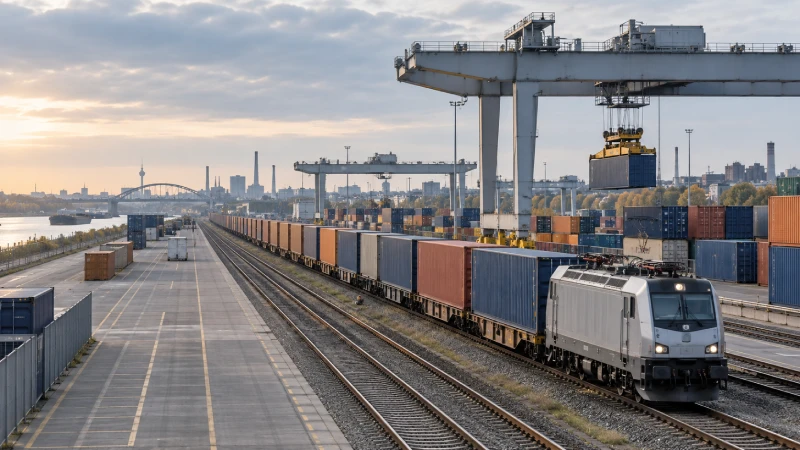
Shipping from China to Duisburg is particularly attractive for importers looking for a middle ground between slow ocean freight and expensive air freight.
Duisburg is not simply another inland German destination. It is one of Europe’s most important rail and intermodal logistics gateways, connecting China-Europe freight trains with road, rail and inland-waterway networks across Germany, the Rhine-Ruhr region, the Benelux countries and wider Europe.
For cargo originating in China, rail freight can be arranged from major hubs such as Chongqing, Chengdu, Yiwu, Xi’an and other inland terminals. Depending on the shipment, you can use rail LCL for smaller commercial cargo or rail FCL for full-container movements, followed by customs coordination and terminal-to-door delivery from Duisburg.
Duisport describes the Port of Duisburg as the world’s largest inland port. The port has approximately 200 km of its own railway network, 10 container terminals and more than 400 weekly intermodal train connections linking over 100 national and international destinations. See the Duisport company overview for current infrastructure details.
If your shipment is going elsewhere in Germany, see our Shipping from China to Germany guide for a broader comparison of rail, sea, air and door-to-door options.
Quick Answer: What Is the Best Way to Ship from China to Duisburg?
For many commercial shipments, China-Europe rail freight is the most relevant option for Duisburg.
It is normally chosen when ocean freight is too slow but air freight is too expensive. Duisburg’s direct connection to major Chinese rail hubs also makes rail particularly useful for cargo originating in inland manufacturing regions such as Chongqing, Sichuan, Shaanxi and central China.
Duisport’s transcontinental network information gives approximately 12–18 days between Duisburg and major Chinese rail hubs as a rail journey benchmark. This should not be confused with a guaranteed factory-to-door transit time because pickup, export handling, consolidation, border processing, customs and final delivery must also be included.
| Shipping Method | Best For | Typical Speed | Relative Cost | Duisburg Relevance |
|---|---|---|---|---|
| Rail LCL | Several pallets or medium-volume cargo | Faster than conventional sea freight | $$ | Excellent |
| Rail FCL | Larger or regular commercial shipments | Approx. 12–18 days for major rail-hub movement* | $$ | Excellent |
| Sea LCL | Smaller, non-urgent cargo | Several weeks | $ | Via seaport + inland transport |
| Sea FCL | Large, cost-sensitive cargo | Several weeks | $ | Via Hamburg, Rotterdam, Antwerp or another port |
| Air Freight | Urgent or high-value cargo | Days rather than weeks | $$$$ | Airport + road delivery |
| Express | Samples and small parcels | Fastest for small shipments | $$$$ | Door-to-door |
*Actual schedules vary by origin terminal, operator, corridor, border conditions and capacity.
Pro Tip: Do not compare only the China-Europe rail rate with an ocean rate. Compare the complete factory-to-warehouse cost, including pickup in China, origin handling, destination charges, customs and final delivery in Germany.
Why Duisburg Is a Major China-Europe Rail Gateway
Duisburg has a different logistics function from coastal ports such as Hamburg.
Its strength comes from combining an inland port, large-scale railway infrastructure, container terminals, road networks and inland waterways within one major industrial and consumer region.
The Port of Duisburg lies in North Rhine-Westphalia, at the heart of the Rhine-Ruhr economic area. Duisport states that approximately 30 million consumers are located within a 150 km radius of the port.
This makes Duisburg useful not only as the destination of a China-Europe freight train, but also as a distribution gateway.
A typical shipment may look like this:
China factory → Chinese rail terminal → China-Europe rail → Duisburg terminal → customs/transit procedure → truck or rail → consignee warehouse
The consignee therefore does not need to be located in Duisburg itself.
Cargo arriving in Duisburg can continue to areas such as:
| Destination | Typical Onward Solution |
|---|---|
| Duisburg | Local truck delivery |
| Düsseldorf | Truck |
| Essen | Truck |
| Oberhausen | Truck |
| Dortmund | Truck or regional rail solution |
| Cologne | Truck / intermodal connection |
| Bochum | Road delivery |
| Mönchengladbach | Road delivery |
| Wider Germany | Road or rail + road |
| Netherlands | Cross-border road / rail |
| Belgium | Cross-border road / intermodal |
Duisport Rail operates regional shuttle services within approximately 150 km as well as nationwide rail freight services in Germany. The port also has direct connections with more than 100 destinations across Europe. See Duisport Rail for the latest network overview.
Pro Tip: If your warehouse is in Düsseldorf, Essen, Dortmund, Cologne or elsewhere in NRW, do not assume that a seaport route is cheaper simply because the ocean freight rate is lower. Compare China pickup + international freight + European terminal charges + customs + inland delivery.
China to Duisburg Rail Freight Routes
There is no single universal “China to Duisburg train.”
China-Europe rail cargo can originate from different Chinese logistics hubs, and the most suitable departure point depends on where the supplier is located, current train schedules, consolidation availability, container capacity and the required arrival date.
Important Chinese rail hubs connected with the wider Duisburg network include Chongqing, Chengdu, Yiwu, Xi’an, Wuhan and other inland logistics centres. Duisport’s transcontinental network documentation shows Yiwu, Chengdu, Chongqing, Wuhan, Xi’an and other Chinese cities within its Eurasian network.
| China Rail Hub | Suitable Origin Region | Typical Cargo | Main Advantage |
|---|---|---|---|
| Chongqing | Chongqing / Southwest China | Electronics, machinery, auto parts | Established China-Europe corridor |
| Chengdu | Sichuan / Western China | Electronics, machinery, industrial cargo | Strong western China gateway |
| Yiwu | Zhejiang / East China | Consumer goods, mixed merchandise | Strong consolidation network |
| Xi’an | Shaanxi / Northwest and central China | General commercial freight | Major rail consolidation hub |
| Wuhan | Hubei / Central China | Manufacturing cargo | Central China location |
| Zhengzhou | Henan / Central China | General cargo | Inland consolidation |
| Suzhou area | Jiangsu / Yangtze River Delta | Electronics and manufacturing | Useful for eastern China origins |
The nearest rail terminal is not automatically the best one.
A better routing decision considers:
- domestic trucking distance;
- weekly departure schedule;
- warehouse cut-off;
- rail space;
- container availability;
- international freight rate;
- corridor reliability;
- Duisburg arrival schedule;
- final German delivery cost.
Chongqing to Duisburg Rail Freight
Chongqing is one of the most important historical origins of the China-Europe Railway Express network.
The Chongqing-Duisburg corridor dates back to 2011 and became one of the early regular rail connections between western China and Europe.
It remains especially relevant for cargo produced in Chongqing and surrounding parts of Southwest China, including:
- electronics;
- automotive components;
- machinery;
- industrial equipment;
- household appliances;
- manufacturing components.
The significance of the corridor was highlighted again in December 2024, when the 100,000th China-Europe freight train arrived at Duisburg Intermodal Terminal after departing from Chongqing. The train carried electronics, industrial components and household appliances.
For manufacturers in Chongqing, rail also avoids the need to move cargo thousands of kilometres eastward to a coastal Chinese seaport before beginning the international leg.
When Chongqing-Duisburg Rail Makes Sense
Consider it when:
- the supplier is in Chongqing or Southwest China;
- production schedules are time-sensitive;
- ocean transit is too slow;
- air freight is too expensive;
- regular inventory replenishment is required;
- the German consignee is located in NRW or continental Europe.
Yiwu to Duisburg Rail Freight
Yiwu is another important origin for China-Europe rail cargo, especially for exporters in Zhejiang and the Yangtze River Delta.
The route is particularly relevant to shipments involving:
- consumer merchandise;
- household products;
- apparel;
- footwear;
- electronics;
- e-commerce inventory;
- mixed supplier consolidation.
A scheduled Yiwu-Duisburg freight service was introduced in June 2024. At launch, the scheduled service operated one outbound train from Yiwu to Duisburg per week and advertised a journey of approximately 13 days, compared with 19 days previously.
That 13-day figure should be treated as a service-specific historical benchmark, not as a permanent promise for every shipment. Current schedules, routings, available capacity and terminal cut-offs need to be checked when the cargo is ready.
Pro Tip: If your supplier is near Ningbo, Hangzhou or Shanghai, do not automatically assume Yiwu rail is the best route. Compare factory → rail terminal trucking + consolidation time + train departure date + international rail transit + Duisburg delivery.
Chengdu to Duisburg Rail Freight
Chengdu is an important rail gateway for Sichuan and western China.
It is particularly relevant for manufacturers shipping:
- electronics;
- machinery;
- automotive components;
- industrial equipment;
- manufacturing parts;
- higher-value commercial inventory.
For factories in Sichuan, rail can provide a logical alternative to first transporting cargo eastward to Shanghai, Ningbo or another coastal port.
Current Chengdu-Duisburg departure options should always be checked at booking stage because service frequencies, operators and available routes can change.
The key question is not simply:
“Is there a Chengdu-Duisburg train?”
The better question is:
“Which available Chengdu-Europe service gives this shipment the best combination of cut-off, capacity, transit reliability, Duisburg connection and total delivered cost?”
How Does Rail Freight Travel from China to Duisburg?
A China-Europe rail shipment involves several separate logistics stages.
1. Factory Pickup in China
Cargo can be collected directly from the supplier under EXW or another agreed Incoterm.
For rail LCL shipments, goods are normally moved to a designated consolidation warehouse.
For FCL shipments, loading arrangements depend on the booking, container release and rail operator requirements.
2. China Export Handling
Before departure, the shipment may require:
- export customs declaration;
- commercial invoice;
- packing list;
- HS code information;
- container loading;
- rail terminal documentation;
- commodity acceptance checks.
Cargo involving batteries, chemicals, liquids or regulated products should be reviewed before entering the rail warehouse.
3. Rail Departure
The container enters the scheduled China-Europe rail network from the selected Chinese hub.
4. Eurasian Border Operations
China-Europe rail crosses several national railway systems.
Where railway gauges differ, containers or wagons may need to be transferred between railway systems. Border congestion, customs inspection and equipment availability can therefore influence transit time.
5. EU Entry
When the shipment enters the EU customs territory, safety, security and customs procedures apply.
For rail transport, complete Entry Summary Declaration data under ICS2 has been required for cargo entering or transiting the EU since 1 April 2025. See the European Commission ICS2 rail and road notice for the official requirement.
6. Arrival in Duisburg
Cargo arrives at the relevant terminal within the Duisburg logistics network.
Duisport currently operates ten terminals with road, rail and water connectivity. Duisburg Intermodal Terminal, for example, also has facilities for container and hazardous-goods handling.
7. Customs or Transit Completion
Depending on how the shipment has been structured, goods may:
- complete import customs clearance;
- terminate an EU transit movement;
- continue under another customs arrangement.
8. Final Delivery
After customs and terminal release, cargo moves to the consignee by truck, rail or another intermodal solution.
For a broader door-delivery workflow, see Door-to-Door Shipping from China.
Rail LCL from China to Duisburg
You do not need to fill an entire container to use China-Europe rail.
Rail LCL allows cargo from several shippers to be consolidated into a container and transported together.
It can be a strong option for shipments such as:
- several pallets;
- machinery components;
- electronics;
- spare parts;
- commercial inventory;
- industrial components;
- shipments too large for economical air freight but too urgent for sea freight.
How Rail LCL Works
A typical rail LCL shipment follows this structure:
supplier → China consolidation warehouse → container loading → rail terminal → Duisburg → deconsolidation → customs → truck delivery
| Factor | Rail LCL |
|---|---|
| Container space | Shared |
| Suitable volume | Small to medium commercial shipments |
| China consolidation | Required |
| Destination deconsolidation | Required |
| Handling points | More than FCL |
| Main advantage | Access to rail without filling a container |
| Pricing | Based on cargo characteristics and service |
| Final delivery | Usually truck |
| Main planning issue | Warehouse cut-off and consolidation schedule |
What Is Included in a Rail LCL Cost?
A complete cost calculation may contain:
- pickup from supplier;
- China domestic trucking;
- consolidation warehouse charges;
- export customs;
- origin terminal charges;
- international rail freight;
- destination terminal charges;
- deconsolidation;
- customs-clearance handling;
- import duty and VAT where applicable;
- final delivery.
This is why two offers showing similar international rail rates can result in very different final costs.
Pro Tip: For LCL, compare the door-delivered cost, not just the rail line-haul price. A very cheap international rate can be offset by high consolidation, destination or delivery charges.
Rail FCL from China to Duisburg
For larger shipments, regular inventory or cargo requiring fewer consolidation touchpoints, rail FCL may be the better solution.
With FCL, the container is booked for one shipper rather than shared with multiple unrelated shipments.
Rail FCL Is Usually Worth Evaluating When:
- cargo volume is relatively high;
- shipments are regular;
- the consignee needs predictable inventory replenishment;
- reducing consolidation handling is important;
- cargo value justifies faster transportation than ocean freight;
- the supplier is located close to a major Chinese rail hub.
| Factor | Rail LCL | Rail FCL |
|---|---|---|
| Container | Shared | Dedicated |
| Consolidation | Yes | Normally no shared consolidation |
| Handling | Higher | Lower |
| Cargo volume | Small / medium | Medium / large |
| Pricing structure | Shipment based | Container based |
| Regular inventory | Good | Very good |
| Control over loading | Lower | Higher |
| Destination delivery | Truck / pallet delivery | Container delivery or devanning |
Container type and availability should be confirmed when booking. Do not assume every equipment type is available on every train or every departure.
China to Duisburg Rail Freight Transit Time
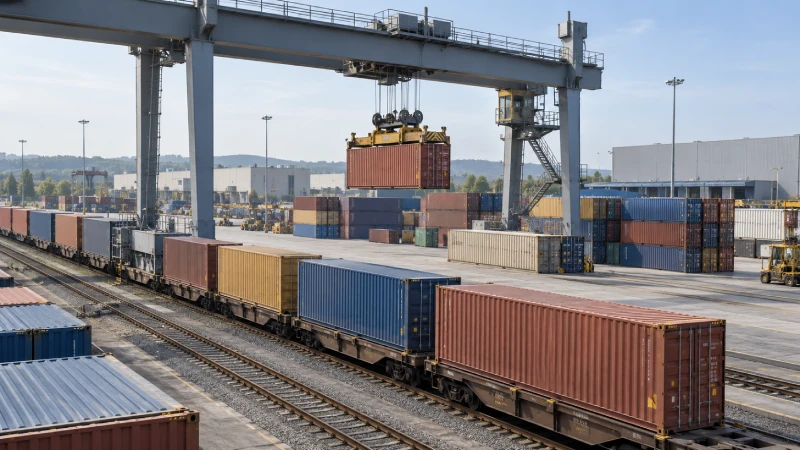
Rail transit time is one of the main reasons importers choose Duisburg.
Duisport’s published transcontinental network information states that travel between Duisburg and major Chinese hubs is approximately 12–18 days.
Actual shipment time, however, must be divided into several components.
| Stage | What Can Affect the Time |
|---|---|
| Factory pickup | Distance from supplier to rail hub |
| LCL consolidation | Warehouse cut-off and loading schedule |
| Export customs | Documentation and inspection |
| Rail departure | Scheduled service and available space |
| Main rail journey | Corridor and operator |
| Border transfer | Gauge change and congestion |
| EU entry | Safety/security/customs processing |
| Duisburg terminal | Discharge and availability |
| Customs clearance | Documentation and commodity |
| Final delivery | German postcode and appointment |
A train advertised as “13 days” or “15 days” does not mean the shipment will arrive at the consignee’s warehouse in exactly 13 or 15 days.
For example, a shipment may arrive at the consolidation warehouse several days before departure. Another shipment may arrive just before cut-off and connect immediately.
Destination customs or delivery appointments can also add time.
Planning Rule
Use rail schedule information as a main-carriage benchmark, then add realistic time for:
- origin pickup;
- warehouse processing;
- export formalities;
- customs;
- terminal release;
- final delivery.
For production-critical cargo, always include contingency time.
For a wider comparison across transport modes, see How Long Does Shipping from China to Germany Take?.
How Much Does Shipping from China to Duisburg Cost?
There is no reliable permanent “China to Duisburg rail price.”
Rates vary according to cargo, origin, equipment, schedule, capacity and final destination.
This is especially important for rail because a cost calculation is influenced by much more than the distance between China and Germany.
Main Rail Freight Cost Factors
| Cost Factor | Why It Matters |
|---|---|
| China origin city | Determines domestic pickup |
| Departure rail hub | Different services and rates |
| Rail LCL or FCL | Different pricing model |
| Cargo dimensions | Important for LCL calculation |
| Gross weight | Heavy cargo affects handling and rating |
| Container type | Equipment availability varies |
| Commodity | May affect acceptance |
| Battery / DG status | Additional restrictions or handling |
| Departure date | Capacity changes |
| Route | Different corridors have different costs |
| Duisburg terminal | Destination charges vary |
| Customs structure | Clearance/transit costs |
| Delivery postcode | Determines last-mile cost |
| Incoterm | Defines logistics responsibility |
A Complete Cost Comparison Should Look Like This
China pickup
+ export handling
+ rail consolidation or container loading
+ international rail freight
+ Duisburg terminal charges
+ customs handling
+ duties/VAT if applicable
+ final delivery
Pro Tip: A rail price that only shows the international freight charge is not enough to compare service providers. Request the same scope from every forwarder.
For broader Germany pricing factors, see Shipping Cost from China to Germany.
Duisburg Terminal-to-Door Delivery
For many importers, the important destination is not the Duisburg terminal.
It is the warehouse after Duisburg.
That is why terminal-to-door planning should be included before the train is booked.
A typical destination chain is:
Duisburg terminal → customs/release → truck appointment → consignee warehouse
Rhine-Ruhr Delivery
Duisburg is particularly well positioned for deliveries across North Rhine-Westphalia.
| Delivery Area | Typical Solution |
|---|---|
| Duisburg | Local trucking |
| Düsseldorf | Truck |
| Essen | Truck |
| Oberhausen | Truck |
| Bochum | Truck |
| Dortmund | Truck / regional intermodal |
| Cologne | Truck |
| Krefeld | Truck / regional logistics |
| Wider NRW | Truck |
| Wider Germany | Road or rail + road |
| Netherlands | Cross-border delivery |
| Belgium | Road/intermodal |
Duisport itself offers national and international pre-carriage, main carriage and on-carriage solutions, including general cargo, partial loads, full loads and container trucking.
What Determines Final Delivery Cost?
Important factors include:
- Duisburg terminal;
- delivery postcode;
- container or pallet shipment;
- total cargo weight;
- truck type;
- unloading requirements;
- warehouse appointment;
- waiting time;
- free time;
- empty-container return;
- customs status;
- weekend or special delivery requirements.
Pro Tip: Provide the German postcode before selecting the international route. Duisburg may be an excellent gateway for one warehouse but not necessarily for another. The correct gateway is the one that produces the best overall balance of freight cost + transit time + inland delivery + reliability.
Rail vs Sea vs Air Freight from China to Duisburg
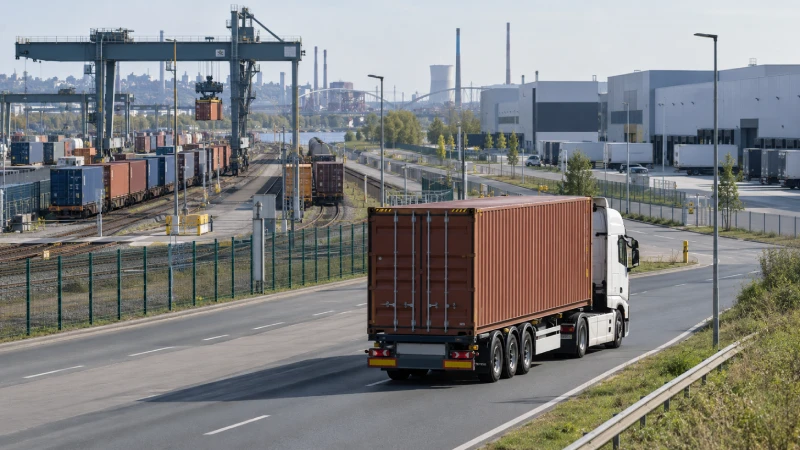
Rail is not always the correct solution.
The best method depends on cargo value, urgency, shipment size and delivery location.
| Factor | Rail Freight | Sea Freight | Air Freight |
|---|---|---|---|
| Speed | Medium-fast | Slowest | Fastest |
| Cost | Medium | Usually lowest for large cargo | Highest |
| Inland China origins | Strong | Requires move to seaport | Strong |
| Duisburg connection | Directly relevant | Via European port | Airport + truck |
| LCL option | Yes | Yes | Consolidated air |
| FCL option | Yes | Yes | No |
| Heavy low-value cargo | Moderate | Excellent | Poor |
| Time-sensitive inventory | Excellent | Weak | Excellent |
| Urgent production parts | Good | Poor | Excellent |
| Regular commercial cargo | Excellent | Excellent | Cost dependent |
Duisport positions transcontinental rail as a transport option that is faster than conventional sea freight while offering a lower-cost alternative to air transportation.
Choose Rail When:
- ocean freight is too slow;
- air freight is too expensive;
- inventory replenishment is time-sensitive;
- the factory is inland;
- the final destination is in NRW or central Europe;
- shipment size suits rail LCL or FCL.
Choose Sea Freight When:
- cost is the main priority;
- cargo is heavy or bulky;
- shipment volume is large;
- delivery is flexible;
- the supplier is close to a major Chinese seaport.
Choose Air Freight When:
- the shipment is genuinely urgent;
- production would stop without the cargo;
- cargo is valuable relative to its weight;
- the shipment is relatively small.
For urgent cargo, see our Air Freight from China service overview.
When Sea Freight to Duisburg Makes More Sense
Duisburg may be inland, but that does not mean every shipment destined for Duisburg should travel all the way from China by rail.
Ocean freight can enter Europe through a major seaport and then move inland.
Possible structures include:
China → Hamburg → Duisburg / NRW
China → Rotterdam → Duisburg / NRW
China → Antwerp-Bruges → Duisburg / NRW
The inland section may then move by:
- barge;
- rail;
- truck;
- combined transport.
Duisburg’s trimodal infrastructure is designed around road, rail and waterway connections, making it an important inland gateway for seaport cargo as well as China-Europe rail cargo.
Rail or Sea?
| Situation | Method to Evaluate First |
|---|---|
| Inland China factory + urgent inventory | Rail |
| Several pallets + moderate urgency | Rail LCL vs sea LCL |
| Large FCL + flexible delivery | Sea |
| Heavy low-value cargo | Sea |
| Coastal China factory | Sea may have stronger economics |
| NRW consignee | Duisburg rail deserves comparison |
| Production-critical parts | Rail or air |
| Very urgent small cargo | Air |
Pro Tip: Do not decide between rail and sea based only on transit time. Ask: When does the cargo actually leave the factory, and when can it realistically reach the warehouse? A sea sailing that departs tomorrow can occasionally beat a rail service that misses its cut-off.
Customs Clearance for China-Duisburg Rail Freight
Rail imports into Duisburg require the same core customs discipline as other commercial imports into the EU, but the route structure can make the process less intuitive.
The train may physically enter the EU in another member state before continuing to Germany.
That does not necessarily mean the goods must complete import clearance at the first EU border.
The EU customs transit system allows non-EU goods, under the applicable procedure, to move from their entry point to the customs office where clearance will take place while import duties and taxes remain temporarily suspended. See the European Commission customs transit guidance for the official framework.
A simplified structure may therefore look like:
China export
→ Eurasian transit
→ EU entry
→ customs transit where applicable
→ Duisburg/designated customs destination
→ import clearance
→ release for free circulation
→ final delivery
The exact customs structure depends on the transport arrangement, importer, customs representative and destination.
ICS2 Requirements for Rail Cargo Entering the EU
An important current compliance point is the EU’s Import Control System 2 — ICS2.
From 1 April 2025, road and rail carriers bringing goods into or through the EU have been required to provide advance cargo information through a complete Entry Summary Declaration, or ENS.
This increases the importance of accurate shipment data before departure.
Information should be consistent across:
- commercial invoice;
- packing list;
- shipper details;
- consignee details;
- goods description;
- HS-related data;
- package quantities;
- transport documents.
Descriptions such as:
- “parts”;
- “accessories”;
- “samples”;
- “general goods”;
may be insufficiently specific for proper customs and security filing.
Instead, cargo should be described accurately, for example:
stainless-steel hydraulic valve components
rather than:
parts
Pro Tip: Fix customs-data problems before the cargo leaves China. Correcting incomplete descriptions or inconsistent data during international transit can create unnecessary delays.
Documents Needed for Rail Freight from China to Duisburg
The exact documentation depends on the commodity, but a typical commercial shipment may require the following:
| Document / Information | Purpose |
|---|---|
| Commercial Invoice | Customs value and transaction details |
| Packing List | Quantity, packages, weight and dimensions |
| HS Code | Customs classification |
| Incoterm | Allocation of seller/buyer responsibility |
| Transport document | Rail movement information |
| China export declaration | Export formalities |
| Importer EORI | EU customs identification |
| Product compliance documents | Commodity specific |
| SDS | Chemicals / regulated cargo where required |
| DG declaration | Dangerous goods where applicable |
| Battery documentation | Lithium battery shipments where applicable |
| Certificates / licences | Product dependent |
Customs documents and product-compliance documents are not the same thing.
For example, successfully clearing customs does not automatically mean that a product complies with applicable EU safety, labelling, environmental or market-access rules.
Check the product category before shipping.
For shipments where duties, taxes and final delivery are bundled under one logistics arrangement, see DDP Shipping from China.
What Cargo Is Suitable for China-Duisburg Rail Freight?
Rail works best where the cargo has enough value or time sensitivity to justify paying more than sea freight, but not enough urgency to justify air freight.
| Cargo | Rail Suitability | Main Consideration |
|---|---|---|
| Electronics | High | Value and handling |
| Machinery | High | Dimensions / weight |
| Industrial components | High | Production schedule |
| Auto parts | High | Regular inventory |
| Consumer goods | High | Replenishment speed |
| E-commerce inventory | High | Stock availability |
| Appliances | High | Volume and value |
| Furniture | Medium | Compare with sea |
| Heavy low-value materials | Low/Medium | Sea often cheaper |
| Lithium batteries | Conditional | Operator acceptance |
| Chemicals | Conditional | Classification / route rules |
| Dangerous goods | Conditional | Specific approval |
| Temperature-sensitive cargo | Conditional | Service/equipment |
| Oversized cargo | Special | Project logistics review |
Duisport Intermodal Terminal can handle containers and hazardous cargo, but terminal capability should never be interpreted as automatic acceptance of every dangerous commodity on every China-Europe rail service.
Carrier, operator, corridor and country-specific restrictions must still be checked.
Cargo That Should Be Checked Before Booking
Pay particular attention to:
- lithium batteries;
- battery-powered equipment;
- chemicals;
- liquids;
- powders;
- magnetic products;
- aerosols;
- flammable products;
- temperature-sensitive goods;
- controlled technology;
- very heavy cargo;
- oversized cargo.
Pro Tip: Do not deliver restricted or uncertain cargo to the rail consolidation warehouse before confirming acceptance. A rejected shipment may create return trucking, warehouse charges, missed departures, customs amendments and significant delay.
China-Duisburg Rail Route Risks and Disruptions
China-Europe rail involves multiple countries, border points, railway systems and customs jurisdictions.
Its speed advantage does not mean the route is immune to disruption.
| Risk | Possible Effect | Practical Mitigation |
|---|---|---|
| Rail capacity shortage | Missed departure | Book early |
| LCL missed cut-off | Shipment waits for next consolidation | Deliver before warehouse deadline |
| Border congestion | Transit delay | Use realistic buffer |
| Gauge-transfer congestion | Longer border handling | Check current corridor performance |
| Customs-data error | Hold or query | Pre-check documentation |
| Terminal congestion | Release delay | Monitor ETA and terminal |
| Severe weather | Rail disruption | Add schedule buffer |
| Geopolitical event | Rerouting / suspension | Check corridor before booking |
| Sanctions restrictions | Cargo or transaction issue | Screen commodity and parties |
| Last-mile appointment problem | Storage/waiting charges | Arrange delivery before arrival |
Russia, Belarus and Sanctions Risk
Some traditional China-Europe rail corridors pass through Kazakhstan, Russia, Belarus and Poland before entering the EU.
This does not mean that every shipment using such a route is automatically prohibited.
However, EU sanctions include restrictions affecting certain goods, entities, services and transit scenarios. The European Commission maintains specific guidance regarding the transit of listed goods through Russia.
Therefore, each shipment should be reviewed based on:
- commodity;
- HS classification;
- shipper;
- consignee;
- end user;
- origin;
- destination;
- payment structure;
- transit countries;
- current sanctions rules.
This is particularly important because sanctions can change faster than evergreen logistics content.
Alternative Corridors
Depending on market conditions and operator availability, alternative Eurasian corridors may also be considered, including routes involving the Caspian region.
However, an alternative route is not automatically better.
More transshipment points can mean:
- additional handling;
- different schedules;
- higher freight cost;
- greater coordination requirements;
- different reliability.
Pro Tip: For time-sensitive cargo, do not select a rail service only because it advertises the shortest possible transit time. A slightly longer route with confirmed capacity + stable schedule + predictable border handling + better destination connection can produce a more reliable door-to-door result.
Which China Rail Hub Should You Use?
The factory location is an important starting point.
| Supplier Location | Rail Hub to Evaluate |
|---|---|
| Chongqing | Chongqing |
| Chengdu / Sichuan | Chengdu |
| Yiwu / Zhejiang | Yiwu |
| Xi’an / Shaanxi | Xi’an |
| Wuhan / Hubei | Wuhan |
| Zhengzhou / Henan | Zhengzhou |
| Jiangsu | Suzhou / other available hub |
| Multiple suppliers | Consolidation location based on total logistics cost |
But do not use geography alone.
Imagine:
Option A is 200 km closer to the factory but the next departure is six days away.
Option B requires 300 km more trucking but has confirmed capacity tomorrow.
Option B may still deliver earlier.
The correct comparison is therefore:
factory pickup cost
+ terminal distance
+ cut-off
+ departure date
+ rail rate
+ corridor transit
+ Duisburg arrival
+ customs
+ final delivery
China to Duisburg Door-to-Door Rail Shipping Process
A professionally managed shipment normally follows these steps.
Step 1 — Send Cargo Details
Provide:
- commodity;
- quantity;
- package dimensions;
- weight;
- cargo value;
- supplier address;
- Incoterm;
- German postcode.
Step 2 — Check Rail Acceptance
Confirm whether the commodity can travel on the proposed service.
Battery, chemical and dangerous-goods cargo requires additional review.
Step 3 — Compare Rail LCL and FCL
Determine whether consolidation or a dedicated container is more economical.
Step 4 — Select the China Rail Hub
Compare departure cities based on the supplier location, schedules and capacity.
Step 5 — Arrange China Pickup
Cargo is collected from the supplier or delivered to the designated rail warehouse.
Step 6 — Complete Export Formalities
Documents and China export customs procedures are prepared before departure.
Step 7 — Load and Dispatch
Cargo is consolidated or containerised and enters the scheduled China-Europe rail service.
Step 8 — Track the International Journey
Progress is monitored through border transfers and the Eurasian rail network.
Step 9 — Handle Duisburg Arrival and Customs
Destination terminal procedures, customs or transit completion and cargo release are arranged.
Step 10 — Deliver to the Consignee
Cargo is delivered to the final warehouse in Duisburg, the Rhine-Ruhr region or elsewhere in Germany.
When Should You Choose Duisburg Instead of Another German Gateway?
Duisburg is particularly strong for rail and inland distribution, but no gateway is best for every shipment.
| Requirement | Duisburg | Hamburg / Seaport Gateway |
|---|---|---|
| China-Europe rail | Excellent | Different rail network |
| NRW delivery | Excellent | Requires inland movement |
| Rhine-Ruhr distribution | Excellent | Secondary |
| Ocean FCL | Indirect | Excellent |
| Ocean LCL | Via inland connection | Strong |
| Inland China origin | Strong rail option | Requires China seaport transfer |
| Multimodal transport | Excellent | Excellent |
| Large low-cost container | Compare | Often strong |
| Time-sensitive commercial cargo | Strong | Depends on sea schedule |
Duisburg Is Particularly Worth Considering When:
- the supplier is inland in China;
- the shipment fits rail economics;
- the consignee is in NRW;
- faster inventory replenishment is important;
- ocean freight is too slow;
- air freight is too expensive;
- onward distribution across central Europe is required.
A coastal route through Hamburg, Rotterdam or Antwerp may be more logical when:
- the shipment is large and non-urgent;
- the supplier is close to a Chinese seaport;
- ocean freight has a strong rate advantage;
- cargo is heavy and low-value.
Why Use a China-Based Freight Forwarder for Duisburg Rail Freight?
Rail freight requires coordination before the cargo reaches the Chinese terminal.
A China-based freight forwarder can manage the origin side while coordinating the European destination process.
This may include:
- communicating with Chinese suppliers;
- confirming cargo readiness;
- arranging factory pickup;
- selecting the rail hub;
- checking departure schedules;
- arranging LCL consolidation;
- booking FCL capacity;
- checking commodity acceptance;
- handling China export procedures;
- tracking the China-Europe train;
- coordinating customs or transit;
- managing Duisburg terminal release;
- arranging Rhine-Ruhr or Germany-wide delivery.
The most useful logistics comparison is not simply:
“How much is rail freight to Duisburg?”
It is:
“What is the best way to move this specific cargo from this factory in China to this postcode in Germany by the required date?”
FAQ
How long does rail freight from China to Duisburg take?
Duisport publishes approximately 12–18 days between Duisburg and major Chinese rail hubs as a general rail journey benchmark. Actual door-to-door transit is longer because factory pickup, consolidation, export procedures, border processing, customs and final delivery must also be included.
Is there a direct freight train from Chongqing to Duisburg?
Yes. Chongqing-Duisburg is one of the historic China-Europe rail corridors. The route has operated since the early development of regular China-Europe freight trains and remains important for Southwest China cargo.
Is there a Yiwu to Duisburg freight train?
Yes. A scheduled Yiwu-Duisburg service was introduced in 2024. Current frequency, route, cut-off and space should always be reconfirmed before booking.
Can I ship LCL cargo by rail from China to Duisburg?
Yes. Rail LCL allows smaller commercial shipments to be consolidated with other cargo. It can work well for pallets, machinery components, electronics, spare parts and other cargo that does not fill an entire container.
Can I ship a full container by rail to Duisburg?
Yes, subject to current equipment, schedule, operator and cargo acceptance. Rail FCL can be attractive for larger shipments and regular inventory where faster transit than conventional sea freight is important.
Is China-Duisburg rail cheaper than air freight?
Rail is normally positioned between sea and air in both speed and cost. It is usually substantially more economical than air for larger commercial cargo while being faster than conventional ocean freight. Actual pricing depends on the shipment and current capacity.
Is China-Duisburg rail faster than sea freight?
Generally yes for the international main carriage. However, compare factory-to-door transit rather than only advertised train and vessel transit times, because origin consolidation, cut-offs, customs and inland transport can materially change the result.
Does cargo have to clear customs at the first EU border?
Not necessarily. Depending on the customs arrangement, non-EU goods can move under an EU or common transit procedure from the entry point to the intended customs destination while duties and taxes remain temporarily suspended.
What is ICS2 and does it apply to China-Europe rail freight?
ICS2 is the EU's advance safety and security system for cargo entering the EU. Since 1 April 2025, road and rail carriers have been required to provide complete Entry Summary Declaration data before goods enter or transit the EU.
Can Duisburg rail cargo be delivered to Düsseldorf, Essen, Dortmund or Cologne?
Yes. Duisburg serves the wider Rhine-Ruhr logistics region, and cargo can continue by road or intermodal transport to these cities and other destinations in Germany.
Can a Duisburg shipment continue to the Netherlands or Belgium?
Yes. Duisburg has strong road, rail and inland-waterway connections with Western Europe. The actual onward route should be selected based on destination, customs status, cargo size and cost.
Can lithium batteries or dangerous goods travel by China-Europe rail?
Sometimes, but acceptance is conditional. It depends on the product classification, battery specifications, dangerous-goods status, documentation, rail operator, route and terminal. Approval should be obtained before cargo is delivered to the origin warehouse.
What happens if the normal China-Europe rail route is disrupted?
Possible responses include using another departure hub, waiting for the next rail service, changing the Eurasian corridor, or switching to sea or air freight. The best alternative depends on cargo urgency, current route conditions and available capacity.
Is Duisburg always the best German rail destination?
No. Duisburg is particularly strong for Rhine-Ruhr and wider European distribution, but the optimal gateway depends on the supplier location, rail schedule, final German postcode and total delivered cost.
Ship from China to Duisburg with the Right Route, Not Just the Lowest Rate
Duisburg’s role as a major European inland port makes it particularly relevant for China-Europe rail freight.
For the right shipment, the route can provide an effective balance between the low cost of ocean freight and the high speed of air freight, while offering strong onward connectivity across the Rhine-Ruhr region and wider Europe.
But the best result depends on more than choosing “rail.”
You also need to determine:
- which China rail hub to use;
- whether LCL or FCL is more economical;
- which departure has confirmed capacity;
- whether the commodity is accepted;
- how EU customs and transit will be structured;
- what happens after arrival in Duisburg;
- how much final delivery costs;
- whether rail still beats sea or air for the required arrival date.
The strongest route decision compares the shipment from the factory in China through Duisburg to the consignee, rather than comparing one isolated freight rate.
