
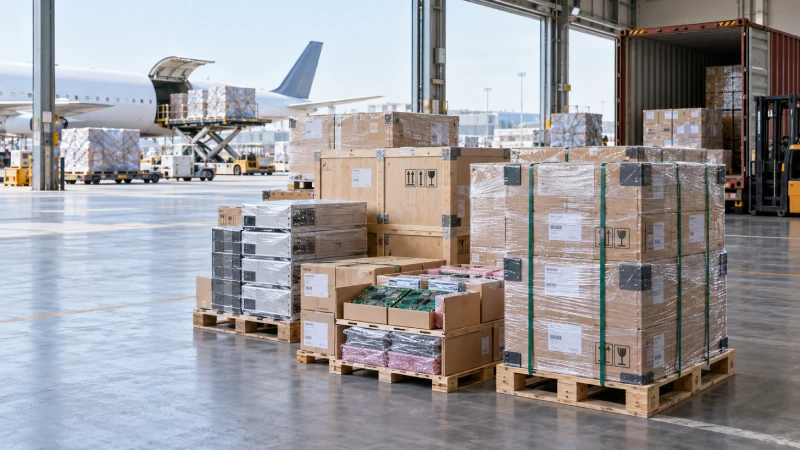
Shipping electronics from China to Germany requires more planning than moving ordinary general cargo. Freight method is only one part of the decision. Before booking express, air freight, rail, LCL or FCL, the shipper and importer should first identify exactly what electronic product is being imported and which EU and German requirements apply to it.
There is no single set of compliance rules for every electronic product.
A mains-powered industrial controller, Bluetooth speaker, laptop charger, PCB assembly, Wi-Fi camera, LED driver and battery-powered IoT device can fall under different legislation. The required conformity assessment, product markings, technical documentation, German-language information and producer-registration obligations may therefore be different.
CE marking is also not an automatic requirement simply because a product contains electronics. The European Commission states that CE marking is required only for products covered by EU legislation that requires it, and it should not be placed on products outside those rules. A CE mark is not an EU authority’s approval certificate. See the European Commission CE marking guidance.
For electronics shipped from China to Germany, the practical process should therefore begin with two separate questions:
- Can this cargo be transported safely and legally by the selected freight method?
- Can this exact product legally be placed on the German or wider EU market?
These questions overlap for products such as battery-powered electronics, but they are not the same.
For a broader view of routes, transit choices and import planning, see shipping from China to Germany. If you are comparing freight budgets, also review shipping cost from China to Germany and how long shipping from China to Germany takes.
Quick Answer: How Should Electronics Be Shipped from China to Germany?
For small, urgent shipments such as samples, replacement parts and prototypes, express courier is usually the simplest option. Commercial shipments that are too large for economical courier service but still time-sensitive often move by air freight.
For larger orders, LCL sea freight can work well when the shipment does not justify a full container, while FCL gives better control over handling and container conditions for larger or higher-value loads. Rail freight can provide a useful middle ground when sea freight is too slow but air freight is too expensive.
Battery-powered electronics require additional checks. Before booking, confirm the battery chemistry, Watt-hour rating, whether the battery is standalone, packed with equipment or contained in equipment, and whether current air, sea or rail dangerous-goods rules apply.
Separately, confirm the product’s EU/German compliance position, including CE marking where applicable, EMC, RoHS, WEEE/ElektroG, GPSR where relevant, battery legislation and importer responsibilities.
What Type of Electronics Are You Shipping?
Do not begin by asking only, “How many kilograms?”
For electronics, the forwarder and importer need a more complete product profile because the same gross weight can represent very different transport and compliance risks.
Before requesting a shipping plan, prepare:
- exact product name
- manufacturer and model number
- intended use
- quantity
- carton dimensions
- gross and net weight
- cargo value
- operating voltage
- whether the product connects to mains electricity
- whether it contains Wi-Fi, Bluetooth, NFC, cellular or other radio functions
- whether it contains a battery
- battery chemistry
- battery Watt-hour rating
- number of batteries per product or package
- whether batteries are installed, packed separately with equipment or shipped alone
- whether a charger or power supply is included
- whether the goods are consumer or professional/industrial products
- intended importer in Germany
- available EU Declaration of Conformity, test reports and technical documentation
A basic product-category assessment may look like this:
| Electronics type | Areas commonly requiring review |
|---|---|
| Wired low-voltage electronic device | EMC, RoHS, WEEE, GPSR where relevant |
| Mains-powered equipment | LVD where in scope, EMC, RoHS, WEEE |
| Wi-Fi/Bluetooth/IoT product | RED, RoHS, WEEE, batteries if applicable, GPSR where relevant |
| Charger or power supply | LVD/EMC where applicable, RoHS, WEEE and potentially other product-specific rules |
| PCB or electronic module | Depends on whether it is a finished product, component and intended application |
| Battery-powered consumer product | Applicable CE legislation, RoHS/WEEE, battery requirements and DG transport rules |
| Industrial electronic equipment | Product-specific analysis; consumer-product rules cannot simply be assumed |
This table is only a screening tool. The actual legislation should be determined from the exact product design, function and intended market use.
Best Shipping Method for Electronics from China to Germany
There is no universal kilogram threshold at which one freight method automatically becomes better than another.
Electronics can be lightweight but bulky, compact but extremely valuable, battery-powered, moisture-sensitive or vulnerable to repeated handling. Freight cost should therefore be compared with cargo value, CBM, deadline and risk.
Electronics Shipping Method Decision Table
| Method | Useful planning range | Urgency | Best suited to | Main considerations |
|---|---|---|---|---|
| Express | Usually below about 30–50 kg or a few cartons | Very urgent | samples, prototypes, replacements | dimensional weight, battery restrictions |
| Air freight | Approx. 50–500+ kg / 0.3–3+ CBM | Urgent | commercial electronics, components | chargeable weight, batteries, high-value handling |
| Rail freight | Approx. 1–15+ CBM | Medium | heavier commercial electronics | route availability, DG acceptance, terminal handling |
| Sea LCL | Approx. 1–15 CBM | Flexible | medium-volume commercial orders | additional handling, moisture, shared-container risk |
| Sea FCL | Often compared from 12–15 CBM upward, sometimes earlier | Flexible | larger, valuable or sensitive cargo | container control, security, moisture management |
These are planning ranges rather than carrier rules.
A 6 CBM shipment of low-value plastic housings may logically move by LCL. A 6 CBM shipment of expensive servers or sensitive laboratory electronics may justify FCL or another more controlled solution even when the freight cost is higher.
Pro Tip: Do not choose the freight method by kilograms alone. For electronics, compare freight cost against handling frequency, cargo value, inventory urgency, moisture exposure, battery restrictions and insurance conditions.
Express Shipping Electronics from China to Germany
Express services are particularly useful for:
- engineering samples
- prototypes
- repair parts
- launch samples
- replacement components
- small commercial orders
- urgent after-sales shipments
The main advantage is operational simplicity. Pickup, export movement, international transport, customs presentation and final delivery are usually handled within one network.
For very small shipments, this can be more efficient than arranging separate air-freight handling.
However, cost increases quickly as chargeable weight rises. Electronics may also have relatively large retail cartons compared with their actual weight, so courier volumetric weight can become more important than gross weight.
Battery-powered goods require extra attention. A product cannot automatically be accepted as ordinary courier cargo simply because the battery is installed inside the equipment. Courier acceptance depends on the battery type, configuration, quantity and service.
Always provide the battery specifications before booking.
Air Freight Electronics from China to Germany
Air freight is often the preferred solution for commercial electronics when delivery speed matters but express courier has become too expensive.
Typical air-freight cargo includes:
- computer equipment
- networking hardware
- electronic assemblies
- PCB products
- sensors
- industrial controls
- spare parts
- consumer electronics
- higher-value components
Frankfurt is Germany’s major air-cargo gateway, while other airports may be used depending on the carrier, routing and final delivery address.
For pricing logic, weight breaks and chargeable-weight planning, see air freight cost from China to Germany per kg.
Chargeable Weight Matters
Air freight is normally priced according to chargeable weight rather than simply the number shown on the factory’s scale.
The basic principle is:
Chargeable Weight = Higher of Gross Weight or Volumetric Weight
This is particularly important for electronics packed with protective foam or large retail packaging.
Before comparing quotes, provide the final packed dimensions rather than only the product’s net dimensions.
High-Value Electronics by Air
Air freight reduces transit time but does not automatically remove security risks.
For valuable cargo, consider:
- fewer transshipment points
- shorter warehouse dwell times
- secure cargo terminals
- strong palletization
- tamper-evident wrapping
- numbered carton or pallet seals
- serial-number records
- loading photographs
- documented handovers
- direct delivery after customs clearance where practical
A more expensive routing with fewer handling points may make more commercial sense than the cheapest available flight.
Sea Freight: LCL or FCL for Electronics?
For larger commercial shipments, sea freight usually provides the lowest freight cost per unit.
The main decision is whether to use LCL or FCL.
LCL Shipping for Electronics
LCL allows your goods to share container space with other shipments.
It can work well for:
- several pallets of electronics
- moderate inventory replenishment
- non-urgent shipments
- cargo that does not justify a complete container
The main issue for electronics is that LCL normally involves more handling.
Cargo may move through:
- the Chinese factory
- origin warehouse
- CFS consolidation
- container loading
- ocean transport
- destination CFS
- deconsolidation
- customs processing
- final truck delivery
Every transfer introduces some additional possibility of carton compression, impact, moisture exposure, misrouting or shortage.
Good packaging is therefore especially important.
FCL Shipping for Electronics
FCL gives one shipper use of the container.
For electronics, this can provide important operational advantages:
- fewer cargo touches
- better control over pallet placement
- easier use of container desiccants
- no unrelated LCL cargo inside the same container
- easier seal control
- lower deconsolidation exposure
- improved shipment integrity
For container-size and cost planning, see 20ft and 40ft container shipping cost from China to Germany.
FCL does not require the container to be physically full before it becomes commercially sensible.
For expensive or sensitive electronics, the reduction in handling and theft exposure can justify FCL earlier than a simple CBM calculation would suggest.
Rail Freight for Electronics from China to Germany
Rail freight occupies a useful position between air and sea.
It can be considered when:
- sea freight is too slow
- air freight is too expensive
- the shipment is relatively heavy
- delivery is to inland Germany
- inventory planning allows a medium-speed service
Common candidates include industrial electronics, components, networking equipment, machinery controls and regular inventory replenishment.
For overall transit planning, compare rail with the timings in how long shipping from China to Germany takes.
Electronics with Batteries by Rail
Do not assume a battery shipment accepted by sea can automatically move by rail.
Dangerous-goods movement by rail is governed by applicable regulations including RID on relevant international rail movements. RID includes specific provisions for lithium cells and batteries, including links to the UN Manual of Tests and Criteria subsection 38.3. See the OTIF RID dangerous-goods framework.
Actual China–Europe rail acceptance can also depend on:
- battery classification
- packing
- quantity
- operator policy
- route
- terminals
- transit countries
For this reason, obtain route-specific confirmation before the factory releases the cargo.
Shipping Electronics with Lithium Batteries from China to Germany
Lithium batteries are one of the most common reasons electronics shipments require special planning.
The first step is to identify exactly how the battery is being shipped.
Identify the Battery Configuration
Common classifications include:
| Battery configuration | Typical UN number |
|---|---|
| Lithium-ion batteries shipped alone | UN3480 |
| Lithium-ion batteries packed with equipment | UN3481 |
| Lithium-ion batteries contained in equipment | UN3481 |
| Lithium-metal batteries shipped alone | UN3090 |
| Lithium-metal batteries packed with equipment | UN3091 |
| Lithium-metal batteries contained in equipment | UN3091 |
The correct UN number alone is not enough to determine all transport requirements.
You may also need to establish:
- cell or battery
- chemistry
- Watt-hour rating
- lithium content where relevant
- battery weight
- quantity per package
- packing configuration
- state of charge
- whether the battery is damaged or defective
- whether UN 38.3 requirements are satisfied
- applicable packing instruction
- required marks and labels
- documentation
- carrier-specific restrictions
Power banks deserve particular attention. Under IATA guidance, a power bank designed primarily to provide power to another device is treated as a battery rather than simply as a battery “contained in equipment.” See the IATA battery guidance.
UN 38.3 Is Not a CE Certificate
Lithium battery transport and EU product-market conformity are separate issues.
The UN Manual of Tests and Criteria contains the transport testing framework for lithium cells and batteries under subsection 38.3. See the UNECE Manual of Tests and Criteria resources.
A battery meeting applicable UN 38.3 transport requirements does not automatically prove that the finished electronic product complies with CE, EMC, RED, RoHS, WEEE, GPSR or the EU Batteries Regulation.
Likewise, an electronic product with CE marking cannot be assumed to satisfy dangerous-goods transport requirements.
Pro Tip: Maintain separate transport and product-compliance files for battery products. The transport file should cover UN classification, battery data, packaging and carrier acceptance. The product file should cover applicable EU legislation, conformity documentation, labels and EPR obligations.
Air Freight Rules for Lithium Batteries
Air transport is especially sensitive because lithium batteries can present thermal-runaway and fire risks.
Current air transport requirements should be checked against the latest ICAO Technical Instructions and IATA Dangerous Goods Regulations. IATA publishes current battery guidance through its lithium battery resources.
Depending on the shipment, requirements may involve:
- battery configuration
- Watt-hour rating
- state of charge
- packing instruction
- packaging performance
- marks and labels
- dangerous-goods declaration
- cargo-aircraft restrictions
- operator variations
From 1 January 2026, certain lithium-ion batteries packed with equipment are subject to strengthened state-of-charge provisions under current air transport rules. The exact requirement depends on the applicable packing instruction and section, so it should be checked against the specific battery configuration rather than applied as a blanket rule to every battery-powered device.
Standalone lithium-ion batteries are subject to additional restrictions and should never be booked as ordinary general cargo without a battery review.
Sea Freight Rules for Lithium Batteries
Lithium battery cargo by sea is handled under the International Maritime Dangerous Goods Code where the relevant dangerous-goods provisions apply.
The IMDG Code 2024 Edition incorporating Amendment 42-24 became mandatory on 1 January 2026. See the IMO IMDG Code information.
Depending on the product and battery configuration, requirements can include:
- classification
- UN 38.3 status
- approved packaging
- package marks
- Class 9 labels where applicable
- dangerous-goods declaration
- container packing requirements
- segregation or stowage provisions
- carrier documentation
Never rely on an old battery shipping template without checking the current shipment.
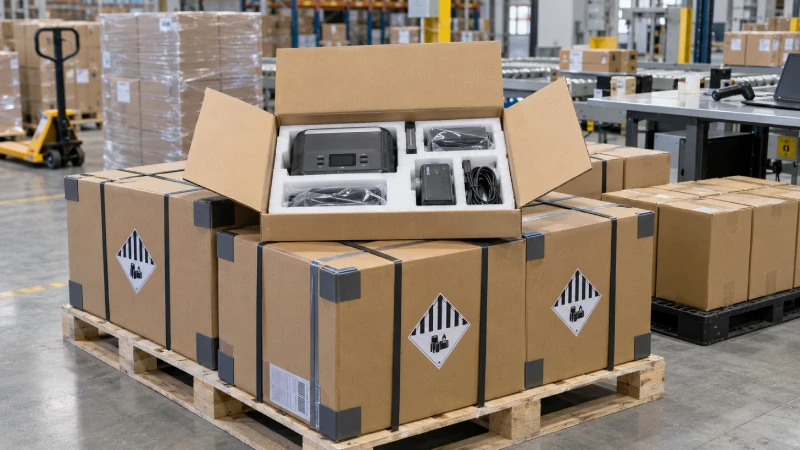
EU Battery Compliance Is Separate from Battery Transport
Battery-powered electronics may create another layer of responsibility once they are placed on the EU market.
Regulation (EU) 2023/1542 applies to batteries and establishes product, conformity, information and economic-operator requirements. The Regulation also contains obligations for importers of batteries entering the EU, including verification of applicable conformity documentation, CE marking and required information. See Regulation (EU) 2023/1542.
This is separate from IATA, IMDG or RID transport compliance.
Depending on the battery category and applicable implementation date, businesses may need to investigate:
- conformity assessment
- technical documentation
- EU Declaration of Conformity
- CE marking for the battery
- labelling
- importer details
- safety information
- removability or replaceability requirements
- QR-code requirements
- battery passport requirements for categories where applicable
- extended producer responsibility
Because the Batteries Regulation contains phased obligations, the requirement should be checked against the battery category and the date on which the product will be placed on the market.
German Battery Registration
Germany also has its national implementation framework under the Batterierecht-Durchführungsgesetz — BattDG.
Section 5 of the BattDG requires the relevant producer or authorised EPR representative to register before first making batteries available on the German market, subject to the role and battery category involved. See the official German BattDG text.
If an electronic product includes a battery, do not assume WEEE registration alone resolves battery EPR obligations.
CE Marking for Electronics: When Is It Required?
One of the most common import mistakes is asking a Chinese supplier:
“Does this product have CE?”
That question is incomplete.
The correct question is:
Which EU legislation applies to this exact model, and what conformity-assessment evidence demonstrates compliance with it?
The European Commission states that the manufacturer is responsible for identifying applicable legislation and standards, conducting conformity assessment, preparing technical documentation, issuing the EU Declaration of Conformity and affixing the CE mark where applicable. See the European Commission guidance for manufacturers.
Different electronic products may fall under different EU legislation.
Low Voltage Directive
Electrical equipment operating within the scope of Directive 2014/35/EU may need to meet the Low Voltage Directive’s safety requirements.
Depending on the equipment, this can include products such as:
- power supplies
- chargers
- mains-powered equipment
- certain appliances
- electrical control products
EU rules also impose duties on importers. Before placing covered electrical equipment on the market, importers must check matters including the manufacturer’s conformity assessment, technical documentation, CE marking and accompanying documentation. See Directive 2014/35/EU.
The directive’s actual voltage scope and exclusions should always be checked for the specific product.
Radio Equipment Directive
Wireless functionality can fundamentally change a product’s conformity route.
Products using technologies such as:
- Bluetooth
- Wi-Fi
- NFC
- cellular connectivity
- RF remote control
- other intentional radio transmission
may fall under the Radio Equipment Directive, depending on the product.
The RED requires importers to place only compliant radio equipment on the market and to verify matters including conformity assessment, technical documentation, CE marking and the required accompanying information. Importers must also ensure that storage and transport conditions under their responsibility do not jeopardize compliance. See Directive 2014/53/EU.
This means changing a wired product into a Bluetooth-enabled version can affect much more than the freight booking.
EMC Requirements for Electronics Imported into Germany
Electromagnetic compatibility is a central compliance area for many types of electronic equipment.
In simple terms, EMC requirements are intended to ensure that equipment does not create unacceptable electromagnetic disturbance and has an adequate level of immunity to electromagnetic disturbance.
For apparatus within the scope of Directive 2014/30/EU, compliance work may involve:
- identification of applicable harmonised standards
- EMC testing
- technical documentation
- conformity assessment
- EU Declaration of Conformity
- CE marking
- required manufacturer or importer information
- instructions
Importers have independent responsibilities. Under the EMC Directive, they must place only compliant apparatus on the market, check that the appropriate conformity-assessment process has been completed and ensure required documentation and CE marking are in place. They must also ensure that storage or transport under their responsibility does not compromise conformity. See Directive 2014/30/EU.
This last point matters for logistics.
A compliant electronic product can still be physically damaged by moisture, impact, temperature exposure or improper handling during international transport.
RoHS Requirements for Electronics
RoHS deals primarily with restricted hazardous substances in electrical and electronic equipment.
The European Commission identifies ten restricted substances under the RoHS framework, including lead, cadmium, mercury, hexavalent chromium, PBB, PBDE and four specified phthalates. The Commission also notes that products with electrical or electronic components generally require a scope review unless specifically excluded. See the European Commission RoHS guidance.
For importers, a useful RoHS compliance file may include:
- BOM or material information
- supplier declarations
- component declarations
- laboratory results where appropriate
- technical documentation
- conformity documentation
Avoid the common assumption that every supplier must simply provide something called an “RoHS certificate.”
The more important question is whether the exact product falls within scope and whether there is credible technical evidence supporting conformity.
A generic PDF for a vaguely similar product is weak evidence.
WEEE Requirements in Germany
WEEE obligations are separate from CE and RoHS.
At EU level, WEEE establishes the framework for waste electrical and electronic equipment. Germany implements producer-registration and related requirements through the ElektroG.
For businesses selling electrical and electronic equipment in Germany, this is not something to postpone until after the goods arrive.
WEEE Registration Before Selling in Germany
Section 6 of Germany’s ElektroG requires a producer, or its authorised representative where applicable, to be registered before placing covered electrical or electronic equipment on the market.
The law also prohibits covered unregistered producers from placing such products on the market and restricts distributors, marketplaces and fulfilment providers from handling relevant unregistered equipment in the circumstances specified by the legislation. See the official ElektroG Section 6.
Registration is handled through stiftung ear.
Producer obligations can include, depending on the equipment and business model:
- WEEE registration
- brand registration
- equipment-category information
- registration number usage
- reporting
- take-back responsibilities
- financing or guarantee requirements where applicable
- product marking
Foreign Companies Selling in Germany
If a foreign company itself qualifies as the producer placing EEE on the German market and is not established in Germany, authorised-representative rules become important.
stiftung ear explains that foreign producers may need an authorised representative located in Germany to assume the relevant ElektroG producer obligations. See stiftung ear’s guidance for producers.
The actual producer role should therefore be established from the sales structure rather than assumed from the freight Incoterm.
Pro Tip: Customs clearance and WEEE registration answer different questions. A shipment being released by customs does not by itself demonstrate that all German market-placement or EPR requirements have been fulfilled.
Does GPSR Apply to Electronics?
The General Product Safety Regulation, Regulation (EU) 2023/988, can be relevant to consumer electronics, but it should not be applied as though it simply duplicates every CE-related safety rule.
The GPSR states that where a product is already subject to specific EU safety requirements, the GPSR applies to aspects or categories of risk not covered by those specific provisions. See Regulation (EU) 2023/988.
For example, a consumer electronic product may already be subject to specific harmonisation legislation dealing with certain electrical, EMC or radio risks, while GPSR can remain relevant for safety aspects not covered by that legislation.
This makes product-by-product assessment essential.
GPSR Importer Responsibilities
Where the relevant GPSR provisions apply, importers can have responsibilities including:
- checking that the product meets the general safety requirement
- verifying required manufacturer information
- adding importer identification
- ensuring appropriate instructions and safety information
- maintaining technical documentation where required
- cooperating with market-surveillance authorities
- taking corrective action for dangerous products
- maintaining complaint or recall information as required
GPSR also expressly requires importers to ensure that storage and transport conditions under their responsibility do not jeopardize product conformity.
For products covered by the relevant GPSR provisions in Germany, the German ProdSG addresses German-language requirements for listed instructions, safety information and warnings. See the official German ProdSG.
The German Importer Has Real Compliance Responsibilities
The importer should not be viewed as just the company whose name appears in the customs declaration.
Under various EU product regimes, an importer can have independent legal obligations.
Depending on which legislation applies, these may include:
- confirming conformity assessment has been completed
- checking CE marking
- checking product and manufacturer identification
- providing importer contact information
- checking the EU Declaration of Conformity
- ensuring technical documentation can be supplied
- checking instructions and safety information
- checking required German-language information
- avoiding sale of products believed to be non-compliant
- carrying out corrective measures
- cooperating with market-surveillance authorities
- ensuring transport and storage do not undermine conformity
These obligations can be seen in legislation such as the RED, EMC Directive and Low Voltage Directive.
Do Not Rely on a “CE Certificate” Alone
A PDF labelled “CE Certificate” is not automatically sufficient.
Before importing, verify:
- Which legislation applies?
- What conformity-assessment route is required?
- Does the Declaration of Conformity identify the correct manufacturer and model?
- Are the referenced standards appropriate?
- Do the available test reports cover the actual product?
- Have product hardware, firmware or radio modules changed since testing?
- Are required labels and economic-operator details correct?
This review is especially important for private-label products where the German or EU buyer sells the equipment under its own brand.
Protecting Electronics from Moisture During Shipping
Electronics do not need to be classified as dangerous goods to be high-risk cargo.
For ocean and rail shipments, moisture can be as important as physical shock.
Potential sources include:
- humidity
- condensation
- temperature cycling
- container rain
- wet pallets
- damp warehouse conditions
- long terminal dwell times
- exposure during loading or unloading
Practical Moisture Protection
Depending on the product, useful controls include:
- moisture-barrier bags
- sealed inner packaging
- desiccant
- humidity-indicator cards
- PE liners
- container desiccants
- corrosion protection for exposed metal
- dry pallets
- waterproof pallet covers where appropriate
- keeping cartons away from direct contact with the container floor or walls
- checking that cartons and pallets are dry before loading
Do not add large amounts of desiccant without considering the actual packaging system. Moisture protection works best when the barrier, product sensitivity, packaging volume and desiccant quantity are considered together.
For semiconductors or moisture-sensitive components, the packaging specification may need to be stricter than for finished consumer electronics.
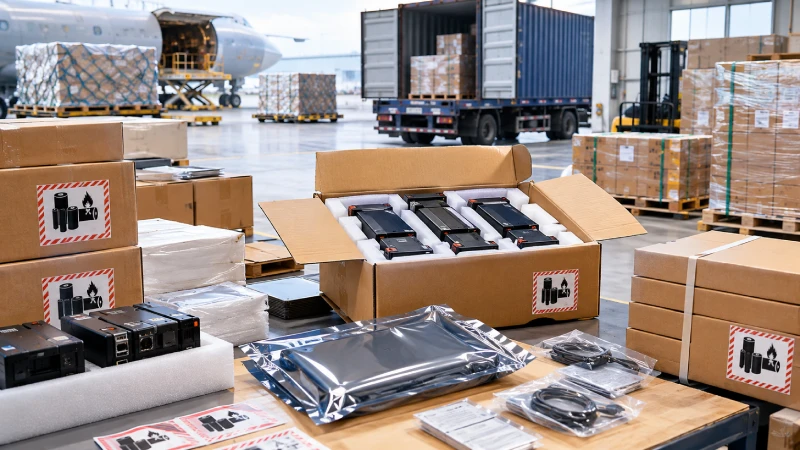
ESD Protection for Electronic Components
Electrostatic discharge can damage sensitive electronic components without leaving obvious external signs.
Products commonly requiring ESD consideration include:
- ICs
- semiconductors
- bare PCBs
- sensors
- electronic modules
- control boards
- certain precision components
Packaging options can include:
- static-shielding bags
- conductive trays
- dissipative packaging
- conductive or ESD-safe foam
- appropriate protective work areas during packing
Do not assume that every bag marketed as “anti-static” provides the same protection.
A simple anti-static material may reduce charge generation but does not necessarily provide the shielding required for highly ESD-sensitive components.
Pro Tip: For sensitive boards and semiconductors, specify the required ESD packaging standard to the supplier before production packing, rather than asking the warehouse to improvise when the truck arrives.
How to Handle High-Value Electronics
High-value electronics should be planned according to loss severity, not just physical volume.
A 200 kg shipment of advanced components can be financially more significant than a full container of low-value goods.
Reduce Unnecessary Handling
Depending on the cargo, consider:
- direct air services
- FCL rather than LCL
- fewer transshipment points
- direct trucking after release
- controlled warehouses
- shorter dwell times
Every additional transfer introduces another handover.
Maintain a Chain of Custody
For valuable shipments, record:
- SKU
- serial number
- carton number
- pallet number
- package count
- weight
- seal number
- loading photos
- container photos
- condition at pickup
- delivery POD
For particularly sensitive cargo, carton-to-pallet mapping can simplify shortage investigations.
Use Neutral Outer Packaging
Avoid unnecessary advertising of expensive contents on master cartons.
Neutral packaging may reduce unwanted attention while still maintaining correct commercial and customs descriptions in the shipping documentation.
Never use neutral packaging as a reason to make a false customs declaration.
Cargo Insurance for Electronics
Carrier liability should not be confused with full-value cargo insurance.
Carrier liability may be limited by transport convention, contract or chargeable weight and may not equal the commercial value of the goods.
For higher-value electronics, consider cargo insurance covering the transport journey appropriate to the sales contract and risk allocation.
Before accepting an insurance option, check:
- insured value
- freight included in the insured basis
- warehouse-to-warehouse scope
- theft
- pilferage
- shortage
- physical damage
- water damage
- condensation exclusions
- electrical or electronic exclusions
- battery exclusions
- deductible
- packing conditions
- claims deadlines
- evidence required for claims
The policy should also be checked against the Incoterm.
For example, agreeing that one party “provides insurance” does not answer whether the actual policy covers the specific electronics, battery type, route or loss scenario.
Pro Tip: For expensive electronics, ask to see the actual insurance scope and exclusions, not just a line in the freight quotation saying “insurance available.”
Customs Classification of Electronics in Germany
“Electronics” is not a customs classification.
Two electronic products that look similar commercially can have different customs codes because their principal functions differ.
HS, CN and TARIC
For EU imports, it helps to understand three levels:
- HS provides the international six-digit foundation.
- Combined Nomenclature (CN) is the EU’s eight-digit classification system.
- TARIC integrates EU tariff and other trade-policy measures.
The European Commission explains that tariff classification is used not only to determine customs duty but also to identify non-tariff measures such as restrictions, licences and other requirements. See the European Commission tariff-classification guidance.
This is why simply writing “Chapter 85 electronics” is not enough.
Why Electronics Can Be Difficult to Classify
Questions commonly arise around:
- complete device vs component
- computer accessory vs communication equipment
- PCB vs finished apparatus
- switching device vs controller
- adapter vs charger vs power supply
- standalone module vs part of another machine
- multifunction equipment
- product sets containing multiple items
The classification should follow the product’s actual characteristics and applicable tariff rules, not whichever code produces the lowest duty rate.
Information Needed for Classification
Prepare:
- datasheet
- exact product name
- model number
- photos
- principal function
- operating method
- composition
- voltage or power information
- connectivity
- radio capability
- components
- intended use
- product catalogue
Where classification is commercially significant and genuinely uncertain, an EU Binding Tariff Information (BTI) decision can provide greater certainty for qualifying future imports.
EORI and Customs Clearance in Germany
Economic operators carrying out relevant EU customs operations generally need an EORI number.
The European Commission states that an EORI is mandatory for customs clearance for import, export and transit operations in the EU customs territory. See the European Commission EORI guidance.
Before electronics leave China, confirm:
- who is the importer
- whose EORI will be used
- customs representative arrangement
- HS/CN/TARIC classification
- customs value
- origin
- commercial invoice details
- product description
- import duty
- import VAT
- any relevant restrictions or compliance documentation
For freight-budget context, see shipping cost from China to Germany. The exact customs code and declared value should always be confirmed for the actual product rather than copied from a previous electronics shipment.
Documents for Shipping Electronics from China to Germany
The exact document set depends on the product, transport method and battery configuration.
| Document | General electronics | Battery cargo | Product compliance |
|---|---|---|---|
| Commercial invoice | ✓ | ✓ | Supporting |
| Packing list | ✓ | ✓ | — |
| AWB / B/L / rail document | ✓ | ✓ | — |
| Customs classification | ✓ | ✓ | — |
| EORI | Import side | Import side | — |
| Battery specification | — | ✓ | May also support product file |
| UN 38.3 information/test summary | — | Where applicable | — |
| DG declaration | — | Where required | — |
| EU Declaration of Conformity | — | — | Where applicable |
| Technical documentation | — | — | Where required |
| EMC/RED/LVD evidence | — | — | According to applicable legislation |
| RoHS evidence | — | — | Where applicable |
| WEEE registration | — | — | Where required |
| Battery EPR registration | — | — | Where required |
| German instructions/safety information | — | — | Where required |
One important distinction should remain clear:
A freight forwarder can coordinate transport and customs logistics, but it does not replace the manufacturer’s or importer’s product-compliance responsibilities.
Pre-Shipment Checklist for Electronics
Before cargo leaves the Chinese factory, work through the following checklist.
Product
- Confirm exact product and model.
- Confirm intended use.
- Determine applicable EU/German legislation.
- Determine whether CE marking is required.
- Verify the EU Declaration of Conformity where applicable.
- Review relevant technical or test evidence.
- Check product and packaging labels.
- Confirm German-language instructions or warnings where required.
- Confirm the importer information.
EPR
- Determine whether the product falls under ElektroG/WEEE.
- Confirm the responsible producer.
- Confirm registration before required market placement.
- Check battery EPR/BattDG obligations separately if batteries are present.
Battery Transport
- Identify battery chemistry.
- Confirm Watt-hour rating.
- Identify standalone, packed with equipment or contained in equipment configuration.
- Confirm applicable UN number.
- Check UN 38.3 information.
- Confirm state-of-charge requirements.
- Confirm carrier acceptance before pickup.
Freight
- Compare express, air, rail, LCL and FCL.
- Confirm chargeable weight or CBM.
- Review routing and number of handovers.
- Specify moisture protection.
- Specify ESD protection where required.
- Record serial numbers for valuable cargo.
- Photograph cargo before dispatch.
- Arrange suitable cargo insurance.
Customs
- Confirm CN/TARIC classification.
- Confirm importer EORI.
- Check commercial invoice description.
- Confirm customs value.
- Estimate duty and import VAT.
- Prepare supporting documents before arrival.
Common Mistakes When Importing Electronics from China to Germany
Treating All Electronics as the Same Product Category
A Wi-Fi camera and an industrial PCB are not automatically subject to identical compliance requirements.
Start with the product, not the word “electronics.”
Asking Only Whether the Supplier Has CE
CE is the result of the applicable conformity process, not a generic supplier certificate.
Review the legislation, Declaration of Conformity, exact model and supporting technical evidence.
Confusing UN 38.3 with EU Product Compliance
UN 38.3 concerns battery transport testing.
It does not replace CE, EMC, RED, RoHS, WEEE or other applicable EU requirements.
Failing to Declare Batteries
Trying to ship batteries as undeclared general cargo can create serious delays, rejection and safety risks.
Give the forwarder accurate battery information before booking.
Using an Approximate HS Code
Classification affects more than duty.
Incorrect classification can affect declarations and applicable non-tariff measures.
Assuming Customs Release Means the Product Is Compliant
Customs and product-market surveillance are related regulatory areas but they are not the same approval process.
Shipping Before WEEE Obligations Are Resolved
For covered products, German ElektroG registration should be addressed before the product is placed on the market.
Forgetting Battery EPR
A product may create both WEEE and battery producer obligations.
Check each regime separately.
Assuming DDP Solves Every Legal Responsibility
DDP is an Incoterm governing contractual delivery, costs and risks.
It does not automatically rewrite the manufacturer, importer, producer or responsible-economic-operator roles imposed by EU and German product legislation.
Ignoring German-Language Information
Where legislation requires instructions, safety information or warnings in German, English-only material may be insufficient.
Choosing LCL Only Because It Is Cheaper
For high-value electronics, the extra handling involved in LCL may outweigh the freight saving.
Evaluate total risk rather than the freight rate alone.
Shipping Electronics from China to Germany?
For electronics exported from China, prepare:
- product name and model
- product photos or datasheet
- quantity
- carton dimensions
- gross weight
- cargo value
- battery type and Wh rating
- pickup city in China
- German delivery postcode
- required delivery date
Winsail Logistics can compare express, air freight, rail, LCL and FCL options and identify transport, battery-handling or shipping-document issues that should be resolved before booking.
CTA: Get an Electronics Shipping Plan
Compliance Research Note
Product rules and dangerous-goods requirements can change. For an electronics shipment, the exact product, model, battery configuration, importer structure and date of market placement should therefore be checked against the current official requirements before shipping.
For this guide, authoritative research should prioritize:
- European Commission and EUR-Lex for CE, LVD, EMC, RED, RoHS, GPSR and battery rules
- Germany’s official legislation database and stiftung ear for ElektroG and BattDG obligations
- UNECE for UN 38.3
- IATA for current air battery guidance
- IMO for the IMDG Code
- OTIF/RID for rail dangerous goods
- European Commission customs resources for CN/TARIC classification and EORI requirements
As of 2026, the IMDG 2024 Edition incorporating Amendment 42-24 is mandatory, while current IATA battery guidance reflects the 2026 Dangerous Goods Regulations. Compliance should still be checked against the exact shipment date and product configuration.
FAQ
What is the best way to ship electronics from China to Germany?
It depends on weight, volume, urgency, cargo value and battery configuration. Express works well for very small urgent shipments, air freight for time-sensitive commercial electronics, rail for medium-speed heavier cargo, and LCL or FCL for larger less-urgent shipments. For sensitive or high-value electronics, handling frequency and security can be as important as freight cost.
Do all electronics imported into Germany need CE marking?
No. CE marking is required only where the product falls under EU legislation that requires CE marking. The applicable legislation must first be identified from the productu0026#x27;s function, voltage, connectivity and other characteristics.
Do I need a CE certificate to clear electronics in Germany?
The phrase u0026quot;CE certificateu0026quot; can be misleading. Where CE legislation applies, the important elements can include the correct conformity assessment, technical documentation, EU Declaration of Conformity, applicable testing and CE marking. A generic supplier certificate should not be treated as sufficient without checking what it actually covers.
Can lithium-battery electronics be shipped by air from China to Germany?
Yes, many can, but acceptance depends on the exact battery configuration. The shipper needs to establish battery chemistry, Watt-hour rating, UN number, whether batteries are standalone, packed with equipment or contained in equipment, UN 38.3 status, packaging and applicable state-of-charge requirements.
What is the difference between UN 38.3 and CE?
UN 38.3 relates to testing of lithium cells and batteries for transport. CE marking concerns conformity with applicable EU product legislation. Passing UN 38.3 does not prove CE conformity, and CE marking does not automatically prove that a battery can be shipped under a particular dangerous-goods transport arrangement.
Can electronics with lithium batteries move by rail from China to Germany?
Some battery-powered electronics can move by rail, but acceptance depends on classification, packaging, route and operator. Relevant dangerous-goods requirements such as RID and actual China–Europe service acceptance should be checked before cargo pickup.
Do electronics sold in Germany need WEEE registration?
Covered electrical and electronic equipment can trigger German ElektroG obligations. The responsible producer or authorised representative, where applicable, must be correctly registered before covered equipment is placed on the German market.
Does GPSR apply if an electronic product already has CE marking?
It can still be relevant. Where specific EU legislation already regulates particular product risks, GPSR generally applies to aspects and risks not covered by those specific rules rather than simply duplicating them.
Who is responsible for electronics compliance: the Chinese manufacturer or German importer?
Both can have legal responsibilities. The manufacturer generally handles conformity assessment and technical documentation under applicable legislation, while EU importers can have independent duties to verify compliance information, provide importer identification, retain or obtain documentation and take corrective action where required.
Does DDP make the Chinese supplier responsible for all German compliance?
No. DDP determines contractual delivery responsibilities under the Incoterm, but regulatory roles such as manufacturer, importer, producer or authorised representative must still be determined under the applicable EU and German legislation.
How should high-value electronics be packed?
Use packaging appropriate to the productu0026#x27;s physical, moisture and electrostatic sensitivity. This may include cushioning, strong cartons or crates, palletization, moisture barriers, desiccant, ESD shielding materials and tamper-evident packaging. For high-value cargo, serial-number records and pre-shipment photographs are also recommended.
Should expensive electronics use LCL or FCL?
LCL can be economical for smaller shipments, but FCL reduces cargo handling and gives the shipper greater control over the container. For high-value or sensitive electronics, FCL can therefore make sense before the shipment reaches the theoretical volume needed to fill a container.
How do I find the correct HS code for electronic products?
Classification should be based on the productu0026#x27;s actual characteristics and principal function. Prepare technical specifications, model details, product photos and intended use, then determine the appropriate EU CN/TARIC classification. For important recurring imports where classification is genuinely uncertain, Binding Tariff Information may be worth considering.
Do electronics require German-language instructions?
Where applicable EU or German legislation requires instructions, warnings or safety information for products supplied in Germany, German-language material may be required. The exact requirement depends on the applicable product rules.
Do electronics containing batteries require separate German battery registration?
Potentially, yes. Battery producer obligations under Regulation (EU) 2023/1542 and Germanyu0026#x27;s BattDG should be assessed separately from WEEE and ElektroG obligations.
