

Why “Cheapest Shipping” in Tanzania Is Not Just About Freight Rates
In China–Tanzania shipping, focusing only on freight rates is one of the most common reasons shipments end up costing more than expected. What looks like a low price at the beginning often turns into higher total expenses once the cargo reaches Tanzania, especially for first-time or infrequent importers.
This happens because freight is only the part of the cost that is easiest to quote. In Tanzania, the real uncertainty starts after arrival. Port handling, customs clearance, inspections, taxes, and inland delivery can change quickly depending on how the shipment is declared and handled locally. A rate that looks competitive on paper does not automatically translate into a low landed cost.
In many real shipments, freight accounts for only a limited portion of the total spend. The remaining costs—most of them incurred at destination—are where budgets are exceeded. That is why two shipments with similar freight rates can end up with very different final costs.
Freight Cost vs Total Landed Cost in Tanzania
Freight rates are fixed before departure, but most destination costs in Tanzania are not. Once cargo arrives, expenses begin to accumulate in several areas:
- Port handling and storage charges that increase with any delay
- Customs clearance costs affected by HS code interpretation and valuation
- Inland transportation expenses that vary by distance, road conditions, and timing
For industrial goods, machinery, and project cargo, destination-side costs frequently match or exceed the ocean freight itself. In these cases, choosing a shipment purely based on freight price often creates more financial risk than savings.
Common “Cheap Quote” Traps for Tanzania Shipments
Many low quotations appear attractive because they leave out costs that are harder to predict—or harder to control—from abroad. Common gaps include:
- Customs-related risks such as inspections, reassessment of value, or penalties
- Port storage and demurrage caused by clearance delays
- Inland delivery surcharges added after arrival
These issues are not theoretical. They occur regularly in Tanzania when shipments are planned without sufficient local insight. In practice, the most economical option is rarely the one with the lowest upfront rate. It is the one where responsibilities are clearly defined, risks are anticipated, and destination costs are managed rather than left open-ended.
Tanzania Port Reality: How Dar es Salaam Shapes Your Shipping Cost
For almost all commercial imports into Tanzania, the port you deal with is effectively the same one. Dar es Salaam Port is the country’s primary gateway for containerized cargo, and its operational reality has a direct impact on whether a shipment stays within budget or slowly becomes more expensive after arrival.
Unlike markets with multiple high-capacity ports that can absorb congestion or operational fluctuations, Tanzania’s port structure is highly centralized. This means any slowdown—whether caused by vessel bunching, equipment availability, or customs-related delays—quickly translates into additional costs for importers. From a cost-control perspective, this concentration increases risk rather than efficiency.
Dar es Salaam as the Main Gateway — Advantages and Bottlenecks
Dar es Salaam handles the majority of Tanzania’s container imports and is also a transit hub for neighboring landlocked countries. The advantage is obvious: established routes, frequent sailings from China, and standardized procedures. However, these benefits come with structural constraints.
Cargo volumes often exceed the port’s handling capacity during peak periods. When this happens, container discharge may be delayed, yard congestion increases, and clearance timelines become less predictable. Even a short delay at this stage can trigger storage charges or demurrage, especially for shipments that are not fully prepared for immediate customs processing.
For importers, the key issue is not whether the port functions, but how smoothly their specific cargo moves through it.
Port Congestion, Storage & Demurrage: Hidden Cost Multipliers
In Tanzania, port-related charges are rarely static. Storage and demurrage fees escalate based on time, not intent. Delays caused by documentation issues, valuation discussions, or inspections quickly turn into measurable costs.
Common cost escalators include:
- Containers waiting at the terminal while customs queries are resolved
- Storage charges accumulating during inspections or re-assessments
- Demurrage incurred when containers cannot be evacuated on time
These expenses are often absent from initial quotations because they depend on execution at destination. However, they are precisely the costs that determine whether a shipment remains economical.
Understanding Dar es Salaam’s operational limits is essential when evaluating any “cheap” shipping option. A rate that does not account for port-side risks may look attractive at booking stage, but once the cargo arrives, those overlooked factors can easily outweigh any savings on freight.
Customs Clearance in Tanzania: The Biggest Cost Risk You Must Control
In China–Tanzania shipping, customs clearance is the stage where costs most often move out of control. Many shipments that were planned with a “cheap” budget only become expensive after arrival, not because of freight, but because clearance does not go as expected. This is especially true for importers without strong local experience or clear compliance preparation.
Tanzania’s customs system places significant weight on documentation accuracy, HS code classification, and declared value. These are not treated as formalities. They directly determine duties, taxes, inspection requirements, and release timing. When any of these elements are questioned, the shipment can slow down immediately, and costs begin to accumulate at the port.
HS Code Classification & Valuation Challenges
HS code classification in Tanzania is not purely mechanical. For many products—particularly machinery, spare parts, building materials, and industrial goods—classification can involve interpretation. Small differences in description or supporting documents may lead to a different duty rate or trigger further review.
Valuation is another frequent point of friction. If the declared value is considered inconsistent with reference prices or documentation, customs may reassess it. When this happens, duties and taxes are recalculated, and the importer must settle the difference before release. This process takes time, during which port storage and container charges continue to increase.
For shippers focused only on freight cost, these risks are often underestimated. In reality, they are central to the final landed cost.
Inspection, Revaluation & Penalties: What Really Happens
Physical inspections are common and should be treated as a normal possibility rather than an exception. Once a shipment is selected for inspection, timelines become less predictable. Containers may remain at the terminal while verification is completed, and any discrepancy discovered during inspection can lead to additional actions.
Typical outcomes include:
- Requests for additional documentation or clarification
- Revaluation of goods and adjustment of payable duties
- Penalties if discrepancies are considered non-compliant
None of these costs are visible in a basic freight quotation, yet they often outweigh any initial savings achieved by choosing a lower-priced shipping option.
Why Clearance Experience Matters More Than Low Quotation
In Tanzania, the difference between a controlled-cost shipment and an expensive one is rarely the freight rate. It is the ability to navigate clearance efficiently and correctly. This depends on local experience, familiarity with customs expectations, and realistic pre-shipment planning.
A slightly higher quote that reflects proper HS classification, realistic valuation, and clear responsibility for clearance risks is often cheaper in the end than a low quote that leaves these issues unresolved. For importers, the most cost-effective decision is not finding the lowest number on a quotation sheet, but choosing a solution that minimizes uncertainty at the point where costs escalate fastest.
LCL vs FCL in Tanzania: Where the Real Cost Breakpoint Lies
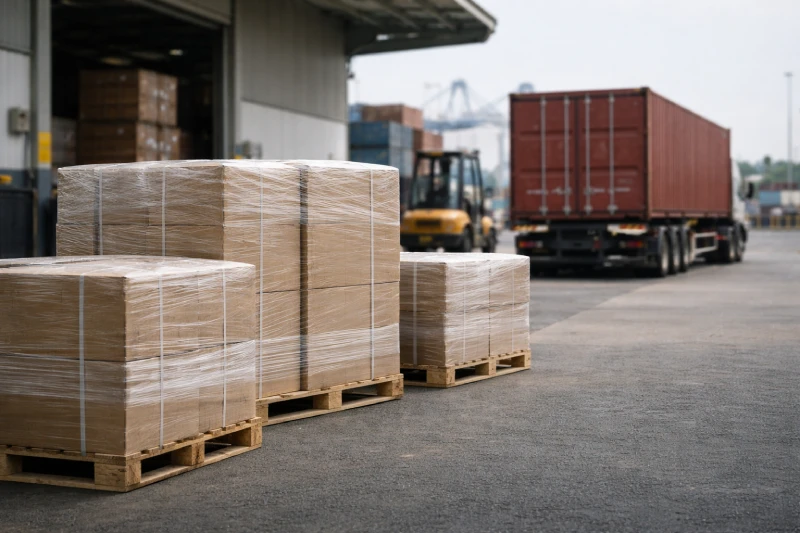
For shipments from China to Tanzania, the decision between LCL (less than container load) and FCL (full container load) is often made too quickly. Many importers assume that smaller volume automatically means lower cost, but in Tanzania this assumption frequently leads to higher overall expenses. The real question is not shipment size alone, but how destination charges are structured and how predictable those charges will be.
Unlike freight rates, which scale relatively smoothly with volume, destination costs in Tanzania do not. Port handling, documentation, clearance procedures, and inland movements follow fixed or semi-fixed pricing models. As a result, smaller shipments can end up carrying a disproportionate share of costs.
Why LCL Is Not Always Cheaper at Dar es Salaam
LCL shipments appear attractive because they avoid paying for unused container space. However, at destination they are subject to multiple layers of handling and consolidation-related charges. Each of these adds cost and complexity.
Typical LCL cost drivers include:
- Destination handling charges applied per shipment rather than per container
- Deconsolidation and warehouse handling fees at the CFS
- Longer clearance timelines due to shared containers and coordination issues
In Dar es Salaam, these factors often cause LCL shipments to stay longer at port or bonded facilities, increasing storage costs and delaying inland delivery. For time-sensitive or compliance-sensitive cargo, this delay alone can erase any savings achieved on the ocean freight.
When FCL Becomes the More Cost-Controlled Option
FCL shipments offer greater control once the container arrives. Clearance can proceed independently, and the container can be moved inland as soon as it is released. This predictability is often more valuable than the nominal savings of LCL.
In practical terms, many importers find that once a shipment reaches a moderate volume, FCL becomes the safer financial choice. The exact breakpoint varies by cargo type, but for industrial goods and project-related shipments, FCL frequently results in:
- Lower destination handling cost per unit
- Faster clearance and reduced storage exposure
- Clearer responsibility for inland transport
In Tanzania, the decision between LCL and FCL should be based on total landed cost and risk exposure, not just freight rate per cubic meter. Understanding where this real breakpoint lies is essential to keeping shipping costs under control.
Inland Delivery in Tanzania: The Cost Factor Many Shippers Ignore
For many China–Tanzania shipments, costs do not stop accumulating once the container is cleared at the port. Inland delivery is often where budgets quietly break down. This is because Tanzania’s internal logistics conditions are very different from coastal-only markets, and inland transport costs are far less standardized than ocean freight.
Distances from the port to final destinations are long, infrastructure quality varies, and transport availability is not always stable. As a result, inland delivery is not a fixed add-on cost. It is a variable component that can change depending on timing, routing, and how well responsibilities are defined before the cargo arrives.

Long Distance & Infrastructure Constraints
Dar es Salaam sits on the coast, but a large portion of imports are destined for inland cities, industrial zones, or project sites. Moving cargo inland involves long-haul trucking over routes that may be affected by road conditions, seasonal weather, or congestion at checkpoints.
These factors influence both transit time and cost. Delays in container evacuation from the port often lead to knock-on effects, including higher trucking rates due to urgency or limited equipment availability. For importers, this means inland transport should be treated as a core cost element, not a secondary detail.
Inland Surcharges & Unplanned Cost Escalation
One of the most common surprises for importers is the appearance of inland surcharges after cargo arrival. These can stem from:
- Extended waiting time for trucks due to port congestion
- Additional handling required for oversized or heavy cargo
- Route-specific charges based on destination or access conditions
When inland delivery is not clearly defined in the original shipping arrangement, these costs are often passed directly to the importer. In contrast, shipments planned with clear inland responsibility and realistic assumptions are far less likely to face sudden cost escalation.
In Tanzania, inland delivery is not simply the final step of shipping. It is a decisive cost factor. Importers who ignore it when evaluating “cheap” shipping options often discover too late that savings on freight were offset by uncontrolled inland expenses.
DDP Shipping to Tanzania: When It Lowers Cost — and When It Doesn’t
In Tanzania, DDP shipping is often seen as a way to simplify imports and avoid unpleasant surprises. For many importers, especially those without strong local teams, the appeal is clear: one price, one responsible party, and fewer decisions to manage after the cargo leaves China. However, DDP does not automatically mean lower cost. In some cases, it reduces financial risk; in others, it simply hides it.
The real value of DDP in Tanzania depends on how comprehensively the responsibilities are defined and whether the party offering DDP actually controls the critical steps at destination.
Why Many Importers Prefer DDP for Tanzania
Tanzania’s regulatory and operational environment makes self-managed imports challenging for occasional or first-time shippers. Customs procedures, valuation practices, and inland delivery conditions require local familiarity. Without it, importers often face delays, unexpected charges, or compliance issues.
DDP becomes attractive because it transfers these uncertainties away from the importer. Instead of managing clearance, tax payments, and inland transport separately, the importer receives goods at a final destination with costs agreed in advance. For many businesses, this predictability is more important than achieving the absolute lowest theoretical cost.
What a Real DDP Cost Should Cover
Not all DDP offers are equal. A genuine DDP arrangement should clearly include:
- Import duties and applicable taxes based on realistic valuation
- Full customs clearance responsibility, including inspections if triggered
- Port handling, storage risks within reasonable limits, and container evacuation
- Inland delivery to the agreed final destination
When any of these elements are excluded, capped, or vaguely defined, the DDP price may look competitive but still leave room for additional charges. This is where many “cheap DDP” offers fail in practice.
How to Judge Whether a DDP Quote Is Truly Reliable
To assess whether a DDP quote is genuinely cost-effective, importers should look beyond the total figure and ask practical questions:
- Who is legally responsible for clearance and tax payment in Tanzania?
- How are inspections, revaluation, or clearance delays handled?
- Is inland delivery fully specified, including destination and access conditions?
In Tanzania, DDP works best when it is used as a risk-control tool, not just a pricing shortcut. A well-structured DDP solution may not be the lowest number on paper, but it often results in the lowest final cost by eliminating the areas where expenses typically spiral out of control.
How to Evaluate a Shipping Quote That Is Truly “Cheapest” for Tanzania
By the time a shipment is ready to move, most importers have already seen several quotations. The challenge at this stage is not finding another number to compare, but determining which quote is most likely to deliver the lowest final landed cost in Tanzania. This requires shifting the focus from price comparison to risk evaluation.
In Tanzania, the most expensive shipments are often those that looked cheapest at the quotation stage but left too many variables unresolved. A reliable evaluation method helps avoid this outcome.
Key Cost Items That Must Be Clearly Confirmed
A quote suitable for Tanzania should clearly address the cost areas where overruns most often occur. At minimum, it should specify:
- Scope of responsibility for customs clearance and duty payment
- Treatment of inspections, revaluation, and potential delays
- Port-related charges and how storage or demurrage is handled
- Inland delivery terms, including final destination and access conditions
If these items are missing, vaguely described, or labeled as “to be advised,” the quote may be incomplete rather than competitive. In practice, clarity in these areas is more valuable than a lower upfront rate.
When You Should Stop Comparing and Start Consulting
There is a point where continuing to collect quotations adds little value. When offers differ mainly in structure and assumptions rather than in freight rate, further comparison often increases confusion instead of reducing cost.
For Tanzania-bound shipments, it is usually more effective to pause and clarify the shipment profile—cargo type, value, destination, and risk tolerance—and discuss it with a party that understands local execution. This approach often reveals hidden cost drivers early and leads to a more stable solution.
The shipment that is truly “cheapest” for Tanzania is not the one with the lowest quoted rate. It is the one where costs are anticipated, responsibilities are defined, and financial exposure is controlled from departure to final delivery.
