

When planning shipping from China to USA, choosing DDP or DAP is not simply deciding who pays the freight bill. Both terms can bring cargo to a named US destination, but they create different arrangements for customs clearance, duties, cash flow, documentation, and compliance control. A quotation that says “DDP USA” or “DAP warehouse” is incomplete unless it identifies the exact delivery point and explains who will perform each import task.
DDP vs DAP: The Quick Decision
Under Incoterms® 2020, Delivered at Place (DAP) requires the seller to arrange transportation to the named destination, while the buyer completes import clearance and pays the related duties and charges. Delivered Duty Paid (DDP) places import clearance and those charges on the seller. Under both terms, delivery normally occurs when the goods are available at the named destination, ready for unloading.
The International Chamber of Commerce comparison of DAP and DDP identifies import clearance as the main difference. Neither rule automatically requires the seller to purchase cargo insurance, although the seller bears transportation risk until delivery at the named place.
DDP may fit when the seller can demonstrate a workable US import structure and the buyer wants one delivered quotation with limited customs administration.
DAP may fit when the US buyer has a broker and bond, wants to approve customs data, or needs direct control over classification, valuation, and duty payment.
Before selecting either term, answer five questions:
- Who will be the US Importer of Record?
- Who will appoint the customs broker?
- Who will approve the HTS code and customs value?
- Which charges and exceptions are included?
- What exact address is the named place?
DDP vs DAP Responsibility Map
| Decision Point | DDP | DAP |
|---|---|---|
| China pickup and export clearance | Seller | Seller |
| Main ocean or air freight | Seller | Seller |
| Transit risk to named place | Seller | Seller |
| Cargo insurance | Not automatically required | Not automatically required |
| US customs clearance | Seller | Buyer |
| Duties and import charges | Seller | Buyer |
| Customs broker arrangement | Seller-controlled | Buyer-controlled |
| Final delivery | Seller | Seller |
| Unloading | Normally buyer | Normally buyer |
| Customs-entry visibility | Must be requested | Usually greater buyer control |
Under both terms, the seller normally manages China pickup, export formalities, and international transportation. The major difference begins at US import clearance.
Under DAP, the buyer must have an importer number, an appropriate customs bond, a customs broker, and enough product information to support classification, valuation, origin, and admissibility.
Under DDP, the seller must include these import functions in its operating plan. The buyer should not assume that the words “duties paid” prove a valid customs structure exists.
Readers who have already selected DDP can use DDP Shipping from China to USA for the detailed transport and delivery process. This article focuses on whether DDP or DAP is the better allocation of control and risk.
Who Is the Importer of Record?
The Importer of Record is not automatically the freight forwarder, customs broker, overseas supplier, or receiving warehouse. It must be an eligible party identified in the customs-entry structure.
Under DAP, the US buyer commonly acts as Importer of Record and appoints a customs broker. The broker can prepare the entry, but the importer remains responsible for using reasonable care when providing information about classification, value, origin, and admissibility.
CBP’s Reasonable Care guidance emphasizes that importers must take active steps to provide accurate information rather than shifting every customs decision to a broker.
Under DDP, the seller is contractually responsible for import clearance, but the shipment still needs an eligible Importer of Record, customs broker, importer identification, and bond where required. A foreign seller is not automatically prohibited from acting through a nonresident-importer structure, but it must meet applicable US conditions.
19 CFR Part 141 addresses entry procedures and requirements affecting nonresident corporations, including resident-agent and bond provisions. Therefore, “our forwarder will clear it” is not enough. Ask for the Importer of Record’s legal name and the customs broker before departure.
For ocean freight, Importer Security Filing responsibility must also be confirmed separately. The Incoterm alone does not determine every ISF obligation.
DDP Legitimacy Check
Before accepting DDP, confirm:
- Importer of Record and customs broker
- customs-bond arrangement
- HTS classification and customs-value method
- country of origin
- ISF responsibility for ocean cargo
- applicable product-agency requirements
- customs documents available after release
If the seller cannot identify these points, the shipment is not ready simply because a door-to-door price has been offered.

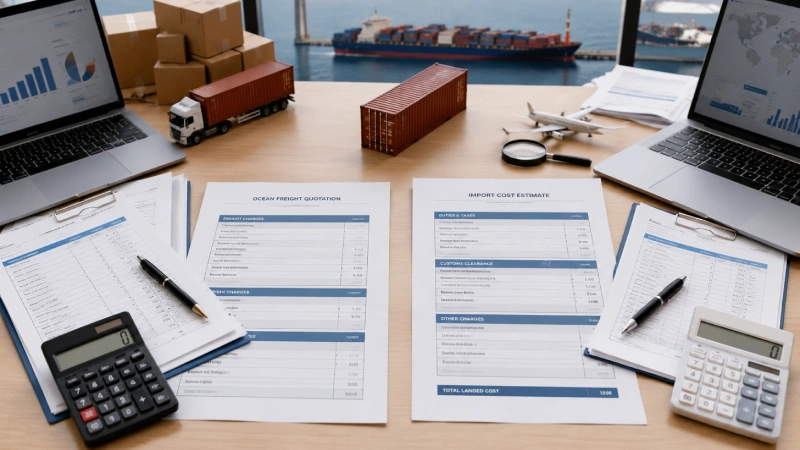
Compare the Full Cost, Not the Headline Price
A DDP quotation is attractive because it appears to provide one delivered amount. A DAP quotation may look cheaper because duties, brokerage, bond costs, and some destination charges remain payable by the buyer.
A properly scoped DDP quotation should address:
- China pickup, export handling, and international freight
- destination handling, brokerage, and bond costs
- estimated duties and customs fees
- inland delivery and appointment charges
- exclusions for examinations, storage, demurrage, redelivery, and unloading
A DAP comparison should add the buyer’s expected:
- duties and customs fees
- broker and bond charges
- product-agency processing
- examination or storage exposure
- delivery exclusions and receiving costs
Use this comparison:
Normalized DDP cost = DDP price + exclusions + receiving costs + unresolved-risk allowance
Normalized DAP cost = DAP price + duties and fees + broker and bond + destination exclusions + receiving costs
Do not estimate duty from a vague supplier description. Classification depends on the actual product, material, function, and other characteristics. Check the current USITC Harmonized Tariff Schedule, because tariff provisions and additional measures can change.
For a full landed-cost calculation, see US Import Duties and Tariffs on Goods from China rather than relying on a fixed universal rate.
Customs Visibility and Document Control
DDP can reduce the buyer’s direct administration, but it may also reduce visibility unless document access is agreed in writing.
Before accepting DDP, ask whether the seller will provide:
- final commercial invoice and packing list
- bill of lading or air waybill
- Importer of Record and broker identities
- HTS code, origin, and declared customs value
- evidence of customs release and duty payment
- ISF confirmation for applicable ocean shipments
- product-agency release evidence where relevant
Do not assume the buyer automatically receives every broker or entry record under every DDP structure. Make document access part of the purchase order or shipping agreement.
Under DAP, the buyer normally communicates directly with the broker. This makes it easier to approve customs data, answer questions, and retain records, but the buyer must complete broker onboarding and bond setup before the cargo arrives.
The operational filing stages belong in US Customs Clearance for Shipments from China, while document ownership should be covered by Documents Required to Import from China to the USA.
Common DDP and DAP Failure Scenarios
The DDP Price Is Lower Than the Expected Duty
Treat this as a verification warning. Ask for the HTS code, declared value, origin, and duty assumptions. Never approve undervaluation, vague product descriptions, or an incorrect origin statement to reduce the delivered price.
The Seller Cannot Name the Importer or Broker
A DDP promise without an identified import structure may fail at arrival. Do not wait until the cargo reaches the United States to determine who can make entry.
The DAP Shipment Leaves Before the Buyer Is Ready
DAP works only when the buyer has a broker, importer identification, bond, and product information. Complete these steps before departure, especially for a first shipment.
The Named Place Is Vague
“DDP USA,” “DAP Los Angeles,” or “DDP Amazon warehouse” does not define delivery precisely. Use wording such as:
DDP [full warehouse address], Incoterms® 2020
or:
DAP [full warehouse address], Incoterms® 2020
Also state whether appointment fees, liftgate service, waiting time, and unloading are included.
The Parties Disagree on Classification or Value
Incoterms allocate tasks, costs, and risk; they do not make unsupported customs data acceptable. Resolve uncertain classification, valuation, or agency requirements with a broker or qualified adviser before booking.
Which Term Fits Your Shipment?
First-Time Importer Seeking One Delivered Price
DDP may work when the seller’s import structure is transparent, exclusions are written, and the buyer can verify duty and compliance handling. Convenience should not replace due diligence.
Established Importer with Its Own Broker and Bond
DAP is often the stronger starting point. It gives the buyer direct control over the broker, HTS code, customs value, duty payment, and entry records. It can also create a repeatable process across multiple suppliers.
High-Duty or Regulated Cargo
For products with substantial tariff exposure, possible trade remedies, or requirements from agencies such as FDA or EPA, prioritize qualified oversight and complete records. This may be buyer-controlled DAP or a carefully verified DDP structure.
Amazon FBA and Third-Party Warehouses
Do not assume a fulfillment center or warehouse will become the Importer of Record. Customs clearance and warehouse delivery are separate responsibilities. See Shipping to Amazon FBA USA from China for appointment, carton, pallet, and delivery planning.
Pre-Shipment Checklist
Before confirming the purchase order or booking, document:
- exact named place and Incoterms® 2020 rule
- Importer of Record, broker, and bond
- HTS code, customs value, and origin
- duty assumptions and quotation validity
- ISF and product-agency responsibilities
- examination, storage, and demurrage charges
- delivery appointment and unloading
- cargo insurance and customs-document access
- treatment of tariff changes and disputes
A phrase such as “tax included door to door” should be converted into an exact Incoterm, named place, written cost scope, and customs-responsibility statement.
Get a DDP or DAP Shipping Plan
Winsail Logistics can review your cargo, supplier location, shipping mode, US destination, and delivery requirements to compare practical DDP and DAP freight scopes. Support may include China export handling, ocean or air freight, consolidation, document coordination, and customs-clearance coordination with appropriate licensed parties.
For a useful comparison, provide the product description, shipment value, carton or pallet details, weight, volume, China pickup city, US ZIP code, target date, and any supplier quotation already received.
FAQ
Can a Chinese supplier be the Importer of Record under DDP?
Potentially, but not merely because the contract says DDP. The entry arrangement must satisfy applicable US requirements, including broker, identification, resident-agent, and bond conditions where relevant.
Does DDP include Section 301 or other additional duties?
DDP assigns import charges to the seller, but the quotation should state how actual tariff exposure and exceptional duties are treated. Do not assume an unusually low DDP price includes every product-specific charge.
Who files ISF under DDP?
The Incoterm does not independently determine the ISF Importer. Identify the responsible party and filing agent for the specific ocean shipment before loading.
Does DAP mean delivery only to a US port?
No. DAP can name a port, terminal, warehouse, or other destination. The seller transports the goods there, while the buyer completes import clearance.
Who pays for a customs examination?
It depends on the Incoterm, the cause and timing of the cost, and the quotation’s exception clauses. Allocate examination, storage, and related charges expressly.
Is insurance automatically included under DDP or DAP?
No. The seller bears risk until delivery at the named place, but neither DDP nor DAP automatically requires the seller to purchase cargo insurance.
Can a DDP price change before entry?
It depends on the quotation and contract. State the quote-validity period and how tariff, surcharge, and exceptional-cost changes will be handled.
This article provides general logistics and import-planning information. Incoterms allocate contractual tasks, costs, and risks but do not replace US customs law, product-specific regulations, or professional legal and customs advice. Verify requirements for the specific goods and transaction with appropriate licensed or qualified parties.
