

Introduction
Choosing between DDP and EXW is not about memorizing trade rules — it is about deciding who should control the shipment and who should manage the risk. Many importers assume the cheaper option is automatically better, while many suppliers default to familiar terms without considering operational impact. In reality, the right choice depends on your logistics capability, customs experience, and tolerance for coordination complexity.
In simple structural terms, EXW places responsibility on the buyer from the seller’s premises, while DDP shifts delivery responsibility to the seller through to the destination. If you need a full explanation of how DDP functions within Incoterms, see our complete guide to DDP shipping.
This page does not redefine either term. Instead, it answers one practical question: in what situations does choosing DDP make more operational sense than EXW?
Quick Structural Difference: Control and Responsibility Direction
At a structural level, the difference between EXW and DDP is about where responsibility begins and how far it extends. Under EXW, the seller makes the goods available at their premises, and the buyer assumes responsibility for the international movement from that point forward. Under DDP, the seller remains responsible for arranging delivery to the agreed destination in the buyer’s country.
This shift affects more than paperwork. It determines who selects the freight forwarder, who manages export procedures, who coordinates international transport, and who handles destination-side clearance arrangements. The operational burden moves in opposite directions depending on the chosen term.
For the official rule wording and full Incoterms framework, refer to the Delivered Duty Paid (DDP) rule reference.
This structural contrast forms the basis for every decision scenario discussed below.
Decision Scenario 1: When the Buyer Has No Origin Control
One of the clearest situations where DDP makes more sense than EXW is when the buyer has little or no operational control in the seller’s country. In this case, choosing EXW may create more coordination risk than expected.
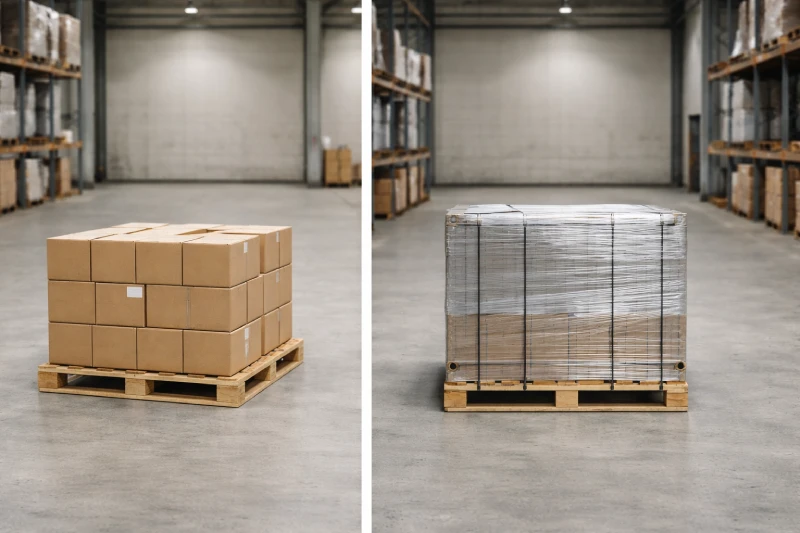
Suitable For: Buyers Without Origin Infrastructure
DDP is often more appropriate for buyers who do not have a freight forwarder, sourcing office, or logistics team in the export country. First-time importers, growing e-commerce sellers, and small or mid-sized companies frequently fall into this category.
If you cannot physically supervise cargo pickup, verify export documentation, or coordinate port delivery, EXW transfers too much responsibility too early in the process. Every additional handoff increases the possibility of delays, miscommunication, or unexpected handling issues.
By contrast, DDP centralizes shipment control on the seller’s side, reducing the number of coordination points the buyer must manage.
Not Suitable For: Buyers With Established Freight Networks
If the buyer already works with a trusted freight forwarder in the origin country, maintains consolidation hubs, or regularly collects goods from multiple suppliers, EXW may provide more operational flexibility.
In such cases, assuming origin responsibility is not a burden — it is a strategic advantage.
Decision Logic:
If you lack reliable origin-side logistics capability, DDP reduces exposure. If you already control origin operations, EXW may offer more control efficiency.
Decision Scenario 2: When Speed and Simplicity Matter More Than Cost Transparency
Another situation where DDP may be preferable to EXW is when the priority is process simplicity and predictable delivery flow, rather than granular control over each logistics segment.
Suitable For: Businesses Focused on Operational Efficiency
DDP is often better suited for e-commerce sellers, fast-scaling brands, and companies managing frequent small-to-medium shipments. These businesses typically prioritize consistent delivery timelines and minimal coordination overhead.
Under EXW, the buyer must arrange pickup, export procedures, international transport, and destination handling. Even with a freight forwarder involved, the buyer remains the coordinating party. This adds internal workload, especially when managing multiple suppliers or high order frequency.
With DDP, the shipment is treated as a single managed delivery chain. The seller coordinates movement to the agreed destination, allowing the buyer to focus on inventory planning, sales, and customer fulfillment rather than transport logistics.
For businesses where logistics is not a core competency, reducing coordination layers can outweigh the benefit of detailed cost visibility.
Not Suitable For: Companies Requiring Full Cost Segmentation
If a company operates centralized logistics procurement, negotiates freight rates directly, or requires strict separation of international and domestic transport expenses, EXW may align better with internal accounting systems.
In these cases, operational complexity is already managed internally, and transparency may be more valuable than simplicity.
Decision Logic:
If minimizing coordination and internal workload is the priority, DDP may be the more practical choice. If detailed cost control and logistics segmentation are critical, EXW may offer greater structural alignment.
Decision Scenario 3: When Customs Risk Must Be Controlled
In some markets, the primary concern is not transportation — it is regulatory uncertainty at destination. When customs procedures, documentation standards, or import compliance requirements are complex or unfamiliar, the choice between DDP and EXW becomes a question of risk allocation.
Suitable For: Buyers Entering New or Complex Markets
DDP may be more appropriate when the buyer lacks direct experience with the destination country’s import procedures. This is common when entering a new market, expanding into regions with evolving regulations, or shipping regulated product categories.
Under EXW, the buyer must manage the import side through their own broker or forwarder. That requires familiarity with documentation timing, classification accuracy, and local compliance standards. Any mismatch between shipment paperwork and regulatory expectations can cause clearance delays or additional handling complications.
With DDP, the seller assumes responsibility for arranging delivery through to destination, including coordinating the necessary clearance steps. This shifts operational exposure away from the buyer, which can be particularly useful when internal compliance expertise is limited.
Not Suitable For: Buyers With Established Import Structures
If the buyer already maintains a licensed customs broker relationship, holds necessary import registrations, and routinely manages inbound compliance internally, assuming responsibility under EXW may not introduce additional risk.
In such environments, internal compliance systems are already in place, and retaining direct control may provide more procedural visibility.
Decision Logic:
If import compliance is uncertain or unfamiliar, DDP concentrates responsibility with the seller. If the buyer has a stable import infrastructure, EXW may remain operationally efficient.
Decision Scenario 4: When the Seller Controls the Supply Chain
The decision between DDP and EXW is not only a buyer-side consideration. In many transactions, the seller’s logistics capability determines which structure creates smoother execution and stronger commercial positioning.
Suitable For Sellers Who Offer Integrated Delivery
DDP can be strategically advantageous for sellers who already coordinate export procedures, maintain relationships with international freight partners, or ship frequently to specific destination markets.
When a supplier has established transport channels and understands routing patterns, offering DDP simplifies the purchasing decision for overseas customers. Instead of negotiating separate freight arrangements, the buyer receives a single delivery commitment. This can reduce friction in negotiations, especially when selling to small or mid-sized importers.
For sellers targeting cross-border e-commerce brands or distributors without strong logistics infrastructure, providing DDP may improve conversion rates by removing uncertainty around transport coordination.
Not Suitable For Sellers Focused Only on Production
If a seller’s operational model is strictly manufacturing-based — with no export coordination team, no freight partnerships, and limited familiarity with destination handling — offering DDP may introduce exposure beyond their core competence.
In such cases, EXW allows the seller to limit responsibility to product readiness while the buyer manages transport and downstream coordination.
Decision Logic:
If the seller has supply chain control and international shipping experience, DDP can strengthen market competitiveness. If the seller lacks logistics infrastructure, EXW keeps responsibility aligned with production-only operations.
Decision Matrix: Who Should Choose DDP vs EXW?
After reviewing the practical scenarios above, the difference between DDP and EXW can be reduced to one core variable: who is better positioned to manage international logistics and destination coordination?
The following matrix summarizes the structural decision logic without redefining either term.
| Business Condition | Recommended Term |
|---|---|
| No freight forwarder or logistics team in origin country | DDP |
| First-time importer or entering new market | DDP |
| High coordination workload across multiple suppliers | DDP |
| Strong freight network in origin country | EXW |
| Internal logistics procurement and rate negotiation team | EXW |
| Established customs broker and import compliance structure | EXW |
This table is not about cost comparison or legal interpretation. It reflects operational control, coordination capability, and risk distribution.
If your organization lacks origin infrastructure or compliance experience, DDP reduces internal management exposure. If you already possess stable logistics systems, EXW may provide greater structural autonomy.
Final Decision Guidance: Choosing Based on Capability, Not Assumption
The choice between DDP and EXW should be based on capability, not assumption.
Choose DDP when you lack origin logistics control, are entering unfamiliar markets, or want to reduce coordination layers. In these cases, concentrating responsibility on the seller simplifies execution and limits internal exposure.
Choose EXW when you already maintain a stable freight network, work with established customs brokers, and prefer direct control over transport structure. Strong internal logistics systems make EXW more manageable.
Before deciding, evaluate your infrastructure:
- Do you have reliable origin-side partners?
- Do you manage cross-border compliance internally?
- Is logistics a strategic strength or an outsourced function?
Your operational answers will typically indicate which structure aligns with your risk tolerance and management capacity.
