
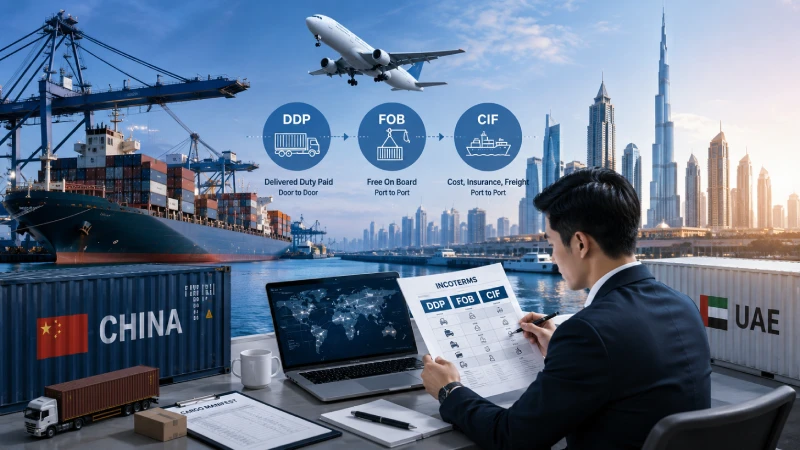
Importing goods from China to the UAE is no longer limited to large trading companies. Today, e-commerce sellers, distributors, construction suppliers, electronics importers, and retail startups all source products internationally. However, one major decision can dramatically affect your shipping cost, customs experience, and delivery risk: choosing the right Incoterm.
Many UAE buyers struggle to understand the real difference between DDP, FOB, and CIF shipping. A shipment may appear cheap at first, but hidden destination charges, customs complications, or delayed delivery can quickly increase the final cost. That is why choosing the right shipping structure matters just as much as choosing the right supplier.
In simple terms, DDP shipping offers maximum convenience, FOB provides maximum control, and CIF sits somewhere in between. But the best option depends on your business size, import experience, shipment volume, and ability to manage UAE customs procedures.
This guide explains DDP vs FOB vs CIF shipping to UAE in practical business language — not overly theoretical definitions. You will learn how each Incoterm works, who should use it, common mistakes to avoid, and how to decide which option best fits your importing strategy.
What Is DDP, FOB, and CIF Shipping?
What Is DDP Shipping?
DDP stands for Delivered Duty Paid. Under DDP shipping, the supplier or freight forwarder handles almost the entire logistics process from China to the UAE.
This usually includes:
- pickup from factory
- export customs clearance in China
- international freight
- UAE customs clearance
- import duties and VAT
- final delivery to your warehouse or address
For the buyer, DDP is the simplest shipping method because the cargo arrives almost like a domestic delivery.
DDP shipping is especially popular among:
- first-time importers
- Amazon sellers
- small businesses
- companies without logistics departments
- buyers unfamiliar with UAE customs procedures
Instead of coordinating multiple parties, the buyer deals mainly with one freight provider.
What Is FOB Shipping?
FOB stands for Free On Board. Under FOB shipping, the supplier’s responsibility ends once the cargo is loaded onto the vessel at the China port.
The supplier handles:
- manufacturing
- export documents
- China export customs clearance
- loading cargo at origin port
The buyer handles:
- ocean or air freight booking
- cargo insurance
- UAE customs clearance
- import taxes and VAT
- local delivery
FOB is widely used by experienced importers because it gives buyers more control over freight costs and shipping schedules.
Large UAE importers often prefer FOB because they already work with freight forwarders, customs brokers, and warehouse providers.
What Is CIF Shipping?
CIF stands for Cost, Insurance, and Freight. Under CIF shipping, the supplier arranges ocean freight and insurance to the destination port in the UAE.
However, many buyers misunderstand CIF.
Although the supplier pays for freight to the UAE port, the buyer still handles:
- UAE customs clearance
- import duties and VAT
- destination port charges
- inland transportation
This is why CIF sometimes creates confusion. Many importers mistakenly believe CIF means “everything included,” but that is not true.
In reality, CIF is mainly a port-to-port shipping arrangement.
DDP vs FOB vs CIF: Main Differences
The biggest difference between these Incoterms is responsibility distribution.
| Area | DDP | FOB | CIF |
|---|---|---|---|
| Freight Booking | Seller | Buyer | Seller |
| Export Clearance | Seller | Seller | Seller |
| Insurance | Seller | Buyer | Seller |
| UAE Customs Clearance | Seller | Buyer | Buyer |
| Import Duties/VAT | Seller | Buyer | Buyer |
| Final Delivery | Seller | Buyer | Buyer |
| Buyer Control | Low | High | Medium |
| Buyer Workload | Very Low | High | Medium |
From a practical perspective:
- DDP focuses on convenience
- FOB focuses on control
- CIF focuses on simplified port shipping
However, the cheapest quote upfront does not always mean the lowest total landed cost.
UAE Import Reality: Why Incoterm Choice Matters
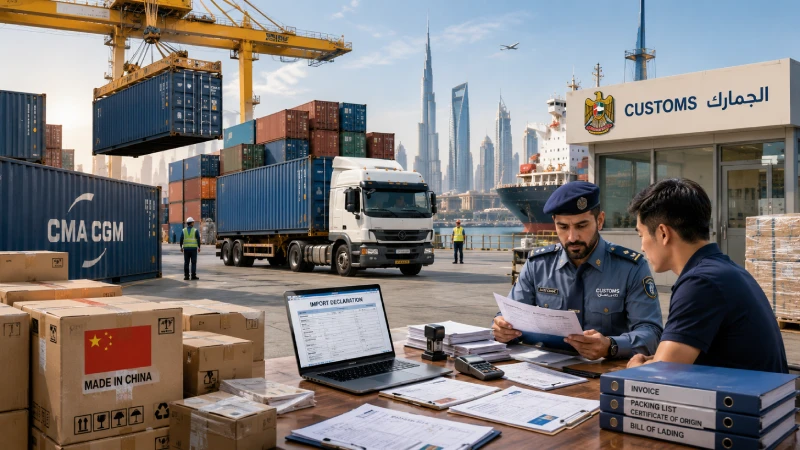
UAE Customs Can Be More Complex Than Buyers Expect
The UAE is highly efficient for international trade, but customs procedures still require proper handling.
Importers may need:
- trade licenses
- importer codes
- accurate HS code declarations
- customs registration
- product compliance documents
If documentation is incorrect, shipments may face:
- customs delays
- inspections
- storage charges
- penalties
This is one reason many small importers prefer DDP shipping. The freight provider manages most of the customs coordination.
Hidden UAE Destination Charges
One of the biggest problems with FOB and CIF shipping is unexpected local charges.
Many first-time importers only compare ocean freight costs and ignore UAE destination expenses such as:
- terminal handling charges
- documentation fees
- customs processing fees
- storage fees
- delivery order charges
- demurrage and detention
Under FOB and CIF shipping, these charges are usually paid by the buyer.
With DDP shipping, most of these costs are included upfront, creating better budgeting visibility.
Why DDP Is Becoming More Popular in UAE
DDP shipping has grown rapidly in UAE trade because businesses increasingly value simplicity and predictable costs.
This is especially true for:
- online sellers
- startups
- SMEs
- importers with frequent small shipments
Instead of coordinating freight, customs, taxes, and local trucking separately, buyers can focus on sales and operations.
For businesses without internal logistics expertise, DDP reduces operational stress significantly.
When DDP Shipping Is the Best Choice
Best for Small Businesses
If your company imports occasionally or lacks logistics experience, DDP is often the safest choice.
Benefits include:
- simplified importing process
- fewer coordination issues
- predictable landed cost
- reduced customs risk
- easier shipment tracking
For example, a UAE startup importing LED lighting products from China may not understand customs procedures or port handling processes. DDP allows them to receive cargo directly without managing multiple logistics steps.
Best for Air Freight and Small Shipments
DDP works particularly well for:
- air freight shipments
- LCL cargo
- e-commerce inventory replenishment
- sample shipments
- urgent deliveries
Smaller shipments often generate proportionally higher local handling charges under FOB or CIF structures. DDP simplifies those costs into one overall quotation.
Best for Predictable Budgeting
Many businesses prioritize stable landed cost over squeezing every dollar from freight negotiations.
DDP helps buyers:
- estimate profit margins more accurately
- avoid surprise invoices
- reduce financial uncertainty
This is especially useful for e-commerce sellers with fixed product pricing.
When FOB Shipping Is the Better Option
Best for Experienced Importers
FOB shipping is ideal for companies that already have:
- freight forwarders
- customs brokers
- warehouses
- internal logistics teams
Experienced UAE importers can often negotiate better freight rates than suppliers.
They also gain more control over:
- carrier selection
- transit schedules
- cargo consolidation
- shipping strategy
Better for Large Container Volumes
FOB becomes more cost-effective for:
- full container loads (FCL)
- regular monthly imports
- high-volume procurement
Large importers may save substantial freight costs by using their own shipping contracts instead of supplier-arranged logistics.
For example, a UAE construction materials distributor importing multiple containers monthly may achieve better cost efficiency under FOB.
Greater Freight Flexibility
FOB allows buyers to:
- compare shipping companies
- optimize transit times
- consolidate cargo from multiple suppliers
- manage routing strategies
This level of control is valuable for mature supply chains.
However, FOB also requires stronger logistics management capability.
When CIF Works — and When It Causes Problems
Why Suppliers Like CIF
Many suppliers prefer CIF because they can arrange shipping directly and offer seemingly competitive freight quotes.
For buyers, CIF initially appears convenient because freight is included.
But problems often appear after cargo arrives at the UAE port.
Common CIF Misunderstandings
Many buyers incorrectly assume CIF includes:
- customs clearance
- import duties
- local delivery
In reality, CIF only covers transportation to the destination port plus basic insurance.
The buyer still manages:
- customs clearance
- taxes
- local port charges
- trucking
This misunderstanding causes major frustration for first-time importers.
Limited Transparency Under CIF
Another issue with CIF is limited freight transparency.
Some buyers discover:
- unexpectedly high destination fees
- limited control over shipping schedules
- unknown destination handling agents
In some cases, low freight quotes are offset by higher local charges after arrival.
That is why CIF is generally better suited for buyers who already understand UAE import procedures.
Real Business Scenarios: Which Incoterm Fits Best?
Scenario 1: Small Electronics Importer
A startup in Dubai imports small electronics accessories from China for online sales.
Challenges:
- limited logistics experience
- small shipment sizes
- need predictable cost
Best option: DDP
Why?
Because the buyer avoids customs complexity and receives direct door-to-door delivery.
Scenario 2: Amazon FBA Seller
An Amazon seller regularly imports inventory to UAE fulfillment centers.
Priorities:
- fast delivery
- minimal coordination
- stable landed cost
Best option: DDP air freight
The seller can focus on inventory turnover instead of logistics operations.
Scenario 3: Large UAE Distributor
A large trading company imports several containers monthly.
Capabilities:
- internal logistics team
- customs broker partnerships
- freight negotiation experience
Best option: FOB
The company gains better freight control and potentially lower overall shipping cost.
Scenario 4: Buyer Chooses CIF and Faces Problems
A first-time importer selects CIF because the quote appears cheaper.
After arrival, they encounter:
- customs delays
- terminal handling charges
- storage fees
- confusion about local agents
Final landed cost becomes much higher than expected.
This situation is extremely common among inexperienced importers.
Common Mistakes When Choosing Incoterms
Choosing Only Based on Lowest Quote
Many buyers compare only freight cost instead of total landed cost.
A low CIF quote may ultimately become more expensive than DDP after local charges are added.
Always calculate:
- freight
- customs
- taxes
- local handling
- delivery
- potential delay costs
Underestimating UAE Customs Complexity
Import regulations vary depending on:
- product category
- certifications
- documentation
- HS codes
Without proper experience, buyers can face expensive delays.
Using FOB Without Logistics Knowledge
FOB provides control, but also increases operational responsibility.
Without reliable freight partners, buyers may struggle with:
- coordination
- customs
- tracking
- port procedures
Assuming CIF Means Door-to-Door Service
This is probably the most common misconception in international shipping.
CIF is not equivalent to DDP.
Importers must clearly understand what is and is not included before confirming shipment terms.
Step-by-Step Framework to Choose the Right Incoterm
Step 1: Evaluate Your Import Experience
Ask yourself:
- Have you imported to UAE before?
- Do you understand customs procedures?
- Can you manage freight coordination?
Beginners usually benefit from DDP.
Step 2: Assess Your Internal Logistics Resources
Do you already have:
- customs brokers?
- warehouses?
- freight contracts?
- import licenses?
If yes, FOB may provide better cost control.
Step 3: Analyze Shipment Volume
- Small air shipments → DDP often works best
- Large container volumes → FOB often becomes more economical
Step 4: Decide Between Convenience and Control
- DDP prioritizes convenience
- FOB prioritizes control
- CIF provides limited middle-ground flexibility
Step 5: Compare Total Landed Cost
Never compare freight cost alone.
Include:
- customs
- VAT
- port handling
- storage risks
- trucking
- internal labor cost
The cheapest quote is not always the most profitable solution.
Final Recommendation: Which Incoterm Should You Choose?
Choose DDP if:
- you are new to importing
- you want door-to-door simplicity
- you lack UAE customs expertise
- you prioritize predictable costs
Choose FOB if:
- you import regularly
- you have logistics experience
- you want freight control
- you manage large shipment volumes
Choose CIF if:
- you understand UAE local charges
- you only need port-to-port service
- you are comfortable handling customs independently
There is no universal “best” Incoterm. The right choice depends on your operational capability, shipment volume, and risk tolerance.
Need Help Choosing the Right Shipping Method to UAE?
Every shipment is different. Product type, customs requirements, cargo volume, urgency, and budget all affect the best shipping strategy.
Many importing problems happen because buyers select the wrong Incoterm before shipping even starts. A proper freight strategy can reduce delays, hidden charges, and operational risk significantly.
If you are importing from China to UAE and are unsure whether DDP, FOB, or CIF is best for your business, working with an experienced freight forwarder can help you:
- estimate total landed cost
- compare shipping structures
- reduce customs risk
- optimize delivery timelines
- improve supply chain stability
You may also want to explore related guides:
- DDP Shipping from China to UAE
- Shipping Cost from China to UAE
- Shipping Time from China to UAE
