
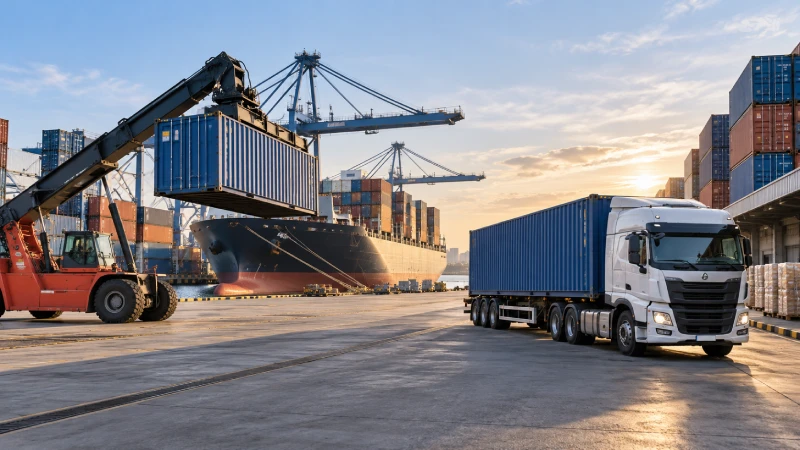
Door-to-door shipping from China to Kenya can simplify a complicated supply chain, especially when your cargo involves factory pickup, consolidation, international freight, customs coordination and inland delivery.
But “door-to-door” does not automatically mean that customs duties, taxes or every import responsibility are included.
One quotation may cover pickup from your supplier in Guangzhou, ocean freight to Mombasa and delivery to Nairobi after you clear the cargo. Another may include coordination with a licensed Kenyan clearing agent. A separately confirmed DDP arrangement may allocate even more responsibility to the seller or logistics provider.
Before comparing prices, you therefore need to understand exactly where the forwarder’s responsibility starts, where it ends, and what still remains with the Kenyan importer.
Data Note: Kenya regulatory information in this guide was reviewed in September 2026. Freight availability, customs treatment, product permits and final-delivery arrangements should always be confirmed for the specific shipment before cargo leaves China.
What Does Door-to-Door Shipping from China to Kenya Include?
In practical freight terms, door-to-door shipping means coordinating cargo from an agreed pickup point in China to an agreed delivery point in Kenya.
A typical shipment may involve:
Chinese supplier → factory pickup → China warehouse → consolidation → export handling → sea or air freight → Kenya arrival → customs coordination → inland transport → final delivery
However, having one logistics coordinator does not mean the importer disappears from the process.
| Logistics Stage | Can Usually Be Coordinated by the Forwarder? | What the Importer May Still Need to Do |
|---|---|---|
| Supplier pickup in China | Yes | Confirm supplier address and cargo-ready date |
| China warehouse handling | Yes | Provide correct cargo details |
| Multi-supplier consolidation | Yes | Coordinate supplier readiness |
| China export handling | Yes | Provide commercial documents where required |
| Ocean or air freight | Yes | Approve routing and service level |
| Kenya destination handling | Yes | Provide consignee/importer information |
| Customs broker coordination | Yes | Authorize the appropriate clearing arrangement |
| Import declaration | Through a licensed Kenyan clearing agent | Provide required importer and shipment documents |
| Duties and taxes | Depends on service structure | May remain payable by importer |
| PVoC / CoC compliance | Can be coordinated | Supplier/importer must ensure product compliance |
| Inland transport | Yes, subject to route and cargo | Confirm delivery address and site conditions |
| Final unloading | Depends on quotation | Forklift, crane or labour may need separate arrangement |
The most important rule is simple:
Door-to-door shipping is a description of logistics coverage. It is not automatically the same as DDP.
That distinction should be clear before you accept any China-to-Kenya freight quotation.
What Does Door-to-Door Shipping Actually Mean?
For an importer, the main advantage of door-to-door shipping is not that every legal responsibility disappears. The advantage is that you reduce the number of separate logistics parties you need to manage.
Instead of arranging:
- a trucker in China;
- a warehouse;
- an export forwarder;
- ocean or air freight;
- a destination agent;
- a customs broker;
- and another trucker in Kenya,
you work through one main logistics coordinator who manages the handoffs.
For example, an importer buying goods from factories in Shenzhen and Foshan could have the cargo collected from both suppliers, consolidated at a China warehouse, shipped as LCL to Kenya, cleared through an agreed customs arrangement and delivered inland.
The exact commercial structure, however, must still be defined.
“Deliver to my warehouse in Nairobi” is not enough information for a reliable quotation.
The provider also needs to know:
- who will act as the Kenyan importer;
- who will appoint the customs clearing agent;
- who will pay import duties and taxes;
- whether PVoC or other permits apply;
- whether the delivery address can receive the truck;
- and whether unloading is required.
These details determine whether the shipment is truly manageable as quoted.
For a broader overview of sea, air, LCL, FCL, customs and inland delivery, see our Shipping from China to Kenya guide.
What May Still Be the Kenyan Importer’s Responsibility?
Kenya Revenue Authority states that an importer needs the services of a licensed customs clearing agent for the import-clearance process. KRA also lists supporting documents such as commercial invoices, Bills of Lading or Air Waybills, Certificates of Origin, packing lists, applicable CoCs, permits and importer identification information. Kenya Revenue Authority import guidance.
This means that “our agent handles customs” should not be interpreted as “the importer has no customs responsibility.”
A more realistic division looks like this:
| Task | Logistics Provider / Agent | Kenyan Importer |
|---|---|---|
| Factory pickup | Arrange | Provide pickup information |
| China export booking | Arrange | Approve shipment |
| Freight documents | Coordinate | Check commercial accuracy |
| Product description | Review for shipping | Provide accurate information |
| HS classification | May assist | Must ensure correct import treatment |
| Kenya clearing agent | Coordinate if included | Appoint/authorize as required |
| Customs declaration | Licensed agent processes | Provide supporting information |
| Duty and tax payment | Depends on structure | Often responsible unless DDP is confirmed |
| Product permits | Can assist with document flow | Ensure legal import requirements are met |
| Delivery appointment | Arrange | Confirm receiving availability |
| Forklift / crane / unloading | If quoted | Otherwise arrange locally |
A freight forwarder can make the process significantly easier, but it cannot make incorrect product information, missing permits or an unsuitable importer structure irrelevant.
This is particularly important for machinery, electronics, batteries, chemicals, food-related products, controlled equipment and other regulated goods.
Check My Kenya Import Requirements
Before booking, confirm your product, HS classification, importer setup and available compliance documents.
Four Ways Door-to-Door Shipping Can Be Structured
There is no single commercial model called “door-to-door.”
In practice, China-to-Kenya shipments may be structured in several ways.
1. China Pickup + Freight + Kenya Delivery After Importer Clearance
Under this arrangement, the logistics provider can:
- collect the goods from the factory;
- arrange China export handling;
- book the ocean or air freight;
- coordinate arrival in Kenya;
- and arrange inland delivery after customs release.
The Kenyan importer uses its own clearing agent and handles import duty, tax and clearance.
This structure can work well for experienced importers that already have a trusted customs broker in Kenya but want one forwarder to control the international transport.
2. DAP to an Agreed Address in Kenya
Under DAP — Delivered at Place, the seller arranges transport to the named destination, but the buyer remains responsible for import clearance and applicable import duties and taxes.
ICC guidance under Incoterms® 2020 confirms that DAP leaves import-clearance formalities and import duties with the buyer. ICC Incoterms® guidance.
A DAP shipment could therefore physically travel:
Factory in China → Mombasa → customs process → Nairobi delivery address
while the Kenyan buyer still handles or authorizes the import-clearance side.
Always specify the named delivery point clearly.
“DAP Kenya” is too vague.
“DAP buyer’s warehouse, Nairobi” provides a much clearer operational basis.
3. Forwarder-Coordinated Customs + Importer-Paid Duties and Taxes
This is often the structure buyers actually have in mind when they say they want “door-to-door.”
The forwarder may coordinate:
- origin pickup;
- export handling;
- international freight;
- destination agent;
- licensed Kenyan customs broker;
- customs-document communication;
- release follow-up;
- and final delivery.
The importer still provides the required importer information and pays duties and taxes assessed during customs clearance.
This is an operational service arrangement, not a separate Incoterm.
It allows the importer to have one main logistics contact without incorrectly describing the shipment as DDP.
4. DDP — Only When It Is Specifically Confirmed
DDP goes further.
Under Delivered Duty Paid, the seller bears responsibility for import clearance and applicable import duties and taxes up to the named delivery point. ICC describes DDP as the Incoterm placing the highest level of obligation on the seller and cautions that practical or legal conditions may prevent the seller from completing import clearance in some destinations. ICC Incoterms® rules.
For that reason, a China-to-Kenya DDP shipment should never be assumed simply because a quotation says “door-to-door.”
DDP feasibility needs to be checked against:
- cargo type;
- HS classification;
- consignee/importer structure;
- product compliance;
- tax treatment;
- available local clearance arrangement;
- and delivery location.
| Service Structure | China Pickup | International Freight | Kenya Customs | Duties / Taxes | Final Delivery |
|---|---|---|---|---|---|
| Importer-cleared door delivery | Yes | Yes | Importer’s agent | Importer | Yes |
| DAP | Yes / agreed origin | Yes | Buyer | Buyer | To named place |
| Coordinated clearance | Yes | Yes | Local licensed agent coordinated | Usually importer | Yes |
| DDP | Yes | Yes | Seller-side arrangement | Seller-side responsibility | Yes |
The quote should state which structure applies instead of simply using the phrase “all-in.”
For broader end-to-end forwarding options, see our door-to-door shipping from China service page.
How Sea Door-to-Door Shipping from China to Kenya Works
For commercial cargo that does not need urgent air transport, sea freight is usually the main door-to-door option.
A typical operational sequence looks like this:
Step 1 — Supplier Pickup in China
The forwarder collects cargo from one or more factories.
You should provide:
- supplier address;
- contact person;
- cargo-ready date;
- number of packages;
- dimensions;
- gross weight;
- cargo description;
- and any special handling information.
Step 2 — Consolidation if Required
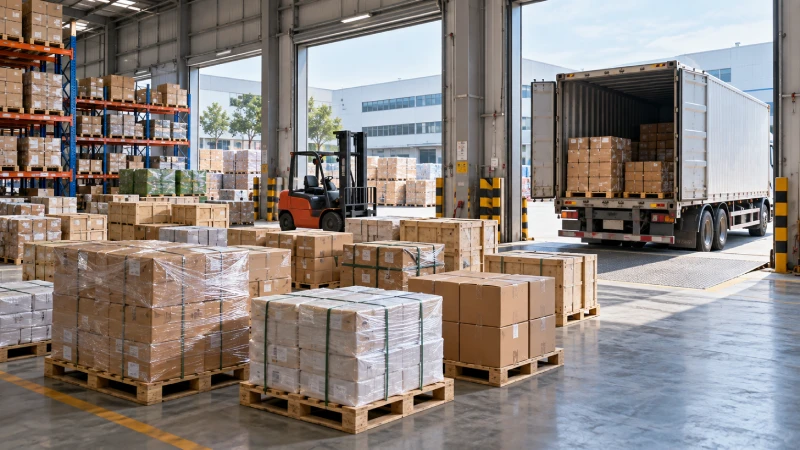
If you buy from several suppliers, the goods can be sent to a common warehouse before export.
The warehouse can check package counts, labels and basic shipping information before consolidation.
This is especially useful for LCL shipments.
Step 3 — Pre-Shipment Compliance and Document Review
Before loading, the commercial invoice, packing list, product description, compliance requirements and destination documentation should be checked.
Do not wait until the container reaches Mombasa to discover that a required certificate was not arranged in China.
Step 4 — ACD Preparation for Applicable Containerized Cargo
This has become particularly important in 2026.
KRA launched its Advance Cargo Declaration (ACD) platform on August 3, 2026 for containerized cargo destined for Kenyan ports.
KRA states that the exporter must obtain an ACD reference code at the loading stage by submitting:
- draft Bill of Lading;
- commercial invoice;
- freight invoice;
- export declaration.
The reference code then needs to be endorsed on the Bill of Lading before the shipment proceeds to Kenya. KRA Advance Cargo Declaration notice.
Step 5 — China Export and Ocean Freight
The cargo is exported from China and loaded for the Kenya routing agreed in the booking.
The exact Chinese port depends on supplier location, carrier availability and shipment type.
For broader origin-side options, see our ocean freight service.
Step 6 — Arrival at Mombasa
After arrival, destination handling, documentation and the Kenya import-clearance process begin according to the agreed shipment structure.
Step 7 — Customs Release
The licensed clearing agent processes the import declaration and applicable supporting documentation.
Where duties and taxes are payable by the importer, they must be settled before release.
Step 8 — Inland Routing
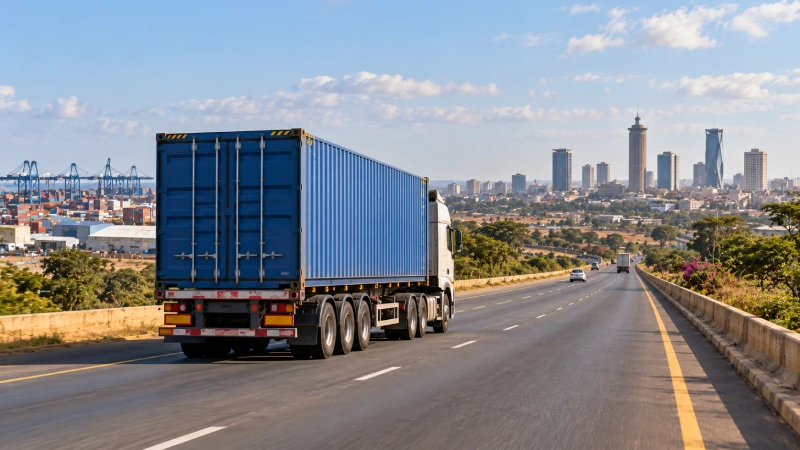
After clearance, the cargo may move toward:
- Mombasa local delivery;
- Nairobi;
- Nairobi ICD depending on the booking structure;
- or another inland destination.
Step 9 — Final Delivery
The last-mile vehicle delivers the cargo to the agreed warehouse, commercial premises or project site.
For FCL containers, the quotation should also clarify:
- container delivery arrangement;
- free-time considerations;
- unloading;
- and empty-container return.
Pro Tip: For containerized cargo, finalize invoice, freight and export-declaration information early. Waiting until loading to discover an ACD documentation problem can disrupt the export plan.
Mombasa to Nairobi Door Delivery: Port, ICD or Inland Truck?
“Nairobi delivery” does not describe one universal route.
The shipment structure should be decided before the cargo leaves China.
Mombasa Clearance + Inland Delivery
One possibility is to complete the relevant destination and customs procedures around Mombasa and then arrange inland transport toward Nairobi.
After release, cargo can move by the agreed inland transport arrangement to the consignee’s delivery point.
Nairobi ICD Routing
Another structure may involve the Inland Container Depot in Nairobi.
Kenya Ports Authority states that ICD Nairobi is linked to the Port of Mombasa through SGR and MGR railtainer services. KPA also notes that cargo can move under a Through Bill of Lading or merchant-haulage status. Kenya Ports Authority Inland Container Depots.
This matters because two quotations that both say “Nairobi delivery” may involve different handoffs.
Before booking, confirm:
- what destination is shown on the Bill of Lading;
- whether cargo is booked only to Mombasa or through to Nairobi ICD;
- where the relevant customs process will occur;
- who controls the inland leg;
- where container release and return take place;
- and where the final truck delivery begins.
A Through Bill of Lading to Nairobi ICD also does not automatically mean delivery to your warehouse door. The ICD and your final address are two different logistics points unless the last-mile transport is included.
Pro Tip: If your final destination is Nairobi, confirm the B/L routing before the booking is finalized. Changing the inland arrangement after arrival can create unnecessary handling and coordination problems.
How Air Door-to-Door Shipping to Kenya Works
Door-to-door does not have to mean sea freight.
For urgent, smaller or higher-value shipments, an air-door service can combine:
China supplier pickup → export handling → airport departure → Nairobi arrival → customs clearance → local delivery
Air door-to-door may be appropriate when:
- production parts are urgently required;
- inventory is close to stockout;
- cargo value justifies higher freight cost;
- shipment size is relatively small;
- delivery timing is more important than freight savings.
The forwarder still needs accurate package dimensions and gross weight because air freight pricing depends on chargeable weight rather than gross weight alone.
Customs clearance also remains part of the destination process. Air transport does not remove Kenyan import requirements.
The current KRA ACD notice specifically addresses containerized cargo destined for Kenyan ports. It should therefore not be automatically applied to ordinary air cargo. KRA Advance Cargo Declaration notice.
For courier-size parcels, express delivery may be another option, but courier acceptance rules, customs treatment, cargo value and product restrictions still need to be checked.
For urgent cargo, you can also review our air freight service.
Check Door-to-Door Feasibility
Send the cargo dimensions, weight, product details, China pickup city and Kenya delivery point so the appropriate sea, air or express structure can be reviewed.
Documents to Prepare Before Cargo Leaves China
Door-to-door shipments work best when the document package is prepared before export, not after the cargo has arrived.
Depending on the product and transport mode, documentation may include:
- Commercial Invoice
- Packing List
- Bill of Lading or Air Waybill
- Certificate of Origin
- Import Declaration Form documentation
- Certificate of Conformity where applicable
- ACD information for applicable containerized cargo
- freight invoice
- Chinese export declaration
- Kenya importer / PIN information
- permit or licence for restricted goods
- purchase order or contract
- cargo insurance documents
- commodity-specific certificates
KRA’s published import guidance lists the commercial invoice, transport document, Certificate of Origin, packing list, applicable CoC, permits and other supporting documentation among the records relevant to customs clearance. Kenya Revenue Authority import guidance.
Certificate of Origin
Kenya strengthened its Certificate of Origin requirements in 2025.
KRA states that imported consignments are required to be accompanied by a Certificate of Origin issued by a competent authority in the country of export. The rule took effect on July 1, 2025, with full compliance from October 1, 2025.
KRA also lists limited exceptions and provisional alternatives that may be accepted in exceptional circumstances subject to Customs verification and approval. KRA Certificate of Origin notice.
For a normal commercial shipment from China, the practical approach is to confirm the required COO arrangement before the goods leave China rather than rely on an exception after arrival.
PVoC and Certificate of Conformity
The Kenya Bureau of Standards operates the Pre-Export Verification of Conformity (PVoC) program to check applicable imported products against Kenyan technical regulations and mandatory standards before export.
KEBS states that importers should ensure suppliers understand the applicable requirements and that relevant consignments obtain a Certificate of Conformity from an appointed PVoC agent. KEBS also publishes exemption and waiver procedures for qualifying categories. KEBS PVoC guidance.
Therefore:
Do not simply ask, “Does Kenya require CoC?”
Ask instead:
“Does this specific product, HS classification and importer situation require PVoC/CoC, or does an exemption or alternative procedure apply?”
That question is much safer operationally.
Marine Cargo Insurance
KenTrade states that the Kenyan government requires imports to be insured locally and provides an automated marine cargo certificate process through its trade system. KenTrade services.
Before shipment, clarify whether the cargo insurance arrangement is:
- included in the logistics package;
- purchased separately by the importer;
- or coordinated through another party.
Insurance scope should never be assumed from the words “door-to-door.”
How Customs Clearance Fits into Door-to-Door Shipping
A frequent misunderstanding is:
“If the freight forwarder gives me door-to-door service, I don’t need a customs broker.”
That is not the correct way to understand Kenya import clearance.
KRA states that importers need a licensed customs clearing agent, and its published process includes IDF processing, customs entry declaration, tax payment where applicable, verification and release. Kenya Revenue Authority import guidance.
A normal coordinated structure may therefore look like this:
Importer → freight forwarder / destination agent → licensed Kenyan clearing agent → KRA / relevant agencies → cargo release → inland carrier
The freight forwarder can coordinate that process without itself becoming the importer.
Customs Coordination Is Not the Same as Taking Over Importer Responsibility
When comparing providers, ask what the words “customs included” actually mean.
They could mean:
Customs brokerage service fee included
but:
duties and taxes excluded.
Or they could mean:
destination agent will coordinate the broker
but:
the importer still needs to appoint or authorize the licensed agent.
Or, in a separately confirmed DDP structure:
import clearance and applicable taxes are allocated to the seller-side arrangement.
These are materially different offers.
Before booking, you should be able to answer four questions:
- Who is the Kenyan importer or consignee?
- Which licensed entity will submit the customs declaration?
- Who pays duties and taxes?
- Who arranges final delivery after customs release?
If the quotation cannot answer those questions clearly, the service scope is not yet clear enough.
LCL, FCL or Air: Which Door-to-Door Setup Fits Your Shipment?
Door-to-door delivery can be combined with several freight modes.
The right choice depends on the cargo rather than the phrase “door-to-door.”
| Shipping Option | Practical Fit | Main Door-to-Door Consideration |
|---|---|---|
| LCL Sea Freight | Smaller commercial shipments | Consolidation, deconsolidation and destination handling |
| FCL Sea Freight | Container-scale shipments | Container routing, delivery access and empty return |
| Air Freight | Urgent or higher-value cargo | Chargeable weight and airport clearance |
| Express | Samples and small parcels | Courier restrictions and customs treatment |
LCL Door-to-Door
LCL can be practical when you do not have enough cargo to justify an entire container.
It may also work well for buyers sourcing from several suppliers because goods can be consolidated in China.
However, the quotation should clearly identify:
- origin warehouse charges;
- destination LCL handling;
- deconsolidation;
- customs clearance;
- and final-mile delivery.
An inexpensive ocean-freight rate alone does not show the total landed logistics cost.
For multi-supplier cargo, see our LCL consolidation services.
FCL Door-to-Door
For larger shipments, FCL reduces the need to share container space with unrelated cargo.
The inland stage becomes particularly important.
Before booking, confirm:
- container type;
- delivery location;
- whether a truck can access the site;
- unloading time;
- equipment required;
- free-time arrangement;
- and empty-container return.
Air Door-to-Door
Air freight should be evaluated when delivery urgency has greater commercial value than freight savings.
For many importers, the right decision is not “sea is cheap, air is expensive.”
It is:
“What does a delayed arrival cost my business?”
If a production line is stopped or high-margin inventory is unavailable, air freight may make commercial sense even when its transport rate is higher.
Door-to-Door Delivery Beyond Nairobi and Mombasa
Final delivery does not have to end in Mombasa or central Nairobi, but upcountry and project-site deliveries require more planning.
For destinations such as Nakuru, Kisumu, Eldoret or other inland locations, feasibility and cost can depend on:
- cargo dimensions;
- vehicle type;
- road access;
- receiving hours;
- security restrictions;
- unloading capability;
- and distance from the customs-release point.
Do not assume that an address entered into a quotation form automatically means a standard truck can complete delivery.
Industrial and Project-Site Delivery
Machinery and project cargo may require additional planning such as:
- route-access checks;
- low-bed or special truck requirements;
- crane availability;
- forklift capacity;
- unloading plans;
- delivery appointments;
- site contact;
- lifting instructions.
A container arriving safely at Mombasa is only part of the job.
The final 500 metres can become the most difficult part of the shipment if the delivery site has not been checked.
Special Cargo Needs More Than a Standard Door-to-Door Quote
Some cargo cannot be handled using a standard general-cargo process.
Examples include:
- lithium batteries;
- battery-powered equipment;
- chemicals;
- dangerous goods;
- liquids;
- oversized machinery;
- project cargo;
- high-value equipment;
- fragile products;
- controlled or regulated goods.
A forwarder may need additional information such as:
- MSDS;
- UN number;
- dangerous-goods classification;
- battery specifications;
- special packaging;
- product certificates;
- carrier approval;
- lifting points;
- machinery dimensions;
- centre of gravity;
- or site-access details.
For oversized shipments, the final trucking requirement should be evaluated before the cargo leaves China.
For dangerous goods, carrier acceptance and route availability should be checked before confirming the booking.
Review My Cargo Before Shipping
For batteries, chemicals, oversized machinery or other non-standard cargo, send the technical cargo details before choosing the shipping method.
What Should a China-to-Kenya Door-to-Door Quote Include?
A door-to-door quotation is only useful when you know what is inside it.
The cheapest headline number may exclude several destination charges.
China-Side Costs
Check whether the quotation includes:
- factory pickup;
- additional supplier pickups;
- warehouse receiving;
- consolidation;
- export customs handling;
- loading;
- origin documentation;
- origin terminal charges.
International Freight
Confirm:
- ocean or air freight;
- carrier surcharges;
- security or special-cargo charges;
- freight documentation;
- route and destination.
Kenya-Side Costs
Ask about:
- destination handling;
- customs brokerage;
- port, CFS or terminal-related charges;
- regulatory processing;
- inland Mombasa–Nairobi movement;
- last-mile truck delivery;
- delivery appointment;
- container handling.
Duties and Taxes
The quotation should explicitly state:
Included or not included.
Do not assume that “door-to-door,” “all-in” or “full service” automatically means import duty and tax are covered.
Possible Extra Costs
Also ask whether the following are excluded:
- customs examination;
- storage;
- demurrage;
- detention;
- permit fees;
- unexpected inspection;
- DG surcharge;
- remote-area delivery;
- forklift;
- crane;
- waiting time;
- redelivery;
- unloading.
A practical quote-comparison table should look like this:
| Quote Item | Included? | Who Pays? | Needs Confirmation? |
|---|---|---|---|
| China supplier pickup | Yes / No | — | Pickup address |
| Export handling | Yes / No | — | Cargo type |
| Main freight | Yes / No | — | Route |
| Kenya destination handling | Yes / No | — | Terminal/CFS |
| Customs brokerage | Yes / No | Importer / provider | Agent |
| Import duties and taxes | Yes / No | Importer / seller | Service structure |
| Mombasa–Nairobi transport | Yes / No | — | Routing |
| Final delivery | Yes / No | — | Exact address |
| Unloading | Yes / No | — | Equipment |
| Storage / demurrage | Usually conditional | Responsible party | Free-time terms |
Pro Tip: Never compare two “door-to-door” prices until both providers state whether duties, taxes, customs brokerage, destination handling and final-mile delivery are included.
A lower quote with several destination exclusions can ultimately cost more than a higher but clearly defined quotation.
What Information Should You Send for an Accurate Door-to-Door Quote?
Good freight quotations depend on good cargo information.
Instead of sending:
“How much is shipping China to Nairobi?”
send the following.
China Pickup Information
- supplier city;
- full pickup address if available;
- number of suppliers;
- cargo-ready date.
Cargo Information
- product name;
- intended commercial use;
- HS code if known;
- number of cartons/pallets;
- dimensions;
- gross weight;
- total CBM;
- cargo value;
- packaging type.
Special Cargo Information
Declare whether the shipment contains:
- batteries;
- liquids;
- powder;
- chemicals;
- magnets;
- dangerous goods;
- oversized cargo;
- wooden packaging;
- temperature-sensitive goods.
Kenya Delivery Information
Provide:
- delivery city;
- delivery address or area;
- warehouse / shop / factory / project-site type;
- truck-access conditions;
- forklift or unloading availability.
Customs and Compliance Information
Tell the forwarder:
- whether you already have a Kenyan clearing agent;
- importer details;
- whether PVoC/CoC has been checked;
- available Certificate of Origin arrangement;
- product permits if applicable;
- preferred DAP, importer-cleared or DDP structure.
With this information, the provider can evaluate the actual shipment instead of giving you a generic freight estimate.
Send Cargo Details
Product + pickup city + packages + dimensions + weight + cargo value + Kenya delivery address are usually the best starting point.
When Does Door-to-Door Shipping Make Sense?
Door-to-door coordination is particularly useful when:
You Buy from Multiple Suppliers
A China warehouse can receive goods from several factories before consolidation.
This reduces the need to manage each supplier’s international shipment separately.
You Do Not Have a Logistics Team in China
One forwarder can coordinate suppliers, warehouse handling and export booking.
You Want One Main Point of Contact
Instead of contacting a China forwarder, Kenyan destination agent, trucker and warehouse separately, you communicate through one primary coordinator.
You Need Inland Delivery
Your commercial destination is often not the port.
The real shipment may be:
Foshan factory → Shenzhen warehouse → Mombasa → Nairobi → customer’s warehouse
rather than simply:
China port → Mombasa port.
You Are Importing for the First Time
A coordinated service can help identify documentation, routing and responsibility questions before the goods are shipped.
However, door-to-door is not always necessary.
An experienced Kenyan importer may already have:
- a preferred licensed clearing agent;
- negotiated inland trucking rates;
- a Mombasa operations team;
- established import procedures.
In that situation, the importer may prefer to control the destination side while the China forwarder handles pickup and international freight.
The objective is not to use the service with the longest name.
The objective is to choose the clearest responsibility structure for your shipment.
Final Checklist Before Booking Door-to-Door Shipping from China to Kenya
Before approving the shipment, confirm the following:
- Who picks up the goods in China?
- Are multiple suppliers being consolidated?
- Is export customs handling included?
- Has PVoC / CoC applicability been checked?
- Is the Certificate of Origin ready?
- Has the ACD requirement been handled for applicable containerized cargo?
- What destination appears on the Bill of Lading?
- Will cargo terminate at Mombasa or move through to Nairobi ICD?
- Who is the Kenyan importer?
- Which licensed customs agent handles clearance?
- Who pays duties and taxes?
- Are destination handling charges included?
- Is inland transport included?
- Is final delivery to the exact address included?
- Is unloading included?
- Who pays storage, demurrage or detention if delays occur?
If those questions are answered clearly, you can compare door-to-door quotations on an equal basis.
If they are not, the quotation still needs clarification.
FAQ
Is door-to-door shipping from China to Kenya the same as DDP?
No. Door-to-door describes the logistics scope from an origin pickup point to a final delivery point. DDP is an Incoterm under which the seller assumes import-clearance and applicable import-duty and tax responsibilities up to the agreed destination. A door-to-door shipment can instead operate under DAP or another coordinated structure where the Kenyan importer remains responsible for customs clearance or tax payment.
Who handles customs clearance with door-to-door shipping to Kenya?
It depends on the agreed service structure. The freight forwarder or destination agent may coordinate the process, but KRA requires importers to use a licensed customs clearing agent for import clearance. The importer also needs to provide the required commercial, identification and regulatory documentation.
Can cargo be delivered from Mombasa to Nairobi?
Yes. Inland movement can form part of a coordinated door-to-door service. Cargo may move inland after Mombasa procedures or be routed through Nairobi ICD, depending on the booking and Bill of Lading structure.
Do I need an ACD when shipping from China to Kenya?
For containerized cargo destined for Kenyan ports, KRA's Advance Cargo Declaration system became operational on August 3, 2026. The exporter obtains the ACD reference before loading by submitting the required shipment documents, and the reference is placed on the Bill of Lading.
What documents are normally needed for door-to-door shipping to Kenya?
Common documents include a commercial invoice, packing list, Bill of Lading or Air Waybill, Certificate of Origin, importer information and any required product permits or conformity documents. For applicable goods, PVoC or CoC requirements should be checked before export, while containerized sea shipments also need to consider the ACD requirement.
Can LCL cargo be shipped door-to-door from China to Kenya?
Yes, subject to the product, customs setup and delivery location. LCL door-to-door shipping can include supplier pickup, China consolidation, sea freight, destination handling, customs coordination and inland delivery. The quotation should clearly identify destination LCL charges and who is responsible for duties and taxes.
Can dangerous goods or oversized machinery be shipped door-to-door?
Potentially, but these shipments need individual feasibility checks. Dangerous goods may require MSDS information, UN classification, special packaging and carrier approval, while oversized machinery may require special trucking, route checks, lifting equipment and site-access planning.
Regulatory Note: Kenya import requirements vary according to product type, HS classification, importer status and the government agencies involved. Confirm shipment-specific requirements before the goods leave China.
Rate Note: Freight, destination handling and inland transport rates change with carrier capacity, origin, cargo type, season and delivery location. Actual costs should be based on a shipment-specific quotation.
