
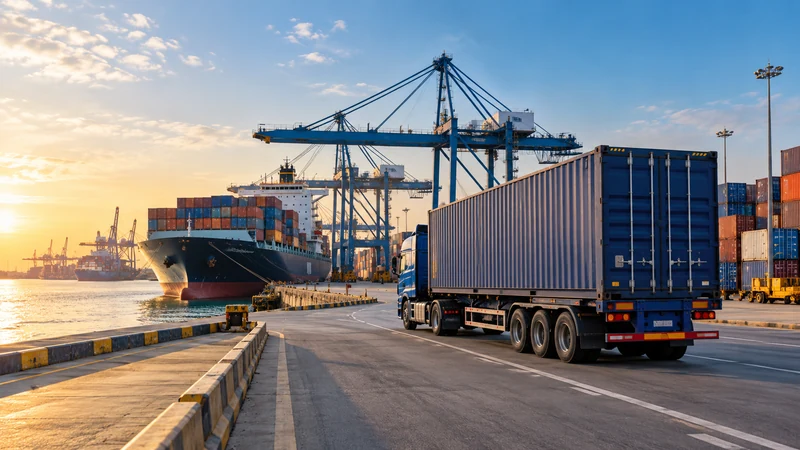
Door-to-door shipping from China to Tanzania involves more than transporting cargo between two countries. For importers receiving goods at a warehouse, factory, distribution center, or construction site, the critical question is whether every handover—from supplier collection to final delivery—has been properly arranged.
An international freight quotation may cover the ocean voyage but leave customs coordination, port release, inland trucking, or unloading to different parties. Understanding these responsibilities before shipment helps prevent delivery disputes and unexpected destination charges.
Quick Answer
Door-to-door shipping from China to Tanzania can cover supplier pickup, export handling, international freight, Tanzanian customs coordination, cargo release, and inland delivery to an agreed address. However, door-to-door does not automatically mean Delivered Duty Paid (DDP). Import taxes, clearance responsibilities, unloading, and empty-container return depend on the contract and quotation. Before booking, confirm the legal importer, clearing arrangements, final delivery access, and exactly which services are included.
Data Note — October 2026: This guide reflects published Tanzanian import and port procedures and ICC Incoterms® 2020 guidance reviewed in October 2026. Actual delivery arrangements depend on the commodity, customs requirements, transport provider, destination, and written service agreement. No fixed freight rates, guaranteed transit times, or universal delivery coverage are assumed.
What Does Door-to-Door Shipping from China to Tanzania Include?
Door-to-door shipping describes a transport arrangement between an agreed collection point in China and a named receiving address in Tanzania.
The collection point might be a manufacturer’s factory in Guangzhou, a supplier’s warehouse in Shenzhen, or a consolidation facility receiving cargo from several suppliers. The destination might be a commercial warehouse in Dar es Salaam, a factory in Dodoma, or an industrial project site farther inland.
The important detail is that the two locations must be specified. A quotation stating only “China to Tanzania, door-to-door” leaves too much room for interpretation.
A properly defined arrangement should identify how the following activities will be coordinated:
- Collection from the agreed supplier or origin facility.
- China-side handling, export documentation, and customs formalities.
- International ocean, air, or courier transportation.
- Arrival notification and coordination with a Tanzanian clearing agent.
- Import customs processing and applicable cargo-release arrangements.
- Collection from the port, terminal, or cargo facility.
- Inland transportation to the named destination.
- Delivery confirmation, with unloading and container return addressed where applicable.
Not every activity is automatically included in the freight price. For example, a forwarder may coordinate an import declaration through a local clearing agent while the importer remains responsible for customs duties and taxes. A trucking quotation may cover delivery to the warehouse entrance without including forklift unloading.
These are not necessarily shortcomings in a service. They become problems when the buyer and logistics provider interpret the quotation differently.
For a broader comparison of sea freight, air freight, and other shipping arrangements, see our shipping from China to Tanzania guide.
What Door-to-Door Does Not Automatically Include
Importers should not assume that the following services are included without written confirmation:
- Payment of Tanzanian import duties, VAT, or other applicable taxes.
- Special import permits or product conformity certification.
- Cargo insurance.
- Destination storage caused by documentation or collection delays.
- Cranes, forklifts, unloading labor, or specialized site equipment.
- Additional delivery points or difficult-access destinations.
- Empty-container return and related equipment charges.
The practical objective is not to purchase the longest possible list of services. It is to agree on a complete transport scope with no unidentified handover between the Chinese supplier and the final receiver.
From EXW Supplier Pickup to International Departure
The door-to-door process begins before the shipment reaches a Chinese seaport or airport.
For factory-origin cargo, the first questions concern the supplier’s sales terms, cargo readiness, loading arrangements, and export documentation.
EXW Pickup: Who Collects and Loads the Cargo?
Under EXW (Ex Works), the seller makes the goods available at the named location. Under the standard EXW rule, the seller is not required to load the collecting vehicle or clear the goods for export.
This distinction matters when an importer asks a forwarder to collect machinery or cartons directly from a Chinese factory.
The collection plan should establish:
- Who books and pays for the pickup truck.
- Whether the supplier will physically load the cargo.
- Who provides loading equipment for heavy or oversized goods.
- Which party is responsible for Chinese export clearance.
- Whether the necessary exporter and declaration arrangements are available.
A buyer purchasing under EXW should not assume that the supplier has included loading or export clearance simply because the goods are ready.
Where appropriate, FCA (Free Carrier) may provide a clearer arrangement. Under FCA at the seller’s premises, the seller is responsible for loading the goods onto the collecting vehicle and for applicable export clearance.
The final choice should match the actual sales contract and the parties’ ability to carry out their obligations.
Supplier Pickup and China-Side Cargo Handover
Before dispatching a collection vehicle, the logistics coordinator should obtain accurate shipment details.
A commercial invoice and packing list provide the starting point, but the truck operator may also need packaging dimensions, total gross weight, loading instructions, and details of any cargo that cannot be stacked or handled using ordinary warehouse equipment.
For example, a shipment of packaged electrical components may be suitable for standard carton handling, while a piece of industrial equipment could require forklift pockets, lifting points, or a crane-loading plan.
The supplier should confirm the cargo-ready date and pickup contact. When goods come from multiple Chinese suppliers, the collection schedule and consolidation warehouse should also be agreed before transport begins.
At handover, the parties should record the cargo received, visible packaging condition, and any exceptions. This helps distinguish pre-existing packaging issues from damage or shortages identified later in the transport chain.
Export arrangements should be checked before collection, especially where the supplier cannot undertake the necessary export declaration or the product is subject to particular controls.
Choosing the International Freight Method
The appropriate transport method depends on cargo volume, handling requirements, urgency, and the receiving location.
| Shipping method | Origin handling | Destination handover |
|---|---|---|
| FCL sea freight | Container positioning, loading, sealing, and export-port delivery | Container release, inland haulage, unloading, and empty return |
| LCL sea freight | Cargo collection, CFS receipt, consolidation, and export shipment | Deconsolidation, cargo release, and loose-cargo delivery |
| Air freight | Airport delivery, security screening, airline acceptance, and airway bill | Airport cargo-terminal handling, customs processing, and local delivery |
| Express courier | Courier collection and service-specific acceptance | Courier customs procedures and delivery under the selected service terms |
For FCL cargo, the container typically remains a central part of the inland delivery operation. LCL cargo normally requires an additional deconsolidation stage before it can be collected for delivery.
Air shipments require the procedures of the actual arrival airport and cargo terminal. The sea-port processes described below should not be applied automatically to air freight.
What Happens After Cargo Arrives at Dar es Salaam?
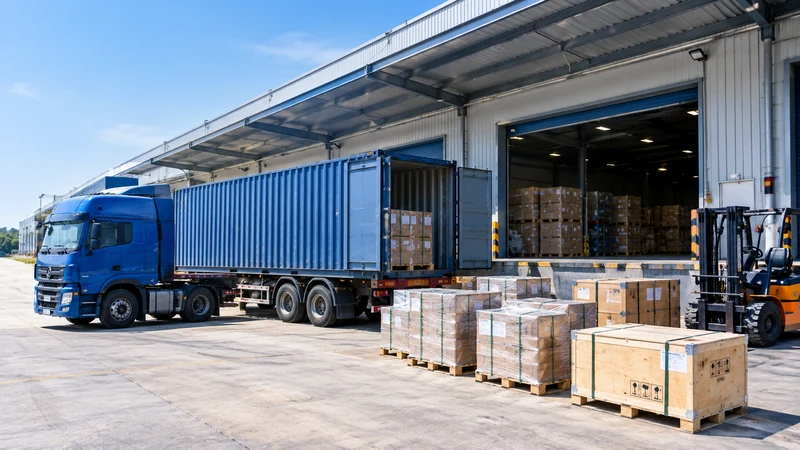
For sea shipments entering through Dar es Salaam, vessel arrival does not mean the container is immediately available for inland delivery.
Several parties may be involved in converting an arriving shipment into cargo that can legally and physically leave the port.
These include the importer or consignee, shipping agent, licensed Clearing and Forwarding Agent (CFA), Tanzania Revenue Authority (TRA), port or terminal operator, and inland transporter.
Each has a different operational function.
Arrival Notice and Local Clearing-Agent Coordination
The shipping line or its agent provides relevant arrival information and cargo documentation. The importer and appointed clearing agent must ensure that the necessary records are available for import processing.
Tanzania’s published import guidance describes the use of licensed CFAs and electronic customs processing through the Tanzania Customs Integrated System (TANCIS).
The government also encourages importers and agents to prepare and submit applicable declarations and supporting documents before cargo arrival, with published guidance recommending submission at least seven days before arrival.
This is an advance-documentation recommendation, not a promise that cargo will clear within a particular number of days.
Important supporting documents may include:
- Final commercial invoice with an accurate goods description.
- Packing list identifying packages, dimensions, and weights.
- Bill of lading or another applicable transport document.
- Importer authorization for the appointed clearing agent.
- Relevant import permits, certificates, or exemption records.
- Information supporting the declared classification, value, and customs treatment.
The applicable documents depend on the goods and import procedure.
For example, products regulated under the Tanzania Bureau of Standards (TBS) Pre-shipment Verification of Conformity program may require an appropriate Certificate of Conformity (CoC). This must be checked against the applicable product scope and exemptions before shipment, rather than assumed for all imports.
The importer should also confirm the identity and authority of the party making the customs declaration. A freight forwarder coordinating a shipment is not automatically the legal importer.
Official reference: Tanzania Government — Import Procedure.
Customs Declaration, Assessment, and Release
Under the applicable import procedure, the appointed agent submits the declaration and supporting information through TANCIS.
TRA may assess the declared customs value, tariff classification, and applicable import charges. It may also request additional documents or require inspection.
Incomplete or inconsistent information can generate queries. A submitted declaration, an assessed tax amount, and an actual customs release are separate stages.
Who pays the applicable taxes depends on the import arrangement, the sales contract, and the parties legally responsible for the import.
Under an ordinary DAP purchase, the buyer is responsible for import clearance and applicable import duties and taxes. Under a genuine DDP sale, those contractual obligations fall to the seller, provided the required legal import arrangements can be fulfilled.
A door-to-door freight quotation, by itself, does not change those responsibilities.
For a detailed explanation of declaration documents, TANCIS, customs assessment, and release, read our Tanzania customs clearance process guide.
Shipping-Line Delivery Order and Port Release
Even after TRA customs release, the cargo may not be ready for immediate collection.
The shipping line or its local agent has separate cargo-release requirements. Applicable shipping-line charges and documentation must be addressed before a Delivery Order (DO) or equivalent authorization is available.
Port and terminal processes also require attention.
The Tanzania Ports Authority’s published import procedure describes the use of its electronic payment system, TePP, for applicable port charges. It also describes truck and driver announcements, gate-entry authorization, cargo collection, and final port-gate checks.
The operational sequence can be summarized as follows:
Arrival information → Customs declaration and assessment → Customs release → Shipping-line delivery authorization → Port/terminal payment and collection arrangements → Truck gate-in → Cargo collection and gate-out → Inland delivery
Some activities may be prepared in parallel. Inspections, permits, cargo type, terminal procedures, and outstanding charges can change the actual sequence.
The key distinction is between three different release milestones:
1. Customs release: TRA has authorized release under the applicable customs procedure.
2. Carrier release: The shipping line or its agent has satisfied the relevant documentary and commercial release conditions.
3. Physical cargo release: The terminal or port has completed the arrangements needed for the cargo to be collected and leave the facility.
Confirming only the first milestone is insufficient for planning the delivery truck.
Official reference: Tanzania Ports Authority — Import Process.
China to Tanzania Door-to-Door Shipping: Stages, Responsibilities, Costs and Risks
The following matrix shows the handovers importers should clarify before booking.
| Shipping stage | Typical coordinating party | Items to verify in the quotation | Main risk |
|---|---|---|---|
| China supplier pickup | Origin forwarder or collection carrier | Pickup transport, loading, waiting | Cargo not ready or loading unavailable |
| China export handling | Exporter, declarant, forwarder | Declaration, documentation, origin handling | Export-document or authorization problems |
| International transport | Shipping line, airline, or forwarder | Main freight, surcharges, insurance if arranged | Schedule changes or cargo-handling exceptions |
| Dar arrival handover | Shipping agent, destination coordinator | Arrival notice, documentation, local coordination | Missing or inconsistent documents |
| Customs processing | Importer, appointed CFA, TRA | Brokerage, duties, taxes, permits, inspection costs | Assessment queries or outstanding compliance requirements |
| Carrier and port release | Shipping agent, CFA, terminal | Delivery Order, terminal/port charges, storage | Customs released but cargo not available for collection |
| Inland trucking | Contracted inland transporter | Vehicle, route, delivery address, waiting | Inaccessible site or unsuitable equipment |
| Unloading and receipt | Receiver or appointed handling provider | Labor, forklift, crane, delivery confirmation | Unloading delays, shortage, damage |
| Empty-container return, if applicable | Assigned haulier or equipment coordinator | Return trip, depot, free time, equipment condition | Late return or additional equipment charges |
Typical coordinating parties are not necessarily the parties legally liable for every charge or risk. The sales contract, import requirements, transport contract, and written quotation determine the final allocation.
Pro Tip — Confirm the Handover Before Arrival
Ask for the name of the destination coordination contact, the appointed clearing party, the importer responsible for customs formalities, and a list of outstanding documents before the vessel arrives. This makes it easier to identify whether a delay is related to customs, carrier release, port charges, or truck collection.
Can You Arrange Inland Delivery from Dar es Salaam to Your Final Address?
Port release is only the beginning of the final delivery stage.
A shipment destined for a warehouse near Dar es Salaam may require a relatively straightforward road movement after cargo collection. A shipment destined for an inland city or remote project site may need additional route planning, vehicle selection, and handling arrangements.
The final address therefore matters as much as the port of arrival.
Delivery to City Warehouses, Factories, and Remote Sites
Different receiving locations create different transport requirements.
| Delivery destination | Main operational considerations |
|---|---|
| Dar es Salaam commercial warehouse | Truck access, receiving appointment, unloading facilities |
| Inland city warehouse or factory | Vehicle selection, road transport, receiving schedule |
| Industrial or construction project site | Road suitability, cargo dimensions, site access, lifting equipment |
| Remote or restricted-access location | Route feasibility, local conditions, security, permits, special arrangements |
Importers may request delivery to cities such as Dodoma, Arusha, Mwanza, or Mbeya. These are examples of possible destination requests, not a guarantee that every address can be served under the same conditions.
A delivery to a city warehouse and a delivery to a remote site in the same region may require entirely different vehicles and pricing.
For project cargo, the route may need to be evaluated against vehicle dimensions, legal road limits, bridge or road restrictions, and available unloading space.
Where the final site cannot accommodate the original vehicle or shipping container, a separately arranged transloading operation may be necessary.
Truck Selection and Receiving-Site Access
The importer should provide more than a city name and postal or street address.
For a reliable delivery assessment, the following information is useful:
| Site checkpoint | Information to confirm |
|---|---|
| Exact destination | Address, district, location reference, receiving contact |
| Road access | Road surface, restrictions, site approach |
| Cargo characteristics | Packed weight, dimensions, handling requirements |
| Site entrance | Gate dimensions, height restrictions, turning space |
| Unloading equipment | Forklift, crane, dock, or manual labor |
| Receiving schedule | Working hours and delivery appointment |
| Container handling | Available unloading area and expected turnaround |
| Special conditions | Security approval, site access requirements, permits |
This information helps the transport provider determine whether a standard truck is suitable or whether additional handling arrangements are required.
For example, a receiver may have enough storage space for an imported machine but no crane or forklift capable of removing it safely from the vehicle.
If unloading equipment is not arranged before the truck arrives, the delivery can become delayed even though the cargo has been successfully transported and cleared.
A proper door-delivery assessment should identify this problem before dispatch.
What About Zanzibar and Non-Standard Destinations?
A delivery address in Zanzibar requires separate consideration.
The transport route, arrival point, customs status, and applicable local procedures must be established for the specific shipment. Zanzibar Bureau of Standards (ZBS) conformity requirements should not be assumed to be identical to those applying to Mainland Tanzania under TBS.
A shipment routed through Dar es Salaam and transferred onward may also involve additional handling and transport arrangements.
Before accepting an offer for Zanzibar or another non-standard destination, confirm the exact routing, responsible clearance parties, applicable compliance requirements, and final delivery scope.
Get a Door Delivery Assessment
Planning a shipment from a Chinese supplier to a warehouse, factory, or project site in Tanzania?
Winsail Logistics can review your proposed transport requirements and assess the coordination needed for the requested delivery. The assessment should establish the pickup location, shipment type, cargo details, import arrangements, inland destination, and any special unloading conditions before a service scope is confirmed.
Get a Door Delivery Assessment
Unloading, Proof of Delivery, and Empty-Container Return
One of the most common misunderstandings in door-to-door freight is assuming that a delivery truck arriving at the destination means every transport obligation has been completed.
For many shipments, important work remains after the vehicle reaches the receiving site.
Who Unloads the Goods at the Destination?
The party responsible for unloading should be identified before delivery.
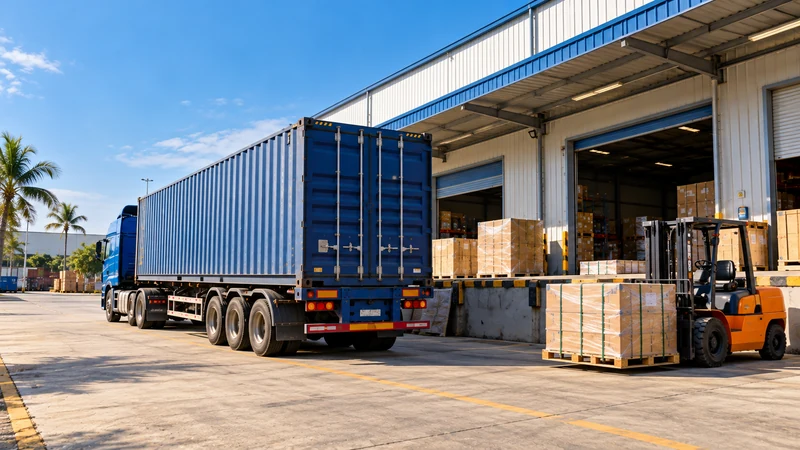
For palletized goods, the receiving warehouse may provide a forklift. For heavy machinery, the importer may need to arrange a crane and qualified lifting personnel. For smaller shipments, unloading may be performed manually where safe and appropriate.
The freight quotation should specify whether unloading is included or excluded.
If special equipment is needed, the parties should confirm who books it, who bears the cost, and how unloading will be coordinated with the arriving truck.
Receiving appointments also matter. A truck arriving outside permitted hours may face waiting, rescheduling, or parking issues.
For FCL shipments, the time allowed for unloading should be assessed against the applicable container-equipment conditions.
Proof of Delivery and Cargo Condition
After unloading or the agreed delivery handover, the receiving party should document the cargo’s condition.
Useful records may include:
- Delivery date and receiving location.
- Name or identification of the authorized receiver.
- Delivered package count, where practicable.
- Visible packaging damage or shortage.
- Signed delivery note or Proof of Delivery (POD).
- Supporting photographs where appropriate.
The receiver should record visible exceptions rather than signing an unqualified receipt when damage or shortages are apparent.
A signed POD confirms an agreed delivery event, but it does not necessarily prove that every customs, insurance, or equipment obligation has been closed.
Who Returns the Empty FCL Container?
When cargo is delivered in a carrier-owned shipping container, the container normally needs to be returned according to the carrier’s applicable instructions.
The importer should confirm whether the inland haulage service covers both loaded delivery and empty-container return.
Important details include the nominated return depot, truck arrangements, permitted equipment-use period, return documentation, and potential detention or damage-related charges.
Container free time and charges depend on the actual carrier, contract, shipment, equipment, and applicable local conditions. They should not be estimated using a universal allowance.
LCL cargo is different. The importer normally receives deconsolidated goods rather than taking responsibility for returning the original consolidated shipping container.
Pro Tip — Track Two Completion Milestones
For FCL door delivery, track cargo received and empty container returned separately. Keep the relevant POD and equipment-return receipt. A successful warehouse delivery does not necessarily end the carrier’s container-related charging exposure.
Does Door-to-Door Shipping Mean DAP or DDP?
No. Door-to-door shipping describes the physical movement and agreed logistics services, while Incoterms® allocate particular responsibilities, costs, and risks between seller and buyer under the contract of sale.
The same physical journey from a Chinese supplier to a Tanzanian warehouse can operate under different contractual arrangements.
Door-to-Door Service and Incoterms Are Not the Same
An importer buying EXW may separately appoint a freight forwarder to coordinate transport from the Chinese factory to the final Tanzanian address.
A buyer purchasing under DAP may receive goods at a named destination while remaining responsible for import clearance and applicable import charges.
Under DDP, the seller assumes import-clearance and duty-payment obligations in addition to the relevant transport responsibilities.
The logistics provider may coordinate individual tasks under any of these arrangements, but that does not automatically change the responsibilities in the buyer-seller contract.
DAP vs DDP at a Named Tanzania Destination
| Responsibility | DAP — Delivered at Place | DDP — Delivered Duty Paid |
|---|---|---|
| Transport to named destination | Seller | Seller |
| Export clearance | Seller | Seller |
| Tanzania import clearance | Buyer | Seller |
| Import duties and applicable taxes | Buyer | Seller |
| Delivery condition | On arriving vehicle, ready for unloading | On arriving vehicle, ready for unloading |
| Destination unloading | Generally buyer | Generally buyer |
| Important consideration | Buyer must arrange compliant import processing | Seller must be legally able to fulfill import obligations |
Both DAP and DDP normally involve delivery at the named place with the goods ready for unloading, not automatically unloaded.
If seller-performed unloading is the intended contractual delivery obligation, DPU (Delivered at Place Unloaded) may be relevant. Any alternative handling obligations should be expressly agreed.
DDP also requires particular care in Tanzania. An overseas seller’s contractual commitment to clear and pay for imports does not, by itself, establish legal authority to act as the importer or bypass local customs requirements.
The parties must confirm that a compliant import arrangement is actually available.
For more detail on import-tax allocation and the legal responsibilities involved, see our DDP shipping from China to Tanzania guide.
Official reference: International Chamber of Commerce — Incoterms® 2020.
How to Compare a Door-to-Door Shipping Quotation
A useful quotation should show more than the international freight charge and the destination city.
It should define the transport endpoints, identify the responsible parties, describe what is included, and explain which costs or operations remain conditional.
Without this information, two offers described as “door-to-door” may cover very different services.
Information to Prepare Before Requesting a Quote
China supplier details
Provide the supplier’s collection address, pickup contact, cargo-ready date, and agreed Incoterm. Confirm whether loading is available at the supplier’s premises.
For multiple suppliers, provide each pickup location and explain whether the goods should be consolidated.
Cargo specifications
Provide the product description, commercial invoice, packing list, number of packages, gross weight, dimensions, and declared value.
Include the HS code if known, although the appropriate classification must be verified for customs use.
Identify machinery requiring lifting equipment, batteries or other regulated goods, dangerous goods, temperature-sensitive products, and cargo with special packaging requirements.
Tanzania import arrangements
Identify the intended legal importer, consignee, clearing-agent arrangements, and the status of any required permits or conformity documents.
If the importer has not appointed a clearing agent, disclose that before booking so the appropriate arrangement and responsibilities can be assessed.
Final receiving address
Provide the actual warehouse, factory, or site location rather than only the city.
Include the receiving contact, unloading arrangements, vehicle-access restrictions, and any special site instructions.
What Is Included in Your Door-to-Door Freight Quote?
Use the following worksheet when reviewing an offer.
| Cost or service category | Included, excluded, or conditional? | Responsible payer | What to confirm |
|---|---|---|---|
| China supplier pickup | To confirm | To confirm | Collection and loading terms |
| Export handling and main freight | To confirm | To confirm | Declarations, freight, surcharges |
| Tanzania customs broker service | To confirm | To confirm | Appointed agent and service scope |
| Import duties and taxes | To confirm | To confirm | Incoterm and legal importer |
| Shipping-line and port charges | To confirm | To confirm | Applicable charges and release costs |
| Inland trucking | To confirm | To confirm | Vehicle and named delivery address |
| Unloading and special equipment | To confirm | To confirm | Labor, forklift, or crane |
| Empty-container return | To confirm | To confirm | Depot, return transport, equipment terms |
| Storage, demurrage, and detention | To confirm | To confirm | Charge triggers and responsibility |
The table should be completed for the actual shipment before the offer is accepted.
Some charges can be agreed in advance. Others may depend on events such as customs examination, delayed collection, additional storage, failed delivery attempts, or container-return timing.
A transparent quotation should identify which charges are fixed for the agreed scope, which are estimated, and which may arise only under specified circumstances.
Check the Delivery Scope, Not Just the Total Price
Consider two quotations for the same FCL shipment.
One may cover arrival charges and truck delivery but exclude unloading and empty-container return. Another may include the return movement but require the receiving warehouse to unload within an agreed window.
Comparing only the final quoted amount does not reveal these differences.
Importers should also ask how exceptions will be handled. If customs requests additional documents, who contacts the importer? If the delivery site cannot receive the truck, who authorizes a revised delivery plan? If equipment-return instructions change, who coordinates the updated depot appointment?
These questions establish the operational handover rather than relying on a general promise of door-to-door service.
Get a Door Delivery Assessment
Before booking, send Winsail Logistics your supplier’s pickup location, cargo specifications, intended shipping method, Tanzania delivery address, and any known customs or unloading requirements.
We can review the requested shipment scope and identify the information needed to assess origin collection, international freight, destination coordination, inland delivery, and applicable handling arrangements.
Final service availability, charges, and responsibilities will depend on the shipment and confirmed operating arrangements.
Get a Door Delivery Assessment
Door-to-door shipping from China to Tanzania works best when every stage has a named responsible party and a clearly agreed scope.
The most important checks are not limited to selecting sea or air freight. Importers also need to establish the correct customs arrangements, complete carrier and port release requirements, confirm the final receiving location, and agree on unloading and container-return responsibilities.
By planning these handovers before departure, buyers can make better comparisons between freight offers and reduce avoidable uncertainty between the Chinese supplier and the final receiving site.
Can I arrange door-to-door delivery to Tanzania if my Chinese supplier sells under FOB terms?
Yes, a destination delivery service can be arranged separately from an FOB purchase. Under FOB, the seller handles the agreed export-side obligations and delivers the goods on board the vessel at the named shipment port. The buyer normally arranges main carriage and subsequent transport. Factory pickup should not be added to the forwarder's scope unless separately needed and agreed.
Can one shipment be delivered to two different warehouses in Tanzania?
Potentially, but this must be arranged before booking. Multiple delivery points may require cargo separation, additional handling, separate trucks, or warehouse distribution after customs release. The logistics provider will need the addresses, cargo allocation, receiving arrangements, and access details for each location. Additional transport and handling costs may apply.
Can a first-time importer arrange door delivery without already having a Tanzanian customs broker?
A freight coordinator may help identify the clearance arrangements required, but the importer and authorization responsibilities must be established before shipment. Tanzania's published procedures describe import processing through licensed clearing and forwarding agents. The importer should confirm the applicable requirements and authorized filing arrangements with TRA rather than assuming the forwarder can automatically import in its own name.
Can a delivery truck unload my goods if the receiving site has no forklift or loading dock?
Not automatically. The answer depends on the cargo's weight and dimensions, vehicle type, site conditions, and whether unloading equipment has been arranged. Heavy machinery may need a crane or a specialized handling plan. The importer should disclose any unloading limitations before booking so the necessary service can be evaluated and priced separately if required.
When is a full-container door-to-door shipment considered complete?
Cargo delivery and container-equipment return may be separate milestones. The consignee may receive the goods and sign a POD while the carrier-owned empty container still needs to be returned to an approved location. The transport agreement should define the relevant completion obligations, return responsibilities, and documentation required to close the shipment.
