
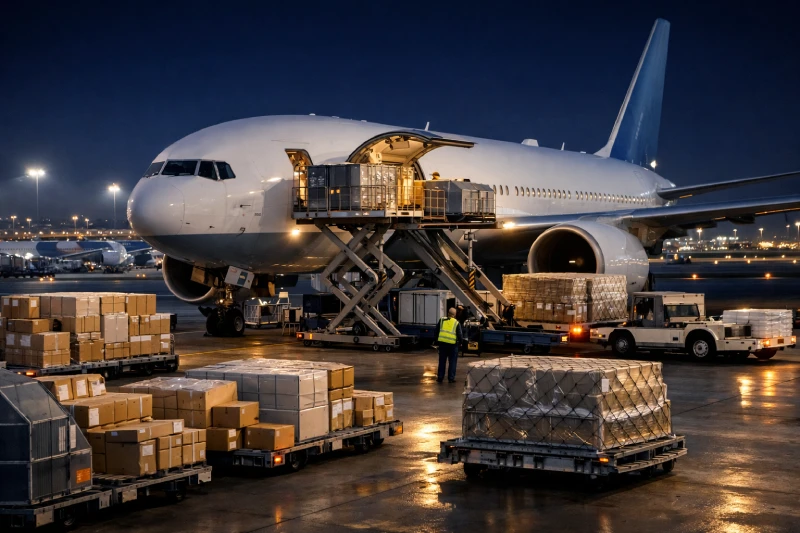
Express shipping from China to Nigeria is the fastest and most reliable way to move small to medium-sized cargo—especially when speed, tracking, and delivery certainty matter more than cost.
Whether you’re importing samples, urgent inventory, or high-value goods, courier services like DHL, FedEx, and UPS provide door-to-door delivery within days, not weeks.
But express shipping isn’t always the best option.
This guide explains when to use it, how much it costs, how long it takes, and when you should avoid it, so you can make the right logistics decision.
When to Use Express Shipping
Express shipping is ideal when speed, simplicity, and reliability are your top priorities.
Most businesses choose express shipping in the following scenarios:
1. Urgent Deliveries
If your shipment is time-sensitive—such as replenishing fast-selling inventory or meeting a client deadline—express is the fastest option available.
2. Small Shipments (0–200 kg)
Courier services are optimized for small cargo. Compared to air or sea freight, they offer better efficiency for lightweight shipments.
3. Samples & Testing Orders
Before placing bulk orders, many importers ship samples via DHL or FedEx to verify product quality.
4. High-Value Goods
Electronics, spare parts, and sensitive items benefit from secure handling and detailed tracking.
5. Door-to-Door Convenience
Express couriers handle pickup, international transport, customs clearance, and last-mile delivery, reducing coordination complexity.
👉 If your shipment is under 100–200 kg and time matters, express shipping is usually the best choice.
Transit Time
One of the biggest advantages of express shipping is speed consistency.
Typical Delivery Time (China → Nigeria):
| Service Type | Transit Time |
|---|---|
| DHL Express | 3–5 days |
| FedEx | 4–6 days |
| UPS | 5–7 days |
What Affects Delivery Time?
- Origin city in China (Shenzhen, Guangzhou, Shanghai are faster)
- Destination in Nigeria (Lagos is fastest; inland cities take longer)
- Customs clearance efficiency
- Public holidays or peak seasons
Realistic Expectation
While couriers advertise “3–5 days,” a more realistic end-to-end timeline is:
4–7 days door-to-door
This includes pickup, export clearance in China, flight transit, Nigerian customs processing, and final delivery.
For urgent shipments, DHL often performs best in West Africa due to its strong regional network.
Cost Structure
Express shipping is priced differently from sea or standard air freight. Instead of charging by volume (CBM), couriers use chargeable weight (kg).
How Chargeable Weight Works
Couriers calculate both:
- Actual weight
- Volumetric weight
Formula:
Volumetric Weight (kg) = (Length × Width × Height in cm) ÷ 5000
Whichever is higher becomes your billable weight.
Price Range (China → Nigeria)
| Weight Range | Estimated Cost per KG |
|---|---|
| 1–20 kg | $6 – $12 |
| 21–100 kg | $5 – $9 |
| 100+ kg | $4 – $7 |
💡 Prices vary depending on fuel surcharges, season, and courier.
Additional Costs
- Fuel surcharge (updated monthly)
- Remote area delivery fee (for certain Nigerian regions)
- Customs duties & VAT
- Special handling (batteries, liquids, etc.)
👉 For a detailed breakdown of pricing models, see: Cost per KG shipping from China to Nigeria
Courier Comparison (DHL vs FedEx vs UPS)
Choosing the right courier can impact delivery speed, customs success rate, and overall experience.

DHL Express
Best for: Speed + Nigeria coverage
Pros:
- Fastest transit time (often 3–5 days)
- Strong presence in Nigeria (especially Lagos)
- Reliable customs handling
Cons: Slightly higher cost
FedEx
Best for: Cost-performance balance
Pros:
- Competitive pricing for medium-weight shipments
- Good tracking system
- Stable delivery timelines
Cons: Slightly slower than DHL in West Africa
UPS
Best for: Specific routes & corporate accounts
Pros:
- Strong global network
- Competitive for certain bulk express shipments
Cons:
- Less dominant in Nigeria compared to DHL
- Transit times can be longer
Quick Comparison Table
| Courier | Speed | Price | Nigeria Strength | Overall |
|---|---|---|---|---|
| DHL | ⭐⭐⭐⭐⭐ | ⭐⭐⭐ | ⭐⭐⭐⭐⭐ | Best overall |
| FedEx | ⭐⭐⭐⭐ | ⭐⭐⭐⭐ | ⭐⭐⭐⭐ | Balanced |
| UPS | ⭐⭐⭐ | ⭐⭐⭐⭐ | ⭐⭐⭐ | Situational |
In most cases, DHL is the safest choice for Nigeria-bound shipments.
Customs & Duties
Customs clearance is one of the most critical steps in express shipping to Nigeria.
Unlike some countries, Nigeria has strict import regulations, and improper documentation can cause delays or additional costs.
Key Documents Required
- Commercial Invoice
- Packing List
- Waybill (provided by courier)
- Import permits (for regulated goods)
Duties & Taxes
Nigeria applies:
- Import Duty (varies by product category)
- VAT (typically 7.5%)
- Additional levies depending on goods
How Couriers Handle Customs
Courier companies usually offer:
- DDU (Delivered Duty Unpaid) — receiver pays duties
- Sometimes limited DDP options (depending on forwarder support)
Common Issues
- Undervaluation (can lead to fines or seizure)
- Missing HS codes
- Restricted goods (electronics, chemicals, etc.)
Learn more in our detailed guide: Customs clearance in Nigeria for imports
When NOT to Use Express
Despite its speed, express shipping is not always the best option.
Avoid Express Shipping When:
1. Large Shipments (200+ kg)
Costs increase significantly. Sea or air freight becomes more economical.
2. Low-Value Bulk Goods
If your cargo has low profit margins, high express costs can eliminate your profit.
3. Non-Urgent Shipments
If delivery time is flexible (2–6 weeks), sea freight offers massive cost savings.
4. Oversized Cargo
Large or irregular items may incur high volumetric charges.
5. Complex Imports
Some goods require specialized customs handling that express couriers may not support efficiently.
👉 Rule of thumb:
Use express for speed.
Use air/sea freight for cost efficiency.
FAQs
1. What is the fastest shipping from China to Nigeria?
DHL Express is typically the fastest, delivering in 3–5 days.
2. How much does express shipping cost per kg?
Usually between $4–$12 per kg, depending on weight and season.
3. Do couriers handle customs clearance?
Yes, DHL, FedEx, and UPS handle customs, but duties are usually paid by the receiver unless arranged otherwise.
4. Can I ship samples via express?
Yes—express shipping is the most common method for samples and small test orders.
5. Is express shipping safe for electronics?
Yes. Couriers provide tracking, secure handling, and faster transit, reducing risk.
Final Recommendation
If you need fast, reliable, and hassle-free delivery, express shipping is the best solution for China to Nigeria routes.
However, for larger or cost-sensitive shipments, combining express (for samples) with air or sea freight (for bulk) is often the smartest logistics strategy.
