
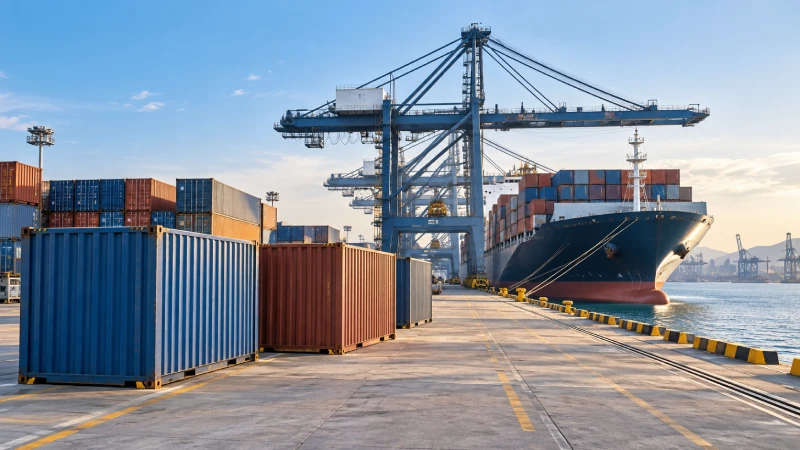
For importers moving commercial cargo from China to Kenya, FCL shipping becomes attractive when you need more control over loading, want to reduce cargo handling, or have enough volume to justify booking a dedicated container.
But choosing FCL is only the first decision.
You still need to choose between a 20GP, 40GP and 40HQ, select the right port in China, coordinate container loading, complete export and Kenya import documents before the vessel sails, plan customs clearance at Mombasa, and make sure the container can be delivered and returned before storage or detention charges begin to accumulate.
That planning has become even more important in 2026. Kenya Revenue Authority introduced the Advance Cargo Declaration (ACD) for containerized cargo destined for Kenyan ports from 3 August 2026. Kenya also introduced additional requirements for importers to retain export documentation from the country of export from 1 September 2026.
For a broader overview of sea freight, air freight, customs and inland delivery options, see Shipping from China to Kenya.
This guide focuses on the operational side of FCL shipping from China to Kenya: how to select the container, organize the shipment in China, prepare for Mombasa and avoid preventable delays.
Data Note: Container specifications, vessel schedules, carrier free time and regulatory requirements can change. Always verify the actual booking, cargo classification and latest Kenyan requirements before loading.
FCL Shipping from China to Kenya: Quick Answer
A typical FCL shipment follows this sequence:
Supplier pickup in China → factory or warehouse loading → container sealing → export declaration and VGM → port gate-in → ocean shipping → Mombasa discharge → Kenya customs clearance → inland delivery → empty-container return
For most general dry cargo, the main equipment choices are:
- 20GP for smaller or relatively heavy cargo
- 40GP for larger standard-height loads
- 40HQ for higher-volume cargo where additional internal height is useful
Mombasa is the main seaport gateway for containerized imports into Kenya. For cargo ultimately going to Nairobi, the shipment may either be cleared and trucked inland from the coast or structured for movement toward Nairobi ICD, depending on the bill of lading, carrier arrangement and clearance plan. Kenya Ports Authority confirms that Nairobi ICD is connected with Mombasa by rail services and can receive imports under Through Bills of Lading.
The most important rule is simple:
Do not wait until the container reaches Mombasa to start thinking about Kenyan clearance.
Container choice, HS classification, PVoC status, Certificate of Origin, ACD preparation, final destination and clearing-agent coordination should be addressed before the shipment leaves China.
20GP, 40GP or 40HQ: Which Container Should You Use?
Container selection should not be based only on how many cubic metres the supplier gives you.
The shape of the packages, cargo weight, pallet configuration, loading method and unloading conditions in Kenya can all change which container makes sense.
As a general equipment reference, carrier specifications typically place a 20ft standard container at roughly 33 m³ nominal capacity, a 40ft standard at roughly 67 m³ and a 40ft high cube at roughly 76 m³. Actual usable loading space will be lower because cartons, pallets and irregular cargo do not use every cubic metre efficiently. Equipment specifications and allowable payload can also vary by carrier and equipment.
| Container | Nominal Volume | Usually Considered For | Main Planning Constraint |
|---|---|---|---|
| 20GP | Approx. 33 m³ | Dense cargo, machinery, components, smaller full loads | Weight may become limiting before volume |
| 40GP | Approx. 67 m³ | Larger general cargo shipments | Same standard height class as a 20GP |
| 40HQ | Approx. 76 m³ | Bulky, lighter or cube-intensive cargo | Extra volume does not mean unlimited weight |
When a 20GP Makes More Sense
A 20GP can be a good option when cargo is relatively dense.
Examples may include industrial components, metal products, machinery parts, packaged equipment or other cargo where weight increases faster than volume.
A shipment does not need to physically fill every cubic metre of the container for a 20GP to be commercially or operationally sensible.
For heavy cargo, however, check more than the theoretical container payload. The actual booking equipment, road transport limitations and weight distribution also matter.
When to Consider a 40GP
A 40GP provides substantially more internal length than a 20ft container and is useful when you have more cartons, pallets or long packages but do not need additional container height.
It can also make sense when consolidating products from several suppliers into one full container.
Before booking, create at least a basic loading plan rather than simply adding all supplier CBM figures together.
When a 40HQ Is More Practical
The extra internal height of a 40HQ makes it particularly useful for relatively bulky cargo.
Furniture, packaged consumer products, household items, some plastic products and other volume-heavy cargo may use that extra space effectively.
But a 40HQ is not automatically the best option simply because it is bigger.
If the cargo is very dense, weight limits may be reached long before the physical space is filled.
Practical rule: Send the package count, individual package dimensions and gross weight—not only total CBM—before deciding which equipment to book.
When Should You Move from LCL to FCL?
There is no universal rule such as:
“Use FCL as soon as your shipment reaches X CBM.”
That type of rule is convenient, but it can lead to poor decisions.
Two shipments with exactly the same volume can have very different economics.
The real comparison should be between the all-in LCL solution and the all-in FCL solution, while also considering how the cargo needs to be handled.
| Situation | LCL May Be Better | FCL May Be Better |
|---|---|---|
| Small shipment | ✓ | |
| Cargo volume increasing significantly | Compare | Compare |
| Fragile or handling-sensitive cargo | ✓ | |
| Multiple suppliers ready at the same time | ✓ | |
| Dedicated container required | ✓ | |
| Low-value cargo and flexible timing | ✓ | |
| High destination LCL handling exposure | Compare | ✓ |
| Cargo difficult to consolidate safely | ✓ |
Do Not Decide Using CBM Alone
With LCL, your cargo shares container space with cargo belonging to other shippers. The shipment normally passes through consolidation and deconsolidation processes.
FCL reduces that shared-cargo handling because one shipper uses the booked container.
That can be important for:
- fragile equipment;
- cartons vulnerable to crushing;
- products that should not be mixed with unrelated cargo;
- shipments involving many pallets;
- high-value commercial cargo;
- cargo where loading sequence matters.
FCL can also simplify a multi-supplier China shipment when all goods can be collected into one warehouse, checked and loaded together.
On the other hand, booking a 20GP with a large amount of unused space does not automatically make economic sense.
A proper comparison should consider:
LCL freight + origin consolidation + destination CFS/local charges
versus
FCL ocean freight + origin charges + container-related destination charges + inland transport
Current market pricing is required to determine the actual crossover point.
How to Choose the Origin Port in China
The nearest seaport to your supplier is not always the best origin port.
The better question is:
Which port gives the best combination of inland transport, sailing schedule, equipment availability and cargo-ready timing?
For China-to-Kenya FCL shipments, port selection may involve major gateways such as Shanghai, Ningbo and Nansha, while other ports can be used depending on supplier location, carrier routing and transshipment options.
Current carrier services show direct or structured China-to-Mombasa connectivity from several major Chinese ports, but the actual service should always be checked for the planned sailing date.
For Suppliers in South China
For factories around Guangzhou, Foshan, Dongguan, Zhongshan and nearby manufacturing areas, South China ports such as Nansha may be operationally attractive.
However, the port should still be checked against:
- actual sailing date;
- carrier service;
- container availability;
- CY cut-off;
- VGM cut-off;
- trucking distance;
- origin charges.
For Suppliers in East China
Shanghai and Ningbo are common options for exporters in the Yangtze River Delta manufacturing region.
If the supplier is between port regions, the cheapest truck move should not automatically decide the booking.
A vessel leaving earlier from a slightly more distant port can sometimes produce a better overall shipment plan.
For Suppliers in North China
Qingdao, Tianjin and other northern gateways may be evaluated for suppliers in northern manufacturing regions.
Depending on the chosen carrier, the Kenya routing may involve different service structures or transshipment connections.
The current schedule should therefore be confirmed before the booking is finalized.
Pro Tip: Saving several hours on Chinese inland trucking does not help if the cargo reaches the terminal after the cut-off and waits for the next sailing.
For a multi-supplier shipment, port selection becomes even more important. The collection distance from all factories to the consolidation warehouse should be considered together rather than optimizing for only one supplier.
Booking and Loading the Container in China
Once the container type and origin route are selected, the next challenge is getting the cargo into the container correctly and on time.
There are two common loading arrangements.
Factory Loading
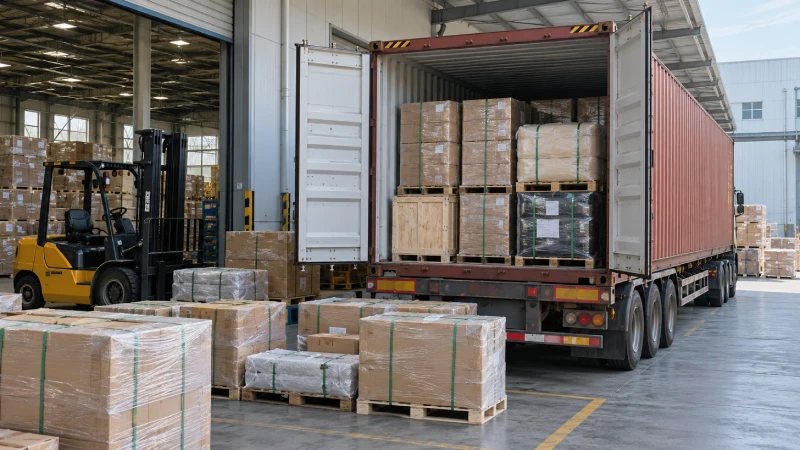
Under factory loading, an empty container is released from the carrier’s nominated depot and trucked to the supplier.
The general process is:
Empty pickup → factory arrival → cargo loading → sealing → terminal gate-in
This works well when one supplier has enough cargo for the entire container and the loading location can accommodate container trucks.
Before arranging factory loading, confirm:
- whether the road can accommodate the container truck;
- whether the factory has forklifts or loading labour;
- whether the loading can be completed within the trucking allowance;
- whether the cargo is fully packed before the truck arrives;
- whether heavy or long pieces require special loading equipment.
Waiting until the truck reaches the factory to discover that the cargo is not ready can create avoidable waiting or trucking charges.
Warehouse Stuffing and Multi-Supplier Consolidation
If products come from several factories in China, sending the container from factory to factory is not always practical.
Instead, individual suppliers can deliver—or have cargo collected—to a consolidation warehouse.
The shipment can then be:
- received from each supplier;
- counted and checked against shipping information;
- arranged according to the loading plan;
- loaded into one FCL container;
- sealed;
- delivered to the export terminal.
This approach can be particularly useful when a Kenyan importer buys different products from several factories within one sourcing region.
However, all suppliers need a coordinated cargo-ready deadline. One late supplier can otherwise cause the entire FCL shipment to miss the planned vessel.
Prepare a Loading Plan Before the Container Arrives
The loading team should know more than total CBM.
Useful information includes:
- carton or package count;
- package dimensions;
- gross weight;
- pallet dimensions;
- stackability;
- fragile areas;
- centre-of-gravity concerns for machinery;
- forklift requirements;
- moisture sensitivity;
- loading sequence;
- unloading sequence in Kenya.
Heavy cargo should be distributed appropriately rather than concentrated in one area of the container.
For machinery or unstable cargo, suitable blocking, bracing and securing may be required.
Inspect the Empty Container
Before loading, inspect the condition of the container.
Useful checks include:
- obvious holes or light penetration;
- damaged flooring;
- water ingress;
- damaged doors or locking bars;
- strong odors;
- severe internal contamination;
- major structural damage.
Record the container number and seal number, and keep loading photographs where practical.
The exact inspection procedure will depend on the cargo and shipping arrangement, but identifying obvious problems before stuffing is much easier than resolving them after the container has entered the terminal.
VGM Must Be Planned Before Vessel Loading
A packed export container requires a Verified Gross Mass (VGM) under SOLAS.
The International Maritime Organization states that the shipper named in the transport document is responsible for providing the verified gross mass and that VGM must be available sufficiently in advance for the vessel’s stowage planning. A packed container without the required VGM cannot be loaded under the SOLAS requirement.
In practical terms, monitor several different deadlines:
- Shipping Instruction cut-off
- VGM cut-off
- Customs/export-document deadline
- CY/container gate-in cut-off
Missing any one of these can affect the planned sailing.
Documents and Compliance to Complete Before Sailing
For Kenya-bound FCL shipments, documentation should no longer be treated as something to organize while the vessel is already at sea.
Important documents and regulatory checks should start before container loading.
Core Commercial and Shipping Documents
Depending on the shipment, the operating file may include:
- Commercial Invoice
- Packing List
- China Export Declaration
- Draft Bill of Lading
- Final Bill of Lading
- Freight Invoice
- VGM information
- Certificate of Origin
- ACD reference
- CoC for applicable PVoC-regulated products
- product-specific permits where required
Not every cargo requires every product certificate or permit.
That depends on what is being imported.
Advance Cargo Declaration: A Major 2026 Change
From 3 August 2026, Kenya Revenue Authority introduced its Advance Cargo Declaration platform for containerized cargo destined for Kenyan ports.
According to KRA, exporters shipping containerized cargo to Kenya obtain an ACD reference code at the point of loading.
KRA lists four documents for the ACD application:
- Draft Bill of Lading
- Commercial Invoice
- Freight Invoice
- Export Declaration
Once issued, the ACD reference code must be endorsed on the Bill of Lading before the shipment proceeds to a Kenyan port.
Mandatory Requirement: ACD preparation should therefore be part of the China-side pre-shipment workflow, not a task left until arrival in Mombasa.
This makes early document accuracy particularly important.
If invoice data, exporter details, cargo descriptions or transport-document information are still changing at the last moment, the shipment can become harder to coordinate.
Certificate of Origin for Kenya Imports
Kenya also strengthened its Certificate of Origin requirement in 2025.
KRA states that consignments imported into Kenya must generally be accompanied by a Certificate of Origin issued by a competent authority in the country of export, subject to defined exceptional cases and transitional provisions.
For China-origin shipments, confirm the correct Certificate of Origin procedure before the container sails rather than assuming a supplier-created origin statement will automatically be accepted.
Kenya’s New Export-Document Retention Requirement
There is another 2026 requirement importers should not overlook.
KRA states that from 1 September 2026, importers must obtain and retain an export declaration, export entry, customs export certificate or equivalent document from the country of export.
The documentation should support the Kenyan import and should be retained for the period required by Kenyan law.
For shipments from China, this makes coordination with the exporter particularly important.
Do not allow the commercial relationship with the supplier to end at “goods shipped.” Make sure required export records can also be provided to the Kenyan importer.
KEBS PVoC and Certificate of Conformity
For products subject to Kenya’s PVoC programme, conformity assessment takes place in the exporting country.
The Kenya Bureau of Standards states that importers should ensure their suppliers understand applicable Kenyan requirements and that consignments subject to PVoC are accompanied by the appropriate Certificate of Conformity (CoC) issued through appointed inspection partners.
China is included in KEBS’s current PVoC arrangements.
Conditional Requirement: PVoC should not be described as automatically applying to every imported product.
The actual requirement depends on the commodity, relevant standard, exemptions and any other regulator involved.
Product-Specific Permits
Some goods may also fall under agencies other than KRA or KEBS.
Depending on the product, additional controls may apply to areas such as:
- food;
- agricultural products;
- medical products;
- telecom equipment;
- chemicals;
- pesticides;
- vehicles;
- controlled or dangerous products.
Check requirements using the exact product description and HS classification.
A generic supplier statement such as “we shipped this product to Africa before” is not sufficient proof that the goods meet Kenya’s import requirements.
Practical Document Checklist
| Document / Check | Main Purpose | Timing |
|---|---|---|
| Commercial Invoice | Customs/commercial declaration | Before shipment |
| Packing List | Packages, weights and cargo details | Before shipment |
| China Export Declaration | Export customs record / ACD input | Before sailing |
| Draft B/L | Transport details / ACD input | Before final B/L |
| Freight Invoice | ACD supporting document | Before ACD completion |
| ACD Reference | Kenya advance cargo declaration | Before shipment proceeds |
| Certificate of Origin | Origin evidence | Before Kenya clearance |
| CoC | PVoC conformity for applicable goods | Before shipment |
| HS Classification | Duty/compliance basis | Ideally before booking |
| Product Permits | Controlled goods | Before shipment where applicable |
Kenyan importers generally work with an accredited customs clearing agent to process import documentation, while duty and other taxes depend on customs value, tariff classification and the legislation applicable to the specific goods.
How Long Does FCL Shipping from China to Mombasa Take?
When an importer asks for transit time, the first question should be:
Port-to-port or supplier-to-final-delivery?
They are not the same measurement.
A complete FCL schedule can include:
- supplier pickup;
- warehouse consolidation if required;
- export and terminal processing;
- ocean transit;
- Mombasa discharge;
- customs/regulatory clearance;
- inland delivery.
Current Carrier Schedules Show Why One Transit Number Is Misleading
Published carrier schedules can vary materially by Chinese port, service and voyage.
Recent public schedules show Shanghai-to-Mombasa port-to-port examples in roughly the low-20-day to around-30-day range, depending on the service and sailing. These are planning references only and should not be treated as guaranteed transit times.
That difference illustrates an important point:
“China to Mombasa transit time” depends on the actual port, carrier, service and voyage.
| Shipping Stage | What Can Affect It |
|---|---|
| Supplier pickup | Cargo readiness, truck availability |
| Origin processing | Export declaration, loading, VGM, cut-offs |
| Ocean transit | Port, carrier, rotation, transshipment |
| Mombasa clearance | Documents, customs, regulatory checks |
| Inland delivery | Release timing, truck/rail plan, unloading |
Schedules can also change due to operational disruptions, port conditions, blank sailings, rollover or vessel adjustments.
For that reason, use public transit times for planning—not as guarantees.
Data Note: Always verify the actual vessel and voyage when booking.
What Happens When the Container Arrives in Mombasa?
Mombasa is Kenya’s main maritime gateway and operates container terminal infrastructure handling Kenyan and regional cargo.
For the importer, vessel arrival is only one milestone.
The cargo still needs customs and operational release.
Coordinate the Kenyan Clearing Agent Before Arrival
Commercial importers normally use accredited customs clearing agents to process import documentation through Kenya’s customs system and assist with clearance.
The precise clearance path depends on the goods and Customs instructions, but a simplified process may look like:
Document preparation → customs declaration → assessment/payment → regulatory/customs checks where applicable → customs release → carrier/terminal release → delivery
Not every container is physically inspected.
Customs or relevant agencies may select shipments for checks depending on the declaration, cargo and regulatory requirements.
The importer should therefore send the Kenyan clearing agent complete documentation before arrival whenever possible.
Typical information includes:
- commercial invoice;
- packing list;
- bill of lading details;
- Certificate of Origin;
- CoC where applicable;
- permits where applicable;
- HS classification;
- importer information;
- ACD-related shipment data.
Mombasa or Nairobi ICD?
If the consignee is in Nairobi, do not automatically assume the container must first be locally delivered from Mombasa by road.
Kenya Ports Authority operates Nairobi Inland Container Depot, which is connected to Mombasa by rail services.
KPA states that imports can be delivered directly from Mombasa to its ICDs under a Through Bill of Lading, and Nairobi ICD is connected to Mombasa by SGR and MGR railtainer services.
Depending on the shipment, there may therefore be different operational structures:
Option 1: Clearance/release around Mombasa followed by inland trucking.
Option 2: Cargo structured for through movement to Nairobi ICD or another applicable inland arrangement.
Neither should automatically be described as cheaper or faster.
The correct choice depends on:
- carrier;
- bill of lading;
- consignee location;
- clearance arrangement;
- cargo type;
- inland capacity;
- current terminal and rail conditions.
Decide the Final Destination Before Finalizing the B/L
Changing the plan after the cargo is already manifested can create additional administration.
KPA’s tariff provisions state that amendments to the status or final destination of containers require the relevant KRA-approved manifest amendment. This can apply to changes between port, ICD/CFS and other destination or status arrangements.
Pro Tip: If you expect the container to move through Nairobi ICD, discuss the routing before the final Bill of Lading and manifest are completed.
Free Time, Port Storage, Demurrage and Detention
One of the most common mistakes in FCL planning is treating all time-related container charges as the same thing.
They are not.
You need to distinguish at least the following.
Port or Terminal Storage
Storage relates to how long the container occupies terminal or port space.
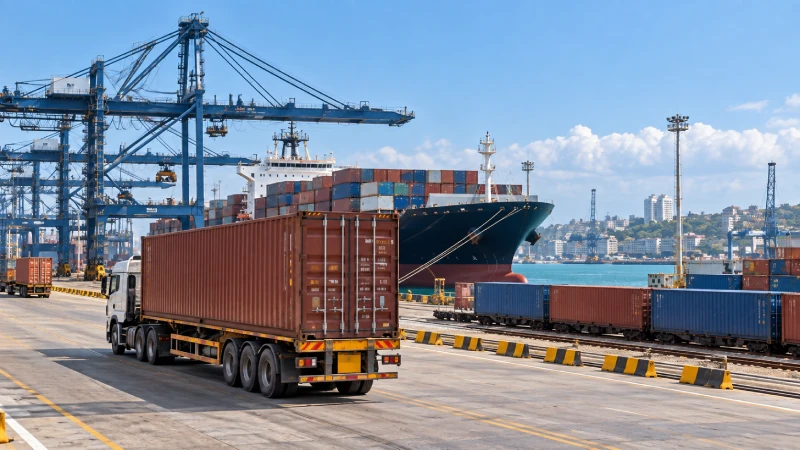
Under the current KPA tariff referenced for this article, domestic import containers receive the first five consecutive days free of KPA storage charges. The tariff also states that import free time begins from the next day after discharge and that free days run consecutively, including Saturdays, Sundays and public holidays.
That is a KPA storage rule.
It should not be confused with the shipping line’s equipment free time.
Demurrage and Detention
Shipping lines apply their own container-use terms.
Definitions and charging structures vary by carrier and contract, and some lines combine demurrage and detention.
For example, one carrier may publish a combined import demurrage and detention arrangement for Kenya dry containers, while another carrier or customer contract may provide different terms.
The actual free time must therefore be checked against the booking.
Three Clocks to Monitor
For practical planning, track:
1. Terminal/port storage clock
How long the container remains at the port or relevant terminal.
2. Shipping-line equipment free-time clock
How long the carrier allows before applicable demurrage or detention charges begin.
3. Empty-container return deadline
When and where the empty box must be returned after unloading.
These clocks can overlap, but they are not necessarily identical.
Pro Tip: If a freight quotation says “7 free days” or “10 free days,” ask exactly what that means. Is it carrier detention/demurrage, terminal storage, or another defined free-time arrangement?
How to Reduce Free-Time Risk
Before vessel arrival:
- give documents to the clearing agent;
- confirm the importer is ready for taxes and charges;
- resolve obvious HS or compliance questions;
- confirm original/release B/L arrangements;
- confirm carrier destination charges;
- prepare inland transport;
- confirm the receiving warehouse can unload;
- identify the empty-container return location.
A container cannot be returned if the consignee has no forklift, crane, labour or warehouse space ready to unload it.
FCL planning therefore does not stop when Customs releases the cargo.
Inland Haulage from Mombasa to Nairobi or Other Kenyan Destinations
For many imports, Mombasa is only the port of entry.
The actual destination may be Nairobi, Athi River, Nakuru, Kisumu or another Kenyan location.
That makes inland planning part of the FCL shipment—not an afterthought.
Check the Delivery Site Before Dispatching the Container
Before booking final trucking, ask:
- Can a container truck reach the premises?
- Are there road or access restrictions?
- Is the gate large enough?
- Is there sufficient turning space?
- Can the consignee unload from container height?
- Is a forklift or crane required?
- How long will unloading take?
- Can the container be unloaded without keeping the truck overnight?
These questions are especially important for industrial equipment and machinery.
A supplier in China may load a piece of machinery easily with an overhead crane, while the Kenyan buyer has no equivalent equipment to remove it from the container.
That mismatch should be discovered before shipment.
Empty Return Is Part of the Inland Route
A typical delivery is not simply:
Mombasa → Customer warehouse
Operationally it is closer to:
Container release → loaded trucking → customer delivery → unloading → empty-container return
The nominated empty depot may depend on the shipping line and equipment arrangement.
Confirm both the return location and deadline before dispatch.
If unloading takes longer than expected, it can consume valuable equipment free time.
Dangerous Goods, Heavy Cargo and Oversized FCL Shipments
Standard FCL planning assumes cargo fits safely into a normal dry container and can be accepted by the carrier without special handling.
Some cargo does not meet those assumptions.
Dangerous Goods
Dangerous goods should be identified before requesting the booking.
Depending on the product, the shipping file may require information such as:
- correct product classification;
- UN number where applicable;
- dangerous-goods class;
- SDS;
- packaging information;
- DG declaration;
- carrier approval.
Do not book cargo as general goods and attempt to correct the classification after the container is loaded.
Carrier acceptance, vessel restrictions, terminal handling and free-time conditions may differ for dangerous cargo.
KPA’s tariff and operating provisions also distinguish hazardous or dangerous cargo from normal cargo in several port procedures and charges.
Heavy Cargo
For high-density machinery, metal goods or equipment, container payload is only one limitation.
The shipment should also consider:
- cargo weight distribution;
- container floor loading;
- lifting method;
- Chinese trucking restrictions;
- terminal handling;
- Kenyan inland road and axle requirements;
- unloading equipment at destination.
A container being technically capable of holding the gross weight does not automatically mean every inland transport arrangement can legally or safely move it.
Oversized or Out-of-Gauge Cargo
If the cargo cannot fit through the doors or within the dimensions of a standard dry container, alternatives may include:
- Open Top container
- Flat Rack
- Breakbulk
- other project-cargo arrangements
Cargo dimensions and lifting points should be reviewed before deciding that a standard FCL shipment is possible.
FCL Pre-Booking Checklist for China-to-Kenya Shipments
A useful freight plan begins with complete cargo information.
Before requesting an FCL shipping plan, prepare the following.
Cargo Information
- Product name
- Intended use
- HS code, if known
- Quantity
- Number of cartons/pallets/packages
- Package dimensions
- Total CBM
- Gross weight
- Commercial value
- Stackable or non-stackable
- Dangerous-goods status
- Photos for unusual cargo
China Origin Information
- Supplier name
- Pickup address
- Number of suppliers
- Cargo-ready date
- Preferred loading location
- Factory loading capability
- Exporter information
Kenya Destination Information
- Mombasa, Nairobi or another city
- Final delivery address
- Importer details
- Clearing-agent details
- Warehouse unloading conditions
- Preferred Incoterm or freight scope
Compliance Information
- Product HS classification
- Certificate of Origin plan
- PVoC / CoC status
- product-specific permits
- ACD documents
- China export declaration documentation
Providing these details at the beginning makes it much easier to compare container types, origin-port options and inland routing.
It also helps identify compliance problems before cargo is loaded.
Plan the FCL Shipment Before the Container Is Loaded
The biggest mistakes in FCL shipping from China to Kenya usually do not begin on the ocean.
They begin earlier:
the wrong equipment is selected, supplier cargo is not ready together, a cut-off is missed, PVoC requirements are checked too late, the ACD documents are incomplete, the final destination is not planned correctly, or the Kenyan clearing and delivery teams only receive information after the vessel is already approaching Mombasa.
A better shipment starts by connecting the whole route:
Chinese supplier → pickup or consolidation → container loading → export and compliance documents → vessel booking → Mombasa clearance → inland delivery → empty return
For a normal commercial FCL shipment, confirm five things before booking:
- Which container actually fits the cargo
- Which Chinese origin port provides the right total route
- Whether Kenyan compliance documents are ready before loading
- Where the container will be cleared and delivered
- How quickly it can be unloaded and returned
If those five decisions are made early, the container is much easier to manage from China all the way to its final destination in Kenya.
FAQ
Is FCL always cheaper than LCL from China to Kenya?
No. FCL and LCL should be compared on an all-in basis. LCL may remain economical for smaller shipments, while FCL becomes more attractive as cargo volume grows or when dedicated loading, lower handling exposure or multi-supplier consolidation becomes important.
How many CBM do I need before using FCL to Kenya?
There is no universal CBM threshold. The economic crossover depends on cargo volume, weight, packaging, current FCL ocean freight, LCL destination charges and origin handling costs. Cargo characteristics also matter.
Should I use a 20GP or 40HQ for my Kenya shipment?
A 20GP is often considered for relatively dense or moderately sized shipments, while a 40HQ provides much more cubic capacity and additional internal height. Package dimensions, gross weight and the loading plan should be checked before selecting equipment.
How long does a full container take from China to Mombasa?
It depends on the Chinese port, carrier, service and voyage. Recent public carrier schedules show Shanghai-to-Mombasa examples ranging from roughly the low 20s to around 30 days port-to-port, but the actual vessel schedule should always be confirmed before booking.
Does a China shipment need an ACD before sailing to Kenya?
For containerized cargo covered by KRA's current requirement, yes. KRA introduced the ACD platform for containerized cargo destined for Kenyan ports from 3 August 2026, and the required reference is obtained using shipment documentation before the cargo proceeds to Kenya.
Can my container move from Mombasa to Nairobi ICD?
Yes. Kenya Ports Authority operates Nairobi ICD and states that imports can move from Mombasa to its ICDs under appropriate through-transport arrangements. The routing should be structured correctly before the final Bill of Lading and manifest are completed.
How many free days do I get at Mombasa?
Do not use one number for every type of free time. KPA terminal storage and shipping-line demurrage or detention are separate arrangements. Confirm both the current KPA storage rules and the carrier-specific free time for the actual booking.
